
Review · MADRID
Atletico de Madrid Stadium & Interactive Museum Admission Ticket
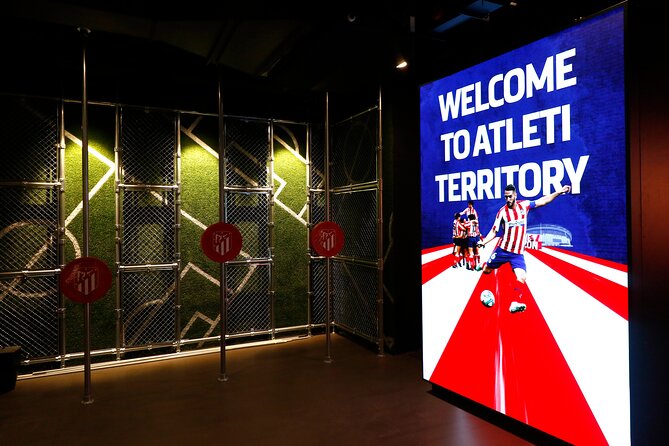
The most memorable part of Atlético Madrid’s stadium visit is the access. You can enter the players’ dressing room, walk through the tunnel, step beside the pitch, and see the press room and presidential box. I especially like the freedom to move at your own pace and the museum’s mix of club history, football challenges, virtual reality, and family activities.
I also like that the experience works for people who do not know Atlético well. The displays explain the club’s values and identity without requiring you to arrive as a lifelong fan. The main drawback is that this is self-guided, so you will not have a guide explaining each room or answering questions as you go.
Key points to know before you go

- Walk through restricted stadium areas: Enter the dressing room, player tunnel, mixed zone, press room, presidential box, dugout area, and trophy displays.
- The museum is more than display cases: Try football skill games, virtual reality activities, short films, and interactive exhibits about Atlético Madrid.
- Plan for more than 90 minutes: You can move quickly, but two hours may be more realistic if you stop for the activities and read the displays.
- This is a self-guided visit: Clear routes and signs help, but you must create your own pace and context.
- Matchdays change the schedule: The stadium closes for matches and events, with special hours possible on the preceding days.
- Good value for football families: Children have hands-on activities, while adults get access to the stadium’s main behind-the-scenes areas.
Entering the Riyadh Air Metropolitano
The stadium is Atlético Madrid’s home in Madrid’s San Blas-Canillejas district. Your ticket is redeemed at Atleti Tour & Museum, on Avenida de Luis Aragonés, 4. The venue is near public transportation, although one practical issue is that taxi access around the stadium can be less straightforward than expected.
The stadium may also appear under its former name, Cívitas Metropolitano, in older information. The attraction itself is the same Atlético home ground described in the visit, now identified in the supplied details as the Riyadh Air Metropolitano.
This is not a guided group walk with a set script. After checking in, you follow the marked route and stop where you like. That makes the visit relaxed. You are not hurried through the dressing room or pushed along because another group is waiting behind you.
The tradeoff is clear. A guide would add stories, background, and answers to questions. If you want detailed explanations about the architecture, former players, or matchday traditions, you will need to read the displays and make your own discoveries.
More Sports Experiences in Madrid:
- Madrid: Atlético de Madrid Stadium Entry
★ 4.7 · 2,022 reviews - Madrid: Guided Tour of Bernabéu Stadium
★ 4.1 · 1,445 reviews - Madrid: Bernabéu Stadium Guided Tour With Megafan Upgrade
★ 4.6 · 873 reviews
The dressing room and player tunnel

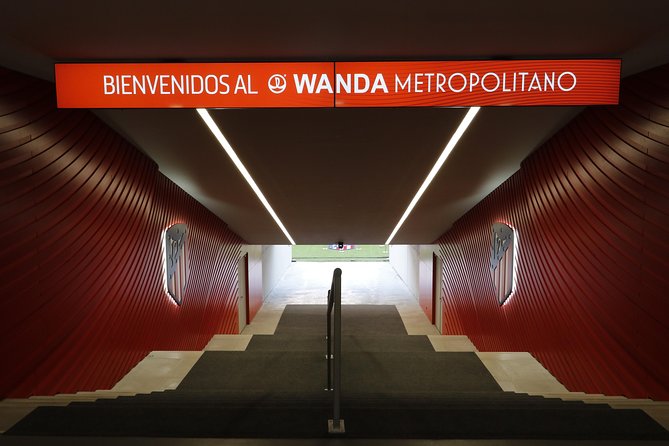
The dressing room is one of the strongest parts of the visit because it changes the scale of the stadium. From the seats, a football ground can feel like a giant bowl. Inside the players’ area, you get a more personal sense of the preparation that happens before a match.
From there, you walk through the tunnel used by the players to reach the field. This is the moment when the tour’s behind-the-scenes promise becomes real. You can picture the stadium filled with roughly 68,000 supporters, even though you are seeing it without a matchday crowd.
The route also includes the mixed zone, where players and media meet after matches, and the press room. These spaces help explain the work around the game, not just the 90 minutes played on the field.
You will not simply be looking at the stadium from a public concourse. The attraction gives you access to areas normally closed to the public. That access is the chief reason the admission feels worthwhile for an Atlético supporter.
Pitchside, dugouts, and the best views
The visit includes time near the pitch and access to the dugout area. You do not get only a distant view from the upper stands. Instead, you see the stadium from several working viewpoints: where players prepare, where coaches and substitutes sit, and where the best seats in the stadium offer a broader view.
The presidential box is another highlight. It provides a different perspective from the ordinary seating areas and helps show how the stadium is used for important club occasions.
The precise route and available areas can change around matches or events. That matters here because the stadium is an active venue, not a museum that closes all its doors to regular operations. Check the time carefully if your Madrid plans fall close to an Atlético match.
Some football fans expect to walk onto the playing field itself. The experience provides pitchside and dugout access, but the supplied information does not promise that you can walk freely across the grass. If stepping onto the field is your main goal, confirm the current route before booking.
The interactive museum and Atlético identity
The museum gives the visit its strongest educational element. It presents Atlético Madrid’s past, successes, and club values through displays that focus on humility, teamwork, and sacrifice.
You also get a look at how Atlético identity is passed from parents to children. That idea matters because the attraction is not only about trophies. It explains the feeling of belonging that connects generations of supporters and gives the club its particular character.
The museum uses more than printed panels. Depending on the current setup, you can find short films, virtual reality activities, virtual tattoos, football skill games, agility tests, and other interactive stations. These features give children something to do while adults read about the club.
I would allow extra time here. It is easy to assume the museum will be a quick corridor before the stadium rooms. In practice, the interactive sections can hold your attention, especially if you want to try the activities rather than pass by them.
The museum is also useful if you know little about Atlético. You can arrive without a strong connection to the club and still follow the basic story, understand its values, and leave with a clearer sense of what makes Atlético different from Madrid’s other major football team.
Same city, a different fixture:
- Madrid: Tour Bernabéu Entry Ticket
★ 4.5 · 21,573 reviews - Bernabeu Stadium & Real Madrid Museum Guided Tour
★ 4.0 · 360 reviews - Madrid: Santiago Bernabéu and Real Madrid Guided tour
★ 4.5 · 313 reviews - Bernabéu Stadium Guided Tour With Optional Megafan Upgrade
★ 4.5 · 272 reviews
A self-guided format, with real advantages and limits

The absence of a guide is the experience’s biggest point to weigh. Some people find it disappointing because there is no expert voice describing the rooms. If you are unfamiliar with Spanish football or do not speak Spanish, a guide could make the visit easier to follow.
I see a practical benefit, too. You can pause at a trophy, return to an interactive screen, or spend extra time with your family without holding up a group. There is no fixed commentary to keep pace with and no timetable forcing you to leave a room after a few minutes.
The route is clearly marked, which helps compensate for the lack of a guide. Staff at reception are available to help, and the visit is designed for independent movement. Still, you should think of it as a well-organized museum and stadium access experience, not as a live storytelling tour.
Families may find the format especially useful. One child can try an agility activity while another looks at the displays. Older children can follow facts and questions during the visit, turning the museum into a small challenge rather than a passive walk.
How long should you allow?
The stated duration is about one hour and 30 minutes to two hours. That is a sensible minimum for the full route, but your timing depends on how much you read and how many interactive features you try.
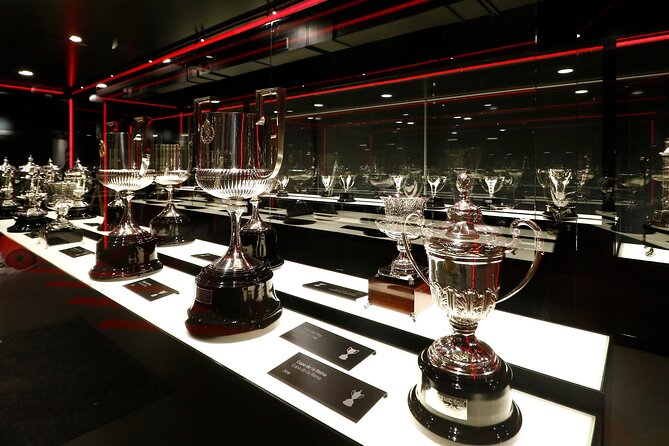
A fast visit can focus on the dressing room, tunnel, pitchside area, press room, and major trophy displays. That approach may fit someone with a full day of sightseeing.
I would plan closer to two hours if you are visiting with children or want to use the VR and football activities. The museum has enough to slow you down, and rushing through it would weaken one of the best parts of the admission.
You can choose from several start times during the day. That makes it easier to fit the stadium around the Prado, Royal Palace, or another Madrid plan. Keep the visit flexible near matchdays, since the attraction closes on matchdays and may use special hours on the day before an event.
Is the $30.17 admission good value?

The listed price is $30.17 per person. Value depends on what you want from a stadium visit, but the access here is broad: dressing room, tunnel, mixed zone, press room, presidential box, dugout area, pitchside views, and museum activities.
That is a stronger package than a simple stadium viewpoint. You are paying for several different experiences in one admission, and the self-guided format lets you use your time fully.
One price detail is worth checking. A visit description says the stadium charged €24 for admission at the venue, with no booking or time slot required at that time. Prices and ticket arrangements can change, so compare the current direct price with the advance ticket before paying. Booking ahead can still be useful for budgeting and for securing a chosen time.
The admission is particularly fair for families because the interactive content gives younger visitors more than a room full of old shirts and trophies. For a person who has no interest in football, the price is harder to justify, although the stadium access and museum may still fill a worthwhile couple of hours.
Getting there and planning your visit

The meeting point is Atleti Tour & Museum, Av. de Luis Aragonés, 4, San Blas-Canillejas, Madrid. The venue is near public transportation, so plan your route before leaving central Madrid.
Do not rely on a last-minute taxi without checking the exact stadium entrance. The stadium is large, and getting dropped near the wrong side can cost time. Public transportation may be the simpler choice, but the supplied details do not specify a particular station or route, so confirm the best connection from your hotel.
Your confirmation arrives when you book. The experience has a maximum capacity of 500 people, though the self-guided design means the crowd may spread through different parts of the building.
If you have reduced mobility, notify Atlético Madrid in advance. The attraction says most people can participate, but advance notice allows the venue to address access needs properly.
The attraction is closed on matchdays and can run special hours before matches or other events. Check the calendar before arranging your day around a fixed start time.
How it compares with other Madrid football visits
Madrid offers more than one major stadium experience, and this visit has a clear personality. It is not only about famous players or a trophy wall. The museum puts weight on Atlético’s values, supporter identity, and the way club loyalty passes through families.
The generous route is another advantage. You see the dressing areas, press spaces, pitchside areas, and presidential seating rather than staying in one public section. The interactive museum adds variety and can make the experience more engaging for an 11-year-old or a teenager.
The main comparison point is the guide. If you prefer an expert explaining every detail, you may prefer a guided stadium visit elsewhere, or you may find this one less satisfying. If you like setting your own pace, the lack of a guide becomes a benefit.
I would also avoid comparing the clubs only by size or fame. This attraction is most rewarding when you want to understand Atlético on its own terms. It gives you a look at the club’s atmosphere and values, not just a checklist of famous rooms.
Who should book this experience?
I would recommend it first to Atlético supporters, football fans, and families with children who enjoy hands-on activities. The dressing room, tunnel, dugouts, trophy areas, and interactive museum provide enough variety for different ages.
It also suits a curious football beginner. You do not need to arrive knowing the club’s full story. The displays give you an introduction, and the stadium itself provides a reason to visit a different part of Madrid.
I would hesitate if you need a guide, dislike reading museum displays, or have only a very short gap between major sightseeing stops. The visit can be completed in about 90 minutes, but it is better when you have time to stop and use the interactive features.
Book with care around matchdays, and check the current direct price against the advance ticket. If the schedule and cost work for you, the combination of restricted stadium access and a hands-on museum makes this one of Madrid’s stronger football attractions.
Final verdict: a strong choice for football fans
You should book the Atlético Madrid Stadium and Interactive Museum visit if you want more than a view from the stands. The dressing room, player tunnel, press room, presidential box, pitchside area, and dugout access give the visit real substance.
The self-guided format will please independent visitors and frustrate anyone wanting a detailed spoken tour. For me, the deciding factor is the museum’s mix of club history and practical activities. It gives adults context and gives children a reason to stay engaged.
Allow two hours, check matchday schedules, and do not rush the museum. If you are comparing Madrid’s football attractions, this is a good pick for access, freedom, and family-friendly content.
FAQ
How long does the Atlético Madrid stadium visit take?
The visit lasts approximately one hour and 30 minutes to two hours. Allow closer to two hours if you want to read the displays and try the interactive activities.
Is the stadium visit guided?
No. The experience is self-guided, so you move through the marked route at your own pace. Staff are available at reception, but no guided service is included.
What areas of the stadium can I see?
The route includes the players’ dressing room, player tunnel, mixed zone, press room, presidential box, dugout area, pitchside views, and other stadium areas normally restricted to the public.
Is the interactive museum suitable for children?
Yes. The museum includes interactive activities, football skill games, virtual reality experiences, short films, and agility tests. Most people can participate, and the activities can help younger children stay involved.
What happens on matchdays?
The stadium tour is closed on matchdays. Special timetables may apply on the days before matches or other events, so check the schedule before booking.
Can I cancel the ticket for a refund?
You can cancel up to 24 hours before the experience start time for a full refund. Cancellations or changes made less than 24 hours before the start time are not accepted for a refund.
Just added for fans in Madrid
- Santiago Bernabeu Private Tour with Inn Pickup★ 3.5 · 11 reviews
- Real Madrid: Skip the Line Bernabeu Stadium Tour★ 5.0 · 5 reviews
- Bernabeu Stadium Private Guided Tour★ 3.5 · 4 reviews
- Madrid: Santiago Bernabeu and Real Madrid Guided tour★ 3.0 · 6 reviews
- Madrid Bernabeu Stadium Tour Admission Ticket★ 4.0 · 18 reviews
- Madrid Santiago Bernabéu Stadium Private Tour★ 5.0 · 5 reviews
- Madrid Reserved Access to Santiago Bernabeu★ 3.5 · 35 reviews
- Atletico de Madrid Stadium Guided Tour★ 4.5 · 19 reviews
Madrid Sports Experiences, compared.




Bernabéu Stadium Guided Tour With Megafan Upgrade
Read our review →
Bernabeu Stadium & Real Madrid Museum Guided Tour
Read our review →

Bernabéu Stadium Guided Tour With Optional Megafan Upgrade
Read our review →
Browse the lists this tour appears in