

Review · SPORTS MUSEUMS
Melbourne: Australian Sports Museum Admission Ticket
The Australian Sports Museum turns the Melbourne Cricket Ground into a hands-on lesson in Australian culture. You can study Olympic objects, football history, racing, cricket, and sporting heroes, then let the kids kick a football or climb on play-friendly displays in Game On!
I like the mix of serious museum material and active exhibits, and I like that the collection reaches from grassroots sport to elite competition. The main drawback is time: a quick visit will miss much of the reading and detail, so plan on several hours if sport interests you.
Key points to know before you go
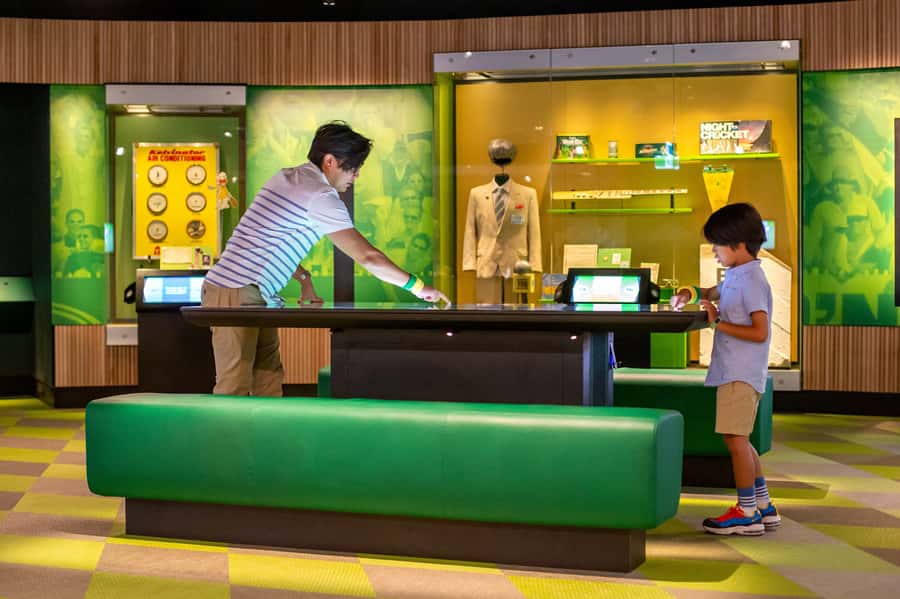
- Enter at Gate 3 of the Melbourne Cricket Ground: The museum is inside the MCG, giving your visit an immediate connection to one of Australia’s best-known sporting venues.
- Try Game On!: This interactive gallery gives children and adults a chance to take part rather than only look at objects behind glass.
- Cover several sporting worlds: Expect galleries devoted to the Olympics, Australian football, horse racing, cricket, and the wider Australian sporting story.
- Allow up to three hours: The museum works as a quick stop, but readers who enjoy facts and displays will need much longer.
- Use the tracking wristband: Your Australian Sports Museum wristband helps record your progress through the visit.
- Choose your language support: Hosting is in English, with audio guides available in English and Chinese.
Why the MCG setting changes the visit
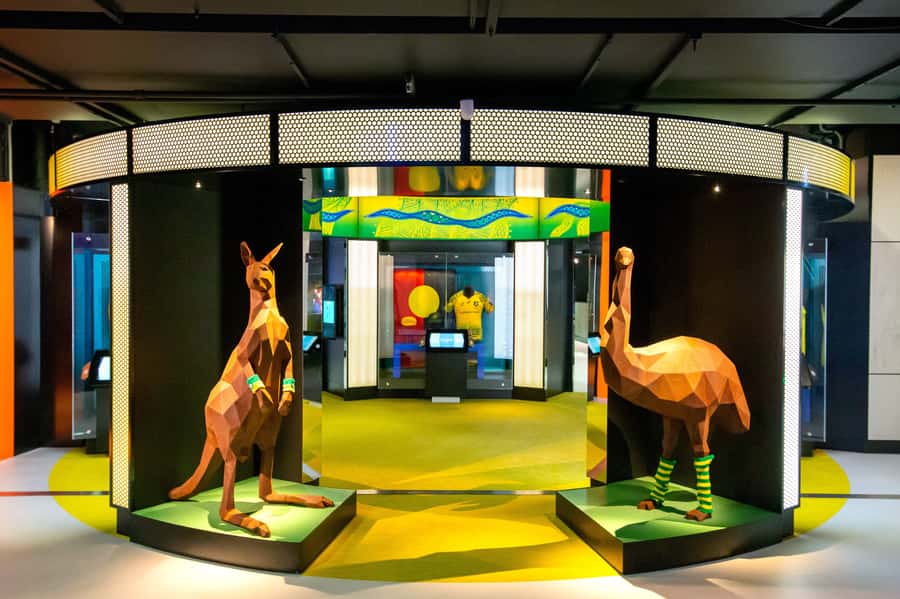
The museum is located inside Gate 3 of the Melbourne Cricket Ground, not in a separate suburban building. That matters. You are not simply looking at sport as an abstract subject. You are visiting a place tied directly to major Australian matches, ceremonies, and sporting memories.
The setting also helps explain why this museum treats sport as part of national culture. In Australia, football, cricket, horse racing, and the Olympic movement are not just weekend hobbies. They connect towns, schools, clubs, families, and national identity. The museum uses those connections to tell a broader story.
Your ticket is valid for one day, so you can take your time. The admission costs $26 per person. I consider that fair value if you are interested in sport, Australian culture, or the MCG itself, especially because the ticket includes the interactive Game On! area rather than charging separately for it.
If you only want a brief look at a few trophies, the price may feel less attractive. The museum gives you value through time spent exploring, not through a short list of famous objects. I would not rush in for 30 minutes and expect to see the place properly.
More Sports Museums in Melbourne:
- Melbourne: MCG and Australian Sports Museum Guided Tour
★ 4.7 · 638 reviews - MCG Tour & Australian Sports Museum
★ 4.5 · 263 reviews - Australian Sports Museum Ticket
★ 5.0 · 60 reviews
Start with Australian sport from local clubs to Olympic glory
A useful way to approach the museum is to think of it as a journey from participation to achievement. The collection covers sport at the grassroots level as well as the highest international stage.
That range is one of the museum’s best features. Olympic champions get attention, but so do the ordinary activities that make sport part of daily life. You can consider how children begin playing, how local clubs build communities, and how a talented athlete may eventually represent Australia on the world stage.
The Australian Gallery of Sport and Olympic Museum provides the broadest view. It links Australian sporting life with the Olympic movement, giving you a place to compare local sporting traditions with international competition.
You will find plenty to read. One visitor spent three hours here, and that is a useful guide if you like facts, labels, and background stories. Another visitor planned to spend more time after finding the displays especially informative. I would treat the museum as a proper half-day activity for a committed sports fan, not a quick add-on between other MCG attractions.
The Olympics Gallery puts achievement in context
The Olympics Gallery focuses your attention on international competition and the athletes who carry national expectations. The value here is not only in seeing Olympic-related objects. It is in understanding how sport becomes a public story shared across generations.
The gallery is a good fit if you enjoy major sporting moments, medal history, and the emotional side of competition. It also gives children a clear way into the subject. They may not care about a long written account of sporting administration, but they can understand the basic idea of athletes training, competing, winning, and representing their country.
The amount of written material means you control the pace. Read every panel and the visit grows longer. Move briskly and you can focus on the objects and visual displays. That flexibility makes the museum work for families with different levels of interest.
Australian football gets its own detailed treatment
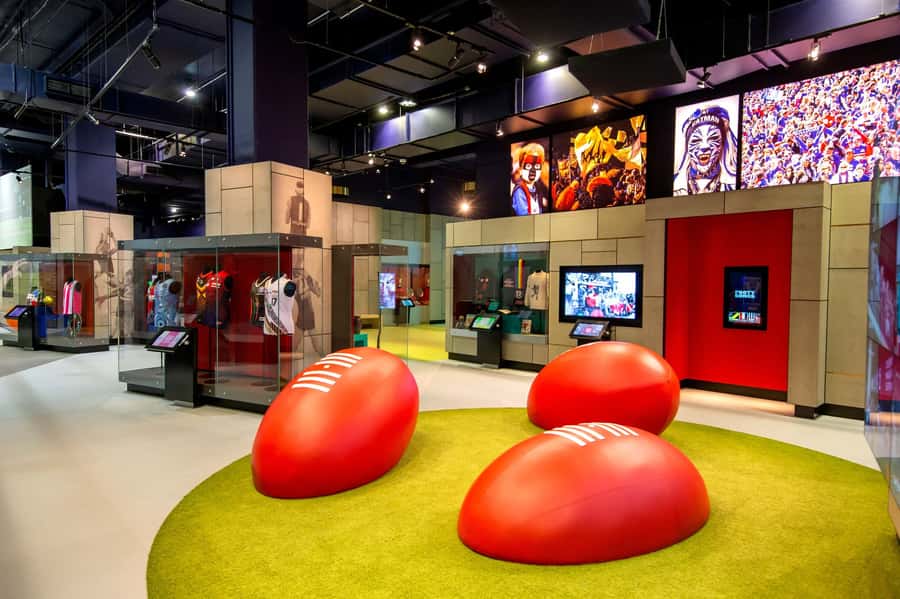
The Australian Football Gallery is one of the most relevant sections for anyone trying to understand the country through its sport. Australian football is more than a game with a ball. It has regional traditions, club loyalties, famous grounds, and a strong place in social life.
The gallery helps connect the rules and equipment of the game with the people who play and follow it. If you already know Australian football, you can spend time with the memorabilia and stories. If the sport is new to you, the interactive approach makes it less intimidating than starting with a live match and trying to work out what is happening.
Game On! is especially useful here for families. While adults read, children can kick a football in the interactive area. The museum also includes climbable statues and touchscreens, so the usual museum rule of keeping your hands to yourself is relaxed in selected spaces.
That does not mean every part is a playground. Much of the museum still rewards quiet attention. The strength is the balance: young children have somewhere active to go, while older visitors can continue with the displays.
More Sports Experiences in Melbourne:
- Melbourne: Melbourne Cricket Ground (MCG) Guided Tour
★ 4.8 · 1,004 reviews - Melbourne Cricket Ground (MCG) Tour
★ 4.5 · 394 reviews - Melbourne Park Tennis Experience
★ 5.0 · 143 reviews - Melbourne Sports Experience + MCG Tour Combo
★ 5.0 · 137 reviews
Racing and cricket reveal different sides of Australia
The Victorian Racing Gallery focuses on horse racing, an important part of Victoria’s sporting culture. Racing has its own traditions, personalities, clothing, events, and public rituals. This section gives the museum a different tone from the football and Olympic areas.
You might find it especially interesting if you want to understand why racing occupies such a visible place in Victorian life. It also broadens the museum beyond ball sports and international competition.
The Melbourne Cricket Club Museum brings the focus back to the MCG and cricket. Cricket has a long connection with the ground, so this gallery helps tie the museum’s wider themes to its physical location.
The contrast among these galleries is helpful. Football shows a team game with local loyalties. Racing presents a sport built around events, horses, and tradition. Cricket connects national competition with one of Melbourne’s major sporting venues. You do not need to be an expert in all three to appreciate the differences.
Game On! gives children a reason to stay
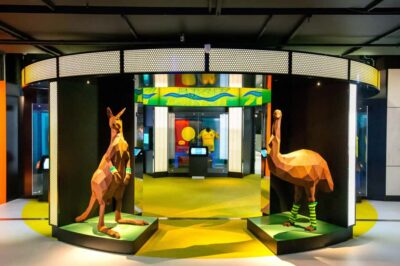
The Game On! gallery is the museum’s most obvious family feature. It is designed for visitors of all ages and offers interactive activities instead of a purely display-based experience.
Children can kick a football, use touchscreens, and interact with climbable statues. These features matter because many sports museums work best for adults who already know the names and events. Here, younger visitors have a direct way to take part.
I would give children permission to spend time here rather than treating it as a quick extra. It may become the part they remember most. Adults can also try the activities, though the museum’s wider displays provide more depth for people who want sporting facts and historical detail.
The interactive area also makes the museum less dependent on prior knowledge. You do not need to understand every sport before you begin. You can play first, then follow the stories that catch your attention.
Use the wristband to shape your own route
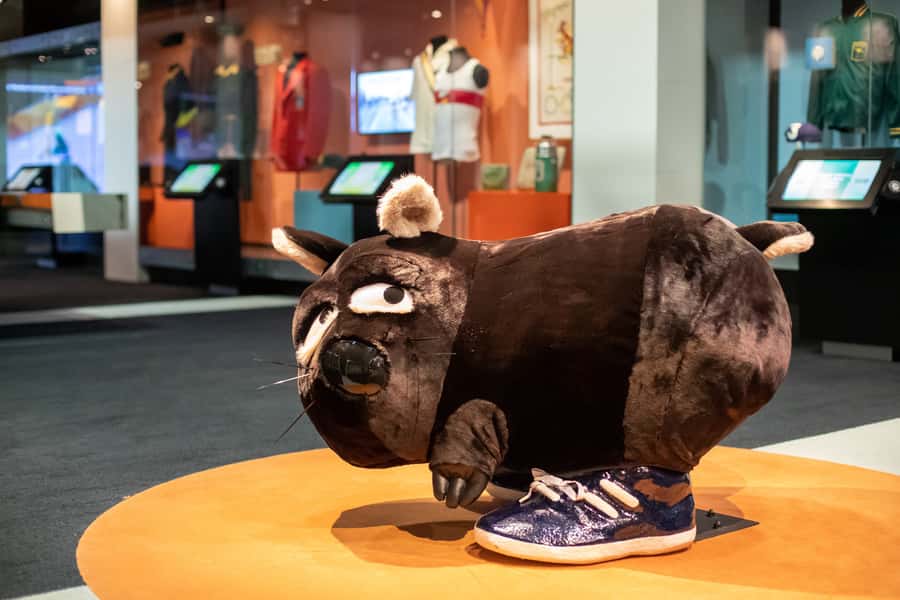
Your admission includes an Australian Sports Museum wristband that tracks your visit. The supplied information does not explain every function in detail, so you should think of it as a way to record or follow your museum experience rather than assume it replaces a traditional guide.
This feature adds a small sense of purpose to the visit. Instead of drifting through every room at the same pace, you can move through the galleries and keep track of what you have explored.
A host or greeter is available in English, and audio guides are offered in English and Chinese. If you prefer listening to reading, the audio guide can help you get more from the exhibits. English is the stated operating language, so the Chinese audio option is particularly useful for Chinese-speaking visitors.
One guide named Rod received especially strong praise for his explanations and knowledge of the MCG. If Rod is leading or greeting during your visit, you may benefit from a more personal introduction. Guide availability is not guaranteed, so I would still plan to use the museum displays and audio guide independently.
How long should you spend inside?
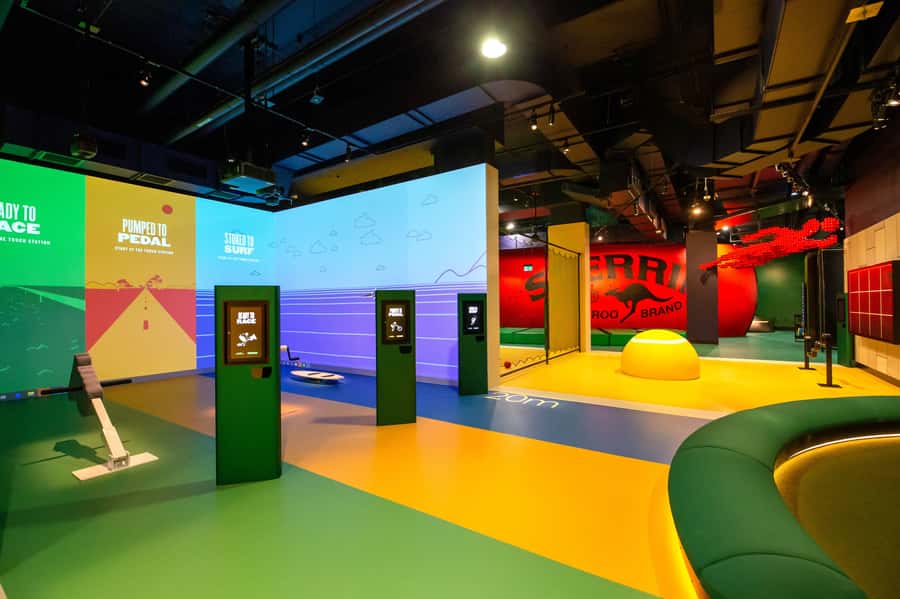
The ticket is valid for one day, but most people will not need the full day. A serious visit can easily reach three hours, particularly if you read the information panels and stop at the interactive sections.
Here is how I would plan it:
- Allow about an hour if you want a quick look at the main galleries.
- Allow two to three hours if you want to read, use Game On!, and explore the major sport sections.
- Allow more time if your family has different interests or you want to revisit interactive displays.
The museum is more enjoyable when you avoid rushing. It contains a large collection of memorabilia, and the written material adds context that you will miss if you simply walk from object to object.
A family may need more time because children will stop for the active features. An adult sports fan may need more time because the memorabilia and facts invite close reading. Build in flexibility rather than assigning yourself a strict finish time.
Who gets the best value from the $26 ticket?
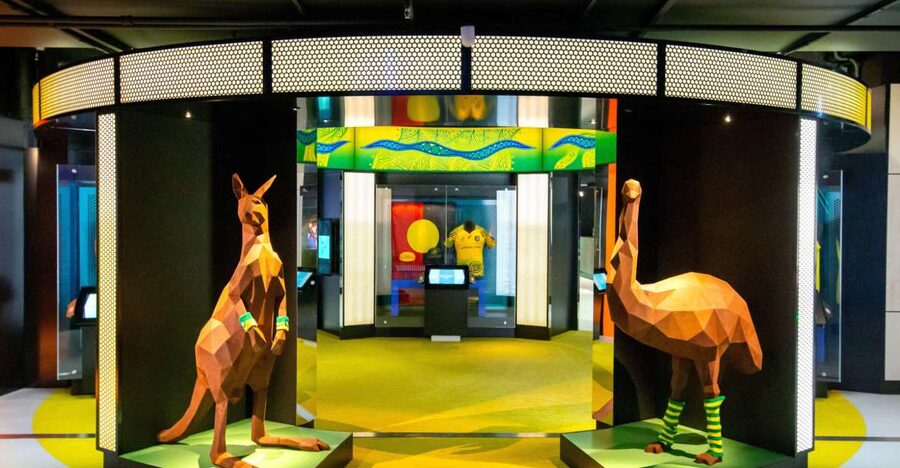
At $26 per person, this is best for someone who will stay long enough to use the museum properly. I see good value for:
- Families looking for an indoor activity with hands-on features
- Sports fans interested in Australian football, cricket, racing, or the Olympics
- Visitors who want cultural context rather than only a stadium view
- People already visiting the MCG
- Anyone who enjoys detailed displays and historical information
The value is weaker for someone with no interest in sport and little time in Melbourne. The museum uses sport as its main way into Australian culture, so you need at least some curiosity about that subject.
The inclusion of Game On! improves the family value. The audio guide and English host also give you more ways to approach the displays. Free cancellation up to 24 hours before the visit and the option to reserve now and pay later make the booking less risky if your schedule is still changing.
Accessibility and practical planning
The museum is fully accessible and caters for mobility issues. Wheelchair users should find the venue suitable, which is important in a museum where you may spend several hours moving among galleries.
The meeting point is inside Gate 3 of the MCG. Check the available starting times when you book, since the activity is listed with scheduled availability even though your admission remains valid for one day.
The group format is small, limited to 10 participants, although the museum itself is an open public venue rather than a private room for your group. That smaller format may be useful if an English host or greeter is providing an introduction.
You can cancel up to 24 hours in advance for a full refund. You can also reserve and pay later, which suits a Melbourne itinerary that may depend on weather or changing plans.
Should you book the Australian Sports Museum?
Book it if you want more than a quick stadium photo and you have at least two hours to give the museum. The combination of Olympic material, Australian football, racing, cricket, the MCG setting, and Game On! gives you a clear picture of how sport fits into Australian life.
Families should pay particular attention to the interactive area. Adults who enjoy reading and sporting detail should plan closer to three hours. If you are not interested in sport, the museum may feel too specialized, and the $26 ticket is harder to justify.
For the right visitor, this is a lively and useful MCG experience rather than a standard collection of trophies. Go with time, let the children play, and use the displays to understand Australia through the games people watch, play, and pass on.
FAQ
Where is the Australian Sports Museum located?
The museum is inside Gate 3 of the Melbourne Cricket Ground in Victoria, Australia.
How much does admission cost?
Admission costs $26 per person.
How long is the ticket valid?
The ticket is valid for one day. Check availability when booking for the available starting times.
Is Game On! included with admission?
Yes. Admission includes access to the Game On! interactive area.
Is the museum wheelchair accessible?
Yes. The museum is a fully accessible venue that caters for mobility issues.
What languages are available?
The host or greeter service is in English. Audio guides are available in English and Chinese.
Just added for fans in Melbourne
- Melbourne Sports Precinct Walk with Behind-the-Scenes MCG Tour★ 5.0 · 3 reviews
- Aussie Football MCG Matchday Experience with a Local★ 5.0 · 8 reviews
- Melbourne Sports Experience + Free Australian Sports Museum entry★ 5.0 · 5 reviews
- Australian Sports Museum Ticket★ 5.0 · 60 reviews
- Half-Day Sports Lovers Bus Tour of Melbourne with MCG Tour★ 4.5 · 84 reviews
- Melbourne Park Tennis Sporting Experience★ 4.8 · 118 reviews
- Melbourne Sports Experience + MCG Tour Combo★ 5.0 · 137 reviews
- Melbourne Park Tennis Experience★ 5.0 · 143 reviews
Sports Museums, compared.
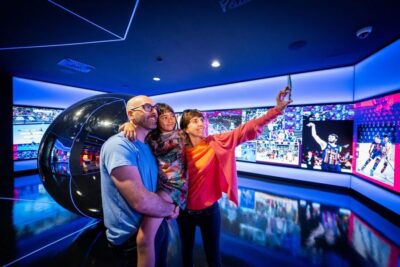
FC Barcelona Museum “Barça Immersive Tour” Ticket
Read our review →
Liverpool Football Club Museum and Stadium Tour
Read our review →

Camp Nou Immersive Tour F.C.Barcelona Museum: Open Date Ticket
Read our review →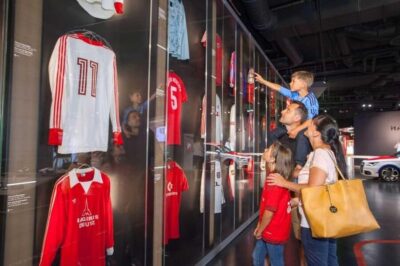


Browse the lists this tour appears in