
Review · GOLF ROUNDS AND COURSES
St Andrews: Town, Golf, and Old Course History Tour
St Andrews’ golf story is woven into the town itself, and this walking tour makes that connection clear. You move from the university and cathedral ruins to the Old Course, finishing beside the famous Swilcan Bridge. It is a useful way to see more than fairways and photo stops.
I like the mix of golf lore and everyday St Andrews, especially the university stories about William and Kate and the walk past old college buildings. I also like the human touch from guides such as Richard and Jim, who bring personal experience, humor, and local detail. The main drawback is the pace: this is a long walk, and one large group found it hard to hear when the guide moved quickly or traffic was loud.
Key points to know before booking

- Golf and town history share the spotlight: The route covers the university, cathedral, castle area, and Old Course rather than focusing only on golf.
- The Swilcan Bridge is the finale: You can take photos there, except on tournament days.
- The cathedral graveyard adds real context: You see the graves of golfing pioneers including Old and Young Tom Morris, Allan Robertson, and Jamie Anderson.
- Richard and Jim are notable guides: Both are praised for clear explanations, humor, and strong knowledge of St Andrews and golf.
- Expect a brisk walking tour: The scheduled length is 105 minutes, but some outings run longer and cover much of the town.
- Arrive early: The guide starts on time, and late arrivals cannot join the tour.
A smart first look at St Andrews
At $27 per person, this is priced as an affordable introduction to St Andrews. You are not paying for entry to a major attraction. You are paying for a local guide who links places that can otherwise feel separate: the medieval religious center, Scotland’s oldest university, royal stories, and the world’s most famous golf course.
That link is the real value. You could walk around town alone and see the same streets, but you would miss why the cathedral graveyard matters to golf, how the university shapes local life, and why the Old Course developed in such an unusual form.
The tour is listed at 105 minutes. In practice, allow roughly two hours if the guide pauses for questions or the group moves slowly. One outing lasted longer than expected, which can be welcome if you have time, but less useful if you have a tight connection or a fixed lunch booking.
The route starts outside T-Squared Social at 117 North Street. Arrive early, not at the stated start time. The operator is strict: even being a minute late can mean losing your place, with no refund for the missed tour.
More Golf Rounds and Courses in the UK:
- St Andrews: Golf Origins and Old Course History Tour
★ 4.7 · 322 reviews - St Andrews Tours: Town, Golf and Old Course History
★ 5.0 · 138 reviews - Manchester: Junkyard Golf Club Tickets for 9 or 18 Holes
★ 4.6 · 133 reviews
Starting at T-Squared Social
The opening stop gives the tour a modern touch before it turns toward older St Andrews. You hear about T-Squared Social, the bar and restaurant connected with Tiger Woods and Justin Timberlake, along with a little about the Dunhill Championship.
That opening helps explain how St Andrews remains both a historic university town and a working golf destination. The tour does not treat golf as a museum subject. It also covers the business, personalities, and events that keep the town in the public eye.
Your guide then sets the scene for the walk. Richard is the name most often associated with these tours, while Jim has also led outings. Both are described as clear, entertaining speakers with a strong command of golf and local history. Richard’s background includes time as a caddy, and his personal stories can give the golf sections a practical feel.
St Salvator’s College and the university story
The route turns toward St Salvator’s College and its quadrangle. This is one of the most useful sections for non-golfers because it shows how much of modern St Andrews revolves around the university.
You hear about William and Kate, who met while studying there, and about the period when the television series The Crown came to town. These details are popular, but the guide places them within the wider story of the university and its buildings rather than treating them as isolated celebrity facts.
The university stop also breaks up the golf material. If you are traveling with someone who has little interest in fairways, this is one of the points that keeps the tour balanced. You see old college architecture, hear about student life, and get a sense of why St Andrews feels more like a compact university town than simply a golf resort.
The guide may also show you one of the town’s less obvious interiors. The exact access can depend on conditions, so do not treat this as a guaranteed major attraction, but it adds a welcome change from outdoor walking.
St Salvator’s Chapel and the older town
St Salvator’s Chapel provides another pause in the university section. Its connection with the college helps you understand the long relationship between education, religion, and power in St Andrews.
The route continues through town with short sightseeing stops along the way. This is not a hop-on, hop-off tour. You remain on foot, and the guide tells the story while moving between sites. That format is good for seeing how close the main landmarks are, but it means you should wear shoes you can comfortably use for nearly two hours.
The tour is conducted in English, and a fluent command of English is essential. The guide speaks clearly, but the amount of information and the movement through streets make this unsuitable if you need translation or frequent pauses to keep up.
More History and Heritage Tours in the UK:
- Tour of Historic Fenway Park, America’s Most Beloved Ballpark
★ 4.5 · 3,013 reviews - Krabi: Ao Nang Landmark Stadium Muay Thai
★ 4.7 · 287 reviews - Private Luxury Tour: Marathon – Battle & Run That Changed History
★ 5.0 · 30 reviews - FC Barcelona History Immersive Walking Tour – Beer Included
★ 5.0 · 18 reviews
Cathedral ruins and the golfers beneath your feet
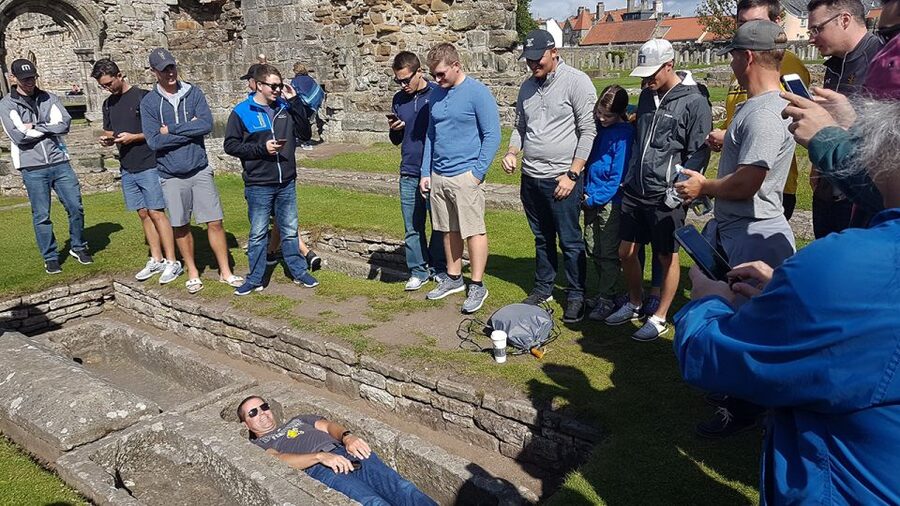
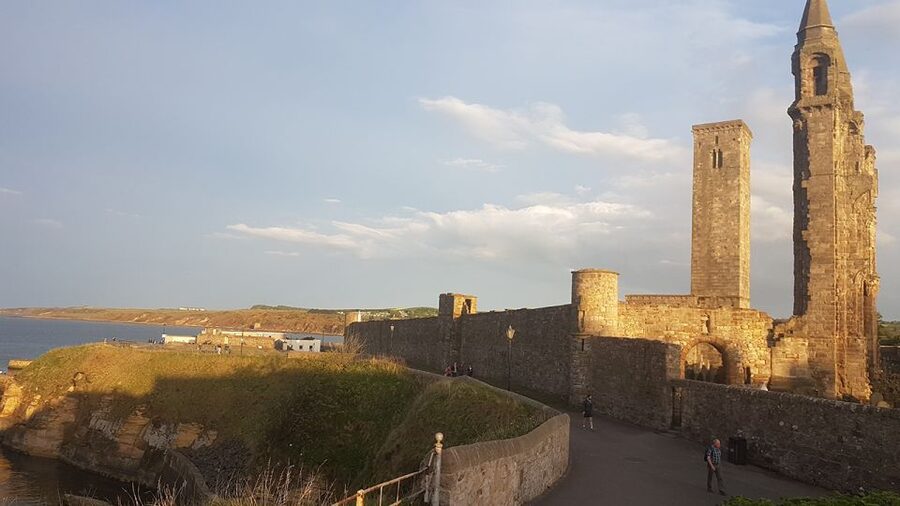
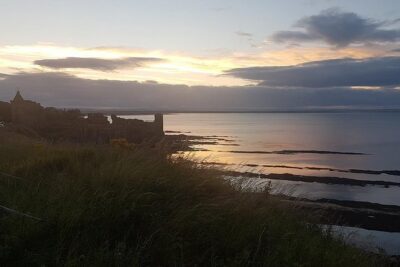
The ruined cathedral is the emotional center of the historical side of the tour. You see the remains of the great medieval church and learn about St Andrews as a former center of Catholic wealth and power.
The graveyard adds the golf connection in a direct way. Around 124 noted golfers are buried in the cathedral grounds, including Old Tom Morris, Young Tom Morris, Allan Robertson, and Jamie Anderson. These names matter because they belong to the formative period of golf in St Andrews, when local players, club makers, caddies, and course designers helped shape the game.
I find this stop valuable even if you do not follow professional golf. The graves show that golf here is not just an imported attraction for modern visitors. It has been tied to local families, work, competition, and community life for generations.
The tradeoff is time. The tour has a lot to cover, and you may not get a long, quiet period to study every grave or explore the grounds at your own pace. One useful tip is to return later if you want a slower look at the cathedral area. The tour gives you the names and context; a separate visit lets you linger.
Bishop’s Palace and the edge of the medieval town
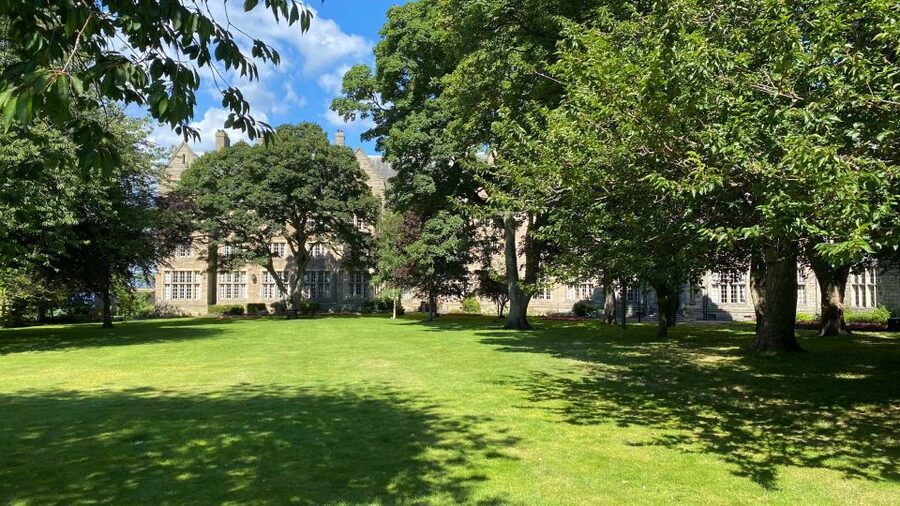
You pass the ruins of Bishop’s Palace, a strong reminder of the influence once held by St Andrews’ religious leaders. The palace and cathedral together explain why this small town mattered far beyond its present size.
The tour does not treat the ruins as a stand-alone archaeological visit. Instead, they form part of a larger walk through the town’s changing identity. Medieval religious power gives way to university life, and university life sits beside a golf culture that grew from the links at the edge of town.
The castle is generally a photo stop or a pass-by rather than a full interior visit. You get scenic views and historical context, but the tour does not include a lengthy castle exploration. If the castle is a top priority, plan a separate visit and check its admission arrangements independently.
Along the Scores toward the Old Course
From the cathedral area, the route follows the Scores past attractive Victorian university buildings, the Principal’s House, and the residence where William and Kate spent their first year as students.
This stretch is especially good for putting St Andrews’ scale into perspective. You are not being driven between disconnected sights. You are walking from the academic quarter toward the shore and golf course, seeing how the town’s architecture changes as the route opens out.
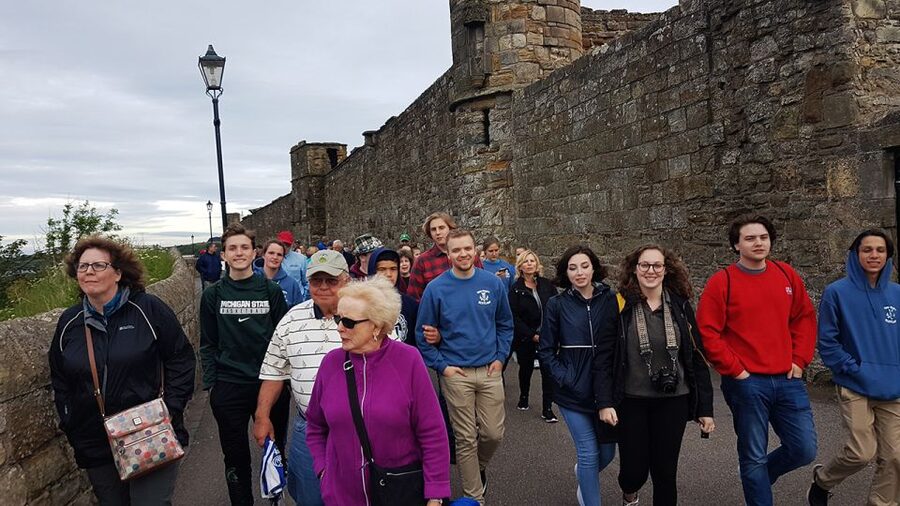
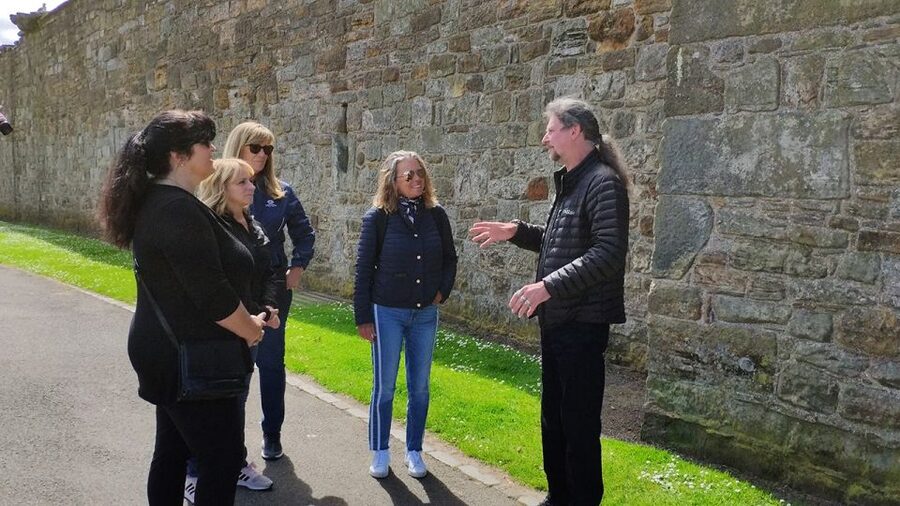
The walk can feel brisk. One group of 13 found that the guide’s pace and street noise made some information difficult to catch. If you want every word, stay near the guide and mention early that you need a clear speaking position. Smaller groups may feel more personal, and one outing with only two participants felt almost like a private tour.
The route also gives the guide room to adjust the level of detail. Richard has been praised for answering questions and offering more depth when a group wants it, while keeping the explanation accessible for people who are new to golf.
The Old Course, from the first tee to the 18th green
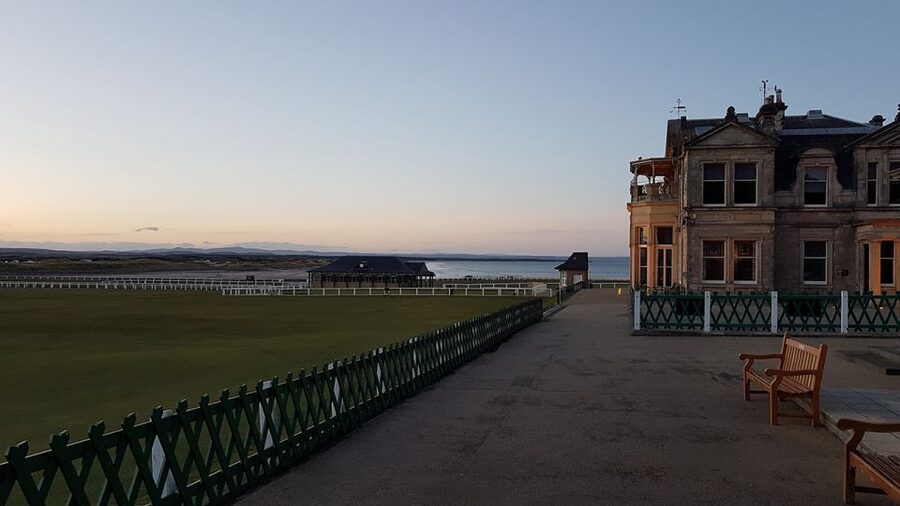
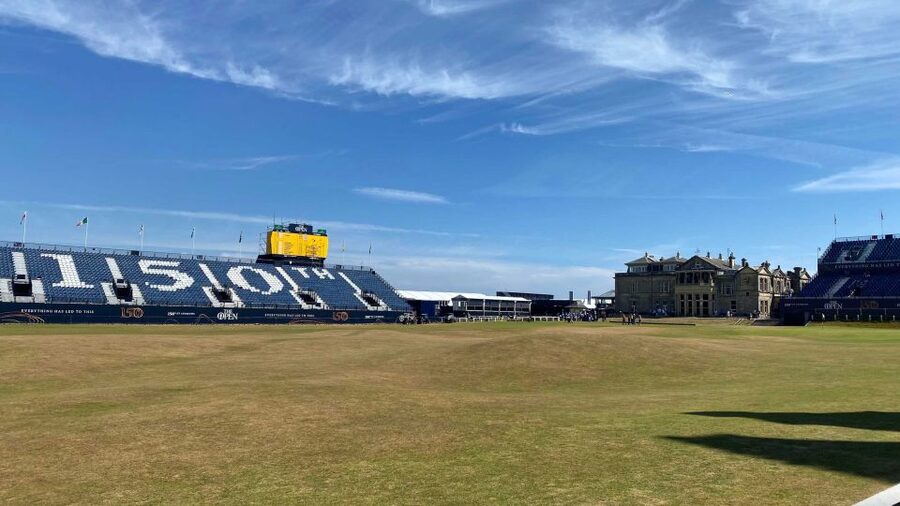
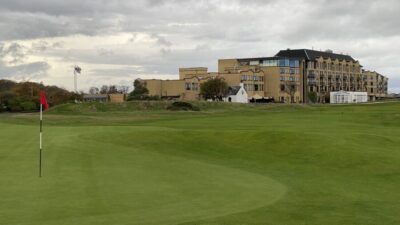
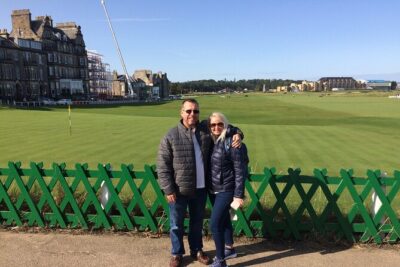
The Old Course is the payoff for golf fans. You walk by the 18th green, the 1st tee, and the first fairway while hearing how the Open Championship developed and how St Andrews became known as the Home of Golf.
The guide explains some of the odd features of the course and the decisions that shaped its history. You hear why the links came to have 18 holes and learn about buildings that overlook the course. The talk also includes memorable moments from golf, though the exact stories can vary with the guide and the group’s questions.
This is not a full round, a club fitting, or a behind-the-scenes course tour. You are walking beside and across parts of the 1st and 18th fairways. During live play, you must watch for golf balls and accept the risk of crossing an active course.
That detail matters. The Old Course is not a fenced museum piece. It remains a working golf course, so access and movement can be affected by play, conditions, or events. Keep children close, listen to the guide, and do not wander onto the course to improve a photograph.
For a golfer, this section can feel like the highlight of the visit. For a non-golfer, it works because the guide explains how the course shaped the town rather than simply naming famous players. People who know little about golf can still follow the story of how a local links became a major international stage.
Finishing at the Swilcan Bridge
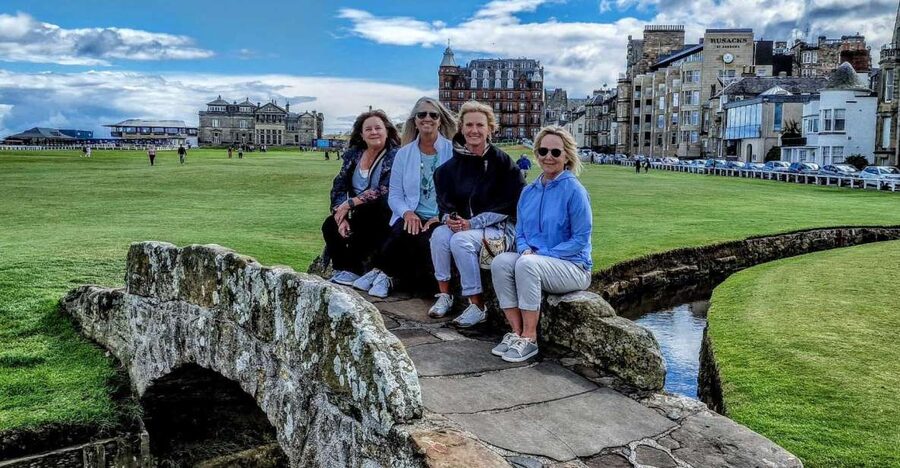
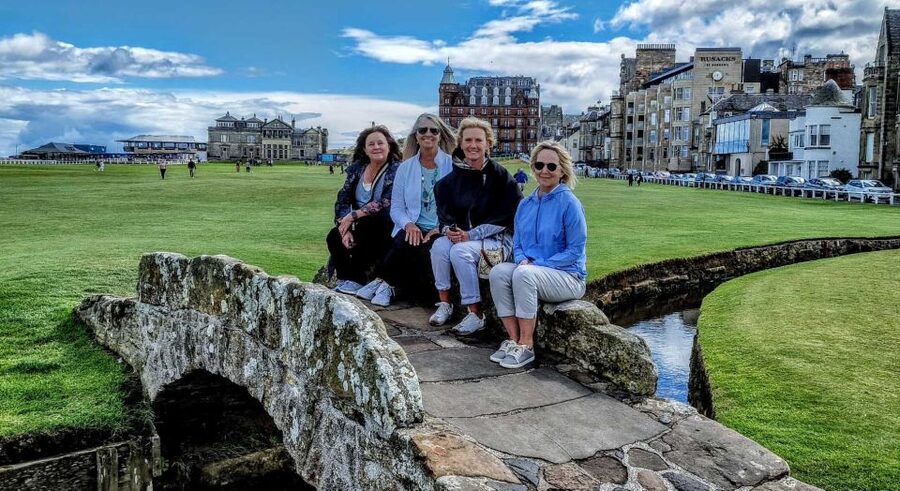
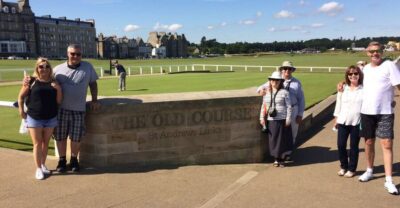
The tour ends at the Swilcan Bridge, where you can take photographs. This is a practical advantage because the guide can help with the camera, and Richard has been praised for taking good group and family photos.
Photo access excludes tournament days. Check the date carefully if the bridge photograph is a central reason for booking. The Old Course may also be busy, so expect a real golf setting rather than a controlled photo studio.
After the tour, you can continue to the Jigger Inn or the Old Course Hotel. These are not included as part of the tour, but they give you a natural place to sit, have a drink or meal, and look back toward the course. The suggestion is useful because the tour finishes at the western end of town, away from the original meeting point.
Who will enjoy this walking tour?
I would choose this tour for a first visit to St Andrews, especially if you want a guide to organize the town’s main stories in one outing. It suits golfers who want context around the Old Course, but it also works for history fans and companions who are not golfers.
The strongest fit is:
- Couples or families who want one shared activity with different interests covered.
- First-time visitors who want an introduction before exploring alone.
- Golf fans interested in Old Tom Morris, the Open Championship, and the development of the links.
- People who enjoy walking between landmarks instead of taking transport.
- Visitors who value a local guide’s stories more than formal entry to interiors.
It is a poor fit if you have walking difficulties, use a wheelchair, mobility scooter, walking frame, crutches, or need a stroller. The tour does not provide luggage storage, and it cannot hold luggage, baby carriages, scooters, or golf clubs. Children under 16 must be with an adult, children under five are free, and the outing is not suitable for children under two.
Bring comfortable shoes and clothing suited to Scottish weather. Do not bring pets except assistance dogs, and alcohol or disruptive behavior is not allowed.
Is $27 good value?
At $27, the tour offers good value if you would otherwise spend a day trying to piece together the university, cathedral, golf graves, and Old Course on your own. Its price is particularly fair for couples or mixed-interest groups because the content is broader than a standard golf talk.
The value falls if you want long visits inside the cathedral or castle, a full Old Course tour, or lots of free time for photos. This experience is a guided walk with viewpoints and stories, not a series of extended attraction visits.
The free cancellation option up to 24 hours before departure and the reserve-now, pay-later choice also help if your plans are still shifting. The strict late-arrival rule remains the key practical warning.
Should you book it?
Book this tour if you want one lively introduction to St Andrews’ town, university, religious ruins, and golf culture. It is especially useful at the start of a stay because it gives you names, locations, and background for later independent walks.
Skip it if you dislike walking, need translation, want a slow cemetery visit, or expect access to every part of the Old Course. For most visitors who can keep pace, $27 buys a well-organized route and a helpful explanation of why St Andrews matters far beyond one famous golf course.
FAQ
How long does the St Andrews Town, Golf, and Old Course History Tour last?
The scheduled duration is 105 minutes. Some outings can last longer, depending on the group and the guide’s pace.
Where does the tour begin?
Meet your guide outside the main entrance of T-Squared Social, 117 North Street, St Andrews, KY16 9AD.
Where does the tour finish?
The tour finishes at the Swilcan Bridge beside the Old Course.
Is the Swilcan Bridge photo included?
You can have your photo taken at the Swilcan Bridge, except on tournament days.
Is the tour suitable for people who do not play golf?
Yes. The route includes the university, St Salvator’s College and Chapel, cathedral ruins, Bishop’s Palace, local stories, and royal connections, as well as golf history.
Is the tour suitable for people with mobility difficulties?
No. The tour is not suitable for wheelchair users or people with mobility impairments, walking frames, crutches, or mobility scooters. Baby strollers and carriages are also not allowed.
What happens if I arrive late?
The tour starts on time and does not wait. If you are late, even by one minute, you cannot join that departure.
Just added for fans in the UK
- Windsor: LEGOLAND Adventure Golf★ 4.6 · 10 reviews
- LEGOLAND® Adventure Golf★ 4.5 · 9 reviews
- Indoor Illuminated 9 Hole Golf in Matlock Bath Peak District★ 4.5 · 23 reviews
- Golf, Whisky and Fish & Chips (A “VERY” Scottish Experience)★ 4.5 · 12 reviews
- Manchester United Match at Old Trafford★ 4.5 · 38 reviews
- Manchester United Soccer Match VIP Ticket 2024/25★ 4.5 · 2 reviews
- Manchester: Football Experience With A Local Host★ 3.5 · 6 reviews
- Windsor, Bath, Stonehenge and Salisbury Guided Tour on Boxing Day★ 4.5 · 10 reviews
Golf Rounds and Courses, compared.
St Andrews Tours: Town, Golf and Old Course History
Read our review →



Browse the lists this tour appears in