
Review · STADIUM TOURS
Adelaide Oval Stadium Tour
The most memorable part of this tour is not simply seeing the oval from the seats. It is stepping inside the old manual scoreboard, walking through the player race, and seeing how this working sporting ground connects its heritage features with a modern stadium. I like the chance to reach areas normally closed during a match, and I like that the tour gives equal attention to cricket, football, architecture, music, and local sporting history.
The visit also includes the Bradman Museum, the media areas, changing rooms, members’ spaces, and a short look at the playing surface. One consideration is the 2.5km of walking, along with the fact that access can change on event days. A few areas may be unavailable, and some guides are easier to hear than others in a large stadium.
Key points to know before you book
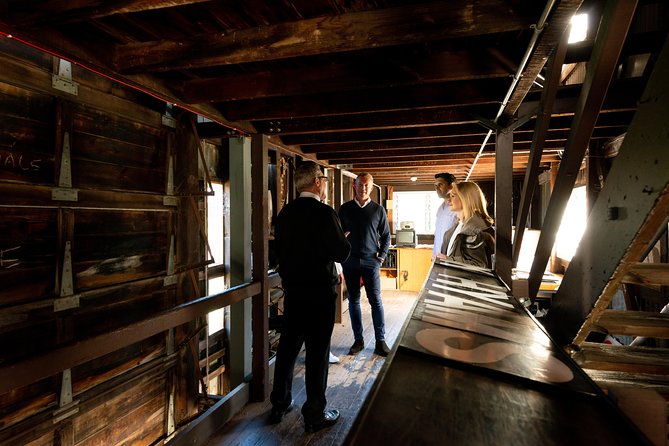
- The old scoreboard is the star attraction: You can see its outside structure and, when access allows, enter the working interior to learn how the manual system operates.
- The tour covers more than cricket: Adelaide Oval’s AFL use, music concerts, media spaces, changing rooms, and modern redevelopment all form part of the story.
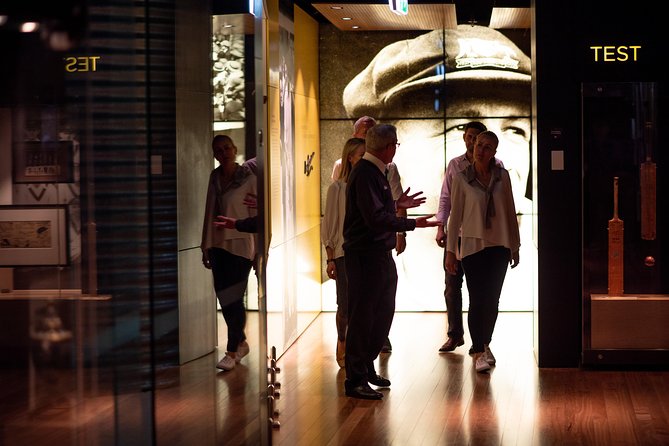
- The Bradman Museum adds real value: Cricket fans get a close look at memorabilia connected with Sir Donald Bradman.
- You walk about 2.5km: Wear enclosed, comfortable shoes. Stiletto heels are not allowed.
- Guides make a major difference: Names associated with recent tours include Brenton, Tony, Alex, Craig, Chook, Ian, Allen, Terry, and Brian.
- The price is modest for the access: At $20.80 per person, this is a reasonably priced way to see areas you cannot reach with a match ticket alone.
Why Adelaide Oval feels different from a normal stadium tour
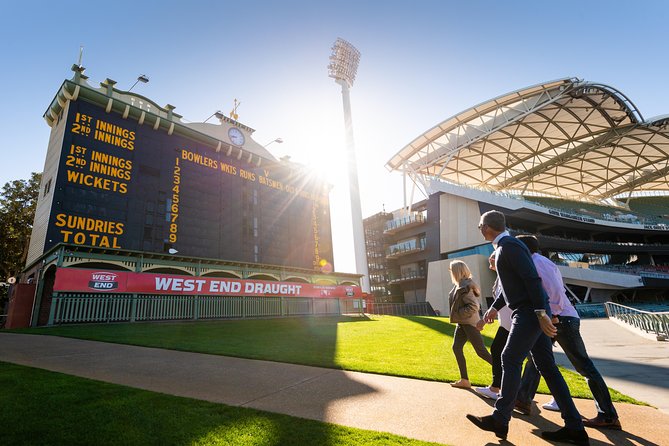
Adelaide Oval is unusual because the old ground remains visible inside the rebuilt complex. The heritage scoreboard, century-old Moreton Bay fig trees, grassy northern mound, and traditional members’ areas sit beside newer stands and event facilities.
That mixture gives the tour its character. You are not walking through a stadium that has been stripped back and rebuilt as a generic entertainment venue. You can still see the older parts that shaped Adelaide’s sporting life, while the newer sections show how the venue now handles cricket, AFL, concerts, media work, hospitality, and large crowds.
I like this approach because it gives you something to look at even if you are not a serious sports fan. The architecture matters. The old scoreboard has a practical story. The fig trees and grassy mound help explain how the oval looked before its major redevelopment. The tour is about a place, not just a building.
More Stadium Tours in Australia
- Adelaide Oval Stadium Guided Tour
★ 4.8 · 760 reviews - The Optus Stadium Tour
★ 5.0 · 524 reviews - Perth: Optus Stadium Guided Tour
★ 4.8 · 375 reviews
Starting at 1 War Memorial Drive
The meeting point is at 1 War Memorial Drive in North Adelaide. The tour lasts about 90 minutes and returns to the same place.
The group can include up to 30 people, which is small enough for a guide to lead a clear route but not necessarily intimate. The best guides use the stadium itself as a visual aid, pointing out details as you walk rather than delivering a long talk in one spot.
Past guides have included Brenton, Tony, Alex, Craig, Chook, Ian, Allen, Terry, and Brian. The strongest accounts describe guides who combined local sports knowledge with personal enthusiasm. That matters here, since the ground contains many names, rooms, teams, and traditions. A good guide helps you connect them instead of simply listing them.
You may also find the Bradman Museum available before the main walk begins. Allow a little extra time around the start if you want to look at the collection without rushing.
Entering the player race and restricted areas
One of the more atmospheric moments comes when you use the interactive player’s race to reach the ground area. The tour description presents this as a way to experience the sound and movement of a match from the players’ side, rather than from the public seats.
You do not get only a view of the field. You see the route players take, the spaces used for preparation, and the way the stadium controls movement behind the scenes. For anyone who has watched Adelaide Oval on television, this can make the familiar ground feel much larger and more complex.
Access is not guaranteed to every area on every departure. The ground may be preparing for a match, concert, or other event, and some rooms can be closed. One specific area, the Bodyline room, was not available on one tour. That is worth keeping in mind if you are booking for one particular room.
The old scoreboard and its mechanical workings

The heritage scoreboard is the highlight for many people, and I can see why. You get more than a photograph of the outside. When conditions permit, the route takes you inside the scoreboard to see how the manual system works.
This is an excellent contrast with the digital screens used in modern stadiums. The scoreboard shows the physical side of match presentation, where information had to be changed by hand and the people operating it were part of the action.
The interior is not presented as a polished modern attraction. That is part of its appeal. You are seeing an old working structure, with the cramped, practical feel that comes from a piece of sporting equipment built for another era.
The scoreboard may be especially rewarding for cricket fans, but you do not need detailed cricket knowledge to enjoy it. The guide explains what you are seeing, and the system itself is easy to understand once you are inside. I would place this near the top of your reasons to book.
Same city, a different fixture:
- Melbourne: Melbourne Cricket Ground (MCG) Guided Tour
★ 4.8 · 1,004 reviews - Melbourne: MCG and Australian Sports Museum Guided Tour
★ 4.7 · 638 reviews - Sydney Cricket Ground (SCG) and Museum Walking Tour
★ 4.9 · 616 reviews - Behind The Scenes: Sydney Cricket Ground (SCG) Guided Walking Tour
★ 5.0 · 581 reviews
The playing surface, fig trees, and northern mound
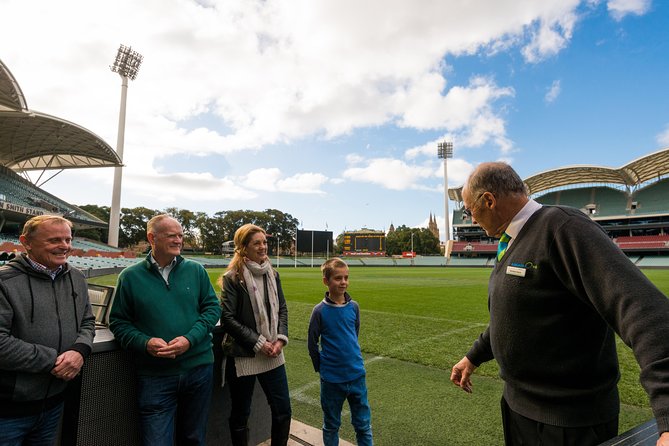
The route includes a look toward the edge of the oval and the grassed northern mound. Depending on the day’s access, you may get close to the playing surface and see the ground from a level usually reserved for teams and officials.
That change in viewpoint is important. From the stands, the oval feels like a broad stage. At ground level, you can better understand the distances involved and the amount of work required to prepare it for cricket and football.
The century-old Moreton Bay fig trees are another reminder that Adelaide Oval is older than its modern stands. They form part of the living character of the venue and help preserve the feel of the earlier ground.
I would not expect a long botanical talk. The trees are one part of a larger story about how the old oval was retained during redevelopment. Their value is visual and historical, especially when set against the newer stadium structure.
Media rooms, changing rooms, and members’ areas
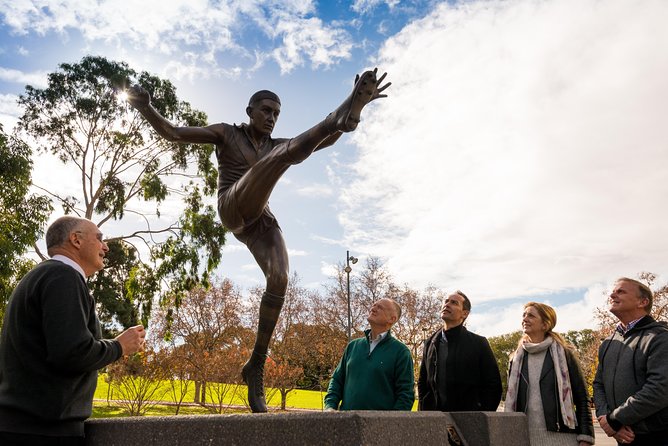
The tour can include the cricket media room, media centre, changing rooms, Sheffield Room, members’ areas, corporate lounges, and other internal spaces. Exact access may vary, but the route is designed to show how the ground operates beyond the public seating bowl.
The media areas explain how matches are turned into broadcasts and reports. The changing rooms and player route show the preparation side of sport. The members’ spaces and Sheffield Room give you a look at the older social traditions connected with the oval.
You may also see modern hospitality areas, including the Bespoke bar and spaces connected with the Adelaide Oval Hotel. These sections help explain how the venue now works outside match hours. It is not only a cricket ground. It is also used for football, concerts, dining, accommodation, and corporate events.
This mix is useful if you are travelling with someone who is less interested in cricket. The sporting history is strong, but the tour also covers building design, event management, media, and public entertainment.
Cricket, AFL, music, and local memory
Adelaide Oval has strong cricket associations, but the tour does not stop there. Guides explain its use for AFL and point out how the stadium supports different sports.
Some cricket fans have found the AFL material a little heavy. That is a fair warning if your only reason for booking is cricket. On the other hand, the football content gives a fuller picture of the modern venue and may be welcome if your interests are broader.
The tour also covers major musical acts and sold-out concerts held at the oval. This adds a different layer to the building. The same ground that hosts a cricket match can become a concert venue, with different demands on the field, stands, sound, and crowd movement.
I like these connections because they show how a public venue changes with its audience. You are learning about the oval as a place where South Australians gather, not only as a site for one sport.
The Bradman Museum and cricket memorabilia

The Bradman Museum sits within the oval complex and is included as part of the experience. It focuses on Sir Donald Bradman and presents cricket memorabilia connected with his career and legacy.
This section works best as a compact museum visit rather than a full replacement for the larger Bradman Museum in Bowral, New South Wales. It gives you a focused look at Bradman within the Adelaide Oval setting, and it helps place South Australian cricket in a wider national story.
If you are a cricket fan, allow time to look carefully at the displays. The museum adds context to the scoreboard, media rooms, changing areas, and playing surface you see during the walk.
For a mixed group, this is also a manageable stop. You can appreciate the objects and photographs without needing to know every match or player. The tour guide can explain the local connection and answer questions along the way.
How much value do you get for $20.80?
At $20.80 per person, the tour offers good value if you want access rather than a simple stadium view. You are paying for a guide, a behind-the-scenes route, the old scoreboard, the Bradman Museum, and a walk through parts of the complex that a regular visitor may not see.
The price is particularly fair for cricket fans who would otherwise only experience the oval from a public seat. You get the chance to stand near the ground, enter the scoreboard when available, and see the spaces used by players and media.
The value is less clear if you dislike sports history or have limited walking tolerance. Much of the tour depends on stories about cricket, AFL, local players, stadium design, and event use. It is not a short photo stop.
The average rating is 4.7 from 208 reviews, with 95 percent recommending the experience. That points to a reliable product overall, though the guide and access on the day can shape your experience. One poor account focused on a guide who spoke too much about himself and made an inappropriate personal comment. That appears to be an exception, but it is worth noting because guide quality matters on a walking tour.
Walking, clothing, weather, and group size
You cover about 2.5km, often through a large stadium complex. Wear enclosed shoes with good comfort. Stiletto heels are not permitted, and practical footwear will make the walk easier.
Most people can take part, but children must be accompanied by an adult. The tour is near public transportation, which makes the North Adelaide meeting point fairly practical for a day in the city.
The tour can run in wet or windy weather, so bring suitable outerwear. One account describes an enjoyable visit on a cold, rainy Adelaide day, with the guide’s humor helping keep the group engaged. Still, the experience is better when you are prepared for outdoor sections and exposed parts of the ground.
A maximum of 30 people is not a tiny group. If clear audio is important to you, stay close to the guide. One person found the guide hard to hear without a microphone. That is a small issue, but large open spaces can swallow voices.
Who should book this Adelaide Oval tour?
I would book it if you enjoy cricket, AFL, stadium design, or local history. It is particularly good for people who have watched Adelaide Oval on television and want to understand the spaces behind the broadcast.
It also suits families with older children, provided everyone can manage the walking and the children stay with an adult. The route offers enough variety to hold attention: a manual scoreboard, player areas, media rooms, memorabilia, trees, stands, and the ground itself.
Music fans may also enjoy the concert history, though it is not the central focus. If you want a purely architectural tour, the sporting content may be more than you expect.
I would think twice if you want guaranteed access to one specific room or if you cannot walk 2.5km. Stadium operations can change the route, and not every space is open on every visit.
Should you book it?
Yes, if the old scoreboard and behind-the-scenes access appeal to you. At $20.80, this is a practical way to see Adelaide Oval from the player, media, and operations side, not just from a spectator seat.
The best fit is a sports fan who appreciates stories and can walk at an easy pace. Book with realistic expectations: access may change, the tour includes AFL as well as cricket, and the guide can shape the tone. If you choose a day with good access and get a guide such as Alex, Tony, Brenton, Craig, or another enthusiastic local volunteer, the 90 minutes can feel like a very full introduction to one of Adelaide’s most important sporting places.
FAQ
How long does the Adelaide Oval Stadium Tour last?
The tour lasts approximately 1 hour and 30 minutes.
How much does the Adelaide Oval Stadium Tour cost?
The listed price is $20.80 per person.
Where does the tour start?
The tour starts at 1 War Memorial Drive, North Adelaide, South Australia 5006.
Where does the tour finish?
The activity ends back at the meeting point.
Is the Bradman Museum included?
Yes. The tour includes a visit to the Bradman Museum inside the Adelaide Oval complex, where you can see cricket memorabilia.
Can I go inside the old Adelaide Oval scoreboard?
The tour includes access to the old scoreboard when conditions permit. The route can take you inside to see how the manual system operates.
How far do I walk during the tour?
The tour covers about 2.5km of walking.
What should I wear?
Enclosed footwear is required. Stiletto heels are not permitted.
How many people can join the tour?
The tour has a maximum group size of 30 people.
Are children allowed on the tour?
Yes, but children must be accompanied by an adult.
Just added for fans in Australia
- Allianz Stadium Guided Walking Tour★ 4.0 · 9 reviews
- Optus Stadium VERTIGO by Twilight★ 5.0 · 15 reviews
- Optus Stadium HALO by Twilight★ 5.0 · 18 reviews
- Melbourne Sports Precinct Walk with Behind-the-Scenes MCG Tour★ 5.0 · 3 reviews
- Aussie Football MCG Matchday Experience with a Local★ 5.0 · 8 reviews
- Melbourne Sports Experience + Free Australian Sports Museum entry★ 5.0 · 5 reviews
- Sydney: Allianz Stadium Guided Tour★ 5.0 · 2 reviews
- Perth: Optus Stadium Rooftop Vertigo Experience★ 4.9 · 27 reviews
Stadium Tours, compared.

Liverpool Football Club Museum and Stadium Tour
Read our review →


Emirates Stadium Entry Ticket and Audio Guide
Read our review →
Chelsea Football Club Stadium and Museum Tour
Read our review →

Browse the lists this tour appears in