

Review · FOOTBALL MATCH TICKETS IN THE UK
Glasgow Football Tour: Three Hampdens Walking Tour
The Three Hampden Parks tell a bigger story than a stadium tour. In about two hours, you follow football from Queen’s Park Recreation Ground to the first Hampden mural, abandoned Cathkin Park, and today’s Hampden Park. I like the clear sense of place, and I like that the tour shows football’s failures as well as its triumphs. The first Hampden site is not polished or grand. That is part of its appeal.
The main drawback is that the walking distance is short, so you spend plenty of time standing and listening. Bring warm clothing, even if the forecast looks mild. The tour costs $29 per person, which is good value if you care about football history, but less so if you want a fast-paced stadium visit.
Key points at a glance
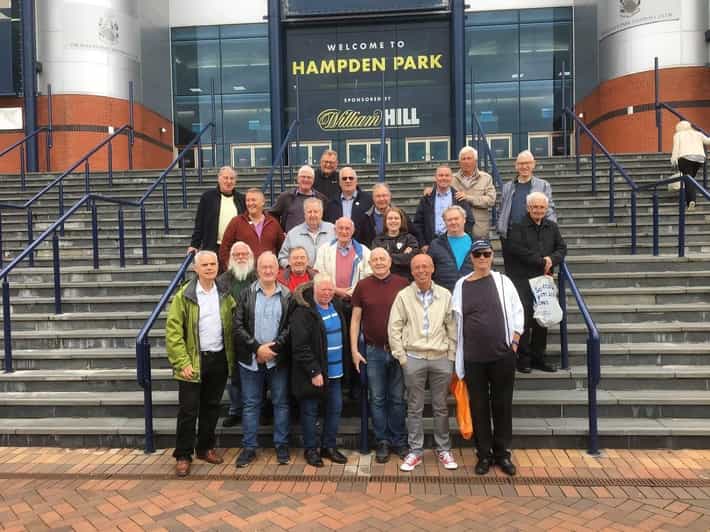
- Three grounds in one short route: Follow the development from the first Hampden Park to the modern national stadium.
- The 1882 mural: See the first Hampden mural marking Scotland’s 5 to 1 win over England on March 11, 1882.
- Original terracing at Cathkin Park: Look across an abandoned football ground where the old terraces remain.
- A local football story: Learn how Scottish passing and running football helped shape the modern game.
- Roughly one mile of walking: The route is manageable, but much of the two hours involves standing in place.
- A practical match-day pairing: You can arrange to attend a Queen’s Park match after the tour, if one fits your plans.
Why the Three Hampdens matter
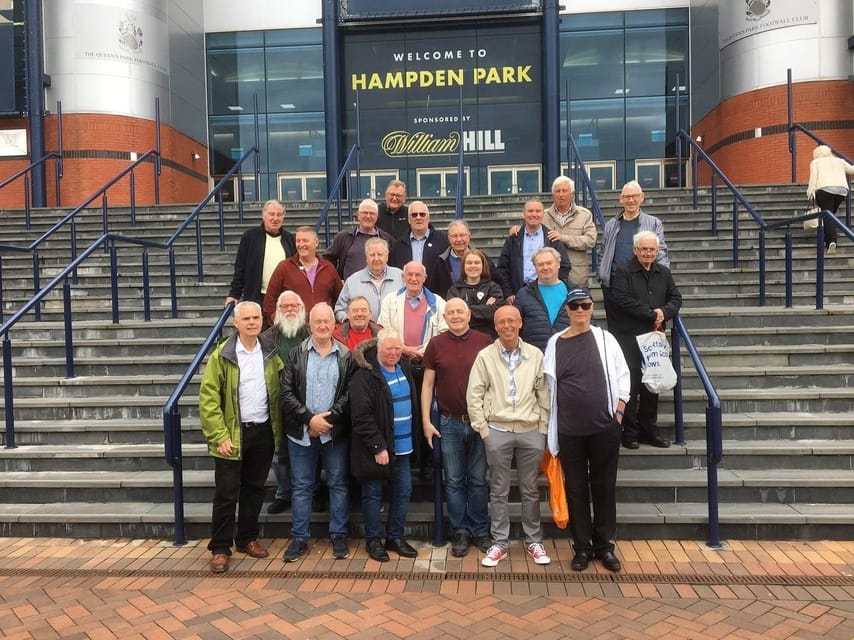
Most football tours focus on a famous club, a trophy room, or the inside of a working stadium. This one takes a wider view. It follows the grounds where the game developed, changed, and sometimes faded away.
The tour begins at Queen’s Park Recreation Ground. From there, your guide connects the recreation ground with the three Hampden sites and the wider story of Scottish football. The point is not simply to look at old buildings. You are shown how the shape and use of football grounds changed as the sport moved from an early local pastime into a world game.
The tour presents Scotland as a major force in the development of passing and running football. That claim is central to the experience. You hear about the way this style of play developed over centuries, then spread far beyond Glasgow. The tour also places modern football in a global setting, noting that the game is now enjoyed by more than 3.5 billion people around the world.
I find this approach more useful than a simple list of dates. A ground becomes meaningful when you understand what happened there and why it mattered. Here, each stop helps explain a different stage in football’s growth.
More Football Match Tickets in the UK
- Liverpool: Liverpool Football Club Museum and Stadium Tour
★ 4.8 · 10,764 reviews - London: Chelsea Football Club Stadium and Museum Tour
★ 4.8 · 4,576 reviews - Chelsea FC Stadium Tours and Museum
★ 5.0 · 1,908 reviews
Meeting at Queen’s Park Recreation Ground
Your meeting point is the skatepark in Queen’s Park Recreation Ground, across from Hotel Number 10. This gives you a clear outdoor starting place, but you should arrive with enough time to locate the skatepark before the tour begins.
The first part of the visit sets the scene. You are in the area linked to Queen’s Park, one of the key names in the story of the early game. The tour then uses the nearby sites to show how football grounds developed in relation to the sport itself.
This is a walking tour rather than a conventional stadium entry experience. You are not being led through changing rooms, hospitality areas, or a museum collection. Instead, the ground beneath your feet is the main exhibit. That makes the tour especially useful for people who enjoy seeing how history survives in ordinary streets, open spaces, murals, and old structures.
The route is about a mile in total, according to the practical experience of the walk. That is not strenuous, but it does mean the tour is built around explanation rather than exercise. Wear comfortable shoes, but put more thought into your coat than your walking gear.
The first Hampden and the 1882 mural
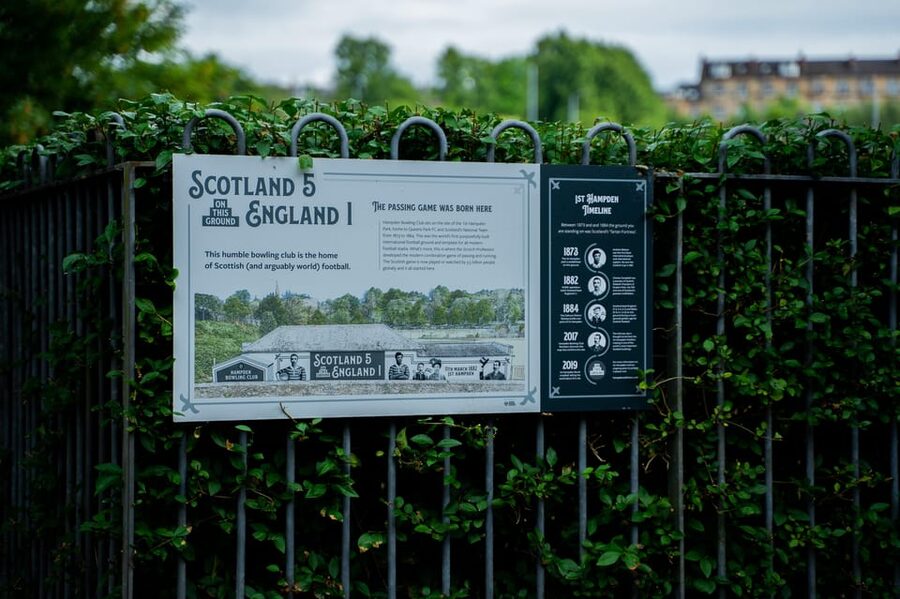
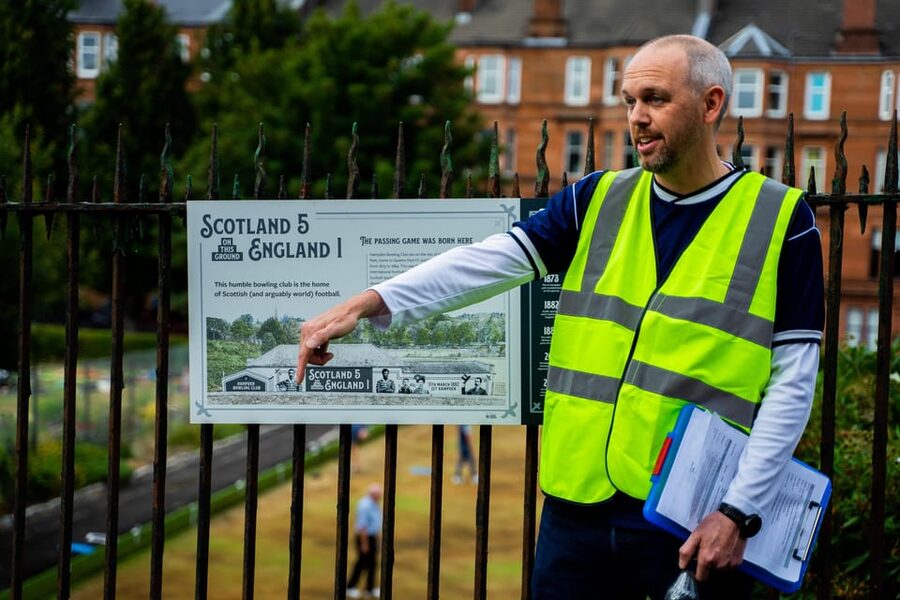
The first Hampden Park is connected with Hampden Bowling Club. This stop marks the site of the first purpose-built international football stadium, making it one of the most important points on the route.
The highlight here is the 1st Hampden mural, which recalls Scotland’s 5 to 1 victory over England on March 11, 1882. It gives you a strong visual moment and an easy photograph. If you enjoy taking pictures with a clear football connection, this is likely to be one of the best stops for an Instagram image.
The mural also helps turn an abstract story into something you can see. Early international football can feel remote when it is described only through dates and results. A mural, placed in the setting connected with the match, gives the story a physical anchor.
Your guide explains why the first Hampden mattered, rather than treating it as a quick photo stop. You learn how the ground fitted into the early international game and how football grounds began setting patterns that later stadiums would follow.
Do not expect the first Hampden to look like a modern sporting venue. The interest comes from its place in the story, not from a grand surviving structure. If you want polished architecture and a large interior, modern Hampden Park offers that more directly. If you want origins, this is the more rewarding stop.
Cathkin Park and the abandoned terraces
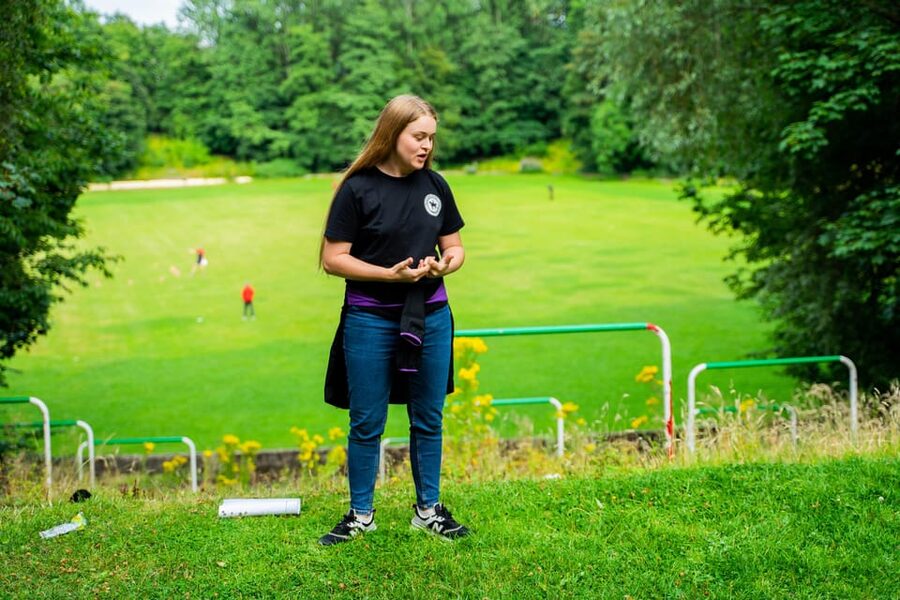
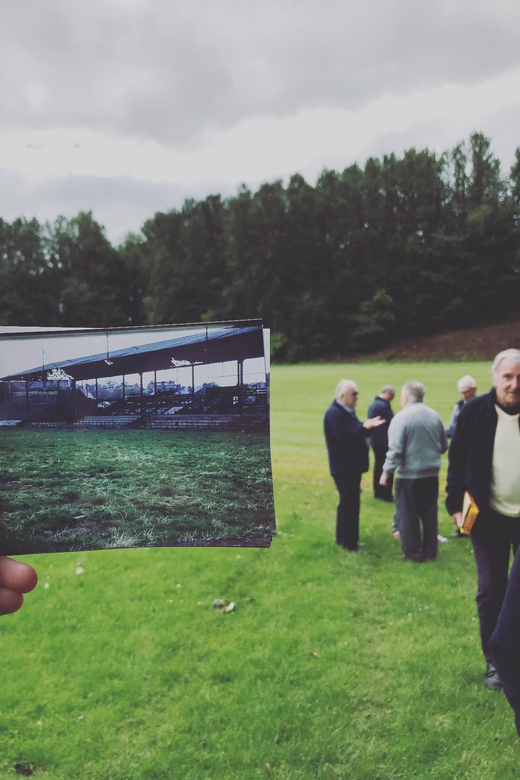
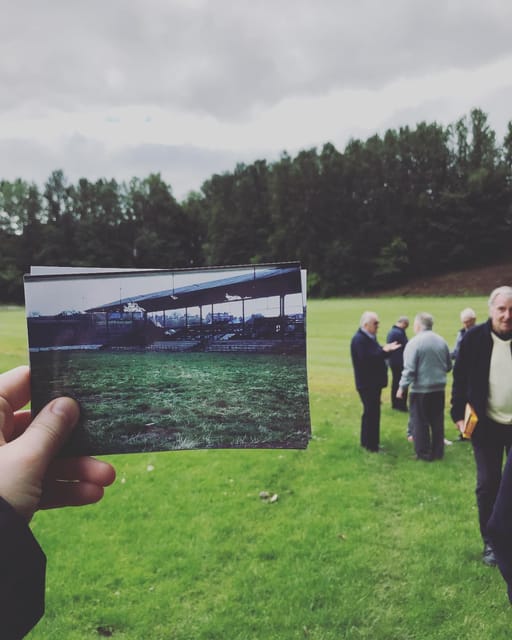
Cathkin Park, the second Hampden Park, gives the tour its most atmospheric stop. Here you see an abandoned football ground with original terracing still in place.
This is where the tour moves beyond celebration. Football grounds can become symbols of ambition, community, and success, but they can also be left behind. The old terraces make that point without much explanation. You can see the remains of a place designed for crowds, now disconnected from the match-day life it once supported.
For me, this is the most unusual part of the route. Modern stadium tours tend to present football as a polished product. Cathkin Park shows the other side: the fading ground, the lost routine, and the physical remains of a former sporting world.
The original terracing is also valuable because it helps you picture how people watched football before every stadium became a large, engineered venue. The shape of the ground gives you a better sense of the relationship between spectators and the pitch than a photograph alone.
This stop may not suit you if you expect easy access to a fully maintained attraction. The site is described as an abandoned stadium, so its appeal lies in atmosphere and historical meaning rather than comfort or presentation. Listen closely to your guide and take care around the area.
Same city, a different fixture:
- London: Emirates Stadium Entry Ticket and Audio Guide
★ 4.7 · 5,513 reviews - The Manchester City Stadium Tour
★ 5.0 · 4,176 reviews - London: Wembley Stadium Guided Tour
★ 4.7 · 3,629 reviews - Glasgow: Celtic Park Stadium Tour
★ 4.9 · 3,336 reviews
Modern Hampden Park and the Rose Reilly mural
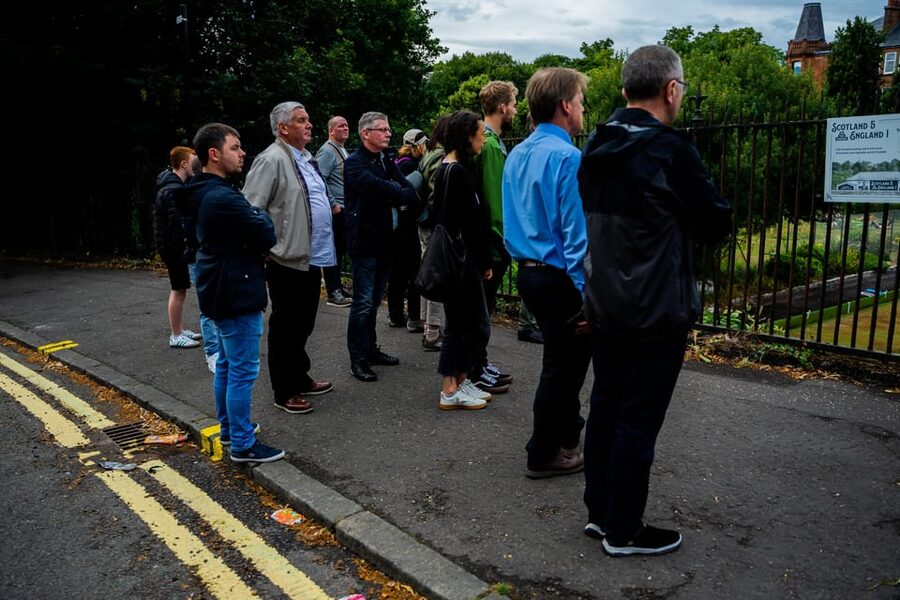
The final stadium on the route is the third Hampden, today’s Hampden Park. This is the most recognisable name on the tour and the point where the story reaches the modern national game.
The contrast with Cathkin Park is the whole point. You move from a ground with original, abandoned terraces to one of the world’s most iconic football stadiums. The two sites show how much the game has changed, while also linking modern football to its earlier Glasgow roots.
You also see the Rose Reilly mural. Including this mural broadens the story beyond the familiar male international game. It gives the tour another important Scottish football figure and adds a different perspective to the final section.
The tour does not promise an interior stadium visit, so you should book it for the outside story and the wider setting rather than expecting access to the stands, dressing rooms, or pitch. The value is in understanding why Hampden matters and how it connects with the earlier grounds.
If you have already visited Hampden Park for a match, this walking tour can add context that a game alone cannot provide. You see the stadium not just as a venue, but as the latest stage in a long local story.
What the guide adds
The guide is described as passionate and well informed, and the strongest part of the experience is the spoken history. You are not simply pointed toward a mural or an old terrace and left to make sense of it yourself.
The tour covers football’s birth, modernisation, success, and failures. That range matters. A weaker tour might focus only on famous wins and national pride. Here, the abandoned second Hampden gives the guide a chance to explain decline as well as achievement.
You should expect stories that are revolutionary and sometimes heartbreaking, rather than a dry architectural walk. The quality of the tour will depend heavily on the guide’s delivery, but the subject gives the guide excellent material to work with.
The available feedback praises the guides’ remarkable command of Scotland’s role in the development of football. That is the area where this tour earns its price. You are paying for interpretation, not for admission to a large attraction.
The pace, distance, and clothing advice
The total duration is two hours, but the walking part is probably no more than a mile. This is good news if you want a manageable outing or have limited mobility. The activity is listed as wheelchair accessible, though the practical character of an abandoned football ground means you should still consider your own comfort and ask the provider if you need route-specific details.
The short distance can also surprise you. You are not walking continuously for two hours. Much of the time is spent standing while the guide explains the sites and their place in football history.
Dress warmly. This advice matters more here than it would on a typical indoor museum visit. You may be outside for long stretches with little chance to warm up, and the tour works best when you can concentrate on the story rather than on the cold.
The route is in English and uses a live guide. If you do not follow spoken English comfortably, this may not be the right choice, since the guide’s explanations carry much of the experience.
Is $29 good value?
At $29 per person, the tour is fairly priced for a specialist two-hour experience. You are not paying for a ticket to a major attraction with extensive facilities. You are paying for access to several meaningful locations and for a guide who can connect them into one story.
I would consider it good value for football supporters, Scottish sports fans, and anyone interested in how ordinary places shaped a global sport. The price is harder to justify if you are only looking for a quick photo at Hampden Park, since the route is not a standard stadium tour.
The strongest value comes from the combination of sites. The first Hampden mural gives you a clear early landmark. Cathkin Park provides the unusual abandoned-ground experience. Modern Hampden supplies the famous name and the link to the present day.
You also get a more complete picture than you would from visiting the current stadium alone. The tour explains why the area matters and shows that football history is not contained in one building.
Who should take this tour?
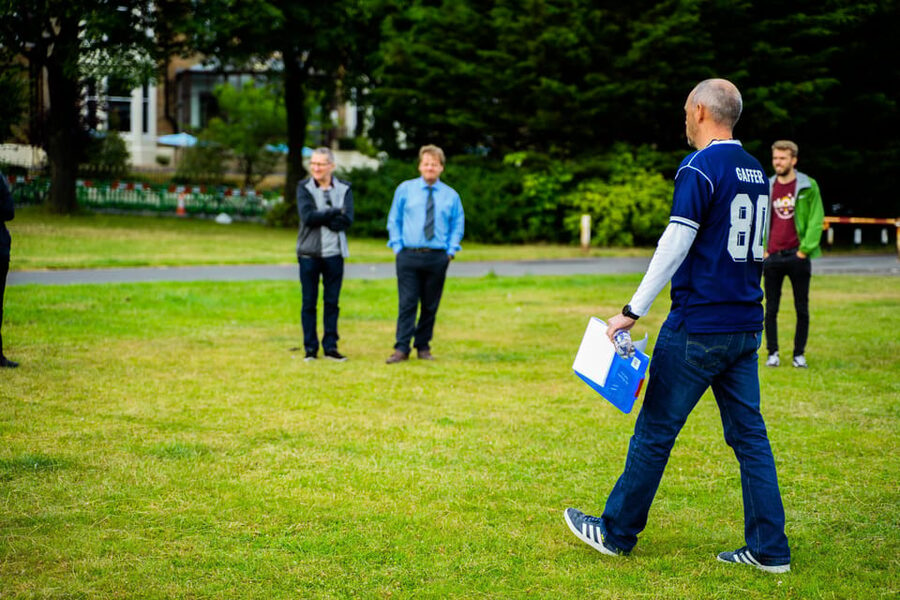
You should book this if you enjoy football beyond the final score. It suits people who want to understand how grounds, crowds, tactics, and local identity shaped the game.
It is particularly useful for:
- Football supporters visiting Glasgow
- People interested in Scottish football and international matches
- Visitors who prefer local stories to standard city sightseeing
- Anyone who enjoys abandoned places and surviving historic structures
- Families or groups who want a short, focused outdoor activity
- People pairing the walk with a Queen’s Park match
You may want to skip it if you need a highly active walk, a large museum collection, or a full tour inside Hampden Park. The route is short and the presentation is talk-led. Its success depends on your interest in the subject.
The possibility of attending a Queen’s Park game after the tour is a smart pairing. The walk gives you historical context, then the match lets you see football as a living part of the local area. The match is not included, so you would need to arrange that separately.
Practical details before you book
The meeting point is the skatepark in Queen’s Park Recreation Ground, across from Hotel Number 10. The activity lasts two hours and is offered in English with a live guide.
You can cancel up to 24 hours before the start for a full refund, and you can reserve now while paying later. These options are useful if your Glasgow plans are still changing.
The tour is listed as wheelchair accessible. Since one stop is an abandoned ground, you should confirm any personal access needs with Glasgow Football Tour before booking if you require detailed information about surfaces or the exact route.
The overall rating is five out of five from two verified bookings. That is encouraging, especially because the praise focuses on the guide’s football knowledge and the quality of the content. The sample is small, so I would treat the rating as a helpful signal rather than the only reason to book.
Should you book the Three Hampdens Walking Tour?
Book it if you want a thoughtful football history walk rather than a conventional stadium visit. The first Hampden mural, Cathkin Park’s original terracing, and modern Hampden Park give you three distinct views of the game.
I especially recommend it to anyone who can spare two hours and is willing to stand outside while listening. Wear warm clothes, expect only about a mile of walking, and consider adding a Queen’s Park match if the timing works.
Skip it if your main goal is to enter Hampden Park or see a fast sequence of attractions. For the right audience, though, $29 buys something more useful than a photo stop: a clear explanation of why Glasgow helped shape the football played around the world.
FAQ
How long does the Three Hampdens Walking Tour last?
The tour lasts two hours.
How far do you walk?
The walking section is roughly one mile. Much of the tour involves standing while the guide explains the sites.
Where does the tour meet?
The meeting point is at the skatepark in Queen’s Park Recreation Ground, across from Hotel Number 10.
Which football grounds are included?
The tour visits Queen’s Park Recreation Ground, the first Hampden site at Hampden Bowling Club, Cathkin Park as the second Hampden, and modern Hampden Park as the third.
Can I see an abandoned football ground?
Yes. The tour visits Cathkin Park, an abandoned football ground with original terracing.
Is the tour offered in English?
Yes. The tour has a live English-speaking guide.
Is the tour wheelchair accessible?
Yes, the activity is listed as wheelchair accessible.
How much does the tour cost?
The price is $29 per person.
Can I cancel the booking?
Yes. You can cancel up to 24 hours in advance for a full refund. You can also reserve now and pay later.
Just added for fans in the UK
- Windsor: LEGOLAND Adventure Golf★ 4.6 · 10 reviews
- LEGOLAND® Adventure Golf★ 4.5 · 9 reviews
- Indoor Illuminated 9 Hole Golf in Matlock Bath Peak District★ 4.5 · 23 reviews
- Golf, Whisky and Fish & Chips (A “VERY” Scottish Experience)★ 4.5 · 12 reviews
- Manchester United Match at Old Trafford★ 4.5 · 38 reviews
- Manchester United Soccer Match VIP Ticket 2024/25★ 4.5 · 2 reviews
- Manchester: Football Experience With A Local Host★ 3.5 · 6 reviews
- Windsor, Bath, Stonehenge and Salisbury Guided Tour on Boxing Day★ 4.5 · 10 reviews
Football Match Tickets in the UK, compared.
Liverpool Football Club Museum and Stadium Tour
Read our review →
Chelsea Football Club Stadium and Museum Tour
Read our review →


Craven Cottage Guided Tour at Fulham Football Club
Read our review →

Browse the lists this tour appears in