
Review · STADIUM TOURS IN SPAIN
Sevilla: Ramón Sánchez Pizjuán Stadium Entry Ticket
The best part of this visit is the chance to walk the same route Sevilla FC players use, from the locker room through the tunnel and out toward the pitch. The stadium’s 1958 architecture, its 1982 World Cup semifinal connection, and the club’s long story give the visit more weight than a simple look around a football ground.
I like the self-paced audio guide, which lets you linger over trophies and photos instead of being hurried along. I also like the mix of football and theater: the VIP box, mock press conference, player tunnel, fan noise, and anthem give even a casual supporter a feel for match day. The drawback is that this is not a live guided tour, and visitors using wheelchairs cannot take part.
Key points at a glance
- Walk through the player tunnel: Follow the route from the Sevilla FC locker room toward the pitch.
- Hear the stadium roar: Audio effects recreate fan chants and the club anthem as you approach the field.
- Trace the club from 1890: The museum covers Sevilla FC’s origins, players, coaches, presidents, and major wins.
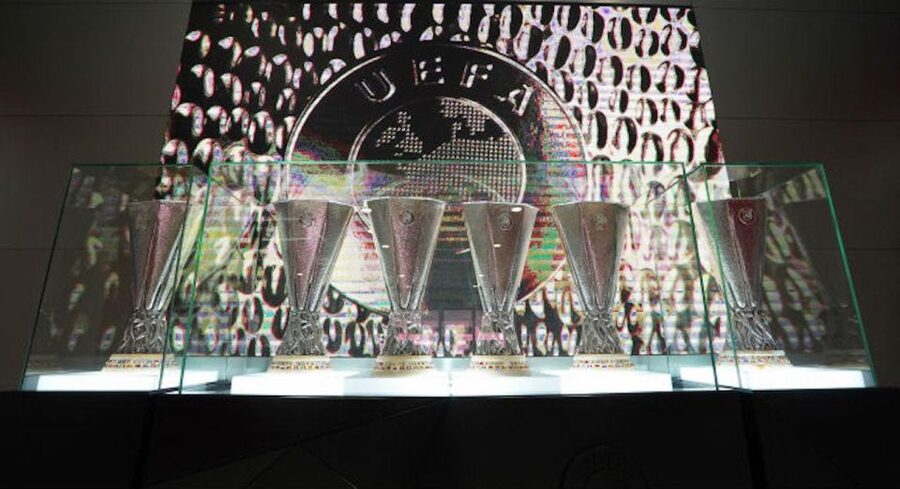
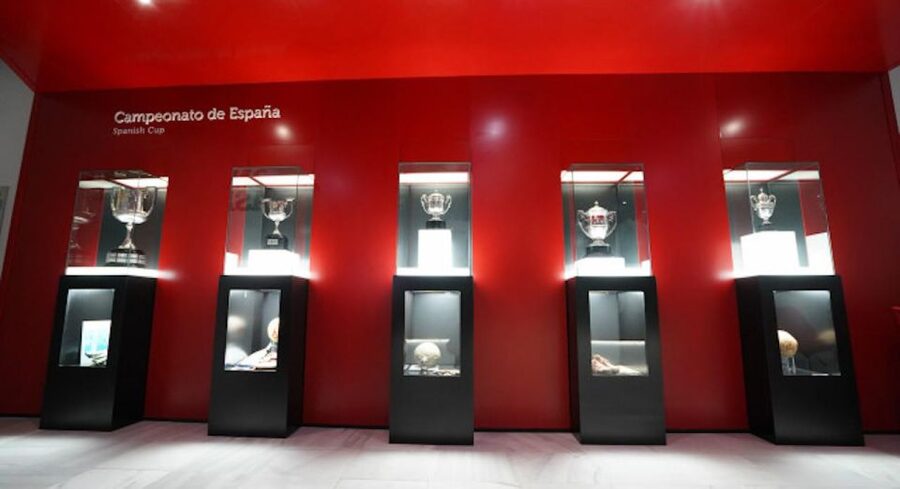
- See the trophy collection: Displays include La Liga, five Copa del Rey titles, and Spain and European Supercopa trophies.
- Tour at your own speed: The audio app works in Spanish, English, Arabic, Chinese, Japanese, German, Italian, Portuguese, and French.
- Plan for a phone-based visit: Bring a charged smartphone and headphones, since no live tour guide is included.
Starting with Sevilla FC’s story since 1890
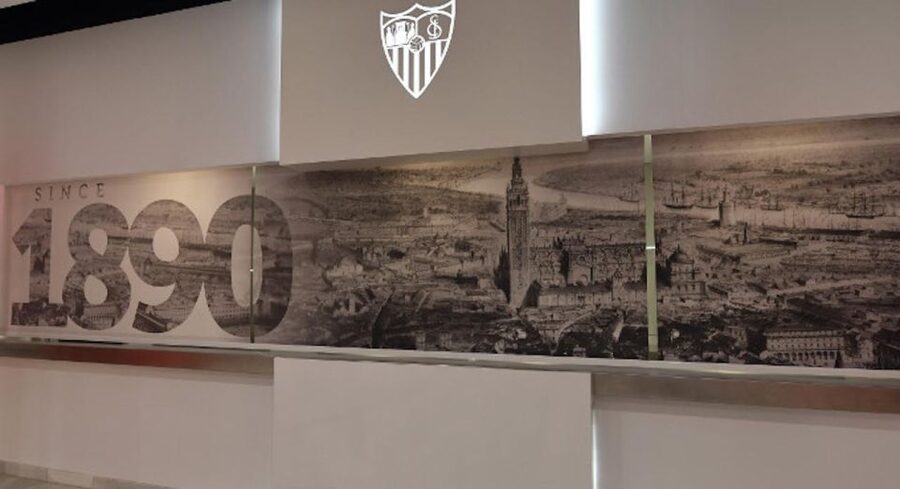
Your visit begins in the stadium museum, where the audio guide sets out the club’s story from its beginnings in 1890. That opening matters because it gives the rest of the tour a clear frame. You are not simply looking at a modern football venue. You are following the growth of one of Seville’s best-known sporting institutions.
The museum also covers the first documented football match in Spain. That is a useful detail for anyone who thinks football arrived in Spain only as a modern professional sport. The early story connects Sevilla FC with the wider development of the game in the country.
The audio guide is the main source of explanation throughout the visit. It is available in nine languages, including English, Spanish, French, German, Italian, Portuguese, Arabic, Chinese, and Japanese. You will not have a guide walking beside you, so the experience feels more like an audio museum visit than a scheduled tour with a group.
That format has a clear advantage. You can take your time with an old photograph, move quickly past a display that interests you less, or pause before a trophy. It also means you should arrive with your smartphone charged and headphones ready. The entry ticket and audio guide are included, but your own device is needed.
More Stadium Tours in Spain
- Madrid: Tour Bernabéu Entry Ticket
★ 4.5 · 21,573 reviews - Madrid: Atlético de Madrid Stadium Entry
★ 4.7 · 2,022 reviews - Bilbao: San Mamés Museum and Stadium Tour
★ 4.8 · 1,464 reviews
Jerseys, photographs, and the silverware
The museum uses jerseys, photographs, and trophies to make the club’s story tangible. A shirt can tell you about a particular player or era, while a photograph helps you picture the people behind the results. The displays cover players, coaches, and presidents, so the focus is not limited to match scores.
The trophy section is the natural center of attention. You will see reminders of Sevilla FC’s major successes, including La Liga, five Copa del Rey titles, the Supercopa de España, and the Supercopa de Europa. Even if you do not know the club’s full record, the collection gives you a quick sense of its place in Spanish and European football.
I would allow more time here if you are a committed football fan. You may want to read every caption and listen to each audio segment. If you are visiting with someone who has little interest in football, the museum still offers enough visual material to keep the visit moving, but the experience will be strongest for anyone who enjoys sports history, uniforms, famous moments, and club culture.
The displays also help explain why the stadium matters to local supporters. Football clubs are not just teams that play in a particular building. They collect memories there. The jerseys and old images show how those memories pass from one generation to the next.
The 1958 stadium and its World Cup connection
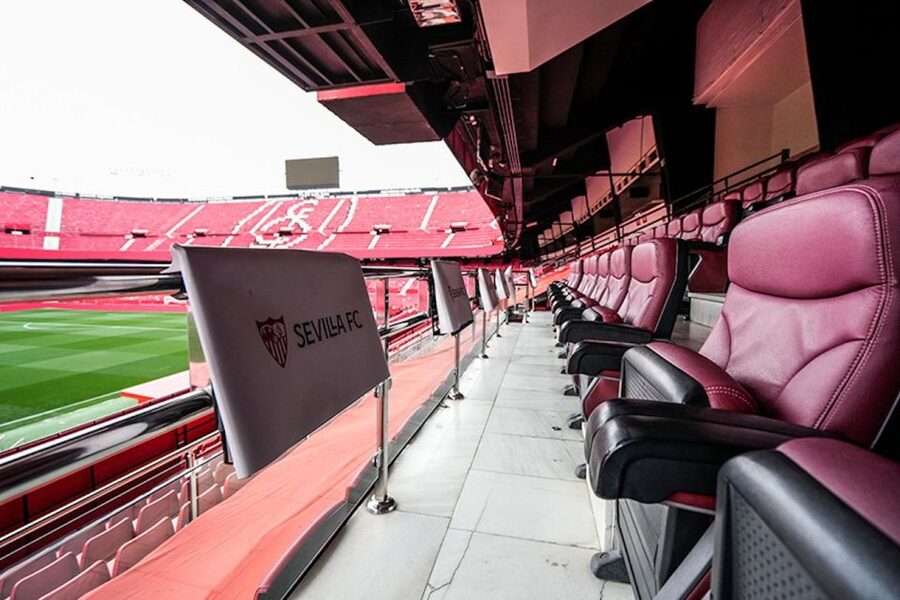
The Ramón Sánchez-Pizjuán Stadium was built in 1958. Its age gives the visit a different feel from a tour of a brand-new arena. You are entering a venue with decades of matches behind it, including one of the most important games in its story, the 1982 World Cup semifinal.
That World Cup connection adds interest even if Sevilla FC is not your team. Major international matches help place the stadium in the wider history of football in Spain. As you move through the building, the venue feels connected not only to weekly league fixtures but also to a global sporting event.
The tour does not promise access to every part of the stadium, and the available information does not give a detailed architectural route. What it does provide is access to several spaces that normally feel private or restricted. The value comes from moving through those areas in sequence, rather than only looking down from the seats.
The audio guide also helps supply atmosphere. At one point, you hear enthusiastic supporters singing the club anthem. That sound is a simple effect, but it changes the mood. A quiet stadium can feel like an empty shell. Add the voices of supporters and you can picture the place on match day.
From the VIP box to the press room
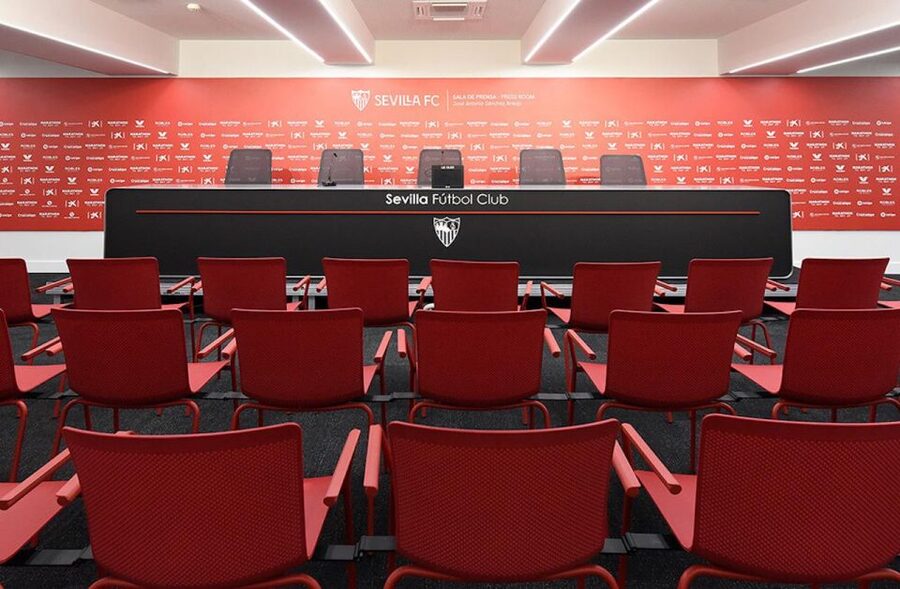
The VIP area offers a different view of the club. Here, the focus shifts from the players to the people who watch, manage, and represent the team. You can imagine what it would be like to sit in the president’s place, looking over the stadium and considering the business and responsibility behind a major football club.
This part of the tour is brief but useful because it shows that a stadium has several audiences. Players use it as a workplace. Supporters treat it as a gathering place. Club officials and media use it as a place for decisions, announcements, and public appearances.
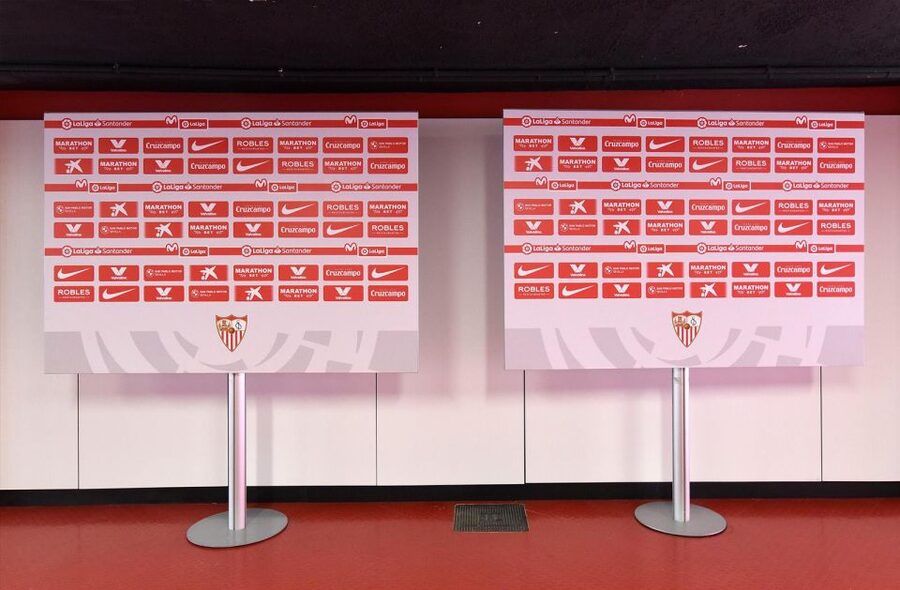
The media room adds a playful element. You can take part in a press conference setup and answer questions as if you were a player. It is not a full performance or a staffed workshop, but it gives you a chance to see how the club presents itself after a match.
For families and groups, this can be one of the more entertaining stops. It breaks up the museum displays and gives you something active to do. The experience is still self-guided, so there is no presenter prompting you or leading a group response.
Same city, a different fixture:
- Barcelona: FC Barcelona Museum “Barça Immersive Tour” Ticket
★ 4.4 · 10,944 reviews - Madrid: Guided Tour of Bernabéu Stadium
★ 4.1 · 1,445 reviews - Camp Nou Immersive Tour F.C.Barcelona Museum: Open Date Ticket
★ 4.0 · 1,307 reviews - Madrid: Bernabéu Stadium Guided Tour With Megafan Upgrade
★ 4.6 · 873 reviews
Entering the player locker room
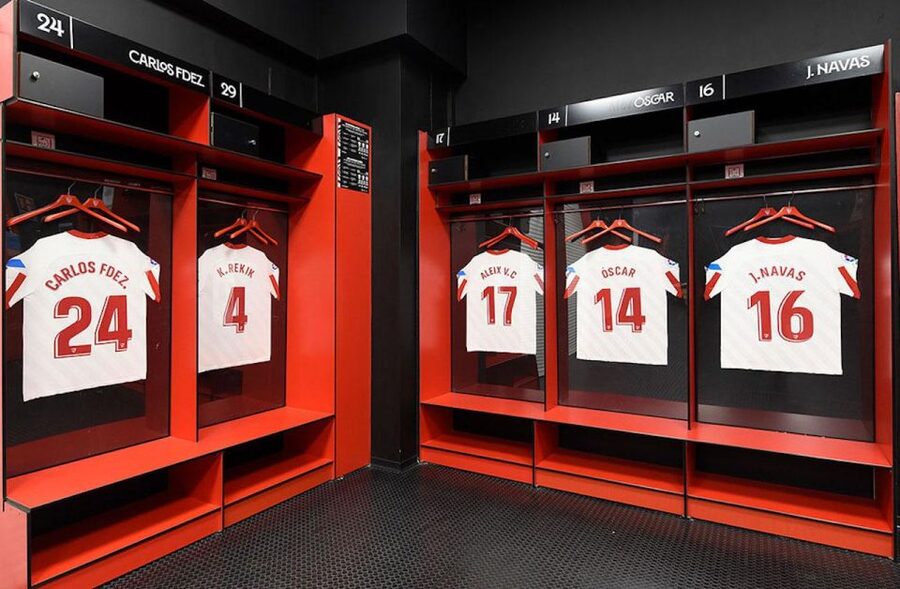
The locker room is one of the most practical parts of the route. You can see where Sevilla FC players hang their jerseys and prepare before a match. That access makes the visit feel closer to the working side of football, rather than only its public display.
Do not expect a long explanation from a live guide. Instead, the audio content and the room itself provide the setting. The power of this stop comes from imagining the minutes before a major match: players getting ready, staff moving through their routines, and the noise outside building as kickoff approaches.
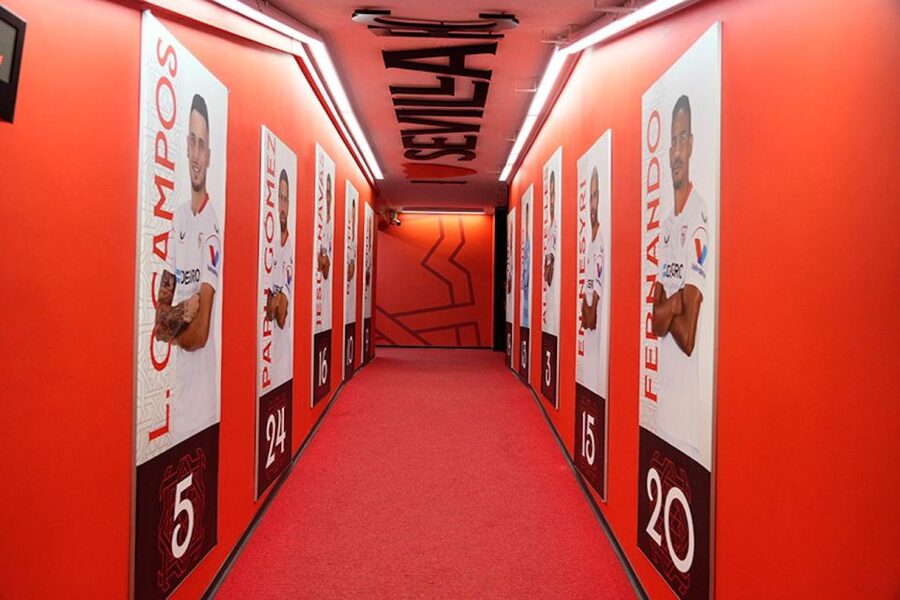
You then follow the route toward the pitch through the players’ tunnel. This is the most effective part of the visit for many people because it gives you the same basic visual sequence as the team. The experience ends with the sense of moving from a private preparation area into a public arena.
The audio adds fan noise and the club anthem to this section. That combination helps you picture the change in atmosphere from the quiet locker room to a stadium filled with sound. You cannot recreate an actual match, of course, but the presentation gives the route an emotional lift.
Reaching the pitch and looking into the bowl
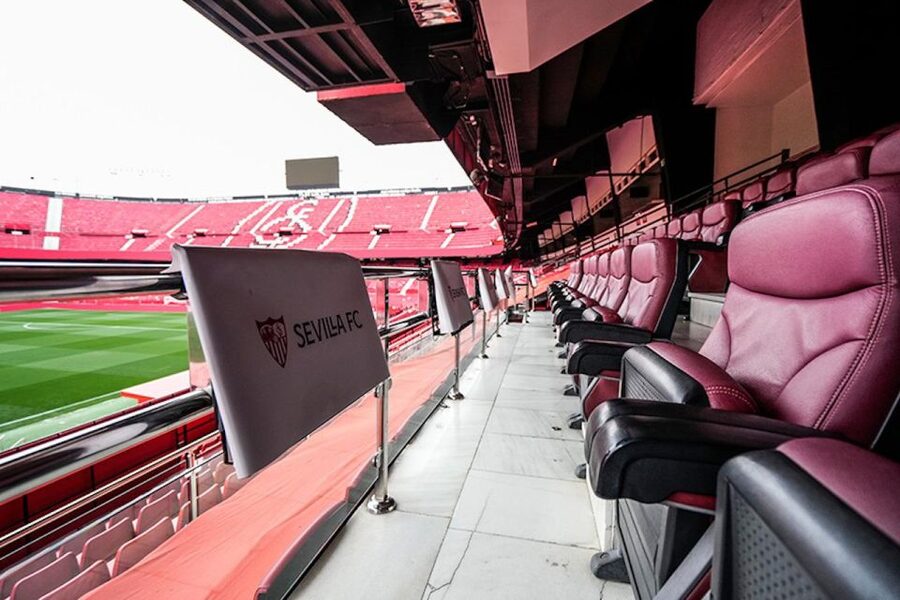
Stepping toward the pitch gives you the stadium’s scale from a different angle. A football ground can look familiar from television or from a seat in the stands, but the player route changes your perspective. You see the field as the destination of the walk, not simply as a rectangle below you.
The stadium’s size is part of the appeal. The tour gives you time to pause and take in the bowl, rather than rushing through a single photo stop. Bring your phone if you want personal pictures, but remember that the tour also offers an optional photo shoot for an additional €10, according to the activity information.
The pitch access is a highlight for football fans, but it also works for people with only a passing interest. You get a clear sense of the ritual around professional football: jersey, locker room, tunnel, anthem, supporters, and field. The visit turns those familiar television images into physical spaces.
Access details can vary by stadium operations, and the supplied information does not promise a particular amount of time directly on the playing surface. Think of this as a stadium access experience, not a chance to play football or join a training session.
How the audio format affects your visit
The audio guide gives you control, but that control comes with responsibility. You need to manage your own pace, follow the route, and keep your phone ready. Some people prefer this because there is no fixed group schedule. Others may miss the energy and personal stories that a live guide can add.
The strongest use of the audio guide comes in places where sound changes your sense of the room. Fan chants and the anthem help the tunnel and pitch sections feel connected to match day. In the museum, the audio provides background on the club’s beginnings, notable people, and major trophies.
You can choose from nine languages, which makes the visit practical for a mixed-language group. The listed options are Spanish, English, Arabic, Chinese, Japanese, German, Italian, Portuguese, and French.
Wear or bring headphones. You will also need a charged smartphone. Those are not minor details here, since the audio guide is delivered through an app and there is no tour guide included. If your phone battery is low, charge it before you arrive.
Time, price, and practical value
The visit takes about 1.5 hours, with starting times available according to the date you select. That makes it easy to fit into a Seville day without giving up an entire afternoon. You can spend more or less time at individual displays, but ninety minutes is a sensible planning estimate.
At $16 per person, the ticket is reasonably priced for a stadium visit that includes the museum, audio app, VIP areas, media room, locker room, tunnel, and pitch access. The value is best if you plan to use the full route. A quick walk through the museum alone would not make as strong a case for the price.
The ticket also allows you to skip the ticket line. You go to the entrance turnstiles and show the ticket sent in a separate email. Keep that message available on your phone so you do not waste time searching through your inbox at the entrance.
This activity is non-refundable, so check your plans carefully before booking. Starting times can vary, and you should check availability for the date you want. The activity ends back at the stadium meeting point.
There is no transportation service or live guide included. You are responsible for reaching the stadium and following the self-guided route. The stadium is not suitable for wheelchair users, so anyone needing wheelchair access should choose another Seville activity.
Who will enjoy this stadium visit most
You will get the most from this experience if you follow Sevilla FC, collect football memories, or enjoy seeing the working spaces behind a major sporting event. The trophy displays and player route give serious supporters plenty to focus on.
You do not need to be a devoted football fan. The museum covers a long span of Spanish football, and the locker room, VIP box, press room, and tunnel offer variety. If you are traveling with someone who is only mildly interested in the sport, the self-paced format lets each person move at a comfortable speed.
Families may appreciate the mock press conference and the stadium sound effects. The visit also works for adults who want a relaxed indoor stop with a strong local connection. It is less suitable for anyone looking for a fully narrated architectural tour, a behind-the-scenes tour led by a club expert, or interactive access to the field.
The absence of a live guide is the main choice you need to make. If you want personal questions answered as you walk, this may feel limited. If you prefer to explore without a group and pause wherever you like, the format is a good match.
Should you book the Ramón Sánchez-Pizjuán tour?
Book it if you want a compact, affordable look at Sevilla FC’s past and present, especially the route through the locker room and player tunnel. The $16 price is fair for ninety minutes of museum displays, club trophies, private stadium areas, and audio effects that recreate the match-day mood.
I would choose this tour over a general football museum visit because you do not only look at objects. You also enter the spaces players use and reach the stadium bowl from their side of the building. That physical route gives the visit its strongest moments.
Skip it if you need wheelchair access, dislike phone-based audio tours, or want a live guide with detailed conversation throughout. For everyone else, bring headphones, charge your phone, and allow enough time to listen rather than racing from room to room. The stadium’s long story, trophy displays, and pitch approach make this a worthwhile stop in Seville, even for a casual football fan.
FAQ
How long does the Ramón Sánchez-Pizjuán Stadium visit take?
The activity lasts about 1.5 hours. You can explore the museum and stadium areas at your own pace within that visit.
Is a live tour guide included?
No. The experience includes an audio guide app, but not a live tour guide.
Which languages are available for the audio guide?
The audio guide is available in Spanish, English, Arabic, Chinese, Japanese, German, Italian, Portuguese, and French.
What should I bring?
Bring headphones and a charged smartphone. You need your phone for the audio guide app.
What can I see inside the stadium?
The visit includes the Sevilla FC museum, jerseys, photographs, trophies, VIP areas, the media room, the players’ locker room, the player tunnel, and access toward the pitch.
Is the tour suitable for wheelchair users?
No. The activity is not suitable for wheelchair users.
Just added for fans in Spain
- Travel and play tennis in Mallorca★ 5.0 · 5 reviews
- Stadium Tour (SEVILLA FC)★ 5.0 · 7 reviews
- Santiago Bernabeu Private Tour with Inn Pickup★ 3.5 · 11 reviews
- Tour of Malaga Bullring & Bullfighting Museum with Audioguide★ 5.0 · 38 reviews
- Real Madrid: Skip the Line Bernabeu Stadium Tour★ 5.0 · 5 reviews
- Bernabeu Stadium Private Guided Tour★ 3.5 · 4 reviews
- Madrid: Santiago Bernabeu and Real Madrid Guided tour★ 3.0 · 6 reviews
- Madrid Bernabeu Stadium Tour Admission Ticket★ 4.0 · 18 reviews
Stadium Tours in Spain, compared.



Camp Nou Immersive Tour F.C.Barcelona Museum: Open Date Ticket
Read our review →
Bernabéu Stadium Guided Tour With Megafan Upgrade
Read our review →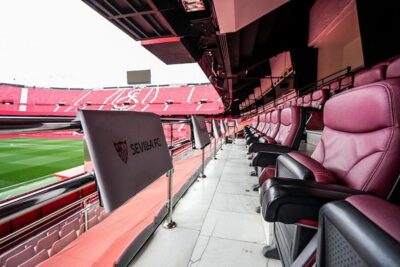

Bernabeu Stadium & Real Madrid Museum Guided Tour
Read our review →Browse the lists this tour appears in