
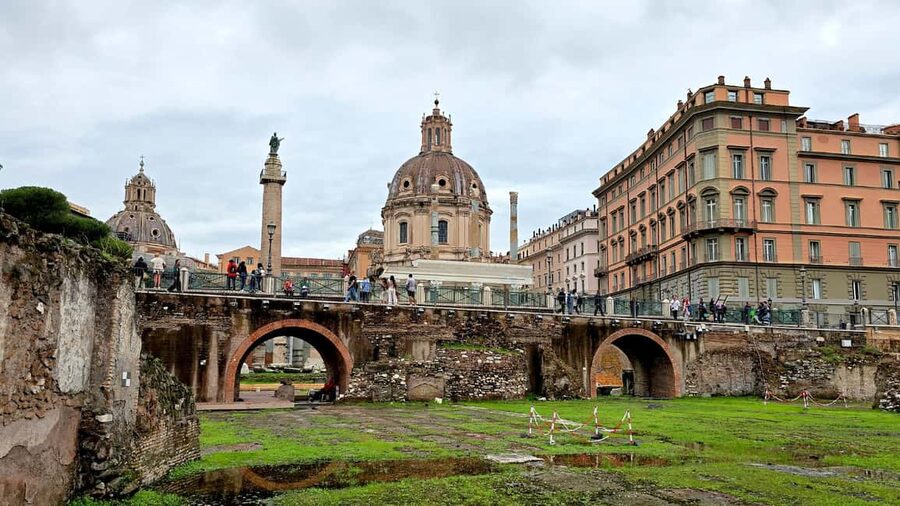
Review · ANCIENT ARENAS AND COLOSSEUM TOURS
Colosseum Arena Tour, Palatine Hill and Roman Forum
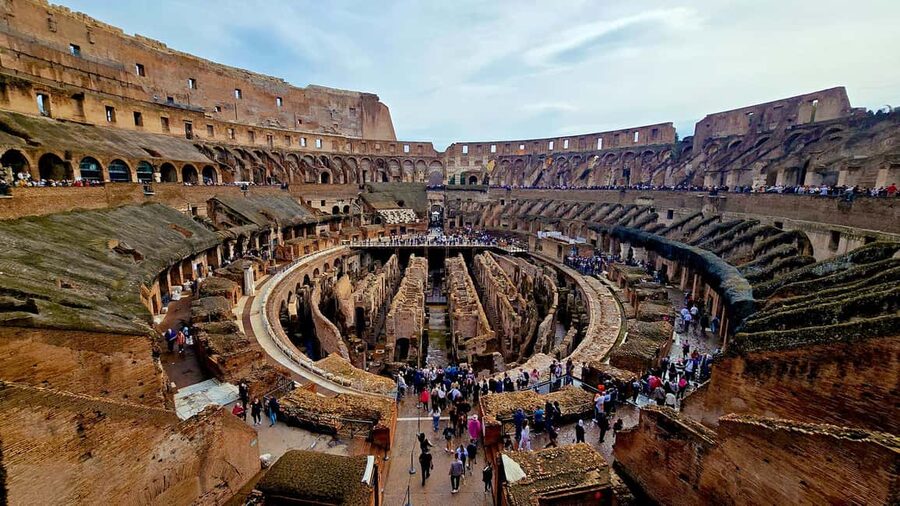
The most striking part of this Rome tour is the chance to step onto the Colosseum arena floor through the Gladiator’s Gate. You are not just looking down from the usual upper levels. You follow the route once used by gladiators and prisoners before the public spectacle began.
I like the way the tour connects three major sites instead of treating the Colosseum as a stand-alone photo stop. I also like the human scale: guides have included Paola, an engaging local guide, and a former archaeologist who spent 30 years working in Rome. The main drawback is the pace. You cover a lot in three hours, often without a long break, so eat first and carry a refillable water bottle.
Key points
- Arena-floor access: Enter through the Gladiator’s Gate and walk on the central floor of the Colosseum.
- Three essential Roman sites: The route includes the Colosseum, Palatine Hill, and Roman Forum in one continuous visit.
- Stories beyond emperors: Expect accounts of gladiators, conquered peoples, political plots, triumphal processions, and public executions.
- Guided archaeological context: The guide explains how the ruins fit together instead of leaving you to decode them alone.
- About three hours on foot: One morning departure ran from 8:45 a.m. to 12:45 p.m., so plan for a substantial outing.
- Good value at $50: The price includes admission to all three sites, a licensed guide, radio equipment, and skip-the-ticket-line access.
Why the Colosseum Arena Floor Matters
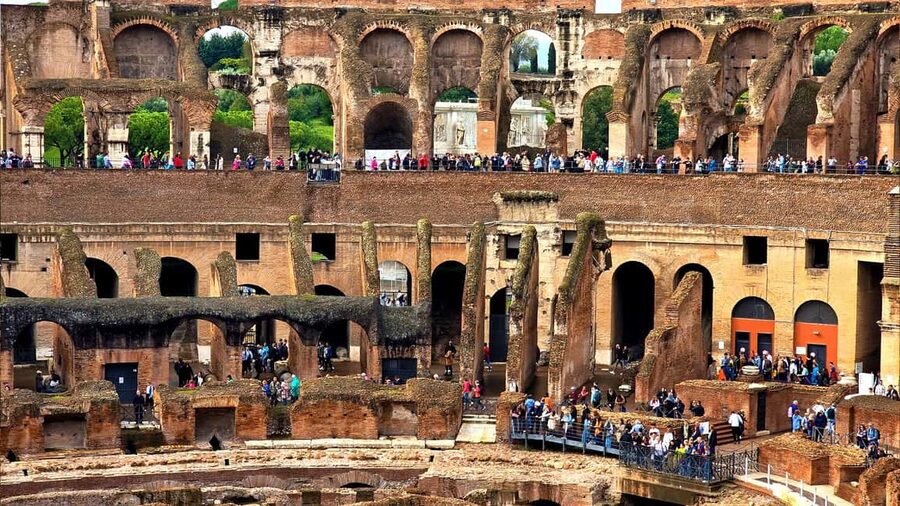
The regular Colosseum visit gives you a powerful view of the amphitheater, but the arena floor changes your sense of scale. From ground level, the surrounding tiers rise above you, and the building feels less like a ruin and more like a machine built for mass entertainment.
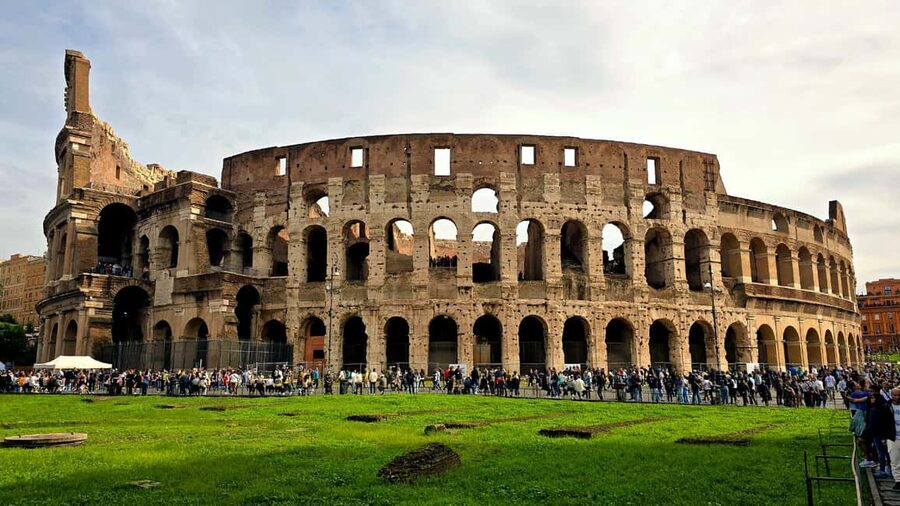
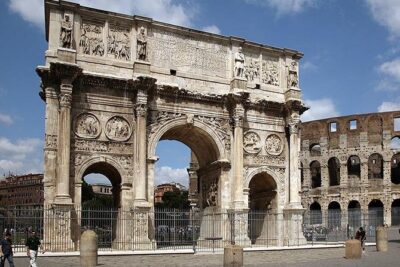
You enter through the Arch of Constantine meeting point, then move toward the Colosseum. The tour uses the Gladiator’s Gate, the traditional route associated with those who entered the arena before a contest. That detail gives the visit a clear narrative line: you are following the path into the building rather than simply wandering through its remains.
The guide sets the scene under the emperors, when Rome controlled territory across the Mediterranean and beyond. The Colosseum displayed animals, prisoners, and people taken from lands conquered by Rome. Its shows were entertainment, political messaging, and a public display of imperial power all at once.
Expect stories of cruelty, discipline, and clemency. Those themes help explain the Roman world better than a list of dates. The arena was not only about gladiator fights. It showed what the empire could capture, control, and stage for a crowd.
The Colosseum portion lasts about an hour and a half. That is enough time to hear the main story, take photographs, and look closely at the surviving structure without spending the whole day inside. The trade-off is that you will not have unlimited time for every corridor or viewpoint. This is a guided introduction, not a private archaeological study.
More Stadium Tours in Italy
- Rome: Colosseum Underground and Arena Tour
★ 4.7 · 1,002 reviews - Rome: Private Colosseum Arena Tour With Roman forum Access
★ 4.5 · 94 reviews - Olympic Stadium Tour with Expert Guide in Rome
★ 4.5 · 86 reviews
Entering at the Arch of Constantine
The meeting point is the Arch of Constantine, beside the Colosseum on the Palatine side. It is easy to identify: the arch has one large central opening and two smaller side arches. It also combines reliefs from different periods, including pieces reused from monuments connected with earlier emperors.
That makes it a useful meeting point rather than a random street corner. You can recognize it quickly, but do not arrive at the last second. The Colosseum area is busy, and the tour requires time for the group to gather and pass through security.
The tour includes guided access to the various entrances, plus on-site assistance. That matters here because the Colosseum complex has several access points and a large flow of visitors. An English-speaking guide helps keep the group moving in the right direction.
Bring the same passport or identification document used when booking. Tickets are nominative, so the name on your reservation must match your document. Security checks apply at the Colosseum and at the Palatine Hill and Roman Forum area. Large bags, luggage, handcarts, alcohol, and drugs are not allowed.
Palatine Hill and the Beginnings of Rome
After the Colosseum, the group walks for about 10 minutes to Palatine Hill. The hill is tied to Rome’s legendary foundation and to the story of Romulus, but it is also an archaeological site with layers reaching from the Iron Age through the 16th century.
The guide brings those layers together. You may see references to the Hut of Romulus, the legendary founder’s dwelling, alongside remains from the imperial period and later use of the hill. The point is not to treat the founding story as a proven event. It is to understand how strongly Rome connected its identity to this place.
Palatine Hill was also where emperors lived. The Imperial Palace complex recalls a world of family life, political maneuvering, and private power. Ancient Rome was not run only in public spaces such as the Forum. Decisions were shaped in imperial residences, among relatives, advisers, rivals, and ambitious officials.
I like this section because it adds a useful contrast to the Colosseum. The arena shows Rome’s public theater. Palatine Hill shows the private side of rule, where emperors and their families managed the empire and competed for influence.
The hill is an archaeological site, so much of what you see is fragmentary. A guide is especially useful here because walls and foundations do not always explain themselves. You might look at a line of stone and see only a ruin. With context, it becomes part of a palace, a residence, or a much older settlement.
The walk also means you should wear comfortable shoes. The tour is not suitable for wheelchair users, and the route includes time on foot between sites. The information does not promise a dedicated rest stop, so if you need frequent breaks, tell the guide at the start.
The Roman Forum, Rome’s Political Stage
The final major stop is the Roman Forum, once the central public area of the ancient city. Markets, law courts, temples, speeches, ceremonies, and political business all took place here. The remains are spread across a wide archaeological area, and the Forum makes more sense when you understand what each space once did.
This is where the tour’s stories become especially vivid. Julius Caesar was cremated here. Roman triumphs passed through with the spoils of conquest. Cicero delivered speeches that influenced western political thought for centuries.
The Forum also carries darker stories. Two disgraced emperors were murdered here in 69 AD, a reminder that imperial power could change hands through violence as well as ceremony. These details keep the Forum from becoming a collection of broken columns. You are seeing the setting for law, religion, public memory, and political conflict.
The guided Forum visit lasts about an hour. That gives you time to follow the main route and understand the key remains, though you may want more time afterward. When the formal tour ends, you can stay and explore the Forum at your own pace. This is a valuable feature because the three-hour schedule gives you structure first, then freedom to linger.
If you are tired by this point, the Forum can feel like a lot to take in. The ruins cover a large area, and there is no food or drink included. Eat before the tour, and carry water. Refill wells are available along the way, which helps on a warm day.
More Stadium Tours in Rome
- Colosseum Arena tour with Roman Forum and Cesar’s Palace
★ 4.0 · 54 reviews - Gladiators Arena Tour with Colosseum First Level & Ancient Rome
★ 4.5 · 53 reviews - Olympic Stadium Tour Express- Skip the Line
★ 4.0 · 49 reviews - Private Colosseum Arena Tour with Expert Guide – all inclusive
★ 5.0 · 40 reviews
How the Guide Shapes the Experience
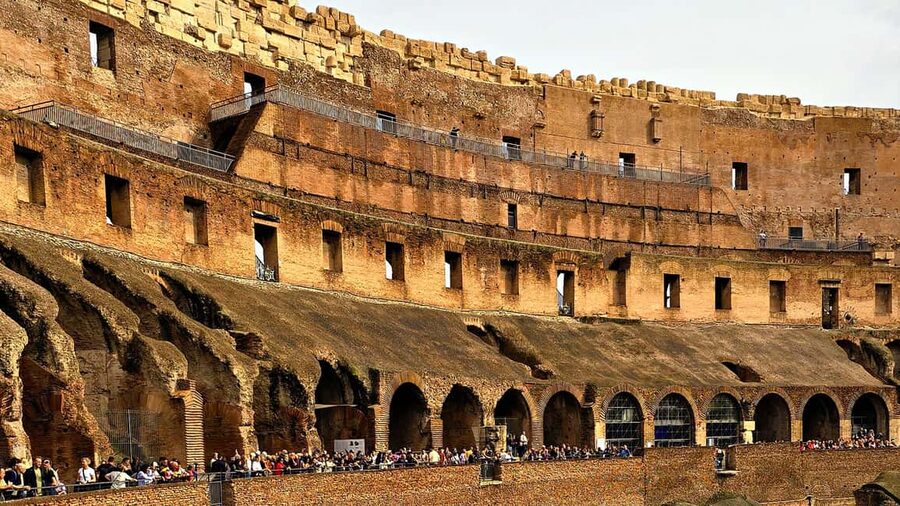
The guide is the main reason to choose this tour instead of buying admission and walking through the sites alone. A licensed local guide can explain why a ruin matters, connect it to Roman politics, and point out details you might otherwise pass without noticing.
Guides have included Paola, who allowed time for photographs and breaks while keeping the group moving. Another guide had worked as an archaeologist in Rome for 30 years. That level of local experience can make a real difference at the Forum and Palatine Hill, where the remains require explanation.
The tour is conducted in English. A radio guide is included, helping you hear the commentary when the group is moving or standing near crowded areas. Small groups are available, though group size can vary. One scheduled departure even operated as a private-feeling experience with a single participant rather than being canceled.
Do not expect a theatrical performance. The strongest part of this format is clear explanation, strong storytelling, and the chance to ask questions while standing among the ruins. The guide can also adjust the pace for photographs and short pauses, although you should not count on long stops for meals.
Is $50 a Fair Price?
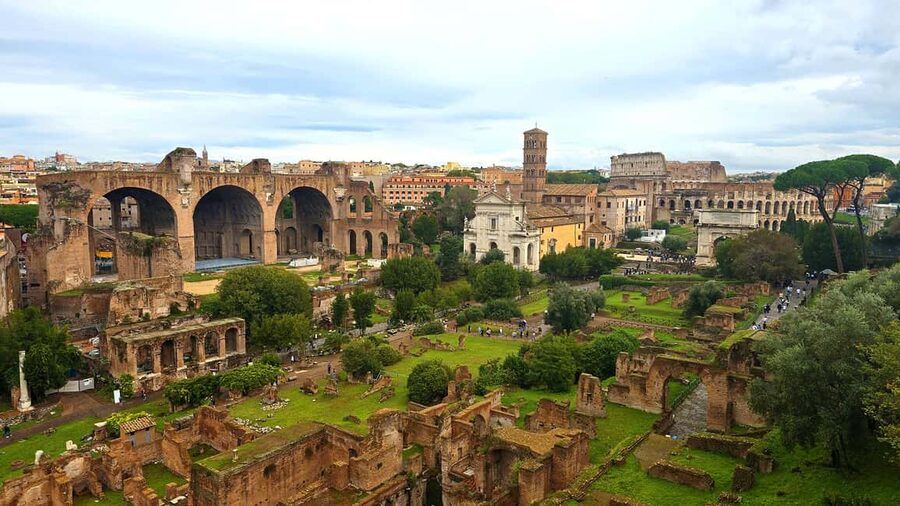
At $50 per person, this is a fair price for a three-hour guided visit that includes the Colosseum, arena floor, Palatine Hill, and Roman Forum. You are paying for more than entry tickets. The package also includes a licensed guide, radio equipment, skip-the-ticket-line access, and help with the complicated entrances.
The arena floor is the strongest value point. Many Colosseum visits do not include this access, and adding it separately can make a cheaper-looking basic ticket less attractive. Here, the arena is combined with the two nearby archaeological sites, so you do not need to arrange separate visits.
The price is less compelling if you prefer to move slowly, read every sign, or spend a full day at the Forum. A self-guided visit gives you more control. This tour is better for you if you want a strong overview, reliable entry, and a guide who can make sense of a very large ancient site.
The flexible booking terms also help. You can cancel up to 24 hours in advance for a full refund, and you can reserve now while paying later. Still, do not leave the booking until the last few days. Reservations made within five days of the tour cannot be guaranteed because of Colosseum booking limits.
Timing, Comfort, and What to Bring
The stated duration is three hours, with roughly 90 minutes at the Colosseum, one hour at Palatine Hill, and one hour at the Roman Forum. In practice, a morning schedule has run from 8:45 a.m. to 12:45 p.m., so allow extra time if the tour runs long or the group needs to move through security.
Eat breakfast or an early meal before you arrive. There is no included food or drink, and the route does not promise a formal meal break. Bring a refillable water bottle because wells along the route can be used to top it up.
Wear shoes suited to walking over archaeological ground. Carry only what you need, since large bags and luggage are not permitted. Your passport or ID card is essential, even if you normally prefer to leave documents at your hotel.
The tour is not suitable for wheelchair users. The information does not describe a fully accessible route, so anyone with mobility concerns should contact the provider before booking rather than assume the standard route will work.
Who Should Book This Tour?
I would choose this tour for a first visit to ancient Rome, especially if you want the Colosseum but also want to understand the connected sites around it. The three locations tell a fuller story together: public entertainment, imperial power, and civic life.
It also suits you if you value a local guide more than unlimited free time. The explanations are likely to be most useful at Palatine Hill and the Roman Forum, where the remains can be difficult to interpret without help.
Families with older children may appreciate the stories of gladiators, emperors, triumphs, and political plots. The route is long enough that younger children may tire, particularly because the experience has no included meal break.
I would think twice if you need a slow, highly accessible visit or if you dislike fixed schedules. The tour covers a lot, and the no-luggage rule means you must plan ahead. For most visitors, though, the combination of arena access and the two major archaeological sites gives this tour a strong balance of cost and content.
Should You Book It?
Book this tour if you want to walk on the Colosseum arena floor and have the ancient city explained in one organized visit. The $50 price is especially reasonable because it includes all three sites, admission, a licensed English-speaking guide, and radio equipment.
Skip it if you want to explore every corner at your own pace or need a wheelchair-accessible route. Otherwise, eat first, bring identification and water, arrive at the Arch of Constantine early, and plan to spend at least three active hours moving through the center of ancient Rome.
FAQ
How long does the Colosseum Arena Tour last?
The stated duration is three hours. The planned visits include about 1.5 hours at the Colosseum, one hour at Palatine Hill, and one hour at the Roman Forum. A morning departure has run from 8:45 a.m. to 12:45 p.m.
What sites are included?
The tour includes the Colosseum arena floor, Palatine Hill, and the Roman Forum. Entrance fees for all three locations are included.
Can I walk on the Colosseum arena floor?
Yes. The tour includes access to the arena floor through the Gladiator’s Gate, subject to availability and the site’s operating limits.
What language is the tour in?
The live guided tour is conducted in English. A radio guide is also included to support the audiovisual experience.
Where is the meeting point?
The meeting point is at the Arch of Constantine, next to the Colosseum on the Palatine side. You can identify it by its three arches, with one large central arch and two smaller arches.
Do I need identification?
Yes. Bring your passport or ID card. The tickets are nominative, so the name on your booking must match the name on your document.
Can I bring luggage or a large bag?
No. Luggage, large bags, and handcarts are not allowed. Alcohol and drugs are also prohibited.
Is the tour suitable for wheelchair users?
No. The experience is not suitable for wheelchair users.
More Ancient Arenas and Colosseum Tours in Rome
- Ticket to Piazza Navona Undergrounds Stadium of Domitian
★ 4.5 · 410 reviews - Piazza Navona Underground: Stadium of Domitian EXCLUSIVE TOUR – LIMITED ENTRANCE
★ 4.5 · 129 reviews - Express Colosseum with Arena Floor Guided Tour
★ 3.5 · 65 reviews - Rome: Guided Group Tour of Colosseum, Palatine Hill & Roman Forum
★ 5.0 · 65 reviews
Just added for fans in Rome
- Guided Group Tour of Colosseum with Arena Floor★ 4.5 · 18 reviews
- Rome : Colosseum Underground and Arena Tour (MAX 7 PEOPLE)★ 5.0 · 17 reviews
- Rome: Navona Underground and Domitian Stadium Guided Tour★ 4.5 · 8 reviews
- Rome: Join a AS Roma or Lazio football match with Local★ 5.0 · 2 reviews
- Small-Group Rome Tour by Golf-Cart★ 5.0 · 2 reviews
- Exclusive Private Golf Cart Tour of Rome★ 5.0 · 5 reviews
- Private Colosseum Arena Tour with Expert Guide – all inclusive★ 5.0 · 40 reviews
- Rome Golf-Cart Rental★ 5.0 · 35 reviews
Ancient Arenas and Colosseum Tours, compared.
Ticket to Piazza Navona Undergrounds Stadium of Domitian
Read our review →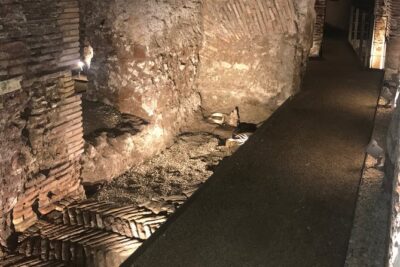
Piazza Navona Underground: Stadium of Domitian EXCLUSIVE TOUR – LIMITED ENTRANCE
Read our review →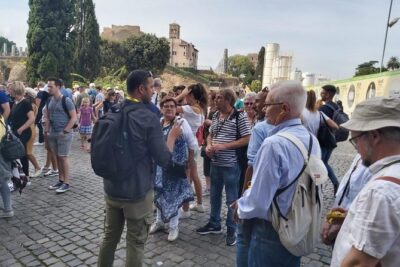
Private Colosseum Arena Tour With Roman forum Access
Read our review →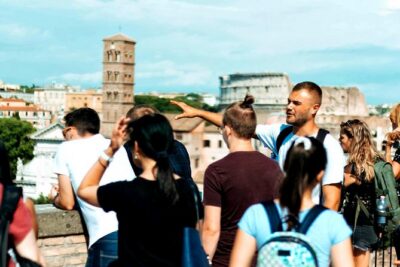
Guided Group Tour of Colosseum, Palatine Hill & Roman Forum
Read our review →
Full day private guided tour of Rome by golf-cart & Colosseum and Roman Forum
Read our review →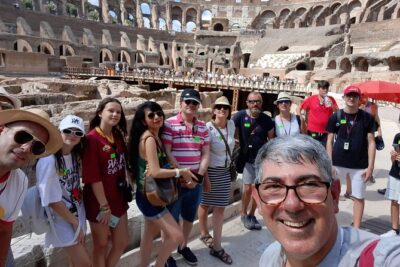
Colosseum Arena tour with Roman Forum and Cesar’s Palace
Read our review →Browse the lists this tour appears in