
Review · ANCIENT ARENAS AND COLOSSEUM TOURS
Piazza Navona Underground: Stadium of Domitian EXCLUSIVE TOUR – LIMITED ENTRANCE
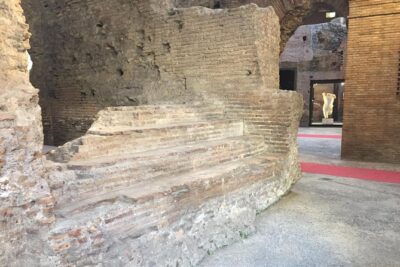
The most surprising part of this experience is what lies beneath one of Rome’s prettiest squares. Five metres below Piazza Navona, you’ll find the remains of the Stadium of Domitian, an arena built from brick and cement during the Roman Empire. The space helps you understand why the long, oval shape of today’s piazza looks so unusual.
I like the clear audio guide, which explains the stadium, the square, and Roman sports without requiring a live guide. I also like the chance to enter the limited-access underground section, especially the area beneath the French building. The main drawback is practical: the entrance can be hard to spot, and the first part has more wall fragments and display panels than dramatic ruins.
Key points at a glance
- Five metres below Piazza Navona: See the ancient foundations hidden beneath the modern square.
- Rome’s only masonry stadium: Learn why this arena is different from other Roman sporting sites.
- Audio-led exploration: Follow the route at your own pace, with a children’s audio guide for ages six and up.
- Limited underground access: The second section offers more detail and atmosphere than the initial excavations.
- About one hour: Morning and afternoon start times make this easy to fit between other Rome sights.
- Bring comfortable shoes: The route involves walking through archaeological excavations below street level.
What lies beneath Piazza Navona
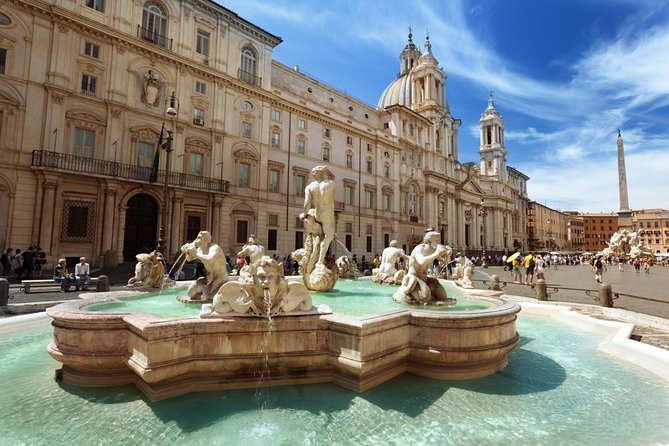
Piazza Navona is usually treated as a grand Baroque square, a place for fountains, church architecture, cafés, and people-watching. This visit asks you to look below the surface. The square follows the outline of an ancient stadium, and the underground remains explain its odd shape better than any map can.
The Stadium of Domitian was the first and only Roman arena built entirely as a masonry structure using brick and cement. That detail gives the site its importance. You are not looking at a collection of unrelated ruins. You are seeing part of a purpose-built sporting venue that shaped the footprint of modern Piazza Navona.
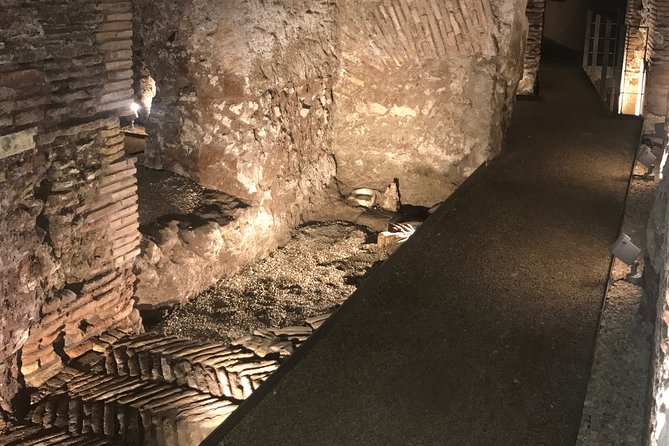
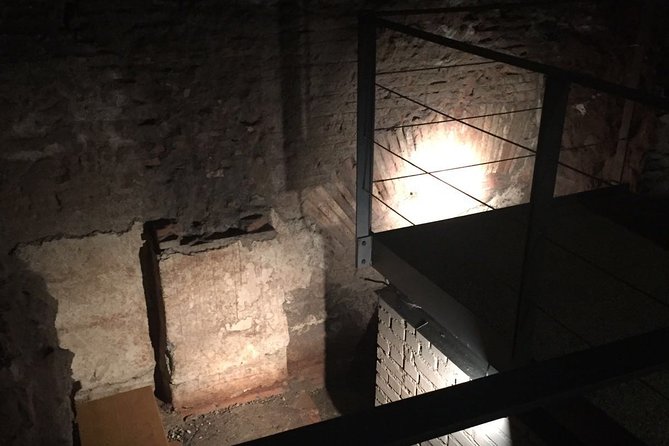
The excavations opened to the public in 2014. They are not enormous, and that matters when you set expectations. This is a compact archaeological visit rather than a full-scale arena such as the Colosseum. You will see ancient walls, structural remains, explanatory panels, and displays that help fill in the missing parts.
I find that the site works best when you first enjoy Piazza Navona above ground, then visit below. Once you have seen the long shape of the square, the underground geometry makes much more sense.
More Ancient Arenas and Colosseum Tours in Rome:
- Rome: Colosseum Underground and Arena Tour
★ 4.7 · 1,002 reviews - Ticket to Piazza Navona Undergrounds Stadium of Domitian
★ 4.5 · 410 reviews - Rome: Private Colosseum Arena Tour With Roman forum Access
★ 4.5 · 94 reviews
The first section: ancient walls below street level
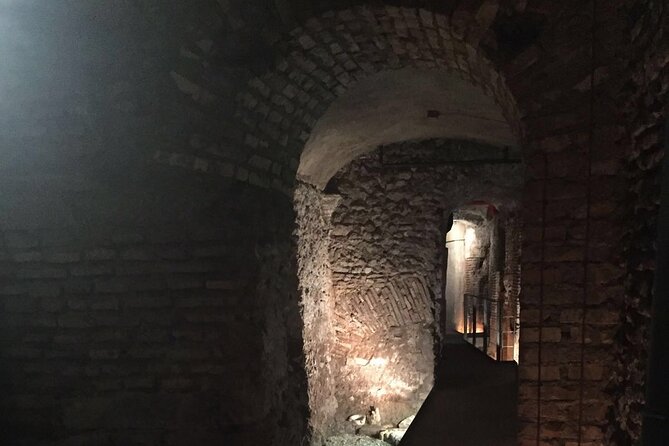
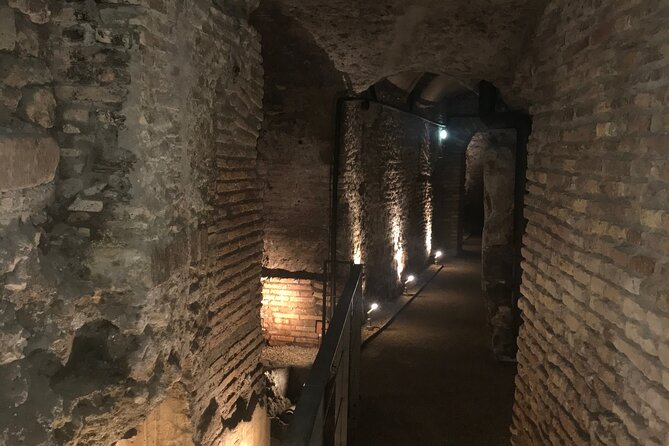
The visit begins with a descent of about five metres beneath the square. You enter the excavated level and follow the route through the remains of the stadium. The setting is cool and removed from the noise and heat above, which can be especially welcome during a hot Roman afternoon.
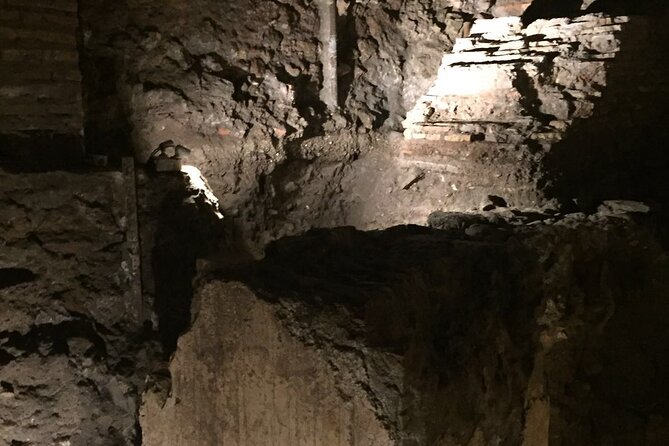
The first section is informative, but it may not deliver an instant wow moment. Much of what you see consists of walls and fragments rather than complete arches, statues, or large open sections of the arena. If you expect a fully preserved stadium, you may find this part modest.
That does not make it pointless. The walls show how Roman builders created a large public venue with brick and cement. The audio guide connects the physical remains to the original structure, helping you picture the stadium’s layout and purpose.
The route also explains the link between the ancient stadium and modern Piazza Navona. The square did not simply happen to take this long, narrow form. Its shape follows the older arena, and the underground visit gives you a better sense of that connection.
The displays add useful context, though the audio recording sometimes follows the information already printed on the panels. I would use both together if you want the fullest explanation. Read the key displays first, then listen to the related audio section while looking at the ruins.
The audio guide and how to use it
This is a self-guided visit, so the audio guide does much of the teaching. It covers the stadium, Piazza Navona, ancient Roman sports, and the way Rome developed on top of earlier buildings. You move through the site without having to keep pace with a live group.
That format suits me when I want control over the pace. You can pause, replay a section, and spend more time in the areas that interest you. It also makes the visit easier for families, since children aged six and older can use a child-specific audio guide.
The recording is generally clear and informative. It gives the relatively small site more weight by explaining what the walls once supported and how the arena fit into Roman public life. Without the audio, you could walk through quickly and see little more than old masonry.
Still, this is not a substitute for a personal archaeologist or historian. If you prefer spontaneous questions and detailed discussion, the audio-only format may feel limited. The experience is built around looking, listening, and reading rather than conversation.
I suggest allowing at least 50 minutes, which matches the advertised duration. A careful visit can take closer to an hour, and one self-guided visit lasted about an hour and a half. The exact time depends on how long you spend with the panels, audio stops, and displays.
The limited-access underground section
The second part is the strongest reason to choose this ticket rather than simply looking at the visible remains from outside. The limited-access area provides more detail and a stronger feeling of being inside the archaeological structure.
This section includes the area beneath the French building, according to the tour information and visitor experience. It offers additional rooms and details that you cannot fully appreciate from the street. The contrast is useful: the first section explains the site, while the second gives you more physical space to explore.
You should know that the advertised exclusive access does not mean an enormous private archaeological complex. The underground area remains compact. Its value comes from seeing sections that are otherwise restricted, not from spending several hours in a vast ruin.
Part of this section can be seen from the street without paying for entry. The ticket matters because it lets you go inside and examine the underground remains more closely. If you are already in Piazza Navona and only want a quick glimpse, the exterior view may be enough. If you want context and access, the paid visit makes more sense.
The underground setting is also a practical advantage. Rome can be hot, crowded, and tiring, while this short visit offers a quiet break below street level. I would not book it only for relief from the heat, but that cooler setting adds to the appeal.
More Sports Experiences in Rome:
- Exclusive Golf Tour Private VIP with Local & Gelato o Wine
★ 5.0 · 500 reviews - Tickets and Guided Tour of the Olympic Stadium in Rome and Foro Italico
★ 4.5 · 404 reviews - ROME: Golf-Cart Private Tour
★ 5.0 · 112 reviews - Olympic Stadium Tour with Expert Guide in Rome
★ 4.5 · 86 reviews
Why the stadium matters in Rome
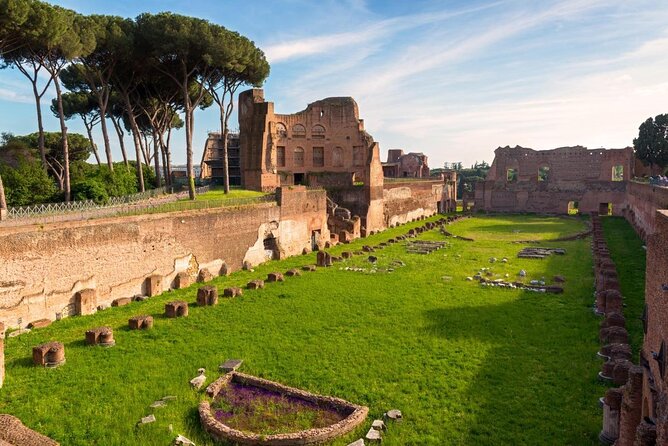
The Stadium of Domitian helps explain a familiar Roman pattern: new streets, buildings, and squares often sit on top of older structures. Piazza Navona is not just decorated on an ancient site. Its basic form preserves the outline of the stadium.
The arena was connected to Roman sports and public entertainment. The audio guide gives you information about those activities and the role of the stadium. You get a better idea of how the space functioned, even though only portions of the original structure remain visible.
The building method is another reason to pay attention. The site is described as the first and only Roman stadium built with brick and cement. That makes the construction itself part of the story. You are looking at an important example of Roman engineering, not simply an old wall beneath a famous piazza.
The visit also helps you read the city above. Afterward, the geometry of Piazza Navona becomes easier to understand. You can look across the square and picture the arena that once occupied the same footprint.
What families and history fans should expect
Families can get good value from this visit if children enjoy archaeology, ancient Rome, or audio stories. The child audio guide is available for ages six and up, and the route is short enough to avoid becoming an all-day commitment.
The site also works well for students. The connection between the ancient arena and the modern square is easy to grasp, and the panels support the audio explanations. A school-age visitor may get more from this than from a long, lecture-style museum visit.
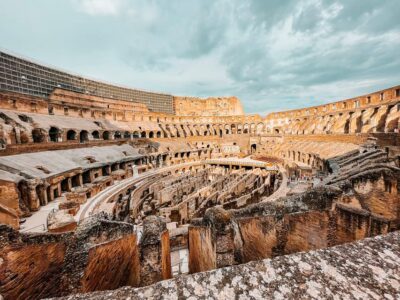
Adults who already know the Colosseum should treat this as a smaller, more focused experience. It will not replace Rome’s major amphitheater visits. Instead, it adds a different view of Roman public buildings and shows how much ancient Rome remains under the present city.
I would especially recommend it to someone making a first visit to Piazza Navona. The tour provides a useful starting point before you admire the fountains and churches above. It also suits repeat visitors who want something less obvious than another major monument.
Price, timing, and practical value
At $18.14 per person, this is a relatively low-cost Rome activity. The value depends on what you want. If you need a major, visually dramatic attraction, the compact ruins may feel underwhelming for the price. If you enjoy archaeology and want to understand Piazza Navona, the cost is fair.
The ticket includes the audio guide, taxes, and a children’s audio guide for children aged six and above. Food, drinks, hotel pickup, souvenir photos, and DVDs are not included. The on-site library sells art and history books, antique prints, postcards, souvenirs, artistic crafts, and multimedia DVDs, with a section for children.
Morning and afternoon start times make the visit easy to place in a Rome schedule. I would pair it with time in Piazza Navona rather than crossing the city just for this one-hour stop. It also works as a pause between larger sights, since it does not require a full morning or afternoon.
The maximum group size is listed as 150 people, although the experience itself is self-guided. A large overall capacity does not necessarily mean you will move as one large group, but the underground setting may feel busier at popular times.
Wear comfortable walking shoes. You are going below street level and walking through an archaeological site, so practical footwear is a better choice than delicate sandals or shoes chosen only for photos.
Finding the entrance without wasting time
The biggest practical weakness is the entrance. Piazza Navona is large, and the entrance is a narrow doorway off the square. If you arrive expecting an obvious museum façade, you could walk past it.
Give yourself extra time before the scheduled start. Confirm the exact meeting point and look carefully for the entrance rather than relying only on the broad phrase Piazza Navona. This matters even more if you are running late, since communication through the booking app may not provide an immediate answer.
The visit does not include hotel pickup or drop-off. You make your own way to the site, which is simple once you locate the doorway, but less simple if you arrive in a hurry. I would aim to be in the square early enough to search calmly.
Confirmation is provided when you book. Free cancellation is available until 24 hours before the start time. Cancellations within 24 hours are not refunded, and changes during that final 24-hour period are not accepted.
Is this tour accessible for everyone?
The information says most people can participate, and service animals are allowed. No detailed accessibility information is provided for the underground route, so you should check directly before booking if you need specific support with stairs, narrow areas, or mobility equipment.
The five-metre descent is an important detail. Even though the visit is short, you are going below street level rather than simply entering a flat museum gallery. Comfortable shoes are recommended for everyone.
The tour is offered in English. The child audio guide is available from age six, making the activity suitable for families who want an English-language explanation at a younger level.
Who should book the Stadium of Domitian visit?
I would book this if you like ancient buildings, Roman engineering, and the lesser-seen layers of a city. It is also a good choice if you want a short indoor activity near Piazza Navona, especially during the hottest part of the day.
I would be more cautious if you want spectacular ruins, a live guide, or a long tour packed with major monuments. The first section can feel sparse, and the entire site is compact. The audio guide carries much of the experience, so your enjoyment will depend on how much you like learning through recorded commentary.
The limited-access section makes the ticket more worthwhile than a quick look from the street. Still, keep your expectations realistic: this is a focused archaeological stop, not a replacement for the Colosseum or the Roman Forum.
Book it if you have about an hour, want to understand why Piazza Navona has its unusual shape, and enjoy finding Rome’s earlier layers below the modern city. Skip it if you are already overloaded with ruins and want your limited time to go toward Rome’s largest monuments.
FAQ
How long does the Stadium of Domitian tour take?
The advertised duration is about 50 minutes to one hour. Since the visit is self-guided, you may take longer if you listen to all the audio and study the displays. One described visit lasted about an hour and a half.
How much does the tour cost?
The listed price is $18.14 per person.
Is the tour guided by a person?
No. The visit uses an audio guide rather than a live guide. You explore the underground site at your own pace.
Is the audio guide available for children?
Yes. A children’s audio guide is included for children aged six and above.
What language is offered?
The experience is offered in English.
What does the ticket include?
The ticket includes admission, the audio guide, the children’s audio guide for ages six and above, and taxes.
Is the underground section included?
The experience includes access to the excavations beneath Piazza Navona and a limited-access underground section. The second section offers additional areas and details, including space beneath the French building.
Can I cancel for a refund?
Yes. You can cancel at least 24 hours before the local start time for a full refund. Cancellations or changes made less than 24 hours before the start time are not refunded.
Just added for fans in Rome
- Guided Group Tour of Colosseum with Arena Floor★ 4.5 · 18 reviews
- Rome : Colosseum Underground and Arena Tour (MAX 7 PEOPLE)★ 5.0 · 17 reviews
- Rome: Navona Underground and Domitian Stadium Guided Tour★ 4.5 · 8 reviews
- Rome: Join a AS Roma or Lazio football match with Local★ 5.0 · 2 reviews
- Small-Group Rome Tour by Golf-Cart★ 5.0 · 2 reviews
- Exclusive Private Golf Cart Tour of Rome★ 5.0 · 5 reviews
- Private Colosseum Arena Tour with Expert Guide – all inclusive★ 5.0 · 40 reviews
- Rome Golf-Cart Rental★ 5.0 · 35 reviews
Ancient Arenas and Colosseum Tours, compared.
Ticket to Piazza Navona Undergrounds Stadium of Domitian
Read our review →
Private Colosseum Arena Tour With Roman forum Access
Read our review →
Guided Group Tour of Colosseum, Palatine Hill & Roman Forum
Read our review →
Full day private guided tour of Rome by golf-cart & Colosseum and Roman Forum
Read our review →
Colosseum Arena tour with Roman Forum and Cesar’s Palace
Read our review →
Gladiators Arena Tour with Colosseum First Level & Ancient Rome
Read our review →Browse the lists this tour appears in