
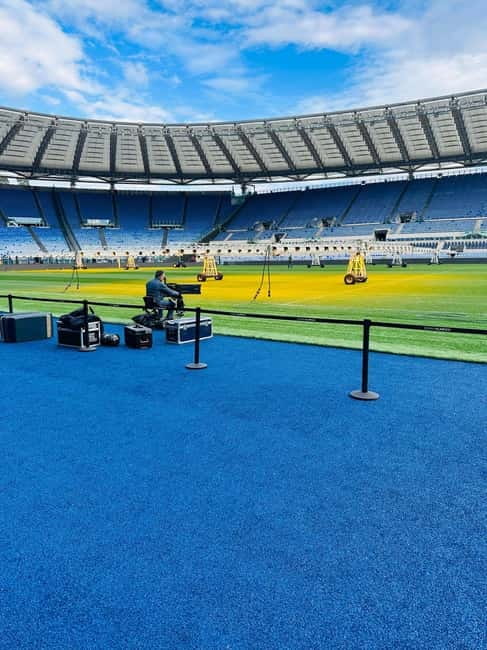
Review · OLYMPIC VENUES
Tickets and Guided Tour of the Olympic Stadium in Rome and Foro Italico
Rome’s Olympic Stadium is more than a football ground. It is the heart of a large sports complex shaped by Fascist-era architecture, the long rivalry between Roma and Lazio, major tennis events, concerts, and Italy’s Olympic story. This tour begins at the Mussolini Obelisk, then takes you through the Foro Italico before entering the stadium by the same route used by players.
I like two things here: you get both the outdoor architectural setting and the behind-the-scenes stadium visit, and guides such as Simone, Angelica, and Kwanza are praised for explaining the political, sporting, and local context clearly. The main drawback is that the experience can feel rushed or hard to hear in a large group, and concerts or other events may change the route.
Key points to know before you book
- The tour starts at the Mussolini Obelisk, not at the stadium entrance itself, so allow time to find the correct meeting point.
- Foro Italico adds real depth, with its monumental architecture, sports courts, and links to Italy’s Fascist period and national sporting identity.
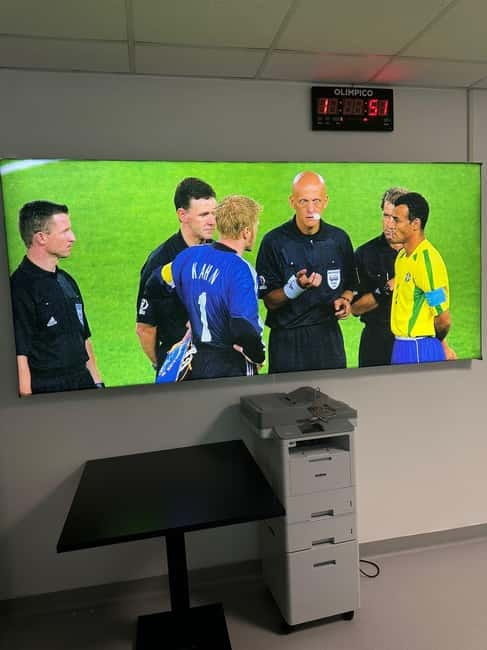
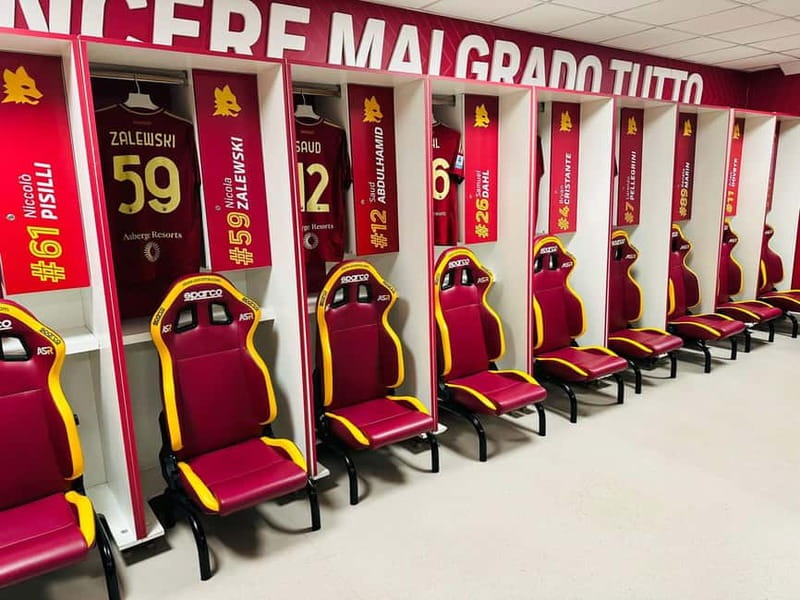
- The stadium visit includes the players’ entrance, locker rooms, pitch area, and stadium interior, subject to event-day restrictions.
- Football fans get the most emotional payoff, but the tour also works for non-sports visitors interested in architecture, politics, and modern Rome.
- Guides make a major difference, with Simone, Angelica, Kwanza, Dayana, and others praised for clear explanations and friendly group management.
- The $48 price is fair if you value access and interpretation, but less appealing if you only want to see the building from outside.
Why the Olympic Stadium is worth your time
Rome has no shortage of ancient ruins, so a twentieth-century sports complex can be easy to overlook. That would be a mistake if you want to see another side of the city. The Olympic Stadium and Foro Italico show how sport, public architecture, political power, and football identity have shaped modern Rome.
The tour lasts about 90 minutes. That is long enough to cover the outdoor complex and stadium without taking half a day from your sightseeing plans. You are not simply handed a ticket and left to wander. A live guide leads the group and explains what you are seeing in English, Italian, French, or Spanish.
The most valuable part is the context. The Mussolini Obelisk is not just a tall stone marker for a quick photograph. It belongs to a grand, carefully planned sports district created during the Fascist period. The monumental style can feel imposing, and the guide helps explain how the area was presented as a symbol of national strength and unity.
That does not make the site comfortable or simple. Its architecture is tied to a difficult political era. The tour is useful because it connects the buildings to that past instead of treating the setting as decoration.
More Olympic Venues in Rome:
- Olympic Stadium Tour with Expert Guide in Rome
★ 4.5 · 86 reviews - Olympic Stadium Tour Express- Skip the Line
★ 4.0 · 49 reviews - Berlin: Olympia Stadium Entrance Ticket
★ 4.3 · 789 reviews
Starting at the Mussolini Obelisk
The meeting point is at the Obelisco Mussolini, at the entrance to the Foro Italico area. This is an important practical detail. Do not assume you can walk straight to the Olympic Stadium and find the group there. The tour begins outdoors, and the opening talk sets the tone for everything that follows.
Here you hear about the origins of the Foro Italico, its monumental design, and the role of sport in Fascist Italy. You also get an introduction to the long-running rivalry between Roma and Lazio. That rivalry is central to the identity of the stadium, and the best guides explain both sides rather than turning the walk into a one-club sales pitch.
Simone has been praised for discussing the two clubs fairly, even when his personal support was clear. That is exactly what you want on a mixed group tour. You may arrive wearing a Roma shirt, a Lazio scarf, or no football colors at all. The guide should give you enough background to understand the passion without making the tour feel like a fan club meeting.
The outdoor section lasts about 40 minutes. Wear comfortable shoes, since you will be walking through the sports complex before entering the stadium. In warm weather, the open setting can also mean strong sun, so water and sun protection are sensible.
Walking through Foro Italico’s sporting world
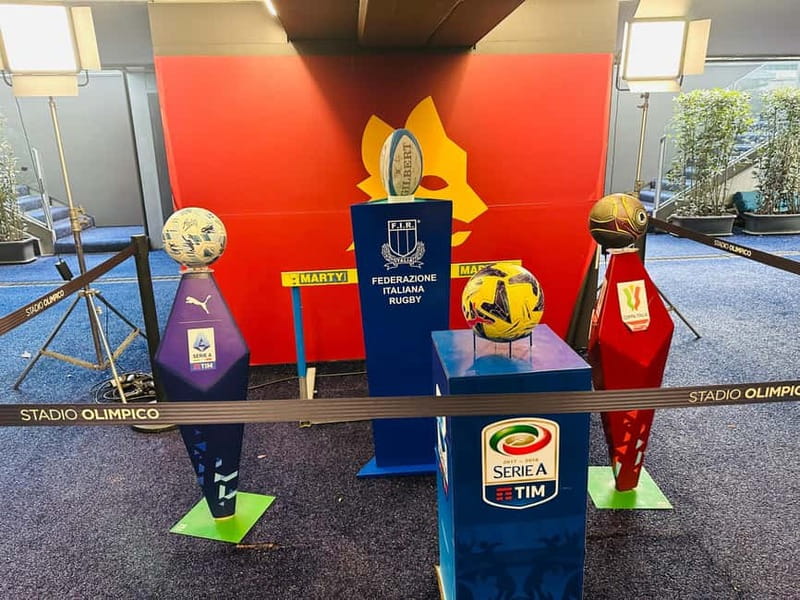
Foro Italico gives the tour more range than a standard football stadium visit. The area is associated with a number of sports, including tennis. One visitor particularly enjoyed seeing the Central Court used for the Rome Masters, while another appreciated learning about Italian sport culture beyond football.
That wider setting matters. You begin to see the Olympic Stadium as part of a larger sports campus, not an isolated football bowl. The tour may include views of surrounding arenas and facilities connected with Italian sport. The exact route can change, so treat the outdoor portion as guided orientation rather than a fixed checklist of every court and building.
Some people may find this part more interesting than expected. If you are not a football fan, the architecture and political background give you a reason to stay engaged. One guide, Kwanza, was praised for explaining the historical and political meaning of the stadium area in a way that was easy to follow.
The tradeoff is that the Foro Italico portion is mainly about looking, listening, and moving between sites. It is not a museum visit with extensive indoor displays. If you want objects, labels, and long stretches of quiet browsing, this is not that kind of experience.
Entering the stadium through the players’ route
The transition into the Olympic Stadium is the tour’s most exciting moment. You enter through the same general entrance used by players, which gives the visit a stronger sense of occasion than simply walking through a public gate.
The guide sets up the pre-match atmosphere and explains how the stadium functions on game days. Even without a match underway, the route helps you picture the build-up: players leaving the changing rooms, teams moving toward the field, and supporters waiting in the stands.
The stadium is impressive on a physical level, but the access is what gives the tour value. You get to see areas that are not part of an ordinary stadium visit. The route includes the locker rooms, where the focus shifts from architecture to football routine and preparation.
Do keep expectations sensible. This is not a private access pass to every part of the stadium. Areas can close at short notice, especially when matches, concerts, or other events are being prepared. The provider also warns that the route and content may change without notice.
More Sports Experiences in Rome:
- Rome: Colosseum Underground and Arena Tour
★ 4.7 · 1,002 reviews - Exclusive Golf Tour Private VIP with Local & Gelato o Wine
★ 5.0 · 500 reviews - Ticket to Piazza Navona Undergrounds Stadium of Domitian
★ 4.5 · 410 reviews - Piazza Navona Underground: Stadium of Domitian EXCLUSIVE TOUR – LIMITED ENTRANCE
★ 4.5 · 129 reviews
Locker rooms, pitch, and football memories
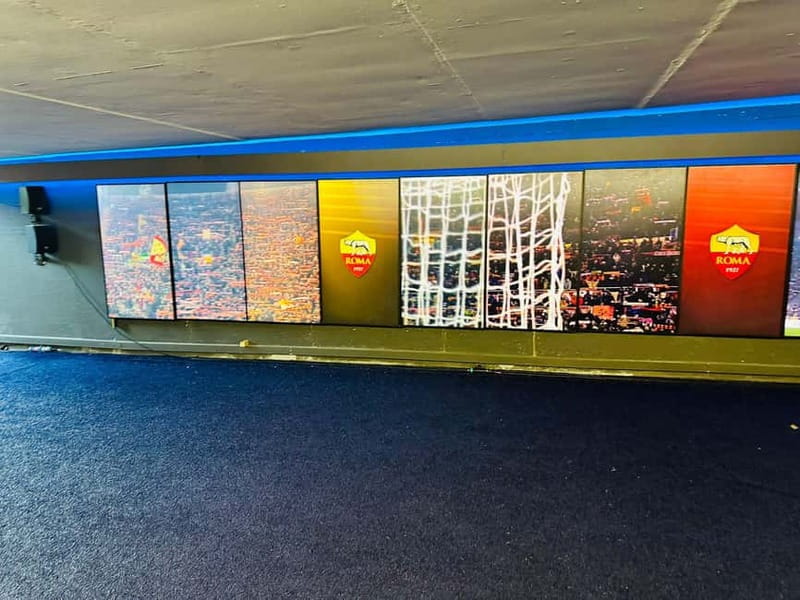
The locker rooms are one of the clearest reasons to choose the guided visit. They offer a glimpse of the practical side of football: where teams prepare, gather, and wait before walking out. The guide adds stories about the clubs and the stadium, making the room more meaningful than an empty changing area.
You also get close to the pitch. Several people particularly valued seeing the field and having enough time for photographs. One family highlight was seeing a child appear on the stadium scoreboard, though you should not treat that as a guaranteed part of every tour.
The pitch visit is not the same as attending a match. You will not have the crowd, noise, or floodlights of a live fixture. Still, standing near the field where major football moments have taken place gives the stadium a useful sense of scale. It is also a good photo stop, and guides have been praised for taking pictures for the group.
This is where the quality of the guide matters most. Angelica has been singled out for keeping people involved and making sure everyone was ready before moving on. Simone has been praised for answering questions and explaining both clubs in detail. A strong guide turns a series of rooms into a story.
How much football knowledge do you need?
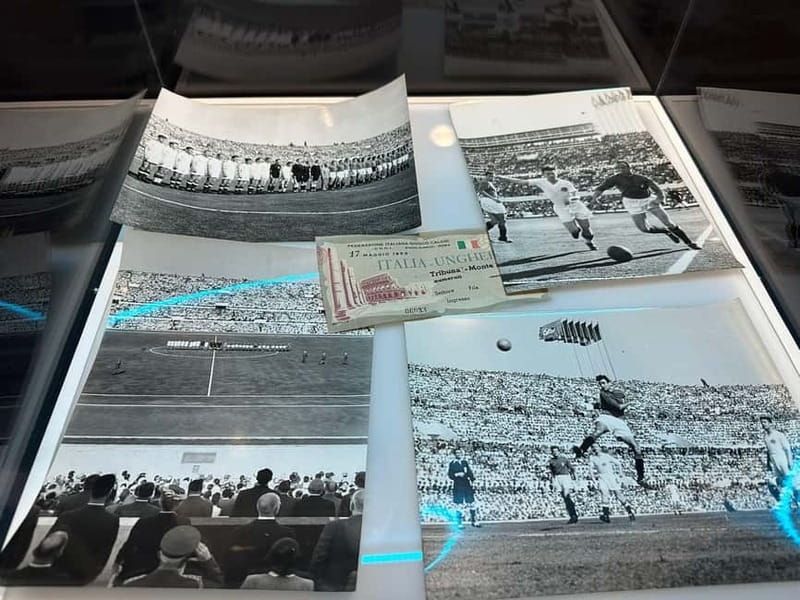
You do not need to follow Serie A or know the difference between Roma and Lazio to enjoy the tour. The rivalry is explained as part of the stadium’s identity, and the wider discussion of Italian sports culture gives non-football fans useful points of interest.
I would recommend it most strongly to people who already follow football, especially supporters of Roma, Lazio, or English clubs interested in European football. You will recognize the emotional importance of the pitch, changing rooms, and player entrance more quickly.
Still, the tour can work well for couples or families with mixed interests. One person may focus on club history while another pays attention to Fascist architecture, Olympic connections, or the design of the sports complex. A non-sports visitor described the experience as enjoyable because the guide covered much more than football.
Teenagers are also a good match for this activity. A young visitor was especially enthusiastic, and the combination of locker rooms, pitch access, and stories about famous clubs gives the tour a clear focus. It is more active than a conventional history talk, but not physically demanding.
Guide quality and the listening problem
The strongest feature of this experience is the guide. Names that come up repeatedly in the available feedback include Angelica, Simone, Simeone, Kwanza, Camila, Dayana, and Valentina. Their styles differ, but the best qualities are consistent: clear English, useful background, friendly group handling, and willingness to answer questions.
Angelica is praised for warmth, photos, and historical detail. Simone receives high marks for explaining the stadium, the two Roman clubs, and Italian sports culture. Kwanza is noted for making the political and historical side easy to understand. Camila worked especially well for a mixed couple in which only one person followed sport.
There is one practical weakness: sound. In a crowded group, it may be difficult to hear the guide clearly, and one person specifically suggested microphones. Stay near the guide when possible and do not hesitate to ask for a point to be repeated.
The experience is not perfectly uniform. One visit was affected by a late guide and limited explanation, while another felt rushed. That suggests the guide assigned on your date can shape the experience more than the basic ticket does. The overall rating is 4.5 from 404 reviews, but I would still book it for the access and setting rather than assume every departure will be identical.
Free time, refreshments, and shopping
The schedule includes time connected with a local restaurant, followed by shopping at the stadium. The supplied details do not promise a full meal or a specific food inclusion, so think of this as a chance to pause or browse rather than a restaurant tour.
One visitor especially enjoyed beverages in the Monte Mario Gold area at the end. That may be part of the experience on some departures, but it is not listed as a guaranteed inclusion, so do not book this as a food or drinks experience.
The stadium shopping stop can be useful if you want a Roma, Lazio, or Olympic Stadium souvenir. It is not likely to be the main reason to book. The real value comes from the guided access and the stories attached to the place.
Price, timing, and possible changes
At $48 per person, this is not a bargain sightseeing ticket, but it is reasonable for a 90-minute guided experience with admission included and no ticket line. You are paying for access to the stadium’s interior, the locker rooms and pitch area, plus an expert-led walk through Foro Italico.
I would compare it with your interests. If you only want an exterior photo of the Olympic Stadium, you can spend far less by visiting the area independently. If you want the players’ route, stadium access, and explanations of the setting, the price becomes easier to justify.
The advertised duration is 1.5 hours, divided roughly into 40 minutes at Foro Italico and 45 minutes in the stadium, with a little time for transitions and other stops. The pace can feel brisk, especially if the group is large. At the same time, some people found there was enough time for photos and looking around.
The route is not fixed in stone. Summer concerts are the biggest known complication, but matches, preparations, closures, and other stadium events can also change the content or close sections. All tours may be changed or cancelled at short notice for reasons outside the operator’s control.
You can cancel up to 24 hours before the start for a full refund, and the reserve-now, pay-later option keeps your plans flexible. The tour is wheelchair accessible, but you should tell the provider about accessibility needs when booking.
Is this Olympic Stadium tour right for you?
Book it if you want to see the working side of Rome’s main football stadium, not just its exterior. It is especially suitable for football fans, families with sporty teenagers, and visitors curious about Fascist-era architecture and modern Italian sports culture.
I would also recommend it to anyone who likes guided context. The Mussolini Obelisk and Foro Italico can be confusing without background, while the stadium’s locker rooms and pitch mean more when someone explains their role.
Think twice if you dislike group tours, need a quiet pace, or expect guaranteed access to every stadium section. Concerts and sporting events can change the route, and sound may be an issue when the group is large.
For most people, the combination of Foro Italico’s political and architectural setting with behind-the-scenes Olympic Stadium access makes the $48 worthwhile. Choose your date carefully, arrive at the Obelisk meeting point early, stay close enough to hear the guide, and treat the route as flexible. If those conditions suit you, this is a smart way to spend 90 minutes in a part of Rome many visitors skip.
FAQ
Where does the Olympic Stadium and Foro Italico tour start?
The tour starts at the Mussolini Obelisk, also called the Obelisco Mussolini, in the Foro Italico area.
How long does the tour last?
The experience lasts about 1.5 hours. The Foro Italico guided section takes about 40 minutes, and the Olympic Stadium guided section takes about 45 minutes.
What languages are available?
Live guides are available in Italian, English, French, and Spanish. Some content may be presented in its original language.
What parts of the stadium can I see?
The planned visit includes the players’ entrance, locker rooms, the pitch area, and the stadium interior. The exact route can change because of matches, concerts, preparations, or other stadium restrictions.
Is the tour wheelchair accessible?
Yes, the activity is listed as wheelchair accessible. If you have specific accessibility needs, you should provide that information when booking.
Can I cancel the booking?
Yes. You can cancel up to 24 hours before the tour for a full refund. You can also reserve now and pay later, according to the booking conditions.
Just added for fans in Rome
- Guided Group Tour of Colosseum with Arena Floor★ 4.5 · 18 reviews
- Rome: Navona Underground and Domitian Stadium Guided Tour★ 4.5 · 8 reviews
- Rome : Colosseum Underground and Arena Tour (MAX 7 PEOPLE)★ 5.0 · 17 reviews
- Rome: Join a AS Roma or Lazio football match with Local★ 5.0 · 2 reviews
- Small-Group Rome Tour by Golf-Cart★ 5.0 · 2 reviews
- Exclusive Private Golf Cart Tour of Rome★ 5.0 · 5 reviews
- Private Colosseum Arena Tour with Expert Guide – all inclusive★ 5.0 · 40 reviews
- Rome Golf-Cart Rental★ 5.0 · 35 reviews
Olympic Venues, compared.
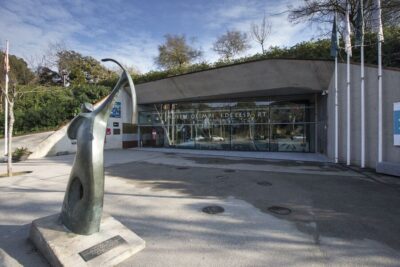
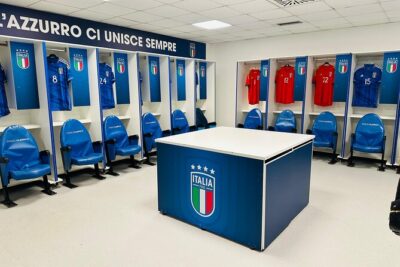
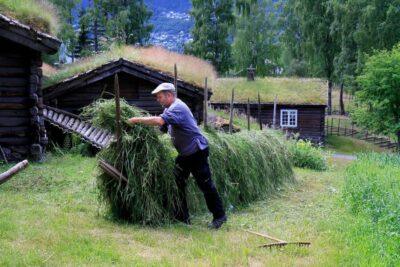
Maihaugen Museum/The Norwegian Olympic Museum, Lillehammer.
Read our review →Browse the lists this tour appears in