
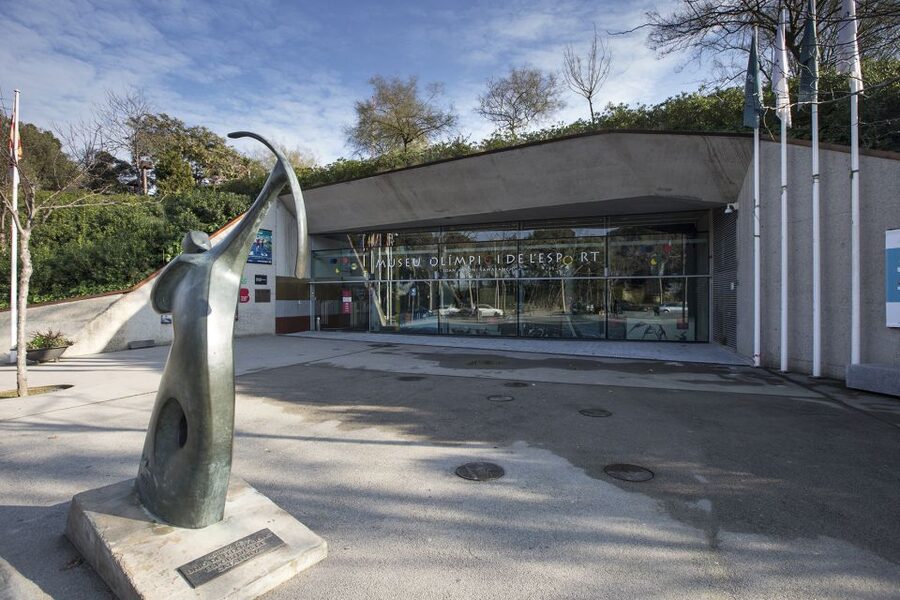
Review · OLYMPIC VENUES
Barcelona: Olympic and Sport Museum – Sports Experience
The best part of Barcelona’s Olympic and Sport Museum is that it does not ask you to simply look at medals behind glass. You can race against Carl Lewis or Usain Bolt, compare swimming techniques linked to Mark Spitz and Michael Phelps, and test your own cycling or weightlifting skills through interactive displays. I like the hands-on sports stations and the clear look at Olympic host cities. I also like the special Paralympic section, which gives the museum more range than a standard sports hall.
I also appreciate the low $7 admission price, especially for families or anyone already visiting Montjuïc. The main caution is that the Barcelona 1992 material is smaller than some people may expect, and much of the experience is presented in Spanish. It is best viewed as an interactive sports museum, not a full tour of every Olympic venue.
Key points at a glance
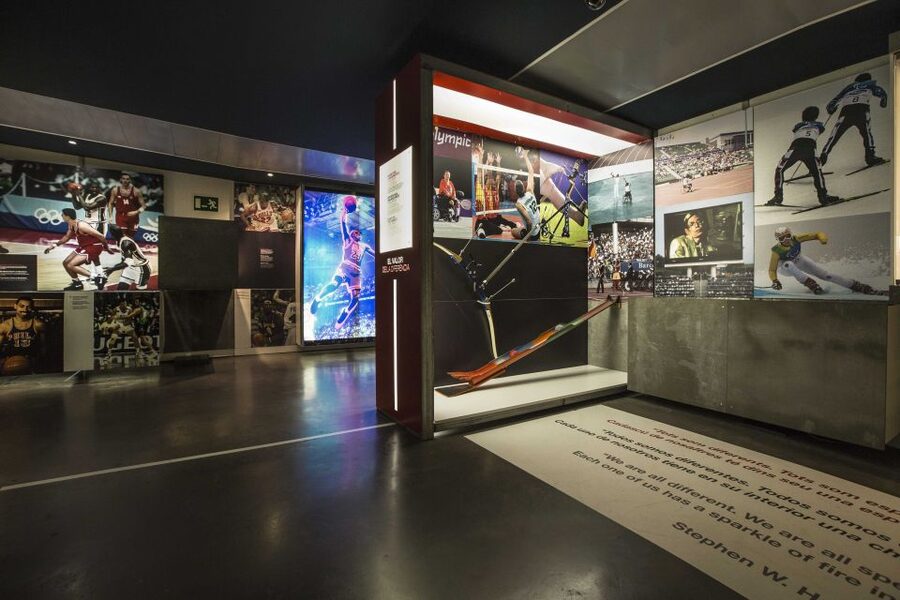
- Race against Olympic legends: Try digital challenges inspired by sprinters Carl Lewis and Usain Bolt.
- Explore many sports: The displays cover football, Formula 1, skiing, cycling, canoeing, tennis, swimming, and weightlifting.
- See Barcelona 1992 memorabilia: The permanent collection includes objects and sporting paraphernalia from the Barcelona Games.
- Visit the Paralympic section: Learn about blind football, visually impaired football, and wheelchair basketball.
- Good family value: Children have interactive games, while adults can follow Olympic history and examine sporting objects.
- Allow flexible time: The ticket is valid for one day, but no fixed visit length is provided.
Starting on Montjuïc with sport in every direction
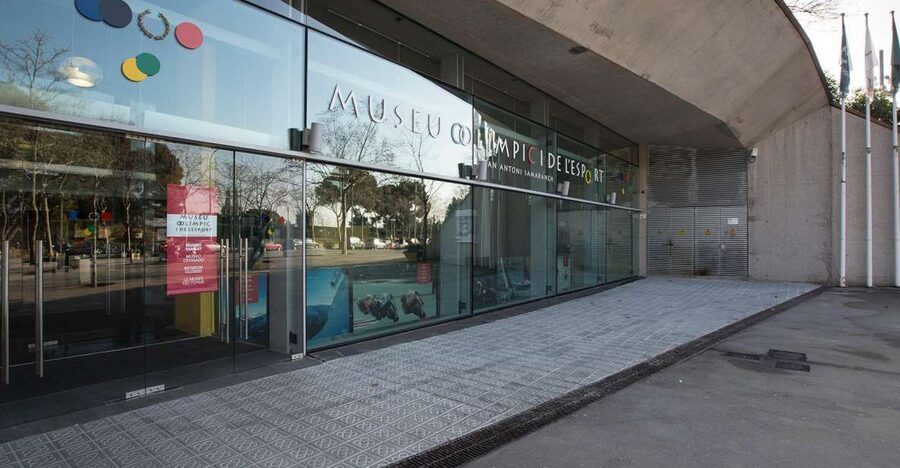
The museum sits on Montjuïc hill, one of Barcelona’s main sports and culture areas. That location matters. You are not visiting an isolated collection with no connection to the city. The Olympic theme is tied to the wider Montjuïc setting, and the stadium area is nearby.
One recent visit found the stadium open just down the road, offering good photo opportunities and views. Access to the stadium is not presented as part of this museum ticket, so treat it as a possible extra stop rather than a promised inclusion. Still, pairing the museum with the surrounding Olympic sites makes the visit feel more complete.
The museum is designed for a self-guided visit. A Spanish-speaking host or greeter is listed, but there is no guided tour in several languages. If you do not speak Spanish, the visual displays, sports equipment, videos, and interactive stations should still give you plenty to do, though detailed written information may take more effort.
More Sports Museums in Spain
- Barcelona: FC Barcelona Museum “Barça Immersive Tour” Ticket
★ 4.4 · 10,944 reviews - Camp Nou Immersive Tour F.C.Barcelona Museum: Open Date Ticket
★ 4.0 · 1,307 reviews - Barcelona: FC Barcelona Museum Total Experience Pass
★ 4.3 · 464 reviews
Testing your speed, balance, and sporting skill
The interactive sports area is the museum’s main reason to visit. Instead of walking past one display after another, you get chances to try different sports through multimedia installations and simulators.
The sprint challenge lets you race digital versions of famous athletes such as Carl Lewis or Usain Bolt. You will not be measuring yourself against a real Olympic track time, of course, but the setup gives children and adults a reason to take part rather than simply observe.
Other stations focus on swimming, cycling, and weightlifting. The swimming displays refer to the techniques of Mark Spitz and Michael Phelps. Cycling lets you work on your riding skills, while weightlifting offers a taste of the strength and precision needed in that sport.
The museum also covers football, Formula 1, skiing, canoeing, and tennis. That broad mix is useful if your interest is not limited to the Summer Olympic Games. Formula 1 is not an Olympic sport, and neither are several other activities shown here, but their inclusion helps explain how the museum treats sport as a wider subject.
You should expect a playful experience, not a serious training session. The simulators give you a short, memorable taste of a sport. They do not replace a real race, ski run, or cycling route, but they add a welcome bit of action to the visit.
Following the Olympic Games from city to city
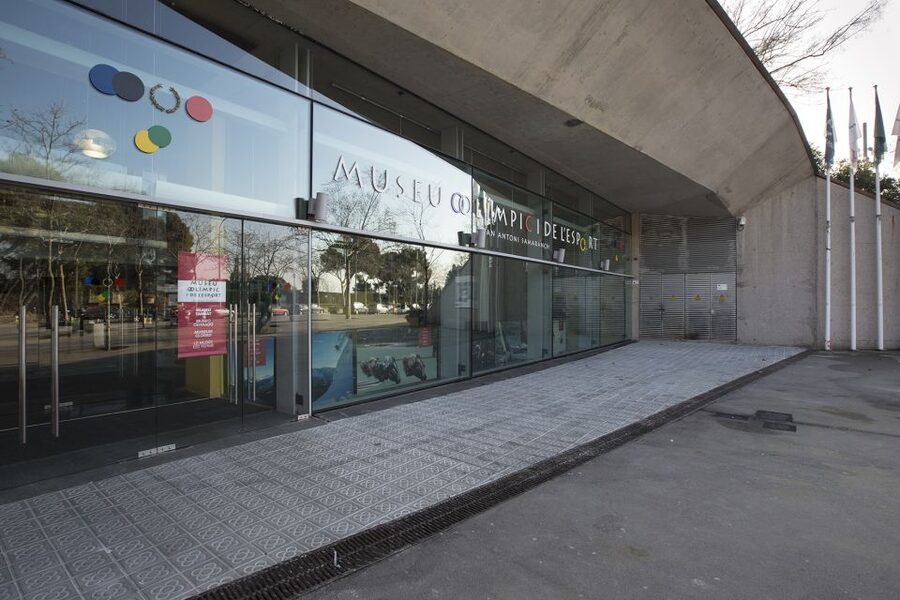
A permanent exhibition explains the history and locations of the Olympic Games. It includes host cities from Barcelona 1992 to London 2012, giving you a useful timeline of how the event has moved around the world.
This section works best if you enjoy the wider story of the Games: changing host cities, different sports, famous moments, and the objects that surround each edition. It gives context to the Olympic movement instead of focusing only on medal winners.
The Barcelona 1992 material is especially relevant while you are in Barcelona. You can see paraphernalia from those Games and connect the museum displays with the Olympic sites around Montjuïc. Still, keep your expectations in check. The Barcelona 1992 section is described as fairly small, with limited video coverage of the sports. If Barcelona’s Olympic architecture and ceremonies are your main reason for visiting, you may want to spend time outside the museum as well.
For $7, the host-city display does not need to carry an entire day by itself. It works as one part of a larger visit, with the interactive stations and special exhibits adding variety.
The Idols space and the details fans notice
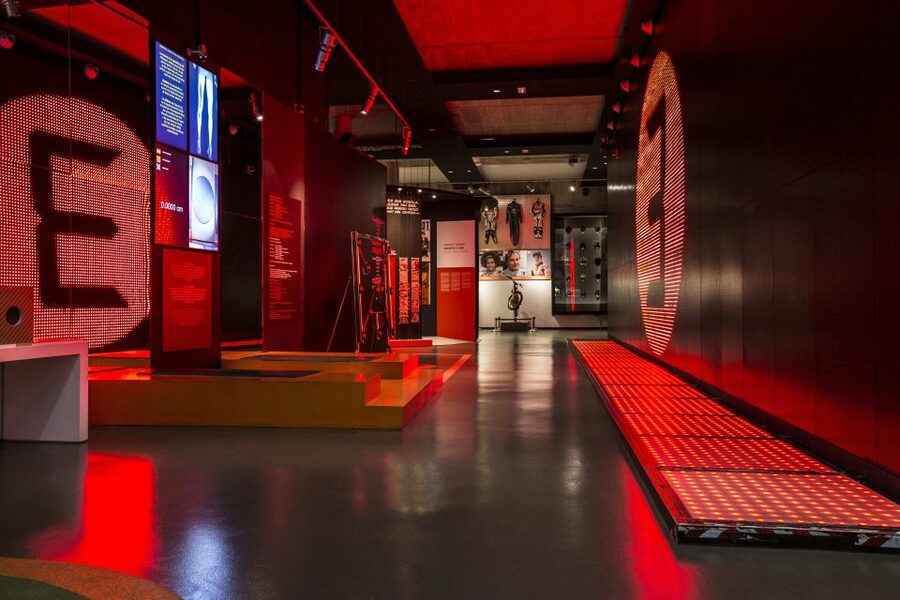
The Idols space focuses on trophies, milestones, and objects connected with major athletes and sporting moments. This is where the museum shifts from broad Olympic history to personal achievement.
One amusing feature lets you compare your shoes with those of athletes such as Michael Jordan, Pau Gasol, and Roberto Dueñas. That simple comparison can make the size and physical demands of elite sport more real than a written statistic. It is also the kind of feature that works well for children, who may not spend long reading a timeline.
You can also see the Samaranch collection. The supplied information does not specify every item in that collection, so I would treat it as an additional historical display rather than expect a detailed guided presentation. A live sports match may also be available in the museum, adding a changing element to the visit.
The strongest displays here will depend on your interests. Basketball fans may pay special attention to the footwear and Spanish players. Olympic enthusiasts may prefer the trophies and milestones. Families may move quickly through the objects and spend more time at the interactive stations.
More Olympic Venues in Barcelona:
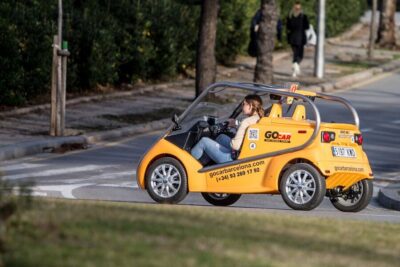
- Barcelona: City Center and Olympic Park GoCar Experience
★ 4.8 · 146 reviews - Olympic and Sport Museum of Barcelona “Joan Antoni Samaranch”
★ 4.5 · 22 reviews - Private Montjuic Mountain Tour with Visit to Olympic Park and Plaza España
★ 5.0 · 20 reviews - BARCELONA SPORTS VIP – Camp Nou – La Masia & Montjuic (Olympic)
★ 4.5 · 3 reviews
A serious look at Paralympic sport
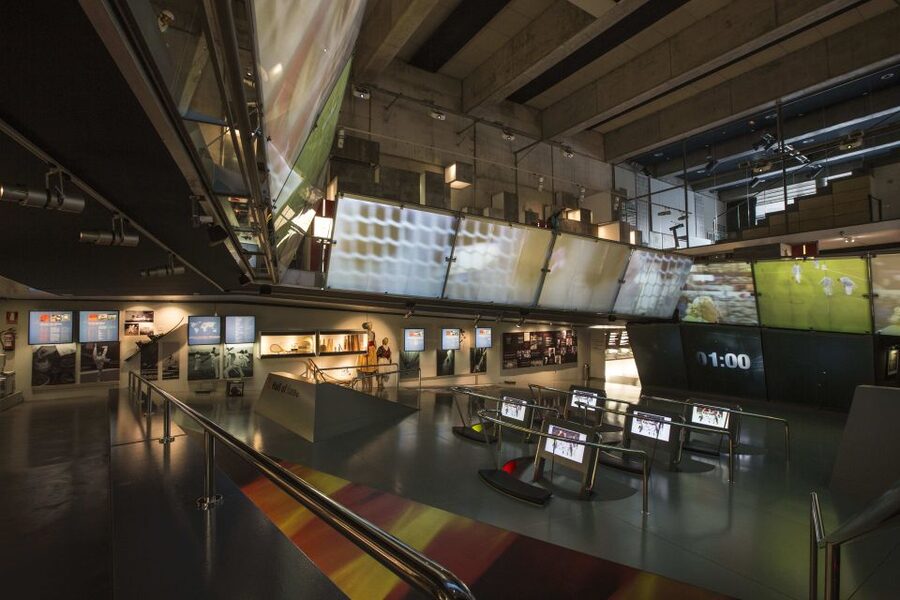
The Paralympic section is one of the museum’s most worthwhile features. It explains the development of the Paralympic Games and includes sports such as football for blind and visually impaired players and wheelchair basketball.
This section matters because it broadens the usual Olympic story. A museum focused only on famous medal ceremonies and record-breaking performances would leave out a major part of modern sport. Here, you get a chance to consider how athletes compete with different physical abilities and how sports are adapted.
The displays are also useful for families. Children may understand the idea of wheelchair basketball or blind football more easily when they can see the sport presented through dedicated exhibits. Adults get a chance to place Paralympic competition within the wider history of international sport.
Do not rush this area just because the simulators look more immediately fun. The interactive equipment catches attention first, but the Paralympic material adds depth and purpose to the museum.
Temporary exhibitions add another reason to visit
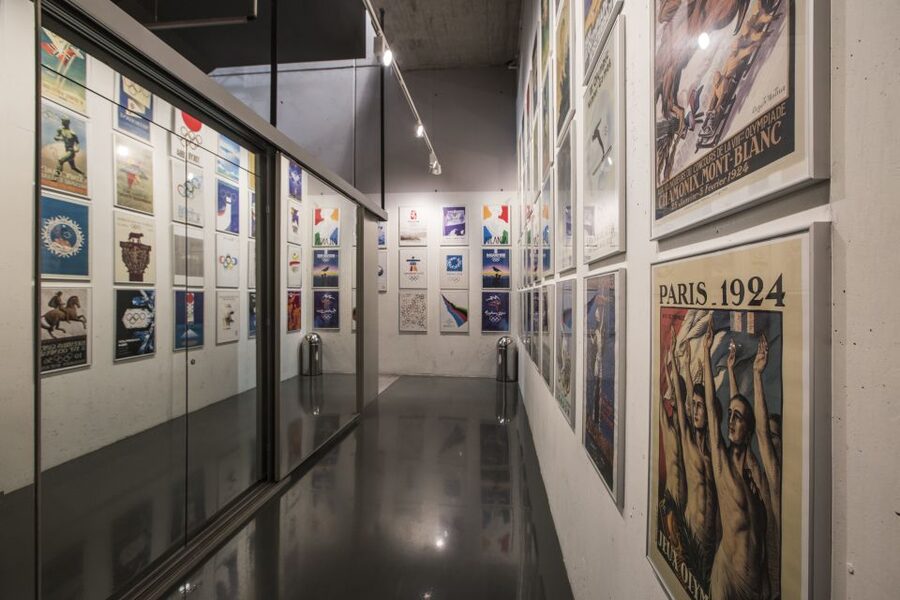
Your ticket includes temporary exhibitions, so the museum changes over time. Two exhibitions are listed with specific end dates.
Values and Emotions of the COPLEFC Photography Contest runs until January 25, 2026. The contest began in 1999 and has gathered hundreds of images across 26 editions. The photographs look at the feelings and values connected with physical activity and sport.
This is a useful change of pace after the technology-heavy displays. You move from testing your reaction speed or cycling skills to considering how sport is photographed and remembered. The exhibition can appeal even if you are not a dedicated Olympic fan.
The XI Barcelona Olympic Foundation International Art on Paper Award runs until November 9, 2025. The award has been organized since 2010, and the 2025 edition is described as the twelfth edition. It connects art with sport through works on paper.
Check the dates before booking if a temporary exhibition is important to you. These displays are included in the ticket during their stated runs, but they should not be treated as permanent parts of the museum. If you visit after those dates, the temporary content may have changed.
How long to allow, and how to plan the visit
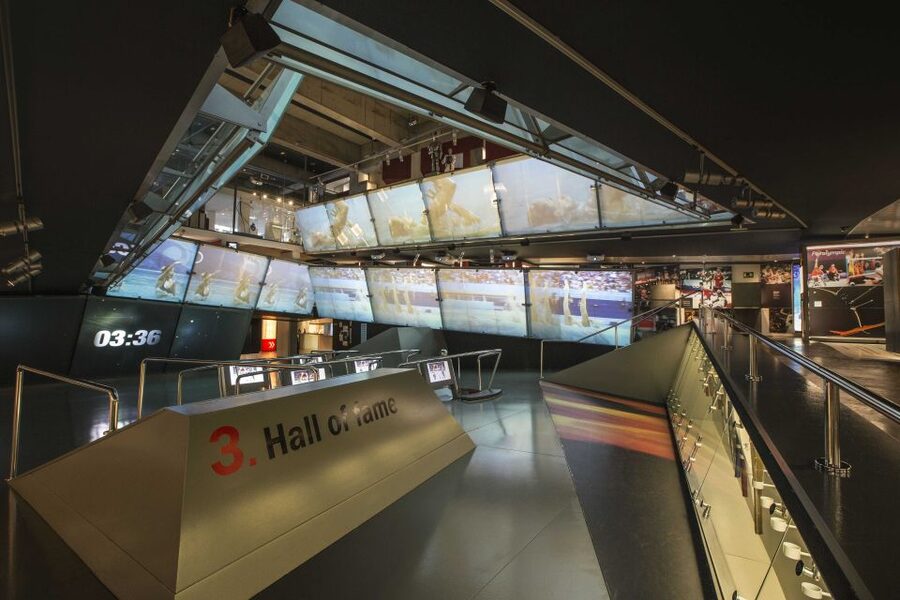
The ticket is valid for one day, and you choose from available starting times. The information does not give a fixed visit duration, so I would avoid building a tightly timed schedule around an exact number of minutes.
You can make a short stop if you mainly want the Olympic timeline and a few interactive stations. You can also stay longer if your family wants to try several sports, read the permanent displays, watch a live match, and visit the temporary exhibitions.
The museum provides Wi-Fi and toilets. Those are modest conveniences, but they help when you are visiting Montjuïc with children or combining several nearby sights. The museum is wheelchair accessible, which is especially relevant given the focus on Paralympic sport.
Unaccompanied minors are not allowed. Children need to visit with an adult, so this is not a drop-off activity.
What the $7 ticket is really worth
At $7 per person, this is one of the easier Montjuïc admissions to justify. You get the permanent Olympic collection, interactive sports equipment, the Idols space, the Paralympic section, and any temporary exhibition included during your visit.
The value is strongest for families. A traditional museum can lose younger children after a few display cases, but the race and sports simulators give them something active to do. Adults can focus on the historical objects while children test the interactive features.
Sports fans may also find the price appealing, particularly if you want a broad look at Olympic and non-Olympic sports rather than one specialized collection. The museum covers enough ground to keep the visit varied.
The value is less clear if your only goal is Barcelona 1992. The local Olympic material is present, but it occupies a fairly small area, and the museum does not promise a full venue tour or an extensive video archive of the Games. In that case, think of the museum as a modestly priced addition to your Montjuïc day.
The overall rating is 4.4 from 65 ratings, and the strongest practical themes are good value, a quiet atmosphere, an interesting presentation, and activities that work for both younger and older visitors. That quiet setting may suit you if you prefer to explore without a large crowd pressing you from room to room.
Who will enjoy this museum most
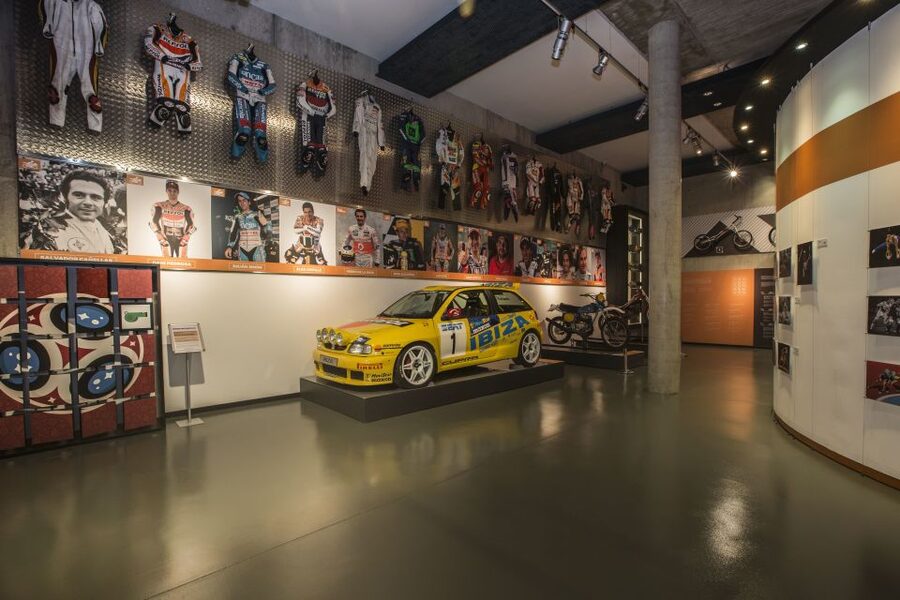
I would recommend the museum most strongly to families, casual sports fans, and visitors already planning time on Montjuïc. You get enough active content to keep children interested, plus enough history and memorabilia to give adults a reason to slow down.
It also suits anyone who likes learning through objects and activity rather than long blocks of text. The digital races, sports simulators, footwear comparisons, and multimedia displays make the subject easy to approach.
Dedicated Olympic historians may want more detail on individual Games, more video material, and a larger Barcelona 1992 section. The museum offers an overview, not an exhaustive archive.
Language is another consideration. Spanish is the listed language, and the host or greeter is Spanish-speaking. If you need a full English-language explanation for every display, this may not be the right choice. If you are comfortable learning from visual material and trying the activities directly, the language issue should be less serious.
Booking flexibility and practical details
You can cancel up to 24 hours before the visit for a full refund. The reserve now and pay later option lets you hold a place without paying at the time of booking, which is useful when your Barcelona schedule may change.
The ticket is valid for one day, and availability determines the starting times. Since the visit is not described as a fixed guided tour, you should think of it as an admission to explore at your own pace.
The listed provider is Touristcheck, Museu Olimpic. The experience is wheelchair accessible, includes Wi-Fi and toilets, and does not permit unaccompanied minors.
Should you book the Olympic and Sport Museum?
Book it if you want an affordable, active museum visit with family-friendly displays, Olympic memorabilia, and a thoughtful Paralympic section. The combination of sports simulators and historical objects gives the museum more variety than a collection made up only of medals and photographs.
I would especially add it to a Montjuïc day, when its location and nearby stadium area make practical sense. At $7, it is a low-risk choice, and the quiet setting may be a welcome break from Barcelona’s busiest sights.
Skip it if you want a large, detailed tribute devoted only to the 1992 Barcelona Olympics. The local section is not the main event, and the Spanish-only presentation may limit the experience for some visitors. For most families and general sports fans, though, the price, interactive features, and broad range of sports make this a sensible stop.
FAQ
Where is the Olympic and Sport Museum located?
The museum is located on Montjuïc hill in Barcelona, Catalonia, Spain.
How much does admission cost?
The listed price is $7 per person.
How long is the experience?
The ticket is valid for one day, but no fixed visit duration is provided.
What languages are available?
The listed language is Spanish, and the host or greeter is Spanish-speaking.
Is the museum wheelchair accessible?
Yes, the museum is wheelchair accessible.
Can children visit alone?
No. Unaccompanied minors are not allowed.
What sports are covered?
The museum covers Olympic and non-Olympic sports including football, Formula 1, skiing, cycling, canoeing, tennis, swimming, and weightlifting.
Can I try any sports at the museum?
Yes. Interactive installations and simulators let you try activities such as sprinting, cycling, swimming-related challenges, and weightlifting.
Does the museum include Paralympic content?
Yes. A dedicated section covers the history of the Paralympic Games and includes blind and visually impaired football and wheelchair basketball.
Are temporary exhibitions included?
Yes. Temporary exhibitions are included with the entrance ticket. The listed exhibitions have specific end dates, so check the current schedule when booking.
More Sports Museums in Barcelona
- Football Club Barcelona Museum Immersive Tour Guided Visit
★ 3.5 · 52 reviews - Barcelona: FC Barcelona Museum Private Tour
★ 4.6 · 14 reviews - Barcelona: FC Barcelona Museum Virtual Experience
★ 4.3 · 7 reviews - Spotify Camp Nou Tour F.C. Barcelona Museum (Open Date Ticket)
★ 3.5 · 5 reviews
Just added for fans in Barcelona
- Spotify Camp Nou Tour F.C. Barcelona Museum (Open Date Ticket)★ 3.5 · 5 reviews
- Discover Leo Messi’s secrets at Barça Café – Camp Nou★ 5.0 · 22 reviews
- Transport Barcelona★ 4.5 · 2 reviews
- Private 4h Tour Of Camp Nou And Most Emblematic Sites Of Barcelona with pick up★ 4.5 · 3 reviews
- BARCELONA SPORTS VIP – Camp Nou – La Masia & Montjuic (Olympic)★ 4.5 · 3 reviews
- Olympic and Sport Museum of Barcelona “Joan Antoni Samaranch”★ 4.5 · 22 reviews
- Football Club Barcelona Museum Immersive Tour Guided Visit★ 3.5 · 52 reviews
- FC Barcelona Soccer Match VIP Ticket 2024/25★ 4.5 · 8 reviews
Olympic Venues, compared.
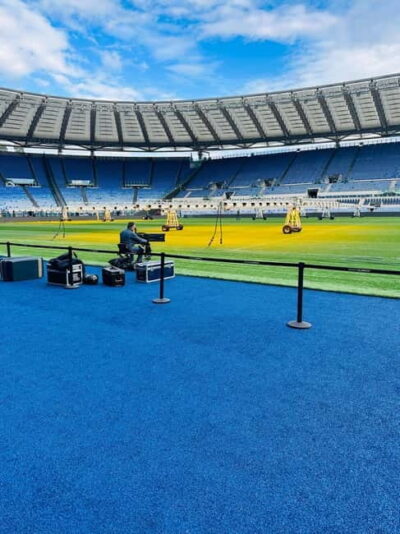
Tickets and Guided Tour of the Olympic Stadium in Rome and Foro Italico
Read our review →


Maihaugen Museum/The Norwegian Olympic Museum, Lillehammer.
Read our review →Browse the lists this tour appears in