
Review · OLYMPIC VENUES
Barcelona: City Center and Olympic Park GoCar Experience
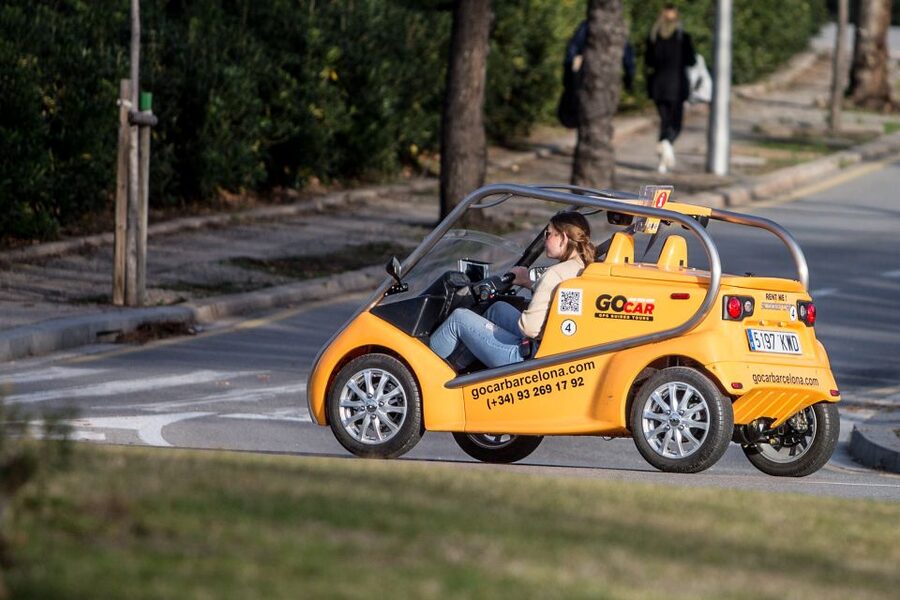
The best thing about this Barcelona outing is the feeling of being part driver, part sightseeing performer. You guide a two-seat yellow GoCar through the center, while its GPS system gives directions and tells stories about the places around you. It is an easy way to cover ground without sitting inside a bus.
I like the route’s variety, from the Sagrada Familia and Passeig de Gracia to the open roads and views of Montjuic. I also like the friendly setup at Arc de Triomf, where staff explain the car and route before you set off. The main catch is that the GPS route leaves little time for long stops, and the half windscreen offers limited protection if Barcelona sends rain your way.
Key points to know before you drive
- The route covers major sights: You pass the Sagrada Familia, Las Ramblas, El Raval, Poble Sec, Montjuic, and Port Olympic in one circuit.
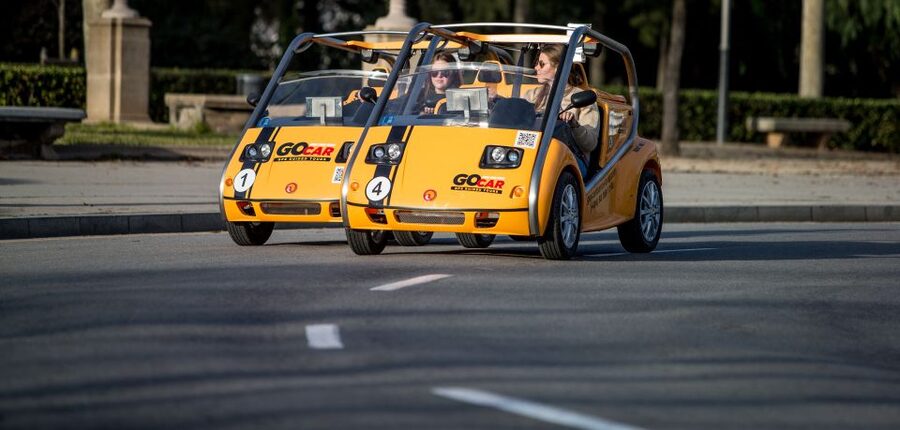
- One car carries two people: You need one driver aged 21 or older, while passengers must be at least 7.
- The GPS does the guiding: Directions and recorded commentary are available in Spanish, Catalan, English, French, German, Italian, Portuguese, and Russian.
- Montjuic is the scenic high point: The route includes the Olympic Stadium, MNAC, Miro Foundation, Poble Espanyol, and Montjuic Castle.
- Budget for the security deposit: A €300 deposit is required by credit card or cash, then returned after the car is brought back.
- Weather matters: Ponchos are provided, but put them on before the rain starts. The open car does not give you much shelter.
Why a GoCar works well in Barcelona
Barcelona is spread across several sightseeing zones. The Gothic center, Gaudí’s major works, Montjuic, and the waterfront do not all sit within a short walk of one another. This three-hour drive links them in one moving tour, which can save you a good deal of time if your stay is brief.
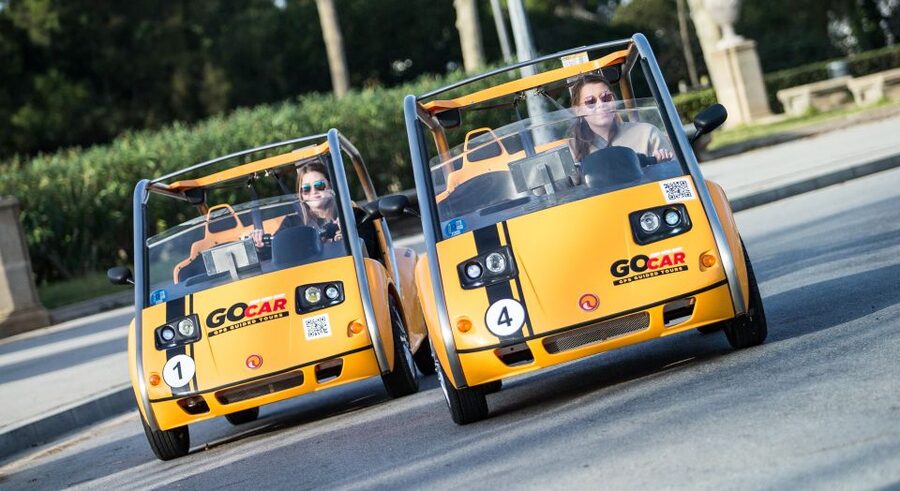
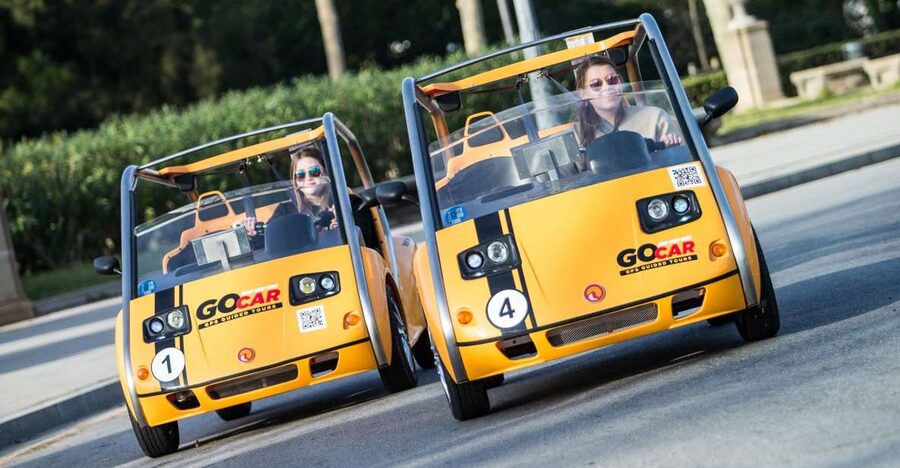
The car is small, bright yellow, and easy to spot. That makes it fun, but it also makes you part of the street scene. People may wave, smile, or take pictures as you pass. You should expect attention rather than blend into traffic.
You receive unlimited mileage, third-party insurance, GPS navigation, and tax in the price. At $65 per person, the value depends on how you use it. For two people sharing one car, you get transport, a self-guided tour, and a city overview in one booking. It is less compelling if you want long visits inside museums or monuments, since this is mainly a moving sightseeing experience.
The private-group setup is useful for couples, friends, or a parent and older child who want their own space. You are not sharing a coach with strangers, and you can hear the audio without a guide speaking over a large group. Still, the driver must focus on traffic. The passenger gets the easier view of the city, while the driver has to keep eyes on the road.
More Olympic Venues in Barcelona:
- Barcelona: Olympic and Sport Museum – Sports Experience
★ 4.4 · 65 reviews - Olympic and Sport Museum of Barcelona “Joan Antoni Samaranch”
★ 4.5 · 22 reviews - Private Montjuic Mountain Tour with Visit to Olympic Park and Plaza España
★ 5.0 · 20 reviews
Starting at Arc de Triomf
The meeting point is GoCar HQ at Passeig de Pujades 7, near the Arc de Triomf. This is a practical place to begin because it is easy to find and gives you a clear starting point before the route enters central Barcelona.
Allow time for the safety briefing and paperwork. Bring your driving license, a credit card, and cash. You must provide a €300 deposit in cash or by credit card, so plan for that temporary hold or payment. The driver must have a license valid in Spain and be at least 21 years old.
The car seats two people. If you are traveling as a pair, decide before setting off who wants to drive first. The driver controls the experience, but the passenger may have more time to look at buildings, listen to the commentary, and wave back at pedestrians.
Staff explain the controls and GPS directions before departure. That preparation matters because city driving can feel busy at first. One person found the car a little cramped, so larger passengers should keep that in mind. The car is designed for fun and access, not for roomy comfort.
From Gaudi to Passeig de Gracia
The route heads toward the city center and includes the Sagrada Familia. You may not have time to visit inside, but seeing the basilica from the road gives you a useful first look at Barcelona’s most famous modernist work.
The GPS then guides you toward Passeig de Gracia, one of the city’s grandest avenues. This stretch is known for major architecture, polished shops, and heavy traffic. It gives you a sense of Barcelona as a city of broad avenues and ornate buildings, not just narrow old lanes.
This part requires attention from the driver. You should not expect to stop wherever a landmark catches your eye. The GPS route is planned as a continuous circuit, and the full drive takes about three hours. One person found the route itself lasted roughly two hours and 45 minutes, leaving very little time for scenic stops.
That is an important point when you plan your day. Think of the GoCar as an orientation tour with moving views, not as a series of long monument visits. If the Sagrada Familia or a building on Passeig de Gracia is a major priority, schedule a separate visit.
Las Ramblas, El Raval, and Poble Sec
Driving down Las Ramblas gives the experience its most theatrical moment. In a bright yellow open car, you are easy to notice. You may get waves and phone cameras from people along the route, which adds a playful, slightly comic touch to the ride.
Las Ramblas is also a place to stay alert. It is a busy central thoroughfare, and the driver needs to follow the GPS while watching traffic and pedestrians. The passenger can enjoy the scene more freely, so this section is a good reason to switch drivers only if doing so is safe and permitted during the tour.
The route continues through El Raval and Poble Sec before climbing toward Montjuic. These neighborhoods give you a look beyond Barcelona’s headline sights. You pass from the famous central boulevard into districts with a more everyday urban feel, then gradually leave the dense center behind.
The audio commentary adds context as you drive. It is available in eight languages: Spanish, Catalan, English, French, German, Italian, Portuguese, and Russian. The system is useful for keeping the route clear, though one person found the GPS a little hard to follow. Listen closely at turns, and let the passenger help with navigation when possible.
More Sports Experiences in Barcelona:
- Barcelona: FC Barcelona Match Tickets at Spotify Camp Nou
★ 4.6 · 62 reviews - Football Club Barcelona Museum Immersive Tour Guided Visit
★ 3.5 · 52 reviews - Barcelona: Ultimate Football Tour – 4 Stadiums & 2 Museums
★ 4.8 · 33 reviews - Barcelona’s Ultimate All-Inclusive Football Tour
★ 5.0 · 18 reviews
Climbing Montjuic for open roads and views
Montjuic changes the mood of the tour. After the tighter city streets, the route opens up as it climbs the hill. You get broader views and a calmer driving setting, though you still need to follow the road rather than treat every viewpoint as a guaranteed stop.
The hill includes several of Barcelona’s major cultural and sporting sights:
- Poble Espanyol, a purpose-built architectural and craft center
- MNAC, the Museu Nacional d’Art de Catalunya
- The Olympic Stadium, linked to Barcelona’s 1992 Olympic era
- The Miro Foundation, dedicated to the work of Joan Miro
- Montjuic Castle, a hilltop fortress
You should see these places from the route, but the tour does not include entry tickets. The value here is the broad sweep: you get a quick look at several Montjuic landmarks in one pass, then can decide which deserves a proper return visit.
The Olympic Stadium is especially meaningful because it connects the hill to the city’s major transformation around the 1992 Games. Even if you are not a sports fan, the area helps explain why Montjuic is such an important part of Barcelona’s modern identity.
The best views come when the road opens over the city and coast. Bring sunglasses on bright days, and keep your phone secure in the open vehicle. The half windscreen gives you a direct view, but it also leaves you exposed to wind and weather.
Returning by the coast to Port Olympic
After Montjuic, the route comes back down toward the waterfront. Following the coastline gives the final part of the drive a different feel from the central neighborhoods and hill roads.
You pass toward Port Olympic before making the final turn back to GoCar HQ. This closing section helps you connect Barcelona’s inland sights with its seafront redevelopment. It also gives you another chance to see the city from the road rather than from a fixed viewpoint.
The route is broad in scope, but it is not a hop-on, hop-off service. You cannot treat each landmark as a separate stop with unlimited time. If you stop for photographs, you will need to manage the clock carefully. The GPS may tell you to pause for scenery, yet the planned route can still use nearly the full three hours.
That timing makes the experience best for a first look. I would use it early in a Barcelona stay, then return later to the places that caught your eye. It works particularly well when you want to understand how the center, Montjuic, and the waterfront fit together.
What the GPS commentary adds
The GoCar has two jobs. It gives turn-by-turn directions, and it tells stories about the sights around you. That combination makes the experience more than simply renting a small car and following a map.
The audio guide is included, with the same eight language choices as the live tour support. You can choose the language that lets you follow the information without having to translate while driving.
The system is generally a strong part of the experience, but it demands attention. If the driver tries to watch the road, read signs, hear commentary, and plan a photograph at the same time, the tour can feel rushed. Let the passenger help with the route and save pictures for safe stops.
The audio also means the experience does not depend on a guide walking or driving beside you. You get privacy and control, but not the chance to ask questions as you go. If you want detailed discussion about architecture or local life, a traditional walking tour may suit you better.
Weather, comfort, and driving reality
The GoCar is easy to drive, but this is still city traffic. You need confidence behind the wheel, especially around central Barcelona, where traffic and pedestrians can make the first section feel demanding. One driver admitted to a few nervous moments, though the staff preparation helped.
The car’s small size is useful on city streets, but it also means limited space. For two adults, it may feel cramped over three hours. The passenger has a more relaxed sightseeing position, while the driver does the work.
Weather can change the experience sharply. In heavy rain, the half windscreen offers little protection. Ponchos are provided, but put them on immediately if rain begins. Waiting until you are already soaked makes the rest of the route far less pleasant.
On a dry day, the open design is a major benefit. You hear the city, get a clear view, and feel more connected to the streets than you would inside a coach. On a wet or very hot day, the same openness becomes a drawback. Check the forecast before booking if you have flexibility.
The tour is not suitable for pregnant women, children under 7, or drivers under 21. These rules are firm planning details, not minor footnotes. The passenger age minimum is 7, while only someone aged 21 or older with a license valid in Spain may drive.
Is $65 per person good value?
At $65 per person, this is a mid-priced city activity. For two people sharing a private GoCar, the cost covers the vehicle, unlimited mileage, third-party insurance, GPS, audio commentary, and tax. You also get a route that reaches places difficult to combine on foot in three hours.
The price is easier to justify if you have only a few days in Barcelona. You can see central avenues, Montjuic, Olympic sites, and the coast without arranging several separate transport trips. It is also good value for people who enjoy driving and want an activity, not just a ride.
The value drops if your main goal is to enter attractions. No food, drinks, or admission tickets are included. You will need separate time and money for the Sagrada Familia, MNAC, Miro Foundation, Poble Espanyol, or Montjuic Castle.
Free cancellation up to 24 hours before the start gives you useful flexibility, and you can reserve now and pay later. That is handy when weather may affect your decision, though the deposit requirement still needs attention on the day.
Who should book the Barcelona GoCar?
I would recommend this for couples, friends, and families with children aged 7 or older who want a playful overview of Barcelona. It suits confident drivers who enjoy being outdoors and do not mind a bit of attention from people along the street.
It is especially useful early in your visit. The route shows you which parts of the city deserve more time, and the mix of Gaudi, central streets, Montjuic, Olympic sites, and the waterfront gives you a strong first orientation.
I would hesitate if you dislike city driving, need a spacious seat, or want long, quiet visits at each sight. I would also think twice in poor weather. The route is fun because it is open and compact, but those same features can make it uncomfortable in rain.
FAQ
Where does the Barcelona GoCar tour start?
The meeting point is GoCar HQ at Passeig de Pujades 7, Barcelona 08018, near the Arc de Triomf.
How long does the GoCar experience last?
The scheduled duration is three hours. The GPS route itself may take about two hours and 45 minutes, leaving limited time for stops.
How many people fit in one GoCar?
One electric GoCar seats two people.
How old must the driver be?
The driver must be at least 21 years old and have a driving license valid in Spain.
Can children ride in the GoCar?
Children must be at least 7 years old to ride as passengers. Children under 7 are not permitted.
What deposit is required?
You must provide a €300 deposit by credit card or cash.
Which languages are available?
The live tour support and audio guide are available in Spanish, Catalan, English, French, German, Italian, Portuguese, and Russian.
What is included in the price?
The price includes unlimited mileage, third-party insurance, GPS navigation, and tax. Food, drinks, hotel pickup, and hotel drop-off are not included.
Should you book the Barcelona GoCar experience?
Book it if you want a lively, efficient first look at Barcelona and enjoy the idea of driving your own bright yellow car through the city. The strongest reasons are the wide route, the Montjuic views, the private two-person setup, and the friendly preparation at the start.
Skip it if you want to spend serious time inside each attraction or if rain, traffic, and a cramped seat would spoil the fun. For the right pair, this is a memorable way to connect Barcelona’s center, hills, Olympic sites, and coast in one afternoon.
Just added for fans in Barcelona
- Spotify Camp Nou Tour F.C. Barcelona Museum (Open Date Ticket)★ 3.5 · 5 reviews
- Private 4h Tour Of Camp Nou And Most Emblematic Sites Of Barcelona with pick up★ 4.5 · 3 reviews
- Discover Leo Messi’s secrets at Barça Café – Camp Nou★ 5.0 · 22 reviews
- Transport Barcelona★ 4.5 · 2 reviews
- Olympic and Sport Museum of Barcelona “Joan Antoni Samaranch”★ 4.5 · 22 reviews
- BARCELONA SPORTS VIP – Camp Nou – La Masia & Montjuic (Olympic)★ 4.5 · 3 reviews
- Football Club Barcelona Museum Immersive Tour Guided Visit★ 3.5 · 52 reviews
- FC Barcelona Soccer Match VIP Ticket 2024/25★ 4.5 · 8 reviews
Olympic Venues, compared.
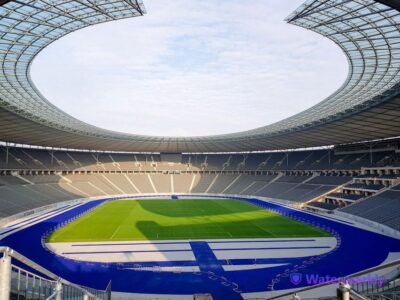
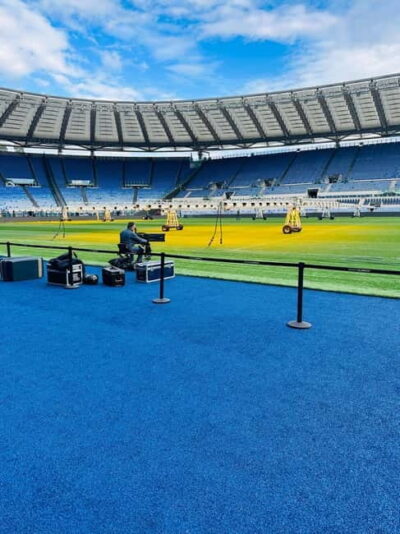
Tickets and Guided Tour of the Olympic Stadium in Rome and Foro Italico
Read our review →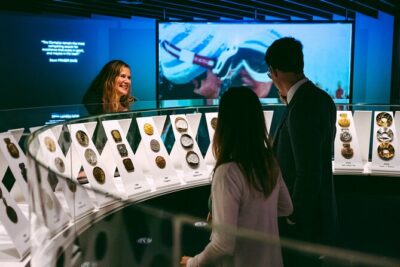


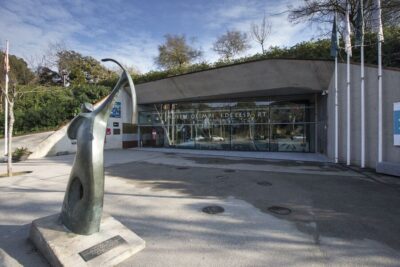

Maihaugen Museum/The Norwegian Olympic Museum, Lillehammer.
Read our review →Browse the lists this tour appears in