
Review · STADIUM TOURS
OM Stadium Tour
The most interesting part of the Orange Vélodrome tour is seeing the stadium from the inside, beyond the public seating bowl. You move through the spaces used by players and officials, including the dressing rooms, press room, interview area, corridors, VIP lounge, and pitch area. It is an independent visit, so you set your own pace rather than follow a guide.
I like the freedom to linger over the museum and displays, and I like the chance to see the stadium from a player’s point of view. The striking murals outside also add character before you even enter. The main drawback is that this is not a guided tour, English explanations can be limited, and construction or pitch work may affect what you see.
Key points to know before you go
- Self-guided access: You explore the Orange Vélodrome independently, with no regular guide leading the route.
- Player-side spaces: The visit includes dressing rooms, press areas, corridors, the VIP lounge, stands, and the pitch area.
- Museum stop: The museum is free to explore at your own pace, with displays and interactive features.
- Allow about an hour: The advertised duration is roughly 45 minutes to one hour, depending on how carefully you read and look around.
- English may be limited: Some historical information is not available in English, and the advertised audio tour may not always be operating.
- Flexible booking: The mobile ticket is useful, and cancellation is free up to 24 hours before the start time.
Inside Marseille’s Orange Vélodrome
The Orange Vélodrome is more than a football ground viewed from a seat on match day. This visit takes you into the working parts of the stadium, where the public normally has no reason to go. You can walk through the player areas, see the press room and interview zone, visit the VIP lounge, and look out from the stands.
That change of viewpoint is the chief reason to book. On match day, the stadium is noisy, crowded, and full of energy. During this tour, you get time to notice the practical details: the corridors, the rooms used before and after matches, the routes toward the field, and the difference between a private lounge and an ordinary spectator area.
You should think of it as a behind-the-scenes visit rather than a fully staged museum attraction. The route gives you access to important stadium spaces, but it does not promise a guide, a large trophy collection, or a polished show at every stop.
More Stadium Tours in the world:
- Liverpool: Liverpool Football Club Museum and Stadium Tour
★ 4.8 · 10,764 reviews - Amsterdam: Johan Cruijff ArenA Tour with Optional Guide
★ 4.6 · 8,954 reviews - Milan: San Siro Stadium and Museum Guided Tour
★ 4.3 · 5,567 reviews
A self-guided route at your own pace
The experience is described as free and autonomous, which means you are responsible for following the route and deciding how long to spend in each area. That works well if you already know what interests you. A football fan can focus on the dressing rooms and match-day spaces, while a casual visitor can spend more time with the museum displays and architecture.
I like this format for a stadium because it avoids the pressure of keeping up with a group. You can pause for photographs, read the panels, and take in the scale of the building without waiting for a large party to move along.
There is a trade-off. Without a guide, you do not get a running explanation of what happened in each room or why a particular space matters. One area may feel important to a football fan who knows the club well, but ordinary to someone hearing about it for the first time.
The best approach is to arrive ready to make your own discoveries. Read the available panels, look for visual details, and ask staff if you need help. Do not expect a guide to fill every gap.
The museum and interactive features
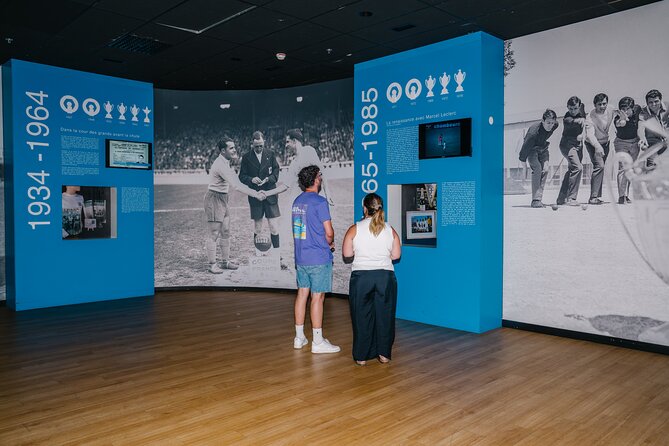
The museum is included in the admission and forms one of the most useful parts of the visit. It gives the stadium context instead of leaving you with only a sequence of empty rooms. You can take your time, which is helpful if you want to read the displays or study the club material closely.
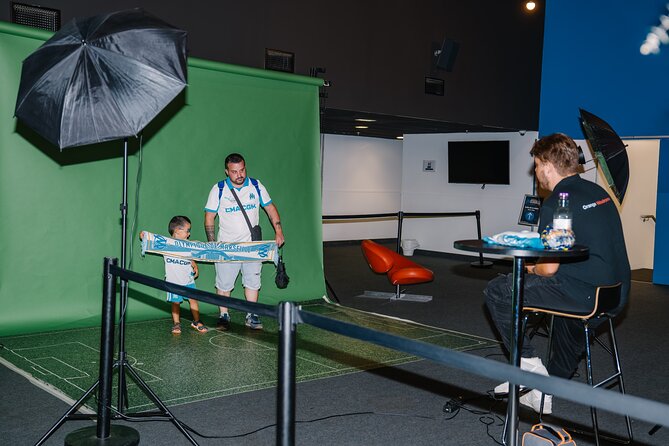
Interactive activity is also available and can be a welcome change from reading panels. It is particularly useful for families or for anyone visiting with a football fan who wants something more active than a standard museum display.
The quality of the information is not completely even for an international audience. Some historical explanations are not in English, so you may get less from the museum if you cannot read French. The displays are still worth seeing, but the language issue affects how much background you receive.
The advertised audio tour also deserves a caution. It was not available during at least one visit, so you should not treat an audio guide as guaranteed. If having English commentary is essential, check its availability before booking or arriving.
Dressing rooms, press rooms, and the player viewpoint
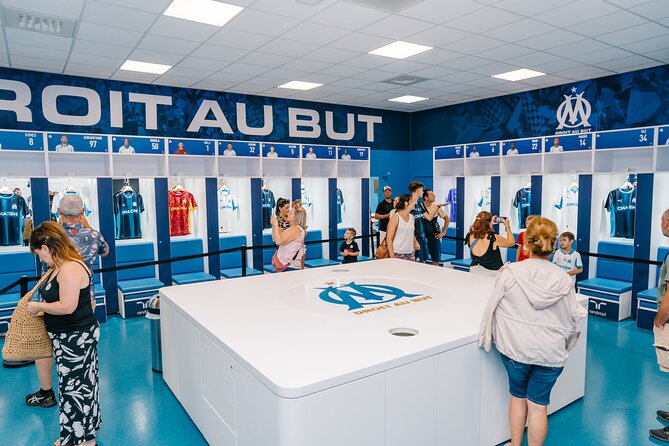
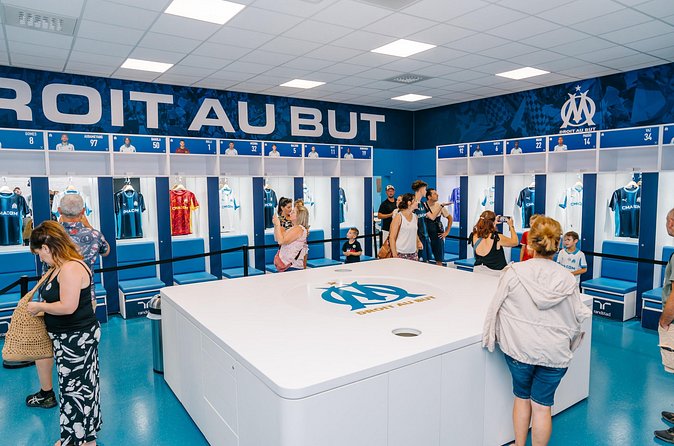
The dressing rooms are one of the main draws, but expectations matter. The tour gives you access to player areas, yet the rooms can feel more basic than the stadium’s public image suggests. You may see changing areas and related rooms, but the real current dressing rooms are not always visible.
That distinction is important. A stadium tour can promise access to dressing rooms while offering only a limited section or a simplified version. If you are imagining a grand, fully decorated locker room with every player’s place marked out, this visit may feel modest.
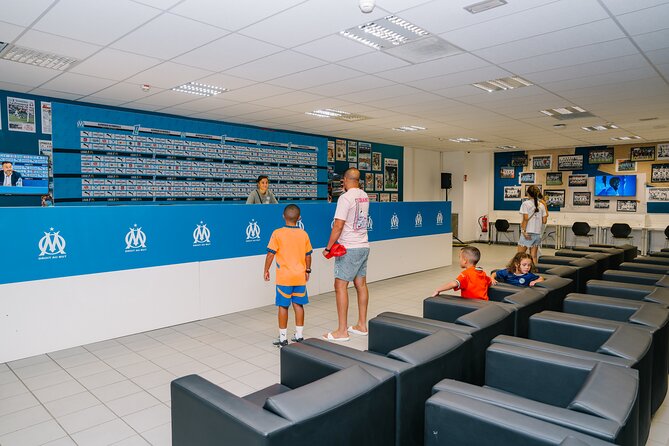
The press room and interview area are easier to appreciate because their purpose is clear. These are the spaces where football news is created and presented after a match. Walking through them helps you picture the routine behind the spectacle: players arriving, journalists preparing questions, and officials handling the public side of the game.
You also move through corridors and rooms that give a sense of the stadium’s working life. These areas are not designed as theatrical attractions, and that is part of their appeal. You see functional spaces rather than a carefully staged replica.
More Sports Experiences in the world:
- Tokyo: Sumo Show Experience with Chicken Hot Pot and a Photo
★ 4.8 · 6,678 reviews - London: Emirates Stadium Entry Ticket and Audio Guide
★ 4.7 · 5,513 reviews - Bangkok: Muay Thai Boxing Tickets at Rajadamnern Stadium
★ 4.9 · 4,740 reviews - London: Chelsea Football Club Stadium and Museum Tour
★ 4.8 · 4,576 reviews
Looking out from the stands and pitch area
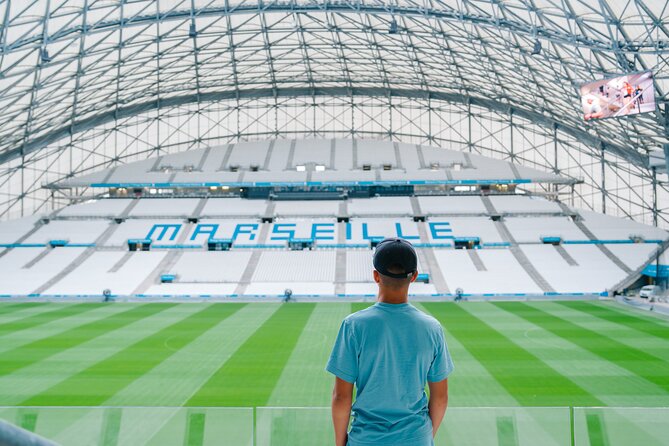
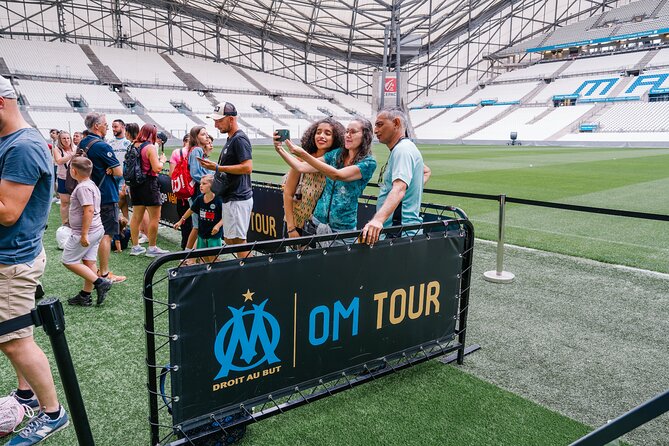
The stands provide the familiar football view, but from an empty stadium it is easier to study the structure. You can consider the distance between the pitch and the seats, the height of the tiers, and the way the stadium is arranged for a large match crowd.
One useful piece of advice is to separate the building from the match-day atmosphere. An empty ground can feel surprisingly quiet and less dramatic than it does during a game. The tour shows you the physical setting, not the noise, songs, pressure, or packed crowd that gives the Orange Vélodrome its strongest character.
The pitch area may also be affected by maintenance or construction. During one visit, there was no grass because work was under way. Conditions can change, but you should accept that the field may not look exactly as expected on the day.
This is one of the biggest reasons to check current conditions if seeing the grass is central to your plans. Access to the stadium remains worthwhile, but construction can reduce the visual impact of the pitch.
Murals, architecture, and the stadium from outside
Do not rush past the exterior. Murals outside the stadium are one of the memorable visual details connected with the visit, and they give the approach more personality than a plain concrete entrance would.
The building itself is also part of the attraction. You may find the structure more impressive when viewed from different levels and interior positions than from a normal seat. The tour lets you notice how the stadium functions as a building, not just as a place to watch football.
The surrounding area has been renovated over the years, and the stadium presents a more modern face than it did in the past. That is useful context if you know the Orange Vélodrome from an older visit or from photographs.
Still, this is not a separate architecture tour. The strongest details are encountered along the stadium route, and the visit is built around football access rather than design commentary.
Is the $25.23 price good value?
At $25.23 per person, the tour is reasonably priced if you want access to the stadium’s interior and have not attended a match there. You are paying for entry to the Orange Vélodrome, the museum, and the behind-the-scenes route, not for a long guided presentation.
The value is strongest for three types of visitors:
- A football fan who wants to see player and media areas.
- A parent looking for a memorable activity with a young football supporter.
- A visitor already interested in the Orange Vélodrome as a Marseille landmark.
The value is weaker if you expect a major trophy room, a replica of a famous European cup for photographs, a gift item at the end, or a detailed English audio presentation. Those extras are not reliably part of the experience.
Compared with the cost of a match ticket, the tour can be an accessible way to enter the stadium when no game fits your schedule. Compared with a polished museum visit, it feels more basic because the experience depends on the building and the access areas rather than a large collection of objects.
A football fan may find the price easy to justify. A casual visitor should decide based on how much interest they have in seeing the inside of a stadium.
How long to spend and how to plan the visit
The official duration is about 45 minutes to one hour. That is enough for a straightforward walk through the route, but you may want more time if you read every panel, use the interactive feature, and stop for photographs.
Because the tour is independent, your pace matters. Someone who moves quickly may finish near the shorter estimate. Someone who studies the museum and pauses in each space may use the full hour.
A mobile ticket makes entry simple, and confirmation is received at booking. The experience is near public transportation, and parking is available beneath the stadium and along the avenue according to the information provided for the visit.
The practical lesson is to leave a little room in your schedule. The tour itself is short, but finding the entrance and getting oriented can take some time. Since no guide is leading you from point to point, pay attention to signs and ask staff if the route is unclear.
Service animals are allowed, and most people can participate. The available information does not give detailed accessibility specifications, so you should contact the provider directly if you need precise information about routes, lifts, or seating.
Language, staff, and the level of service
The tour is operated by Orange Vélodrome, but it is not presented as a personal guided experience with a named host. Staff may help with the practical side of entry, yet the quality of the welcome can vary.
Some visitors found the staff welcoming, while others found the reception less friendly. That mixed impression fits the self-guided format: you receive access to the stadium, but not necessarily the warm storytelling and personal attention found on a private tour.
Language is the other service issue. The information panels are considered well made in places, but not all historical details are available in English. If you are comfortable reading French, you will likely get more from the displays. If not, focus on the spaces themselves and the visual material.
I would not book this expecting a polished English-language lesson in Olympique de Marseille history. I would book it for the physical access and the chance to see the stadium from inside.
Who will enjoy this most?
This visit suits a football fan better than a general sightseeing visitor. It is especially good for a parent and child, since the combination of stadium access, player areas, museum displays, and interactive material gives the day a clear focus.
You do not need to be a devoted football follower to enjoy the architecture and behind-the-scenes spaces. The stadium is substantial, and the chance to see press rooms, VIP areas, corridors, and stands can be interesting even if you do not know the club’s full story.
You may want to skip it if you need a guided English experience, if you are mainly looking for trophies, or if construction at the time of your visit has closed the pitch area. You should also temper expectations about the dressing rooms, which may be more functional than grand.
For a birthday treat tied to a recent match, it can make a strong gift. For someone who wants a full account of the club’s history, it may feel too light.
Booking flexibility and final advice
The booking policy is friendly. You can cancel for a full refund up to 24 hours before the local start time. Cancellations or changes made inside that 24-hour window are not accepted, so keep the deadline in mind.
I would book the Orange Vélodrome tour if you want to see the stadium from the player side, appreciate self-guided visits, and can accept that the English information and pitch access may vary. The museum, interactive feature, murals, press spaces, and stands give the visit enough substance for its short length.
I would pass if you expect a guide, a large trophy room, guaranteed audio commentary, or a grand final presentation. The tour is best understood as a practical look behind the scenes of a famous Marseille stadium. For the right visitor, that direct access is the point.
FAQ
Where does the OM Stadium Tour take place?
The tour takes place at the Orange Vélodrome in Marseille, France.
How much does the tour cost?
The listed price is $25.23 per person.
How long does the visit last?
The visit lasts approximately 45 minutes to one hour.
Is the tour guided?
No. The experience is free and autonomous, meaning you explore the Orange Vélodrome independently.
What is included in the ticket?
Admission to the Orange Vélodrome is included.
Does the tour include the museum?
Yes. The museum is part of the stadium visit, and you can explore it at your own pace.
What stadium areas can you see?
The route can include dressing rooms, press rooms, the interview area, corridors, stands, the VIP lounge, and the pitch area.
Is an audio tour available?
An audio tour was advertised, but it was not available during at least one visit. Availability should be checked before you go.
Can service animals participate?
Yes. Service animals are allowed.
Can I cancel for a refund?
Yes. You can cancel at least 24 hours before the experience start time for a full refund. Changes or cancellations made less than 24 hours before the start time are not accepted.
Just added for fans in the world
- Zandvoort: Driving Experience at the Formula 1 Race Track★ 4.6 · 5 reviews
- Wörth am Rhein: Grand Prix 30 – Electric kart race★ 3.6 · 2 reviews
- Woop! Glow golf: Ljubljana Btc City★ 4.8 · 14 reviews
- Windsor: LEGOLAND Adventure Golf★ 4.6 · 10 reviews
- Woop! Glow Golf: Maribor★ 4.9 · 8 reviews
- Washington D.C.: Washington Nationals Baseball Game Ticket★ 4.3 · 28 reviews
- Tokyo: Grand Sumo Morning Training Tour★ 4.9 · 12 reviews
- Washington D.C.: Washington Wizards Basketball Game Ticket★ 5.0 · 19 reviews
Stadium Tours, compared.

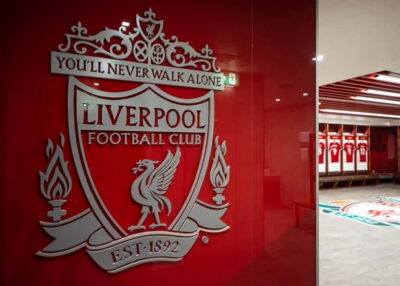
Liverpool Football Club Museum and Stadium Tour
Read our review →
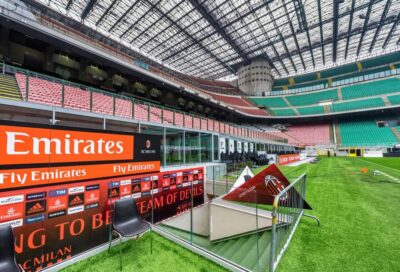

Emirates Stadium Entry Ticket and Audio Guide
Read our review →
Chelsea Football Club Stadium and Museum Tour
Read our review →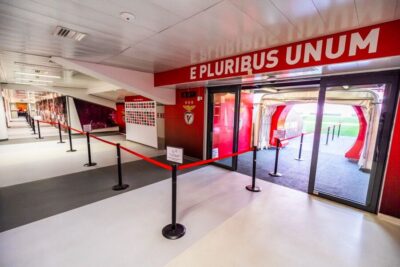

Browse the lists this tour appears in