
Review · SUMO EXPERIENCES IN TOKYO
Tokyo: Grand Sumo Morning Training Tour
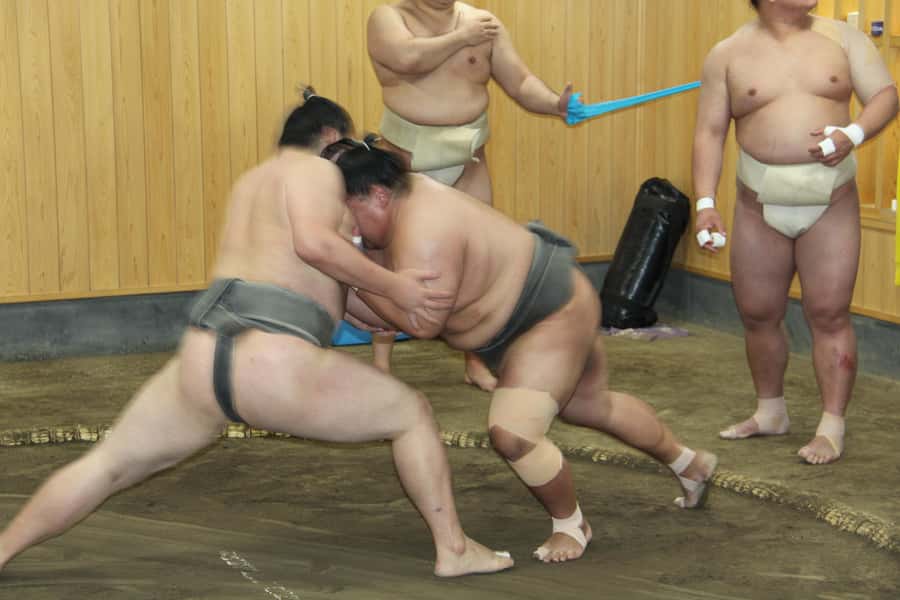
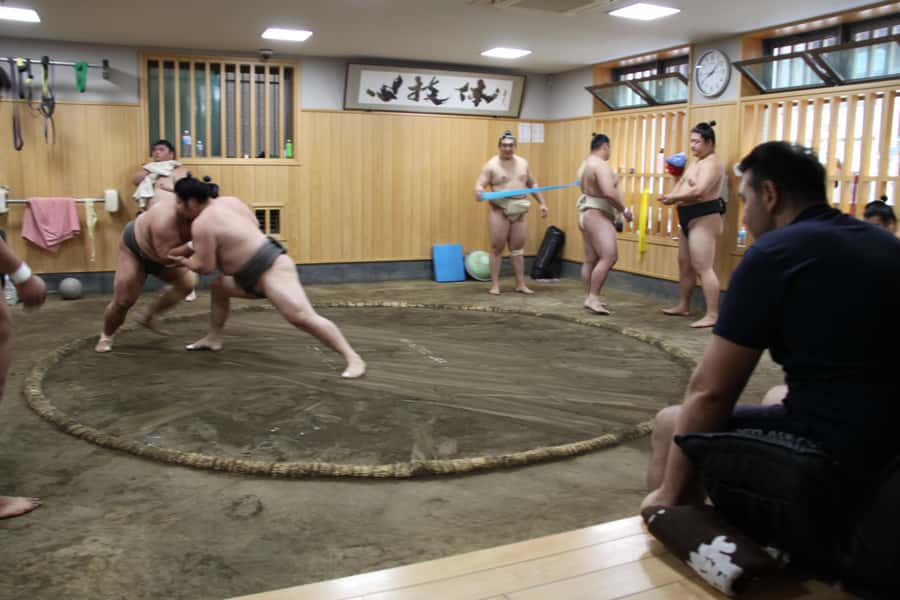
Tokyo’s sumo stables are working spaces, not staged theaters. During this two-hour morning visit, you sit close to the practice ring and watch professional wrestlers repeat demanding drills, test their strength, and sharpen their technique. The quiet focus is part of the experience.
I like the rare access and the disciplined setting. You are not watching a polished stage show with a script and costumes. You are seeing athletes train in their own stable, with an English-speaking guide helping you understand the customs. I also like the ceremonial photo at the end, a simple keepsake after a strict and memorable lesson.
The main drawback is comfort. There are no chairs, so you sit on the floor and must keep your legs tucked in rather than stretching them out. Photography, video, food, large bags, and late arrival are not allowed, so this visit suits people ready to follow traditional rules.
Key points at a glance
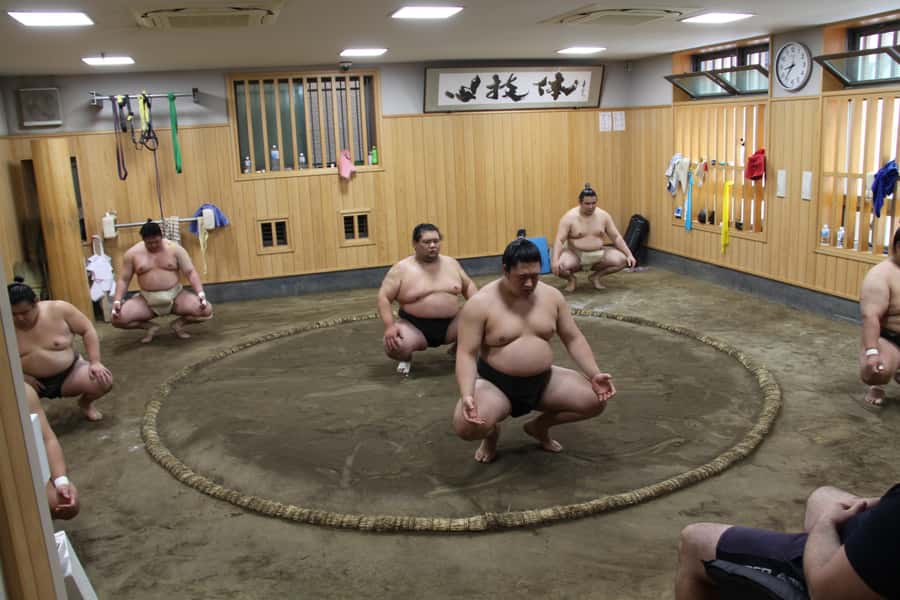
- Training at close range: Watch professional sumo wrestlers practice only a short distance away.
- A real morning stable: The visit takes place during a working training session, not a theatrical sumo performance.
- Floor seating: No chairs are supplied, and you must sit without stretching your legs into the practice area.
- Ceremonial photo: After the lesson, you can take a commemorative photograph with a sumo wrestler.
- Easy pairing with Asakusa: Afterward, you can spend the rest of the morning exploring nearby Asakusa.
- Strict stable etiquette: Arrive ten minutes early, leave large bags behind, and follow the guide and stable staff closely.
Why this sumo morning feels different from a show
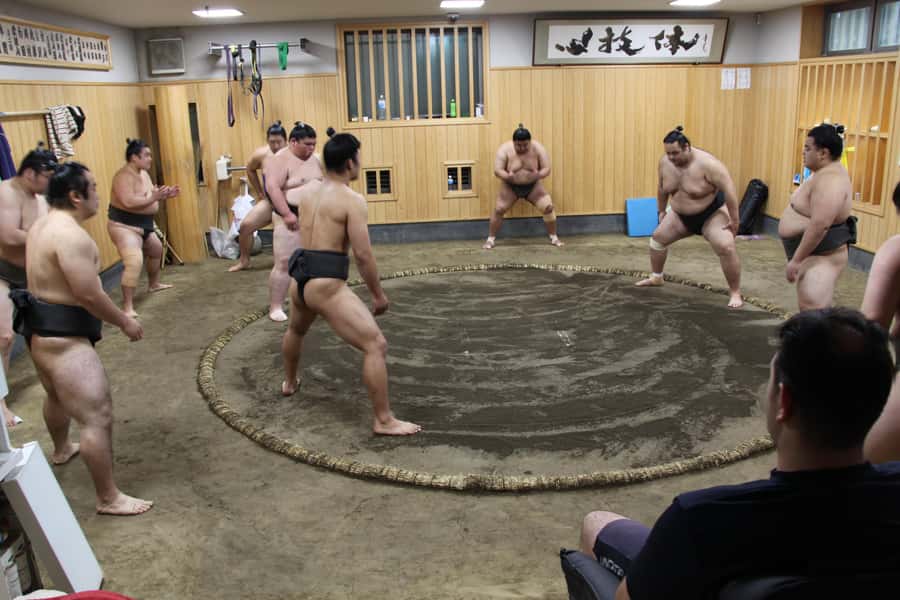
Sumo is easy to encounter in Tokyo as a performance, museum display, or themed meal. This visit offers something more direct: you watch the wrestlers during training, when the focus is on repetition, effort, and preparation.
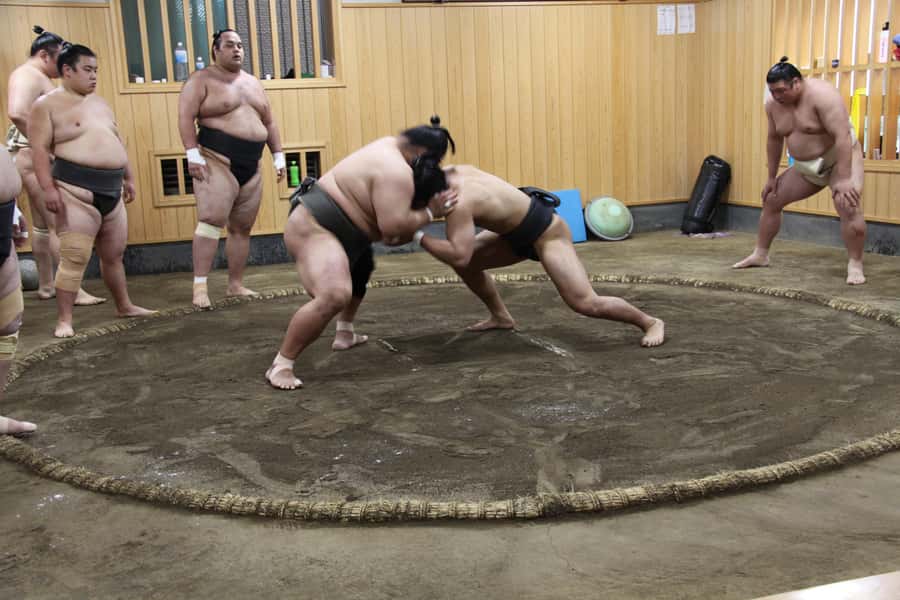
That difference matters. A stage show can explain the sport and give you a good view, but a stable visit shows how serious the daily work can be. You might see wrestlers pushing through powerful practice bouts and demanding exercises. The supplied details do not promise a particular drill or named wrestler, so you should come for the atmosphere and discipline rather than a guaranteed star appearance.
The stable is also a place where silence and attention count. You are entering a private working environment with permission, not walking into a public attraction where you can move around freely. That gives the visit its special quality, but it also means you must accept the rules.
The experience has earned a 4.9 rating from 12 reviews, with particular praise for the close view, clear meeting instructions, organization, and the chance to take a photo at the end. Those strengths match what makes this tour useful for a first encounter with sumo: the guide gets you to the correct place, the format is short, and the main event is easy to understand.
More Sumo Experiences in Tokyo
- Tokyo: Sumo Show and Dining Experience
★ 4.8 · 2,742 reviews - the SUMO show
★ 5.0 · 1,960 reviews - Tokyo Shinjuku Sumo Show & Experience with Photo
★ 5.0 · 1,750 reviews
Meeting at Honjo-Azumabashi Station
Your morning begins at Honjo-Azumabashi Station, Exit A4. The guide waits near the exit, at approximately 35.7087287902832, 139.80487060546875, and leads the group to the sumo stable.
Give yourself extra time to find the station exit. You must arrive at least ten minutes before the stated departure time, and late arrivals will not be accommodated. This is more important here than on a casual city walk because the group is entering a private training space at a fixed time.
The meeting instructions are clear, but Tokyo stations can still take a moment to sort out. Check that you are heading for Exit A4 before leaving the station, and keep the guide’s meeting description available on your phone. Once you are at the correct exit, the guide handles the walk to the stable.
The tour is conducted in English. No guide name is provided in the booking information, but an English-speaking guide accompanies the group and helps explain what is happening and how to behave inside the stable.
Entering a working sumo stable
The entrance is part of the lesson. You need permission to enter, and you must follow the instructions from the guide and the stable staff. Once you leave your seat, you are not allowed to re-enter, so settle in carefully before the training begins.
This rule may sound strict, but it protects the wrestlers’ concentration. Training is not interrupted so people can come and go. You will get more from the visit if you treat the stable like a place of work rather than an attraction designed around visitor convenience.
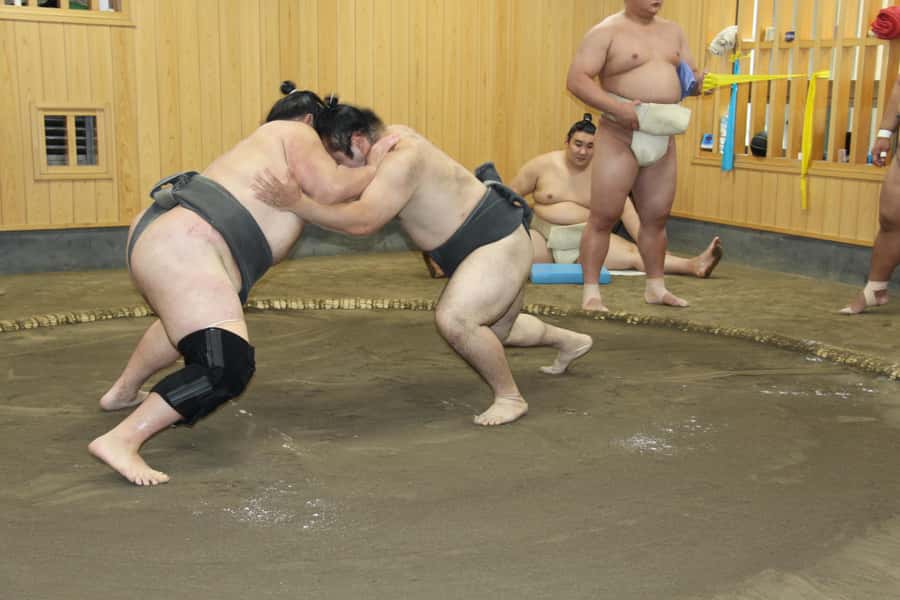
The stable itself is not presented as a set decorated for tourists. It is a traditional training environment where professional wrestlers prepare under demanding conditions. The information provided does not specify the stable’s name, exact interior design, group size, or seating layout, so you should not expect a guaranteed front-row position or a tour of private areas.
What you can expect is close access to the practice. The wording of the tour and the strongest praise for it both point to proximity as a major benefit. You are close enough to notice the force of the movement and the concentration required, while still being expected to remain quiet and in your assigned place.
Watching the morning training
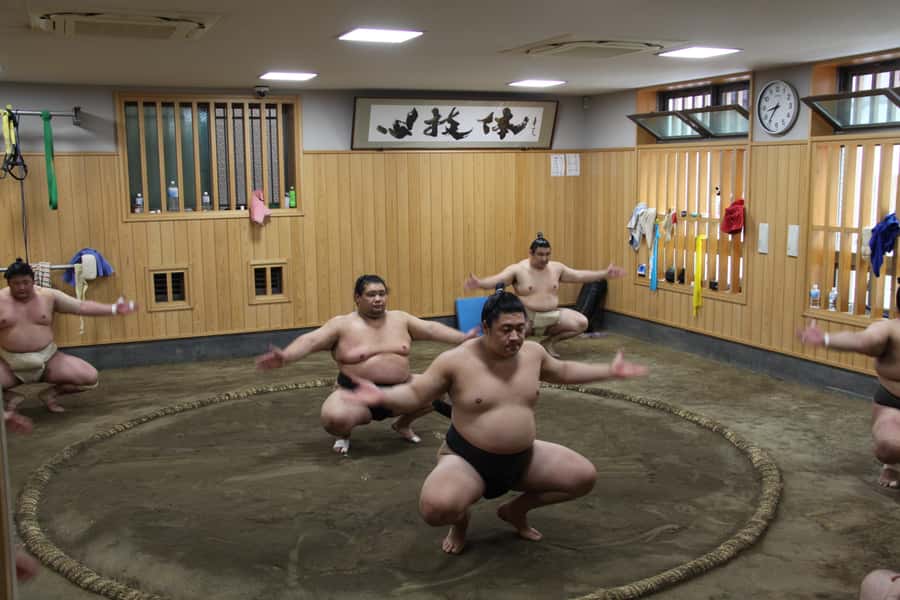
The central part of the visit is the training session. Professional wrestlers work through their practice while you watch from the floor. The power is obvious, but the repeated nature of training is just as important. Sumo is not only about the brief clash in a tournament bout. It depends on preparation, balance, control, and the willingness to repeat hard work.
You may find the session more intense than a standard cultural demonstration because the wrestlers are not performing a simplified version for an audience. Their attention remains on training. That makes the experience feel more genuine, but it also means the exact pace and content can change.
The wrestlers’ physical condition can affect the activity, and the training session may change because of unforeseen circumstances. Keep that in mind when deciding how to fit this into a tightly packed Tokyo schedule. The tour is built around access to a real training session, so it cannot promise an identical program each morning.
You are asked to respect the stable’s rules throughout. No flash photography, video recording, audio recording, or photography inside is allowed. The practical reading is simple: watch with your eyes, listen to the guide, and wait for the permitted photograph after the lesson.
This restriction is a fair trade for access to a private training space. It may frustrate anyone hoping to document every bout, but it also keeps phones from turning the session into a media event. You should treat the final ceremonial photo as the planned souvenir rather than expecting to take pictures during training.
Same city, a different fixture:
- Tokyo: Sumo Show and Experience in Shinjuku
★ 4.8 · 1,001 reviews - Tokyo Grand Sumo Tournament Viewing Tour with Tickets
★ 5.0 · 692 reviews - Tokyo Sumo Wrestling Tournament Experience
★ 5.0 · 660 reviews - Tokyo:Luxury Sumo Show Experience & Japanese cuisine & Drink
★ 4.7 · 577 reviews
Sitting on the floor for two hours
The biggest comfort issue is the seating. Chairs are not provided, and you must sit on the floor during the lesson. You also need to refrain from stretching your legs out.
For some people, this will be a small part of the traditional setting. For others, it could become the main challenge, especially during a full two-hour visit. Wear comfortable clothes that allow you to sit respectfully for an extended period. The activity specifically recommends comfortable clothing, and that advice is worth taking seriously.
This is not the right outing for anyone who needs a wheelchair, and it is not suitable for children under three. The floor seating also deserves a frank mention for people with stiff knees, limited mobility, or difficulty getting up and down. The stable’s rules take priority, and you should not assume that a chair can be arranged.
No baby strollers or baby carriages are allowed. Large bags and luggage are also prohibited, so plan to leave bulky items at your accommodation or in a suitable storage facility before meeting the guide. Sharp objects and weapons are not allowed, either.
The ceremonial photo after training
Once the training ends, you have the opportunity to take a ceremonial photograph with a sumo wrestler. This is one of the tour’s most appealing finishing touches because it gives you a personal memory without turning the training itself into a photo session.
The timing matters. Photography inside is not allowed during the lesson, so do not take out your phone or camera simply because the wrestlers are nearby. Wait for the guide and stable staff to explain when the photograph can happen.
The supplied information does not promise a particular wrestler, a private photo session, or a specific number of pictures. Think of it as one formal photo opportunity after the training, not an open-ended meet-and-greet.
That modest format fits the setting. You get a respectful souvenir, while the actual practice remains protected from interruption. If your main goal is a long conversation with a wrestler, a meal, or hands-on sumo activities, you should compare this tour with a sumo show or experience built around those features.
Walking on to Asakusa afterward
The morning can end with free time near Asakusa, one of Tokyo’s most useful areas for extending a cultural outing. The tour does not include a guided Asakusa visit, so you are free to decide how much time to spend there.
That flexibility is valuable. After two hours of fixed activity, you can continue sightseeing at your own pace instead of being carried through another scheduled stop. You might find this especially convenient if you want to combine the sumo stable with a day in eastern Tokyo.
The tour information only says that Asakusa is nearby and available to explore at leisure. It does not include admission to attractions, a meal, or a guided walking route there. Treat Asakusa as an optional follow-on, not part of the core sumo program.
What the tour is worth
No tour price is provided here, so I cannot judge the exact cost in yen. The value depends on how much you want access to a real training session rather than a broader, more comfortable entertainment package.
For someone curious about sumo, the strongest value comes from three things: close viewing, a working stable, and an English-speaking guide who manages the meeting and etiquette. You are paying for access and structure, not for a long list of extras. There is no stated meal, no chair, no video, and no extended performer interaction.
That makes this a focused purchase. If you want the most direct look at sumo training, the format makes sense. If you want food, a former wrestler, staged demonstrations, souvenirs, or a full evening of entertainment, one of the other sumo experiences in Tokyo may offer better value for your budget.
The short two-hour duration is helpful. You can fit the visit into a morning without sacrificing a full day of sightseeing. At the same time, the fixed start and strict no-late-arrival policy mean you should not place it between two distant Tokyo appointments.
You can reserve now and pay later, and cancellation is available up to 24 hours before the activity for a full refund. Those terms help if your schedule is still changing, but they do not remove the need to arrive early on the day itself.
Rules that protect the experience
The restrictions are extensive, so read them before booking. You may not bring food, alcohol, drugs, vaping devices, or smoking materials. Costumes, selfie sticks, short skirts, and large bags are also not allowed.
Do not bring video or audio recording equipment for use during the session. Flash photography and photography inside the stable are prohibited. The ceremonial photograph after training is the exception specifically offered by the experience, and you should wait for permission before taking it.
Failure to follow instructions can result in removal without a refund. That is not a minor warning. You are entering a place that has agreed to receive visitors under specific conditions, so courtesy is part of the ticket.
The activity can also change if a wrestler’s physical condition or another unexpected issue affects training. I would avoid making this your only reason for an expensive, tightly timed morning. It is a memorable chance to see sumo up close, but the exact session cannot be guaranteed.
Who should book this morning
I would recommend this tour to you if you want a short, serious look at Japanese sumo and can sit quietly on the floor. It is especially suitable if you value close observation over a staged show and want an English-speaking guide to handle the cultural rules.
It also suits a first visit to Tokyo because the plan is simple: meet at one station, walk to the stable, watch training, take the permitted ceremonial photo, and continue toward Asakusa. The clear meeting instructions and strong praise for organization make it less stressful than trying to find a stable independently.
I would think twice if you need accessible seating, plan to bring luggage, want unrestricted photography, or hope to interact with wrestlers for a long time. Families with children under three cannot join, and anyone uncomfortable sitting on the floor for two hours may find the format tiring.
Should you book the Tokyo Grand Sumo Morning Training Tour?
Book it if the sight of professional wrestlers training at close range is your main goal. The visit offers a rare look at sumo as daily work, not just as a public spectacle, and the ceremonial photo gives the morning a clear finish.
Skip it if comfort, photography, food, or a broad entertainment program matters more than authentic training access. The rules are firm and the seating is basic. For the right person, though, that restraint is exactly why the experience feels special.
FAQ
Where does the tour meet?
Meet the English-speaking guide near Exit A4 of Honjo-Azumabashi Station.
What time should I arrive?
Arrive at least ten minutes before the stated departure time. Late arrivals will not be accommodated.
How long does the activity last?
The sumo training visit lasts two hours.
Is the tour conducted in English?
Yes. The tour includes a live English-speaking guide.
Do I receive a ticket or skip a line?
The activity includes skip-the-ticket-line access.
Can I take photographs during the training?
No. Photography inside the stable is not allowed, and flash photography is prohibited.
Can I take a photo with a sumo wrestler?
Yes. You have the opportunity to take a ceremonial photograph with a sumo wrestler after the lesson.
Do I sit on chairs during the training?
No. Chairs are not provided, so you must sit on the floor and refrain from stretching out your legs.
Can I bring luggage or a stroller?
No. Luggage, large bags, baby strollers, and baby carriages are not allowed.
Is the tour suitable for wheelchair users and children under three?
No. The activity is not suitable for wheelchair users or children under three.
Just added for fans in Tokyo
- Sumo Training Watching Experience in Tokyo★ 4.5 · 8 reviews
- Kickboxing & Body Training with EX-Pro Fighter★ 5.0 · 4 reviews
- Tokyo: Visit Sumo Morning Practice with English Guide★ 4.5 · 22 reviews
- Tokyo Sumo Experience with Live Show & Audience Challenge★ 5.0 · 38 reviews
- Tokyo Sumo History Tour with Chanko Nabe Lunch★ 5.0 · 3 reviews
- 【SUMO FESTIVAL】Tokyo Ginza: Sumo Show & Photo Experience★ 4.5 · 41 reviews
- Tokyo Shinjuku Sumo Show and Experience with Drinks and Photo★ 4.0 · 21 reviews
- Tokyo Grand Sumo Tournament 2026 with a Sumo Expert Guide★ 5.0 · 29 reviews
Sumo Experiences in Tokyo, compared.
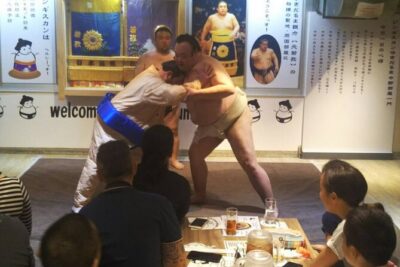
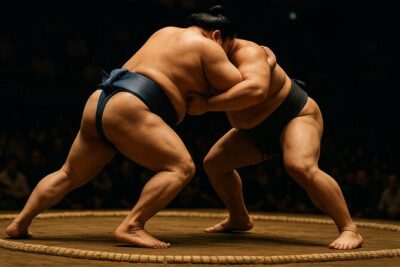
Tokyo Shinjuku Sumo Show & Experience with Photo
Read our review →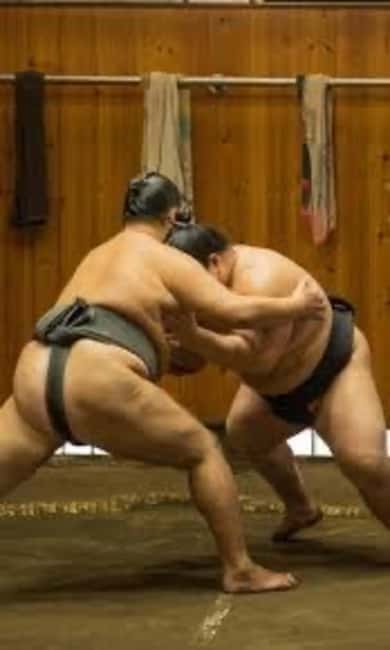
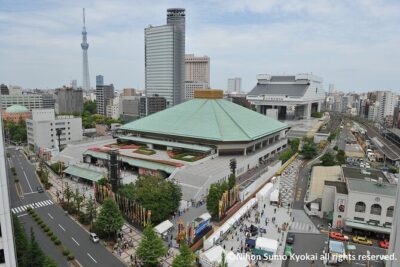
Tokyo Grand Sumo Tournament Viewing Tour with Tickets
Read our review →

Luxury Sumo Show Experience & Japanese cuisine & Drink
Read our review →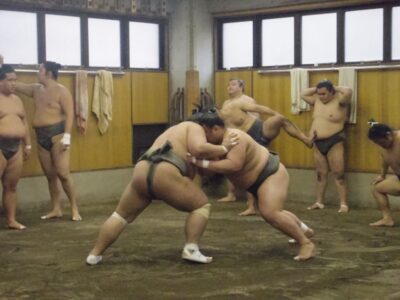
Browse the lists this tour appears in