
Review · SUMO EXPERIENCES IN TOKYO
Tokyo Grand Sumo Tournament 2026 with a Sumo Expert Guide
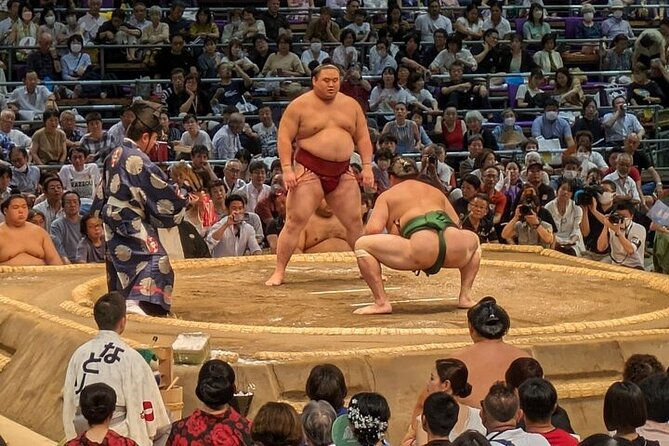
The best part of this Tokyo experience is not simply seeing enormous wrestlers collide. It is having Elisabeth Llopis, known as Elly, explain the ceremony, rules, rankings, and small details that make sumo far more than a quick push out of a ring. You meet at Ryogoku Station at 2 p.m., then spend about four hours at the Kokugikan.
I like the reserved second-floor chair seat, which removes the worry of finding your place in a crowded hall. I also like the included Sumo Museum visit, where changing displays bring out old prints, ceremonial belts, and other pieces of sumo culture. The main caution is practical: steep steps can make the older venue difficult for people with mobility concerns, and the $198 price does not include food or drinks.
Key points before you book
- Elly’s explanations give the matches meaning, from opening rituals to wrestler rankings and bout tactics.
- Reserved second-floor chairs are included, while box seats require advance discussion.
- The Kokugikan Sumo Museum adds historical context and is included in the four-hour visit.
- The small group is limited to 10 people, with a minimum of two people per booking.
- The meeting point is Ryogoku Station, close to the stadium and public transportation.
- The ticket is non-refundable, so book only when your Tokyo plans are firm.
Why sumo makes more sense with a guide
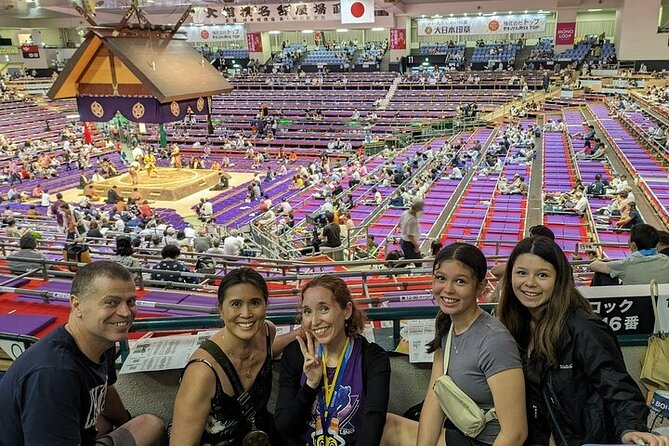
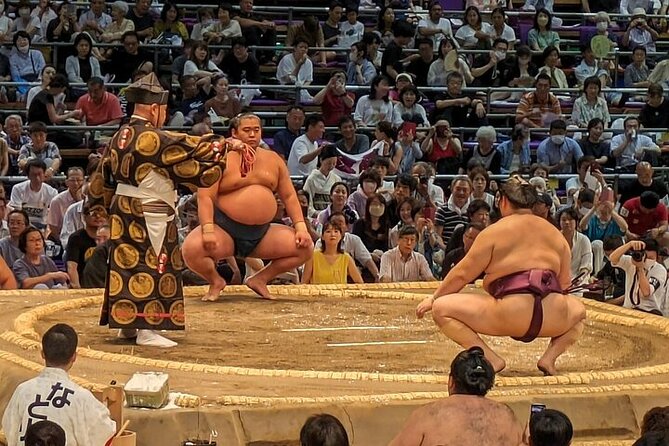
Sumo can look simple at first. Two wrestlers enter a ring, push, slap, and try to force one another outside the circle. But that quick view misses the layers of ceremony and strategy around each bout.
This is where a guide earns the fee. Elly explains what you are seeing as the tournament unfolds, including the sport’s traditions, changing rules, techniques, and current wrestlers. You are not left trying to guess why the wrestlers spend time preparing before the match, or what the gestures and rituals mean.
I especially like this setup for first-time visitors. You do not need to arrive with any sumo knowledge. The experience is built for people who want to attend a tournament but would rather understand it than simply watch a series of unfamiliar bouts.
Elly’s style, based on the information available about the experience, is enthusiastic without requiring you to become a specialist. She has been praised for explaining the sport and its ceremony clearly, without making the subject feel too technical. That balance matters. Sumo has plenty of terminology, rankings, and tradition, but you should still have time to enjoy the action.
More Sumo Experiences in Tokyo
- Tokyo: Sumo Show and Dining Experience
★ 4.8 · 2,742 reviews - the SUMO show
★ 5.0 · 1,960 reviews - Tokyo Shinjuku Sumo Show & Experience with Photo
★ 5.0 · 1,750 reviews
Meeting at Ryogoku Station at 2 p.m.
Your day begins at Ryogoku Station, 1-chōme-3-20 Yokoami, Sumida City. This is a sensible meeting point because it is near the Kokugikan and served by public transportation.
The station meeting also helps you get your bearings before entering the venue. The activity ends back at the meeting point, so you are not left wondering where the official tour finishes. Since the start time is fixed at 2 p.m., leave enough time to reach Ryogoku without rushing.
The group can include up to 10 people, and at least two people are required for a booking. That is a useful middle ground. You get more personal attention than in a large bus group, but you are still sharing the experience with other sumo fans.
A mobile ticket is provided, making the booking easy to carry on your phone. Confirmation is sent within 48 hours, subject to availability. Because the experience cannot be changed or refunded after booking, check your Tokyo schedule carefully before paying.
Inside the Kokugikan: ceremony, noise, and sudden action
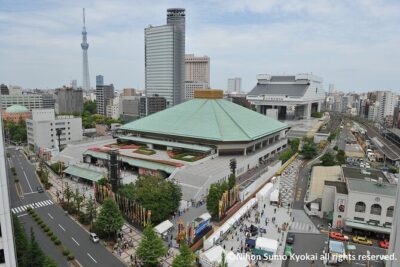
The Ryogoku Kokugikan is the home setting for Tokyo’s grand sumo tournament. The building gives the experience a strong sense of place, but it is not a modern, accessibility-focused arena.
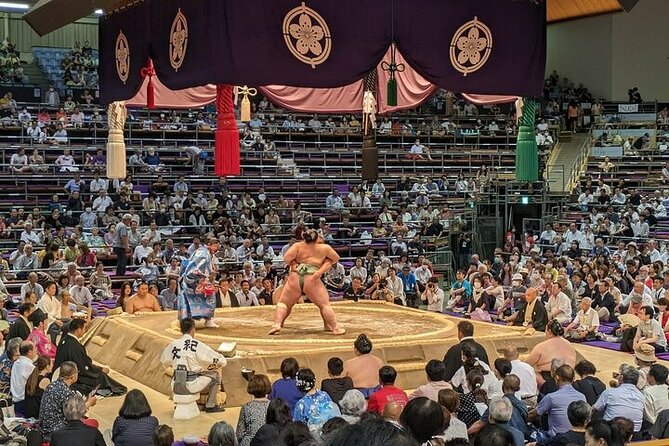
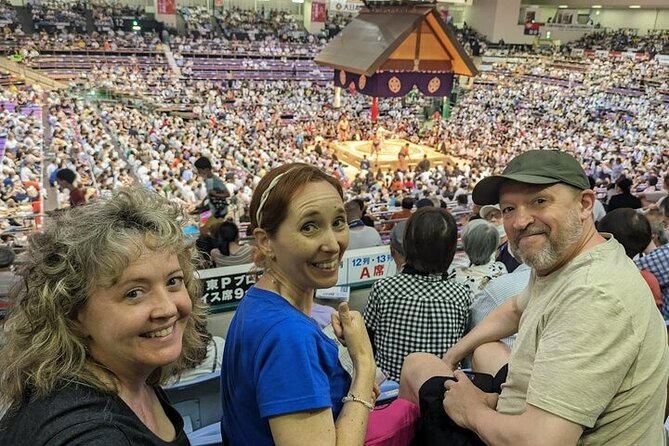
Your admission includes a reserved second-floor chair seat. This is important. You do not need to compete with other spectators for a place, and you can settle in while Elly explains what is happening. For many first-time visitors, having a fixed seat makes the day feel much easier.
The second-floor location gives you a broad view of the ring. You may not have the close-up feeling of a ringside seat, but you can follow the entire bout and see the formal movement around it. Box seats are not included, so you need to ask in advance if that seating style is important to you.
The tournament atmosphere is a major part of the appeal. Sumo is not only about the instant when one wrestler loses balance. The buildup, the ceremonial movements, the crowd response, and the concentration before the bout all matter. With Elly beside you, you can ask questions while those details are fresh.
The matches can be surprisingly short. That makes the explanation between bouts useful. A guide can help you notice the difference between a forceful push, a slap-based attack, a grappling move, or a wrestler’s attempt to use balance and timing. You get more from the action when you know what to watch for.
The venue’s older design has one clear drawback. Steps leading to the seats can be steep, and access has not been adapted for reduced mobility. If stairs are difficult for you, contact the operator before booking and discuss what arrangements may be possible. The supplied information does not promise a fully accessible route.
The Sumo Museum and its changing displays
The Kokugikan Sumo Museum is included in your admission. It gives you a quieter way to understand the sport before or around the tournament experience.
The collection can include historic woodblock prints, ceremonial belts worn by famous wrestlers, and other memorabilia from earlier periods. Displays change regularly, so the exact material depends on the visit. You might see a different theme or a different group of notable rikishi than someone visiting at another time.
I like the museum because it broadens the day beyond live competition. The tournament shows sumo as a present-day sport, while the museum shows how its customs and public image developed over time. You can look closely at objects that are easy to miss when all your attention is fixed on the ring.
The museum is also useful if you have a gap before the action or want a calmer break from the arena. It can be visited even when a tournament is not taking place, although this particular experience is built around the Tokyo Grand Sumo Tournament.
Same city, a different fixture:
- Tokyo: Sumo Show and Experience in Shinjuku
★ 4.8 · 1,001 reviews - Tokyo Grand Sumo Tournament Viewing Tour with Tickets
★ 5.0 · 692 reviews - Tokyo Sumo Wrestling Tournament Experience
★ 5.0 · 660 reviews - Tokyo:Luxury Sumo Show Experience & Japanese cuisine & Drink
★ 4.7 · 577 reviews
What the guide adds to the ticket
The $198 price needs to be judged as a guided experience, not just as a seat at a sporting event. Your package includes the reserved second-floor chair, admission to the museum, and a local sumo guide for about four hours.
If you already follow sumo closely, you may prefer to buy a ticket on your own and watch at your own pace. But if you are new to the sport, the guide can prevent a common problem: paying for a rare event and understanding very little of what you see.
Elly’s role is especially valuable for questions about current wrestlers, rankings, and tournament form. Sumo changes from one tournament to the next, so explanations tied to the actual matches can make the event feel current rather than like a museum lesson.
The experience has also earned a perfect rating from 29 reviews, with 100 percent recommending it. That does not guarantee that every departure will suit every person, but it does point to a clear strength: the guide’s personal enthusiasm and ability to make the sport approachable.
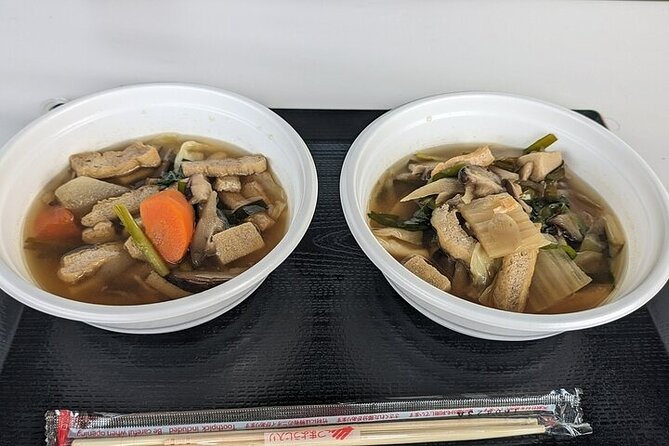
Food and drinks are not included. Plan to buy those separately if you want refreshments during the four-hour visit. The provided information does not specify a meal, snack, or drink arrangement, so do not assume any are part of the price.
Who will get the most from this experience
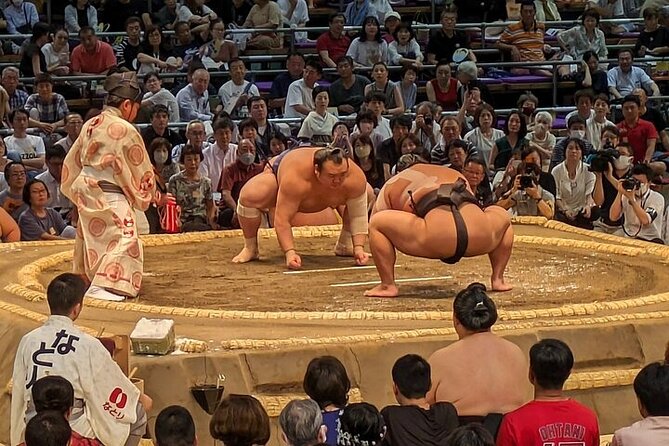
This is a strong choice for a first sumo tournament. You get a seat, an expert guide, and historical background in one booking. Couples and small groups should also appreciate the limited group size and the chance to ask questions throughout the day.
It suits you if you enjoy culture that comes with rules and ritual. Sumo has a theatrical side, but it is also a serious competitive sport. Elly’s explanations help connect the formal movements with the tactics and pressure of the match.
It is less suited to someone who wants complete independence. You will spend the experience with a guide and group rather than simply entering the venue and doing your own thing. It is also not ideal if you need step-free seating access unless the operator confirms a workable arrangement beforehand.
The tour may also appeal to serious fans who want a local expert’s view of the tournament. You can follow sumo on your own, but an informed guide can point out details you might miss in the noise and speed of the event.
Practical details that affect your decision
The advertised duration is about four hours, beginning at 2 p.m. and ending back at the meeting point. That makes it a manageable half-day activity, though you should keep your schedule flexible around the tournament visit.
The group maximum is 10 people. A smaller group usually gives you a better chance to ask questions than a large sightseeing group, and sumo creates plenty of moments when a quick explanation helps.
The ticket is mobile, and the meeting point is near public transportation. Most people can participate, and there are no general participation restrictions listed. The important exception is the venue’s steep stair access, which deserves attention if you have mobility concerns.
The experience is non-refundable and cannot be changed for any reason. That is stricter than many sightseeing activities. Do not book until you know you can attend at the selected time.
Should you book the Tokyo sumo experience?
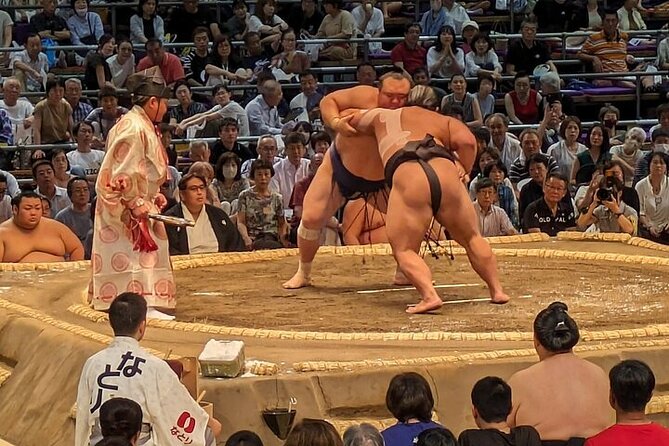
Book this experience if you want more than a seat inside the Kokugikan. The strongest reason to choose it is the guide, especially if you are new to sumo or want help following current wrestlers, rules, ceremony, and tactics.
The $198 cost is easier to justify when you value the reserved chair, museum entry, and four hours of personal explanation. It is harder to justify if you are already a sumo expert, want box seating specifically, or prefer to make your own plans.
For most first-time visitors, I would choose the guided option. Sumo is one of Tokyo’s most distinctive cultural experiences, and a clear explanation can turn a puzzling afternoon into a memorable one. Just confirm the stair situation if needed, budget separately for food and drinks, and remember that the booking cannot be refunded.
FAQ
Where does the experience begin?
It begins at Ryogoku Station, located at 1-chōme-3-20 Yokoami, Sumida City, Tokyo 130-0015, Japan.
What time does the tour start?
The start time is 2 p.m.
How long does the experience last?
The activity lasts approximately four hours.
Where does the experience end?
It ends back at the meeting point.
What type of seat is included?
A reserved second-floor chair seat is included.
Are box seats included?
No. Box seats are not included, but you can consult the operator about them in advance.
Is the Sumo Museum included?
Yes. Entry to the Kokugikan Sumo Museum is included.
Is food or drink included?
No. Food and drinks are not included in the price.
How many people can join?
The group has a maximum of 10 people, and a minimum of two people is required per booking.
Can I cancel or change the booking?
No. The experience is non-refundable and cannot be changed for any reason.
Just added for fans in Tokyo
- Tokyo: Grand Sumo Morning Training Tour★ 4.9 · 12 reviews
- Sumo Training Watching Experience in Tokyo★ 4.5 · 8 reviews
- Kickboxing & Body Training with EX-Pro Fighter★ 5.0 · 4 reviews
- Tokyo: Visit Sumo Morning Practice with English Guide★ 4.5 · 22 reviews
- Tokyo Sumo Experience with Live Show & Audience Challenge★ 5.0 · 38 reviews
- Tokyo Shinjuku Sumo Show and Experience with Drinks and Photo★ 4.0 · 21 reviews
- Tokyo Sumo History Tour with Chanko Nabe Lunch★ 5.0 · 3 reviews
- 【SUMO FESTIVAL】Tokyo Ginza: Sumo Show & Photo Experience★ 4.5 · 41 reviews
Sumo Experiences in Tokyo, compared.
Tokyo Shinjuku Sumo Show & Experience with Photo
Read our review →
Tokyo Grand Sumo Tournament Viewing Tour with Tickets
Read our review →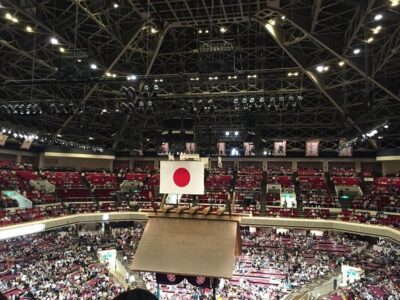
Luxury Sumo Show Experience & Japanese cuisine & Drink
Read our review →
Browse the lists this tour appears in