
Review · SUMO EXPERIENCES IN TOKYO
Tokyo Shinjuku Sumo Show and Experience with Drinks and Photo
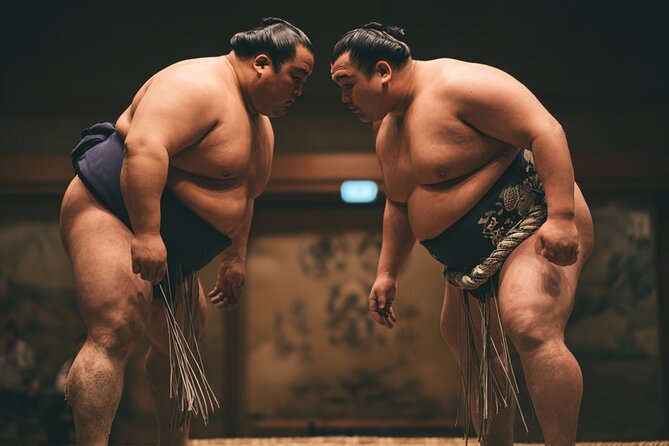
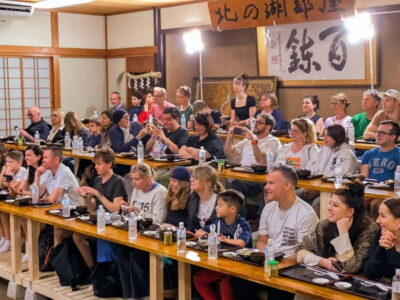
The best thing here is the distance between you and the action. With about 50 seats around a small dohyo, you are close enough to see the wrestlers’ footwork, salt throwing, and comic exchanges without the scale of a major tournament. I like the bilingual explanations and the chance to step into the ring for the Sumo Challenge. A photo with the wrestlers gives the evening a personal finish.
I also like the friendly tone. The MC explains what you are seeing instead of leaving you to guess at the rituals, and the wrestlers play along with the crowd. The main consideration is that this is a staged entertainment show, not a full tournament or a working training session. Some matches are brief, and the included drink may be only a bottle of water.
Key points at a glance
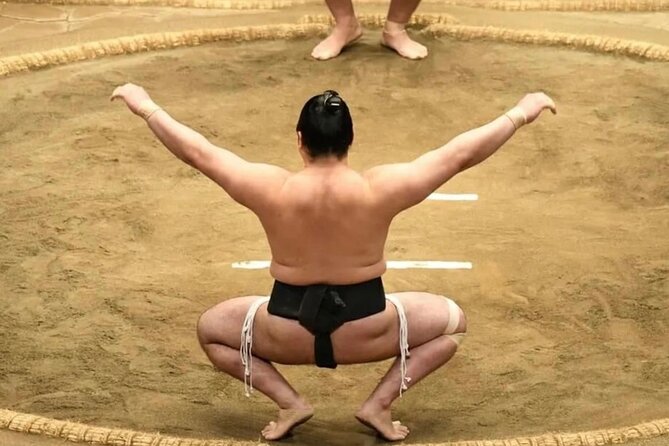
- Small 50-seat setting: Every seat gives you a close view of the dohyo and wrestlers.
- Manny and the bilingual MC format: Sumo customs, terminology, history, and match tactics are explained for international visitors.
- Audience participation: A limited number of volunteers can challenge a wrestler in the ring.
- Photo with real wrestlers: Everyone gets a chance to pose with the wrestlers at the end.
- 90-minute program: Demonstrations, bouts, ceremonies, commentary, questions, and a meet-and-greet fit into one compact show.
- Central Shinjuku location: The club is near public transportation in Okubo, with the activity returning to the same building.
A close-up introduction to sumo in Shinjuku
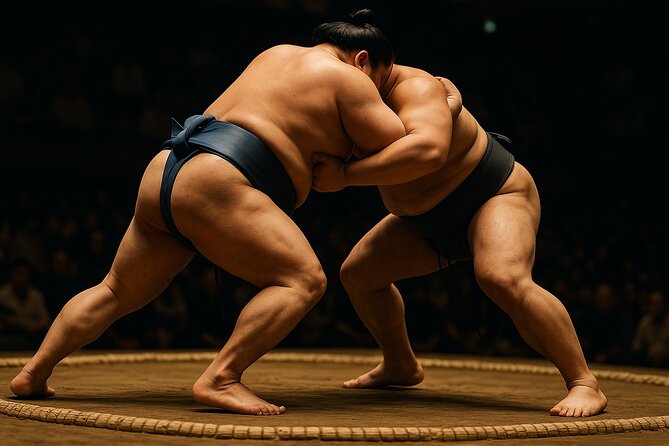
At a formal sumo tournament, you watch from the stands and follow the action as best you can. At Shinjuku Sumo Club, the format is smaller and more direct. The ring sits at the center, seating is limited to about 50 people, and the MC keeps the program moving in English and Japanese.
That makes this a good first meeting with sumo. You are not expected to know the rules or recognize every ritual. The show explains the sport as it goes, from the salt thrown before a bout to the strength and balance behind each move.
The experience lasts about 90 minutes. That is enough time to see several demonstrations and matches, learn the basic customs, join the audience reaction, and take photos without giving up an entire day in Tokyo.
More Sumo Experiences in Tokyo
- Tokyo: Sumo Show and Dining Experience
★ 4.8 · 2,742 reviews - the SUMO show
★ 5.0 · 1,960 reviews - Tokyo Shinjuku Sumo Show & Experience with Photo
★ 5.0 · 1,750 reviews
What happens when you arrive at the club
The meeting point is the SEKISAKU BLDG. at 2-chome 5-22 Okubo, Shinjuku City, Tokyo 169-0072. The venue is near public transportation, which matters in Shinjuku, where a short address can still involve a confusing walk through side streets and station exits.
Once inside, you take a seat around the dohyo. The limited seating is one of the strongest parts of the setup. You do not face a distant arena floor. Instead, you watch the wrestlers in a compact ring where their movements and expressions are easy to follow.
One practical note: the building has an elevator, although it may be easy to miss if you first notice the stairs. Most people can take part, and the activity is designed for a broad audience. The available information does not describe specific wheelchair facilities, so anyone with detailed access needs should confirm those arrangements before booking.
A bottle of water is provided on arrival. Drinks beyond that are available for purchase, but the included drink should not be treated as a full beverage package. This small point affects the value if you were expecting beer, sake, or another drink to be included in the $70 price.
The opening lesson: rituals, rules, and ring manners
The show begins with an introduction to sumo. The bilingual MC explains the background of the sport and the purpose of its familiar rituals. You learn why wrestlers throw salt, how they prepare for a bout, and what the different actions mean.
This teaching section helps make the later matches more interesting. Sumo can look simple at first: two large wrestlers push, pull, and try to force one another out of the ring. The details are more precise. Balance, grip, timing, foot placement, and the first few seconds of contact can decide the result.
One host identified in the available information is Manny, who is described as giving a clear explanation of the wrestlers and the history of sumo. The MC also brings humor into the lesson, which keeps the opening from feeling like a formal lecture.
The tone is light, but the content has value. If you have never watched sumo before, this is the part that helps you understand what you are seeing. If you already follow the sport, you may find the material basic, but the close view and audience participation still give the evening a different feel from watching a tournament broadcast.
Demonstrations and short bouts in a small dohyo
After the introduction, the wrestlers demonstrate techniques and perform bouts. Live commentary explains the moves, giving you a better sense of why a wrestler shifts position, changes direction, or tries to gain control early.
The size of the ring affects the pace. A small dohyo makes the action feel immediate, but it also means that bouts can be very quick. One of the clearest drawbacks is that the program does not offer the long sequence of matches you would see at a major competition. Some people will want more wrestling and less explanation.
Several of the performances use humor and audience reaction. The two wrestlers work as entertainers as well as athletes, encouraging support from the room and playing up the drama. That approach is useful for families, groups, and first-time visitors who want an accessible evening rather than a technical sporting event.
You should know what you are buying. This is an exhibition designed for visitors. It is not a chance to watch an official tournament, and it is not presented as a quiet training session. The moves and bouts are performed for the audience, with the MC guiding the mood.
That does not make the athletic side meaningless. The wrestlers still need size, control, timing, and physical skill to perform safely and convincingly. It simply means the show is built around entertainment, explanation, and participation rather than competition alone.
Same city, a different fixture:
- Tokyo: Sumo Show and Experience in Shinjuku
★ 4.8 · 1,001 reviews - Tokyo Grand Sumo Tournament Viewing Tour with Tickets
★ 5.0 · 692 reviews - Tokyo Sumo Wrestling Tournament Experience
★ 5.0 · 660 reviews - Tokyo:Luxury Sumo Show Experience & Japanese cuisine & Drink
★ 4.7 · 577 reviews
The Sumo Challenge puts you in the ring
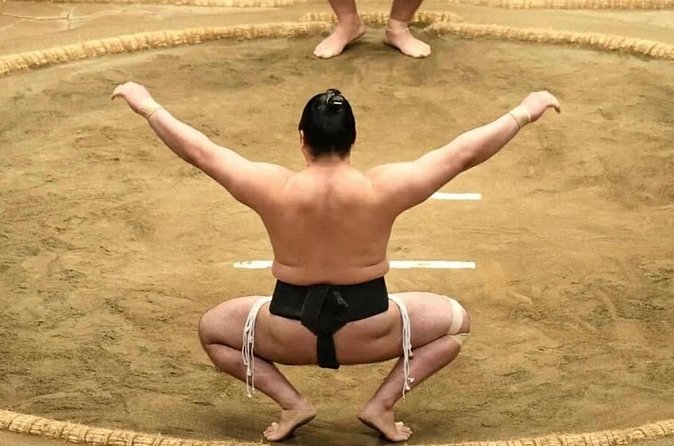
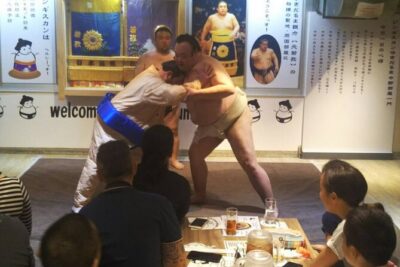
The most memorable part for many people is the Sumo Challenge. Audience members are invited to test their strength against one of the wrestlers. You do not have to take part, but the opportunity is there if you want a funny and physical photo moment.
Only a limited number of volunteers are selected. The selection is handled as a lottery, so you may not be chosen even if you raise your hand. That system is fairer than simply choosing the loudest person in the room, but you should not book the experience solely because you expect to wrestle.
The challenge is best viewed as playful participation, not a serious contest. You are taking part in a controlled demonstration with a professional wrestler who knows how to keep the exchange entertaining. The attraction is the experience of standing in the dohyo, feeling the scale difference, and giving the audience something to cheer about.
If you are traveling with children or a group of friends, this part can become the highlight. It gives the show a shared story to talk about afterward. If you prefer to watch quietly, you can remain in your seat and enjoy the spectacle without pressure to participate.
Photos and the final meet-and-greet
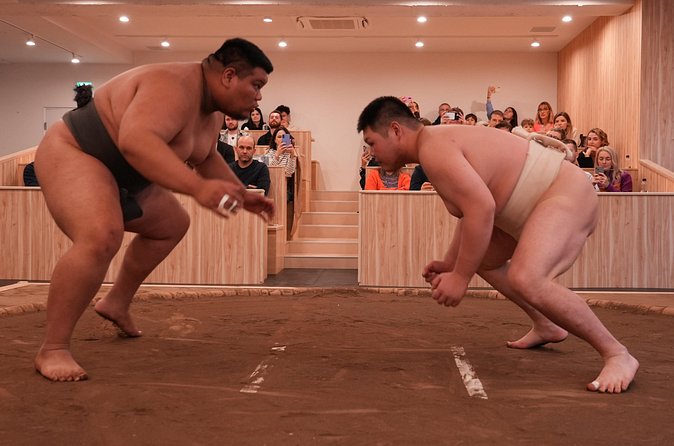
The program ends with a photo opportunity and a chance to meet the wrestlers. Everyone is given the opportunity to take a picture with them, not only the people selected for the Sumo Challenge.
This is an important difference between the two activities. The ring challenge is limited, but the photo session is for the full audience. The wrestlers are described as friendly and patient during the pictures, which helps keep the closing moments relaxed rather than rushed.
The photo is also a useful souvenir because it records the unusual scale of the experience. You are not simply photographing performers from a distance. You are standing beside real sumo wrestlers in the club setting, with the dohyo nearby.
The show ends back at the meeting point. Because the whole program is contained in one venue, you do not need to manage a second transfer or find your way across Tokyo after the final match.
What the $70 price really buys
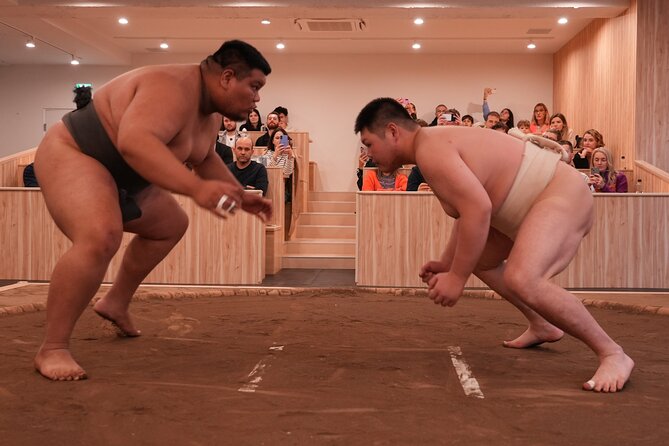
At $70 per person, this is not a bargain basement Tokyo activity. The value depends on what you want from sumo.
You are paying for a small-group format, a 90-minute program, bilingual hosting, live demonstrations, audience interaction, and a photo with the wrestlers. A major tournament ticket may offer more genuine competitive sumo, but it does not give you the same close-up format or the chance to enter the ring.
The price feels more reasonable if you value explanation and participation. A first-time visitor who wants someone to explain the rituals in plain language gets more from this than someone who only wants to see long, serious bouts.
The included bottle of water is a minor extra, not a major benefit. Other drinks are sold separately, so budget for that if you want something beyond water. Since the program is short, it is also worth considering the timing of your meal. The available information does not state that a meal is included.
The experience earns a strong overall rating of 4.2 from 21 reviews, but the range is important. High marks focus on the funny wrestlers, clear MC, photo session, and chance to take part. Lower ratings focus on the short bouts, staged format, price, and the feeling that the setting is aimed more at tourists than at traditional sumo fans.
That split is useful. It tells you that the same feature can be a strength or a weakness. The playful style makes the experience easy and fun, but it can disappoint anyone expecting a serious practice session.
Who will enjoy this most
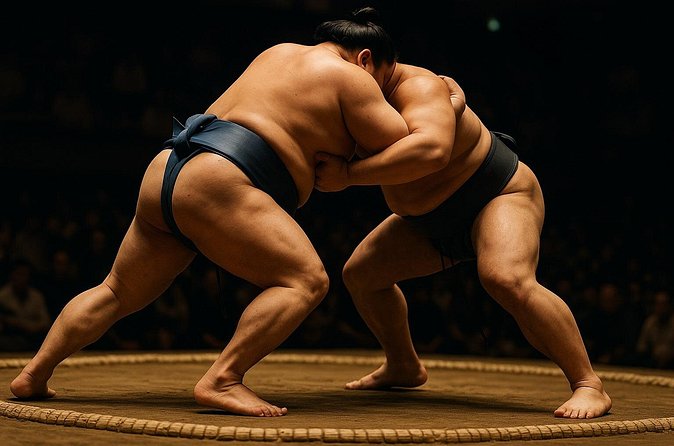
I would recommend this to first-time visitors to Japan, families, couples, and small groups who want a social cultural activity in Shinjuku. You get enough background to understand the basics, and you do not need to plan around a full tournament schedule.
It also suits people who like to be involved. The Sumo Challenge, audience cheering, questions, and final photographs give you more to do than simply sit in a theater.
This is a particularly practical choice if your schedule is tight. Ninety minutes is long enough to feel worthwhile, but short enough to fit around dinner or another Shinjuku activity. The venue is near public transportation, and the activity ends where it begins.
I would be more cautious if your main goal is authentic competitive sumo. The show is arranged for entertainment, and the bouts may be over quickly. Some of the humor and audience interaction may feel too staged if you want to observe wrestlers in a normal training environment.
I would also think twice if $70 feels high for a short performance. The photo and close seating add value, but the included drink is only water and additional drinks cost extra.
Practical booking advice
Confirmation is provided when you book, and the ticket is mobile, so you can keep the booking on your phone. The maximum group size is about 50 people, which helps preserve the close view but does not guarantee that you will be selected for the challenge.
Free cancellation is available if you cancel at least 24 hours before the start time. Cancellations made less than 24 hours before the experience are not refunded, and changes inside that period are not accepted. The deadline follows Tokyo local time.
Give yourself enough time to reach Okubo and locate the building. Shinjuku addresses can be harder to find than they look, especially if you are coming from a large station. If you need an elevator, look for it rather than assuming the stairs are the only route.
Should you book the Shinjuku Sumo Club?
Book it if you want an easy, close-up introduction to sumo with English support, a lively host, real wrestlers, and a photo at the end. The small room, clear explanations, and chance to try the Sumo Challenge make it more personal than watching from an arena seat.
Skip it if you want a full tournament, a serious training session, or a long run of competitive bouts. The show is staged for visitors, the matches can be brief, and the $70 price is easier to justify when you value interaction as much as sport.
For most first-time visitors, I see this as a fun cultural night with a clear tradeoff: less formal sumo, more access. Know that distinction before you book, and you are more likely to enjoy what the club actually offers.
FAQ
How long does the Shinjuku Sumo Show last?
The experience lasts approximately 1 hour and 30 minutes.
Where does the experience begin?
It begins at the SEKISAKU BLDG., 2-chome 5-22 Okubo, Shinjuku City, Tokyo 169-0072, Japan.
Where does the activity end?
The activity ends back at the meeting point.
How many people can attend?
The maximum group size is about 50 travelers.
Is the show suitable for people who do not know sumo?
Yes. A bilingual MC explains the history, rituals, terminology, and moves, making the program suitable for first-time visitors.
Can I take part in the Sumo Challenge?
Audience members are invited to volunteer, but only a limited number are selected through a lottery. Participation is not guaranteed.
Does everyone get a photo with the wrestlers?
Yes. Everyone is given an opportunity to take a photo with the wrestlers during the closing session.
What is included as the drink?
A bottle of water is provided. Other drinks are available for purchase.
Just added for fans in Tokyo
- Tokyo: Grand Sumo Morning Training Tour★ 4.9 · 12 reviews
- Sumo Training Watching Experience in Tokyo★ 4.5 · 8 reviews
- Kickboxing & Body Training with EX-Pro Fighter★ 5.0 · 4 reviews
- Tokyo: Visit Sumo Morning Practice with English Guide★ 4.5 · 22 reviews
- Tokyo Sumo Experience with Live Show & Audience Challenge★ 5.0 · 38 reviews
- Tokyo Sumo History Tour with Chanko Nabe Lunch★ 5.0 · 3 reviews
- 【SUMO FESTIVAL】Tokyo Ginza: Sumo Show & Photo Experience★ 4.5 · 41 reviews
- Tokyo Grand Sumo Tournament 2026 with a Sumo Expert Guide★ 5.0 · 29 reviews
Sumo Experiences in Tokyo, compared.
Tokyo Shinjuku Sumo Show & Experience with Photo
Read our review →
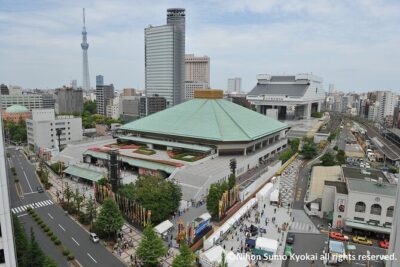
Tokyo Grand Sumo Tournament Viewing Tour with Tickets
Read our review →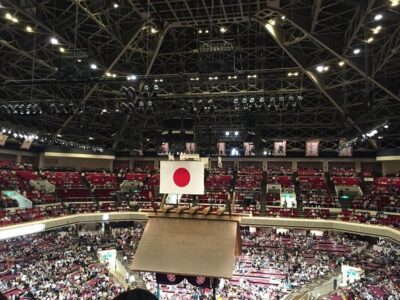
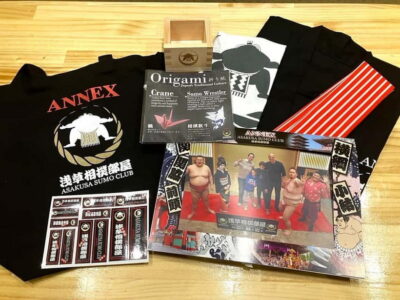
Luxury Sumo Show Experience & Japanese cuisine & Drink
Read our review →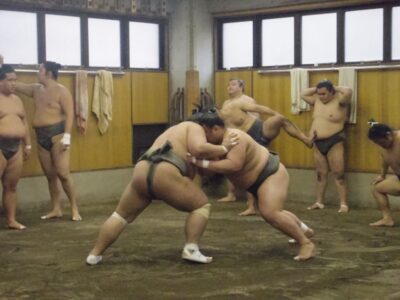
Browse the lists this tour appears in