
Review · BASEBALL GAME TICKETS
Tokyo Baseball Experience Tour with Expert English-Speaking Guide
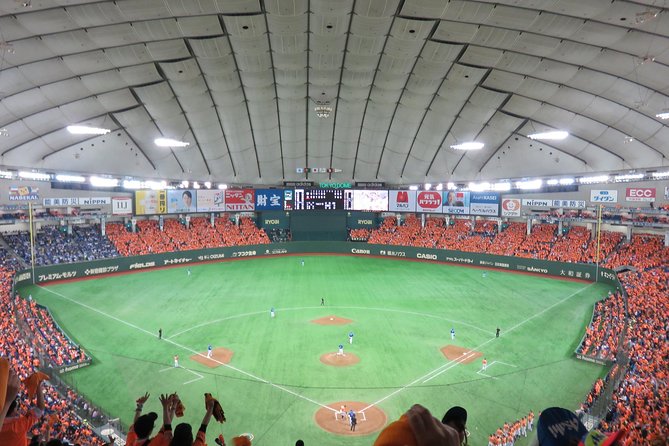
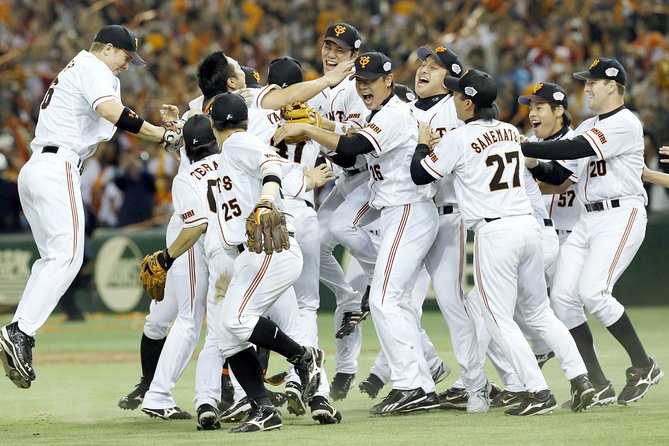
Japanese baseball is more than a game. It is a carefully practiced show of chants, brass-band anthems, coordinated cheering, and strong team loyalty. This small-group experience gives you a useful bridge into that culture before you take your seat at Meiji Jingu Stadium. The English-speaking guide explains how Japanese baseball differs from MLB, then teaches you the chants so you can join the crowd instead of watching from the sidelines.
I especially like two things here: the seat is included, with S, A, or B locations offering good views, and the group is capped at 12 people. The audio headset should also help you hear the guide clearly in an open-air stadium. The main consideration is timing: the guided portion ends when the game starts, so this is not a full pregame-to-final-out tour with a guide beside you throughout.
Key points to know before you book
- Meiji Jingu Stadium is the setting: You meet at this historic Tokyo baseball venue in Shinjuku City.
- The crowd participation is the point: You learn chants and anthems before joining the local cheering section in spirit.
- Three seat categories may be used: Your ticket can be in an S, A, or B seat, depending on availability.
- The group stays small: Up to 12 people join, with at least 8 required for the tour to operate.
- The guide uses an audio headset: You hear explanations about Japanese baseball and its differences from MLB.
- Plan around the weather: Heavy rain can cancel the match, while light rain normally does not.
Why Japanese baseball makes a good Tokyo night out
If you already follow MLB, you will recognize the basic structure quickly: pitcher, batter, innings, strategy, and the long pauses that let tension build. The setting and crowd behavior are different enough to make the evening feel like a cultural activity, not simply an imported American sport.
The clearest difference is the organized support. Japanese fans use repeated chants and anthems tied to individual players and teams. Instead of waiting for an occasional big moment to cheer, the crowd takes part throughout the game. Learning those patterns before the first pitch gives you a better sense of what is happening around you.
This is useful if you know little about baseball, too. The guide explains the sport in plain English and places it in a Japanese setting. You do not need to arrive with a working knowledge of statistics, team rivalries, or Japanese league rules. The focus is on helping you understand the game and the behavior in the seats.
The strongest part of the experience is likely to be the change from spectator to participant. You may not remember every baseball detail afterward, but you will understand why a Japanese crowd can sound highly organized and energetic even during ordinary stretches of play.
More Baseball Game Tickets in Tokyo:
- Tokyo Dome: Yomiuri Giants Baseball Game Ticket with Towel
★ 4.9 · 82 reviews - Catch a Baseball Game in Tokyo with a Local – Tickets Included
★ 5.0 · 24 reviews - Baseball Professional • Yomiuri Giants
★ 4.5 · 13 reviews
Meeting at Meiji Jingu Stadium
The tour begins at Meiji Jingu Baseball Stadium, at 3-1 Kasumigaokamachi, Shinjuku City, Tokyo 160-0013. The venue is near public transportation, but the package does not include transportation, so you need to arrange your own route to the stadium.
Arrive at least 10 minutes early. This matters more than it might on a flexible sightseeing walk because the group may leave without anyone who arrives late. You receive the guide’s phone number before the activity, and you may be able to meet the group at the next location, but that is a backup plan, not a good way to begin.
The meeting point is also the ending point. That keeps the logistics simple, especially if you plan dinner or another activity afterward. The stated duration is about four hours, though the exact timing depends on the game schedule and the pregame portion.
The stadium is open-air. Bring weather protection suited to the forecast, since you cannot count on an indoor fallback. Heavy rain can cancel the match and trigger a full refund, while light rain normally allows play to continue. If rain begins after the match is already underway, no refund is provided.
What happens before the first pitch
The guide’s job is to give you the cultural and baseball background that is hard to pick up from a seat alone. Using the audio headset, the guide explains the history of baseball in Japan and points out key differences between Japanese baseball and MLB.
The headset is a practical touch. Baseball stadiums are noisy, and a normal speaking voice can disappear once the crowd starts chanting. You can listen to the explanation without needing to stand close to the guide or strain to catch every sentence.
You also learn the chants and anthems used by Japanese supporters. This is not just a list of facts. It gives you a small set of tools for reading the crowd once the action starts. You can recognize when the cheering is connected to a specific player, when a familiar anthem is beginning, and why the rhythm continues from one at-bat to the next.
The supplied information does not name the guide, so you should not expect to select a particular host. What is clear is that the guide speaks English and is presented as an expert fan of Japanese baseball. That combination is useful because the best explanations here are likely to be both practical and personal: how the sport works, and how people actually support it.
Choosing between S, A, and B seats
Your ticket is for one of three seat categories, based on availability. Each offers a different view, so it is worth understanding the tradeoffs before you arrive.
S seats are right behind home plate, in the center of the action. These are the strongest choice if you want to watch the pitcher and batter head-on and follow the details of each pitch. They are also the most direct view of the central contest, though the exact seat is not guaranteed.
A seats are behind first or third base. From there, you can see much of the field and the players on the bench. This angle can make it easier to follow baserunning and defensive positioning, while still keeping you close to the main action.
B seats are behind the foul pole. They give you a good view of outfield play, which can be useful when a ball is hit deep or when you want to watch the defensive shape of the field. They are farther from home plate, so they may feel less immediate during each at-bat.
You do not choose among S, A, and B seats in advance based on the information provided. Availability determines the category. If a particular location matters greatly to you, this is an important limitation to accept before paying.
More Sports Experiences in Tokyo:
- Tokyo: Sumo Show and Dining Experience
★ 4.8 · 2,742 reviews - the SUMO show
★ 5.0 · 1,960 reviews - Tokyo Shinjuku Sumo Show & Experience with Photo
★ 5.0 · 1,750 reviews - Tokyo: Sumo Show and Experience in Shinjuku
★ 4.8 · 1,001 reviews
The game itself and the four-hour timing
A Japanese baseball game can last about three hours. That does not mean the guide-led activity lasts three hours after the first pitch. The guided tour ends when the game commences, so you should think of this as a pregame introduction followed by your own time watching from the included seat.
That arrangement has both advantages and drawbacks. You get expert context before the noise and action begin, then you can settle into the game at your own pace. You are not tied to a guide’s running commentary during every inning, which lets you focus on the crowd, the field, or the food stands.
The drawback is important for anyone expecting a full guided evening. One person who rated the experience four out of five had expected to arrive before the start and enjoy the entire game experience as part of the tour. That expectation is worth correcting: arrive early for the meeting, but understand that the formal tour portion finishes once play starts.
Your game ticket is included, so you can remain for the match according to the ticket terms and stadium schedule. The package information does not promise that a guide will stay with you until the final out. If your priority is a guided explanation during the entire game, this may not be the right format.
Food, drinks, and the stadium atmosphere
Food and drinks are not included in the $98 price. Snacks and beverages are available for purchase at stadium stands, along with merchandise. This gives you a chance to add a simple ballpark meal, but you should budget extra money and allow time to buy anything you want.
The stadium sales areas are part of the experience. Japanese baseball is not only about what happens on the field. The food, team goods, chants, and repeated crowd rituals all help explain why the sport has such a strong place in daily culture.
Still, do not treat the food as part of the tour’s included value. You pay separately, and the details of the available choices are not specified. If you have dietary needs, the supplied information does not provide enough detail to promise particular options.
Merchandise is also optional. You can enjoy the game without buying anything, but a team item may make it easier to follow the visual side of the support around you. No purchase is required for participation.
Is $98 a fair price?
At $98, the value depends on how much help you want with the cultural side of baseball. You are paying for an English-speaking guide, the audio headset, the instruction on chants and anthems, and an S, A, or B game ticket. Service fees and tax are included.
For an independent baseball fan who only needs a seat, the price may feel high. You could prefer to buy a ticket on your own and spend the difference on food or merchandise. The tour becomes more worthwhile if you want someone to explain the customs, compare Japanese baseball with MLB, and make the first visit easier to follow.
The small group also matters. With a maximum of 12 people, the guide can give explanations without handling a large crowd. It is not a private tour, but it should feel more manageable than a big coach-style outing.
The minimum of eight people is a practical risk. If fewer than eight book, the activity can be canceled and you receive a full refund. That protects you financially, but it can affect your plans if you have built a particular evening around the game.
Who will enjoy this most
I would consider this experience a good match for several types of visitors:
- You follow MLB or another baseball league and want to compare fan culture in Japan.
- You are new to baseball but want a live event with clear English guidance.
- You prefer a small group rather than attending a stadium alone.
- You want to learn local chants and crowd customs, not just watch from a seat.
- You have children or older family members who can attend with an adult and benefit from simple explanations.
There is no age requirement, but every person needs a reservation, including children. Children must be accompanied by an adult. The information says most people can participate, though it does not provide detailed accessibility notes for every seat or stadium route.
This is less suitable if you want a flexible arrival, a guaranteed home-plate seat, or a guide for the complete game. It is also not ideal if your schedule cannot handle a possible change caused by weather or by the minimum group size.
Booking, weather, and cancellation details
Confirmation is sent within 48 hours of booking, subject to availability. Since seat category and tour operation depend on availability, do not treat the reservation as fully settled until confirmation arrives.
The cancellation information supplied for this experience is strict and inconsistent in its wording. One section lists stepped fees of 25 percent within 20 days, 50 percent within 14 days, and 100 percent within seven days. The provider also describes the experience as non-refundable and unchangeable for any reason.
For practical planning, assume you cannot cancel for a refund or amend the booking. If the match is canceled because of heavy rain, the information says you receive a full refund. If light rain allows the match to proceed, or if rain begins during the game, the normal cancellation terms apply and no refund is provided for the latter situation.
Should you book the Tokyo baseball experience?
Book it if you want a live Japanese sporting event with a cultural guide, a small group, and an included seat. The chants and anthems are the real reason to choose this over simply buying a ticket. The audio headset and MLB comparison also make it easier to understand what you are seeing.
Think twice if your main goal is to watch every inning with a guide, choose a specific seat, or keep your schedule completely flexible. The tour ends when the game starts, food costs extra, late arrival can mean missing the group, and the cancellation terms are severe.
For a first Japanese baseball game, the format offers useful preparation without requiring you to become a fan before you arrive. Just book it for the instruction and crowd culture, not for a full guided game commentary.
FAQ
Where does the Tokyo baseball tour begin?
It begins at Meiji Jingu Baseball Stadium, 3-1 Kasumigaokamachi, Shinjuku City, Tokyo 160-0013, Japan.
Where does the activity end?
The activity ends back at the meeting point at Meiji Jingu Stadium.
How long does the experience last?
The tour lasts about four hours. A baseball game itself can last around three hours, but the guided tour ends when the game begins.
Is admission to the baseball game included?
Yes. A baseball seat ticket is included with the experience.
What type of seat will I receive?
You will receive an S, A, or B seat, depending on availability. S seats are behind the batter, A seats are behind first or third base, and B seats are behind the foul pole.
Is food included?
No. Snacks, drinks, and merchandise are available for purchase at the stadium, but they are not included in the tour price.
Is transportation included?
No. You are responsible for transportation to and from Meiji Jingu Stadium.
How large is the group?
The experience has a maximum of 12 people. At least eight people are needed for the tour to operate.
What happens if I arrive late?
You should arrive at least 10 minutes before the scheduled meeting time. The group may leave without you. You receive the guide’s phone number before the tour and may be able to meet the group at the next location.
What happens if it rains?
Heavy rain can cancel the match, in which case you receive a full refund. Light rain normally does not stop the game. If rain begins after the match is already in progress, no refund is provided.
Just added for fans in Tokyo
- Tokyo: Grand Sumo Morning Training Tour★ 4.9 · 12 reviews
- Sumo Training Watching Experience in Tokyo★ 4.5 · 8 reviews
- Kickboxing & Body Training with EX-Pro Fighter★ 5.0 · 4 reviews
- Tokyo: Visit Sumo Morning Practice with English Guide★ 4.5 · 22 reviews
- Tokyo Sumo Experience with Live Show & Audience Challenge★ 5.0 · 38 reviews
- Tokyo Shinjuku Sumo Show and Experience with Drinks and Photo★ 4.0 · 21 reviews
- Tokyo Sumo History Tour with Chanko Nabe Lunch★ 5.0 · 3 reviews
- 【SUMO FESTIVAL】Tokyo Ginza: Sumo Show & Photo Experience★ 4.5 · 41 reviews
Baseball Game Tickets, compared.

Boston Fenway Park: Guided Ballpark Tour with Options
Read our review →
Tour of Historic Fenway Park, America’s Most Beloved Ballpark
Read our review →
Jamsil Baseball Stadium Game Ticket with Dinner& Beer
Read our review →
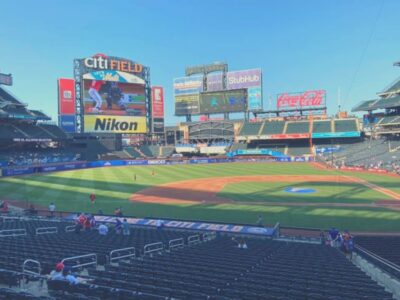
New York Mets Baseball Game Ticket at Citi Field
Read our review →

Browse the lists this tour appears in