
Review · OLYMPIC VENUES
Maihaugen Museum/The Norwegian Olympic Museum, Lillehammer.
Maihaugen gives you a rare chance to walk through eight centuries of Norwegian life in one place. You can see a 1200s stave church, old farmsteads, and homes from the 1900s, then move indoors for exhibitions on Norwegian culture and Olympic history. I especially like the way the museum connects ordinary homes and working farms with major national events. I also like that the Norwegian Olympic Museum is included, so one ticket covers two very different kinds of history.
The main drawback is seasonal access. In winter, many open-air buildings may be closed, and the outdoor section can feel incomplete. The indoor exhibitions remain useful, but if your main goal is to enter historic houses and meet costumed hosts, plan your visit for summer.
Key points to know before you go
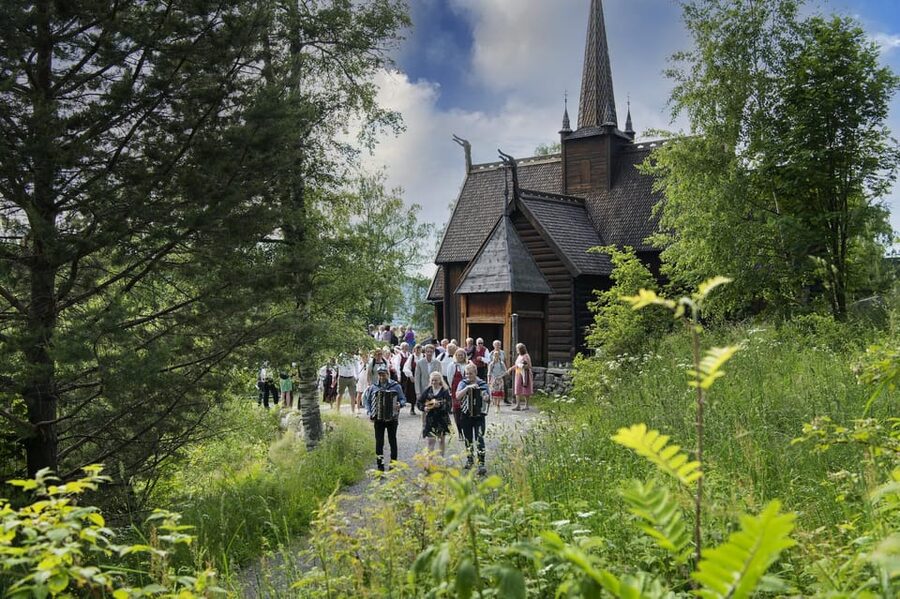
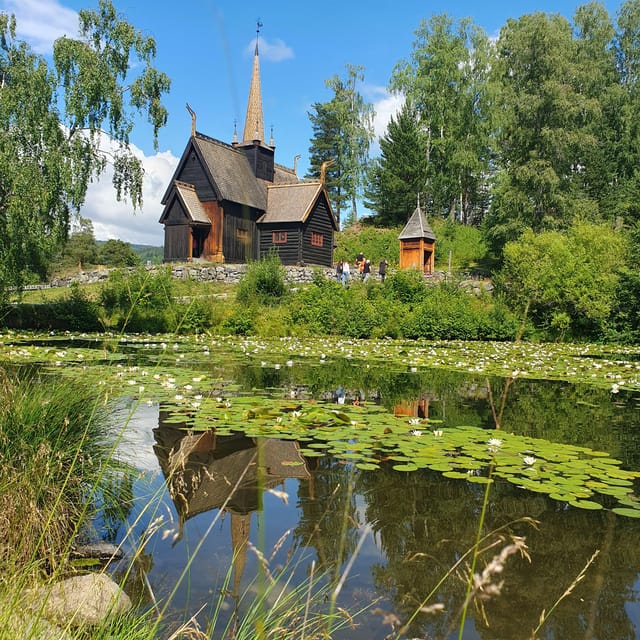
- Garmo stave church dates from the 1200s: This is one of Maihaugen’s most memorable buildings and a strong reason to allow time for the older section.
- More than 200 buildings cover eight centuries: Old farms, working homes, and 20th-century houses show how daily life changed over time.
- The Olympic Museum is included: See original objects, interactive displays, and films about the 1952 Oslo Games and Lillehammer 1994.
- Summer offers the fullest visit: More houses, outdoor activities, eateries, traditional crafts, and the Norwegian Postal Museum are available then.
- The $19 ticket can fill a full day: You receive access to the open-air grounds, indoor exhibitions, and both additional museums.
- Winter requires realistic expectations: A few buildings may be open, while much of the outdoor collection is best viewed from the paths and windows.
Start at the visitor center in Lillehammer
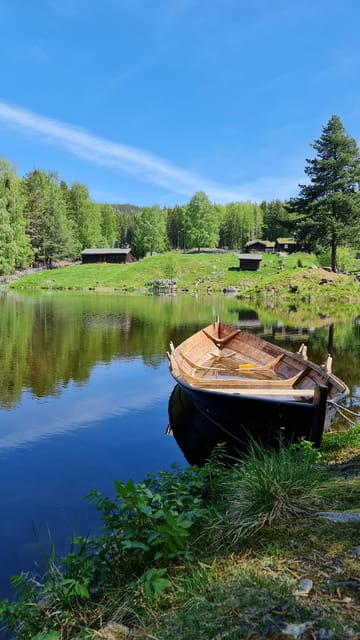
Your visit begins at the Visitor Center, where the ticket counter and hosts are located. There is no transportation included, so you need to make your own way to Maihaugen in Lillehammer.
The ticket is valid for one day, which is important here. Maihaugen is not a quick stop. With more than 200 buildings, indoor displays, and the Olympic Museum, you can easily spend several hours walking, reading, and going inside selected houses.
I would begin by picking up a map or asking the staff how the buildings are arranged that day. The museum covers a large area, and an informal route can become confusing. One useful criticism of the outdoor section is that it does not always feel obvious where to go next. A little planning at the start will help you avoid circling back or missing an area.
The museum is wheelchair accessible, though the open-air grounds contain historic buildings and outdoor paths rather than a modern, uniform gallery layout. If you need help choosing a manageable route, ask at the visitor center before setting off.
More Olympic Venues in the world:
- Berlin: Olympia Stadium Entrance Ticket
★ 4.3 · 789 reviews - Tickets and Guided Tour of the Olympic Stadium in Rome and Foro Italico
★ 4.5 · 404 reviews - The Olympic Museum Entrance Ticket in Lausanne
★ 4.5 · 211 reviews
Garmo stave church and Norway’s medieval roots
Make Garmo stave church one of your first major stops. The church dates from the 1200s and is the clearest single link between Maihaugen and medieval Norway.
Stave churches are built with upright wooden posts and distinctive timber construction. At Garmo, the value is not only the age of the building. You can also see how Norwegian religious architecture developed using local wood and skilled craft traditions.
The church is especially rewarding if you have already seen modern Norwegian towns and want a physical connection to an earlier period. It gives the open-air museum a strong center. Instead of viewing history only through labels, you are looking at a building that has survived from the medieval era.
Allow extra time here rather than treating it as a quick photo stop. The church is one of the most praised parts of the visit, and it gives you a better sense of why Maihaugen is more than a collection of old houses.
Old farms show how rural Norway worked
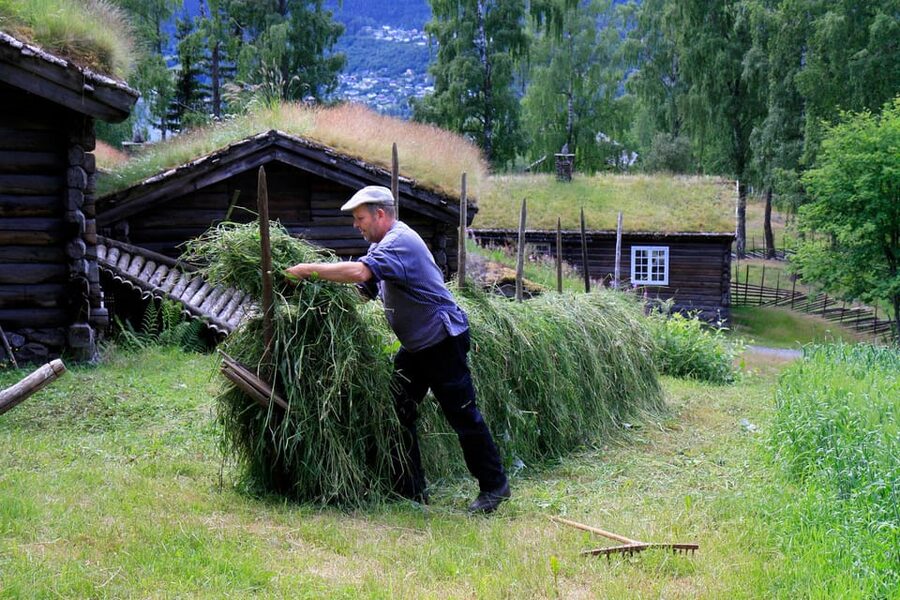
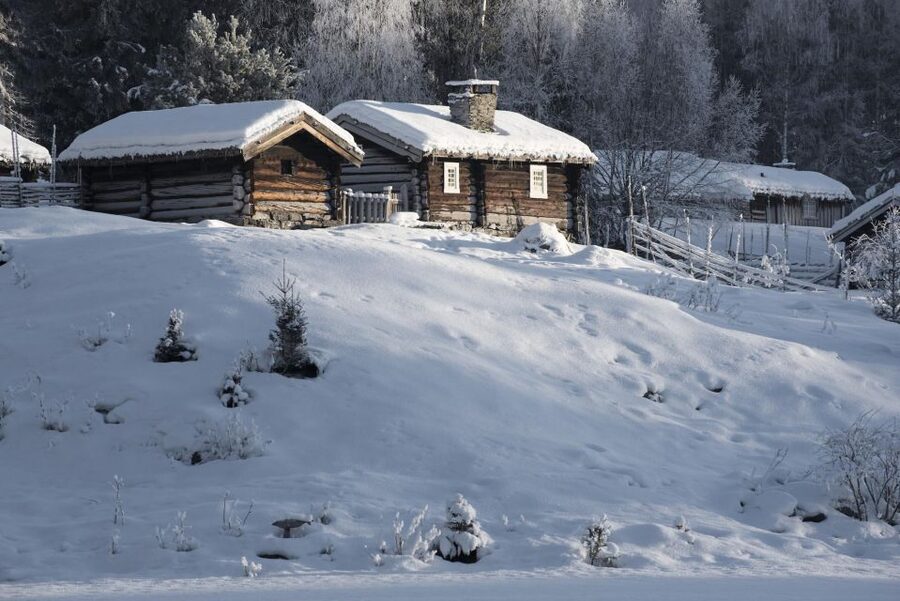
The farm section covers buildings from the 1500s, 1600s, 1700s, and 1800s. This is where Maihaugen is at its most practical. You see the buildings people used, the way they were grouped, and the relationship between homes, farm work, and the surrounding countryside.
The old farms help explain Norwegian life without reducing it to a list of dates. You can compare construction styles, household spaces, and the signs of changing living conditions across several centuries. The museum also presents a cultural landscape of mountain farms, with animals grazing among weathered wooden buildings during the appropriate season.
That seasonal detail matters. Summer gives you a more active setting, with traditional crafts, open houses, and hosts or actors in historic clothing and roles. These encounters can help turn a quiet building into a picture of daily life. You may see demonstrations of old skills and gain a clearer sense of how much work went into rural living.
If you visit outside the main summer period, the farms can be much quieter. Some buildings may be closed, and you might be limited to looking through windows or reading outdoor information. The old farms are still worth seeing, but the experience is less complete without open interiors and live interpretation.
The 1900s section brings the story closer to home
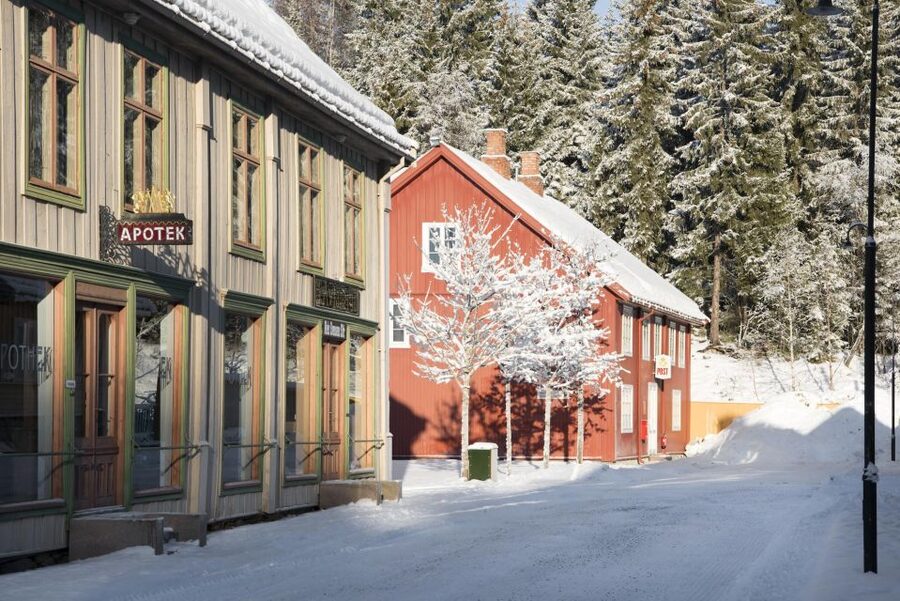
Maihaugen does not stop with medieval and rural Norway. Its collection includes houses from each decade of the 20th century, giving you a useful record of modern change.
This section is often easier to relate to than the oldest buildings. You can see how homes, furnishings, and everyday design shifted over time. The houses show that history is not only about kings, wars, and grand public buildings. It is also about how people lived, arranged rooms, and adapted to new technology and social habits.
I like this chronological approach because it prevents the museum from becoming a single picture of old Norway. You move from farm buildings and stave construction to more familiar homes, making the country’s development easier to follow.
The 1900s houses are also a good reason to avoid rushing through the grounds. If you only visit Garmo church and the oldest farms, you miss one of Maihaugen’s most useful ideas: Norway continued changing rapidly long after the traditional farm era.
More Sports Museums in the world:
- Liverpool: Liverpool Football Club Museum and Stadium Tour
★ 4.8 · 10,764 reviews - Lisbon: Luz Stadium Tour & SL Benfica Museum Entry
★ 4.7 · 4,102 reviews - Munich: FC Bayern Museum + Arena View
★ 4.5 · 944 reviews - Melbourne: MCG and Australian Sports Museum Guided Tour
★ 4.7 · 638 reviews
Indoor exhibitions explain the bigger picture
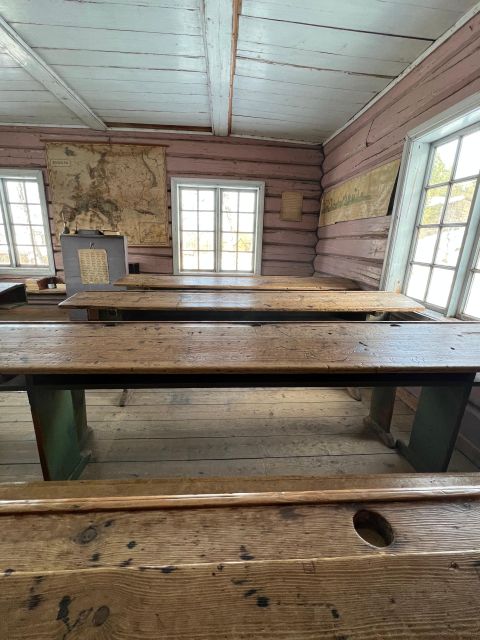
The indoor museum provides structure when the open-air collection feels spread out. The exhibition called Impulses and the exhibition We won the land add cultural and historical context to the buildings outside.
For me, the indoor section is particularly helpful at the beginning or end of the visit. Start here if you want a clear outline of Norwegian history before walking among the houses. Finish here if you have seen many buildings but want to connect them into a wider story.
One practical strength is that the indoor displays remain valuable in poor weather and during the colder months. A winter visit can still give you a strong introduction to Norway’s history and culture, even when much of the outdoor museum is quiet.
If you have limited time, do not assume the open-air collection is the only important part. The indoor displays may be the most informative portion of the day, especially for a first visit to Norway. They give you a broader framework, while the buildings provide the physical detail.
The Norwegian Olympic Museum adds a modern Norwegian chapter
The Norwegian Olympic Museum is located on the same site and included in your admission. It covers the Olympic Games from ancient times to the present, with special attention to the 1952 Oslo Games and Lillehammer 1994.
This is a welcome change of pace after the historic farms and churches. You move from timber buildings and rural traditions to international sport, national pride, and modern Norwegian identity. The museum uses original objects, interactive installations, and films to make the subject easier to follow.
The Lillehammer 1994 section is especially relevant because you are visiting the museum in the same town that hosted the Winter Olympics. The Oslo 1952 material adds an earlier chapter and helps show how Norway presented itself on the world stage before Lillehammer.
I would not skip this museum, even if sports are not your main interest. It is a compact way to understand two important moments in modern Norwegian history. The displays also give younger visitors something more hands-on after a long walk through old buildings.
At the same time, keep your expectations sensible. This is one part of a larger museum day, not a separate full-day Olympic tour. Its value comes from the contrast it creates with Maihaugen’s older collections.
The Norwegian Postal Museum is a summer bonus
During summer, your ticket also includes the Norwegian Postal Museum. Norway’s postal history has been preserved and presented here since 1947, and the collection includes several exhibitions.
The most distinctive object mentioned is an old train with a postal carriage. That detail makes the postal section more than a display of stamps and envelopes. It shows how mail moved through Norway and how transport shaped communication across the country.
This museum is open during the summer season, so do not count on it during a winter visit. If it is open, include it after the main Maihaugen grounds or use it as an indoor break when the weather turns wet.
The postal collection may not be the main reason you buy a ticket, but it adds another useful layer. You see how a country kept people, communities, and institutions connected over time.
How to plan a full day without tiring yourself out
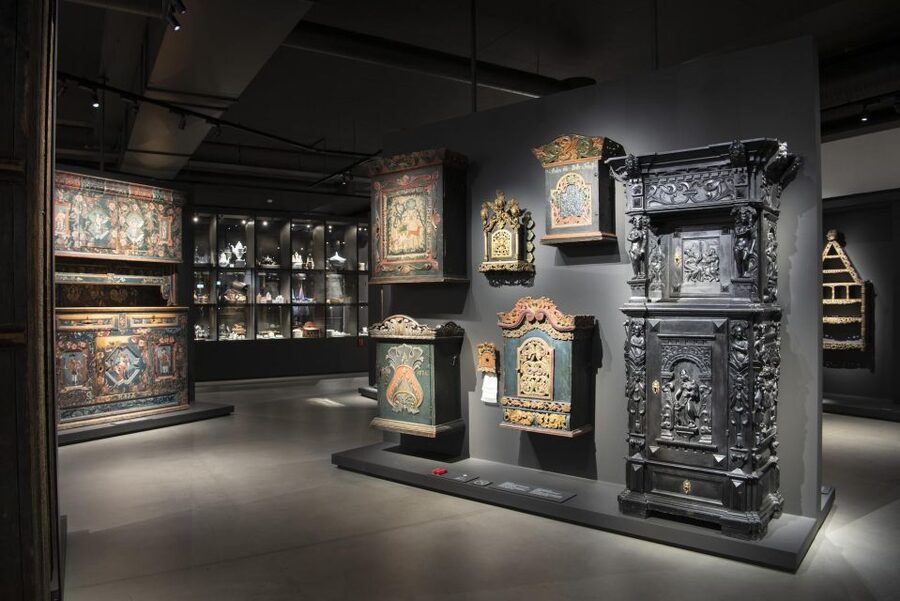
Maihaugen rewards a slow pace, but its size can become tiring. I would divide the day into clear sections instead of trying to inspect every building in sequence.
A practical order is:
- Begin at the visitor center and get oriented.
- Visit the indoor exhibitions for a general introduction.
- See Garmo stave church and the oldest buildings.
- Continue through the 16th to 1800s farm areas.
- Take a break for food.
- Explore the 20th-century homes.
- Visit the Norwegian Olympic Museum.
- Add the Norwegian Postal Museum in summer.
You do not need to follow this order exactly. The important point is to alternate outdoor walking with indoor museums. This keeps the day from feeling like one long march between buildings.
Food and drinks are not included. There is a cafeteria in the main building open all year, with additional places to eat around the open-air museum during summer. I would plan a real pause rather than relying on a quick snack, especially if you are visiting with children.
The museum shop is also worth a short look. It carries Norwegian design products and other quality items, making it a better stop for a useful souvenir than a generic gift shop.
Summer and winter offer different museums
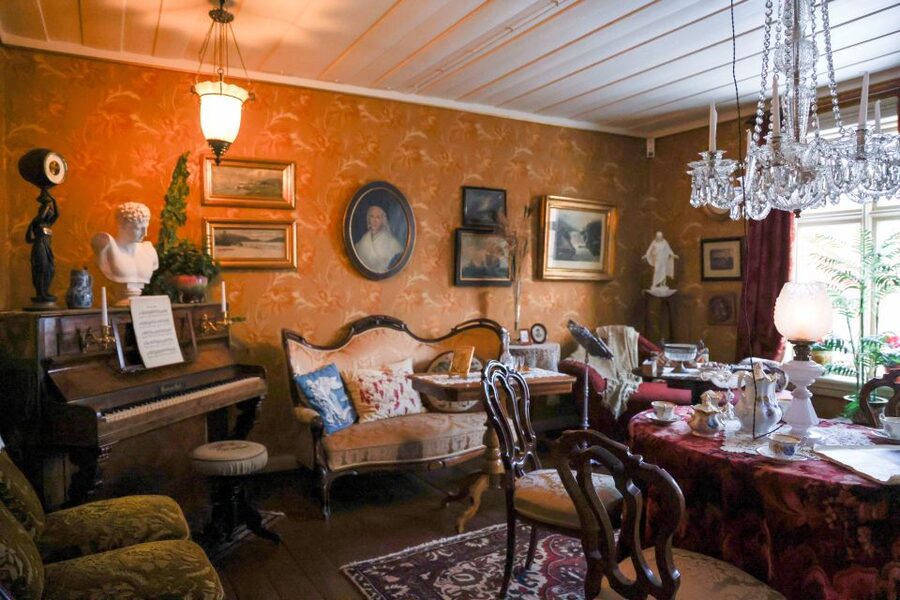
The season changes the experience enough that it should affect your decision to visit.
In summer, more of the museum is active. Historic houses may be open, hosts and actors can appear in the buildings, traditional crafts are demonstrated, animals graze around farm buildings, and extra food outlets operate. The Norwegian Postal Museum is also open.
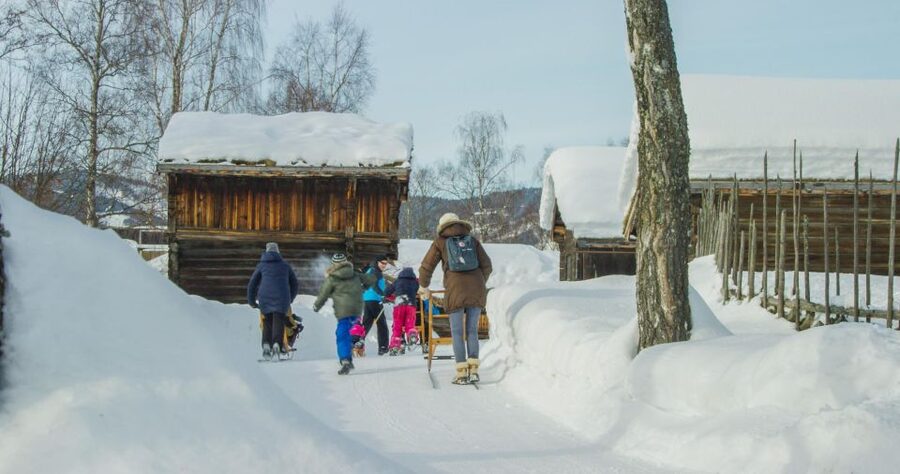
In winter, you can still visit the indoor exhibitions and the Norwegian Olympic Museum. The open-air setting may be peaceful and atmospheric, especially with snow, but access to historic interiors is limited. A winter visit has been particularly disappointing when only a handful of houses were open.
One winter experience included only four accessible houses, with a German-speaking guide helping open them, while an expected English-speaking guide did not arrive. That does not mean every winter visit will be the same, but it is a useful warning: confirm what is open before you go, and do not book a winter visit expecting the full summer program.
A Spanish-language visit also found the outdoor section difficult to follow because the route was not always clear and many houses were closed. Again, this points to planning rather than a fatal flaw. Ask staff for a suggested route and check the seasonal schedule at the entrance.
Is $19 good value for one day?
At $19 per person, the admission is fair if you give the museum enough time. You are not paying for one small exhibit. The ticket includes the open-air museum, indoor exhibitions, outdoor displays available that season, the Norwegian Olympic Museum, and the Norwegian Postal Museum during summer.
The value is strongest for families, history-minded visitors, and anyone who enjoys moving between indoor and outdoor sights. You can spend most of a day here without needing to buy another major attraction ticket.
The value is weaker if you only have an hour or two, especially in winter. A large open-air museum needs time, and closed houses reduce what you can see. If your schedule is tight, the indoor exhibitions and Olympic Museum may justify a shorter stop, but you will not experience Maihaugen fully.
Compared with a single themed museum, the ticket gives you more variety. Compared with a guided tour, it gives you greater freedom but less guaranteed explanation at every building. The admission works best when you want to set your own pace.
Who will enjoy Maihaugen most?
I would recommend Maihaugen to families who want a full cultural day rather than a single indoor attraction. Children can move between old houses, farm areas, animals in summer, interactive Olympic displays, and the train postal carriage.
It also suits first-time visitors to Norway. The museum gives you a broad introduction to the country, from medieval church building and farm life to modern sport and national identity.
Architecture fans will find plenty to study, especially at Garmo stave church and the older timber buildings. People interested in everyday history will appreciate the 20th-century houses, where social change appears in familiar domestic settings.
You may want to choose another activity if you dislike walking, have very limited time, or are visiting in winter mainly to enter historic homes. The open-air section is the heart of Maihaugen, and its seasonal limitations matter.
The museum is English-friendly, and the booking information identifies English as the host language. Still, access to a specific English-speaking guide is not guaranteed in the way a private guided tour would be. You are mainly booking admission to explore independently.
Should you book Maihaugen?
Book it if you can spare most of a day and want more than a standard city museum. The combination of Garmo stave church, old farms, 20th-century homes, indoor cultural exhibitions, Olympic history, and summer postal history gives you a broad picture of Norway that few single attractions can match.
Choose summer if open houses, crafts, farm animals, actors, and the Postal Museum are priorities. Choose winter only if you are satisfied with the indoor museums and an outdoor walk that may include limited building access.
At $19, it is a sensible buy for a full day, especially for families and first-time visitors. Just arrive with a plan, begin at the Visitor Center, and confirm which buildings are open that season.
FAQ
Where is Maihaugen located?
Maihaugen is in Lillehammer, in Innlandet County, Norway.
How long is the ticket valid?
The ticket is valid for one day.
What does the admission include?
Admission includes the Maihaugen open-air museum, indoor exhibitions, outdoor exhibitions available during the season, and the Norwegian Olympic Museum. The Norwegian Postal Museum is included during summer.
Is transportation to Maihaugen included?
No. Transportation to and from the museum is not included.
Is food included in the ticket?
No. Food and drinks are not included. Maihaugen has a cafeteria in the main building, with additional summer eateries around the open-air museum.
Is Maihaugen open all year?
Yes. Maihaugen is open all year, but most outdoor activities and more historic house access take place during summer.
Is the Norwegian Postal Museum open all year?
No. The Norwegian Postal Museum is open during summer.
Is the museum wheelchair accessible?
Yes, the activity is identified as wheelchair accessible.
Is an English-speaking host available?
English is listed as the host language. A specific English-speaking guide is not guaranteed for every visit.
Can I cancel for a full refund?
Yes. You can cancel up to 24 hours in advance for a full refund.
Just added for fans in the world
- Zandvoort: Driving Experience at the Formula 1 Race Track★ 4.6 · 5 reviews
- Wörth am Rhein: Grand Prix 30 – Electric kart race★ 3.6 · 2 reviews
- Woop! Glow golf: Ljubljana Btc City★ 4.8 · 14 reviews
- Woop! Glow Golf: Maribor★ 4.9 · 8 reviews
- Windsor: LEGOLAND Adventure Golf★ 4.6 · 10 reviews
- Washington D.C.: Washington Nationals Baseball Game Ticket★ 4.3 · 28 reviews
- Tokyo: Grand Sumo Morning Training Tour★ 4.9 · 12 reviews
- Washington D.C.: Washington Wizards Basketball Game Ticket★ 5.0 · 19 reviews
Olympic Venues, compared.

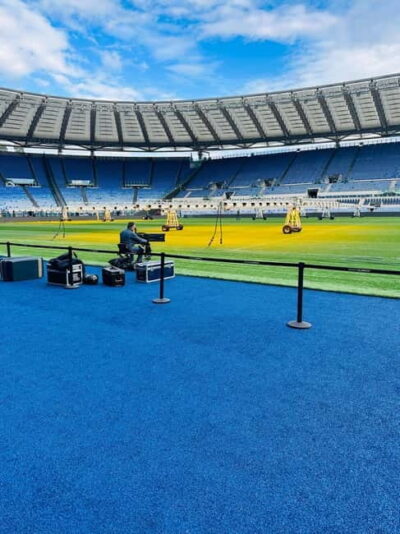
Tickets and Guided Tour of the Olympic Stadium in Rome and Foro Italico
Read our review →



Browse the lists this tour appears in