
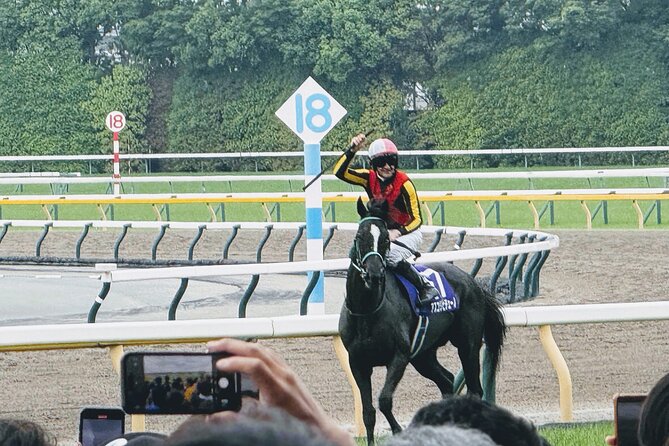
Review · HORSE RACING AND RACECOURSES
Horse Racing Tour with Local Fans in Tokyo Racecourse
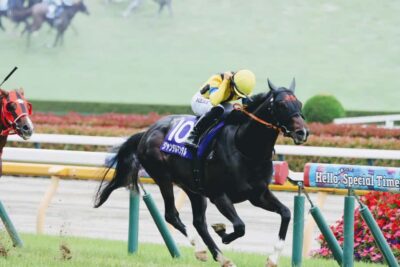
Tokyo horse racing is part sport, part ritual, and part Saturday social outing. This four-hour tour takes you from Shibuya to Tokyo Racecourse by train, then puts you beside local fans as the horses parade, race, and thunder past. Your guide explains the rules in plain English, helps you place bets, and offers race predictions, so you can take part without needing to read Japanese.
I especially like the small maximum group of 12, which makes train travel and betting instructions easier to manage. I also like the chance to see the paddock, browse the gift shop, and spend time around passionate local fans. The main catch is that the $100 price covers the guide only. You still pay for food, drinks, bets, and ¥320 per person for public transportation.
Key points
- Train ride from Shibuya: Meet at Shibu Hachi Box and travel together to Tokyo Racecourse.
- Simple racing lesson: Your guide explains Japanese horse racing and betting in an easy-to-follow way.
- Local race-day atmosphere: Watch fans cheer, inspect the horses, and take in several live races.
- Food and drinks cost extra: Sake, cocktails, and Japanese street food are available, but not included.
- Bring Japanese yen: Betting normally requires cash, and transport also costs ¥320 per person.
- Four hours with a small group: The experience finishes around 4:00 PM and accepts no more than 12 people.
Starting at Shibu Hachi Box in Shibuya
Your day begins at Shibu Hachi Box, at 2-chōme-1-1 Dōgenzaka in Shibuya. This is a useful meeting point if you are already spending time around Shibuya, but you should allow enough time to find the box and arrive ready to leave with the group.
The tour then heads to Tokyo Racecourse by train. The ¥320 public transportation charge is not included in the tour price, so keep that amount in Japanese yen. The train ride is not just a transfer. It gives you time to meet your guide, ask basic questions, and get a sense of how Japanese race days fit into ordinary city life.
I like this shared start because it removes some of the stress of reaching a large racecourse on your own. You do not need to decode the entire rail route while also worrying about finding the entrance. Still, you should be comfortable walking and using public transport. The tour asks for a moderate level of physical fitness, and the day includes moving around the station and racecourse.
More Horse Racing and Racecourses in Tokyo:
- Tokyo: Horse Racing Tour with Local Fan
★ 5.0 · 14 reviews - Horse Racing Tour with Local Fans in Tokyo, Oi Racecourse
★ 5.0 · 5 reviews - From Buenos Aires: Polo Match, Lesson, and BBQ Day-Trip
★ 5.0 · 5 reviews
Learning Japanese horse racing without reading Japanese
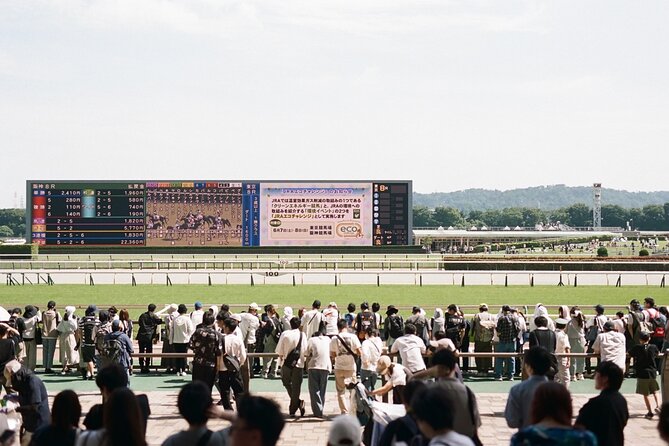
At the racecourse, your guide gives you a straightforward introduction to the sport. You learn the basic rules and how the races work, with explanations designed for people who do not speak Japanese.
That help matters. Japanese racecourses can feel confusing at first because betting forms, announcements, horse names, and race information may all appear in Japanese. A guide can turn the first few races into a lesson rather than a guessing game.
You will also learn how to place a bet. This is useful for first-time racegoers, but it can help experienced fans too, since the process and betting choices may differ from what you know at home. The guide also provides race predictions. Treat those as part of the fun, not as a promise of profit. Horse racing remains gambling, and your betting money is separate from the tour fee.
Bring Japanese yen in cash. The activity specifically advises this for betting, and you will also need to account for the transportation charge. Since food and alcohol are extra as well, I would carry enough cash for the day rather than assuming every expense is covered by the booking.
Watching the paddock before the race
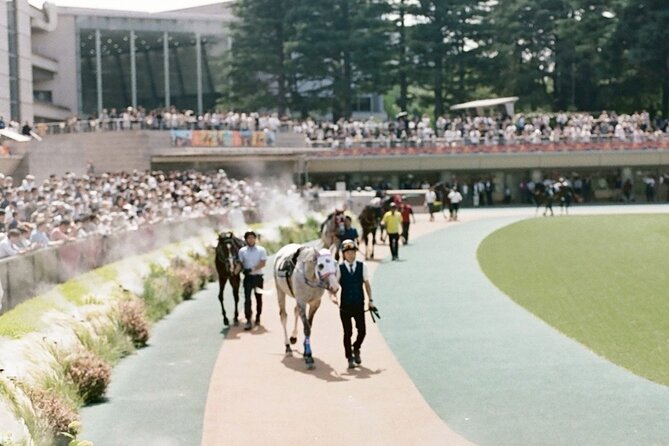
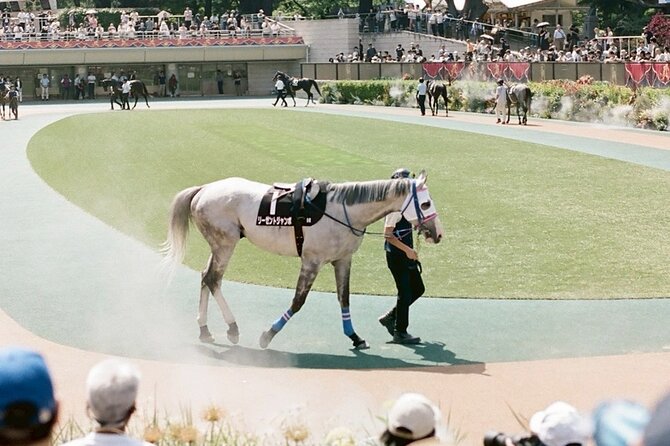
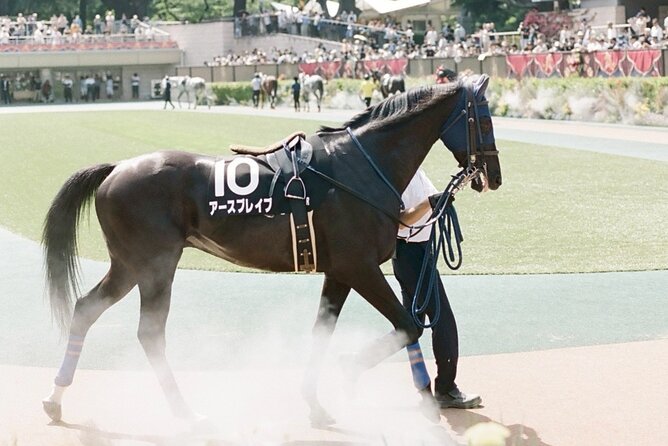
One of the most useful parts of a race day is seeing the horses before they run. The paddock gives you a closer look at the horses and the pre-race routine. It is a quieter counterpoint to the noise of the main race.
Access to the paddock was part of one especially successful day, along with help placing bets for several races. Because exact race-day access can depend on timing and the guide’s plan, I would ask about it at the start rather than assume a private or special viewing area is guaranteed.
Even when you know little about racing, the paddock gives you something concrete to watch. You can see the horses before the field heads to the track, then compare that calmer preparation with the noise and speed of the race itself. For an experienced fan, it adds a useful pre-race stage to the outing.
Live races and the noise of the crowd
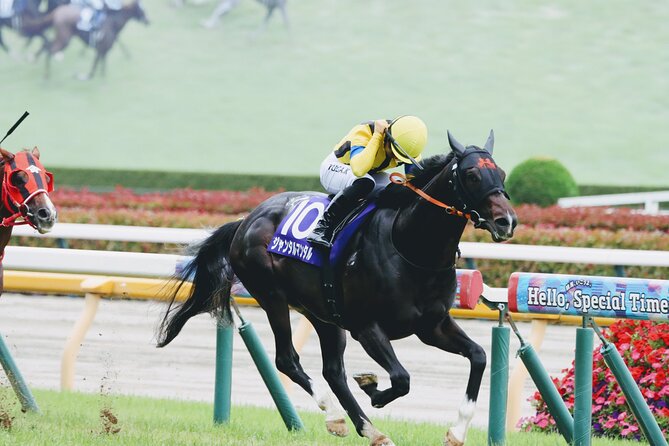
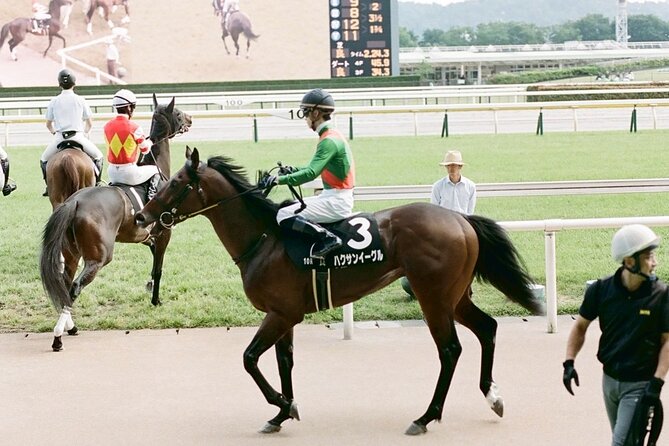
The main event is, naturally, the racing. You should have time to watch several races during the tour, with the experience ending around 4:00 PM.
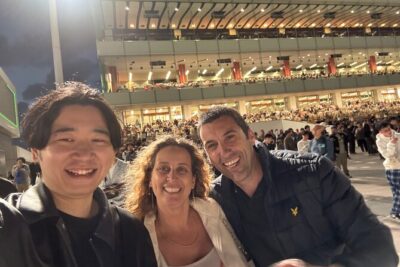
The appeal is not limited to the horses. Japanese fans cheer with real feeling, especially when a favorite is in contention. That collective reaction helps you understand why racecourses are more than places to place wagers. They are social spaces where people follow horses, study form, celebrate wins, and accept losses.
I would not expect every race to produce a dramatic finish. That is part of the honest appeal. Some races will be exciting, some will be over quickly, and your chosen horse may lose. The guide’s explanations give the day structure, so you still have something to follow between races.
If you dislike gambling, you can focus on the horses, the crowd, the racecourse, and the food. If you enjoy a small wager, the guide makes it easier to join in without fumbling through the system alone. Set a spending limit before you arrive. The tour is more enjoyable when a losing bet remains a small part of the day rather than its main story.
More Horse Riding Trips in Tokyo:
- Horseback Riding Tour and visit to Tablón, Chaquira, Pelota
★ 5.0 · 4 reviews
Sake, cocktails, and Japanese street food
Food and drink add a social side to the outing. The experience includes access to premium drinks such as sake and cocktails, along with Japanese street food, but these purchases are not included in the $100 price.
That distinction is important when you compare the cost with other Tokyo activities. You are paying for the guide, the group coordination, the racing explanation, and help with betting. You are not buying an all-inclusive meal, open bar, or betting allowance.
I like the idea of sampling casual Japanese food at the racecourse because it keeps the day connected to the setting. A sit-down restaurant would separate you from the action. Here, you can eat between races and return to the track when the next field is ready.
The tradeoff is control over your final bill. A drink, snacks, betting money, and transport can quickly add to the base price. If you want to keep costs down, decide in advance how much you will spend on food, alcohol, and wagers. The booking fee itself is clear, but your personal spending will vary.
What the guide adds to the day
The guide is the key reason to choose this experience instead of simply buying entry and visiting the racecourse independently. You receive an introduction to the rules, practical help with bets, race predictions, and company on the train and around the course.
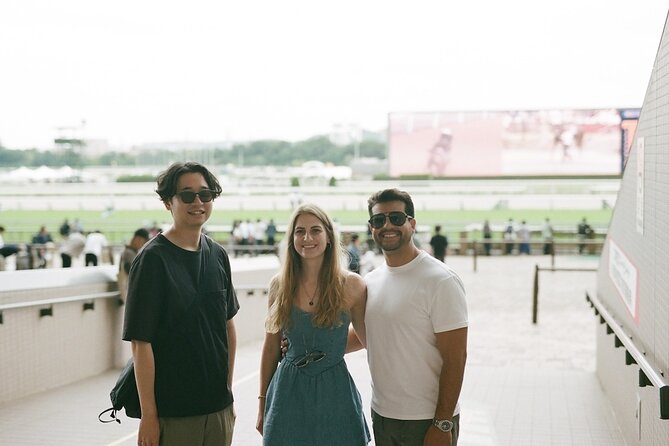
The strongest praise connected to the experience centers on the guide’s friendly and accommodating manner. One particularly personal day included relaxed conversation on the train and at the racecourse, time in the paddock, help with several races, a stop at the gift shop, and an escort back to the visitor’s hotel. Hotel escort is not listed as a fixed inclusion, so I would not book expecting it, but the example shows that the guide may be willing to make the day feel personal when time and circumstances allow.
The conversation can also be part of the value. This is not a silent transfer followed by a worksheet. You have someone who can explain what is happening and help you feel at ease in an unfamiliar setting.
No individual guide name is provided, so you cannot request a named host from the available details. The experience is operated by Japan Traditional Travel, and the mobile ticket makes access easier once your booking is confirmed.
Is $100 a fair price?
At $100 per person, this is not the cheapest way to spend an afternoon in Tokyo. The guide fee is included, but transport costs ¥320 per person, and you pay separately for all food, alcohol, and bets.
The value depends on what you want from the day. If you already understand Japanese racing, speak Japanese, and are comfortable navigating the racecourse alone, you may find the guide fee harder to justify. You could prefer to arrange your own visit and keep your spending focused on racing and food.
For a first visit, the calculation changes. The guide saves you from working out the betting system alone and gives you a way to understand the customs around the races. The train journey, explanations, race predictions, and company throughout the outing are the main product.
I would view the $100 as a cultural guide fee rather than an admission package. You are paying for access to a more understandable and social version of race day. It is good value for someone who wants context and help. It is less compelling for someone who only wants to watch one or two races cheaply.
Group size, timing, and physical demands
The maximum group size is 12 people. That is small enough for the guide to answer questions, though the actual group may be smaller or close to the limit.
The total duration is about four hours, ending around 4:00 PM. This makes the tour fit well into a day when you want a morning or evening free for other plans. You should not expect a full-day racecourse visit.
The day includes a train ride, walking around the racecourse, time near the viewing areas, and movement between races. A moderate level of physical fitness is requested. Service animals are allowed, and the meeting point is near public transportation.
Because the tour is tied to live races, timing matters. You will be moving according to the race schedule rather than lingering wherever you like. That guided rhythm helps a first-time visitor, but it gives you less freedom than an independent visit.
Who should book this race-day outing?
I would recommend it most strongly to you if you meet one or more of these descriptions:
- You are curious about Japanese horse racing but do not know how betting works.
- You want a local social experience rather than a standard sightseeing stop.
- You enjoy live sports, crowds, and a little low-stakes gambling.
- You want a guide for the train ride and racecourse rather than handling the visit alone.
- You have enough flexibility to pay separately for food, alcohol, transport, and bets.
I would think twice if you want a quiet cultural activity, dislike gambling, or need a fixed all-inclusive price. The racecourse can be noisy and emotionally charged, and the tour’s central appeal is the live action.
The experience also suits solo visitors who want company. The shared train ride and guide-led explanations give the afternoon a social shape without requiring you to organize a group of your own.
Booking and cancellation details to keep in mind
Confirmation arrives when you book, and the activity uses a mobile ticket. It is often booked well ahead, with an average booking lead time of about 37 days, so I would not leave it until the last moment if the date matters to you.
You can cancel for a full refund up to 24 hours before the local start time. Cancellations or changes made inside that 24-hour window are not refunded or accepted. Keep the local time rule in mind when arranging other plans.
FAQ
Where does the horse racing tour begin?
The tour begins at SHIBU HACHI BOX, 2-chōme-1-1 Dōgenzaka, Shibuya, Tokyo 150-0043, Japan.
How do I get to Tokyo Racecourse?
You travel by train with the guide and group. Public transportation costs ¥320 per person and is not included in the tour price.
How long does the experience last?
The tour lasts approximately four hours and concludes around 4:00 PM.
Are food and drinks included?
No. Food and alcoholic drinks, including options such as sake and cocktails, are paid for separately.
Do I need Japanese yen?
Yes. Bring Japanese yen in cash because betting typically requires cash. You should also have yen available for the ¥320 transportation charge.
How many people can join the tour?
The maximum group size is 12 people.
Should you book it?
Book this tour if you want to understand Japanese horse racing while sharing the day with local fans. The guide’s help with rules, betting, and race predictions makes the experience far easier for a first-time visitor, and the chance to see the paddock, browse the gift shop, and watch several races gives the afternoon plenty of variety.
Skip it if you want an all-inclusive package or plan to avoid betting, food, and alcohol entirely. The $100 fee is only the starting cost. For the right person, though, it buys something more useful than racecourse entry: a friendly introduction to a distinctly Japanese day at the races.
Just added for fans in Tokyo
- Tokyo: Grand Sumo Morning Training Tour★ 4.9 · 12 reviews
- Sumo Training Watching Experience in Tokyo★ 4.5 · 8 reviews
- Kickboxing & Body Training with EX-Pro Fighter★ 5.0 · 4 reviews
- Tokyo: Visit Sumo Morning Practice with English Guide★ 4.5 · 22 reviews
- Tokyo Sumo Experience with Live Show & Audience Challenge★ 5.0 · 38 reviews
- Tokyo Shinjuku Sumo Show and Experience with Drinks and Photo★ 4.0 · 21 reviews
- Tokyo Sumo History Tour with Chanko Nabe Lunch★ 5.0 · 3 reviews
- 【SUMO FESTIVAL】Tokyo Ginza: Sumo Show & Photo Experience★ 4.5 · 41 reviews
Horse Racing and Racecourses, compared.
Horse Racing Tour with Local Fans in Tokyo, Oi Racecourse
Read our review →
Hong Kong Jockey Club Racecourse Guided Tour with F&B
Read our review →Browse the lists this tour appears in