
Review · SUMO EXPERIENCES
Sumo Tournament Experience in Nagoya
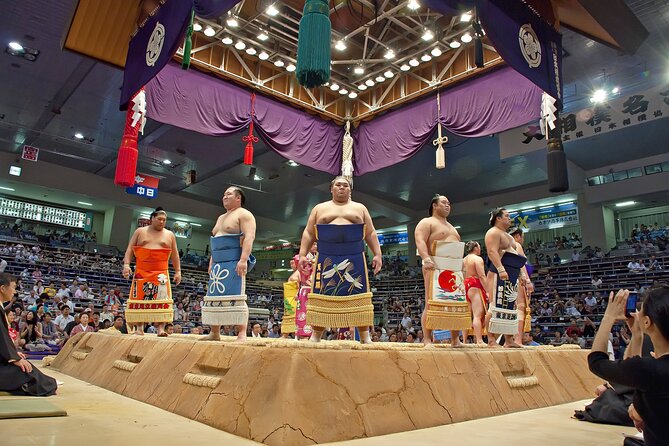
Nagoya’s July sumo tournament gives you a rare look at Japan’s national sport when the rules, rituals, crowd noise, and enormous athletes all come together inside the Aichi Prefectural Gymnasium. You’ll learn why wrestlers throw salt, how the ranking board works, and what life is like inside a communal training stable before settling in for the matches.
I like the English-speaking sumo expert, who makes a sport that can seem mysterious feel easy to follow. I also like the chance to cheer for wrestlers as they enter the arena, then eat chanko hot pot, the filling stew associated with sumo life, if you choose the dinner option.
The main drawback is timing. You may wait before taking your seat because earlier matches must finish, and the group can be as large as 15 to 24 people. Tickets are also limited, so you should plan well ahead and accept that the event can be canceled if the minimum group size or ticket supply is not met.
Key points before you book
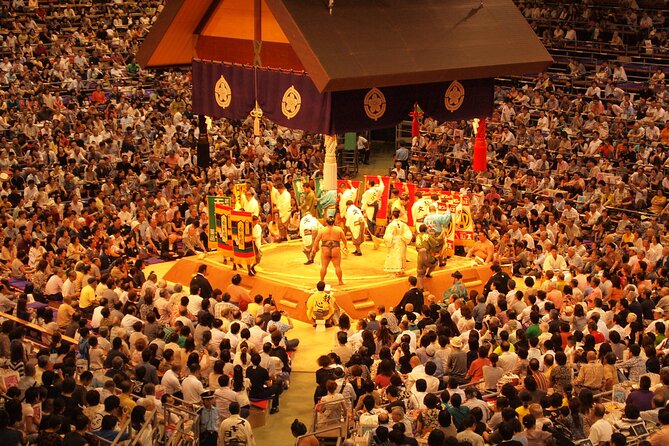
- Nagoya’s only official basho: The tournament takes place once a year, in July, during a 15-day event.
- Reserved chair seating: Depending on the option you choose, you receive A-class, S-class, or another listed reserved seat category. Standard premium seating is on the second floor.
- Sumo expert in English: Audio headsets help you hear explanations about rituals, rankings, wrestlers, and the sport’s strict traditions.
- A chance to see wrestler arrivals: You can cheer and greet famous wrestlers as they enter the stadium before their matches.
- Optional chanko dinner: Add a local hot pot meal based on the food traditionally eaten by sumo wrestlers.
- Book early: Three months ahead is recommended, and one month is the minimum suggested planning window.
Why Nagoya’s July basho is special
Japan holds six official sumo tournaments each year, but Nagoya gets only one. The others take place in Tokyo, Osaka, and Fukuoka, so your dates must line up with the July tournament if you want to see professional sumo here.
Each basho lasts 15 days, with the opening and closing dates falling on Sundays. The exact dates change from year to year, but July is fixed. This makes the experience a poor fit for a spontaneous stop in Nagoya, but a strong choice if sumo is one of your main reasons for visiting Japan.
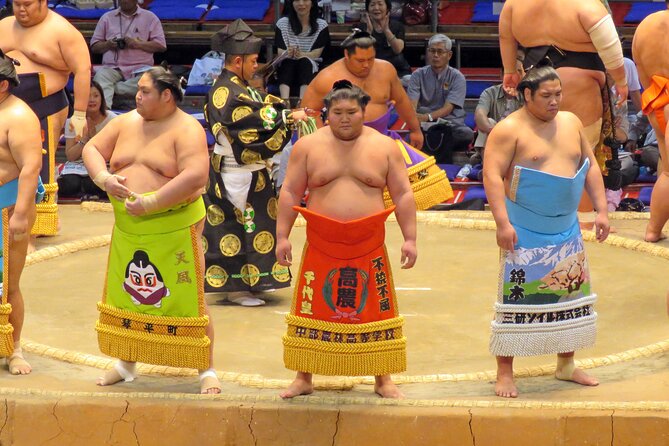
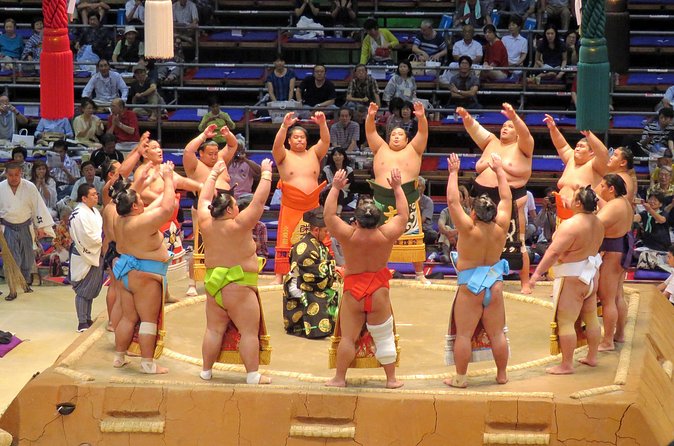
Sumo is more than a contest of strength. It is treated as a Japanese martial art, with strict rules and old ceremonies preserved in modern competition. Wrestlers commonly live in communal heya, or training stables, where their meals, clothing, practice, and daily routines are closely controlled.
That setting helps explain why the pre-match rituals matter. The salt purification, formal movements, rankings, and entrance ceremonies are not filler before the real action. They are part of the sport itself. With an expert beside you, you can follow those details instead of waiting for the bouts to begin.
More Sumo Experiences in Japan:
- Tokyo: Sumo Show Experience with Chicken Hot Pot and a Photo
★ 4.8 · 6,678 reviews - Tokyo: Sumo Show and Dining Experience
★ 4.8 · 2,742 reviews - the SUMO show
★ 5.0 · 1,960 reviews
Meeting the group and getting oriented
The experience starts at 2:00 pm, with the exact meeting point sent by email at least one week before the date. You should arrive at least 10 minutes early. This is a join-in group tour, not a private outing, and the guide may not be able to wait if you arrive late.
The usual group size is about 15 to 20 people, with a maximum of 24 for the wider experience. The minimum is 15. That minimum matters because this is a ticketed event that requires advance planning. If too few people book, the experience can be canceled and you will be offered another date or a full refund.
The group format has a clear benefit: an expert can explain the action as it happens, and you can share the excitement with other people who came for the same unusual event. The tradeoff is less freedom. You may need to move at the group’s pace, and the guide cannot stop for long individual explanations at every point.
Inside the Aichi Prefectural Gymnasium
The main stop is the Aichi Prefectural Gymnasium, the official venue for Nagoya’s basho. Plan on roughly four hours for the tournament experience, though the full outing may run closer to five hours if the dinner option is included or if there is a wait before seating.
The tour may begin with time around the venue, explanations of sumo customs, and a look at the Sumo Museum. The museum can become crowded, and moving a large group through it may be difficult. In that case, the guide may ask you to visit it independently rather than lead everyone through together.
You may also wait before taking your seat. The group must wait for earlier matches to finish before entering or settling into the reserved seating area. That can test your patience, especially if you expect the afternoon to run on a strict schedule. It is best to treat the waiting period as part of the event rather than plan a tight connection afterward.
Once seated, you can follow the bouts while the guide explains what you are seeing through an audio headset. The headset is useful in a large hall, where ordinary conversation would be hard to hear. You receive sumo information, a tournament ranking chart called a banzuke-hyo, and running context about famous wrestlers from the past and present.
Choosing between the seat options
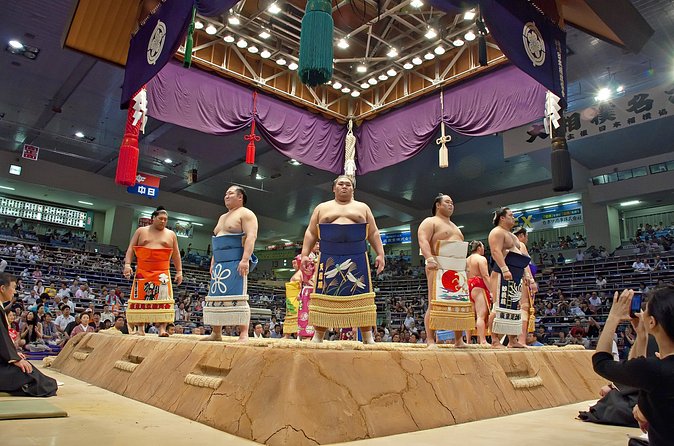
The seating details depend on the package selected, so read the exact option carefully before paying. The experience information lists S-class or A-class reserved seats for some options, while the standard premium option uses A-class chair seats on the second floor.
The description also refers to B or C-class reserved chair seating in one part of the experience details. Because the seat category can vary by package, the safest approach is to confirm the ticket level shown at checkout rather than assume every booking receives the same view.
The important practical point is that you sit in a chair, not on a traditional floor cushion. That makes the event easier for many people, especially if you are not used to sitting on the floor for several hours. The second-floor A-class arrangement places the group together with the guide, up to 20 people in the same area.
Your guide’s explanations add value to the ticket. You are not simply watching two large athletes push, slap, and force each other out of the ring. You can learn how the ranking system works, why rituals happen before the bout, and which wrestlers matter in the current tournament.
More Sports Experiences in Japan:
- Tokyo Shinjuku Sumo Show & Experience with Photo
★ 5.0 · 1,750 reviews - Tokyo Sumo Entertainment Show with Chicken Hot Pot and Photo
★ 5.0 · 1,205 reviews - Tokyo: Sumo Show and Experience in Shinjuku
★ 4.8 · 1,001 reviews - Tokyo: Sumo Tournament Tour with Chair Seat Tickets
★ 4.6 · 753 reviews
Seeing wrestlers arrive at the arena
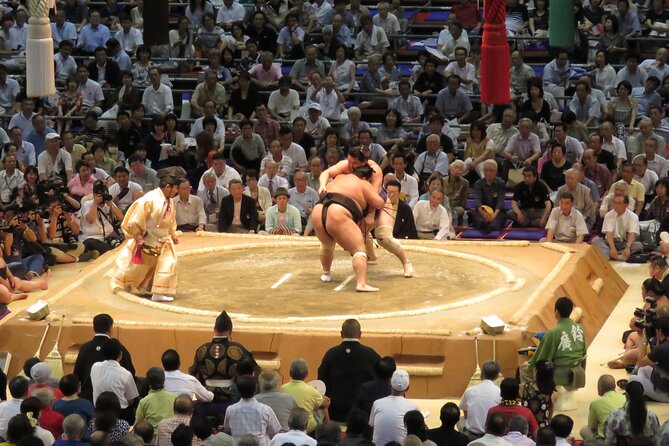
One of the most memorable parts is the chance to cheer and greet famous wrestlers as they enter the stadium for their matches. This gives you a closer connection to the event before you take your seat.
The timing and crowd conditions can vary, so you should not expect a private meeting or a guaranteed conversation with a particular wrestler. Still, seeing the competitors arrive helps turn the afternoon into more than a seat in a sports hall. You are watching the build-up to a major Japanese sporting event, with local supporters gathered around the same entrance.
The guide can help you understand who you are seeing and why certain wrestlers draw attention. That is especially useful if you know little about current competitors. If you already follow sumo, the introduction may be less essential, but the live setting still gives the sport a different feel from watching it on television.
What the guide adds
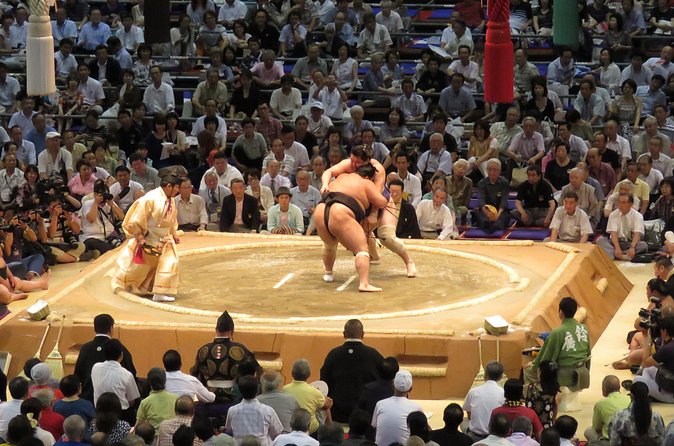
The guide is the part that makes this experience useful for beginners. Sumo has many small rules and customs, and the action can be over quickly. An English-speaking expert can tell you what to watch before the bout, explain the rituals, and point out the significance of a wrestler’s ranking.
Kazou has guided this experience with a focus on the tournament and its wrestlers. He has also taken photographs of the group and the event for the people he guided. Yoko is another guide praised for her strong enthusiasm and clear explanations, with a style that worked well for families with children aged nine and eleven.
Guides can vary by date, so you cannot assume that Kazou or Yoko will lead your group. You can, however, expect an English-speaking local sumo expert and an audio headset. The guide’s role is not just translation. It is helping you read the culture around the sport.
Chanko nabe, the sumo wrestler’s hot pot
You can add dinner at a local chanko hot pot restaurant when booking. Chanko nabe is a stew made with chicken stock, vegetables, and other ingredients. It is associated with sumo wrestlers because a large pot can feed many hungry people at once after training.
The standard dinner is chanko hot pot without drinks. Meals and drinks are not included in the basic experience, so check the final price before you book. If you want a vegetarian version, request it at least one week in advance in the special requirements field.
Traditional chanko broth is usually made with pork or chicken. The restaurant may substitute the broth for a vegetarian meal, but you should not wait until the day of the tour to ask. Once the dinner request has been accepted, changes cannot be made one week before the date.
I see the dinner as a useful add-on if you want the event to explain sumo life beyond the ring. It is less important if your main goal is simply to watch the matches or if you already have dinner plans in Nagoya.
Is $228.62 a fair price?
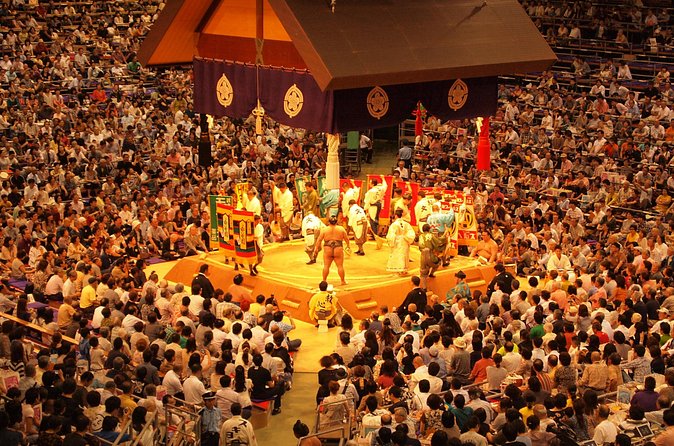
At $228.62 per person, this is not a cheap sporting event. The value depends on what you would otherwise have to arrange yourself: an official tournament ticket, a suitable reserved seat, an English-speaking guide, sumo background, the ranking chart, headset service, and the chance to see the wrestlers arrive.
The price makes more sense if you are new to sumo or visiting Japan only once. A regular fan may be comfortable arranging a ticket independently and researching the rules alone. A first-time viewer may get much more from the afternoon because the guide fills in the context that a ticket alone cannot provide.
The optional dinner increases the total cost, and drinks are not included. Group discounts are available, so larger parties should check the booking price before assuming each person will pay the full individual rate.
Tickets for groups are released by the Sumo Association about four to seven weeks before the tournament date. If the operator cannot obtain the tickets, you should be notified within four weeks of the tour and offered another date or a full refund. This is another reason not to build your entire Nagoya schedule around a nonrefundable booking until the ticket situation is confirmed.
Who will enjoy this experience most?
I would choose this for someone who wants cultural context along with a major Japanese sporting event. It fits first-time sumo viewers, dedicated fans, families with older children, and anyone who prefers having the rules explained in English.
Families can benefit from the structure. The event gives children a clear story to follow: ritual, rankings, entrances, and short bursts of physical action. The guide also helps keep the afternoon from becoming a long stretch of matches that look similar to an untrained eye.
I would hesitate if you dislike fixed schedules, group tours, or waiting. You may spend time before seating, the museum may be too crowded for a full group walk-through, and late arrivals may miss the tour without a refund.
The experience is near public transportation, and most people can participate. Hotel pickup is not included, so you must make your own way to the meeting point. The exact location arrives by email at least one week before the date.
Booking rules worth taking seriously
This experience is nonrefundable and cannot be changed after booking. The operator begins arranging guides, tickets, restaurant reservations, and other details after receiving your reservation, so cancellation can leave you without a refund.
Book about three months before your travel date if possible. One month is the minimum suggested window, but waiting longer may leave too little time for ticket and restaurant arrangements.
The event can also be canceled if the 15-person minimum is not met. In that case, you receive the choice of another date or experience, or a full refund. That protection does not apply to a personal cancellation, so make sure your Nagoya schedule is firm before booking.
No outside food or drinks are allowed inside the arena. Vendors sell food within the venue, which gives you a way to manage hunger during the event, but meals are not included unless you purchase the dinner option.
Should you book the Nagoya sumo tournament experience?
Book it if the July basho fits your dates and you want more than a sports ticket. The English explanations, reserved chair seating, wrestler arrivals, ranking information, and optional chanko dinner give you a clear way into a sport that can otherwise feel hard to read.
The price is justified for a first visit, particularly if arranging tickets and understanding the ceremony on your own would be a hassle. I would skip it if you want a flexible afternoon, dislike group pacing, or are comfortable attending sumo without guidance.
For most visitors with a serious interest in Japanese culture, this is a strong use of one Nagoya afternoon. Reserve early, confirm the seat category and dinner choice, arrive before 2:00 pm, and leave room in your schedule for the event to run at its own deliberate pace.
FAQ
When does the Nagoya sumo tournament take place?
The official Nagoya basho takes place once a year in July. Each official tournament lasts 15 days, with the start and end dates falling on Sundays.
How long does the experience last?
The tournament portion lasts about four hours. The overall experience is listed as approximately four to five hours, depending on the arrangements and whether you select the dinner option.
Where does the experience meet?
The meeting point is near public transportation, but the exact location is sent to you by email at least one week before the tour date. The start time is 2:00 pm.
What seating is included?
The seat category depends on the package selected. Options include listed S-class or A-class reserved seats, while the standard premium group option uses second-floor A-class chair seats. Check the exact seat category at checkout.
Is dinner included?
Dinner is not included unless you select the dinner option. The meal is chanko hot pot without drinks. A vegetarian request can be made at least one week in advance.
What happens if the tour does not reach its minimum group size?
The experience requires at least 15 participants. If the minimum is not reached and the tour is canceled, you will be offered another date or experience, or receive a full refund.
Just added for fans in Japan
- Tokyo: Grand Sumo Morning Training Tour★ 4.9 · 12 reviews
- Sumo Training Watching Experience in Tokyo★ 4.5 · 8 reviews
- Tokyo Sumo Experience with Live Show & Audience Challenge★ 5.0 · 38 reviews
- Kickboxing & Body Training with EX-Pro Fighter★ 5.0 · 4 reviews
- Tokyo: Visit Sumo Morning Practice with English Guide★ 4.5 · 22 reviews
- Tokyo Shinjuku Sumo Show and Experience with Drinks and Photo★ 4.0 · 21 reviews
- Tokyo Sumo History Tour with Chanko Nabe Lunch★ 5.0 · 3 reviews
- 【SUMO FESTIVAL】Tokyo Ginza: Sumo Show & Photo Experience★ 4.5 · 41 reviews
Sumo Experiences, compared.
Sumo Show Experience with Chicken Hot Pot and a Photo
Read our review →
Tokyo Shinjuku Sumo Show & Experience with Photo
Read our review →
Tokyo Sumo Entertainment Show with Chicken Hot Pot and Photo
Read our review →
Tokyo Grand Sumo Tournament Viewing Tour with Tickets
Read our review →Browse the lists this tour appears in