
Review · SUMO EXPERIENCES
Sapporo Sumo Show Experience with Japanese Food and Photo
The most entertaining part comes after the explanations, when selected audience members step into the dohyo to face retired rikishi. It turns a formal cultural demonstration into a lively, funny evening, while still showing the ritual and discipline behind sumo. I especially like the small group size and the close view from every seat.
I also like the combination of food, instruction, and performance. You are not simply watching a staged bout for two hours. You learn the rules, see morning exercises and winning techniques, and share a Japanese meal prepared with help from former sumo athletes. The main consideration is that this is entertainment by retired wrestlers, not a professional tournament, and the audience challenge is limited and may be decided by lottery.
Key points before you book
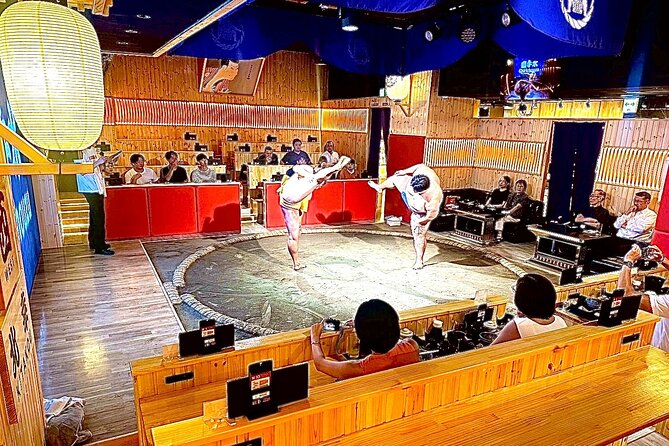
- Retired rikishi lead the show: You see former competitors demonstrate sumo, explain techniques, and take part in a best-of-three bout.
- Audience participation is real but limited: You may challenge a wrestler in the ring, though places can be assigned by lottery if many people volunteer.
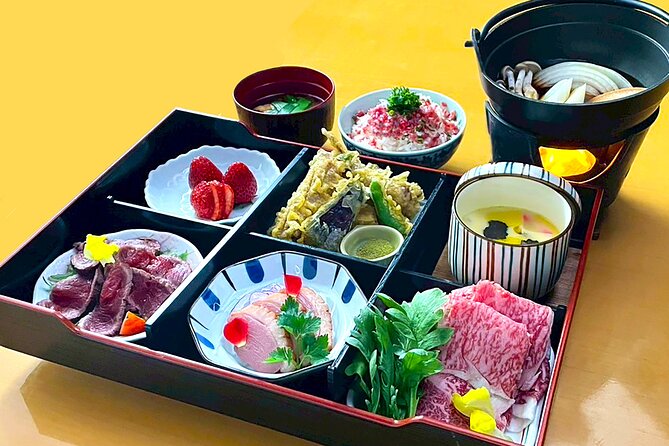
- Food is part of the experience: Meal plans include Japanese cuisine, one drink, and a dish described as chanko-nabe, with wagyu sukiyaki and tempura also listed for meal-inclusive plans.
- Every seat has a close view: The setting is intimate, with a front-row upgrade available for an even stronger connection to the dohyo.
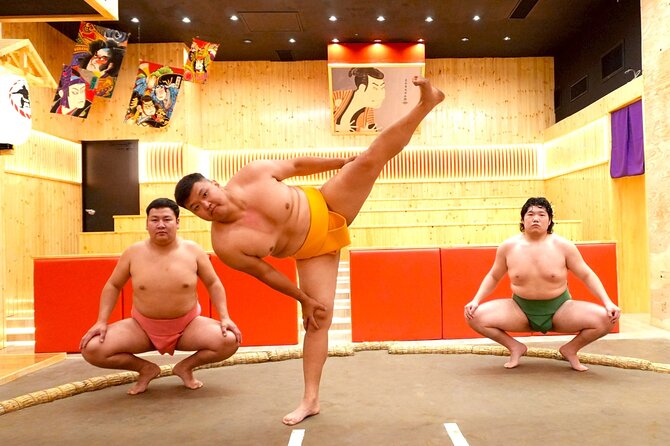
- You leave with a keepsake: A framed group photo with the wrestlers and a souvenir bag are included.
- It is easy to reach: The activity begins and ends at 2-chōme-10-1 Minami 4 Jōnishi in central Sapporo, near public transportation.
A small Sapporo venue with a big sumo welcome
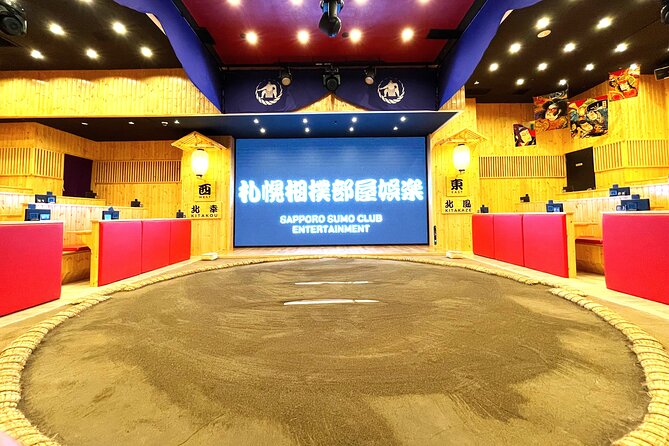
This experience takes place at Sapporo’s first sumo show restaurant, at 2-chōme-10-1 Minami 4 Jōnishi in Chuo Ward. The activity lasts about two hours and returns you to the same meeting point, so it fits neatly into an evening around central Sapporo.
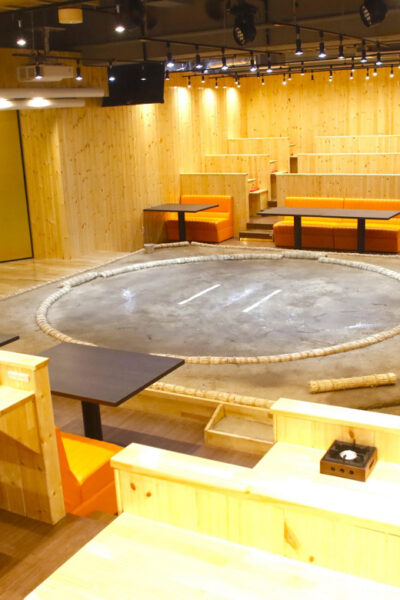
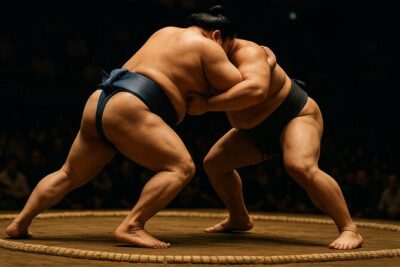
The maximum group size is six. That matters here. Sumo loses some of its force if you are seated far from the ring, but this format keeps the dohyo close and makes the explanations easier to follow. You are not looking at a tiny figure across a large arena. You can see the wrestlers’ footwork, body position, and ceremonial gestures from every seat.
There is no private transportation. You make your own way to the venue, but the location is near public transportation. A mobile ticket keeps the arrival process simple. Confirmation is provided when you book, and the activity ends where it starts.
More Sumo Experiences in Japan:
- Tokyo: Sumo Show Experience with Chicken Hot Pot and a Photo
★ 4.8 · 6,678 reviews - Tokyo: Sumo Show and Dining Experience
★ 4.8 · 2,742 reviews - the SUMO show
★ 5.0 · 1,960 reviews
The opening lesson: rules, ritual, and morning exercises
The show begins by giving you the basics. Sumo has existed for centuries, and the presentation explains how the sport developed along with its rules and customs. You learn what the wrestlers are trying to do, what counts as a winning move, and which actions are not allowed.
This introduction is useful even if you know little about sumo. A bout can look like two large men pushing at close range, but the result often depends on balance, timing, foot placement, and a precise technique. Once you understand the structure, a brief movement can make much more sense.
You also watch demonstrations of asa geiko, or morning training exercises. This gives the show a useful change of pace. Instead of seeing only the final collision, you get a sense of the preparation behind it. The former wrestlers demonstrate the movements rather than asking you to accept a list of rules.
The show also covers kimarite, the named techniques used to win a bout. That is one of the strongest parts for first-time visitors because it helps you watch with more purpose. You can begin to recognize whether a wrestler is using a push, a throw, or another form of controlled movement.
The explanations are presented in English and Japanese, based on the information provided for the experience. A staff member identified as Kitadai-chi has received special praise for helping create a friendly and informative atmosphere. Names and staff can change, but the program is designed to work for an international audience.
The best-of-three bout with retired wrestlers
After the lesson, the former wrestlers compete in a best-of-three tachiai. This is the point where the information becomes action. You have already heard how sumo works, so you can follow the decisions more easily as the bout unfolds.
The wrestlers are retired from competition. That is important context. This is not a current professional tournament, and you should not book it expecting the scale, tension, or strict sporting stakes of a major sumo event in Tokyo or Osaka. It is a cultural show led by athletes who know the sport from the inside and can explain it in a relaxed way.
That trade-off works well for a dinner experience. The tone is friendly and playful, but the demonstrations still come from people with genuine sumo backgrounds. The result is more personal than simply watching a match on a screen. You see the techniques close up, hear the rules explained, and have a chance to ask questions or join the fun through the interactive parts of the program.
Some sessions have also included a traditional dancer or geiko performance. This adds another piece of Japanese culture to the meal and sumo presentation. Since the detailed program can vary, treat the dance as a possible part of the show rather than the central promise. The main focus remains sumo.
Stepping into the dohyo
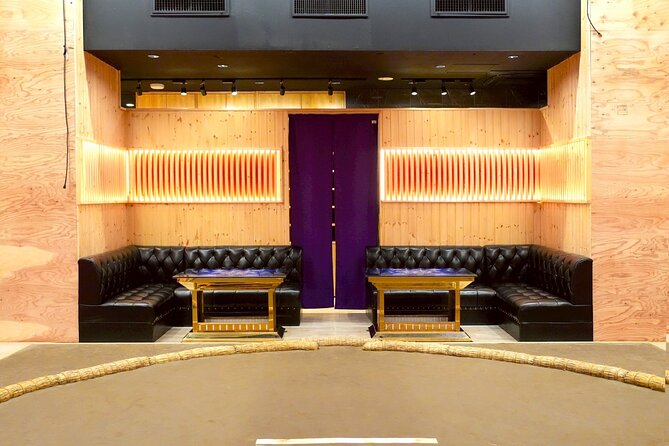
The audience challenge is the most memorable feature for many people, but it comes with a clear limit. Only a small number of participants can face the wrestlers. If too many people volunteer, the challengers are chosen by lottery.
That rule keeps the program moving and prevents the ring from becoming crowded. It also means you should not book this experience with the expectation that you personally will wrestle. You might get the chance, and the possibility adds energy to the room, but the participation is not guaranteed.
If you are selected, the match is meant for fun. You challenge a retired wrestler under the guidance of the staff, giving you a safe and unusual way to experience the size, balance, and force involved in sumo. The whole point is participation, not proving yourself against an athlete.
This part works well for families and groups with teenagers. The show can remain interesting for people who are not serious sumo fans because the audience is invited to take part rather than simply sit through a lecture. A teenage visitor who might normally resist a cultural presentation can still find the ring challenge, demonstrations, and humor engaging.
If you prefer to watch, you are not left out. The dohyo is visible from all seats, and the audience participation is only one part of the two-hour program.
More Food and Drink Tours in Japan:
- Sapporo: Sumo Show Experience with Japanese food & Photo
★ 4.9 · 81 reviews - Lucha Libre Tickets & Tacos & Beer & Mezcal – BEST NIGHT EVER!
★ 5.0 · 1,077 reviews - Lucha Libre Tour and Mezcal Tasting in Mexico City
★ 5.0 · 519 reviews - Seoul: Jamsil Baseball Stadium Game Ticket with Dinner& Beer
★ 4.8 · 248 reviews
Choosing your seat near the dohyo
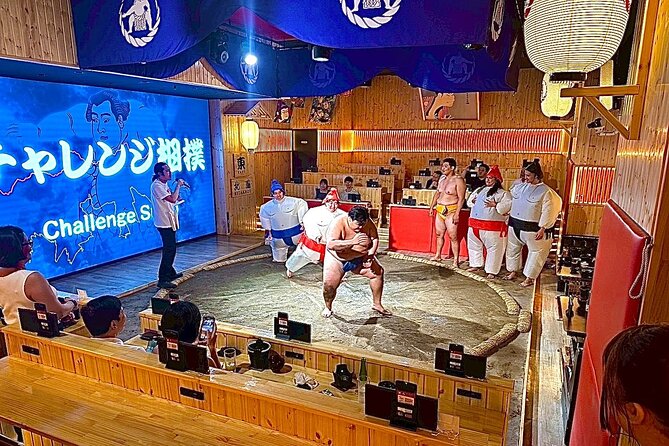
All seats offer an intimate view, which is a major advantage in a small venue. You should still consider the front-row upgrade if seeing the wrestlers at very close range matters to you or if you want the strongest setting for photographs.
The front row is not essential for following the show. The standard seating already keeps you near the action. The upgrade is more about atmosphere and connection than about fixing a poor view.
The small group limit also helps the staff involve people directly. A large dinner show can feel like a performance delivered to a crowd. Here, the limited capacity gives the hosts more room to bring individuals into the explanations, photographs, and challenge portion.
The setting is especially useful for families, couples, and small groups of friends. It is less suited to someone seeking a quiet meal with no interruptions, since the program is deliberately interactive and the room’s attention shifts between the dohyo, wrestlers, host, and audience.
What you eat, and what to confirm before arrival
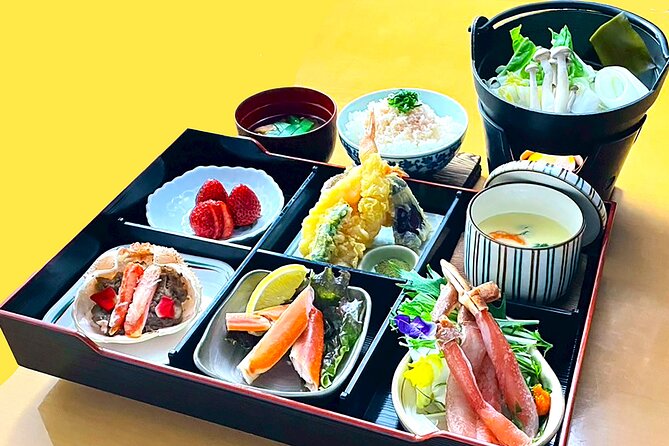
A meal plan includes a set of Japanese cuisine and one drink. The information describes chanko-nabe, the hearty hot-pot dish linked with sumo wrestlers, as part of the meal. It also specifies wagyu beef sukiyaki and tempura for meal-inclusive plans.
Because the descriptions name both chanko-nabe and wagyu sukiyaki with tempura, I would confirm the exact menu attached to the plan you select when booking. The wording may reflect different meal arrangements, and you want to know what is included before you arrive.
The food is more than a convenient dinner placed beside the show. Chanko-nabe connects the meal to sumo culture, while sukiyaki and tempura make the menu familiar and appealing to people who may not want a specialized hot pot. One drink is included with the set meal.
Vegetarian food is available by request, but you must notify the provider in advance by message. Do not wait until you sit down. The experience specifically asks for advance notice, so make that request soon after booking.
You can also choose a plan without the meal if that is offered for your date. In that case, compare the price difference with your own dinner plans nearby. The meal option makes the experience simpler and gives the evening a stronger cultural shape, while a non-meal plan may suit you if you have dietary needs that are difficult to arrange or already have dinner booked.
The photo and souvenir bag
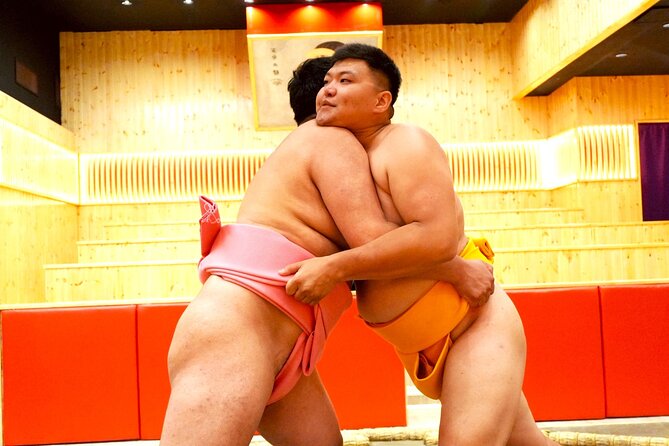
At the end, you receive a commemorative photo with the former rikishi. The photo is described as framed and can include you and your group. A souvenir bag is also provided.
This is a practical touch. A sumo demonstration can be difficult to explain later, but a formal photo with the wrestlers gives you a clear memory of the evening. It also makes the activity work well as a special family outing or a small-group celebration.
The photo opportunity is not just an afterthought. It gives the show a natural finish after the bout and audience challenge. If you are hoping for photographs during the action, you may find the front-row option useful, but the official framed photo is the clearest keepsake included in the experience.
The atmosphere is designed to be warm rather than solemn. The hosts and wrestlers bring energy to the room, and the photo gives you a final chance to meet them in a more relaxed way.
Is $79.07 a fair price?
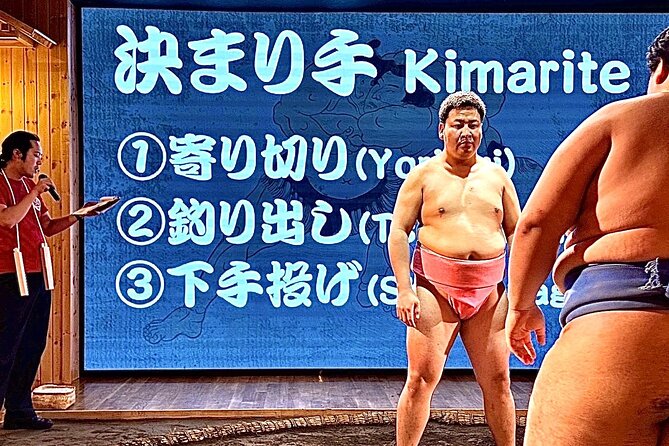
At $79.07 per person, this is not the cheapest way to spend two hours in Sapporo. You are paying for a small-capacity cultural performance, an interactive program, a Japanese meal if you select the meal plan, one drink, and a framed photo.
The value is strongest if you would otherwise pay separately for dinner and an evening activity. You get several parts in one booking: a sumo lesson, demonstrations, a competitive bout, audience participation, food, and a keepsake. The small group size also matters because close access is part of what you are buying.
The value is weaker if you want serious sporting competition or a long sumo event. The wrestlers are retired, and the show is made for entertainment. You will not get the atmosphere of a packed national tournament, the formal schedule of professional bouts, or the scale of a major arena.
I would compare it with the cost of a regular dinner plus a cultural performance. For families and visitors who want an easy, guided introduction to sumo, the combined price is reasonable. For dedicated sumo followers who have already attended a professional tournament, this will feel more like a friendly cultural add-on than a substitute.
The experience has been rated 4.7 out of 5, with 92 percent recommending it. Those numbers fit the program’s strengths: food, staff interaction, clear instruction, and a chance to participate. They should not be read as a promise that every visitor will get into the ring or that every meal plan has the same menu.
Who will enjoy this most?
I would recommend it most strongly to:
- Families looking for an activity that keeps children and teenagers involved
- First-time visitors who want sumo explained in plain terms
- Small groups who like food paired with live entertainment
- Visitors who want a cultural experience without committing to a full professional tournament
- Sumo fans who would enjoy meeting retired rikishi and seeing techniques at close range
You may want to skip it if you dislike audience participation, want a quiet dinner, or expect a serious competitive match. The atmosphere is social and playful, and the show works best when you are comfortable with the chance of being called on.
English and Japanese are used, which helps international visitors follow the program. The experience is open to most people, and the stated maximum group size is six. Specific seating and challenge arrangements can vary, so the front-row upgrade is worth considering if proximity matters to you.
Cancellation is free if you cancel at least 24 hours before the start time. Inside that 24-hour window, the payment is not refunded, and changes are not accepted.
Should you book the Sapporo sumo show?
Book it if you want an approachable introduction to sumo with dinner, close seating, and a real chance to join the action. The retired wrestlers bring authentic experience, while the hosts keep the mood light enough for people who know little about the sport.
I especially recommend it for a first visit to Japan, a family evening, or a small group that wants something more personal than a standard dinner show. Just remember the two important limits: the bouts are for entertainment, and audience challengers are selected in limited numbers.
If those conditions suit you, $79.07 buys a well-packed two hours, a meal plan, a framed photo, and a story far more memorable than another ordinary restaurant dinner.
FAQ
How long does the Sapporo sumo show last?
The experience lasts approximately two hours.
Where does the activity begin and end?
It begins at 2-chōme-10-1 Minami 4 Jōnishi, Chuo Ward, Sapporo, Hokkaido 064-0804, Japan, and ends back at the same meeting point.
What food is included?
For meal-inclusive plans, the information describes a Japanese set meal with chanko-nabe and one drink. It also lists wagyu beef sukiyaki and tempura, so confirm the exact meal attached to your selected plan.
Can I request a vegetarian meal?
Yes. You must notify the provider in advance by message if you need a vegetarian meal.
Can I challenge a sumo wrestler?
You may have the chance to challenge a retired wrestler in the dohyo. Participation is limited, and if too many people apply, challengers are selected by lottery.
What is included besides the show?
A meal and one drink are included if you select a meal plan. Every participant also receives a commemorative photo with former rikishi, and the experience includes a souvenir bag.
More Food Tours in Japan
- Seoul: Watching Sports Match & Local Food Experience
★ 4.8 · 17 reviews - Sports Match in Seoul with Guided K-Food Experience
★ 5.0 · 4 reviews - Suwon: Baseball Game with Fortress and Local Food Tour
★ 5.0 · 3 reviews
Just added for fans in Japan
- Tokyo: Grand Sumo Morning Training Tour★ 4.9 · 12 reviews
- Sumo Training Watching Experience in Tokyo★ 4.5 · 8 reviews
- Kickboxing & Body Training with EX-Pro Fighter★ 5.0 · 4 reviews
- Tokyo: Visit Sumo Morning Practice with English Guide★ 4.5 · 22 reviews
- Tokyo Sumo Experience with Live Show & Audience Challenge★ 5.0 · 38 reviews
- Tokyo Shinjuku Sumo Show and Experience with Drinks and Photo★ 4.0 · 21 reviews
- Tokyo Sumo History Tour with Chanko Nabe Lunch★ 5.0 · 3 reviews
- 【SUMO FESTIVAL】Tokyo Ginza: Sumo Show & Photo Experience★ 4.5 · 41 reviews
Sumo Experiences, compared.
Sumo Show Experience with Chicken Hot Pot and a Photo
Read our review →
Tokyo Shinjuku Sumo Show & Experience with Photo
Read our review →
Tokyo Sumo Entertainment Show with Chicken Hot Pot and Photo
Read our review →
Tokyo Grand Sumo Tournament Viewing Tour with Tickets
Read our review →Browse the lists this tour appears in