
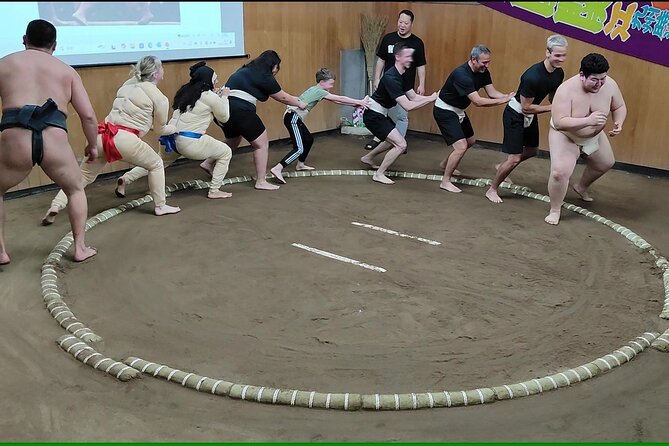
Review · SUMO EXPERIENCES IN TOKYO
Complete Sumo Experience in Tokyo
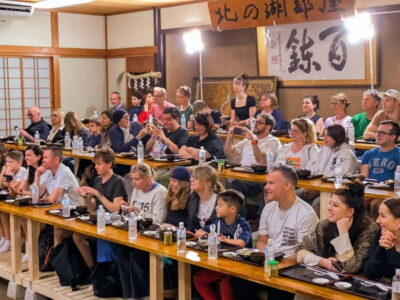
Sumo is best understood up close, not from the far side of a stadium. This two-hour Tokyo experience brings you into a traditional stable setting to watch wrestlers train, see actual bouts, and learn how the sport works before meeting the athletes.
I like the direct access and the clear explanations of sumo technique. I also like the chance to ask questions and take photos, details you rarely get at a large tournament. The main drawback is that the audience participation can run a little long, especially if you prefer watching rather than joining in.
- Watch training and matches at close range, rather than from distant arena seats.
- Learn sumo basics from an expert, including its origins, customs, and combat techniques.
- Challenge the wrestlers yourself, with participation built into the show.
- Eat chanko-nabe at selected times, the hearty hot pot associated with sumo wrestlers.
- Choose your schedule carefully, since the 3 PM option does not include the meal.
- Arrive early for the best seat, a useful tip when the group may include up to 30 people.
Entering a Tokyo Sumo Stable in Koto City
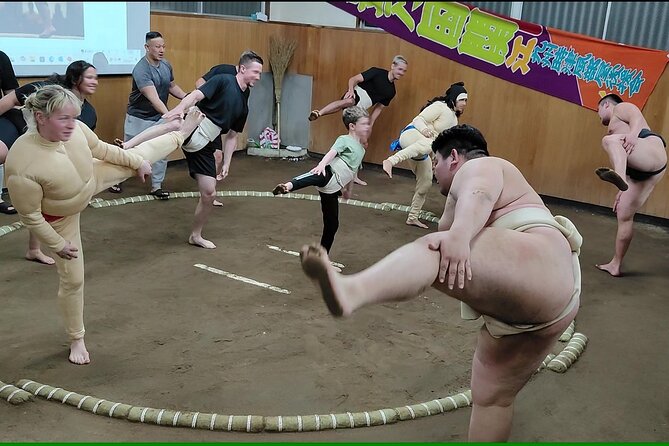
The meeting point is at Kitanoumi stable in Kiyosumi, Koto City, at 2-chome 10-11. The activity begins and ends here, so you do not need to arrange a complicated transfer between several parts of Tokyo.
That simplicity matters. Sumo stables are working places, not tourist attractions designed around a long sightseeing route. You arrive, settle in, and spend your time around the training and matches. The location is near public transportation, but hotel pickup and drop-off are not included, so plan your route before the start time.
The setting gives the event its character. You are not simply watching a staged cultural presentation in a theater. You are seeing a place connected with the daily life of wrestlers, then hearing how sumo functions from an expert and the athletes themselves.
The group may contain up to 30 people. That is small enough for the activity to feel personal, though your seat can still affect how well you see the action. I would arrive early, particularly for the popular evening sessions, because a good position makes a real difference during training and bouts.
A Short Crash Course Before the Action
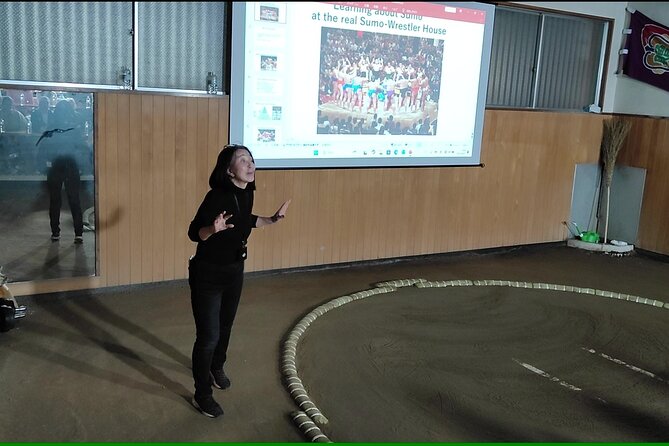
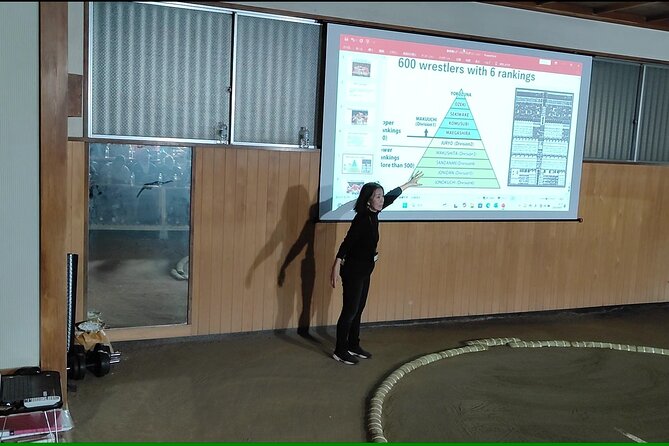
The program begins with an explanation of sumo’s origins, history, and culture. You learn the basic ideas behind the sport before the physical action starts, which makes the later demonstrations easier to follow.
This introduction is useful even if you already know the broad outline of sumo. You may recognize the wrestlers’ size and strength, but sumo also depends on balance, footwork, timing, ritual, and technique. Without context, a bout can look like two large men pushing each other. With a little guidance, you can see why a quick shift of weight or a well-placed grip matters.
The expert also explains the techniques of combat. That is one of the strongest parts of the program for first-time viewers. The session gives you enough background to understand what you are seeing without turning into a long classroom lecture.
You should not expect an exhaustive study of every rule or the full structure of professional sumo. The format is designed to prepare you for a lively demonstration within a limited two-hour visit. For most people, that balance works well.
More Sumo Experiences in Tokyo
- Tokyo: Sumo Show and Dining Experience
★ 4.8 · 2,742 reviews - the SUMO show
★ 5.0 · 1,960 reviews - Tokyo Shinjuku Sumo Show & Experience with Photo
★ 5.0 · 1,750 reviews
Watching Wrestlers Train at Close Range
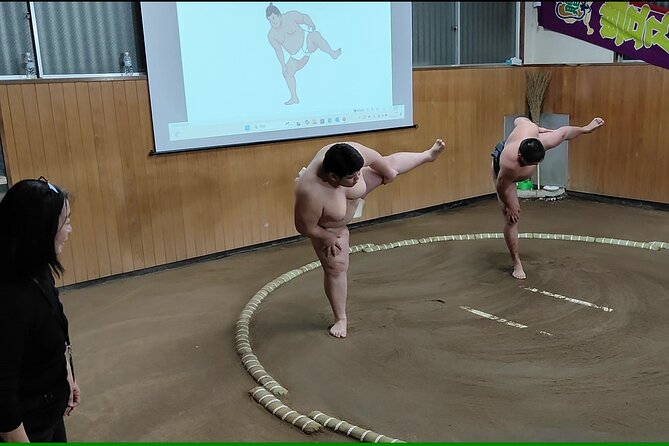
The training portion shows you how wrestlers prepare their bodies and skills. Seeing practice inside the stable offers a different feel from attending a grand sumo tournament, where the formal matches are the main event and the athletes are farther away.
Close viewing also helps you notice the physical demands of the sport. Training is not just about brute force. The explanations help connect the movements with the techniques used in combat, so you can watch with a better sense of purpose.
The experience promises both training and actual matches. That combination gives the session a useful rhythm. You first see preparation, then watch the wrestlers apply their power and technique in bouts. The structure keeps the event from becoming only a lecture or only a photo opportunity.
You will be sitting close to the action, so follow the staff’s directions and remain aware of the activity around you. The wrestlers are performing in a real stable environment, not on a large stage with generous distance between the audience and the athletes.
The Match Segment and Its Human Side
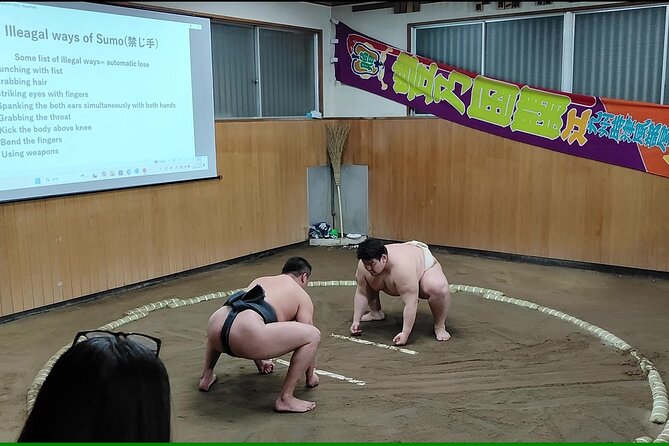
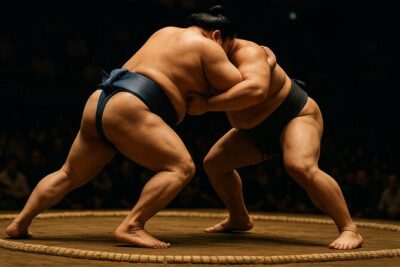
The matches are the centerpiece. They make the rules and techniques from the opening explanation concrete, and they give you the chance to see how quickly a bout can be decided.
Sumo often looks slow for a moment, then changes instantly. The wrestlers face one another, prepare, and explode into action. A match may be brief, but the short length is part of the sport’s tension. You are watching timing and position as much as raw strength.
The atmosphere is also intentionally friendly. The wrestlers interact with the audience, and humor is part of the presentation. That makes the event approachable for people who may know little about sumo, including families and first-time visitors.
Still, the lighter tone may not suit everyone. If you want a quiet, formal sports demonstration, the audience participation can feel overextended. One useful way to think about this activity is as a cultural show with real athletes, not as a silent training observation.
Challenging the Wrestlers Yourself
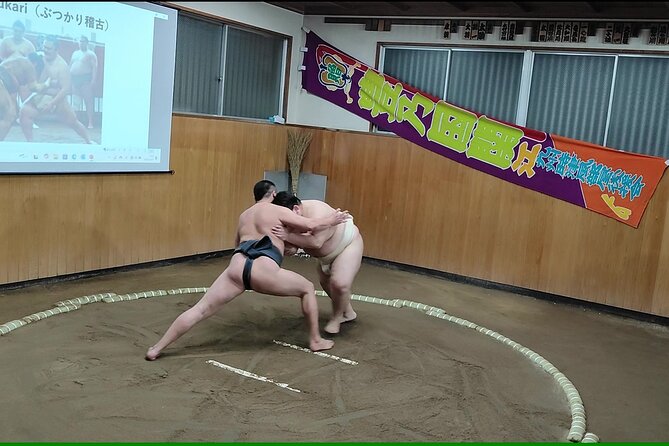
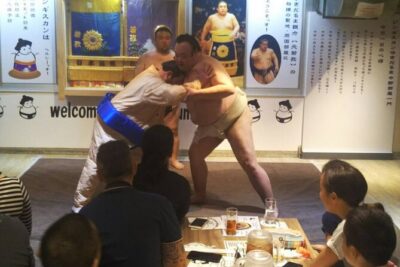
You are invited to challenge the wrestlers. This is the part that turns the event from a demonstration into a personal memory.
You do not need to be a sumo expert to take part. The activity includes explanations and staff guidance, and the challenge is presented with humor rather than as a serious contest. The point is to feel the difference in size, balance, and force, not to defeat a professional wrestler.
Participation is optional in spirit, even though it is a planned part of the show. If you would rather watch, you should be able to enjoy the training and matches without becoming the main attraction. If you do volunteer, expect the audience to take an interest and the moment to be played for laughs.
This is also where the program’s limits become clear. The audience involvement takes time. One person’s good fun can be another person’s interruption, so consider your own preference before booking. People who enjoy a social, interactive event will likely appreciate this section most.
Same city, a different fixture:
- Tokyo: Sumo Show and Experience in Shinjuku
★ 4.8 · 1,001 reviews - Tokyo Grand Sumo Tournament Viewing Tour with Tickets
★ 5.0 · 692 reviews - Tokyo Sumo Wrestling Tournament Experience
★ 5.0 · 660 reviews - Tokyo:Luxury Sumo Show Experience & Japanese cuisine & Drink
★ 4.7 · 577 reviews
Asking Questions and Taking Photos
After the demonstrations, you can ask the wrestlers questions. This is a valuable chance to go beyond the public image of sumo and hear directly from the people who train and compete in the sport.
The question session works best if you think ahead. You can ask about training, the rules, the wrestlers’ daily work, or the techniques shown during the bouts. The exact questions and answers will depend on the session, but the format gives you a direct line to the athletes.
Photo time follows the same personal approach. You can pose with the wrestlers and take pictures, which gives you a keepsake that is more personal than a photograph from an arena seat.
Keep your expectations realistic. This is a group activity, not a private photo shoot. With as many as 30 people, you may need to wait your turn and keep your photo time brief. The advantage is that everyone gets a shared, good-humored encounter rather than a distant glimpse.
Chanko-Nabe at the 11 AM and 7 PM Sessions
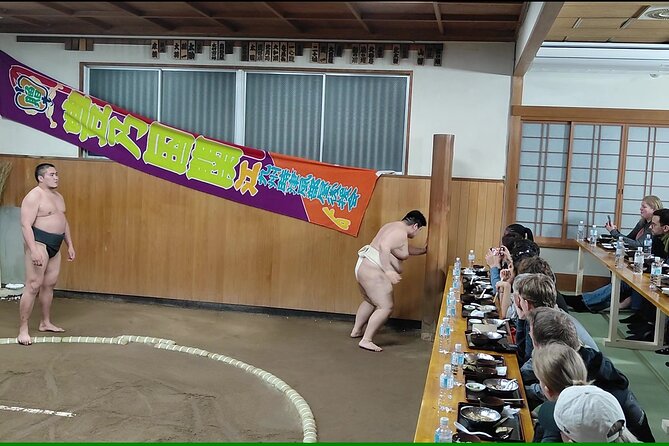
The meal option includes chanko-nabe, the hot pot associated with sumo wrestlers and their effort to build strong bodies. You watch the show over the meal, linking the food with the sport in a way that adds context to the visit.
The food received particularly strong praise for its taste, and that matters because the meal is part of the value of the package, not just a small extra. You are getting food, a live cultural presentation, direct contact with wrestlers, and a question-and-photo session in one booking.
The chanko-nabe option applies to the 11 AM and 7 PM start times. Check your selected time carefully. The 3 PM session is the no-meal option, so it is not simply a cheaper or shorter version of the same package unless the booking details confirm that for you.
A meal can also make the activity feel more relaxed. You have something to do while watching, and the hot pot provides a practical connection to the food traditionally linked with sumo life. If eating is important to your plans, choose the meal session rather than assuming every departure includes it.
Comparing the Three Start Times
The three listed times give you useful flexibility:
- 11 AM: Includes chanko-nabe and suits a morning cultural activity.
- 3 PM: Does not include chanko-nabe and focuses on the sumo program itself.
- 7 PM: Includes chanko-nabe and works well as an evening meal and show.
The best choice depends on how you are arranging the rest of your day. The 11 AM session leaves your evening free. The 3 PM session may fit between sightseeing plans, but you need to budget for your own meal. The 7 PM option combines the event with dinner, though you will finish later.
The total duration is about two hours. That is long enough to include instruction, training, matches, questions, photographs, and participation without taking over an entire day. Allow extra time to reach Kiyosumi and find the meeting point, since the stated duration covers the activity itself.
Is the $138.52 Price Worth It?
At $138.52 per person, this is not a casual add-on for anyone counting every yen. The price makes more sense when you use several parts of the program: the expert introduction, close-range training, actual matches, wrestler interaction, photographs, and, at two start times, chanko-nabe.
A grand tournament ticket can offer a more formal view of professional sumo, but it does not give you the same close contact. Morning practice at a stable may feel more traditional, but it usually does not include this combination of explanations, audience challenges, questions, and photographs.
That comparison explains the price. You are paying for access and interaction, not just a seat. If you mainly want to watch bouts and do not care about food or participation, the value may be weaker. If you want a compact introduction with personal contact, the package is easier to justify.
The meal option strengthens the value. Chanko-nabe is not simply a standard restaurant dinner added to the ticket. It connects the food to the subject of the event and lets you eat while the show continues. The 3 PM session may suit you better if you want the sumo content without paying for or planning around a meal.
Who Will Enjoy This Most?
I would recommend this for first-time sumo fans, families, couples, and anyone who wants more contact than an arena performance allows. The explanations make it accessible, while the real wrestlers and matches keep it from feeling like a museum talk.
It also suits people who enjoy taking part. The challenge, questions, humor, and photographs are central to the format. You should book with the right expectations: this is active and social, not a silent observation of a private practice.
Dedicated sumo followers may still enjoy it, especially if they have only seen the sport from stadium seats. But if you want a full tournament day, a broad range of bouts, or an entirely formal sporting event, this two-hour program cannot provide that.
Most people can participate, and confirmation is provided when you book. Since no special restriction is listed, the activity is broadly accessible, though the supplied information does not describe specific mobility arrangements. Contact the provider if you need details beyond the general participation information.
Booking Details That Matter
The experience is provided by Arumachi and uses a mobile ticket. You meet at Kitanoumi stable in Tokyo’s Koto City, and the program returns you to that same point.
You can cancel for a full refund if you do so at least 24 hours before the local start time. Cancellations or changes made inside that 24-hour window are not accepted for a refund. That policy is fairly flexible, but your choice of start time still matters because of the different meal arrangements.
I would book the time first, then check the meal inclusion, then plan the route to Kiyosumi. Arriving early is smart because it can help you get a better seat, and seating affects your view during both the bouts and the photo portion.
Should You Book This Sumo Experience?
Book it if you want sumo explained in plain terms and presented at close range. The best features are the traditional stable setting, the real training and matches, the chance to challenge wrestlers, and the direct Q&A and photo sessions.
Choose the 11 AM or 7 PM departure if chanko-nabe matters to you. Choose 3 PM if you want the sumo program without the meal. Skip it if you dislike audience participation or want the full scale and ceremony of a grand tournament.
For a short Tokyo activity, the package offers a lot: sport, culture, food, humor, and personal contact. Just arrive early, select the right time, and expect a lively show rather than a quiet training visit.
FAQ
Where does the sumo experience take place?
It takes place at Kitanoumi stable in Kiyosumi, Koto City, Tokyo, at 2-chome 10-11. The activity ends back at the meeting point.
How long does the activity last?
The experience lasts approximately two hours.
What is included?
The program includes a sumo crash course with an expert, training and matches by sumo wrestlers, a Q&A session, and photo sessions with the wrestlers.
Can I challenge a sumo wrestler?
Yes. Challenging the wrestlers is included as part of the audience participation.
Can I ask the wrestlers questions?
Yes. A Q&A session with the sumo wrestlers is included.
Is food included?
Chanko-nabe is included with the 11 AM and 7 PM start times. The 3 PM option does not include the meal.
Is hotel pickup provided?
No. Hotel pickup and drop-off are not included.
How many people can join the activity?
The group can have a maximum of 30 people.
Just added for fans in Tokyo
- Tokyo: Grand Sumo Morning Training Tour★ 4.9 · 12 reviews
- Sumo Training Watching Experience in Tokyo★ 4.5 · 8 reviews
- Tokyo: Visit Sumo Morning Practice with English Guide★ 4.5 · 22 reviews
- Tokyo Sumo Experience with Live Show & Audience Challenge★ 5.0 · 38 reviews
- Kickboxing & Body Training with EX-Pro Fighter★ 5.0 · 4 reviews
- Tokyo Shinjuku Sumo Show and Experience with Drinks and Photo★ 4.0 · 21 reviews
- Tokyo Sumo History Tour with Chanko Nabe Lunch★ 5.0 · 3 reviews
- 【SUMO FESTIVAL】Tokyo Ginza: Sumo Show & Photo Experience★ 4.5 · 41 reviews
Sumo Experiences in Tokyo, compared.
Tokyo Shinjuku Sumo Show & Experience with Photo
Read our review →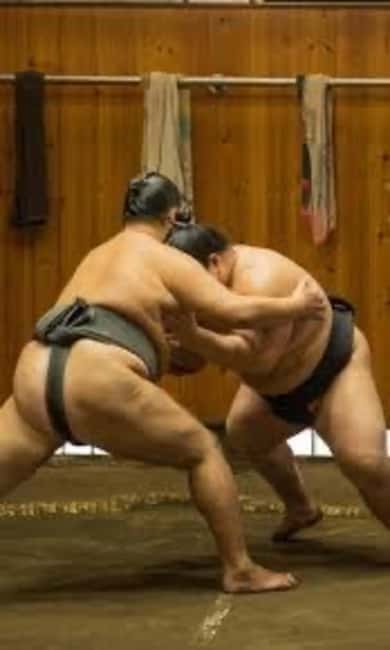
Tokyo Grand Sumo Tournament Viewing Tour with Tickets
Read our review →
Luxury Sumo Show Experience & Japanese cuisine & Drink
Read our review →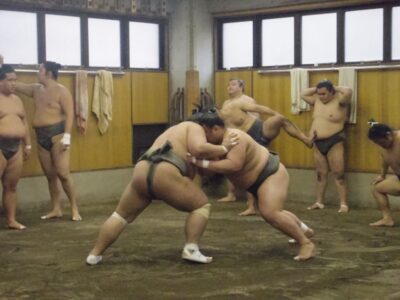
Browse the lists this tour appears in