
Review · SUMO EXPERIENCES IN TOKYO
Tokyo: Grand Sumo May Tournament
Tokyo’s Grand Sumo Tournament is much easier to understand when someone explains the rituals, rankings, and little details unfolding in the ring. This experience pairs a two-hour Ryogoku walking tour with several hours inside Ryogoku Kokugikan, where your guide helps turn a colorful Japanese tradition into a sport you can follow.
I like the personal help from guides such as Yoko, Aki, Ken, and Ali, and I like the practical touch of tournament information, wrestler profiles, and cheer goods. I also like the optional chanko-nabe dinner, served near the arena after the bouts. The main drawback is cost: at $198.20 per person, you pay a large premium over a basic ticket, and the quality of the explanation can vary by guide.
Key points to know before booking
- Ryogoku comes first: A two-hour walk introduces sumo landmarks, shrines, stables, and local traditions before you enter the arena.
- The guide explains the action: Real-time commentary helps you follow rituals, rankings, techniques, and match flow.
- You see more than the bouts: The arena visit includes murals, championship prizes, the sumo museum, and displays about past yokozuna.
- Chair seating matters: The standard choice uses balcony chair seats, a more comfortable option than sitting on cushions in a first-floor box.
- Dinner is optional: Chanko-nabe offers a filling end to the day, but drinks cost extra and fish may feature prominently in the hot pot.
- Book early for tournament dates: Sumo tickets can disappear quickly, and this experience is commonly reserved well ahead of time.
Why a guide changes the sumo experience
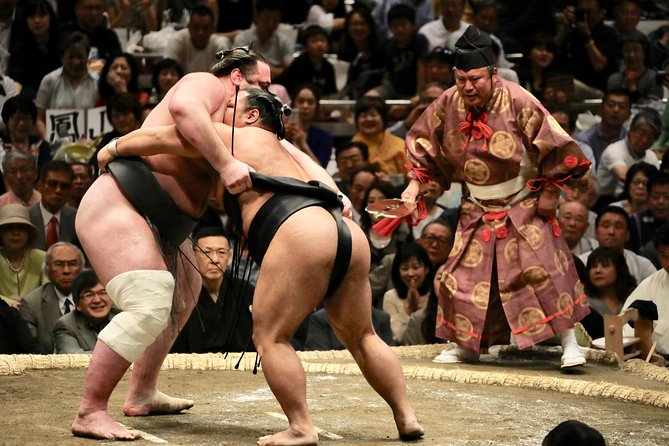
At first glance, sumo can seem simple: two wrestlers enter a ring, bow, stamp, throw salt, and try to force each other out. The real sport has far more going on. Rank, ritual, stable affiliation, ceremonial clothing, match tactics, and the timing of the bouts all matter.
That is where this experience earns its price. Your guide can explain what you are seeing as it happens, rather than leaving you to guess why a wrestler is taking so long before the initial charge or why the crowd reacts to a particular movement.
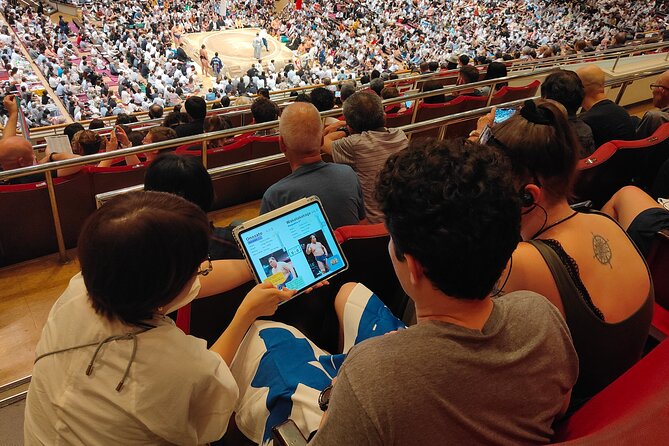
For groups of three or more, headsets allow you to hear the guide clearly from a distance. During the tournament, that can be useful because the arena is noisy and the action moves quickly. The commentary is meant to be live, so you can ask questions and connect the explanation to the bout in front of you.
The human element varies. Guides named Yoko, Aki, Ken, Sue-san, Ali, Yasu, Yosh, and Ichirio have led different departures, and the strongest experiences depend on having a guide who explains freely rather than waiting for questions. If your guide is quiet, ask direct questions early. You will get more from the afternoon if you make clear that you want help understanding the sport.
More Sumo Experiences in Tokyo
- Tokyo: Sumo Show and Dining Experience
★ 4.8 · 2,742 reviews - the SUMO show
★ 5.0 · 1,960 reviews - Tokyo Shinjuku Sumo Show & Experience with Photo
★ 5.0 · 1,750 reviews
Ryogoku from 1:00 to 3:00 pm
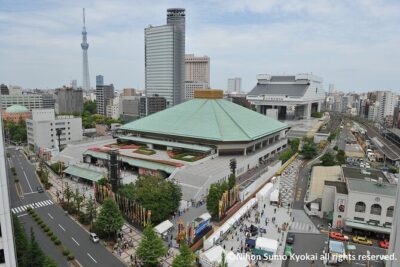
The afternoon begins in Ryogoku, Tokyo’s traditional sumo district. This is not just a transfer point before the main event. The neighborhood gives you the setting you need to understand why the Kokugikan is here and how sumo fits into local life.
The walking portion is optional in the sense that the experience may be sold in different combinations. If you choose it, allow two hours. You may visit sumo-related landmarks, see the exterior of a training stable, and stop at a sumo shrine near the arena. The exact route can vary, but the purpose is consistent: connect the sport to the streets around its main Tokyo home.
One especially memorable detail from a guided walk is a stop near a shrine where the guide shared sumo lore and sang a sumo song. That sort of moment is not something you get from entering the arena alone. It also helps put the formal ceremonies into context before you see them performed at full scale.
The walking route is a good fit if you are new to sumo or interested in traditional Japanese culture beyond the match itself. You may find it less useful if you already know the rankings, rituals, and major landmarks. It is also a walking tour, so wear comfortable shoes and be ready to spend part of the afternoon outdoors.
Guides may point out where wrestlers train and live, though you should expect to see stable exteriors rather than enter private facilities. That is a reasonable boundary. Sumo stables are working homes and training spaces, not ordinary sightseeing attractions.
Inside Ryogoku Kokugikan before the bouts
From about 3:00 pm, the guide takes you inside Ryogoku Kokugikan. The arena portion lasts roughly three hours, and it includes more than sitting down for the matches.
The route may include the large murals, championship prizes, the sumo museum, and paintings or photographs of successive yokozuna, the sport’s grand champions. These stops are useful because they give you visual markers for the long line of champions and the ceremonial side of sumo.
The museum visit is brief, listed at about 15 minutes, while the murals and prize displays take around 10 minutes each. That is enough time for orientation without turning the afternoon into a formal museum tour. Your guide can point out what matters, answer questions, and help you understand the symbols before you take your seat.
The championship prizes are particularly worth seeing. They remind you that a tournament is not only about a single win or loss. Wrestlers compete within a ranking system, and the final days carry special weight for the title race and promotion prospects.
A printed information package adds practical value. It includes tournament information, rankings, and profiles of prominent wrestlers. Keep it with you during the bouts. You can use it to identify the wrestlers and follow the stakes more easily, especially if this is your first tournament.
Watching the grand champions and top division
The main draw is the afternoon inside the arena. You may see the grand champions and top division wrestlers, along with their elaborate ring entering ceremonies. These ceremonies are slow, formal, and full of gestures that make more sense once your guide explains their meaning.
The actual bouts are short, but the full experience is not. The buildup, preparation, ritual, and crowd response are part of the sport. A match can be decided almost instantly, yet the tension rises well before the wrestlers charge.
The guide’s commentary is meant to explain the rules and customs in real time. You may learn why one wrestler wins by a push rather than a throw, how a match ends when a wrestler touches outside the ring, and why certain pre-match actions take place. The goal is not simply to translate Japanese announcements. It is to give you a framework for watching.
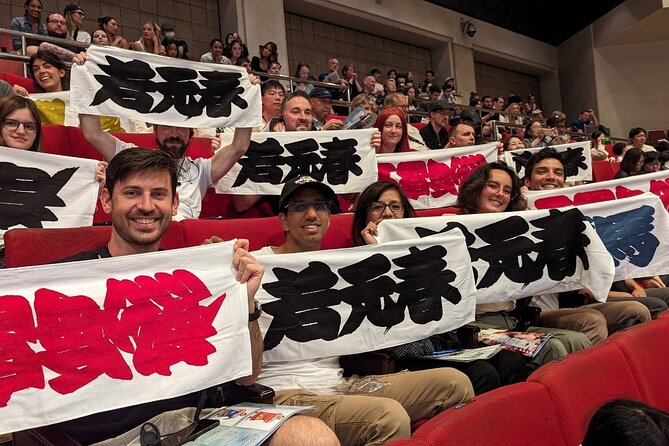
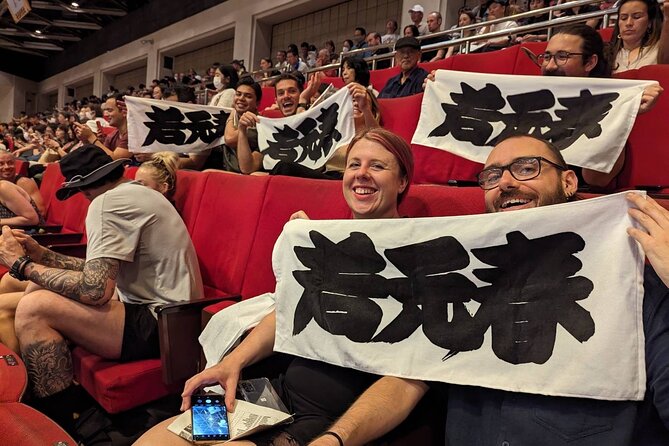
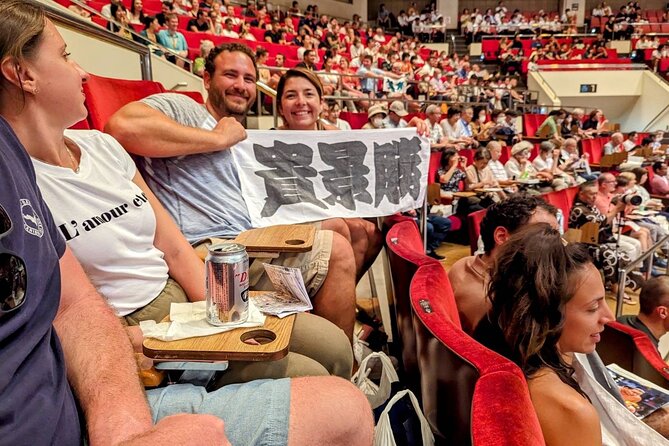
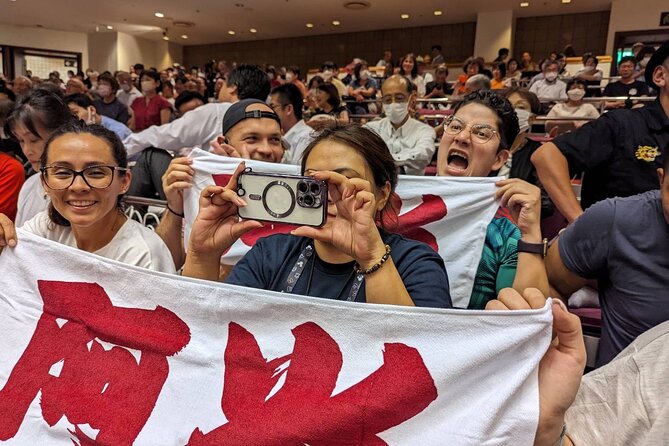
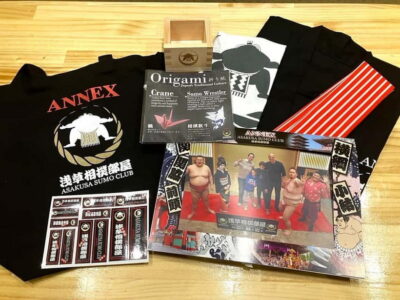
The supplied cheer-up goods add a small bit of fun. You can use them to root for a particular wrestler and feel more connected to the crowd. This is a modest inclusion, but it helps first-time spectators take part instead of sitting quietly and wondering when to clap.
Some people will prefer to watch without commentary, and that is fair. If you already follow sumo closely, a guide may add less. For most first-time visitors, though, the explanation is useful because the sport’s rules are easy to miss when you only watch the physical contest.
Same city, a different fixture:
- Tokyo: Sumo Show and Experience in Shinjuku
★ 4.8 · 1,001 reviews - Tokyo Grand Sumo Tournament Viewing Tour with Tickets
★ 5.0 · 692 reviews - Tokyo Sumo Wrestling Tournament Experience
★ 5.0 · 660 reviews - Tokyo:Luxury Sumo Show Experience & Japanese cuisine & Drink
★ 4.7 · 577 reviews
Chair seats or first-floor box seats
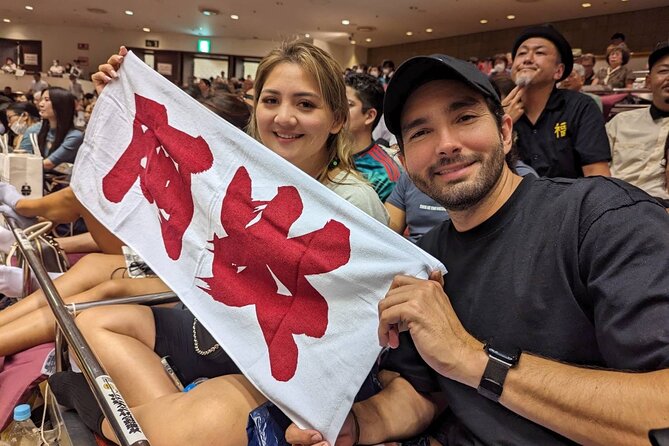
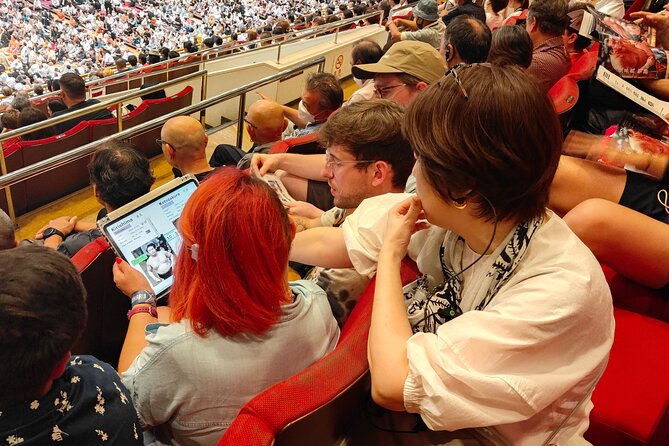
The seating choice deserves attention. The chair option uses balcony seats, specifically chair B or C, according to the available selection. You sit in a normal chair throughout the tournament, which is generally the easier choice for a three-hour arena visit.
First-floor box seats have a different style. Four spectators share a small flat square of about 1.3 by 1.3 meters, sitting on cushions. This offers a closer traditional setting, but it is not the same as having a regular chair. If you value comfort, choose the chair option when available.
The chair seats are higher up, so you may be farther from the ring than someone in a first-floor box. On the other hand, the raised position can make it easier to see the entire ring and the ceremonies around it. Headsets become more important at this distance, particularly if you want to keep listening while looking across the arena.
Seat location can shape your impression of the tour. The guide may be seated near you, but that is not guaranteed. If having constant access to the guide matters, check the seating arrangement before booking or ask questions at the meeting point.
Chanko-nabe after the tournament
The optional dinner takes place after the arena visit, usually at a nearby restaurant. Chanko-nabe is the hearty hot-pot dish associated with sumo wrestlers, who eat it as part of a diet designed to build body mass and muscle.
The guide takes you to one of the better-known chanko restaurants near the Kokugikan, and the short walk is convenient after several hours at the arena. At some departures, the meal is ready when you arrive, so you do not have to wait long before eating.
Expect a filling shared hot pot rather than a small tasting course. Fish may be mixed into the broth or other ingredients, so tell the organizer if you do not eat fish. Drinks are not included and must be ordered separately.
Dinner is a good match for anyone who wants the day to feel like a complete cultural outing. It is less important if you mainly want to watch sumo and prefer to choose your own restaurant afterward. Since the dinner is optional, you can select the parts of the experience that fit your schedule and appetite.
What the $198.20 price really buys
At $198.20 per person, this is not a cheap way to enter a sumo tournament. A basic ticket can cost far less, which makes the price look steep if you judge the experience only by the seat.
You are paying for more than admission. The fee includes an English-speaking sumo guide, all listed fees and taxes, arena orientation, live explanations, tournament material, wrestler profiles, and cheer goods. It may also include the practical advantage of securing a ticket for a popular tournament date when ordinary seats sell quickly.
The value is strongest if you are a first-time spectator, have limited time in Tokyo, or want someone to explain the cultural details. It is weaker if you already understand sumo, can obtain a ticket yourself, and are comfortable researching the rituals and rankings independently.
The optional dinner changes the total cost, so check the package carefully before paying. Drinks are extra. The booking price also does not include hotel pickup or drop-off, so you need to reach the meeting place in Ryogoku on your own.
The tour is described as a private experience, but the activity can have up to 35 participants, depending on the selected arrangement. That is a key point to clarify. The guide may provide personal attention, yet the overall setting is not necessarily an intimate one-person or one-family outing.
Timing, effort, and who should book
Plan on around six hours, beginning at 1:00 pm and continuing through the arena visit and optional dinner. The walking portion runs from 1:00 to 3:00 pm, the arena portion from approximately 3:00 to 6:00 pm, and dinner follows afterward for about an hour.
You should be comfortable walking around Ryogoku before sitting in the arena. The activity is near public transportation, and most people can take part, but the day is long enough that comfortable footwear and a little patience will help.
I would recommend this most strongly to:
- First-time sumo spectators who want the rules explained
- Visitors interested in Japanese customs and ritual
- Sports fans who want live context rather than a silent seat
- Families or mixed groups with different levels of sumo knowledge
- People who could not secure tournament tickets independently
- Anyone who likes ending a cultural outing with a local specialty meal
I would be more cautious if you are a dedicated sumo follower, dislike group activities, or mainly want the lowest possible ticket price. In those cases, buying a ticket directly and exploring Ryogoku at your own pace may make more financial sense.
The guide’s personality also matters. Yoko, Aki, Ken, Sue-san, Ali, Yasu, Yosh, and Ichirio have each been associated with particularly helpful departures, but guide assignments can change. The supplied experiences also include quiet guides who offered only brief comments unless asked. Go in ready to ask questions, and do not assume every guide will deliver the same level of talk throughout the day.
Booking advice for a May tournament date
The Grand Sumo May Tournament is one of Tokyo’s major seasonal sporting events. Tickets can sell very quickly, so booking well ahead is sensible. This experience is typically reserved about 41 days before the event, but that is only an average and should not be treated as a safe deadline.
Select the package carefully. Check if it includes the Ryogoku landmark walk, arena viewing, chanko-nabe dinner, and chair seating. Those choices affect both the schedule and the price.
You receive confirmation at booking, and the ticket is mobile. Keep your phone charged and make sure you can display the ticket at the meeting point and arena. The meeting place is in Ryogoku, not at your hotel, because pickup and drop-off are not included.
Free cancellation is available up to 24 hours before the local start time. After that point, the amount paid is not refunded, and changes made within 24 hours are not accepted.
Should you book this sumo experience?
Book it if you want a guided introduction to sumo, value a reserved tournament seat, and like having someone explain the rituals as they happen. The combination of Ryogoku landmarks, Kokugikan displays, live commentary, and optional chanko-nabe gives you a fuller day than simply arriving for the bouts.
Skip it if you already know the sport well and can buy a ticket yourself. The $198.20 price is justified mainly by instruction, convenience, and access to a hard-to-book event, not by the seat alone.
For most first-time visitors, I think the guide is the main reason to choose this experience. Ask questions, use the tournament booklet, and consider the chair option if comfort matters. Done that way, the Grand Sumo May Tournament becomes more than a colorful afternoon at the arena. You begin to see the rules, discipline, and ceremony behind every brief, powerful clash.
FAQ
Where does the sumo experience take place?
It takes place in Ryogoku, Tokyo, beginning with a neighborhood walking tour and continuing at Ryogoku Kokugikan for the tournament bouts.
How long does the experience last?
The full experience lasts about six hours. The walking tour runs from approximately 1:00 to 3:00 pm, arena viewing runs from 3:00 to 6:00 pm, and the optional dinner lasts about one hour.
Is the walking tour included?
The experience has several options. A two-hour guided walk around Ryogoku can include sumo-related landmarks, shrines, and views of stable exteriors. Check the option you select to confirm that this part is included.
Is the chanko-nabe dinner included?
Chanko-nabe is an optional part of the experience. Drinks are not included and must be ordered separately.
Are arena seats chairs?
The chair option uses balcony seats identified as chair B or C. First-floor box seating uses cushions on a flat floor rather than individual chairs.
What does the guide explain during the tournament?
The English-speaking guide explains sumo rules, rituals, rankings, wrestlers, and what is happening during the bouts. Headsets are provided for groups of three or more so you can hear the guide clearly.
Is hotel transportation included?
No. Hotel pickup and drop-off are not included. You meet the guide at a convenient location in Ryogoku, which is near public transportation.
Can I cancel for a full refund?
Yes, if you cancel at least 24 hours before the experience start time, based on local time. Cancellations or changes made less than 24 hours before the start are not refunded.
Just added for fans in Tokyo
- Tokyo: Grand Sumo Morning Training Tour★ 4.9 · 12 reviews
- Sumo Training Watching Experience in Tokyo★ 4.5 · 8 reviews
- Kickboxing & Body Training with EX-Pro Fighter★ 5.0 · 4 reviews
- Tokyo: Visit Sumo Morning Practice with English Guide★ 4.5 · 22 reviews
- Tokyo Sumo Experience with Live Show & Audience Challenge★ 5.0 · 38 reviews
- Tokyo Shinjuku Sumo Show and Experience with Drinks and Photo★ 4.0 · 21 reviews
- Tokyo Sumo History Tour with Chanko Nabe Lunch★ 5.0 · 3 reviews
- 【SUMO FESTIVAL】Tokyo Ginza: Sumo Show & Photo Experience★ 4.5 · 41 reviews
Sumo Experiences in Tokyo, compared.
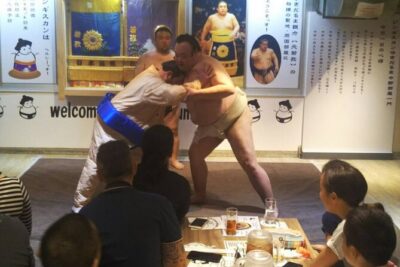
Tokyo Shinjuku Sumo Show & Experience with Photo
Read our review →
Tokyo Grand Sumo Tournament Viewing Tour with Tickets
Read our review →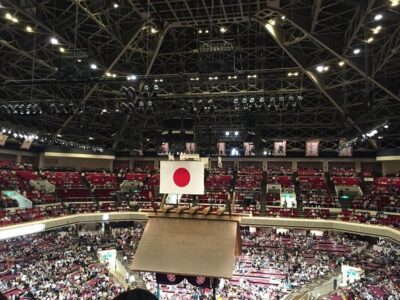
Luxury Sumo Show Experience & Japanese cuisine & Drink
Read our review →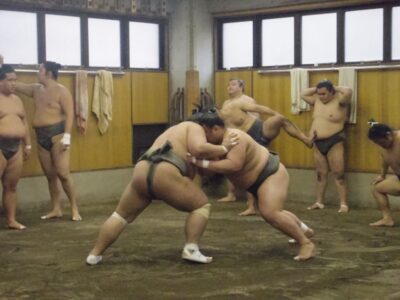
Browse the lists this tour appears in