
Review · SUMO EXPERIENCES IN TOKYO
Tokyo Ryogoku Sumo Morning Practice + Photo Shoot with Wrestlers
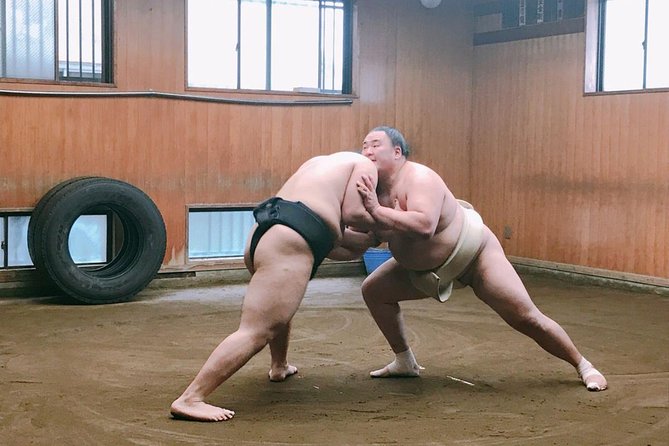
Tokyo’s sumo wrestlers do not perform a tidy show for tourists. They train. You may watch warm-ups, repeated drills, and serious bouts from only a few feet away. That plain, unscripted setting is the main reason to book this Ryogoku morning visit.
I like the close view of the wrestlers and the chance to see the discipline, hierarchy, and silence inside a stable. I also like the local guide’s role, especially when guides such as Mayu, Masao, Ayaka, or Yumiko explain what you are seeing before and after practice. The catch is simple: you sit on the floor, often for more than an hour, and the stable controls photos, seating, timing, and access.
Key points
- Real training, not a staged performance: Watch wrestlers warm up, drill, and practice bouts in an active stable.
- A short walk from JR Ryogoku Station: The route to the stable may take about five to 30 minutes, depending on the day’s location.
- Quiet rules matter: You may need to sit still and remain silent throughout practice, with toilet access possibly restricted.
- Photos are conditional: Tour photos and posed photos may be available, but the stable decides if photography is allowed.
- Small group format: The maximum group size is seven, though larger bookings may be split among different stables.
- Best for ages 12 and up: Children under 12 cannot enter the morning practice.
Why a Sumo Stable Is More Interesting Than a Tournament Seat
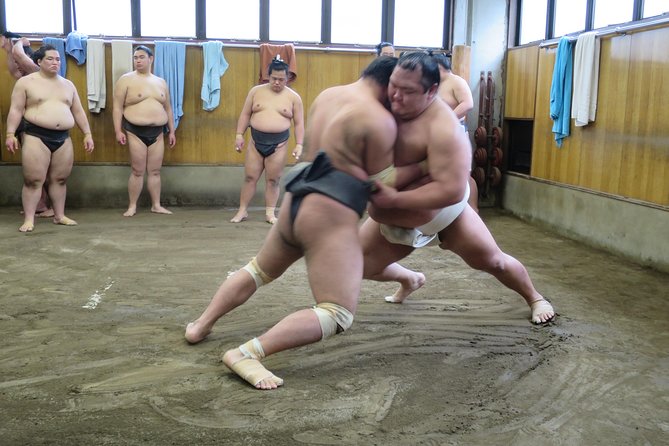
At a tournament, you see polished bouts under bright arena lights. Here, you see the work that produces those bouts. Wrestlers repeat movements, test balance, collide with force, and return to the routine. There is no announcer to explain each moment, and no guarantee that every part of the practice will be dramatic.
That is exactly what makes the visit worthwhile. You are watching a working place, not a cultural display arranged for an audience. The stable is a training home with its own rules, and your guide helps you understand the order of what happens.
The experience can also reveal details that are hard to notice at a tournament. You may see how wrestlers prepare, how they wait their turn, and how the room changes as practice moves from general exercises to harder bouts. The quiet is part of the lesson. You are expected to observe rather than chat.
More Sumo Experiences in Tokyo
- Tokyo: Sumo Show and Dining Experience
★ 4.8 · 2,742 reviews - the SUMO show
★ 5.0 · 1,960 reviews - Tokyo Shinjuku Sumo Show & Experience with Photo
★ 5.0 · 1,750 reviews
Meeting at JR Ryogoku Station at 8:00 a.m.
Meet at the East Exit of JR Ryogoku Station, near Re.Ra.Ku Ryogoku Ekimae. Your guide holds a red or orange MagicalTrip board. This detail matters because Ryogoku has two stations. Do not go to Ryogoku Station on the Oedo Line.
Arrive early. The stated meeting time is 8:00 a.m., with the group expected to gather about 10 minutes before the activity begins. A delay of more than 15 minutes can mean losing the entire visit without a refund or rescheduling. That strict rule is understandable inside a working stable, where a late arrival could interrupt practice, but it leaves little room for a wrong turn or a slow train connection.
The guide normally gives an introduction before the walk. This is your best chance to ask basic questions about sumo, stable customs, and what you are about to see. Some guides have used written notes during practice to explain points without speaking, while others provide most of the background before entering.
The Walk Through Ryogoku to the Stable
The walk takes about five to 30 minutes. The wide range is not a typo. The available stable can change, so you may have a quick stroll or a longer walk through the sumo district.
Ryogoku is the right setting for this activity. The area is closely tied to sumo, and the route helps place the practice in its local context. The guide may point out sumo-related sights and explain the district before taking you inside.
Do not expect a fixed stable every time. The location depends on availability, and the organizer may ask you to change the date or time if the practice schedule shifts. A large group may also be divided between different stables. You still receive a sumo practice visit, but the exact room and walking route are not guaranteed.
Sitting Close to the Action
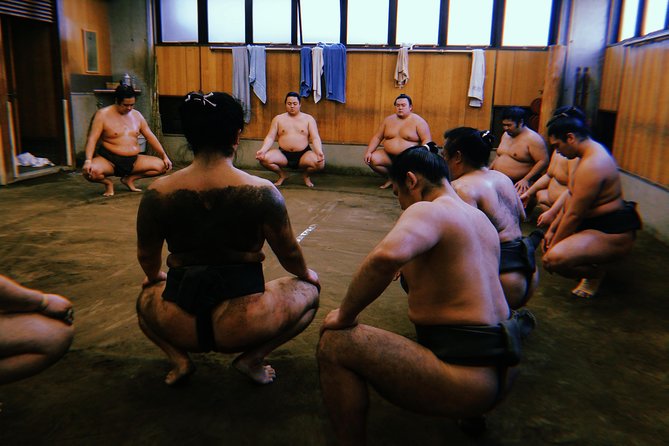
Inside the stable, you enter only the permitted tatami areas. Other parts of the building are off-limits. Seating is usually on the floor, and chairs are uncommon.
You may sit there for an hour and 20 minutes, or longer if practice runs late. One session lasted around two hours rather than the usual hour, so keep your morning flexible. This is not the right outing if you have knee, hip, or back trouble that makes floor sitting difficult.
Seating is first come, first served. If your group arrives late, you may sit two or three rows back. Even from there, the wrestlers can be remarkably close, but a front-row position gives you a better view of footwork and training rituals.
Bring water, particularly in Tokyo’s hot and humid summer. Wear clothing that lets you sit comfortably on the floor. Use the toilet before the tour starts, since you may not be allowed to leave during practice.
Same city, a different fixture:
- Tokyo: Sumo Show and Experience in Shinjuku
★ 4.8 · 1,001 reviews - Tokyo Grand Sumo Tournament Viewing Tour with Tickets
★ 5.0 · 692 reviews - Tokyo Sumo Wrestling Tournament Experience
★ 5.0 · 660 reviews - Tokyo:Luxury Sumo Show Experience & Japanese cuisine & Drink
★ 4.7 · 577 reviews
What the Morning Practice Can Include
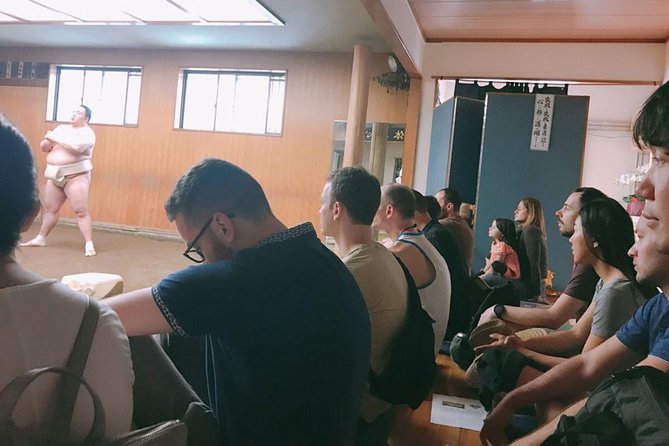
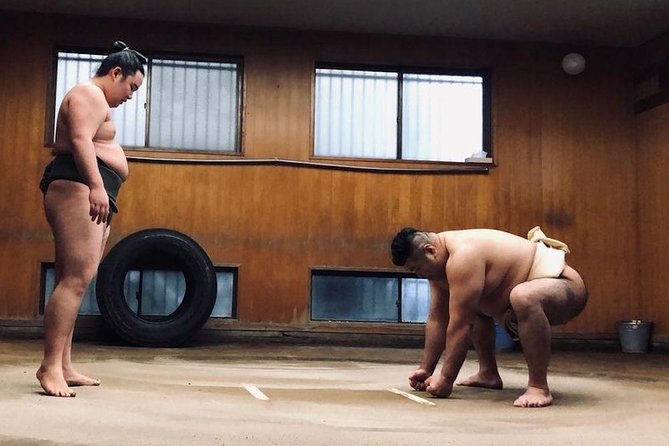
The practice is not fixed like a theater schedule. You might see warm-ups and general exercises, followed by practice bouts that show the force and technique of sumo. The length and order can change with the stable’s schedule, tournament plans, and the wrestlers’ condition.
The best part is the physical detail. From close range, you can see how much effort goes into movements that may look simple from an arena seat. You also see that sumo is not only about pushing an opponent out of a ring. Balance, timing, stance, repetition, and restraint all matter.
Silence is required during practice. Do not assume that the rules used by other people in the room will apply to your group. The stable may ask you to wear a mask, avoid photos, or sit in a particular way. Follow the guide and stable staff, even if someone else appears to be ignoring the rules.
This is also where expectations need adjusting. The tour may include only a short introduction before practice, and some people have wanted more explanation about sumo’s origins, the wrestlers’ daily life, rankings, and the stable system. Guides vary in how much context they provide, so ask questions before entering and after practice, when conversation is allowed.
Photos With Wrestlers Are Not Guaranteed
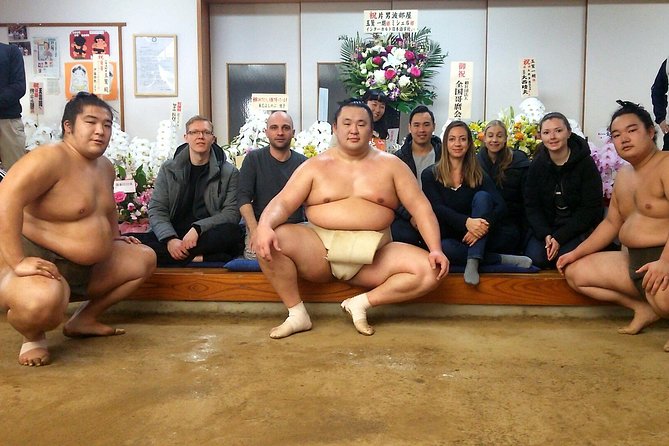
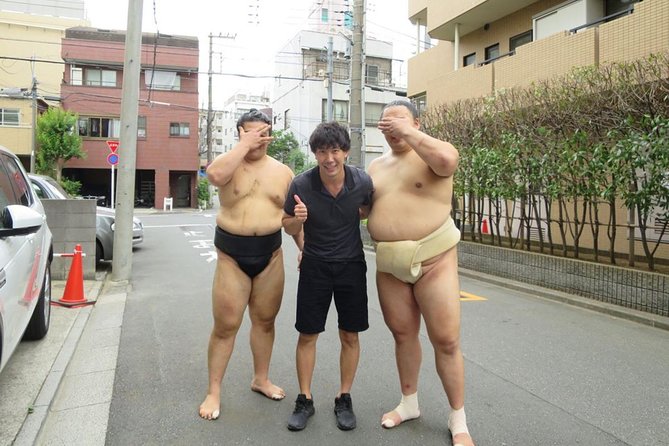
The title highlights a photo shoot, but photography is controlled by the stable. You may be allowed to take pictures during practice, after practice, or only in a posed photo with wrestlers. In some cases, no practice photography is permitted.
That uncertainty is not a minor footnote. If your main goal is a photo beside a wrestler, you should treat it as a possibility rather than a promise. The same applies to the included tour photos. The stable can refuse photos for its own reasons, and the organizer cannot guarantee an alternative.
When photos are allowed, the moment can be special because it follows genuine training rather than a staged meeting. Some sessions have included friendly posed photos after the wrestlers finished. Keep your request brief and follow the guide’s instructions. The stable is still a workplace.
A Short Look Around Ryogoku Kokugikan
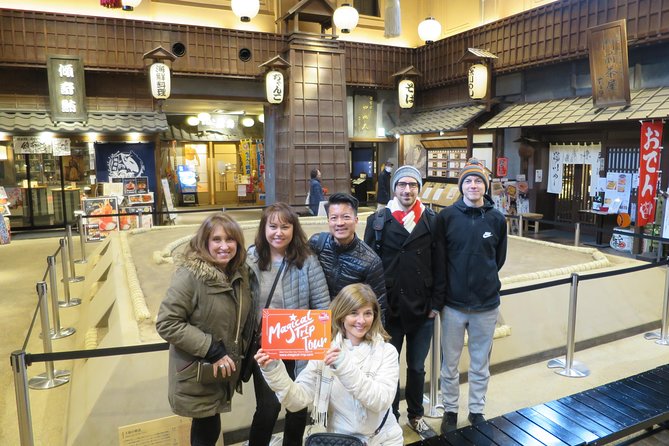
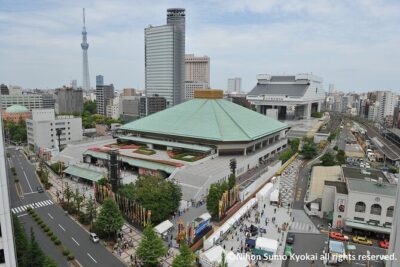
After practice, the guide may take you toward Ryogoku Kokugikan, the district’s famous sumo arena. This stop lasts about 10 minutes and is included as a short local walk rather than a museum visit or tournament admission.
It gives you a useful sense of place. You have just watched wrestlers train, then see the building associated with public sumo tournaments. The contrast helps connect the private work of practice with the formal spectacle held in the arena.
Do not expect entry into the Kokugikan or a long guided tour. The main event remains the stable visit. After the short Ryogoku stop, the guide walks you back to the meeting point.
How Much Value Do You Get for $98.16?
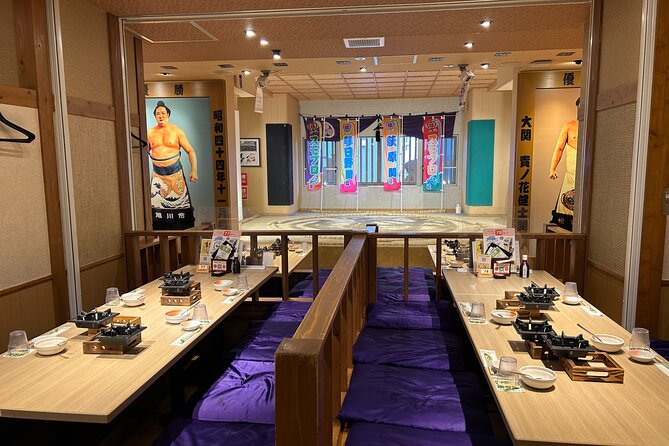
At $98.16 per person, this is not a cheap way to fill two hours. You are paying for access that can be difficult to arrange independently, a guide who handles the stable visit, and a small group capped at seven people.
The price makes the most sense if you value access and explanation. A guide can help you find the correct station exit, introduce the stable’s rules, explain the training, and manage the transition afterward. That support matters because you cannot simply wander into most stables and watch practice.
The value is weaker if you expect a polished show, guaranteed front-row seating, a long cultural lecture, or a meal. There is no lunch included, and the schedule may join practice after it has already begun. The core product is quiet observation from the floor.
Guide quality also affects the value. Guides including Masao, Mayu, Ayaka, and Yumiko have been praised for explaining sumo customs, stable rankings, training, and the wrestlers’ way of life. Still, the amount of commentary can vary. If you want detailed instruction, make your interest clear at the meeting point.
Who Should Book This Morning?
I would recommend it most strongly to people who already care about sumo, sports, Japanese customs, or behind-the-scenes access. You do not need prior sumo knowledge, but curiosity helps. The practice is easier to appreciate when you are willing to watch repeated drills and notice small details.
It also suits solo visitors. You spend much of the session sitting quietly, so you do not need a companion to make conversation or fill the time. Couples and small groups will enjoy it too, provided everyone can follow the stable’s rules.
I would think twice if you need an easy, flexible morning. The early start, strict late-arrival policy, possible floor seating, uncertain photo rules, and changing stable location require care. This is also not suitable for children under 12.
The activity is mobile-ticket friendly and close to public transportation, but the practical success of the morning depends on arriving at the correct station. Set out early, confirm you are using the JR station, and keep the rest of your day open in case practice runs long.
Should You Book the Ryogoku Sumo Morning Practice?
Book it if you want to see working sumo at close range, not a tourist show. The combination of real training, a small group, and local guidance can give you a better feel for the sport than simply attending a tournament bout.
Skip it if you want guaranteed photos, cushioned seating, a fixed schedule, or a long formal lesson. The stable has the final say over nearly every detail.
For the right person, this is one of Tokyo’s more memorable sports visits. Go early, sit quietly, bring water, and accept that the experience belongs to the wrestlers first.
FAQ
Where does the tour meet?
Meet at Re.Ra.Ku Ryogoku Ekimae by the East Exit of JR Ryogoku Station in Sumida City, Tokyo. Your guide holds a red or orange MagicalTrip board.
Does the tour meet at the Oedo Line station?
No. There are two Ryogoku stations, and you must go to the JR Ryogoku Station East Exit, not Ryogoku Station on the Oedo Line.
What time does the tour start?
The activity starts at 8:00 a.m. You should arrive about 10 minutes before the start time.
How long does the activity last?
The estimated duration is about two hours. Practice can sometimes run longer than expected, so allow extra time afterward.
Can children join the tour?
Only people aged 12 and over can enter the morning practice. Children under 12 are not permitted and will not receive a refund.
Do I need to sit on the floor?
Yes, you may need to sit on tatami flooring because most stables do not provide chairs. You may remain seated for more than an hour.
Are photos with sumo wrestlers guaranteed?
No. The stable decides if photography during practice or posed photos with wrestlers are allowed. Photos may be restricted or refused.
What happens if the stable cancels practice?
The stable can change or cancel practice because of its tournament schedule or the wrestlers’ condition. If the booking is canceled for that reason, you will receive a full refund. You can also cancel up to 24 hours before the start time for a full refund.
Just added for fans in Tokyo
- Tokyo: Grand Sumo Morning Training Tour★ 4.9 · 12 reviews
- Sumo Training Watching Experience in Tokyo★ 4.5 · 8 reviews
- Kickboxing & Body Training with EX-Pro Fighter★ 5.0 · 4 reviews
- Tokyo: Visit Sumo Morning Practice with English Guide★ 4.5 · 22 reviews
- Tokyo Sumo Experience with Live Show & Audience Challenge★ 5.0 · 38 reviews
- Tokyo Sumo History Tour with Chanko Nabe Lunch★ 5.0 · 3 reviews
- 【SUMO FESTIVAL】Tokyo Ginza: Sumo Show & Photo Experience★ 4.5 · 41 reviews
- Tokyo Shinjuku Sumo Show and Experience with Drinks and Photo★ 4.0 · 21 reviews
Sumo Experiences in Tokyo, compared.
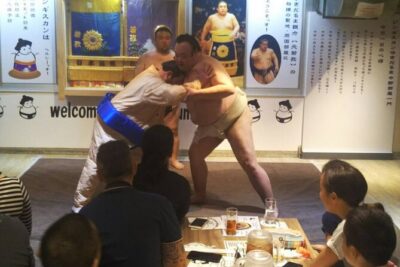
Tokyo Shinjuku Sumo Show & Experience with Photo
Read our review →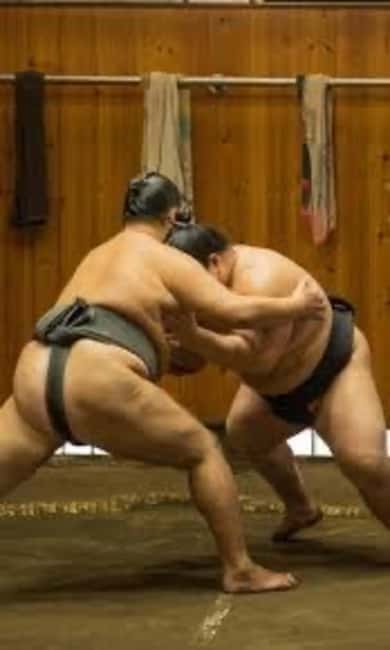
Tokyo Grand Sumo Tournament Viewing Tour with Tickets
Read our review →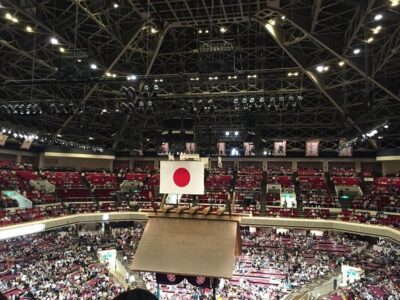

Luxury Sumo Show Experience & Japanese cuisine & Drink
Read our review →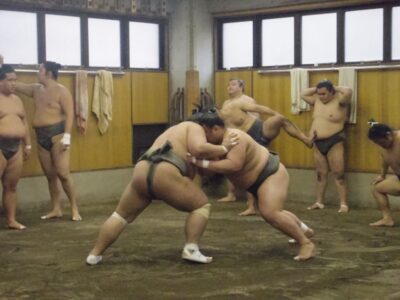
Browse the lists this tour appears in