
Review · SUMO EXPERIENCES IN TOKYO
Chair Seat Guaranteed SUMO Practice +Photo +Culture Option
The best part of this Tokyo experience is the front-row view of morning sumo practice. You sit in a chair close to the action while wrestlers warm up, practice their techniques, and slam into one another with startling force. I especially like the guaranteed chair and the short lesson afterward, since both make this easier and more useful than simply watching a silent training session.
I also like the small group size, with no more than 10 people, and the chance to speak with an active wrestler. Max has guided some sessions, and Masao is also named as a host. The main drawback is the strict etiquette: no talking, eating, or drinking during practice, and the early 8 a.m. meeting time can be tough after a late night in Tokyo.
Key points at a glance
- Guaranteed chair seating: You do not have to sit on a floor cushion, which matters if your knees or hips are not up to it.
- Close-up morning practice: Watch wrestlers train at a real sumo stable rather than attending a staged show.
- Small group of up to 10: The setting feels more personal than a large sightseeing group.
- Wrestler Q&A and photo: You get time to speak with an active wrestler and take part in a group picture.
- Culture talk after practice: The guide explains sumo’s history, customs, and daily life, giving meaning to what you just watched.
- Early start at Kiyosumi-shirakawa: Meet at 8 a.m. at Exit B1, near the FamilyMart convenience store.
Why watching practice can beat watching a tournament
A sumo tournament is thrilling, but it shows you the finished product: two wrestlers enter, bow, clash, and one is pushed or thrown out. At practice, you see the work behind that short burst. Wrestlers warm up, repeat movements, receive coaching, and train with a level of concentration that makes the sport easier to respect.
This visit takes place during a morning practice at a sumo stable in Tokyo’s Koto area. The wrestlers are not performing for a tourist audience. You are watching a working training session, so the mood is quiet and serious. That authenticity is the appeal, but it also means you need to follow the rules.
The practice portion lasts about 1 hour and 40 minutes. You may take pictures, but you must not talk, eat, or drink while the wrestlers train. The quiet is not a minor detail. It lets you notice the slap of bodies, the sound of feet shifting across the floor, and the pauses between bouts without a guide talking over the action.
The close distance is another reason to book this instead of settling for a distant glimpse of sumo. The seating is described as very near the practice area, and several parts of the experience place you in the front row. You can see the effort in each movement, not just the final result.
More Sumo Experiences in Tokyo
- Tokyo: Sumo Show and Dining Experience
★ 4.8 · 2,742 reviews - the SUMO show
★ 5.0 · 1,960 reviews - Tokyo Shinjuku Sumo Show & Experience with Photo
★ 5.0 · 1,750 reviews
Getting to Kiyosumi-shirakawa for the 8 a.m. meeting
The meeting point is at Kiyosumi-shirakawa Station, served by the Oedo and Hanzomon lines. You meet at ground level by Exit B1, next to a FamilyMart convenience store. The official meeting time is 8 a.m., so give yourself time to find the correct exit.
This is one place where you should not rely on a quick glance at your phone after leaving the train. Station exits can be confusing, and the meeting instructions have caused stress for at least some people. Check the exit number before you leave your hotel, and arrive early rather than trying to make the group at the last second.
The guide then handles the transfer to and from the stable. That travel time is estimated at about 20 minutes in total, while the first meeting and orientation period takes roughly 15 minutes. The times are approximate, so do not schedule a tight museum reservation or airport transfer immediately afterward.
The early start has one clear benefit: groups arriving early may reach the seating area before other visitors. A morning practice is also the natural time to see wrestlers training, so the inconvenience is tied to the value of the experience rather than an arbitrary tour schedule.
Sitting close to the wrestlers
The guaranteed chair is the practical feature that separates this activity from many sumo stable visits. Traditional stable seating may involve a floor cushion, and that can be uncomfortable if you have weak knees, limited flexibility, or simply prefer not to sit cross-legged for nearly two hours.
You should still think of the chair as functional rather than luxurious. One booking included a complaint that the seating was uncomfortable, so the promise is best understood as a chair instead of the floor, not a padded theater seat. For many people, that difference will be enough to make the visit possible.
Once seated, you watch the practice unfold without commentary during the session. This can feel odd for the first few minutes, especially if you are used to guided sightseeing. Give it time. The lack of narration is part of respecting the stable and allows you to focus on the wrestlers’ routine.
Do not expect every part of the practice to be explained as it happens. The cultural talk comes later. If you want to get more from the training, pay attention to the repeated movements, the coaching, and the contrast between warm-up exercises and harder bouts. The guide’s presentation will help put those details into context afterward.
The wrestler meeting and group photo
After practice, you have about 20 minutes for a Q&A with an active sumo wrestler. Depending on the day, you may also be able to take individual pictures. This is the most direct human part of the experience, since you move from silently observing the wrestlers to speaking with one of them.
The question period is a useful chance to ask about training, competition, or daily life, though the exact exchange will depend on the wrestler and the group. Keep your questions concise so everyone gets a turn. The small maximum of 10 people helps here, since a large crowd would make the conversation much less personal.
A group photo is included. The tour description also suggests that a picture with a wrestler may be possible, but treat that as an opportunity rather than a guaranteed private photo session. The included photo gives you a simple souvenir of the morning without requiring an extra purchase.
The photo is also a good reason to dress neatly and arrive ready. You are visiting a working sumo stable, not just a tourist attraction, so respectful behavior matters from the moment you enter until you leave.
Same city, a different fixture:
- Tokyo: Sumo Show and Experience in Shinjuku
★ 4.8 · 1,001 reviews - Tokyo Grand Sumo Tournament Viewing Tour with Tickets
★ 5.0 · 692 reviews - Tokyo Sumo Wrestling Tournament Experience
★ 5.0 · 660 reviews - Tokyo:Luxury Sumo Show Experience & Japanese cuisine & Drink
★ 4.7 · 577 reviews
The 25-minute sumo and culture lesson
The guide’s presentation lasts about 25 minutes and covers the history and context of sumo, including what the sport is and how it developed. This is where the tour earns more than a basic admission ticket.
A practice session can be confusing if you do not know what you are watching. The movements may look repetitive, and the rules are not always obvious from a distance. The presentation gives you a framework for understanding the techniques, customs, and way of life connected with sumo.
Max is named as one of the guides, and his U.S. education may make his explanations especially accessible to English-speaking visitors. Masao is also associated with the experience. The exact guide is not guaranteed, but the format gives you time to ask questions and connect the physical practice with Japanese culture.
I like the order of the experience: watch first, learn second. If you hear a lecture before seeing the wrestlers, the information can feel abstract. After sitting close to the training, the explanation has something concrete to attach to.
What the three-hour schedule really includes
The total activity lasts about three hours, but the stable visit is the main event. The approximate breakdown looks like this:
- About 15 minutes for meeting and initial arrangements
- Around 20 minutes for travel to and from the stable
- About 1 hour and 40 minutes watching practice
- Roughly 20 minutes for the wrestler Q&A and pictures
- Around 25 minutes for the cultural presentation
The experience ends back at the meeting point, where you are free to continue exploring Tokyo. Since the start is early, you will still have much of the day available afterward. Kiyosumi-shirakawa is also a useful area from which to continue sightseeing, though this activity itself does not include an additional tour of the neighborhood.
The timing is approximate, so plan with a little breathing room. You should not book something that requires you to be at an exact time immediately after the expected end.
Is $102.47 a fair price?
At $102.47 per person, this is not a cheap way to fill a morning. The value comes from the combination of access, seating, explanation, and the wrestler meeting rather than from the practice alone.
If you only want to glimpse sumo, you may find the price hard to justify. The practice itself is free once you are inside the stable, and the session includes a long quiet period. But arranging access to an authentic stable, securing a chair, coordinating the transfer, and providing a guide are meaningful parts of what you are paying for.
The chair has real value for anyone who cannot comfortably sit on the floor. The cultural presentation also saves you from leaving with a collection of dramatic images but little idea what they mean. Add the Q&A and group photo, and the activity becomes a compact introduction to sumo rather than simple spectatorship.
I see the strongest value for a first visit to Japan, families who want a structured cultural activity, and anyone who has been curious about sumo but does not know how to approach it. A family with a seven-year-old successfully managed the quiet rules, though you should explain beforehand that children must remain quiet and still during practice.
The rules and etiquette to take seriously
The stable is a place of training, so the etiquette is strict. During practice, you must not talk, eat, or drink. Photography is allowed, but you should follow the guide’s instructions and avoid turning the session into a noisy photo shoot.
The quiet requirement may be the hardest part for young children or anyone who expects a lively show. You are not free to wander around, chat with your group, or snack when you like. The best approach is to treat the practice as a period of observation, not entertainment on demand.
Service animals are allowed, and the activity is near public transportation. A moderate level of physical fitness is requested, though the guaranteed chair reduces the strain of sitting on the floor. You still need to manage the station, the transfer, and the time spent at the stable.
Confirmation is sent within 48 hours of booking, subject to availability. The group is limited to 10 people, and the activity requires a minimum number of participants. If that minimum is not met, you are offered another date or experience, or a full refund.
Who should book this morning?
I would choose this for a first-time Tokyo visitor who wants an experience that feels connected to local life rather than a polished stage performance. It is also a smart pick if you have knee trouble, dislike floor seating, or want a guide to explain what you are seeing.
Families can make it work, but prepare children before departure. Explain that the practice is quiet, movement is limited, and eating and drinking are not allowed. A child who can follow those rules may find the wrestlers’ power and discipline unforgettable.
This is less suited to you if you need a flexible morning, dislike early starts, or want a highly interactive show. The most exciting part is also the most restrained: you sit quietly and watch. The Q&A and culture talk add conversation later, but they do not change the nature of the practice itself.
Free cancellation is available up to 24 hours before the start time for a full refund. Changes or cancellations inside that window are not accepted and are not refunded, so keep the local start time in mind.
Should you book the seated sumo practice?
Book it if you want to see real training from close range, need a chair, and value context as much as spectacle. The combination of near seating, an active wrestler Q&A, a group photo, and a cultural presentation makes this a strong introduction to sumo.
Skip it if you want a casual drop-in activity or cannot commit to strict quiet during a long morning session. For everyone else, the early alarm is a fair trade for seeing the sport at work, not just in competition.
FAQ
Where does the sumo experience begin?
You meet at Kiyosumi-shirakawa Station in Koto City at Exit B1, at ground level near a FamilyMart convenience store. The station is served by the Oedo and Hanzomon lines.
What time does the activity start?
The meeting time is 8 a.m. The full experience lasts approximately three hours and ends back at the meeting point.
Will I sit on the floor during practice?
No. This activity guarantees chair seating rather than floor seating. The chair may still be fairly basic, but it is intended to help people who prefer not to sit on a cushion.
Can I take pictures during the practice?
Yes. Photography is allowed during the practice. You must not talk, eat, or drink while the wrestlers are training.
Is a wrestler Q&A included?
Yes. The experience includes a Q&A session with an active sumo wrestler, along with a group photo. Individual pictures may also be possible.
Can I cancel for a full refund?
Yes, if you cancel at least 24 hours before the experience start time. Cancellations or changes made less than 24 hours before the start are not refunded, and the activity may also be changed or refunded if its minimum group size is not reached.
Just added for fans in Tokyo
- Tokyo: Grand Sumo Morning Training Tour★ 4.9 · 12 reviews
- Sumo Training Watching Experience in Tokyo★ 4.5 · 8 reviews
- Kickboxing & Body Training with EX-Pro Fighter★ 5.0 · 4 reviews
- Tokyo: Visit Sumo Morning Practice with English Guide★ 4.5 · 22 reviews
- Tokyo Sumo Experience with Live Show & Audience Challenge★ 5.0 · 38 reviews
- Tokyo Shinjuku Sumo Show and Experience with Drinks and Photo★ 4.0 · 21 reviews
- Tokyo Sumo History Tour with Chanko Nabe Lunch★ 5.0 · 3 reviews
- 【SUMO FESTIVAL】Tokyo Ginza: Sumo Show & Photo Experience★ 4.5 · 41 reviews
Sumo Experiences in Tokyo, compared.
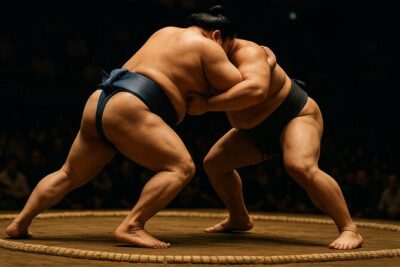
Tokyo Shinjuku Sumo Show & Experience with Photo
Read our review →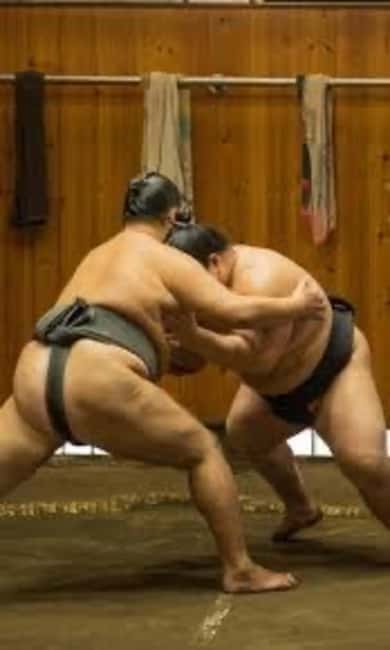
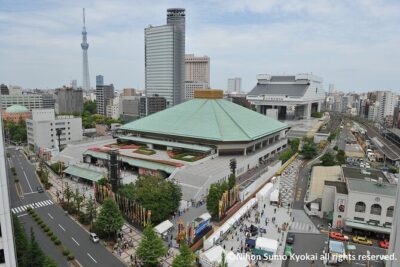
Tokyo Grand Sumo Tournament Viewing Tour with Tickets
Read our review →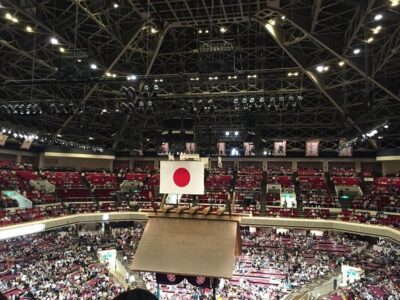

Luxury Sumo Show Experience & Japanese cuisine & Drink
Read our review →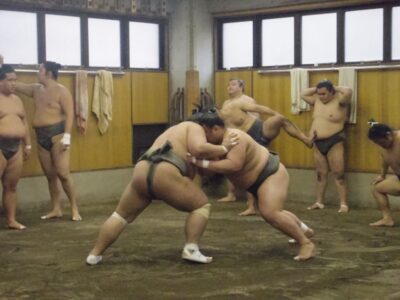
Browse the lists this tour appears in