
Review · SUMO EXPERIENCES IN TOKYO
Sumo Wrestlers Morning Practice Tour – Tokyo Sumida District
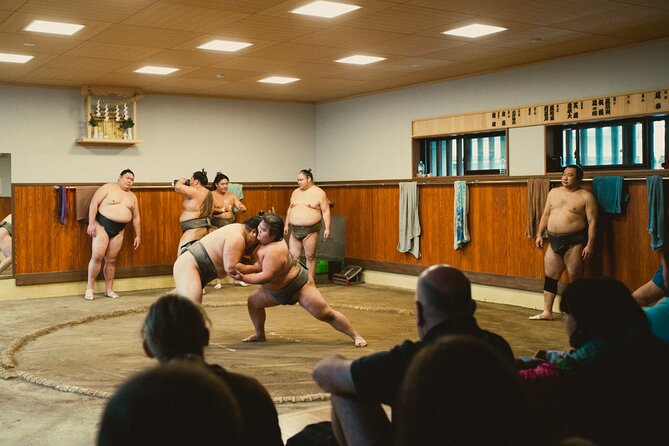
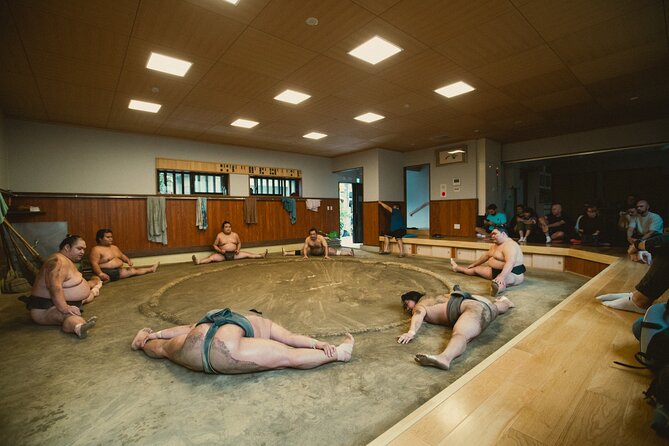
At this sumo stable in Sumida, you watch athletes train at close range, not perform a show for tourists. The best moments are the basic exercises, powerful shouts, stretching, and occasional bouts that reveal how much discipline sits behind this famous Japanese sport. I like the early start because it leaves your afternoon free, and I like the chance to learn from a guide instead of trying to decode the ritual alone. The catch is simple: you sit cross-legged on the floor for about 90 minutes, and the practice may be quiet or end early.
I also like the respectful, small-scale feel of the visit. You walk from the foot of Tokyo Skytree, enter a working stable, and may speak with the stable master or pose for a photo with wrestlers afterward. Just keep your expectations straight: this is training, not a tournament match, and the athletes are not there to entertain you.
Key points to know before booking
- Morning practice, not a staged performance: You watch the stable’s normal routine, which can include stretching, drills, and some wrestling.
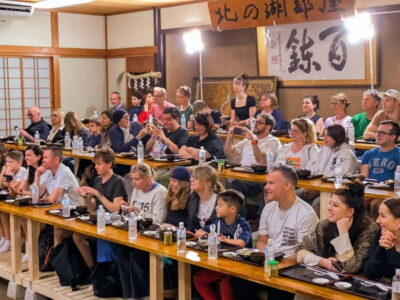
- Close floor-level view: The stable has no chairs, so you sit cross-legged on the wooden floor and remain still during practice.
- A 15-minute walk from Tokyo Skytree: Meet near Oshiage Station at 7:30am, then walk with your guide to the stable.
- Guide help matters: Your guide explains the sport, translates when needed, and helps you follow the stable’s customs.
- Photos may come after practice: A picture with one or more wrestlers may be possible, but it is not presented as a guaranteed group photograph.
- Strict etiquette applies: No flash, food, gum, smoking, hats, sunglasses, or movement during training.
What this morning really lets you see
A professional sumo match gives you spectacle. This visit gives you the work behind it.
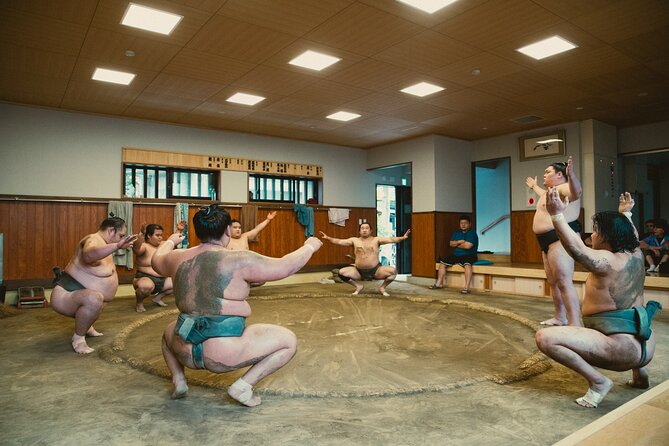
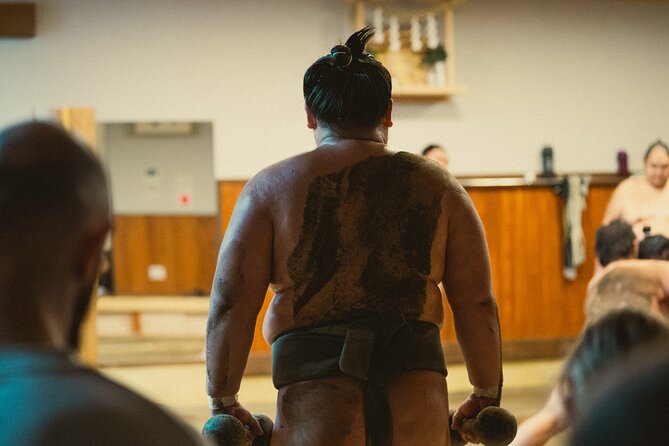
You see wrestlers prepare their bodies through repeated exercises and controlled movement. Their size is striking, but so is their flexibility and speed. The practice can show why sumo is more than two large men pushing each other around a ring. Balance, timing, footwork, strength, and ritual all matter.
The atmosphere is quiet and serious. You are expected to watch without talking, standing, or shifting around. That can feel restrictive if you are used to a typical sightseeing stop, but it is also what makes the visit feel genuine. You are entering a place where the wrestlers train every morning, not a set built for an audience.
The experience has a strong cultural side, too. Sumo grew from Shinto religious traditions, and the ring remains sacred to the wrestlers. You cannot step onto the ring or sandy area. Even the way you sit matters: keep your legs tucked in rather than pointing your feet toward the ring, since showing the soles of your feet is considered impolite.
More Sumo Experiences in Tokyo
- Tokyo: Sumo Show and Dining Experience
★ 4.8 · 2,742 reviews - the SUMO show
★ 5.0 · 1,960 reviews - Tokyo Shinjuku Sumo Show & Experience with Photo
★ 5.0 · 1,750 reviews
Meeting near Tokyo Skytree at 7:30am
The tour starts at 1-chōme-8-21 Oshiage in Sumida City, close to the foot of Tokyo Skytree. You should arrive by 7:10am. The group leaves at 7:30am sharp, so this is not the morning for a last-minute breakfast or a relaxed train connection.
The meeting point is near public transportation, which helps, but the stable itself is not the starting point. You walk for about 15 minutes with the guide. That walk is useful because you are not left to find an unmarked stable on your own, and it gives the guide a chance to explain the basic customs before you enter.
If rain is expected, wear practical shoes and bring a small towel. Your shoes come off inside, and wet feet are not pleasant on the raised wooden floor. It is also wise to use the restroom before meeting the group. The stable may not offer an easy restroom break once practice begins.
The tour returns to the Skytree meeting area when finished. That makes it easy to continue with Tokyo sightseeing. You can pair the morning with Sumida attractions, the Skytree area, Asakusa, or another part of the city without losing a full day.
Inside the stable: 90 minutes of focused practice
Once inside, remove your shoes promptly. Hats and sunglasses are not allowed, and clothing should be modest. Cellphones need to be silent. Photos are allowed, but flash and shutter sounds are not.
The main session lasts about an hour and a half, though the exact length depends on the stable’s schedule. You sit on the floor, cross-legged, and remain in place during practice. There are no chairs. If your hips, knees, or back make floor sitting difficult, take that seriously before booking.
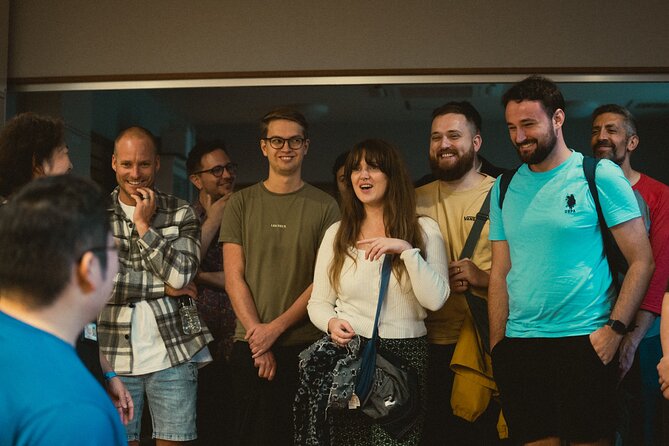
Your view depends on where you are seated and how many people join the tour. The maximum group size is 25. That is not a private visit, and some people may have a row of spectators in front of them. Still, the floor-level setting puts you much closer to the action than a large tournament arena.
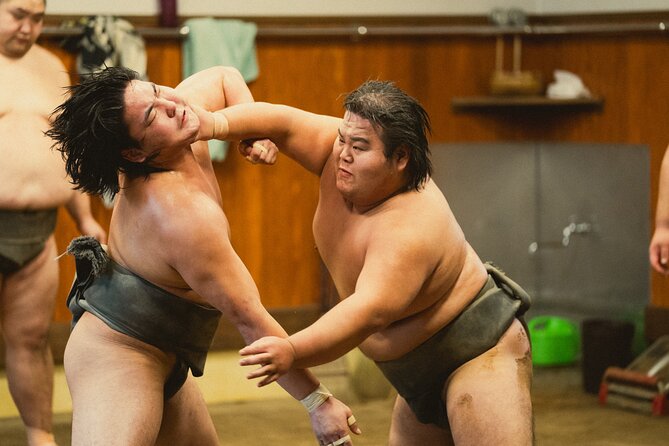
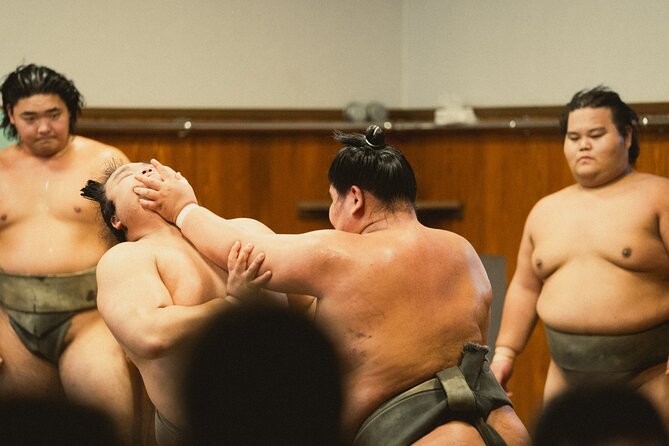
Do not expect nonstop full-contact wrestling. A training session is made up of different parts, and the pace can vary. You might see warmups, repeated drills, stretching, and bouts. One day may offer more wrestling than another. The tour provider also warns that practice can finish earlier or run longer depending on what the wrestlers are doing.
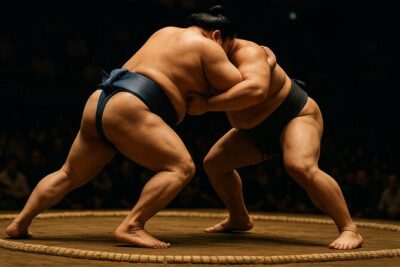
That unpredictability is part of the bargain. You get the real schedule, not a performance designed around your booking. It also means the promotional image of two wrestlers in a dramatic clash should not become your mental contract with the tour. If your priority is seeing a full match, buy a tournament ticket instead.
How much the guide adds
A guide is especially useful here because the rules of sumo and stable etiquette are not obvious at first glance. The guide can explain what you are seeing, translate questions, and prevent small cultural mistakes, such as moving at the wrong time or pointing your feet toward the ring.
The quality of explanation may vary by guide. Some departures have included Yuriko, who was praised for patience and clear translation. Other feedback suggests that the practice itself can provide more information than the guide, with explanations about the training needing more detail. I would treat the guide as an important aid, but not assume you will receive a full lecture on every rule, ranking, or ceremony.
The strongest educational moment may come after practice. Some sessions include time with the stable master, who can answer questions about the wrestlers’ diet, daily life, and training. That conversation gives context that you cannot get from watching alone. It also lets you see the human side of the stable, after the formal silence of practice.
Come with two or three questions ready. Ask about diet, training routines, the purpose of a particular exercise, or how a wrestler prepares for competition. The guide can help translate, and the stable master may offer a more direct view of the sport.
Same city, a different fixture:
- Tokyo: Sumo Show and Experience in Shinjuku
★ 4.8 · 1,001 reviews - Tokyo Grand Sumo Tournament Viewing Tour with Tickets
★ 5.0 · 692 reviews - Tokyo Sumo Wrestling Tournament Experience
★ 5.0 · 660 reviews - Tokyo:Luxury Sumo Show Experience & Japanese cuisine & Drink
★ 4.7 · 577 reviews
The photo opportunity comes last
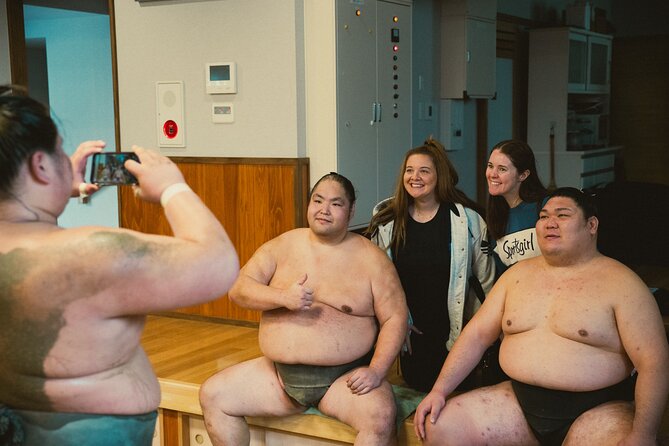
After practice, the rules relax a little. You may be able to take a photo with some of the wrestlers. This can be a memorable finish, especially after spending so long watching them work in silence.
Do not assume you will receive a picture with every wrestler in the stable. The photo opportunity depends on who is available and what the stable permits that day. If taking a particular group photo matters greatly to you, keep your expectations modest.
You can take photos and videos during the visit, but no flash or shutter sounds are allowed. You are also told not to upload the photos or videos to social media. Follow that rule carefully. This is a working training space, and the athletes deserve privacy even when they allow a short photograph.
The real value of the $83.23 price
At $83.23 per person, this is not a cheap way to fill two hours. You are paying for access to a place that is difficult to enter independently, plus a guide who handles the meeting, walk, translation, and etiquette.
The value is strongest if you want a close look at sumo culture rather than a quick photo outside a stadium. You get roughly 90 minutes of practice, a guide-led introduction, and the possibility of a question-and-answer session and photographs. The early timing also has practical value because you still have most of the day for Tokyo.
The value is weaker if you mainly want a dramatic bout. Practice may include only limited wrestling, and it may end early. A tournament offers more competition and ceremony, but it does not provide the same close view of a normal training morning.
With a 4.9 rating from 54 ratings and a 98 percent recommendation figure, the experience has performed strongly overall. I would still read those numbers with the practical details in mind: the high marks fit people who enjoy authentic observation, quiet behavior, and cultural explanation. They do not erase the hard floor, early start, variable practice, or no-social-media rule.
Free cancellation is available if you cancel at least 24 hours before the local start time. Changes or cancellations inside that window are not accepted for a refund.
Rules that shape the experience
The restrictions may sound fussy, but most have a clear purpose. You are entering an active stable, not a theater.
Keep these points in mind:
- Sit quietly and do not stand or move during practice.
- Keep your phone silent and turn off flash and shutter sounds.
- Do not eat, chew gum, smoke, or step onto the ring or sandy ground.
- Water is allowed.
- Wear modest clothing.
- Remove shoes as soon as you enter.
- Do not wear a hat or sunglasses inside.
- Do not point your feet toward the ring.
- Follow the guide’s instructions at all times.
Children must be at least six years old. A child who talks loudly, moves around, or cannot watch quietly may be asked to leave the stable. This is best for families who can explain the rules in advance and expect children to follow them.
Most people can take part, but the floor seating is the key physical concern. If you cannot sit cross-legged for around an hour and a half, this is probably the wrong tour for you. The stable does not provide chairs.
Who will enjoy this most
I would choose this experience if you want to understand how sumo works beyond the famous topknot, loincloth, and brief match. It suits first-time visitors who want a cultural activity with a clear morning schedule, and it works well for anyone already planning to visit Tokyo Skytree or Asakusa.
It is also a good fit if you value access over polish. The session may not be perfectly timed, perfectly explained, or packed with dramatic bouts. That is the tradeoff for seeing real training.
I would hesitate if you need comfortable seating, a guaranteed photo with the entire stable, or a full-contact match. I would also think twice if you dislike strict quiet rules or have difficulty with early starts.
Tournament season can affect the schedule, so check the timing with the provider if you are visiting during that period. The listed start time is 7:30am, but tournament-season arrangements may differ.
Should you book the Sumida sumo practice tour?
Book it if you want a close, respectful look at the discipline behind sumo and can accept that the morning is training rather than entertainment. The stable setting, guide support, possible conversation with the stable master, and chance to meet wrestlers afterward give you more cultural context than simply sitting in the crowd at a match.
Skip it if you want guaranteed hard-fought bouts, flexible seating, or a casual photo stop. The best approach is to arrive early, dress modestly, prepare to sit on the floor, and watch with patience. If you do that, the quiet moments can be just as revealing as the collisions.
FAQ
Where does the sumo practice tour start?
It starts at 1-chōme-8-21 Oshiage, Sumida City, Tokyo, near the foot of Tokyo Skytree. The group meets at 7:30am and returns to the same meeting area after the tour.
What time should I arrive?
You should be at the meeting point by 7:10am. The group leaves at 7:30am sharp.
How long does the tour last?
The planned duration is about two hours. This includes the walk to the stable, roughly 90 minutes of practice, and time afterward for photos. The session may end earlier or run longer depending on the practice.
Is there seating at the sumo stable?
There are no chairs. You sit cross-legged on the floor for about an hour and a half, so you should not book if that position is not manageable for you.
Can I take photos or videos?
Photos and videos are allowed, but flash and shutter sounds are not. Cellphones must be silent, and the photos and videos cannot be uploaded to social media platforms.
Are children allowed?
Children must be at least six years old. They must remain quiet and still during practice. A child who is noisy or moves around may be asked to leave the stable.
Can I cancel for a refund?
You can cancel for a full refund up to 24 hours before the local start time. Cancellations or changes made less than 24 hours before the start are not refunded.
Just added for fans in Tokyo
- Tokyo: Grand Sumo Morning Training Tour★ 4.9 · 12 reviews
- Sumo Training Watching Experience in Tokyo★ 4.5 · 8 reviews
- Kickboxing & Body Training with EX-Pro Fighter★ 5.0 · 4 reviews
- Tokyo: Visit Sumo Morning Practice with English Guide★ 4.5 · 22 reviews
- Tokyo Sumo Experience with Live Show & Audience Challenge★ 5.0 · 38 reviews
- Tokyo Shinjuku Sumo Show and Experience with Drinks and Photo★ 4.0 · 21 reviews
- Tokyo Sumo History Tour with Chanko Nabe Lunch★ 5.0 · 3 reviews
- 【SUMO FESTIVAL】Tokyo Ginza: Sumo Show & Photo Experience★ 4.5 · 41 reviews
Sumo Experiences in Tokyo, compared.
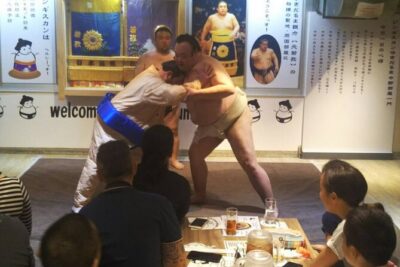
Tokyo Shinjuku Sumo Show & Experience with Photo
Read our review →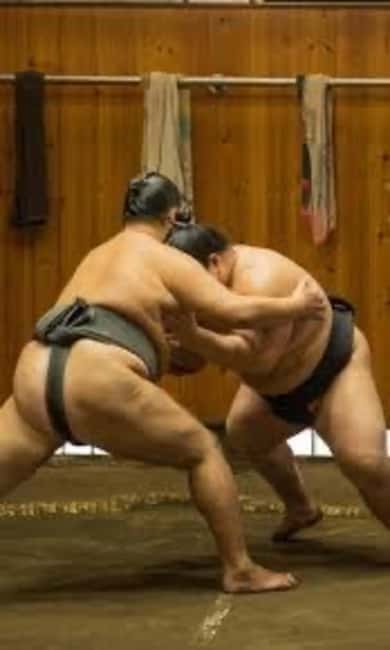
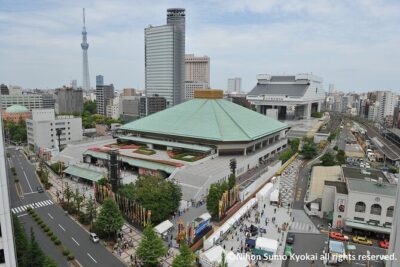
Tokyo Grand Sumo Tournament Viewing Tour with Tickets
Read our review →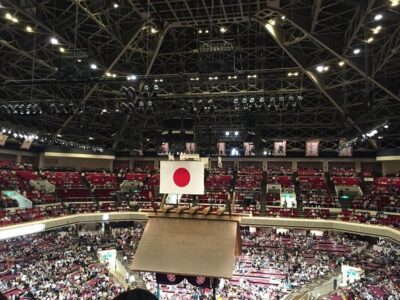

Luxury Sumo Show Experience & Japanese cuisine & Drink
Read our review →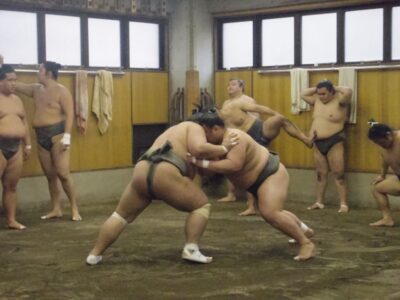
Browse the lists this tour appears in