
Review · SUMO EXPERIENCES IN TOKYO
Tokyo Sumo Morning Practice Tour w/ Ring-Side Seat + Photo Shoot
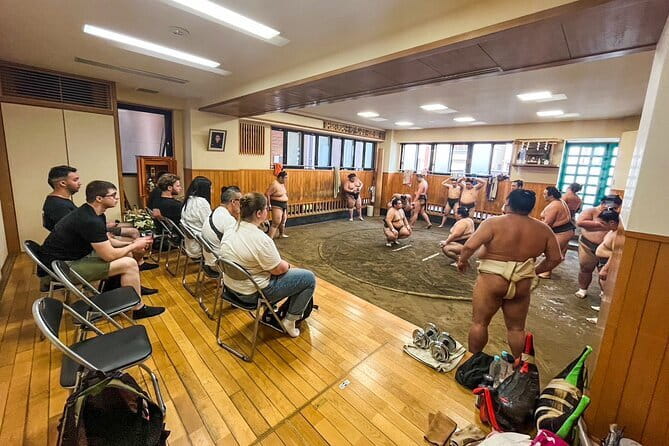
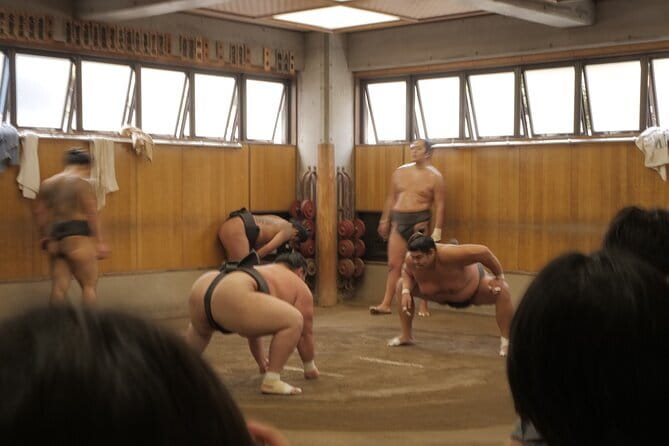
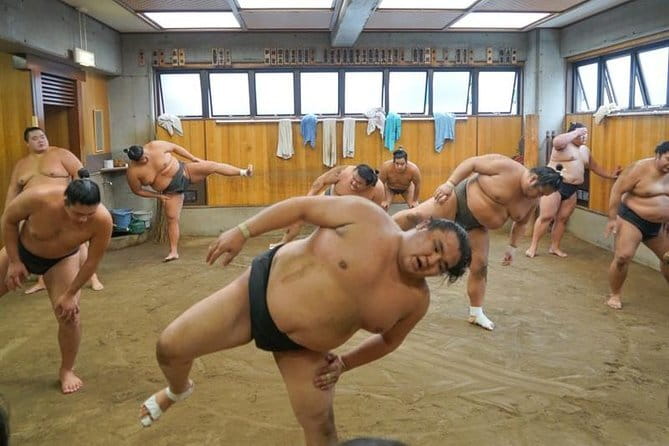
Tokyo sumo practice is not a staged show. You sit quietly on the tatami and watch wrestlers stretch, repeat drills, and crash through practice bouts under the watch of their stable master. The close range makes the sport’s force and discipline easy to understand.
I like the small group of up to 10, which gives you a better chance to see the action and ask questions. I also like the guide support, especially when your guide is Marie, whose passion for sumo helps explain the customs, training, and rules without turning the visit into a lecture.
The main catch is that the experience depends on stable rules and the wrestlers’ schedule. Photos with wrestlers may not be allowed on a particular day, seating is first come, first served, and late arrivals cannot join or receive a refund.
Key points at a glance
- Real morning practice: Watch wrestlers train inside an active sumo stable rather than attending a staged demonstration.
- Close tatami seating: The practice takes place near the audience, but arriving later can mean sitting farther back.
- Guide-led context: A guide accompanies you from Kiyosumi Shirakawa Station and answers questions after practice.
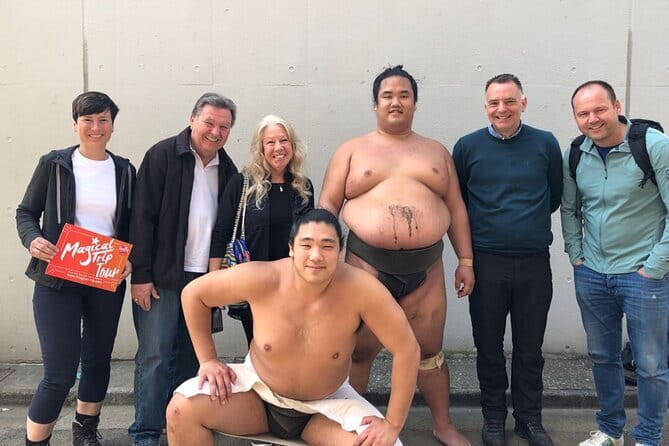
- Photo opportunity: A photo shoot with wrestlers is included when the stable permits photography.
- Quiet, respectful setting: You must follow stable rules, remain within the permitted tatami areas, and avoid disrupting training.
- Kiyosumi Gardens finish: The approximately two-hour outing includes about 30 minutes at this peaceful Tokyo garden.
Why a sumo stable is more revealing than a tournament
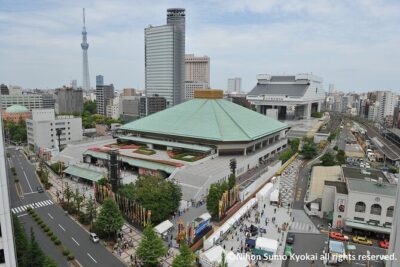
A Tokyo tournament is exciting, but it can also be hard to arrange. The six official tournaments take place only at set times of year, and tickets can be difficult to find. This morning visit gives you another way to see sumo during a normal training day.
The difference is important. At a tournament, you watch a polished public contest with formal entrances, judges, rankings, and a large audience. At a stable, you see the work behind that contest. The session can include stretching, repeated exercises, practice bouts, and close interaction between wrestlers and their stable master or head trainer.
You should not expect a performance built for tourists. The wrestlers are focused on training, and the audience is expected to behave more like a quiet observer than a cheering crowd. That is part of the appeal. You see the repetition, fatigue, concentration, and physical control that make the tournament bouts possible.
This is particularly good for people who want sumo as a sport, not a novelty act. There is no invitation to climb into the ring or take part in a comic demonstration. You watch the real thing from the edge of the training space.
More Sumo Experiences in Tokyo
- Tokyo: Sumo Show and Dining Experience
★ 4.8 · 2,742 reviews - the SUMO show
★ 5.0 · 1,960 reviews - Tokyo Shinjuku Sumo Show & Experience with Photo
★ 5.0 · 1,750 reviews
Meeting at Kiyosumi Shirakawa at 8:30 a.m.
The tour begins at 8:30 a.m. at Kiyosumi Shirakawa Station, near 3-chōme-11-1 Kiyosumi in Koto City. Your local guide meets you there and leads the group to the stable, so you do not need to search for a private training facility on your own.
Arrive early. The tour starts promptly, and a late arrival means you cannot join the group. There is no refund or rescheduling for missing the start, so allow extra time for Tokyo’s rail system and finding the correct station exit.
The morning timing is not just a scheduling choice. Sumo stables train early, and the practice session is built around the wrestlers’ routine. You are visiting at a working hour, not arriving for a flexible afternoon attraction.
Use the restroom before meeting the guide. Restroom access may not be available once practice begins. Wear clothing suited to the season, too. Tokyo can be extremely hot in summer, with temperatures reaching 40°C, while winter conditions can fall as low as -5°C.
Inside the stable: quiet training at close range
The main stable visit lasts about 1 hour and 30 minutes. Admission to the practice itself has no separate entrance charge, and the tour price covers the organized visit and guide support.
Inside, only the permitted tatami areas are open to the group. Other parts of the stable are off-limits. You are entering a private training setting with its own rules, so this is not the place to wander, speak loudly, or treat the practice like a photo set.
The most striking part is often the variety of movement. Some wrestlers may be very large, while others look closer to ordinary athletic builds. Their size does not tell the whole story. The practice displays strength, balance, agility, and the ability to repeat hard movements with complete focus.
The stable master and senior staff may direct the exercises and practice bouts. You might see wrestlers interact with their trainers and one another, giving you a sense of the hierarchy and discipline that shape stable life. The reverence shown toward teachers is part of what makes the visit feel like an encounter with a living tradition rather than a simple sports demonstration.
Your guide supplies the cultural frame. Marie, named by several participants as a particularly passionate guide, can help explain what you are seeing and answer questions after the practice. If you know little about sumo, ask about the basic rules and history. One useful suggestion is to request a short explanation after the session, when there is time to connect the drills with the formal sport.
The ring-side promise, and what it really means
The experience is promoted with ring-side seating, but you should read that phrase in practical terms. You sit close to the training area on tatami, not in a numbered stadium chair beside a tournament ring.
Seating is first come, first served. Arrive on time and follow the guide’s instructions if you want the best chance of sitting near the front. Depending on group numbers, the operator may divide the party among different stables. The stated maximum is 10, but the total audience at a stable can be larger if several small groups are present.
A back-row position does not necessarily ruin the visit. The practice is close and physical, and one account described people standing when no one objected. Still, you should not count on standing or changing places. Respect the stable’s directions, and accept that the exact view can vary from day to day.
This uncertainty is a fair trade for seeing practice in a real working environment. A fixed, guaranteed seat would be easier, but it would also make the experience feel more like a standard attraction.
Same city, a different fixture:
- Tokyo: Sumo Show and Experience in Shinjuku
★ 4.8 · 1,001 reviews - Tokyo Grand Sumo Tournament Viewing Tour with Tickets
★ 5.0 · 692 reviews - Tokyo Sumo Wrestling Tournament Experience
★ 5.0 · 660 reviews - Tokyo:Luxury Sumo Show Experience & Japanese cuisine & Drink
★ 4.7 · 577 reviews
Photography and the wrestler photo session
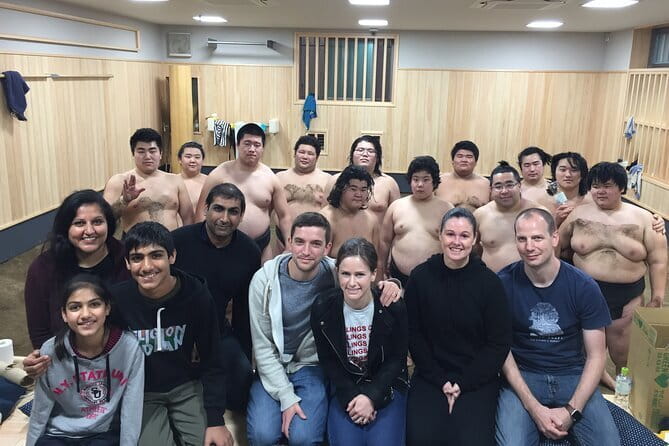
A photo with sumo wrestlers is included as part of the experience, which gives you a lasting memory of the morning. It is also one of the features that makes this visit appealing to families with teenagers and to first-time visitors who want more than silent observation.
There is an important condition: photography depends on the stable’s policy that day. Photos during practice, photos of wrestlers, or photos with wrestlers may not be allowed. Stable rules take priority, so book this for the training rather than treating the photo as guaranteed.
If photography is permitted, follow the guide’s directions closely. Do not interrupt practice or assume that a wrestler is available simply because the group has finished watching. The photo opportunity should be treated as a courtesy within a working stable, not as a formal meet-and-greet.
That limitation may disappoint anyone choosing the tour mainly for a picture. For most people, the real value is the practice itself. The photo is a bonus when conditions allow.
Thirty minutes at Kiyosumi Gardens
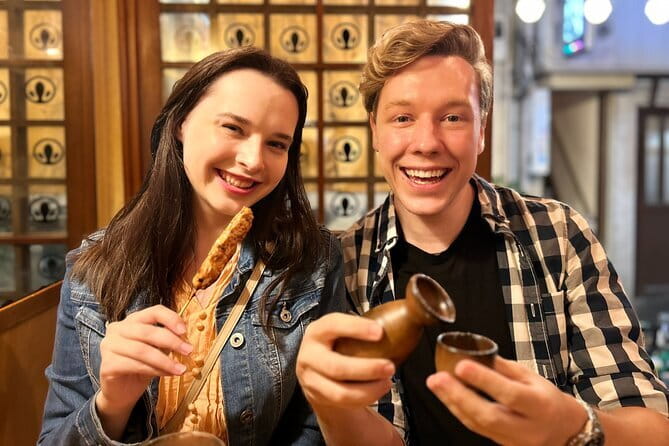
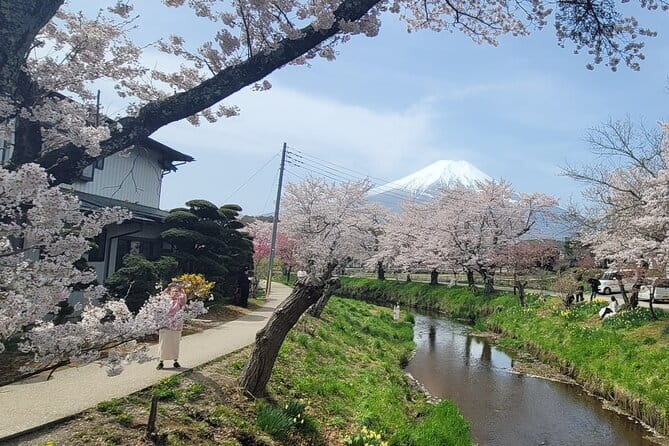
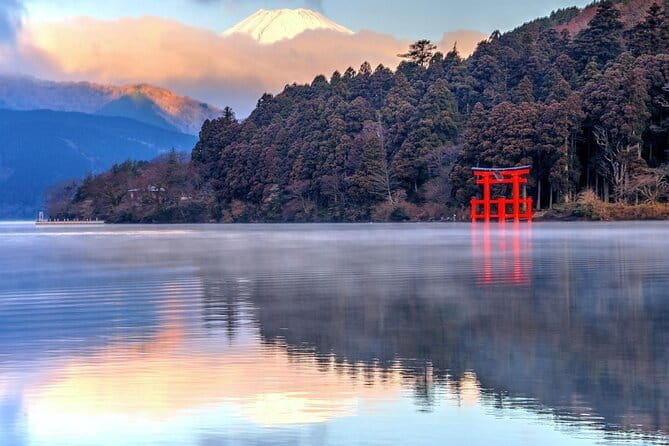
After the stable visit, the tour allows about 30 minutes at Kiyosumi Gardens. This provides a calmer finish after the concentrated noise and effort of training.
The garden stop is short, so think of it as a cool-down rather than a full garden tour. You can slow your pace, reflect on what you have seen, and enjoy a traditional Tokyo garden setting before the activity ends.
The supplied meeting details say the activity ends back at the meeting point, while the route description places the final stop at Kiyosumi Gardens. Because those details do not fully match, confirm the exact end point with the operator if your next train or booking depends on it.
What the $99.10 price buys you
At $99.10 per person, this is not the cheapest way to spend two hours in Tokyo. You are not paying for a major stadium ticket, and there is no separate entrance fee for the practice itself.
The value comes from access and organization. A private sumo stable is not a normal sightseeing stop, and you need a guide to bring the group there, explain the setting, manage questions, and help you follow the stable’s rules. The small group also matters. A limit of 10 gives the visit a more personal feel than a large bus excursion.
I consider the price reasonable if you care about sumo and would otherwise miss a tournament. It is less compelling if you only want a guaranteed photo or a theatrical introduction to Japanese culture. The session can be quiet, strict, and physically intense. That is exactly why serious sports fans tend to appreciate it.
The tour is also a practical option during a Tokyo stay that does not overlap with tournament dates. You get a close look at training without needing to build your schedule around a tournament hall.
Rules, age limits, and possible changes
Only people aged 12 and over may enter the stable. Children under 12 cannot participate, even if accompanied by an adult. This makes the experience suitable for older children and teenagers, but not for families with younger children.
You must remain in the permitted tatami areas and follow every instruction from the stable. Disruptive or disrespectful behavior can lead to refusal of entry or removal without a refund. You may leave before practice ends if needed, but you cannot re-enter afterward.
Practice length can change, and the stable may adjust or cancel a session at short notice because of wrestler condition or tournament commitments. If the stable cancels, a full refund is issued. These changes are inconvenient, but they reflect the fact that you are visiting an active sports institution rather than a fixed museum exhibit.
The operator also may request a change to your tour date or time if stable availability changes. Same-day changes and special requests cannot be accommodated, so keep your plans simple around this booking.
Free cancellation is available up to 24 hours before the start time. Cancel later than that and you should expect no refund.
Who will get the most from this morning
I would choose this tour for a sumo fan who cannot attend a tournament, a sports-minded visitor who wants to see serious training, or anyone interested in the discipline behind a traditional Japanese sport.
It also suits first-time sumo viewers, provided you ask questions. Without context, you may see powerful bodies moving through drills without understanding the rules or rank system. The guide helps, and you can request a short explanation of sumo history and basic rules after practice.
Families with children aged 12 and above can enjoy it, especially if the children are comfortable sitting quietly and following strict instructions. It is not a good choice for anyone who needs frequent restroom access, dislikes early starts, or expects a flexible, interactive show.
You should also be comfortable with uncertainty. The stable, seating position, practice length, and photo rules can vary. In return, you receive access to an authentic setting that cannot be reproduced on a stage.
Should you book this sumo morning practice?
Book it if you want to see the hard work behind sumo, sit close to genuine training, and learn from a guide such as Marie. The strongest part is the practice itself: repetitive drills, powerful bouts, and the visible respect between wrestlers and their teachers.
Skip it if your main goal is a guaranteed photo, a relaxed start, or a fully scripted attraction. For everyone else, the $99.10 cost buys a rare look at a private side of Tokyo sports culture, with a small group and a useful garden stop afterward.
FAQ
Where does the sumo practice tour begin?
The meeting point is at Kiyosumi Shirakawa Station, near 3-chōme-11-1 Kiyosumi, Koto City, Tokyo. The start time is 8:30 a.m.
How long does the experience last?
The activity takes approximately two hours. About 1 hour and 30 minutes is allocated to watching sumo practice, followed by about 30 minutes at Kiyosumi Gardens.
How many people can join the tour?
The maximum group size is 10 participants. Depending on numbers, the group may be divided among different sumo stables.
Is the tour suitable for children?
Only people aged 12 and over may enter the sumo stable. Children under 12 are not permitted to participate.
Can I take photos inside the stable?
Photography depends on the individual stable’s rules. Photos of wrestlers or photos with wrestlers may not be allowed on a particular day.
Is seating guaranteed near the ring?
Seating is on a first-come, first-served basis in the tatami areas. Arriving later may mean sitting farther from the front.
What happens if the stable cancels practice?
If the stable cancels or changes the practice because of wrestler condition or tournament commitments, a full refund is issued for a cancellation by the stable.
Can I cancel my booking for a refund?
You can cancel for a full refund up to 24 hours before the experience starts. Cancellations and changes made less than 24 hours before the start time are not accepted.
Just added for fans in Tokyo
- Tokyo: Grand Sumo Morning Training Tour★ 4.9 · 12 reviews
- Sumo Training Watching Experience in Tokyo★ 4.5 · 8 reviews
- Kickboxing & Body Training with EX-Pro Fighter★ 5.0 · 4 reviews
- Tokyo: Visit Sumo Morning Practice with English Guide★ 4.5 · 22 reviews
- Tokyo Sumo Experience with Live Show & Audience Challenge★ 5.0 · 38 reviews
- Tokyo Shinjuku Sumo Show and Experience with Drinks and Photo★ 4.0 · 21 reviews
- Tokyo Sumo History Tour with Chanko Nabe Lunch★ 5.0 · 3 reviews
- 【SUMO FESTIVAL】Tokyo Ginza: Sumo Show & Photo Experience★ 4.5 · 41 reviews
Sumo Experiences in Tokyo, compared.
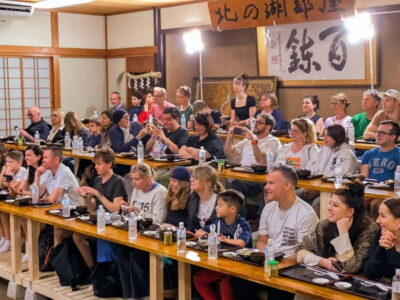
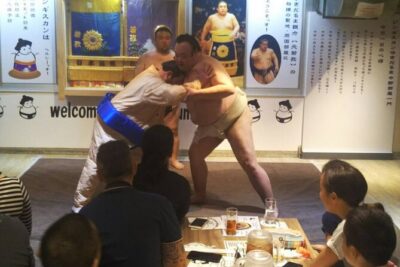
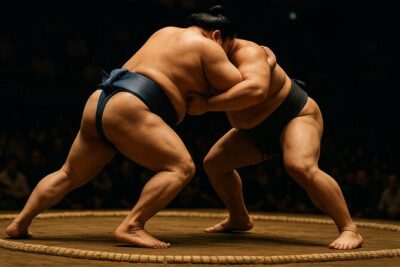
Tokyo Shinjuku Sumo Show & Experience with Photo
Read our review →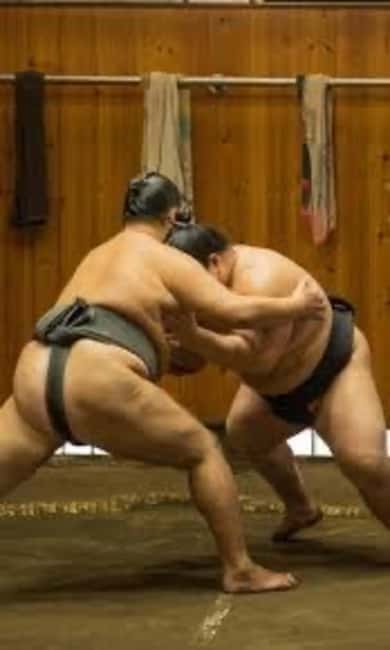
Tokyo Grand Sumo Tournament Viewing Tour with Tickets
Read our review →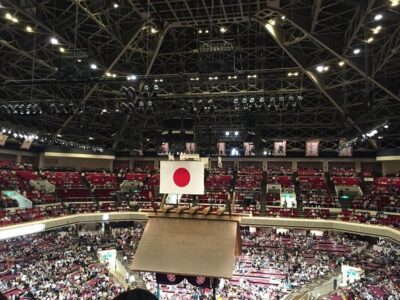

Luxury Sumo Show Experience & Japanese cuisine & Drink
Read our review →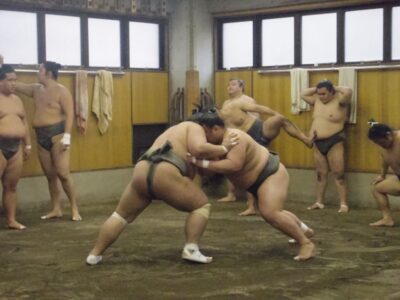
Browse the lists this tour appears in