
Review · SUMO EXPERIENCES IN TOKYO
Watch Sumo Morning Practice at Stable in Tokyo
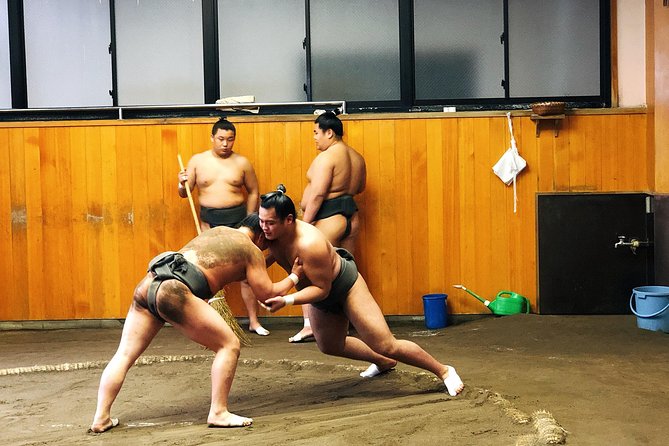
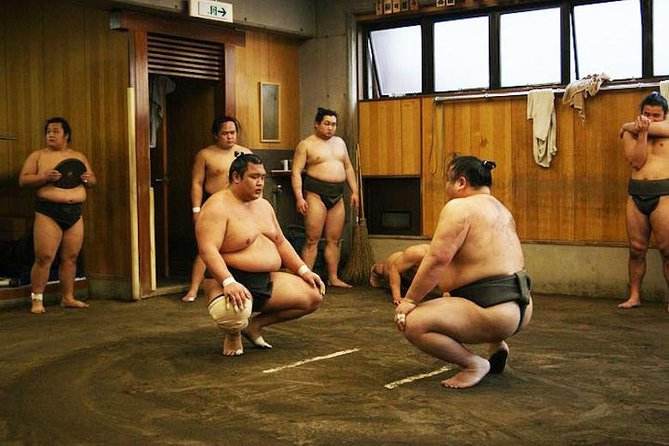
At a Tokyo sumo stable, you sit only a short distance from professional wrestlers as they stretch, slap their bodies, and crash into one another in the ring. This is not a staged show. It is a working practice, and the quiet, serious mood lets you see sumo as a demanding sport rather than a tourist performance.
I like the close view of the training, especially the slow build from warmups to hard sparring. I also like the rare access to a private tradition, with a small group and photographs with the wrestlers at the end.
The main catch is simple: you sit on the floor for a long time, often without much explanation. The exact stable, practice length, and ending time can change, so this works best when you treat it as observation, not entertainment on a fixed timetable.
Key points to know before booking
- Morning practice begins early: The available session runs from 8:00 to 10:00 in the listed operating periods, with the practice itself usually lasting 60 to 90 minutes.
- The exact stable is confirmed late: Conditions depend on the stable’s schedule, and the location can be confirmed only about one week before the visit.
- You watch real training: Expect stretching, warmups, technical drills, repeated exercises, and forceful sparring in the dohyo.
- Silence matters: Do not eat, talk loudly, or use a bright flash or intrusive camera sound.
- Floor seating is part of the experience: You need to sit for an extended period. A chair or stool may be available on request, but space and sightlines can be limited.
- Tournament months change the timing: In Tokyo tournament periods in January, May, and September, practice can shrink to 30 to 40 minutes while the price remains the same.
What happens from the Tokyo meeting point
You make your own way to the designated meeting point in Tokyo, then meet the guide and the rest of the group. From there, you go to the sumo stable for the morning session.
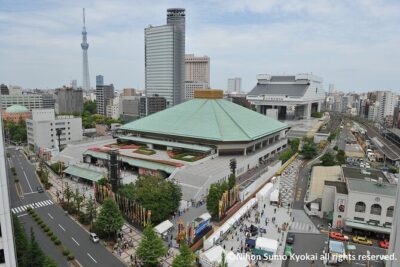
The published itinerary names Ryogoku Kokugikan as the stop, but the practice stable itself is not necessarily inside the stadium. The exact location depends on the stable’s schedule and is confirmed close to the date. That late notice can feel inconvenient, especially if you are arranging several Tokyo activities, but it reflects the way stable access works.
Give yourself extra time. One useful practical tip is to keep the address in Japanese if you use a taxi, since some drivers may not read an English address easily. Public transport and walking can work, but the final approach may be less obvious than the central meeting point suggests.
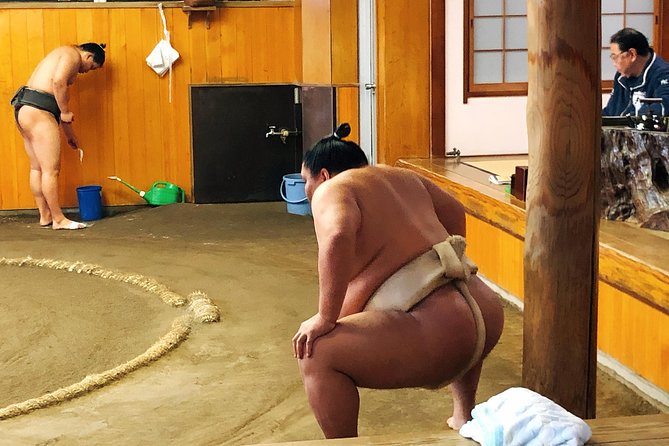
Once you arrive, the guide brings you inside and shows you where to sit. The group may be directed to a low platform or floor area beside the practice space. This is when your position matters. Arrive early enough to improve your chance of sitting near the front, because a rear position can make it hard to see between other people.
More Sumo Experiences in Tokyo
- Tokyo: Sumo Show and Dining Experience
★ 4.8 · 2,742 reviews - the SUMO show
★ 5.0 · 1,960 reviews - Tokyo Shinjuku Sumo Show & Experience with Photo
★ 5.0 · 1,750 reviews
The quiet rules inside the stable
Sumo practice is built around concentration. You are not entering an arena where spectators can chat, clap, or move around freely. The wrestlers are working, and visitors are expected to remain quiet and avoid distraction.
You should not eat during the practice. Keep conversation to a minimum, turn off bright flash photography, and avoid camera sounds that could interrupt the session. You also need to avoid pointing your feet toward the wrestlers, an important courtesy in a traditional setting.
This restraint is part of what makes the visit feel genuine. You are not being invited to interact with the athletes during training. You are being allowed to watch a serious morning routine at close range.
That can be rewarding if you enjoy observing detail. It can feel slow if you expect an explanatory tour or a series of dramatic matches. The activity gives you access, not a constant stream of commentary.
Stretching, warmups, and the first clash
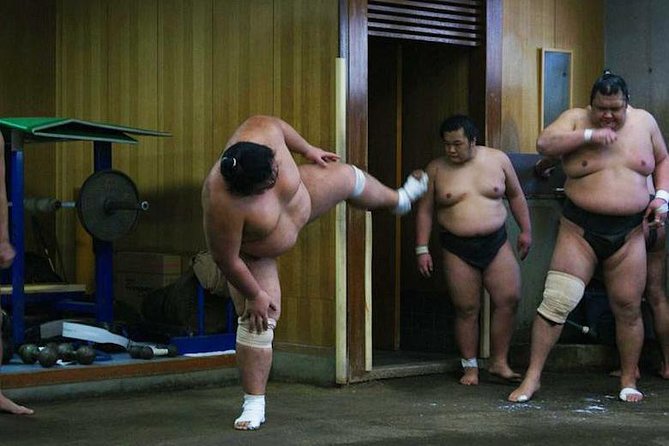
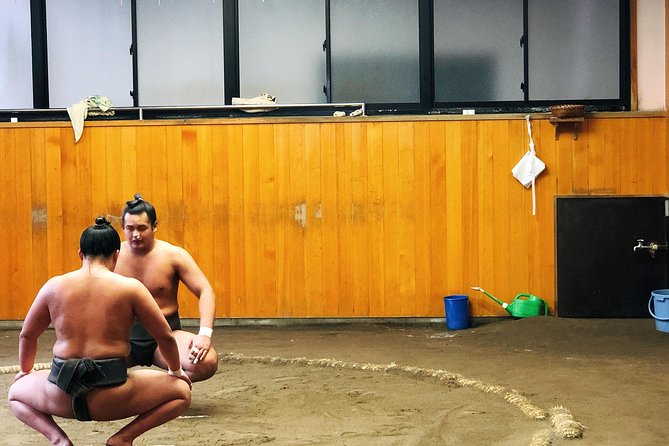
The practice usually begins with stretching and warmup exercises. You might see wrestlers repeat the same movements for a long time, working on balance, flexibility, footwork, and strength.
The repetition is useful to watch because it shows how much of sumo depends on preparation. The familiar movements are not filler before the main event. They are part of the training itself, and the wrestlers perform them with a serious, disciplined focus.
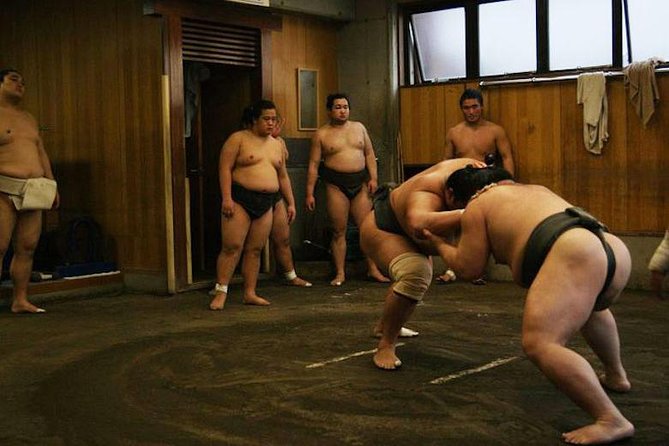
As practice builds, the wrestlers work through techniques and drills in the dohyo. The physical difference between watching a match from a seat in a stadium and sitting close to the ring is striking. You can see the effort behind each movement, hear the impact, and notice that the sport depends on timing as much as size.
The hardest part for some people is the lack of explanation. Several people who enjoyed the practice still wished for a short introduction to the rules, the hierarchy of wrestlers, and the meaning of the movements. If you want that context, read about sumo before you go. Watching Sanctuary was suggested as useful preparation, since it gives you a basic sense of the world you are about to enter.
Why the sparring is the highlight
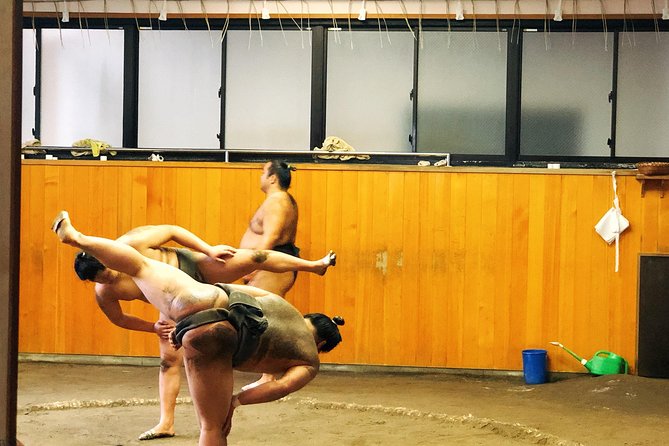
The practice often moves from controlled exercises to more forceful contact. This is where the visit becomes most memorable.
The impact can be startling. Sumo wrestlers are large athletes, but their strength is not just about weight. They push, brace, shift position, absorb force, and try to move an opponent off balance. From a nearby floor position, you get a better sense of the speed and violence of that first collision.
You may also see a more relaxed side of the stable between drills. Wrestlers can joke, tease one another, and offer advice to less experienced members. That contrast matters. The practice is demanding, but it is also a shared routine in which senior and junior wrestlers work around one another.
Do not expect every session to follow the same pattern. Some practices may include a long warmup and only a shorter period of contact work. Others may build toward extended sparring. The stable controls the timing, not the tour operator, so the activity cannot promise a particular number of bouts.
Same city, a different fixture:
- Tokyo: Sumo Show and Experience in Shinjuku
★ 4.8 · 1,001 reviews - Tokyo Grand Sumo Tournament Viewing Tour with Tickets
★ 5.0 · 692 reviews - Tokyo Sumo Wrestling Tournament Experience
★ 5.0 · 660 reviews - Tokyo:Luxury Sumo Show Experience & Japanese cuisine & Drink
★ 4.7 · 577 reviews
Photos after practice
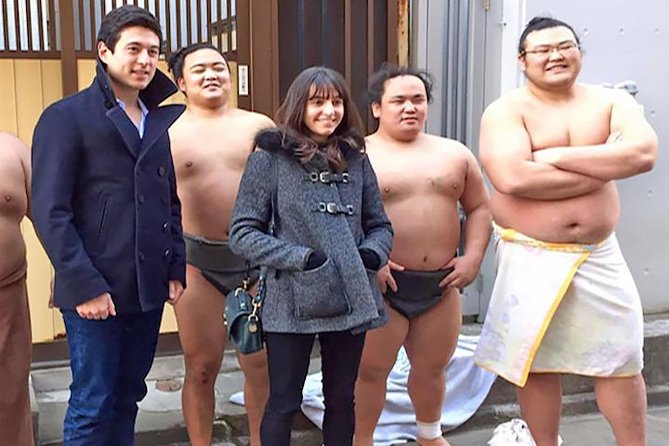
At the end, there is usually time for photographs with the sumo wrestlers. This is included in the admission and can be a nice closing moment after the quiet observation period.
The photo opportunity is not guaranteed to happen at a precise time. Practice can run long, and some people have missed the photographs when they needed to leave for another appointment. If this is an important part of the experience, do not schedule a tight connection, meal, or timed attraction immediately afterward.
The ending time varies each day. The listed morning window runs to 10:00, but the practice can last 60 to 90 minutes, and tournament-season sessions can be shorter. Think of the visit as a flexible morning activity rather than a perfectly timed one-hour appointment.
Sitting on the floor is the real test
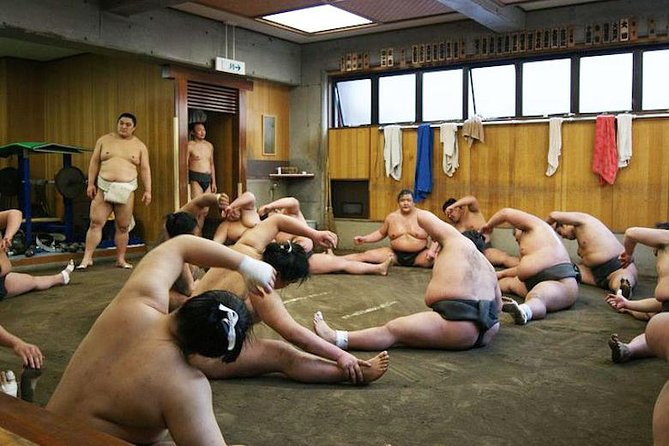
The practical drawback is the seating. You may sit on a tatami-covered floor or a low platform for much of the session. The surface can be hard, and keeping your legs tucked or folded becomes uncomfortable for many people.
A few chairs or stools may be available on request, but seating is limited and the view may be worse from a chair. One person found that a coach’s sitting cushion blocked most of the view, while another said the rear rows made it difficult to see around other people.
If you have back, hip, or knee problems, consider this carefully before paying. Ask in advance about a stool, but do not assume that a chair will provide both comfort and a clear view. The experience requires more physical patience than its short duration suggests.
You should also plan for quiet stillness. You cannot wander around to stretch your legs or change places whenever you like. For many people, the floor is manageable for an hour. For others, discomfort becomes the main memory of the visit.
Group size, guidance, and the value of explanation
The activity is listed for a maximum of 10 participants, which should help keep the visit personal. The meeting arrangement also removes some of the stress of finding an unfamiliar stable on your own.
The amount of guiding can vary. A strong guide can explain sumo history, the wrestler hierarchy, the rules, and what you are seeing. Guides named in individual arrangements have included Hiroko and Ricko, with Ricko also helping arrange transport for one group.
Do not assume, however, that the person meeting you will provide a full commentary throughout practice. Some departures function more like an escorted entry: someone meets you, brings you to the stable, explains basic behavior, and then lets the training speak for itself.
That is not necessarily a flaw. A silent stable is more respectful than a running tour narration. Still, if you want answers about every ritual, book with the expectation that you may need to prepare in advance or ask whether a guide who speaks your language will be present.
Price and what the $95.77 buys you
At $95.77 per person, this is not a cheap way to fill a spare hour in Tokyo. You are paying for arranged access to a stable, an entrance fee, assistance at the meeting point, and the chance to watch professional training from close range.
The value depends on your interest. If you already follow sumo, the price is easier to justify because this is a rare chance to see the work behind the tournament. You are not merely watching a short exhibition. You are seeing the warmups, rituals, repetitions, corrections, and physical effort that make competition possible.
If you know little about sumo, the experience can still work, but preparation becomes more important. Without context, a long set of repeated exercises may seem dull. With a basic understanding of rank, technique, and ritual, the same movements become easier to read.
Group discounts may be available, which helps families or larger parties. The minimum age is 13, so this is not designed for younger children. Teenagers who enjoy sport or Japanese culture may find the close contact and physical power gripping, but children expecting a show may lose interest during the slower sections.
Seasonal timing and the tournament problem
The session is available on Monday through Saturday during the listed operating periods, including February 2 to 14, March 31 to April 30, and May 1 to 9, 2026. Availability depends on the stable, so those dates do not guarantee that every day will have the same practice.
Tokyo hosts sumo tournaments in January, May, and September, generally around the middle to later part of the month. During those periods, many stables close or alter their schedules. The available practice may last only 30 to 40 minutes, even though you pay the regular price.
That shorter session can still offer a powerful look at the wrestlers, but you should not book expecting the usual 60 to 90 minutes. Tournament dates vary each year, and the stable’s conditions can be confirmed only about a week before the activity.
This is one reason the experience is booked well in advance by many people, yet the final details arrive late. You can reserve your place early, but you need to keep your plans flexible.
Who will enjoy this morning
I would choose this experience if you like sports training, traditional Japanese customs, photography, or quiet cultural encounters. It is especially well suited to someone who wants to see how athletes prepare, rather than only watching a polished competition.
It also works well for visitors who want a break from Tokyo’s major sights. The stable is a working place, not a museum. You are watching people train in their normal environment, with rules that require you to fit into the setting.
I would hesitate if you need a chair, dislike sitting still, or want a guide to explain every moment. I would also avoid scheduling it before something with a firm start time, since the ending can shift.
Bring patience, modest expectations, and a willingness to watch repetition. The best moments often come after the slow build, when the wrestlers begin sparring and the force of the sport becomes clear.
Should you book the sumo stable visit?
Book it if you want close-up access to real sumo practice and are comfortable treating the session as a quiet sporting observation. The physical power, old rituals, and intimate view can make this one of the more distinctive cultural activities in Tokyo.
Skip it if you expect a performance, need reliable timing, or cannot sit on the floor. Before booking, check the likely tournament dates, ask about stool availability if needed, and leave plenty of room in your morning schedule.
For the right visitor, the cost buys something difficult to arrange independently: a respectful look inside a private training world. Just remember that the wrestlers are there to work, not to entertain you.
FAQ
How long does the sumo morning practice last?
The practice usually lasts between 60 and 90 minutes. During Tokyo tournament periods in January, May, and September, it may last only 30 to 40 minutes.
What time does the activity take place?
The listed operating window is 8:00 AM to 10:00 AM, Monday through Saturday, during the available date periods. The exact ending time varies each day.
Where does the activity meet?
You make your own way to a meeting point in Tokyo. The exact stable and conditions are generally confirmed about one week before the visit.
Do I need to sit on the floor?
Yes. You should be able to sit on the floor for an extended period. A chair or stool may be available on request, but seating is limited and may not offer the best view.
Can I take photographs during practice?
You need to avoid bright flashes and intrusive camera sounds. There is time for photographs with the wrestlers at the end of the practice.
Is food or a drink included?
No. The activity does not include food or beverages.
What is the minimum age and group size?
The minimum age is 13. The activity has a maximum of 10 participants.
Just added for fans in Tokyo
- Tokyo: Grand Sumo Morning Training Tour★ 4.9 · 12 reviews
- Sumo Training Watching Experience in Tokyo★ 4.5 · 8 reviews
- Kickboxing & Body Training with EX-Pro Fighter★ 5.0 · 4 reviews
- Tokyo: Visit Sumo Morning Practice with English Guide★ 4.5 · 22 reviews
- Tokyo Sumo Experience with Live Show & Audience Challenge★ 5.0 · 38 reviews
- Tokyo Shinjuku Sumo Show and Experience with Drinks and Photo★ 4.0 · 21 reviews
- Tokyo Sumo History Tour with Chanko Nabe Lunch★ 5.0 · 3 reviews
- 【SUMO FESTIVAL】Tokyo Ginza: Sumo Show & Photo Experience★ 4.5 · 41 reviews
Sumo Experiences in Tokyo, compared.
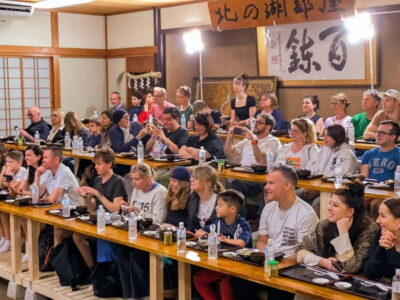
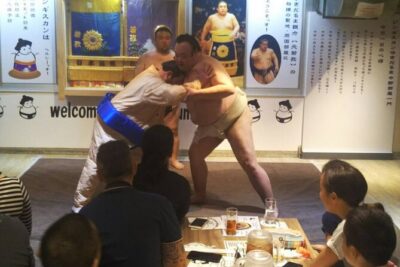
Tokyo Shinjuku Sumo Show & Experience with Photo
Read our review →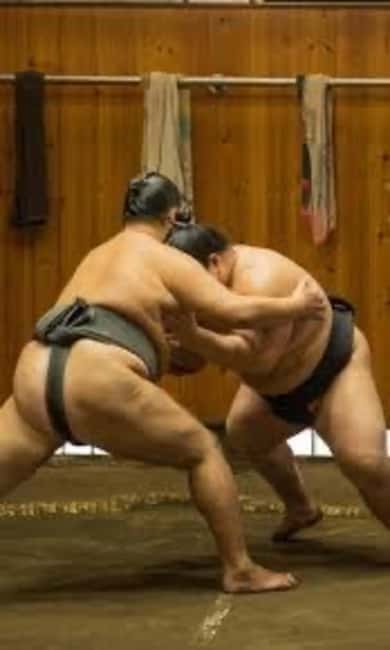
Tokyo Grand Sumo Tournament Viewing Tour with Tickets
Read our review →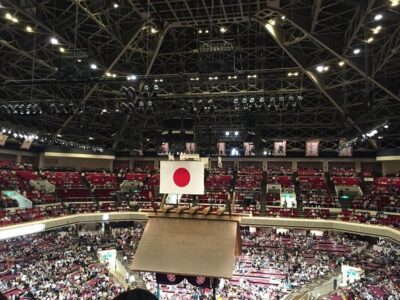

Luxury Sumo Show Experience & Japanese cuisine & Drink
Read our review →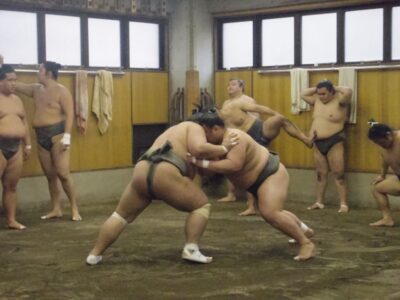
Browse the lists this tour appears in