
Review · SUMO EXPERIENCES IN TOKYO
Tokyo Grand Sumo Tournament Viewing Tour with Tickets
The real thrill here is not just watching two enormous athletes collide. It is seeing the complete sumo ritual at Ryogoku Kokugikan, where a short match carries centuries of ceremony, rank, and symbolism. An English-speaking guide helps you follow the action, then you have plenty of time to enjoy the tournament at your own pace.
I like the short introduction at Ryogoku View Hotel, which explains the rankings and customs before you enter the arena. I also like the practical ticket access. Grand Tournament seats can disappear quickly, and this tour removes much of the guesswork. The main consideration is that your seat may be far from the ring or separated from the rest of your group, especially in B seating.
Key points to know before you book
- The main event runs from afternoon into early evening: Depending on your ticket class, you enter for the later matches between 1:10 and 2:30 PM and remain until about 6:00 PM.
- A guide makes sumo easier to follow: The briefing covers traditions, rules, rankings, and the wrestlers, with guides such as Miki, Michiko, Halle, Holly, Edi, Ako, and Shin praised for lively explanations.
- The best action comes late in the day: Junior divisions compete earlier, while the Makuuchi division and any Yokozuna ring entrance arrive later.
- S and A seats include extras: You receive one yakitori snack, a drink, and a cheering towel. B seats include neither snack nor towel.
- You explore more than the matches: Allow time for the Sumo Museum, championship flags, wrestler displays, and ceremonial aprons.
- The tour ends at the arena: Your guide gets you inside and oriented, but you must make your own way onward after about 6:00 PM.
Why a sumo tournament is worth your Tokyo afternoon
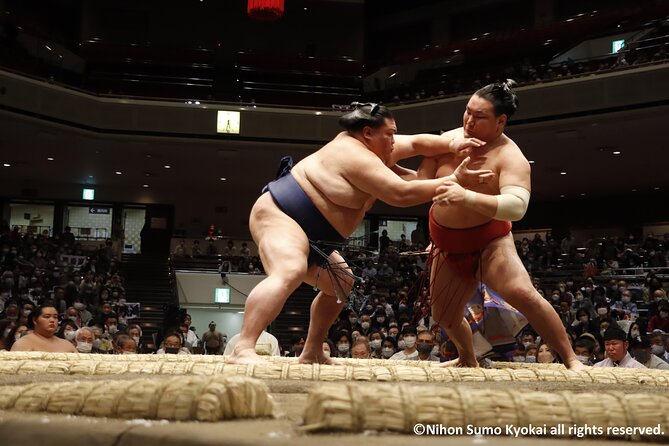
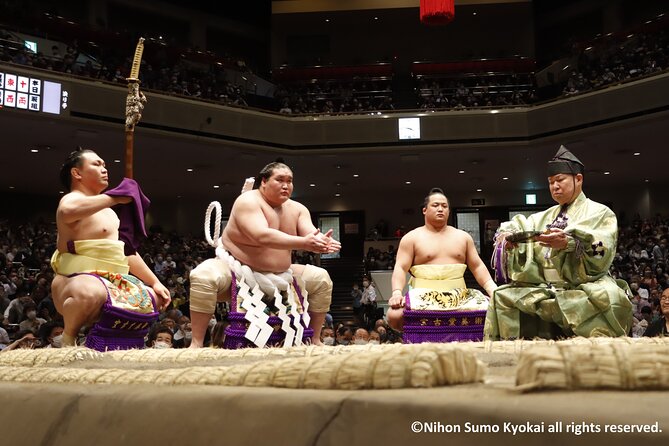
Sumo is easy to misunderstand if you see only a few clips online. The match itself may last seconds, but the lead-up matters just as much. Wrestlers enter, stamp their feet, purify the ring, face one another, and wait for the right moment. The crowd reacts to every gesture.
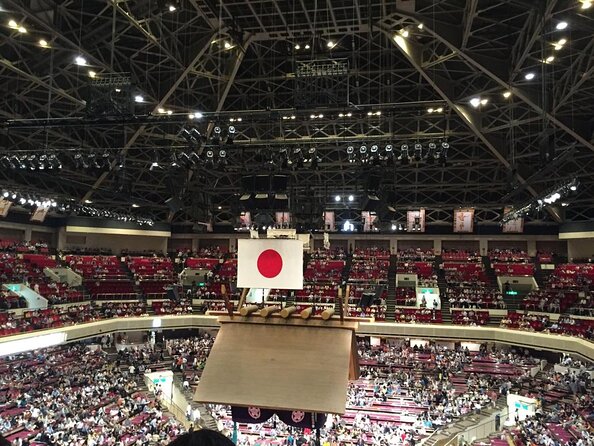
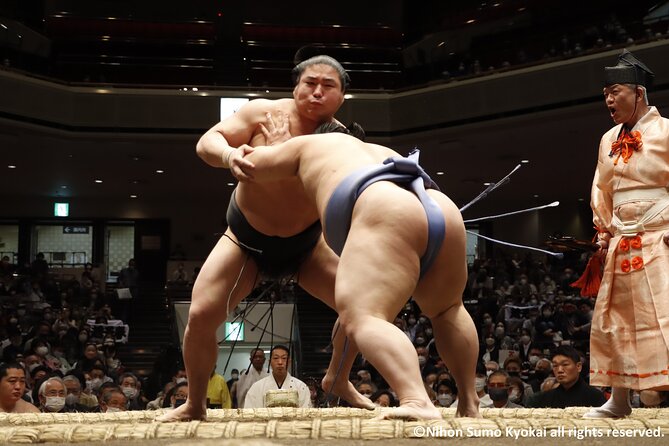
At Ryogoku Kokugikan, you see this ritual in its proper setting. The competition takes place in a ring made from clay and covered with a layer of sand. The atmosphere changes as the day progresses. Early bouts have their own interest, but the noise builds toward the top division matches around 4:00 PM.
This is a particularly good choice for a first sumo experience. The guide gives you enough background to understand why a wrestler’s rank matters, what the ceremonies mean, and why some bouts receive louder support. You still have free time to watch, take photographs in permitted areas, visit the museum, or browse the arena shops.
The experience has a strong practical advantage too. Grand Tournament tickets are difficult to obtain, especially if you are visiting Tokyo on fixed dates. At $124, the price is not cheap for four hours of entertainment, but it covers the ticket, a professional guide, printed information, and the useful service of getting you into a major event that may sell out rapidly.
More Sumo Experiences in Tokyo
- Tokyo: Sumo Show and Dining Experience
★ 4.8 · 2,742 reviews - the SUMO show
★ 5.0 · 1,960 reviews - Tokyo Shinjuku Sumo Show & Experience with Photo
★ 5.0 · 1,750 reviews
Starting at Ryogoku View Hotel
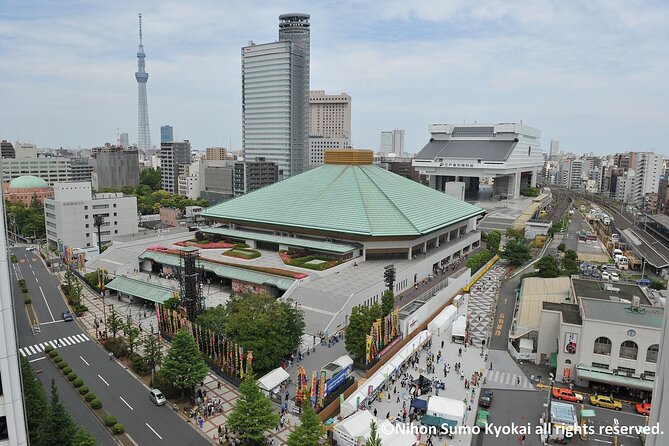
You meet your group and guide at Ryogoku View Hotel, at 2-chōme-19-1 Ryogoku. The hotel is near the stadium and close to public transportation, so it is a sensible meeting point. Arrive at least 10 minutes early. Late arrivals can lose their reservation, and the tour does not offer a forgiving start once the group has left.
The opening lecture lasts about 20 minutes. That may sound brief, but it gives you the basic framework: the six professional divisions, the importance of the Makuuchi division, wrestler rankings, the rules of a bout, and the customs surrounding the ring.
This short talk can be the difference between watching sumo as a strange spectacle and following it as a sport. The best guides add stories about individual wrestlers, their nicknames, and their backgrounds. Halle, Miki, Michiko, Holly, Edi, Ako, and Shin are among the guides specifically praised for making the sport easier and more fun to follow.
The quality of the talk can vary. One particularly unhappy customer found the lecture too short and poorly timed. That is a fair warning: do not book this expecting a long private lesson in sumo. The guide’s main job is to orient you and help you navigate the event, not provide continuous commentary for every minute of the afternoon.
You also receive an English sumo pamphlet and the day’s ranking list. Keep both. The ranking list is especially useful when you want to identify wrestlers as they enter, and the pamphlet gives you something to consult during the quieter stretches.
Inside Ryogoku Kokugikan
After the introduction, you walk to Ryogoku Kokugikan. The guide helps you find the entrance and seats, but the tour is not a fully escorted program from beginning to end. Once you are settled, you have free time, and the guide may sit nearby or check in during the tournament.
Take a look at the entrance lobby before heading to your seat. Championship flags and other items connected with successful wrestlers make this a popular place for photographs. The displays give you a quick sense of how much status and ceremony surround the sport.
The arena also contains a Sumo Museum. Its displays include items such as woodblock prints, folding screens, and other sumo-related objects. The museum is a useful stop if you arrive before the higher-ranked matches, though the available time can depend on your ticket class and the flow of the day.
Do not rush straight to your chair and stay there for four hours. The arena has shops on the first and second floors, along with food and refreshments. You cannot bring food or drinks, including alcohol, into Kokugikan, so buy anything you need inside.
The afternoon schedule and best moments
The exact access time depends on your seat category. S and A ticket holders are scheduled for the longer period from 1:10 to 6:00 PM. B ticket holders generally enter from 2:30 PM until 6:00 PM. These times give you different amounts of access to the earlier bouts and arena displays.
The key moments are:
- Around 3:40 PM, the Makuuchi wrestlers make their ceremonial entrance.
- A Yokozuna grand champion ring entrance follows when a Yokozuna is present.
- Around 4:00 PM, Makuuchi division bouts begin.
- Around 6:00 PM, the bow-twirling ceremony closes the day.
The Yokozuna entrance does not happen if no Yokozuna is competing. That is important to understand before booking. You are guaranteed the tournament, but not every particular ceremony or wrestler.
The top division is where the arena becomes most charged. Wrestlers wear kesho-mawashi, elaborate ceremonial aprons reserved for the Makuuchi division. These garments are more than colorful costumes. They signal status and connect modern professionals with old sumo traditions.
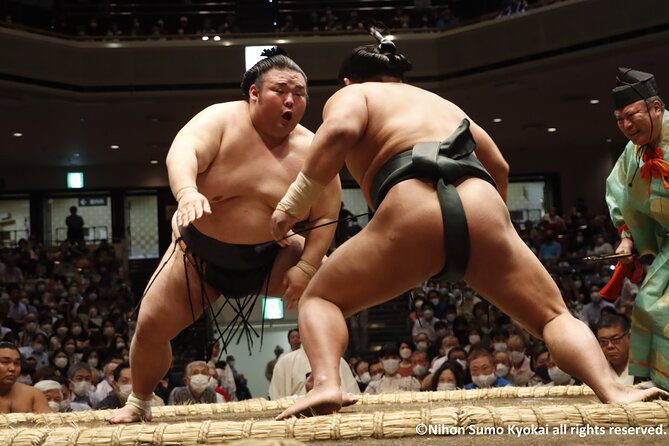
The bouts themselves are short, forceful, and tactical. A match can end with a push, a throw, a grip, or a wrestler stepping outside the ring. Your guide can explain what happened, but you will also begin to see the patterns yourself after a few matches.
The closing bow-twirling ceremony is a small but memorable detail. It gives the afternoon a clear finish and reminds you that sumo is a formal performance as well as a contest.
Same city, a different fixture:
- Tokyo: Sumo Show and Experience in Shinjuku
★ 4.8 · 1,001 reviews - Tokyo Sumo Wrestling Tournament Experience
★ 5.0 · 660 reviews - Tokyo:Luxury Sumo Show Experience & Japanese cuisine & Drink
★ 4.7 · 577 reviews - Tokyo: Sumo Morning Practice Viewing Tour
★ 4.8 · 570 reviews
Choosing between S, A, and B seating
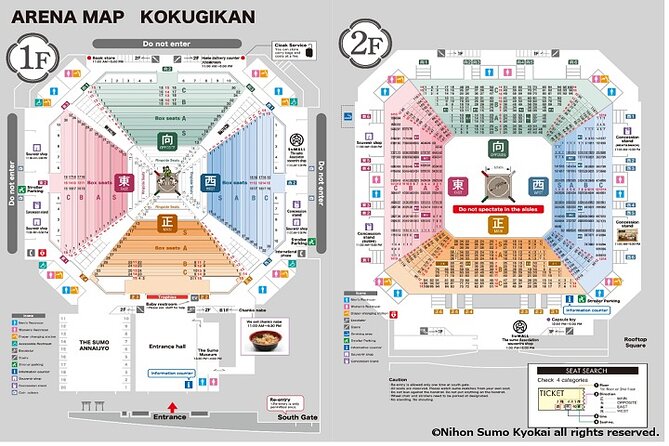
The tour includes second-floor chair seating, but the ticket class affects both your view and what comes with it. Seats may not be assigned until the day of the tour, and groups can be spread across the main, opposite, east, and west sides of the arena.
S and A seats include a light snack of Kokugikan specialty yakitori and one drink. You also receive one cheering towel. Specific colors or wrestler names cannot be requested. Vegetarian options are not available, and declining the yakitori does not create a refund or replacement.
B seats do not include the snack, drink, or towel. That does not remove the central benefit, which is access to the tournament, but it makes the price comparison important. If you care about the souvenir towel or want a small meal included, check the class carefully before paying.
Second-floor seating gives you a broad view of the ring and the ceremonies. It is not the same as sitting close to the dohyo. One person described A seating as a little far away but still easy to enjoy. I would make the same calculation: you gain a useful view of the whole arena, but you will not see every expression or movement as clearly as someone near the ring.
The tour operator may seat members of one booking separately. Large groups are divided, and groups of 20 or more are split into multiple reservations. If you are booking with friends in separate reservations, add their details in the remarks field as requested, but understand that seats still may not be together.
What the guide adds, and where the tour is limited
A strong guide is the main reason to choose this package over simply finding a ticket. Sumo has its own vocabulary, ranking system, and etiquette. Without help, you can still enjoy the physical contest, but you may miss why one bout matters more than another.
Guides such as Michiko and Miki have been praised for explaining the wrestlers, rituals, and schedule in a warm, engaging way. Halle and Holly are noted for sharing backstories and nicknames, while Edi and Shin helped groups follow the sequence of events. Ako was also praised for showing people around, helping with seats, and providing the included items.
The guide is not allowed to speak during certain formal moments. You may have to wait before taking your seat if a bout, speech, Makuuchi ring entrance, Yokozuna entrance, or ritual stomping ceremony is underway. This is spectator etiquette, not poor organization. The guide cannot provide explanations during those events either.
That pause can actually protect the experience. Entering while wrestlers are facing off or completing a formal entrance would distract people and break arena etiquette. Be ready to wait briefly, then enter quietly when directed.
The less positive side is consistency. One customer felt that the lecture was weak and that the tour offered little beyond a good ticket and pamphlet. If your main goal is expert, minute-by-minute instruction, this may not satisfy you. If you want a ticket, basic orientation, and help getting into the right place, it is a safer choice than going alone.
Food, luggage, children, and timing
The yakitori snack is included only with S and A seats. You can buy more food and drinks inside, but you cannot bring your own provisions through the doors. Plan to eat before the tournament or use the arena vendors.
Large suitcases cannot go into the seating area, and Ryogoku View Hotel does not store baggage for the tour. Put luggage in a coin locker or leave it at your accommodation before meeting the group. Strollers can be stored on the first or second floor, but they cannot enter the seating area, and the operator accepts no responsibility for theft.
Children up to age three may sit on a parent or guardian’s lap. They do not receive the snack, drink, or towel in S and A seating. Anyone under 15, or anyone not yet enrolled in middle school, must attend with a parent or guardian. Participants under 18 need written parental permission.
The activity suits most people physically, but the schedule is fixed. You need to reach the meeting point on time, remain in the arena for a long afternoon if you want the full program, and arrange your own transport after the event.
Is $124 good value?
The answer depends on how much you value convenience and ticket access. For a casual afternoon with a guide, $124 is a serious outlay. The short lecture alone would not justify it.
The calculation changes if you are visiting during a limited Tokyo stay and cannot risk missing the tournament. Your fee includes second-floor seating, a professional guide, an English pamphlet, a ranking list, and, with S or A seats, food and a towel. The guide also handles the confusing first steps at the venue.
The tour has a strong 4.8 rating from 697 reviews, with 96 percent recommending it. That does not guarantee a perfect guide or ideal seat, but it reflects a very reliable experience overall. The common thread is that the actual tournament is the prize, while the guide helps you get more from it.
Do not book this as a bargain. Book it as a practical way to secure a hard-to-get event ticket and understand what you are seeing.
Who should book this sumo experience?
I would choose this tour if you are new to sumo, have limited time in Tokyo, or want help with the customs and ranking system. It is also a good fit for families, provided you follow the seating and age rules.
It suits an independent visitor too, since you get free time rather than a guide talking nonstop. You can browse the museum, inspect the lobby displays, buy food, and return to the matches when you wish.
A serious sumo fan may prefer to arrange a ticket independently and choose an exact seat. This package cannot promise a particular section, and groups may be separated. You also cannot request a particular towel color or wrestler name.
Should you book it?
Book this tour if seeing a Grand Sumo Tournament is one of your Tokyo priorities and you want a clear introduction before the matches. The ticket access, English materials, and guide support make the cost easier to accept, especially for a first visit.
Skip it if you already understand sumo, need guaranteed seats together, or want close-range seating with a detailed private guide. For most first-timers, though, this is a well-organized way to see a distinctly Japanese event, learn enough to follow it, and leave Ryogoku with more than a few photographs.
FAQ
Where does the tour begin?
You meet your guide at Ryogoku View Hotel, 2-chōme-19-1 Ryogoku, Sumida City, Tokyo 130-0026. The hotel is near Ryogoku Kokugikan and public transportation.
Where does the tour end?
The tour ends at Ryogoku Kokugikan National Sumo Arena around 6:00 PM. You arrange your own onward transportation.
How long does the experience last?
The total experience lasts about four hours. The schedule includes a 20-minute sumo lecture and time at the arena until around 6:00 PM.
What time do the different ticket classes enter?
S and A ticket holders generally attend from 1:10 to 6:00 PM. B ticket holders generally attend from 2:30 to 6:00 PM.
What is included with the ticket?
The package includes second-floor chair seating, a professional guide, an English sumo information pamphlet, and a sumo-ranking list. S and A seats also include one yakitori snack, one drink, and one cheering towel.
Does B seating include food or a towel?
No. The yakitori, drink, and cheering towel are provided only with S and A seating.
Can I bring food or drinks into the arena?
No. Food and drinks, including alcohol, cannot be brought into Kokugikan. You can purchase refreshments from vendors inside.
Can I choose my exact seat?
Seats may not be designated in advance. Groups may be seated separately, and seating can be spread across the main, opposite, east, and west sides.
Can I bring luggage or a stroller?
Large suitcases cannot go into the seating area, and luggage cannot be stored at the meeting hotel. Strollers can be stored on the first and second floors but cannot enter the arena seating area.
Just added for fans in Tokyo
- Tokyo: Grand Sumo Morning Training Tour★ 4.9 · 12 reviews
- Sumo Training Watching Experience in Tokyo★ 4.5 · 8 reviews
- Tokyo Sumo Experience with Live Show & Audience Challenge★ 5.0 · 38 reviews
- Kickboxing & Body Training with EX-Pro Fighter★ 5.0 · 4 reviews
- Tokyo: Visit Sumo Morning Practice with English Guide★ 4.5 · 22 reviews
- Tokyo Shinjuku Sumo Show and Experience with Drinks and Photo★ 4.0 · 21 reviews
- Tokyo Sumo History Tour with Chanko Nabe Lunch★ 5.0 · 3 reviews
- 【SUMO FESTIVAL】Tokyo Ginza: Sumo Show & Photo Experience★ 4.5 · 41 reviews
Sumo Experiences in Tokyo, compared.
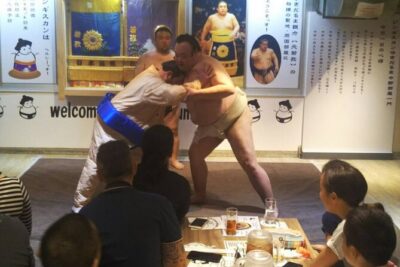
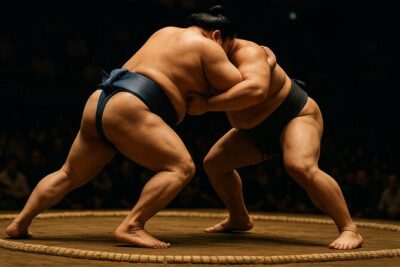
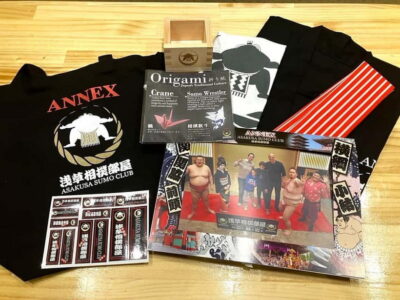
Tokyo Shinjuku Sumo Show & Experience with Photo
Read our review →
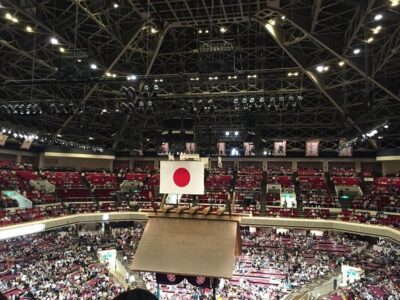
Luxury Sumo Show Experience & Japanese cuisine & Drink
Read our review →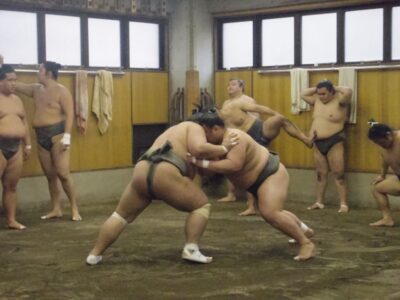
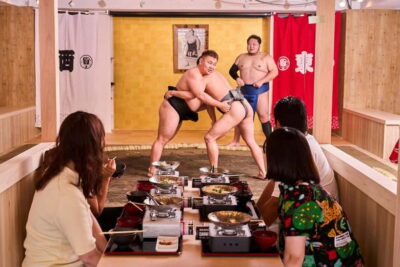
Tokyo Sumo Experience: Chanko & Mochi with a Former Pro
Read our review →Browse the lists this tour appears in