
Review · SUMO EXPERIENCES IN TOKYO
Exclusive Sumo Morning Practice in Tokyo with Photo Opportunity
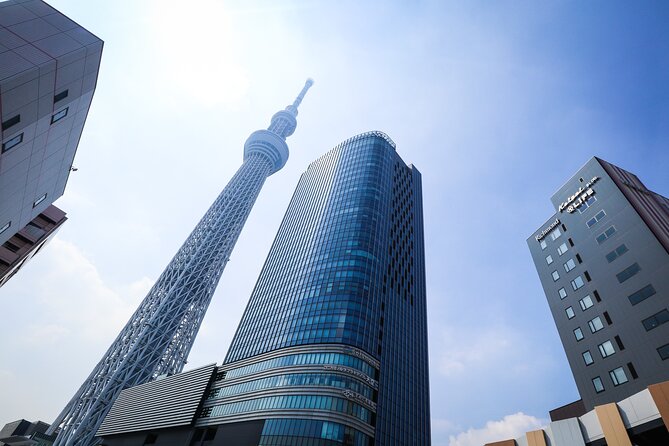
Tokyo sumo practice is not a staged cultural show. Inside a stable near Tokyo Skytree, you watch young wrestlers train at close range, repeating powerful shoves, slaps, and throws with serious focus. It is an unusually direct look at a part of Japanese life that even many locals never see.
I like the small maximum group of 10, which makes it easier to hear the guide and follow the action. I also like the chance for photos with the wrestlers and their stable after practice. The main drawback is seating: it is first come, first served, and a late arrival may sit two or three rows back.
Key points at a glance
- Morning practice near Tokyo Skytree: Meet at Oshiage Station at 8:00 am, then walk or travel to one of the nearby stables.
- Real training, not a performance: Watch warmups and sparring as part of the wrestlers’ regular practice.
- Guides add useful context: Hana, Kentake, and Yuki have all led sessions, explaining sumo customs, history, and philosophy in English.
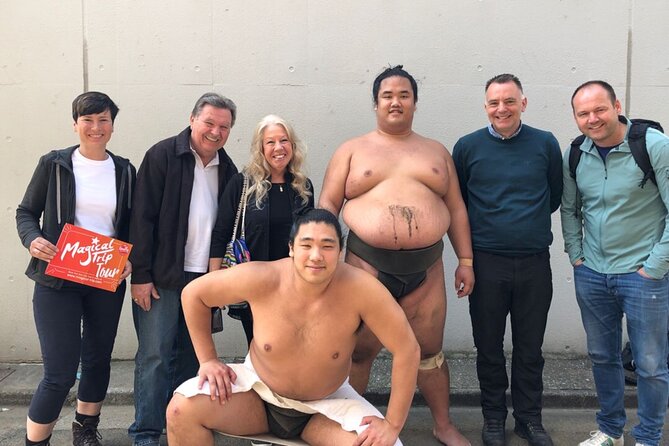
- Photo opportunity included: You may photograph the wrestlers and pose with them and the stable at the end.
- Short, focused visit: The activity lasts about two hours, though the actual practice can feel repetitive after roughly an hour.
- Seating requires an early start: A stable may host several tour groups, so front seating is not guaranteed.
Seeing sumo before the city wakes up
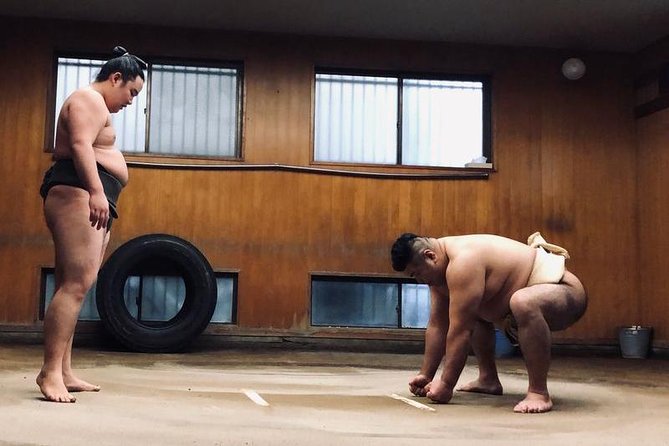
The appeal here is simple: you get close to serious athletes during their working routine. Sumo wrestlers do not merely pose in costumes or demonstrate a few ceremonial moves. You watch them warm up, prepare, and spar with one another under the eye of the stable’s leadership.
That difference matters. A tournament is polished and public, with packed crowds, formal matches, and a full day of ceremony. Morning practice is quieter and more intimate. You see the concentration between bouts and the physical cost of each exchange. The clashes can be startlingly forceful, especially when a wrestler drives another across the ring.
The setting also gives the activity a strong sense of place. You are visiting a sumo stable near Tokyo Skytree, not a theater built for tourists. The experience is limited to the tatami areas, and you must respect the boundaries inside the stable. Those restrictions are part of the visit, not an annoyance to work around.
More Sumo Experiences in Tokyo
- Tokyo: Sumo Show and Dining Experience
★ 4.8 · 2,742 reviews - the SUMO show
★ 5.0 · 1,960 reviews - Tokyo Shinjuku Sumo Show & Experience with Photo
★ 5.0 · 1,750 reviews
Meeting at Oshiage Station at 8:00 am
Your morning begins at the taxi stand inside the station roundabout at Oshiage Station, in Sumida City. The listed meeting point is Japan, 131-0045 Tokyo, Sumida City, Oshiage, 1-chōme 1, 駅ロータリー内. The activity returns to this same meeting point at the end.
The central location is useful if you are staying elsewhere in Tokyo and want to make this a short morning outing. Oshiage is also associated with Tokyo Skytree, so the area is easy to pair with other sightseeing later in the day. Still, give yourself time to find the correct taxi stand. One guide, Hana, has been praised for a strong presentation, but the meeting place has caused some initial confusion for at least one person.
This is an 8:00 am start, so plan your morning carefully. Arriving late can affect your seat inside the stable. It can also mean joining the group after the practice has already begun, when quiet movement is especially important.
After meeting your guide, you visit one of the sumo stables around Tokyo Skytree. The exact stable is not named in advance in the tour details, so you should think of this as access to a working stable in the area rather than a visit to one fixed public attraction.
What you see inside the sumo stable
The practice begins with warmups and preparation before moving into sparring. You might see wrestlers work through repeated movements, collide at close range, and reset for another bout. The rhythm can be intense, but it is also repetitive by design. Training is about discipline and repetition, not constant entertainment.
That is one of the most valuable parts of the experience. You get a better sense of how much effort goes into a sport often reduced to a simple image of large men pushing one another. The wrestlers are highly trained athletes, and the session shows their strength, balance, timing, and ability to keep working under pressure.
The guide helps you read what is happening. Kentake has been singled out for fluent English and for explaining sumo history and the wrestlers’ background in clear detail. Yuki has also been praised for explaining the sport’s philosophy and context, while Hana has been described as enthusiastic and well informed. Guide assignments can vary, so you may meet one of these guides or another member of the team.
You should expect a quiet viewing experience. The stable is an active training space, and all areas are off-limits except the tatami flooring areas. Follow the guide’s instructions, stay within the permitted space, and avoid treating the practice like a free-roaming photo session.
Why the close distance matters
A tournament gives you the full spectacle of sumo. A practice session gives you proximity. From close range, the sport feels less like a grand event and more like demanding daily work.
You can see how concentrated the wrestlers are before they make contact. You can also appreciate the contrast between their size and their speed. The strongest moments are often not the biggest collisions, but the short seconds when a wrestler braces, shifts position, or tries to force an opening.
This closeness also makes the experience more personal. The wrestlers are young men training together, not distant figures on a television screen. The activity offers a chance to take photos of them and, at the end, pose with them and the full stable, including the sensei. That photo opportunity is a major part of the value, though it should be handled with care and according to the stable’s instructions.
Do not expect every moment to be dramatic. One hour of practice may be enough for some people, since repeated bouts can begin to feel similar. If you are fascinated by athletic training, discipline, or Japanese customs, you may happily watch longer. If you mainly want a quick look and a few memorable photos, the two-hour schedule still gives you plenty of time.
Same city, a different fixture:
- Tokyo: Sumo Show and Experience in Shinjuku
★ 4.8 · 1,001 reviews - Tokyo Grand Sumo Tournament Viewing Tour with Tickets
★ 5.0 · 692 reviews - Tokyo Sumo Wrestling Tournament Experience
★ 5.0 · 660 reviews - Tokyo:Luxury Sumo Show Experience & Japanese cuisine & Drink
★ 4.7 · 577 reviews
Seating and the importance of arriving early
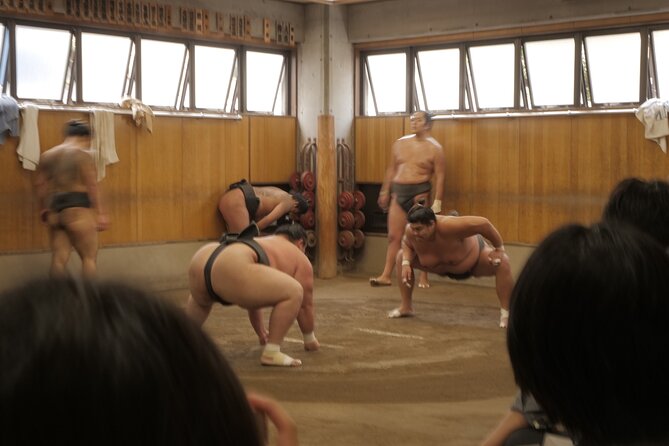
Seating is first come, first served. The stable is often visited by several tour companies, so the group may not have a front-row position waiting for every person. If you arrive late, you may be seated two or three rows from the front.
That does not make the activity a poor choice, but it changes what you will see. From farther back, the wrestlers remain visible, yet close details of footwork and facial concentration may be harder to catch. Your photos may also be less direct.
For the best chance at a close view, arrive at the Oshiage meeting point before 8:00 am and stay with the group. Since this is a small activity with a maximum of 10 people, the guide can usually give personal explanations, but the group still shares the available space with other tour groups.
The seating rule is worth considering before you book. If front-row access is essential to you, this experience cannot promise it. If you mainly want genuine access to a practice and can accept a seat a little farther back, the arrangement is reasonable.
What the guide adds to the morning
Without context, sumo practice can be impressive but difficult to interpret. The guide turns physical action into a cultural experience by explaining the sport’s customs, background, and meaning.
The best guidance here appears to be practical rather than academic. You learn what you are seeing and why it matters, while still having time to watch the athletes. Clear English is especially useful because the practice itself is not narrated continuously. You need explanations before or between periods of action, not a running commentary over every clash.
Kentake has been praised for fluent English and for sharing background about sumo history and individual wrestlers. Yuki has been noted for explaining the philosophy behind the practice, and Hana for her enthusiasm and strong understanding of sumo customs. These comments point to an important booking benefit: the quality of the morning depends partly on how well the guide connects the rules and rituals to what is happening in front of you.
This is also a good activity for people who are new to sumo. You do not need to know the tournament divisions, rankings, or technical vocabulary before arriving. The guide can help you understand the basic setting and make sense of the physical training.
Photos, manners, and stable rules
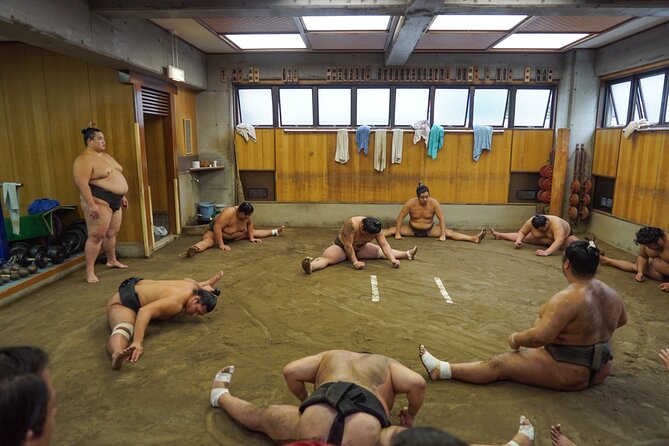
The tour includes the chance to photograph the wrestlers during practice and pose with them afterward. That makes it more memorable than simply watching from a public distance, especially if you are building a short Tokyo itinerary around local sports and culture.
Photography is still subject to the stable’s rules. The information provided specifically limits access to the tatami areas, so you should not move around the building to find different angles or enter restricted sections. Follow directions about where to sit, when to take photos, and how to approach the wrestlers at the end.
The photo with the full stable and sensei can be a special closing moment. It also calls for a respectful attitude. These are athletes at work, and the practice is not designed solely for the camera. Keep your attention on the training, then use the designated photo opportunity when it is offered.
Is $99.10 a fair price?
At $99.10 per person, this is not a cheap quick look at sumo. The value comes from access rather than length. You are paying for a small-group visit to a working stable, a guide who explains the customs and setting, and the chance to take photos with the wrestlers.
The maximum group size of 10 helps justify the price. A crowded walking tour could explain sumo from the street, but it would not give you the same close view of practice or the same chance to ask questions. The included photo opportunity adds further value for anyone who wants a lasting record of the visit.
The price is easier to justify if you will not attend a formal tournament. A tournament offers more matches and larger production value, but it requires a different schedule and availability. This morning visit gives you a taste of the sport even when no tournament is planned.
I would think twice if you are looking for two hours of nonstop action. Practice has repeated movements, and one hour may feel sufficient once you understand the pattern. The activity suits you best if you value access, context, and cultural detail more than a constant stream of new scenes.
Weather and practical comfort
Tokyo summers can be hot and humid. Bring water and wear a hat to reduce the risk of heat-related illness, especially during the walk or wait before entering the stable.
The morning timing helps you avoid the worst heat of the day, but it does not remove the problem. Dress for summer conditions and keep your water close. The activity is near public transportation, and most people can participate, but the supplied information does not describe specific mobility arrangements inside the stable, so contact the provider if you need detailed accessibility guidance.
The tour uses a mobile ticket, and confirmation is received at booking. Free cancellation is available if you cancel at least 24 hours before the 8:00 am start time. Cancellations or changes made less than 24 hours before the start are not accepted for a refund.
Who should book this sumo experience?
I would recommend it to first-time Tokyo visitors who want something more personal than a standard landmark stop. It is also a good match for sports fans, people interested in Japanese customs, photographers, and anyone who wants a compact morning activity near Tokyo Skytree.
Families and mixed-age groups may find the short format helpful, provided everyone can sit quietly and follow the stable’s rules. The small group makes it easier to stay together and hear the guide.
You should be comfortable with several limits. You cannot wander through the stable, front seating is not guaranteed, and the practice may become repetitive. If you need a guaranteed front-row seat or a full tournament with formal bouts, choose a tournament instead.
Should you book it?
Book this if you want to see sumo as working discipline rather than just a spectacle. The close view of warmups and sparring, useful explanations from guides such as Kentake, Yuki, or Hana, and the chance to pose with the stable make this a strong two-hour use of a Tokyo morning.
Arrive early, accept that seating is shared, and bring water in hot weather. At $99.10, the experience is best value for anyone who cares about access and context. If you only want dramatic matches and nonstop action, the repetition of practice may disappoint you.
FAQ
Where does the sumo morning practice begin?
The meeting point is the taxi stand inside the station roundabout at Oshiage Station in Sumida City, Tokyo.
What time does the activity start?
The activity starts at 8:00 am.
Where does the sumo practice take place?
You visit one of the sumo stables around Tokyo Skytree. The specific stable is not named in the provided details.
How long does the experience last?
The activity lasts approximately two hours.
How many people can join the group?
The maximum group size is 10 people.
Can I take photos with the sumo wrestlers?
You have the chance to photograph the wrestlers and pose for photos with them and the stable, including the sensei, at the end of the practice.
Is seating guaranteed near the front?
No. Seating is first come, first served. Late arrivals may be seated two or three rows from the front.
Can I cancel for a full refund?
Yes. You can cancel at least 24 hours before the experience start time for a full refund. Cancellations or changes made less than 24 hours before the start are not accepted.
Just added for fans in Tokyo
- Tokyo: Grand Sumo Morning Training Tour★ 4.9 · 12 reviews
- Sumo Training Watching Experience in Tokyo★ 4.5 · 8 reviews
- Kickboxing & Body Training with EX-Pro Fighter★ 5.0 · 4 reviews
- Tokyo: Visit Sumo Morning Practice with English Guide★ 4.5 · 22 reviews
- Tokyo Sumo Experience with Live Show & Audience Challenge★ 5.0 · 38 reviews
- Tokyo Shinjuku Sumo Show and Experience with Drinks and Photo★ 4.0 · 21 reviews
- Tokyo Sumo History Tour with Chanko Nabe Lunch★ 5.0 · 3 reviews
- 【SUMO FESTIVAL】Tokyo Ginza: Sumo Show & Photo Experience★ 4.5 · 41 reviews
Sumo Experiences in Tokyo, compared.
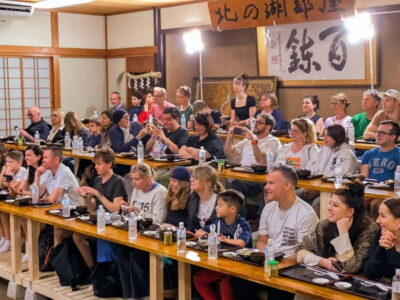
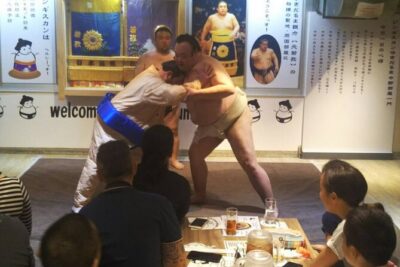
Tokyo Shinjuku Sumo Show & Experience with Photo
Read our review →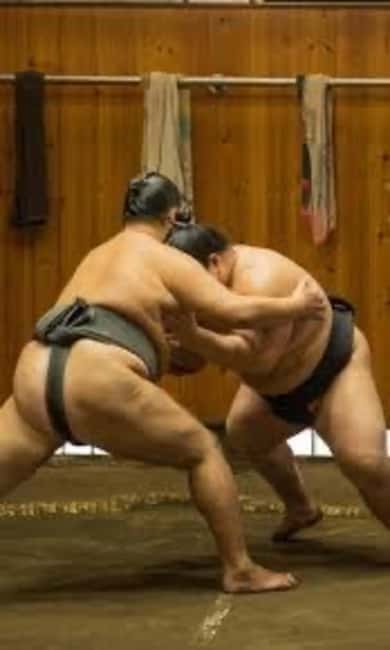
Tokyo Grand Sumo Tournament Viewing Tour with Tickets
Read our review →

Luxury Sumo Show Experience & Japanese cuisine & Drink
Read our review →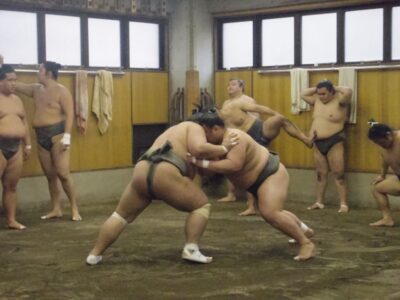
Browse the lists this tour appears in