
Review · SUMO EXPERIENCES
Nagoya: Grand Sumo Tournament Tour
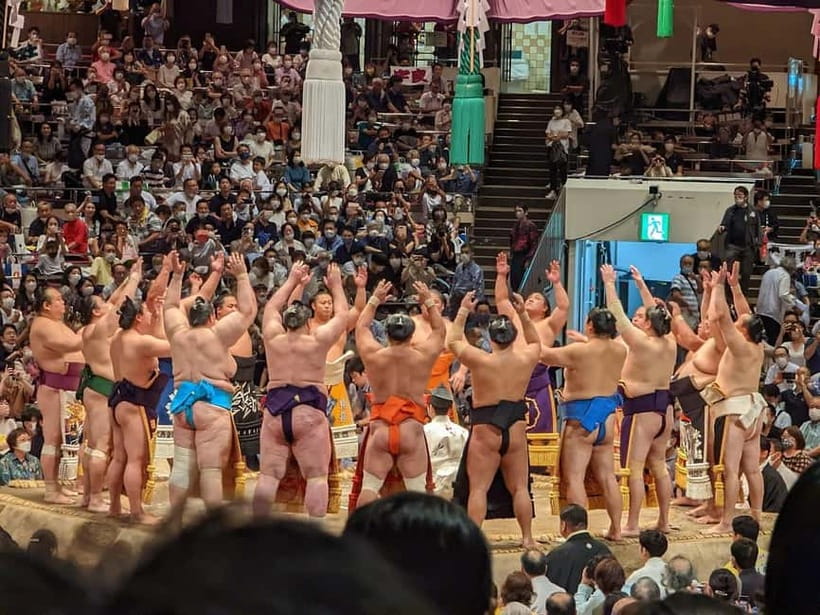
Nagoya’s grand sumo tournament is far more rewarding when you know what you’re watching. I like the live English commentary and the way the guide explains small rituals, wrestler backgrounds, and match tactics as they happen. I also like the cheering towel, a simple touch that gives you a wrestler to support and makes the arena feel much less formal.
The main drawback is price: $225 per person is a serious outlay if all you want is a seat. You are paying for the Sumo expertise, English materials, guided castle walk, and help with the whole experience, not merely admission. The schedule also begins with top-division bouts at 3 p.m., so it is aimed at the best part of the tournament rather than a full day in the arena.
What makes this Nagoya sumo tour worth considering
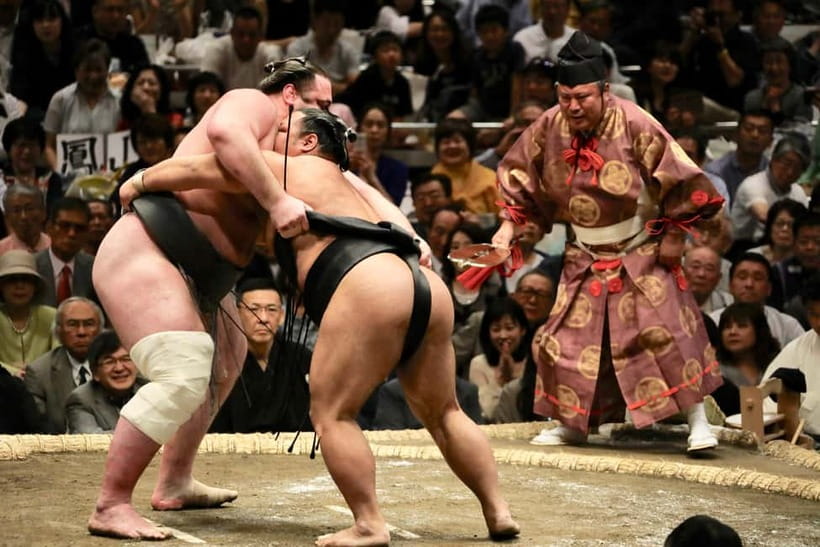
- Top-division action from 3 p.m.: You watch the highest-level bouts for about three hours, when the tournament reaches its most exciting stage.
- Live commentary through an earphone system: You can hear the guide clearly while watching from a distance.
- English wrestler profiles: Photos and translated profiles help you recognize the competitors and follow the tournament.
- A personal cheering towel: You support a particular wrestler and learn when and how to wave the towel.
- Nagoya Castle before the matches: The optional walk adds architecture, politics, and Japanese history to the day.
- Easy access from Osaka and Kyoto: Nagoya is about 50 minutes by train from Osaka and 34 minutes from Kyoto.
Why the 3 p.m. start is a smart choice
Sumo tournaments begin earlier in the day, but the top division is the main event. This tour starts watching at 3 p.m., giving you about three hours of the strongest bouts rather than asking you to sit through a long run of lower-division matches.
That timing matters. Sumo is built around ceremony and rhythm, but the pace can feel slow if you do not yet understand the sport. Watching for hours before the top division begins may leave you tired before the matches most people came to see. This plan saves your attention for the wrestlers at the highest level.
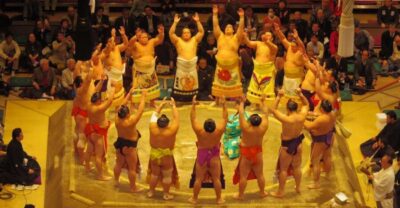
You will still see the customs that make sumo special: the formal movements, the charged silence before a bout, the stomping and ritual gestures, and the sudden speed of the contest itself. A match may last only a few seconds, but the preparation gives it weight.
I think the three-hour window is especially sensible for a first visit. You get enough time to settle into the rules without turning the experience into an endurance test. If you want to see every division from the first bout of the day, this is not the right format. If you want the most important matches with guidance in English, it makes good sense.
More Sumo Experiences in Japan:
- Tokyo: Sumo Show Experience with Chicken Hot Pot and a Photo
★ 4.8 · 6,678 reviews - Tokyo: Sumo Show and Dining Experience
★ 4.8 · 2,742 reviews - the SUMO show
★ 5.0 · 1,960 reviews
Nagoya Castle gives the day a historical opening
The optional Nagoya Castle walking tour places the sumo in a wider setting. Nagoya grew around the castle built by the Tokugawa clan in the early 17th century, during the period when the family ruled Japan for almost three centuries.
A local guide explains why the castle was built, how the Tokugawa family managed feudal lords who had once opposed them, and how the structure worked as a fortress. You are not simply looking at walls and roofs. You are learning how political power, military planning, and architecture came together in one place.
The guide also discusses building techniques and the castle’s defensive design. That helps you notice practical details rather than treating the site as a decorative backdrop. The tour describes the castle’s effectiveness as a fortress and dungeon, which gives the visit a more grounded feel.
The Honmaru Palace is the visual highlight. Its interiors use valuable hinoki cypress, decorative metal fittings, and detailed artwork on walls, ceilings, and sliding doors. You will want comfortable shoes because the day includes walking, and the castle portion comes before several hours of sitting at the tournament.
The castle stop is optional, so clarify the day’s exact arrangement when booking or meeting your guide. Its inclusion adds real value for anyone who wants more than an isolated sporting event. If you have already spent a full day at Nagoya Castle, the sumo portion remains the main reason to book.
Learning the rules before the first major bout
Sumo can look simple at first: two wrestlers, one ring, and a contest decided when someone touches the ground or steps outside. That basic idea hides a great deal of detail.
Your guide explains the rituals and traditions that are easy to miss when you attend alone. You learn what is happening before the bout begins, why the wrestlers perform certain movements, and how the match fits into the larger tournament.
This kind of explanation is useful because the action is fast. A bout can be over before you have worked out what caused the win. With live commentary, you can listen as you watch instead of trying to read a guidebook several rows away from the ring.
The guide also helps with the personalities and backgrounds of the wrestlers. Guides such as Keiko, Yuki, Mari, Yummi, and Sunny Yoko have been praised for bringing energy and clear explanations to the afternoon. Their approach may vary, but the important point is that the experience is led by someone who follows sumo closely rather than simply escorting you to a seat.
The small group format should also make it easier to ask questions. No group size is specified, so I would not assume an intimate private tour. Still, the earphone system means the guide can speak while you watch without forcing everyone to gather tightly around one person.
The wrestler pamphlet turns unfamiliar faces into a contest
You receive a pamphlet with photos and English profiles of the wrestlers. This may sound like a minor extra, but it solves one of the biggest problems for first-time spectators: knowing who is who.
Your guide uses the pamphlet during the bouts, helping you follow the competitors as the tournament progresses. Instead of watching two unfamiliar figures collide, you can connect names, faces, rankings, and individual stories to the action.
You also receive a sumo booklet covering the sport more broadly. Together, the booklet and profiles give you something useful to consult during pauses. They are especially helpful if you know little about sumo before arriving.
The material is not a replacement for watching. Its value is that it keeps your attention on the ring. You are not left searching on your phone for basic information while a match is under way.
More Sports Experiences in Japan:
- Tokyo Shinjuku Sumo Show & Experience with Photo
★ 5.0 · 1,750 reviews - Tokyo Sumo Entertainment Show with Chicken Hot Pot and Photo
★ 5.0 · 1,205 reviews - Tokyo: Sumo Show and Experience in Shinjuku
★ 4.8 · 1,001 reviews - Tokyo: Sumo Tournament Tour with Chair Seat Tickets
★ 4.6 · 753 reviews
The cheering towel adds a little team spirit
The guide gives you a towel connected to a particular wrestler and shows you when to use it. This is a clever way to make a traditionally formal sport more welcoming to newcomers.
You do not need to know all the wrestlers in advance or arrive with a lifelong favorite. You are given a reason to pay attention to one competitor, then join the group in cheering at the right moment. That small act can change the mood from passive observation to shared participation.
It also gives families and first-time spectators an easy entry point. You can watch the technique and rituals while keeping an eye out for your wrestler’s next bout. The activity does not turn sumo into a noisy stadium sport, but it adds a friendly sense of occasion.
The towel is not a substitute for understanding the sport. Its purpose is simpler: it helps you feel involved. I would consider it one of the tour’s more thoughtful extras because it costs little in complexity but adds plenty of fun.
Why the earphone system matters in the arena
The earphone guide system is one of the most practical features here. Your guide provides real-time commentary through a headset, so you can follow the explanation even when the group is spread out or the arena is busy.
That makes a difference in a live event. You do not have to choose between watching the ring and watching the guide. You can keep your eyes on the action while listening to the explanation.
The system also prevents the guide from having to speak loudly over the crowd. You get a clearer connection to the commentary, and the people around you are less likely to be disturbed.
There is still a trade-off. Listening through a headset can make the experience feel slightly less spontaneous than simply reacting to the crowd around you. Some people prefer to absorb a sport without interpretation. For a first sumo tournament, though, the extra context is likely worth it, particularly during the unfamiliar ceremonies and rapid bouts.
Seats, timing, and the value of $225
The tour includes Chair S or Chair A seats. These are chair seating categories, not floor-level boxes, so do not book expecting a private tatami-style room or the most intimate possible view.
Your exact seat position matters in any arena, but the supplied information does not specify a particular row or section. The earphone system and guide materials help compensate for distance, yet they cannot make every seat identical. If a close-up view is your top priority, ask about the seating arrangement before paying.
At $225, the tour is expensive. One person specifically questioned the large premium compared with attending the event alone. That concern is fair. You should compare the price with the cost of a tournament ticket, transportation, and any guide or translation help you would otherwise arrange separately.
The tour makes the strongest financial case for someone who values instruction. You receive the seat, live commentary, wrestler profiles, a sumo booklet, the cheering towel, and the Nagoya Castle walk. You also avoid the uncertainty of figuring out what is happening once you are inside.
I would not recommend it purely as a bargain. I would recommend it as a structured introduction. If you already understand sumo, speak Japanese, and can arrange a ticket easily, the extra cost may not feel worthwhile. If this is your first tournament and you want the sport explained as it unfolds, the package has a clearer purpose.
Getting there from Kyoto, Osaka, or elsewhere in Nagoya
The meeting point is Meijo Line Nagoyajo Station, Exit 7, on the ground. Look for the guide holding a recognizable signboard. The activity ends back at the same meeting point.
This is a meeting-point tour, not a hotel pickup service. You need to reach the station yourself and allow time to find Exit 7. That is particularly important if you are coming from Osaka or Kyoto and are relying on a tight train connection.
Nagoya is about 50 minutes from Osaka by train and about 34 minutes from Kyoto, according to the tour information. Those travel times make the event possible as part of a wider Kansai itinerary, though you should allow extra time for station transfers and finding the meeting point.
Comfortable shoes are the only listed item to bring, but that advice is sensible. The castle walk and station connections involve movement before you settle into the arena. Pack lightly enough that you can manage the day without a large bag becoming a nuisance.
Who will get the most from this experience
I would choose this tour for a first sumo tournament, especially if you are curious about Japanese culture but do not know the rules. The guide turns a short bout into something you can understand, and the printed material helps you keep track of the wrestlers.
It also suits people who want to combine a major sporting event with sightseeing. Nagoya Castle gives you an architectural and political story before the arena, so the day has more variety than a ticket-only outing.
Families and mixed-interest groups may like the format. The towel, profiles, and live explanations give people several ways to stay engaged. Someone who is not already a sumo fan may find the cultural rituals and guide commentary more approachable than watching unaided.
I would hesitate if you want an all-day sumo experience, a very close seat, or the lowest possible cost. The tour does not cover hotel transfers, and the optional castle walk may not be essential if your schedule is already full.
Should you book the Nagoya sumo tour?
Book it if you want the best three hours of the tournament explained in English, with practical help identifying wrestlers and joining the cheering. The guides have earned especially strong praise for enthusiasm and clear instruction, with Keiko, Yuki, Mari, Yummi, and Sunny Yoko singled out by name in past experiences.
The strongest reason to go is not the towel or the booklet alone. It is the combination of live context, useful English material, a good tournament window, and a castle visit that gives Nagoya a sense of place.
Skip it if you are comfortable attending independently or mainly want to minimize cost. At $225, this is a specialist tour, not a cheap ticket with a guide attached.
For a first encounter with sumo, I think the structure is sensible: learn the setting at Nagoya Castle, arrive for the top division, follow the bouts through your headset, and cheer for one wrestler with the group. That is a practical way to turn an unfamiliar sport into a memorable afternoon.
FAQ
Where does the Nagoya sumo tour meet?
The meeting point is Meijo Line Nagoyajo Station, Exit 7, on the ground. Your guide will be holding a recognizable signboard.
Where does the activity end?
The tour ends back at the same meeting point.
How long do I watch the sumo tournament?
You watch the top-division bouts for about three hours, starting at 3 p.m.
Is the Nagoya Castle walk included?
The Nagoya Castle walking tour is listed as optional. It takes place in the area where the sumo arena is located.
What kind of seats are included?
The tour includes Chair S or Chair A seats at the sumo tournament.
Is commentary available in English?
Yes. The tour is conducted in English, with real-time commentary provided through an earphone guide system.
What is included besides the tournament ticket?
You receive an earphone guide system, a pamphlet with wrestler photos and English profiles, a sumo booklet, and a cheering towel for a particular wrestler. Hotel pickup and drop-off are not included.
Just added for fans in Japan
- Tokyo: Grand Sumo Morning Training Tour★ 4.9 · 12 reviews
- Sumo Training Watching Experience in Tokyo★ 4.5 · 8 reviews
- Kickboxing & Body Training with EX-Pro Fighter★ 5.0 · 4 reviews
- Tokyo: Visit Sumo Morning Practice with English Guide★ 4.5 · 22 reviews
- Tokyo Sumo Experience with Live Show & Audience Challenge★ 5.0 · 38 reviews
- Tokyo Shinjuku Sumo Show and Experience with Drinks and Photo★ 4.0 · 21 reviews
- Tokyo Sumo History Tour with Chanko Nabe Lunch★ 5.0 · 3 reviews
- 【SUMO FESTIVAL】Tokyo Ginza: Sumo Show & Photo Experience★ 4.5 · 41 reviews
Sumo Experiences, compared.
Sumo Show Experience with Chicken Hot Pot and a Photo
Read our review →
Tokyo Shinjuku Sumo Show & Experience with Photo
Read our review →
Tokyo Sumo Entertainment Show with Chicken Hot Pot and Photo
Read our review →
Tokyo Grand Sumo Tournament Viewing Tour with Tickets
Read our review →Browse the lists this tour appears in