
Review · SUMO EXPERIENCES IN TOKYO
Tokyo: Challenge Sumo Wrestlers and Enjoy Meal
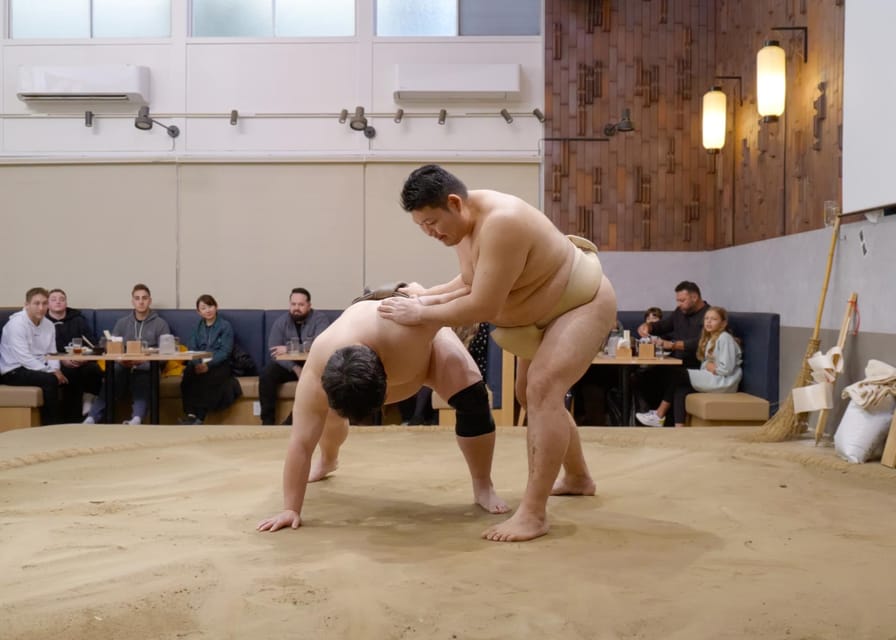
Two former sumo wrestlers bring Japan’s national sport close enough to feel. You watch their powerful demonstration in the dohyo, learn what the moves and rituals mean, then put on a costume and test your own strength. I like the clear English explanation and the chance to ask questions directly. I also like that the meal turns a short show into a complete cultural outing.
The main drawback is sound. The venue can get noisy, and commentary is easier to follow from a front seat. Seats are assigned in booking order, so reserve early if hearing every explanation matters to you. Also note the non-refundable policy.
Key points to know before you book
- Former wrestlers lead the action: You see trained athletes demonstrate sumo rather than only watch a talk or video.
- Hands-on ring time: You can wear a sumo costume and take on a wrestler in a friendly bout.
- Two meal choices: Choose tonkatsu for lunch or sukiyaki for dinner when booking.
- English explanation: The presentation covers common sumo terms, customs, and the sport’s link to Japanese culture.
- Easy Tokyo access: Walk about 5 to 8 minutes from Kikukawa Station’s A1 Exit on the Shinjuku Line.
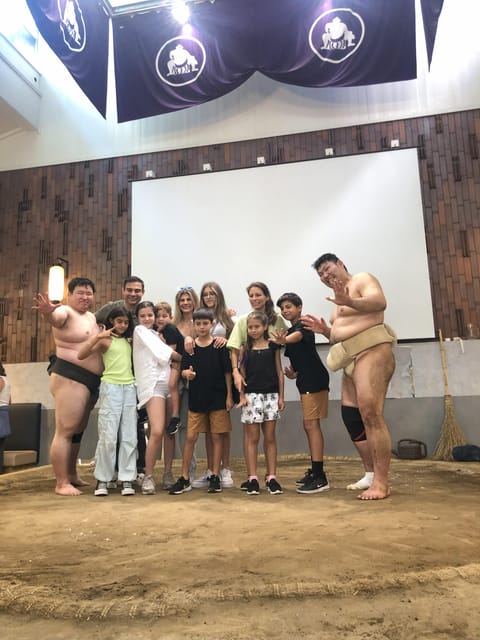
- Photo opportunity included: You can pose with the wrestlers at the end, even if you prefer not to wrestle.
Seeing sumo up close in a small Tokyo setting
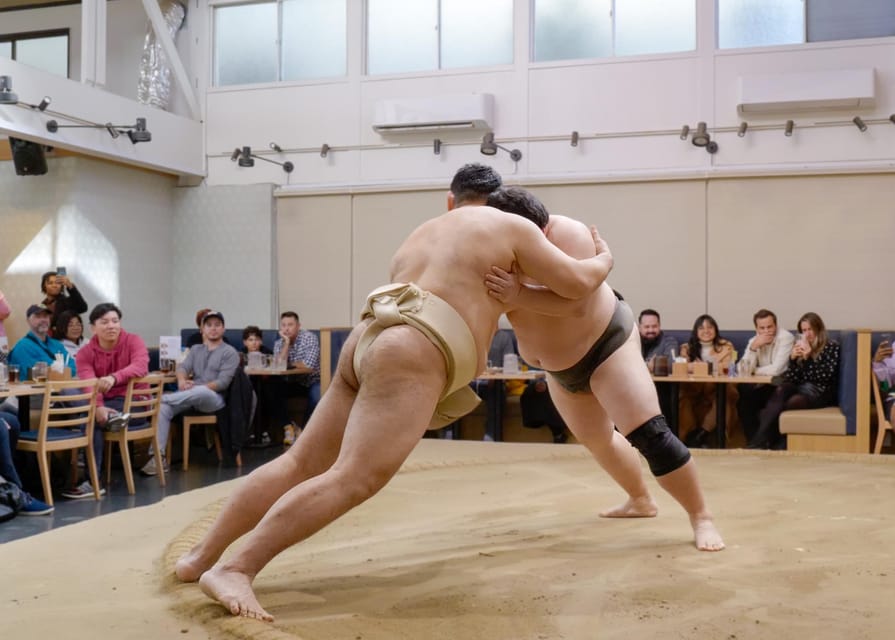
A professional sumo tournament gives you spectacle, ceremony, and a large crowd. This experience gives you something different: a close look at how the sport works, presented by two former wrestlers who can explain what you are seeing.
The action takes place at a venue near Kikukawa Station, not in a grand tournament stadium. That is part of the appeal. You are close to the ring, close enough to notice the wrestlers’ size, balance, footwork, and sudden bursts of force.
The session is presented in English and Japanese. The English explanation covers common sumo terminology and shows how the sport connects with Japanese culture. You are not expected to arrive knowing the difference between a shove and a belt throw. The presentation gives you enough background to follow the demonstrations without turning the visit into a long lecture.
I find this especially useful if you are in Tokyo outside the dates of a grand sumo tournament. It offers a taste of the sport without asking you to understand a complex ranking system or commit an entire afternoon to a formal match.
More Sumo Experiences in Tokyo
- Tokyo: Sumo Show and Dining Experience
★ 4.8 · 2,742 reviews - the SUMO show
★ 5.0 · 1,960 reviews - Tokyo Shinjuku Sumo Show & Experience with Photo
★ 5.0 · 1,750 reviews
What happens during the 1.5-hour session
The advertised duration is 1.5 hours, though one account of the program describes a session lasting closer to two hours once the meal, questions, and photographs were included. I would allow a little extra time, especially if you have another booking afterward.
The order can vary, but you should expect several clear parts:
- An introduction to sumo and its terminology
- A demonstration match by former wrestlers
- An explanation of techniques and customs
- A chance to wear a sumo costume and try the ring
- Photos with the wrestlers
- Lunch or dinner, depending on your selected option
- Time for questions and answers
This rhythm keeps the event moving. You watch first, learn enough to understand the action, and then get a chance to participate. The meal comes as part of the occasion rather than as a separate restaurant visit.
Because the wrestlers also answer questions, you can ask about the parts of sumo that interest you most. The available information does not list fixed question topics or named performers, so you should not expect a formal lecture with a published speaker biography. The draw is the direct contact with retired wrestlers and their practical explanations.
Understanding the demonstration and the dohyo
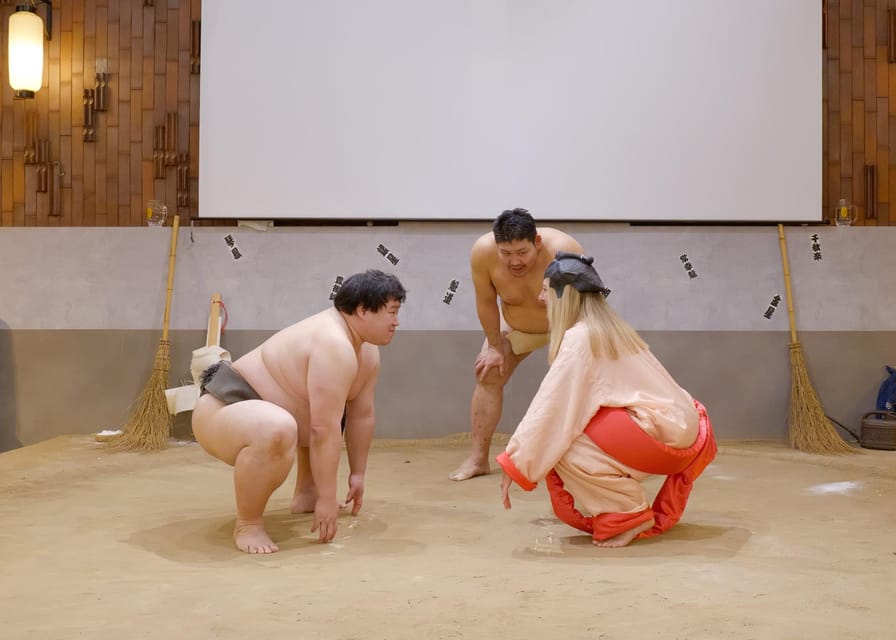
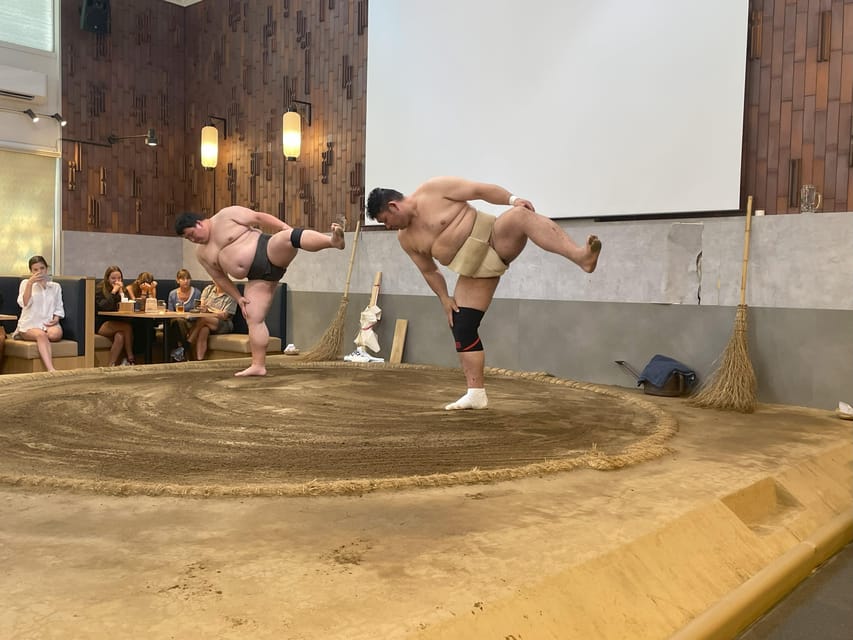
The demonstration is the heart of the experience. Two former wrestlers face one another in the dohyo and show the strength, timing, and technique that make sumo more than a simple pushing contest.
You will hear sumo terms during the explanation and see them applied in front of you. That matters because sumo can look deceptively simple from a distance. A bout may last only moments, but the wrestlers must read one another quickly, keep their balance, and use position as well as power.
The demonstration is also designed to entertain. The tone is light-hearted, with humor mixed into the explanation. That makes the session suitable for families and first-time visitors who might find a highly formal lesson intimidating.
One practical point deserves attention: sit as near the front as possible if you can. The reason is not only the view. Commentary, questions, and answers are easier to hear there, particularly if people nearby talk throughout the presentation. Seating is arranged according to booking order, and larger groups may be split between tables.
You cannot choose a particular seat with certainty, but booking early gives you the best chance of being placed well. If your group is large, be ready for the possibility that you will not all sit at one table.
Putting on the costume and trying sumo yourself
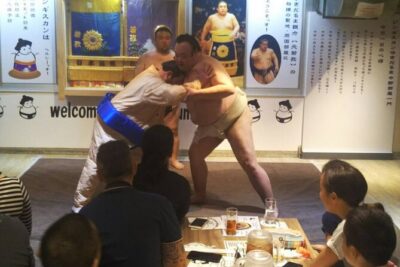
After watching the demonstration, you can put on a sumo costume and step into the ring. This is the part most likely to make the experience memorable, especially for children and adults who enjoy a little harmless embarrassment.
The activity gives you a physical sense of the sport. Even in a playful setting, you quickly learn that pushing is not the whole story. Balance, stance, and timing matter. The wrestlers guide the interaction, so your attempt is framed as a friendly challenge rather than a serious contest.
You should follow the staff’s instructions closely. The rules require good judgment and considerate behavior, and disruptive conduct can result in removal without a refund. That is standard for an organized cultural activity, but it is worth remembering when the atmosphere becomes playful.
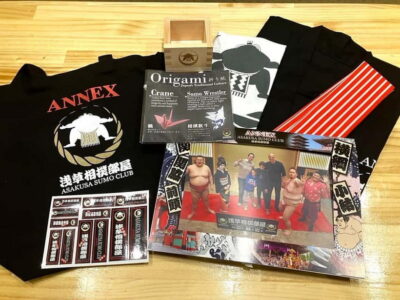
You do not need to wrestle in order to get a photograph. Everyone has a photo opportunity with the wrestlers at the end, so you can enjoy the demonstration and pose without taking part in the costume bout. This makes the activity a better fit for mixed groups, where one person may want the full challenge and another may prefer to watch.
For families, the format works well. Children have a role beyond sitting at a table, while adults can choose how physical or theatrical they want the visit to be. Infant rates apply when an infant does not occupy a seat, but infant meals are not included.
Same city, a different fixture:
- Tokyo: Sumo Show and Experience in Shinjuku
★ 4.8 · 1,001 reviews - Tokyo Grand Sumo Tournament Viewing Tour with Tickets
★ 5.0 · 692 reviews - Tokyo Sumo Wrestling Tournament Experience
★ 5.0 · 660 reviews - Tokyo:Luxury Sumo Show Experience & Japanese cuisine & Drink
★ 4.7 · 577 reviews
Tonkatsu lunch or sukiyaki dinner
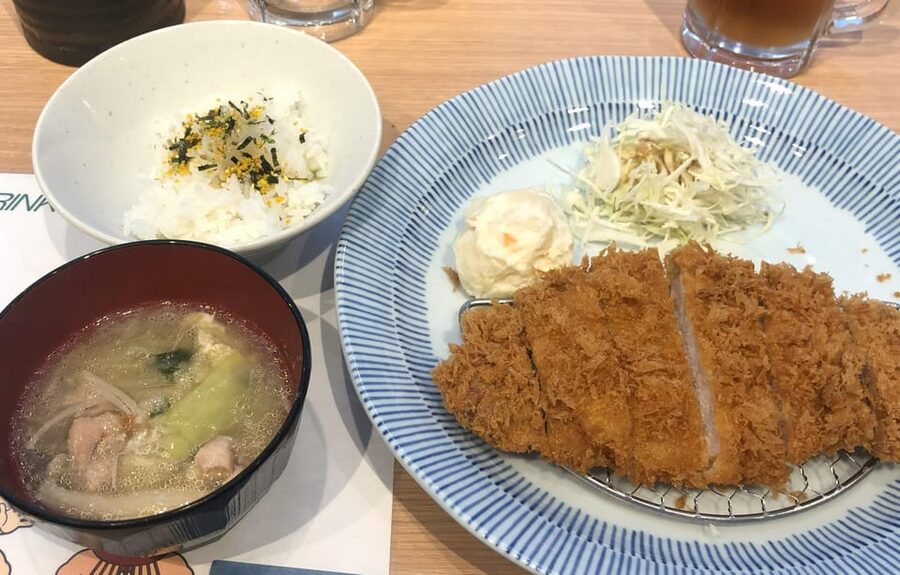
The meal helps justify the price because you are not paying only for a short demonstration. At lunch, you receive tonkatsu, a deep-fried pork cutlet. At dinner, the listed meal is sukiyaki, with beef and vegetables cooked in a sweetened soy broth.
These dishes give the event a stronger connection to everyday Japanese food culture. Tonkatsu is filling and straightforward, while sukiyaki makes dinner feel more social and leisurely. Your choice depends on the time of day and the option you select when booking.
The supplied information does not specify every side dish, portion size, or drink. Additional food and drinks are not included, so budget separately if you want anything beyond the stated meal.
Tell the provider about dietary requirements in advance. You may also bring your own food and drink, but that does not change what is included in the booking. Infant meals are not part of the package.
The meal is best viewed as part of the cultural program rather than a reason to choose the experience over a specialist restaurant. The food adds comfort and value, but the retired wrestlers and the chance to enter the ring are the main reasons to book.
Why this works when a sumo stable is not an option
Some visitors try to arrange a visit to a sumo stable and then discover that training areas may not admit children under 12. This experience offers a useful alternative for families with younger children.
You are not watching a private training session, and you should not confuse the two. A stable visit can show daily practice, while this event is designed for explanation, demonstration, participation, and photographs.
For a first introduction, the format may actually be easier. You receive an English explanation, see a controlled demonstration, and can ask questions without needing to understand stable etiquette in advance. The event also gives children a direct role, rather than requiring them to remain quiet during a serious training session.
It is also a practical choice when a grand tournament is not being held in Tokyo. You get a glimpse of the wrestlers’ skills and routines without planning around the tournament calendar.
Getting to Kikukawa Station
The meeting point is near Kikukawa Station on the Shinjuku Line. From the A1 Exit, allow about 5 to 8 minutes on foot.
There is no hotel pickup or drop-off, and transportation to the restaurant is not included. You make your own way to the meeting point and return there when the activity ends.
That makes the experience easy to fit into a Tokyo day if you plan carefully. It is not a door-to-door outing, so check your route and arrival time before leaving. The activity ends back at the starting point, which is useful if you want to continue sightseeing afterward.
The listed hosts speak English and Japanese. Confirmation is sent within 24 hours of booking, subject to availability. Since seating is arranged by booking order, early booking has two practical advantages: it helps secure your preferred time and may improve your chances of receiving a good seat.
Is the $117 price good value?
At $117 per person, this is not a cheap meal with entertainment added. You are paying for a hosted cultural activity, access to former wrestlers, an English explanation, a demonstration, participation in the ring, photographs, and lunch or dinner.
I think the value is strongest for people who want an active introduction to sumo. If you only want to watch a match, a tournament ticket may be a better use of your money when one is available. If you want to understand the basics, meet former wrestlers, and have a photograph that feels personal, this format offers more than a standard sightseeing stop.
The price also makes sense for families who may not be able to visit a stable because of age limits. A family of four will still spend a fair amount, but each person receives a meal and access to the same program. Children can enjoy the costume and challenge, while adults can focus on the explanation and questions.
The value is weaker if you dislike group activities, do not want a set meal, or expect a full competitive match. The demonstration is presented for an audience, and the wrestling challenge is friendly rather than a serious test.
The cancellation policy is non-refundable, so confirm your schedule before paying. Specific dietary needs should also be raised before the visit.
Who should book this sumo experience?
I would recommend it most strongly to:
- First-time visitors who want a simple introduction to sumo
- Families with children who cannot enter some training areas
- People visiting Tokyo outside the grand tournament season
- Anyone who enjoys hands-on cultural activities
- Visitors who want an English explanation and a chance to ask questions
- Couples or small groups looking for a memorable photograph
I would think twice if you want a quiet meal, a private lesson, or a serious look at professional competition. The room can become noisy, and seating may not place every member of a large group together.
The event also suits people who like a little humor with their culture. The tone is not solemn from start to finish. You will learn, watch a powerful demonstration, laugh at the costume challenge, and eat afterward.
Should you book it?
Book this experience if sumo is on your Tokyo wish list but you are not visiting during a grand tournament. The direct contact with retired wrestlers, clear English presentation, friendly challenge, and included meal make it a well-rounded introduction.
Reserve early if possible, since seating is assigned in booking order and front seats make the commentary easier to hear. Choose tonkatsu for lunch or sukiyaki for dinner, advise the provider about dietary needs, and leave a little more than 1.5 hours in your schedule.
Skip it if you want only a formal match or a private visit. For everyone else, especially families and first-time sumo fans, this is a lively and practical way to meet an important part of Japanese culture.
FAQ
Where does the sumo experience start?
It starts near Kikukawa Station on the Shinjuku Line. From the A1 Exit, the walk takes approximately 5 to 8 minutes.
How long does the activity last?
The stated duration is 1.5 hours. You should allow extra time because the program includes the meal, photographs, and questions.
Is the experience available in English?
Yes. The explanation is provided in English, and the listed host languages are English and Japanese.
What meal is included?
The lunch option includes tonkatsu, a deep-fried pork cutlet. The dinner option includes sukiyaki, beef and vegetables cooked in a sweetened soy broth.
Can I wrestle against a sumo wrestler?
You can put on a sumo costume and try a friendly bout with the wrestlers. You do not have to wrestle to take a photograph with them.
Is transportation included?
No. Hotel pickup and drop-off, as well as transportation to and from the restaurant, are not included. You must make your own way to the meeting point.
Can I cancel for a refund?
No. The activity is non-refundable, so check your plans carefully before booking.
Just added for fans in Tokyo
- Tokyo: Grand Sumo Morning Training Tour★ 4.9 · 12 reviews
- Sumo Training Watching Experience in Tokyo★ 4.5 · 8 reviews
- Kickboxing & Body Training with EX-Pro Fighter★ 5.0 · 4 reviews
- Tokyo: Visit Sumo Morning Practice with English Guide★ 4.5 · 22 reviews
- Tokyo Sumo Experience with Live Show & Audience Challenge★ 5.0 · 38 reviews
- Tokyo Shinjuku Sumo Show and Experience with Drinks and Photo★ 4.0 · 21 reviews
- Tokyo Sumo History Tour with Chanko Nabe Lunch★ 5.0 · 3 reviews
- 【SUMO FESTIVAL】Tokyo Ginza: Sumo Show & Photo Experience★ 4.5 · 41 reviews
Sumo Experiences in Tokyo, compared.
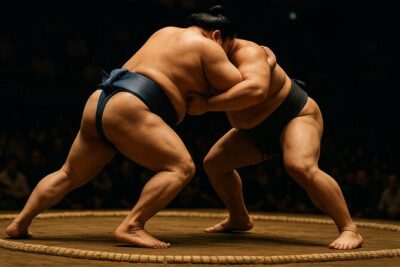
Tokyo Shinjuku Sumo Show & Experience with Photo
Read our review →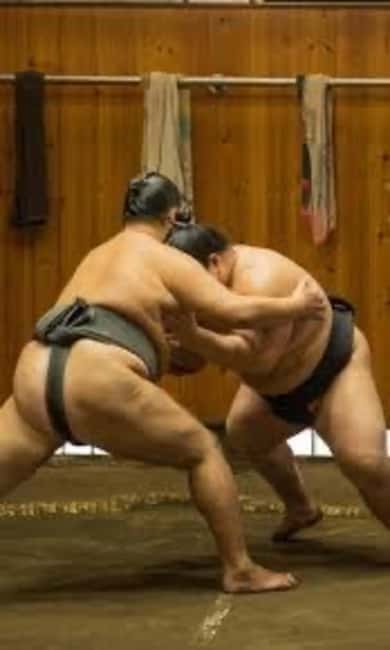
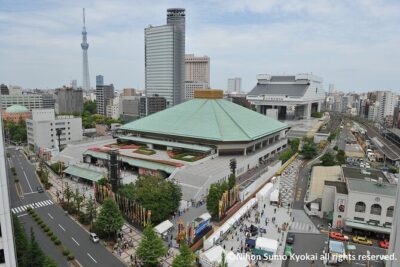
Tokyo Grand Sumo Tournament Viewing Tour with Tickets
Read our review →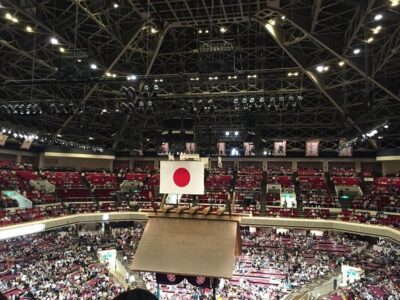
Luxury Sumo Show Experience & Japanese cuisine & Drink
Read our review →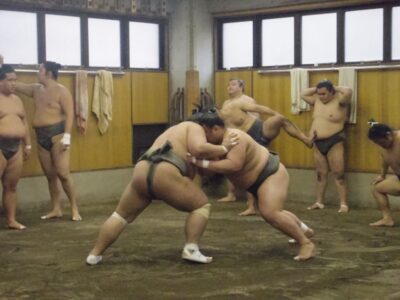
Browse the lists this tour appears in