
Review · SUMO EXPERIENCES IN TOKYO
Tokyo Sumo Experience: Chanko & Mochi with a Former Pro
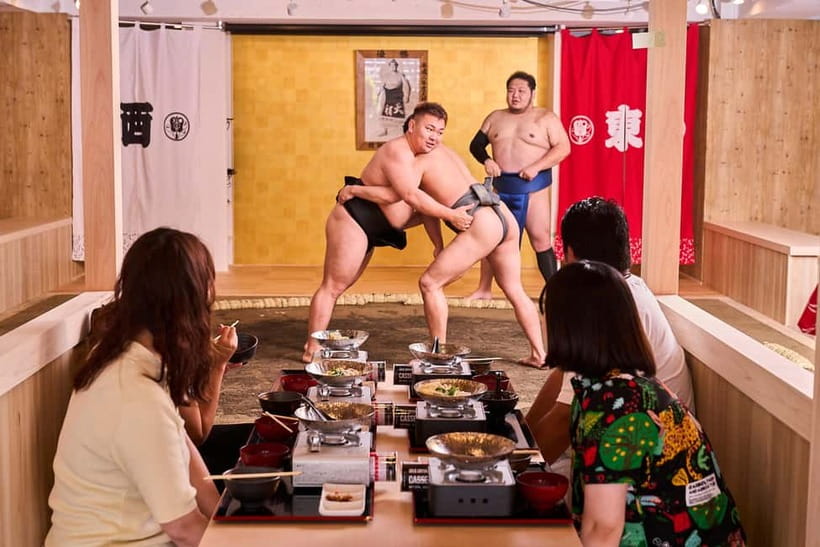
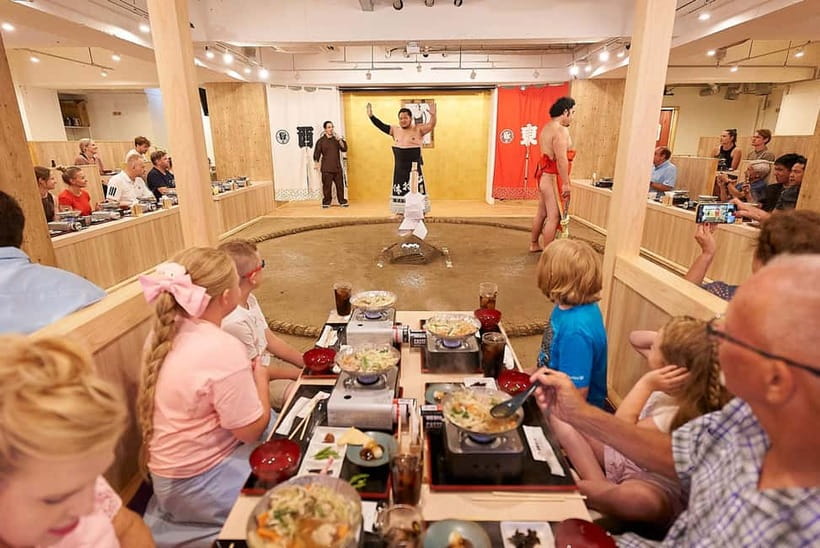
The best part of this Ryogoku experience is the close view of sumo. You sit around the dohyo, eat chanko nabe prepared under the guidance of former professionals, and watch wrestlers demonstrate techniques and real bouts only a few steps away. Then you can step onto the ring yourself.
I like the mix of dinner and hands-on activity. The mochi pounding gives you a traditional Japanese craft with a little muscle behind it, while the sumo session lets children and adults join in. I also like that the English-speaking host keeps the event moving and explains sumo training, food, and daily life in a way first-time visitors can follow.
The main consideration is that this is entertainment rather than serious morning training. The demonstrations are controlled and playful, and seats are assigned by the venue. Standard seats also are not suitable for holding a child on your lap, so book a place for every person.
Key points to know before you book
- Ryogoku setting: Meet on the first floor near Ryogoku Station, marked by a large sumo wrestler sign and flags.
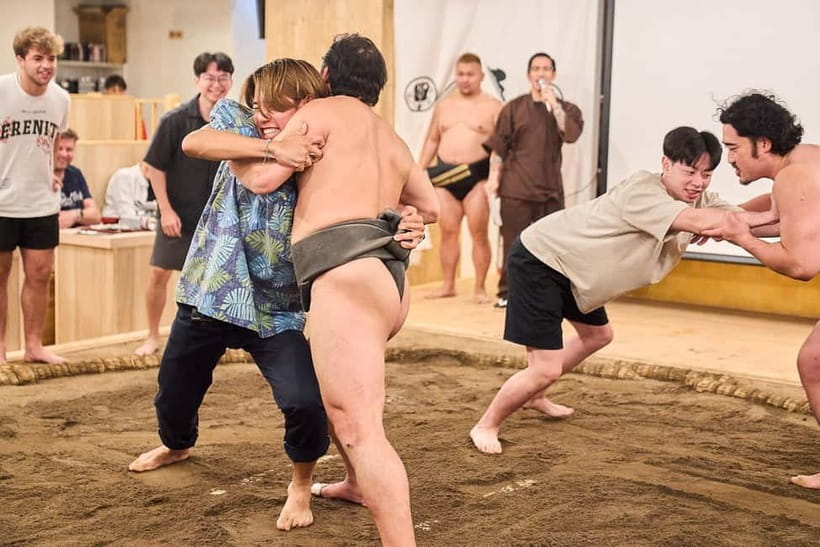
- Three ways to join in: You can help pound mochi, practice sumo techniques, and try a supervised bout on the dohyo.
- A proper chanko nabe meal: The hot pot is based on the food eaten in sumo stables and is served during the show.
- Former professionals lead the session: The wrestlers explain and demonstrate training, technique, and bouts.
- Good for families and groups: Children, teenagers, adults, and work groups can all take part, though standard seating has safety rules.
- Two hours for $103: The price makes the most sense if you plan to participate, eat a full meal, and want an activity outside Tokyo’s tournament dates.
Why Ryogoku is the right place for a sumo night
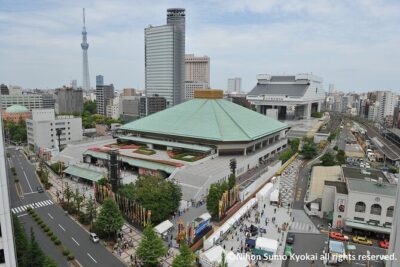
Ryogoku is not just a convenient Tokyo neighborhood for this event. It is the city’s traditional sumo center, so the setting gives the evening useful context before the first wrestler steps onto the dohyo.
The meeting point is on the first floor, a short walk from Ryogoku Station. Look for the large sumo wrestler sign and flags. One practical tip: allow a little extra time to find the entrance. The venue is easy to reach, but one participant found it slightly hard to locate and suggested arriving early.
The location also works well in a larger Tokyo plan. You can pair it with Asakusa, Tokyo Skytree, Akihabara, or Nihonbashi. I would not try to squeeze all four into the same afternoon, but Ryogoku makes a useful stop between sightseeing areas. If you are visiting Tokyo outside one of the major sumo tournaments, this event offers a way to see the sport without arranging a morning training visit.
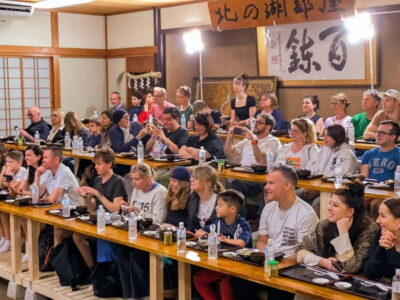
You will sit around the ring rather than in a huge arena. That matters. The small setting lets you see the wrestlers’ footwork, balance, and physical force at close range. It also makes audience participation feel natural instead of like an afterthought.
More Sumo Experiences in Tokyo
- Tokyo: Sumo Show and Dining Experience
★ 4.8 · 2,742 reviews - the SUMO show
★ 5.0 · 1,960 reviews - Tokyo Shinjuku Sumo Show & Experience with Photo
★ 5.0 · 1,750 reviews
Chanko nabe brings sumo culture to the table
The meal is chanko nabe, the hot pot associated with sumo stables. It is served while the sumo presentation is underway, so you are not simply watching a show and then eating afterward. The food forms part of the introduction to the wrestlers’ daily world.
The exact ingredients can vary, but the supplied information describes a traditional hot pot supervised by sumo wrestlers from an actual stable. You can expect a filling meal rather than a token snack. Several participants specifically found it delicious, fresh, healthy, and more substantial than expected. One family also found that a six-year-old enjoyed it, which says something useful about its broad appeal.
I like this part because food gives you a practical way into sumo culture. Sumo is not only about the bout. Training, diet, routine, and stable life all shape the sport. Chanko nabe lets the evening explain that side of sumo without turning the event into a lecture.
The food also helps justify the $103 price. You are paying for a meal, a hosted show, close demonstrations, several interactive activities, and a two-hour visit. If you only want to watch sumo from a distance, the price may feel high. If you eat the meal and join the activities, the value is much better.
Vegetarian, vegan, and gluten-free meals can be arranged if you request them at least two days before your reservation date. Halal meals cannot be provided, but you may bring your own food. Make that request early rather than hoping the venue can adjust on the day.
The sumo demonstrations explain more than size
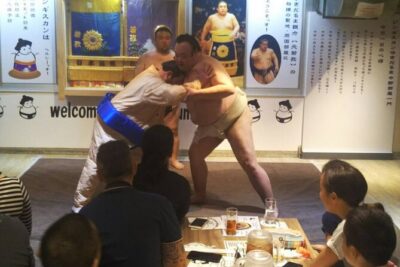
The wrestlers do not simply pose for photographs. The session includes demonstrations of sumo techniques, training, and bouts. You get a chance to see how wrestlers use stance, timing, grip, and balance instead of relying only on brute strength.
The demonstrations are among the most useful parts for first-time visitors. Sumo can look simple from far away: two large athletes push until one leaves the ring. From close up, the small movements matter. A change in footing or body position can decide the result.
You also see sample rounds of wrestling. The demonstrations are exciting, but keep your expectations in the right place. This is not a tournament match and it is not a silent training session. It is designed to entertain adults and children, with explanations and audience interaction built into the program.
That lighter tone is a strength for most people. The host encourages participation, keeps the mood friendly, and helps the event avoid becoming too formal. It is also the reason serious sumo followers may want to treat this as an introduction rather than a substitute for a tournament or stable visit.
Mochi pounding is the most hands-on surprise
The mochi segment adds a different kind of Japanese tradition. You watch a demonstration of the pounding process, then get a chance to help make mochi with the wrestlers. Afterward, sweet mochi is served for dessert.
There is a good rhythm to this activity. One person handles the mallet while another turns and prepares the rice, so the process depends on timing and teamwork. You do not need special skill to take part, and the activity works particularly well for families and groups.
Several parts of the evening can feel familiar to visitors: a meal, a stage show, and photographs. Mochi pounding changes the pace. It gives you something physical to do and helps you remember the evening as more than a performance viewed from a chair.
Wear comfortable clothes. You do not need athletic gear, but you should be ready to move, raise a mallet, and possibly step onto the dohyo. Bring a camera if you want photographs. The wrestlers and staff make room for many photo opportunities, but keep your attention on the activity too. The best moments are usually the ones that happen while you are taking part.
Same city, a different fixture:
- Tokyo: Sumo Show and Experience in Shinjuku
★ 4.8 · 1,001 reviews - Tokyo Grand Sumo Tournament Viewing Tour with Tickets
★ 5.0 · 692 reviews - Tokyo Sumo Wrestling Tournament Experience
★ 5.0 · 660 reviews - Tokyo:Luxury Sumo Show Experience & Japanese cuisine & Drink
★ 4.7 · 577 reviews
Your turn on the dohyo
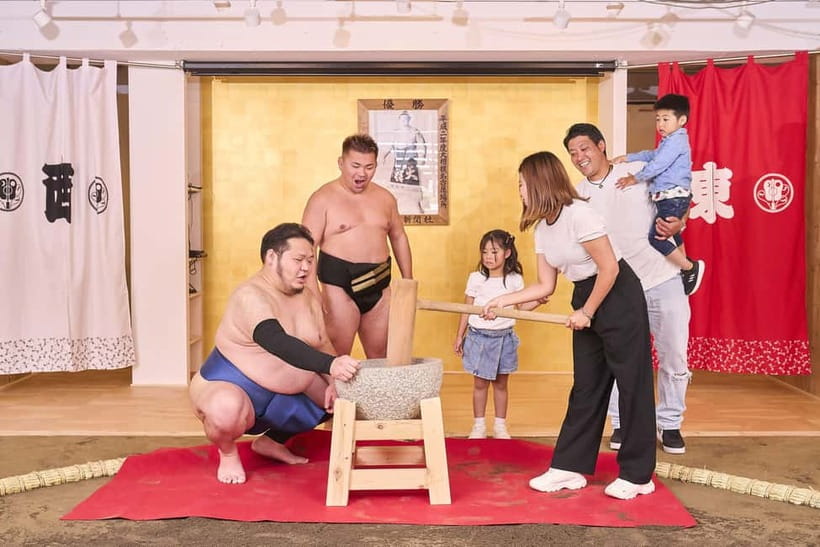
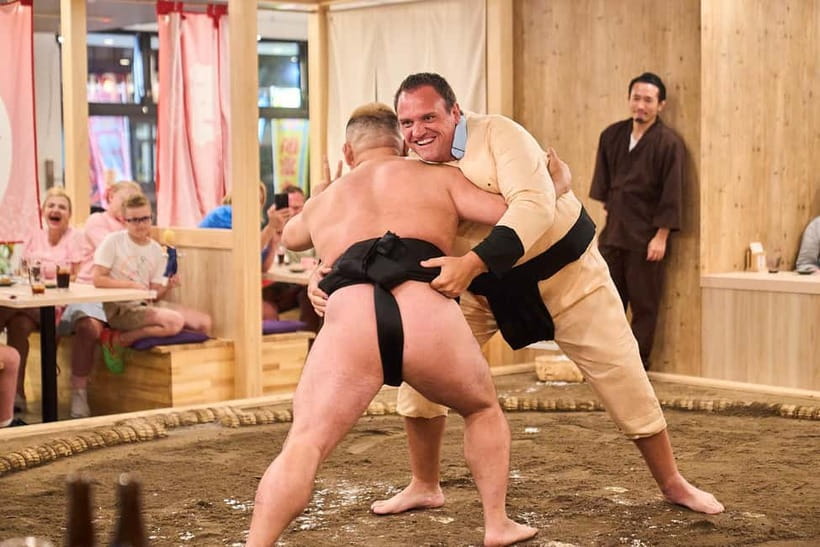
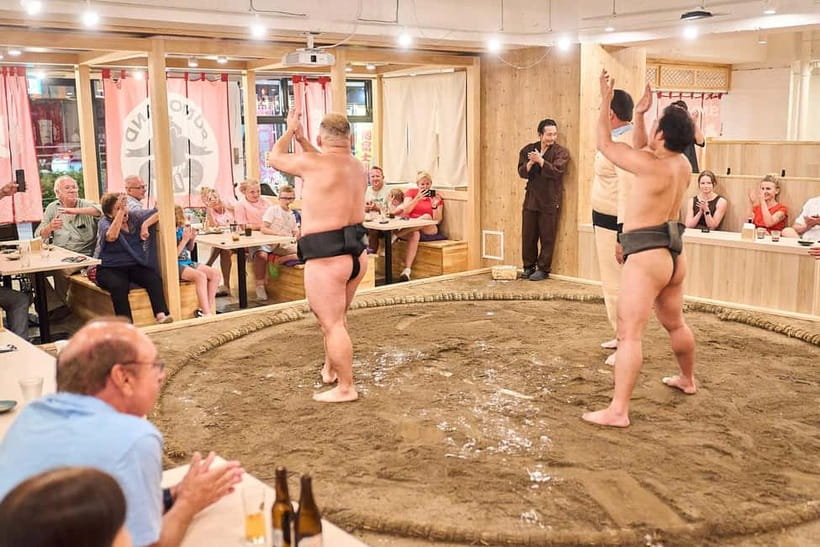
The sumo wrestling activity is the part many people look forward to most. You can step onto the dohyo and try sumo against one of the wrestlers under controlled conditions.
This is not a test of your strength. The wrestlers manage the activity so children and adults can participate safely and have fun. You may practice a technique, take a short bout, or try to push against a much larger opponent. The point is to feel the stance, pressure, and balance of sumo, not to win a genuine professional match.
That distinction is important. If you want a serious athletic challenge, this is not the right setting. If you want a memorable photo and a funny story, it works very well. The wrestlers encourage participation without making people feel foolish, and the host helps bring different ages into the action.
Families with children and groups of friends tend to get the most from this section because they can cheer for one another. A work group can also enjoy it as a relaxed shared activity. You are never required to wrestle, so you can watch if you prefer, but the evening is more worthwhile if at least some people in your group join in.
Assigned seats and family safety details
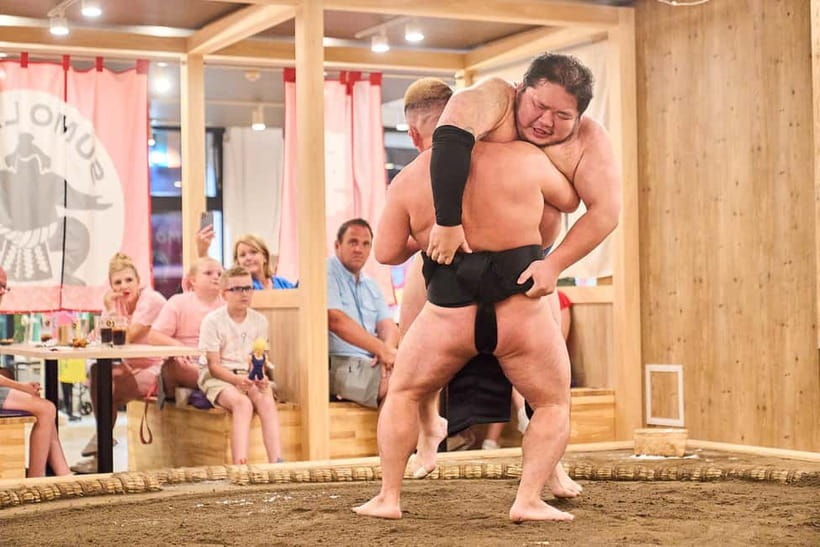
The venue assigns seats. You cannot choose a particular seat or request a specific location, so do not book this expecting a front-row guarantee.
Standard seats have an important safety rule: you should not hold a child on your lap while seated there. Reserve a place for each person, including children. Box seats are different. They can seat up to six people and allow a child to sit on a parent’s lap.
This may affect the total cost for a family, but it is worth planning correctly. The event includes movement around the dohyo, demonstrations, and wrestling, so seating is not a minor detail. If you are traveling with young children, make sure your reservation reflects the number of people in your party.
The activity is not suitable for wheelchair users. The supplied information does not give further accessibility details, so anyone with other mobility concerns should check before paying.
How the $103 price works for different visitors
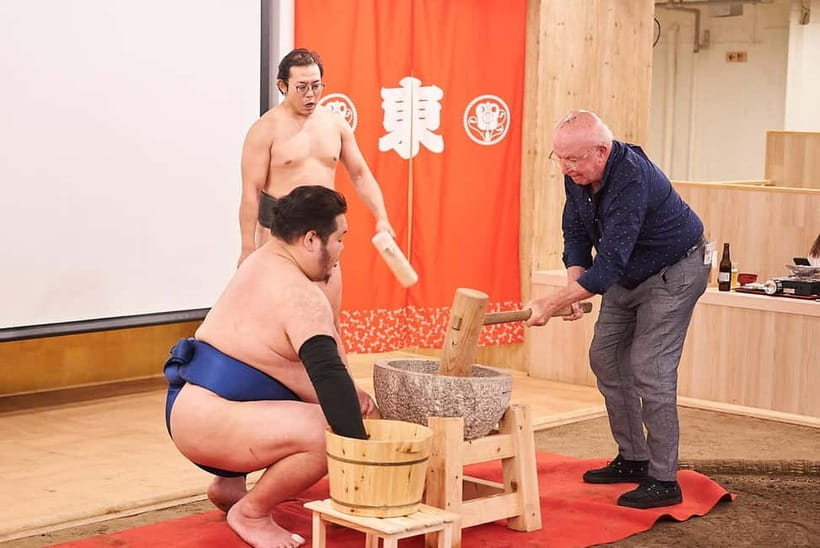
At $103 per person, this is not a budget meal or a free cultural demonstration. The value depends on what you want from the evening.
I think the price is reasonable for someone who wants several things in one booking: a chanko nabe dinner, a hosted sumo presentation, former professional wrestlers, mochi making, a dessert, and an opportunity to enter the ring. You are also buying convenience. The two-hour format gives you a clear activity that fits neatly into a Tokyo itinerary.
It is particularly useful during the off-season, when you are not in Tokyo for a major tournament. You get close-up demonstrations and a chance to learn the basics without planning your schedule around tournament dates.
The price is less convincing if you are mainly interested in watching a serious match. In that case, put your money toward an official tournament ticket or a more formal training visit if one fits your schedule. This event deliberately has a playful, audience-friendly tone.
The high rating of 4.8 from 567 ratings fits the strongest points of the program: the wrestlers are friendly, the staff keeps people involved, the food is filling, and the activities give you plenty to do. I would still read the format honestly. You are buying a lively cultural evening, not an austere look at professional sumo life.
Who will enjoy this most
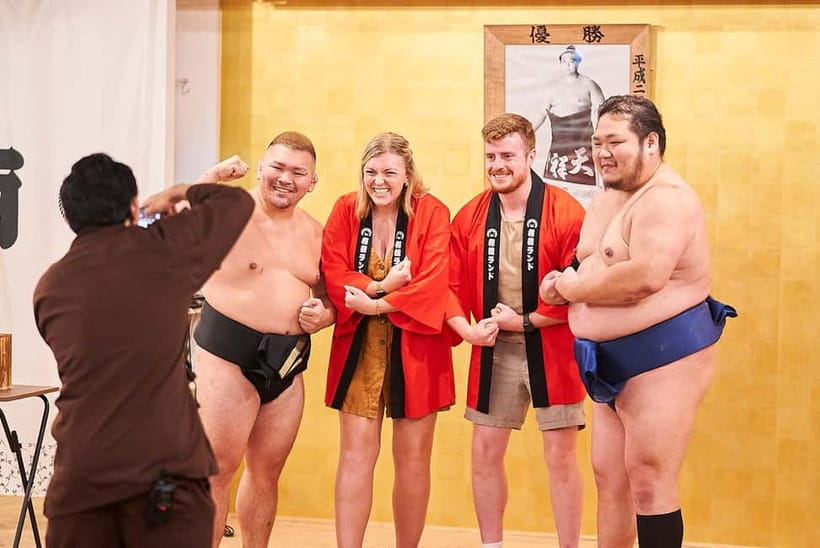
I would recommend it first to families. Children can watch, eat, pound mochi, learn a few techniques, and possibly wrestle. The activities give younger visitors a reason to stay engaged for the full two hours.
It also suits adults who want a social evening. You do not need prior sumo knowledge, Japanese language ability, or athletic skill. English and Japanese instruction is available, and the host explains the action as it happens.
Groups should also consider it. Several people can participate in different activities while others take photos and cheer. The format creates natural shared moments, which is why it works well for friends, family reunions, and work groups.
I would be more cautious for visitors seeking quiet or highly formal cultural study. The host encourages laughter and audience participation. The event explains sumo, but it does so with energy and humor rather than a museum-like approach.
Timing, clothing, and small practical choices
The activity lasts two hours, with starting times available according to the date you choose. That is long enough to include food, demonstrations, mochi, and wrestling without taking an entire day.
Wear comfortable clothing. You should be able to sit through the meal, move for the activities, and step onto the dohyo if you decide to participate. Bring a camera, but keep it ready rather than holding it throughout every activity.
Smoking is not allowed. If you have dietary needs, arrange vegetarian, vegan, or gluten-free food at least two days ahead. If you need halal food, plan to bring your own because the venue cannot provide it.
You can cancel up to 24 hours before the activity for a full refund, and the reserve-now-pay-later option lets you hold a place without paying immediately. Those terms are useful when your Tokyo schedule is still changing.
Should you book this Ryogoku sumo experience?
Book it if you want an approachable, participatory introduction to sumo. The combination of chanko nabe, mochi pounding, close demonstrations, and a supervised turn on the dohyo gives you more than a standard dinner show.
It is especially strong for families, first-time visitors, and anyone in Tokyo outside tournament season. The former professionals add real sporting experience, while the host keeps the evening friendly and easy to follow.
Skip it if your main goal is a serious professional match, a quiet training observation, or a fully flexible seat choice. For everyone else, $103 is a fair price for two hours of food, instruction, entertainment, and hands-on activity in sumo’s home district.
FAQ
Where does the Tokyo Sumo Experience take place?
It takes place in Ryogoku, near Ryogoku Station on Honshu. The venue is on the first floor and is marked by a large sumo wrestler sign and flags.
How long does the experience last?
The activity lasts two hours. Starting times vary, so check availability for your chosen date.
Is the experience offered in English?
Yes. Instruction is available in English and Japanese.
What food is included?
The meal is chanko nabe, a hot pot dish associated with sumo stables. Sweet mochi is served for dessert after the mochi-making activity.
Can I request a vegetarian, vegan, or gluten-free meal?
Yes. Vegetarian, vegan, and gluten-free meals can be provided if you notify the venue at least two days before your reservation date. Halal meals cannot be provided, but you may bring your own food.
Can children take part?
Yes. The activities are designed for adults and children. In standard seats, you should reserve a place for every person because it is not safe to hold a child on your lap. Box seats can seat up to six people and allow a child to sit on a parent’s lap.
Just added for fans in Tokyo
- Tokyo: Grand Sumo Morning Training Tour★ 4.9 · 12 reviews
- Sumo Training Watching Experience in Tokyo★ 4.5 · 8 reviews
- Kickboxing & Body Training with EX-Pro Fighter★ 5.0 · 4 reviews
- Tokyo: Visit Sumo Morning Practice with English Guide★ 4.5 · 22 reviews
- Tokyo Sumo Experience with Live Show & Audience Challenge★ 5.0 · 38 reviews
- Tokyo Shinjuku Sumo Show and Experience with Drinks and Photo★ 4.0 · 21 reviews
- Tokyo Sumo History Tour with Chanko Nabe Lunch★ 5.0 · 3 reviews
- 【SUMO FESTIVAL】Tokyo Ginza: Sumo Show & Photo Experience★ 4.5 · 41 reviews
Sumo Experiences in Tokyo, compared.
Tokyo Shinjuku Sumo Show & Experience with Photo
Read our review →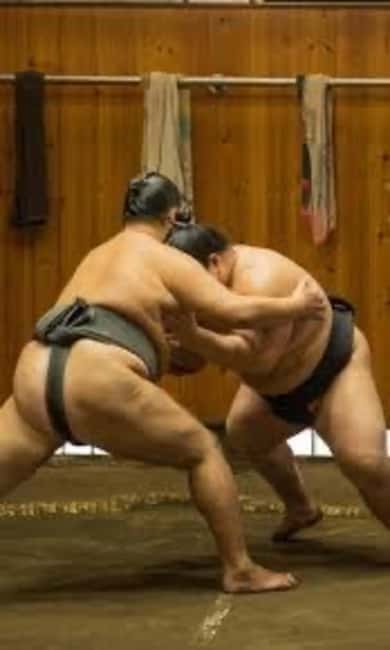
Tokyo Grand Sumo Tournament Viewing Tour with Tickets
Read our review →
Luxury Sumo Show Experience & Japanese cuisine & Drink
Read our review →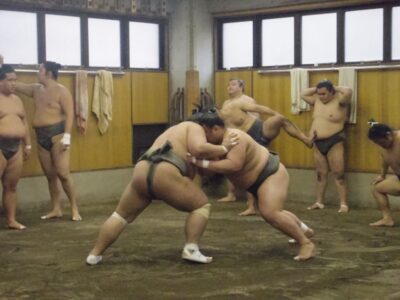
Browse the lists this tour appears in