
Review · SUMO EXPERIENCES IN TOKYO
Tokyo Sumo Morning Practice: Witness the Life of a Wrestler
A sumo stable is not a theater built for visitors. It is a working home where wrestlers train, eat, follow a strict hierarchy, and handle daily chores together. This tour puts you on the floor, just feet from the ring, while powerful athletes repeat throws, pushes, and footwork under the watch of their stablemaster. I especially like the close seating and the guide’s live explanations, which help you understand what you are seeing without breaking the stable’s silence.
I also like the chance to take photos with wrestlers afterward, something that gives the morning a personal finish. The main drawback is comfort: you may sit on a zabuton cushion for nearly two hours, cannot leave during practice, and must remain silent. The Yokozuna trains at this stable, but there is no promise he will be present that morning.
Key points at a glance
- Champion’s stable: Visit the stable where the current Yokozuna trains, though his attendance is not guaranteed.
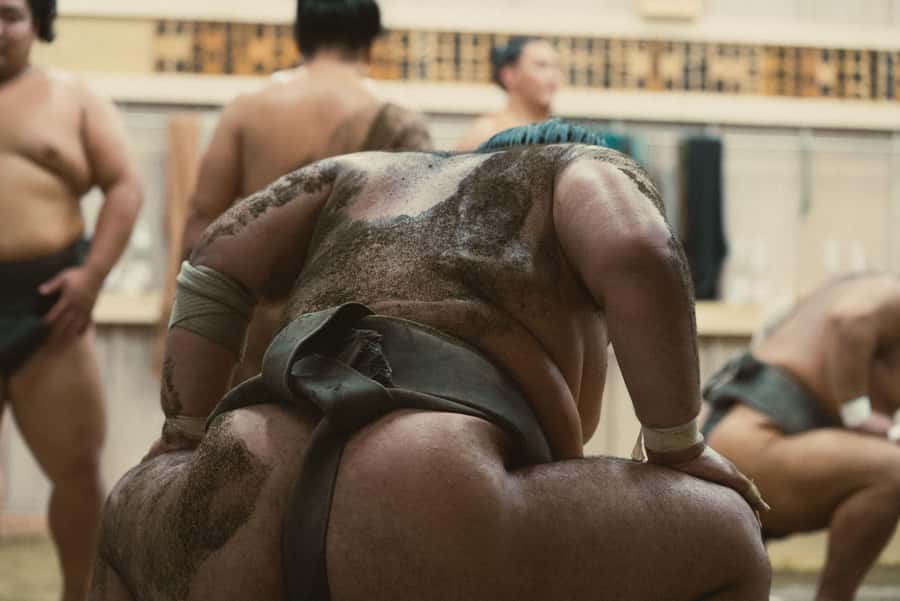
- Close-up practice: Watch wrestlers train only a few feet away, with the sound of feet, slaps, and collisions carrying across the room.
- Live English commentary: Your guide explains rules, ranks, rituals, and stable life through earbuds during the session.
- Quiet, formal setting: You must watch silently, keep your cellphone on silent, and avoid flash photography or video.
- Post-practice photos: A group photo with wrestlers is offered after training, depending on the day’s arrangements.
Why this Tokyo sumo morning is special
Many visitors see sumo as a tournament spectacle, complete with ceremony, costumes, and a packed arena. This experience shows you the less polished but more revealing side of the sport: ordinary training inside a real stable.
A sumo stable, or beya, is both a training base and a shared home. Wrestlers live with their oyakata, or stablemaster, and follow a strict ranking system. Lower-ranked rikishi handle much of the housework, run errands, and help higher-ranked wrestlers with daily tasks, including scrubbing their backs. Meals and chores are shared within a firm hierarchy.
That background matters once practice begins. You are not simply watching a sports demonstration. You are seeing part of a demanding way of life that shapes every wrestler’s day.
The stable belongs to a very small professional sumo world. There are currently 44 stables in Japan, all in the Kanto area, and the number of active wrestlers is limited. This particular stable has one of the largest groups of professional wrestlers, and the Yokozuna trains there. A Yokozuna is the highest rank in sumo, and only one person currently holds that title.
Still, keep expectations sensible. The Yokozuna may be away, resting, traveling, or simply not taking part in that morning’s session. The stable is authentic even if its most famous wrestler is not in the ring.
More Sumo Experiences in Tokyo
- Tokyo: Sumo Show and Dining Experience
★ 4.8 · 2,742 reviews - the SUMO show
★ 5.0 · 1,960 reviews - Tokyo Shinjuku Sumo Show & Experience with Photo
★ 5.0 · 1,750 reviews
Meeting your guide and walking to the stable
The exact location and start time can change with the date of your booking. You receive the final meeting details after reserving, so do not plan your morning around an assumed station or schedule.
At the meeting point, look for a Japan Wonder Travel sign. Your guide leads the group to the stable, with one reported walk taking about seven minutes. This short transfer is useful because your guide can explain what will happen before you enter.
The tour is conducted in English. Guides give an introduction to the stable, explain the different levels of wrestler, and answer questions before or after practice. Yuki has been praised for explaining the history, rules, ranking system, and small details that make the session easier to follow.
You may be part of a group of roughly 10 to 12 people, though the size can change. The small scale helps because everyone can see into the practice area, but this is still a shared observation rather than a private lesson.
Use the restroom before meeting your guide. You cannot count on leaving the stable once practice starts, and the rules are strict for good reason. Training continues on the wrestlers’ schedule, not on a visitor timetable.
Entering the beya and taking your place
Inside, you remove your shoes. Seating may be on zabuton cushions placed on the floor, although one account from August 2025 described folding chairs positioned directly behind the stablemaster and Terunofuji. The arrangement can change by date and stable setup, so prepare for floor seating and bring only what you can manage comfortably.
This is the tour’s biggest practical concern. Sitting for 75 to 105 minutes on the floor can be hard on your knees, hips, or back. The experience is not suitable for wheelchair users, and anyone with mobility issues should think carefully before booking.
Once you sit down, the mood changes. You are expected to stay quiet, keep your legs tucked away from the ring, and avoid pointing the soles of your feet toward the wrestlers. In Japan, displaying the soles of your feet toward people in this setting is considered rude.
Cellphones must be silent. Flash photography, video recording, sunglasses, and food are not allowed. You may also need to turn off your phone’s camera shutter sound. These rules can feel strict if you are used to taking constant pictures, but they protect the concentration of the wrestlers and the dignity of the stable.
The guide provides real-time commentary through earbuds, an especially useful feature here. You can watch the action without listening to a long explanation beforehand or whispering questions to the person beside you. The system lets you understand the practice while the room remains quiet.
Watching the morning training session
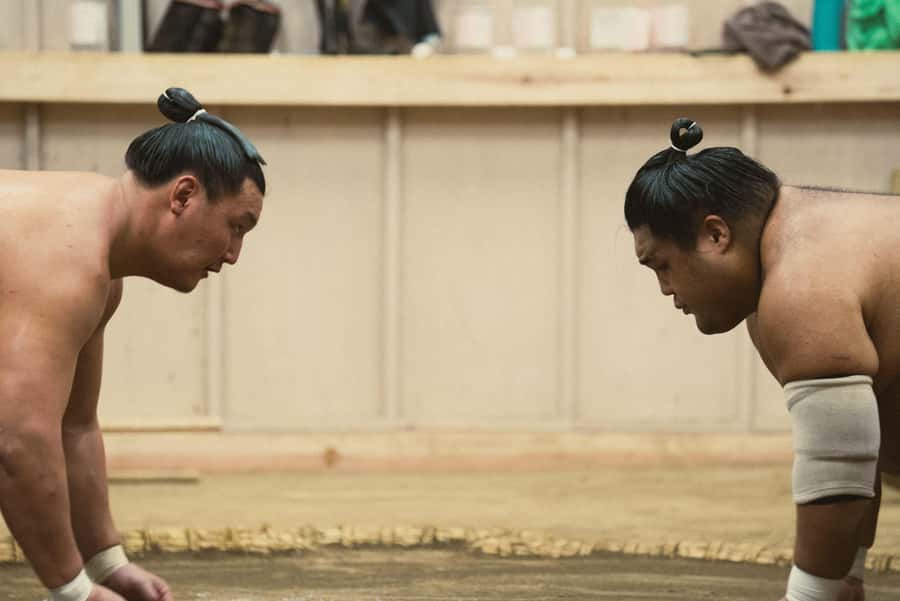
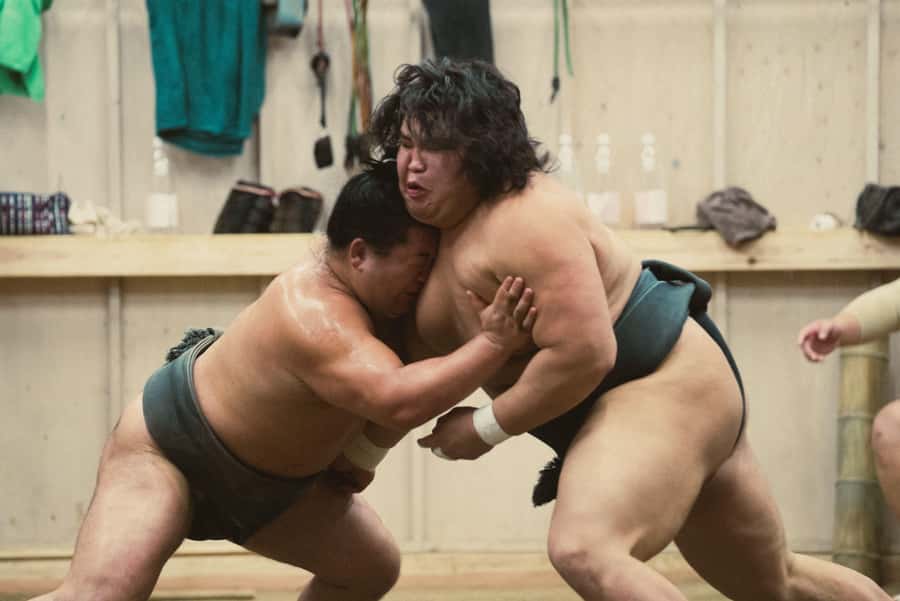
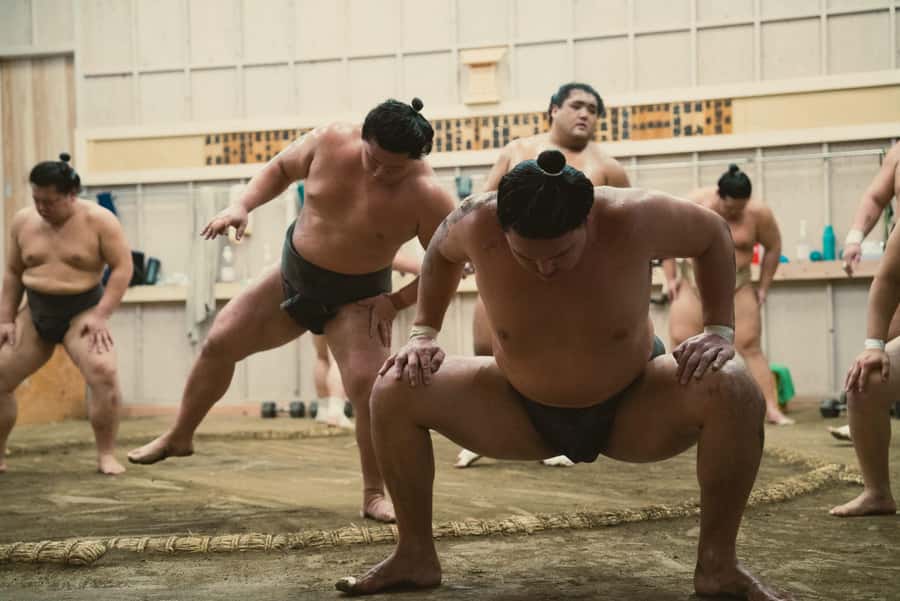
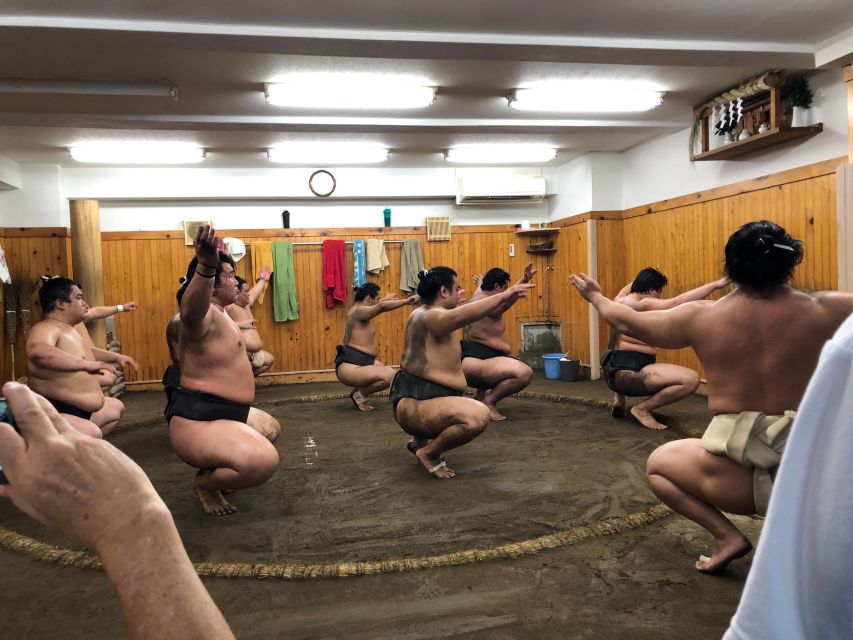
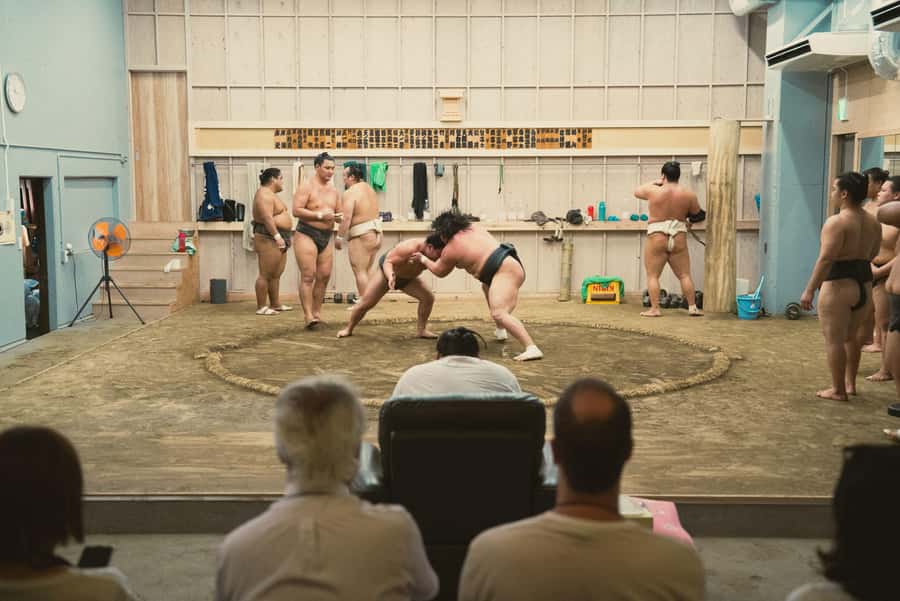
The training is repetitive, physical, and intense. Wrestlers work on strength, speed, balance, and technique with sparring partners. You see them prepare, enter the ring, and repeat movements designed to help them push an opponent out or force him down.
At close range, sumo looks less like a slow contest between heavy athletes and more like a sport built on sudden acceleration. A bout can begin with a hard clash, then turn on foot placement, hip position, grip, or a wrestler’s ability to stay balanced under pressure.
You will hear the impact as much as you see it. Bodies hit the ring, feet stamp the floor, and hands slap flesh. The noise makes the training feel real in a way that a distant arena seat cannot match.
The practice is not staged for the group. Some wrestlers may spend more time exercising than sparring. One account noted that Enho attended but mostly worked on his own and did not enter the practice ring. That is normal for a working session. You may see one wrestler drilling repeatedly while another waits, stretches, or observes.
The Yokozuna may be present as a competitor, instructor, or observer. One morning, Terunofuji was there instructing while another wrestler trained nearby. On another date, the champion might not appear at all. Do not judge the experience only by the famous name on the stable.
Training length can change. A session may last about 75 to 80 minutes, or closer to an hour and 45 minutes. The day’s practice decides when it ends. You cannot leave halfway through, so schedule your next activity with plenty of space.
Same city, a different fixture:
- Tokyo: Sumo Show and Experience in Shinjuku
★ 4.8 · 1,001 reviews - Tokyo Grand Sumo Tournament Viewing Tour with Tickets
★ 5.0 · 692 reviews - Tokyo Sumo Wrestling Tournament Experience
★ 5.0 · 660 reviews - Tokyo:Luxury Sumo Show Experience & Japanese cuisine & Drink
★ 4.7 · 577 reviews
What the guide adds to the silence
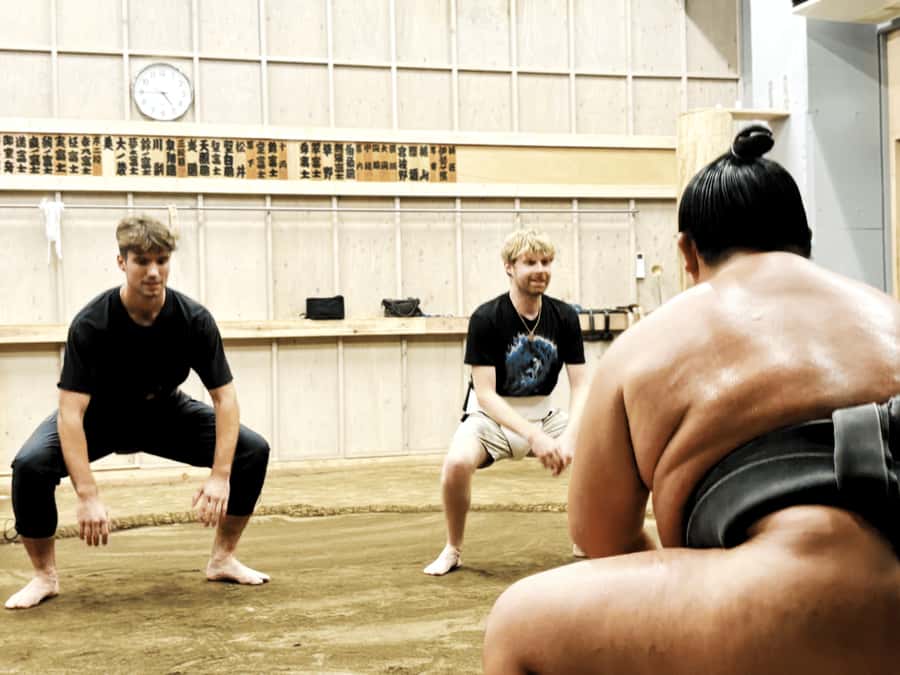
Without explanation, a sumo practice can become a blur of large men pushing one another. The guide gives you the framework to notice what matters.
You learn about the ranking system and the place of the stablemaster. You also hear about sumo’s history, its rituals, and why it remains so important in Japan. The guide can explain what wrestlers are trying to accomplish in a drill and help translate questions after practice.
That translation is valuable. Wrestlers are not there to perform a lecture, and the stable is not a standard attraction with signs beside every object. Your guide connects you to the setting without turning it into a noisy classroom.
The earbuds are also practical for groups. You can listen while looking straight into the ring, rather than turning toward a guide who is speaking from behind you. The result is a better balance between watching and learning.
Still, this is not an interactive workshop. The most important part of the visit is silent observation. If you need to ask questions throughout an activity or move around for different views, this tour may feel restrictive.
The photo opportunity after practice
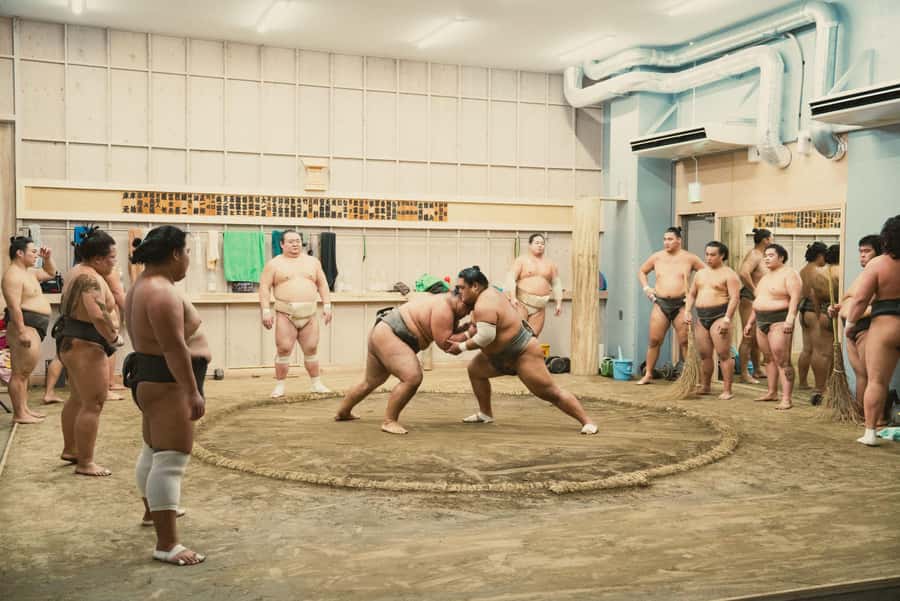
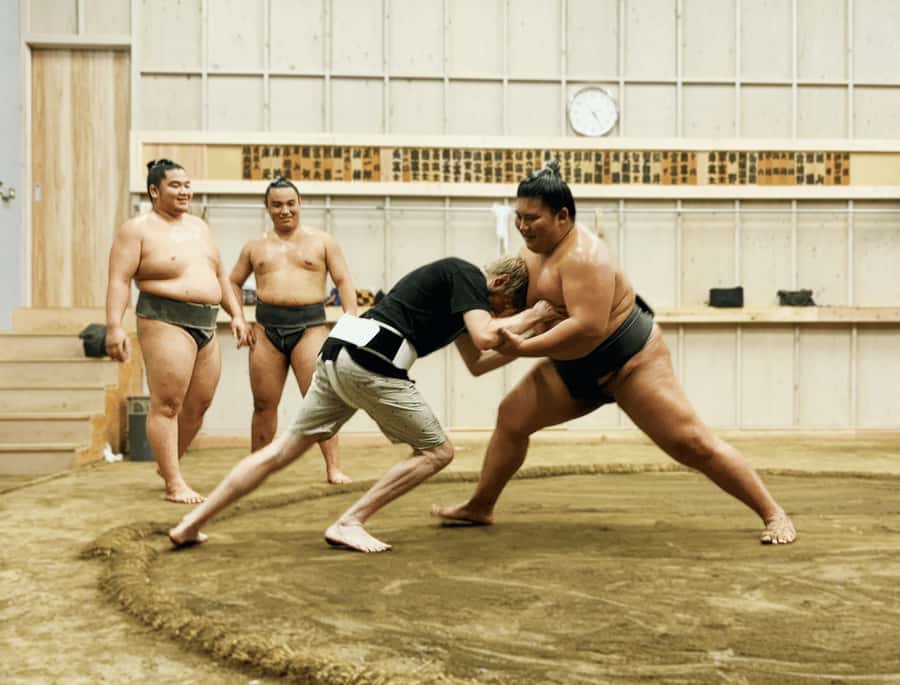
Once the formal observation ends, you may have the opportunity to take a group photo with some of the wrestlers. This is a welcome change of pace after nearly two hours of quiet concentration.
The photo arrangement depends on the timing and the stable’s schedule. A 9:30 a.m. visit ended with pictures outside the building, with four wrestlers including Enho. A later 10:30 a.m. visit allowed photos inside, with the full group of wrestlers standing in front of the ring.
That difference shows why you should not expect one fixed ending. The stable may still need to clear the room, finish chores, or move on to the next part of the day. Your photo may be outside, inside, with several wrestlers, or with more of the group.
This is also the moment when questions are most practical. Your guide can translate questions for the wrestlers, letting you learn a little about the people you have just watched. Keep the exchange brief and respectful. They are finishing a hard training session, not clocking in for a meet-and-greet.
The $121 price and what you receive
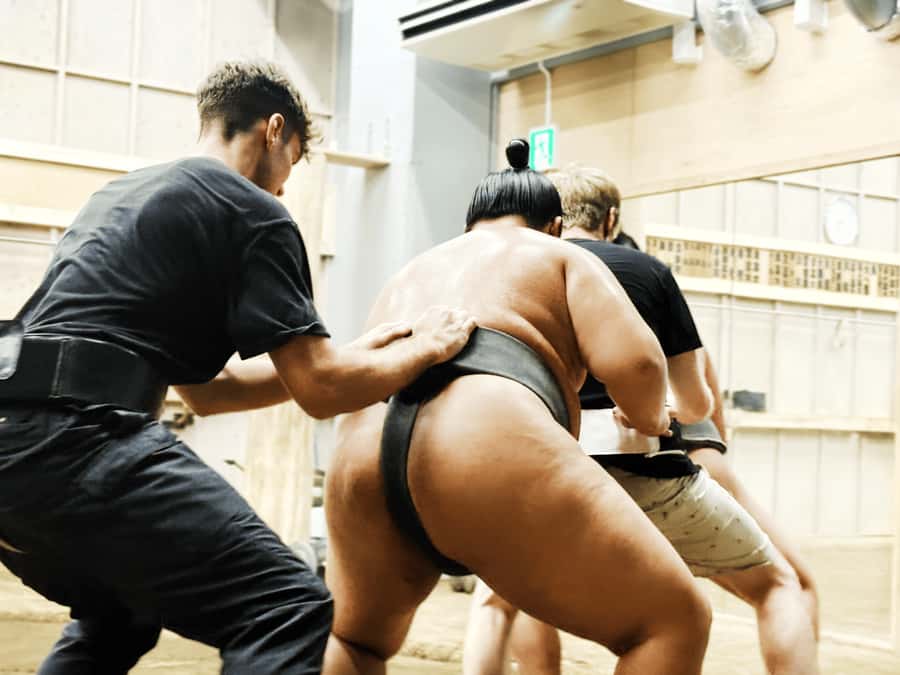
At $121 per person, this is not a cheap morning activity. You are paying for access to a setting that most independent visitors cannot enter, an English-speaking guide, live commentary, and help with the stable’s strict etiquette.
The value depends on your interest. If you already follow sumo, this is a strong use of money because you see the sport at its source rather than only during a tournament. If you know little about sumo, the guide’s explanation gives the visit enough structure to make the price easier to justify.
The stable access is the key part. You are not watching a public exhibition from a distant seat. You are inside a real training place, close enough to see the wrestlers’ feet, grips, expressions, and recovery between bouts.
The cost feels less worthwhile if you want a flexible sightseeing stop, a casual photo session, or a guaranteed appearance by the Yokozuna. None of those is promised. You are paying for access to training, and training can be quiet, repetitive, changing, and controlled by the stable.
The provided information lists a guide, stable access, photo opportunities, and live commentary as included. Do not assume that a meal is part of every booking, even though one account described an excellent sumo meal. Confirm the exact inclusions for your selected date.
Who should book this experience
I would choose this tour for a visitor who wants a rare look at everyday Japanese tradition and is comfortable following formal rules. It suits sumo fans especially well, but you do not need to know the sport in advance.
It also works for curious first-time visitors who want something beyond temples, shopping streets, and observation decks. The stable shows a side of Tokyo that is disciplined, private, and rooted in an old sporting culture.
You should be comfortable with all of the following:
- Sitting quietly for roughly 75 to 105 minutes
- Removing your shoes indoors
- Possibly sitting on a floor cushion
- Staying inside until practice ends
- Keeping your phone silent and avoiding flash photography
- Following directions about posture and personal space
This is not suitable for wheelchair users or people with a cold. A cold is a poor match for a quiet indoor practice room, and the stable’s rules leave little room to step outside during training.
Practical advice for a smoother visit
Wear clothing that makes floor seating easier if cushions are used. Loose, comfortable clothes are more useful than anything formal, though you should still dress respectfully for a working stable.
Leave food behind and do not bring sunglasses into the practice area. Charge your phone if you want a photo afterward, but remember that video and flash photography are forbidden.
Arrive with enough time to find the meeting point. The guide carries a Japan Wonder Travel board, which helps, but the meeting location and time can change. Read the final instructions sent after booking rather than relying on a general map.
Build no tight connection after the tour. Practice may run shorter or longer depending on the wrestlers’ work. Since you cannot leave in the middle, give yourself a generous buffer before lunch or another timed reservation.
The stable may have vending machines outside, and wrestlers may use them, but this is not a promise of a refreshment stop. Bring no food into the stable, and use the restroom before you meet the guide.
Should you book the Tokyo sumo morning practice?
Book it if you want a close, quiet look at professional sumo and can accept that the morning follows the stable’s rules, not a visitor-friendly timetable. The strongest reasons are the real training, the close seating, the live English commentary, and the chance to meet wrestlers afterward.
Skip it if you need guaranteed access to the Yokozuna, dislike floor seating, have mobility problems, or want to come and go freely. For everyone else, the $121 cost buys a rare kind of Tokyo experience: not a staged show, but a brief and respectful look into the daily discipline behind Japan’s national sport.
FAQ
Where does the sumo practice take place?
The practice takes place inside a real Tokyo sumo stable where the Yokozuna trains. The exact location is sent after booking and may vary by tour date.
Is the Yokozuna guaranteed to attend?
No. The stable is where the Yokozuna trains, but you will not know until the morning of the experience if he will be there.
How long does the tour last?
The practice may last about 75 to 105 minutes. The full activity can be shorter or longer depending on the day’s training.
Can I leave during practice?
No. You cannot leave the stable in the middle of the practice, so use the restroom before arriving.
Do I need to sit on the floor?
You should be prepared to sit on a zabuton cushion on the floor. Seating arrangements can vary, and folding chairs have also been used.
Can I take photos?
Photos may be allowed, and a group photo with wrestlers is offered after practice. Flash photography and video recording are not allowed.
Can I use my cellphone?
Yes, but it must be on silent. You may also need to turn off the camera shutter sound.
Is the tour conducted in English?
Yes. The tour includes an English-speaking guide and live commentary through earbuds.
Is food included?
The listed inclusions are the guide, access to the stable, photo opportunities, and live commentary. Food is not listed as a standard inclusion, and food cannot be taken into the stable.
Is the tour suitable for wheelchair users?
No. The experience is listed as unsuitable for wheelchair users, and floor seating may also be difficult for people with mobility issues.
Just added for fans in Tokyo
- Tokyo: Grand Sumo Morning Training Tour★ 4.9 · 12 reviews
- Sumo Training Watching Experience in Tokyo★ 4.5 · 8 reviews
- Kickboxing & Body Training with EX-Pro Fighter★ 5.0 · 4 reviews
- Tokyo: Visit Sumo Morning Practice with English Guide★ 4.5 · 22 reviews
- Tokyo Sumo Experience with Live Show & Audience Challenge★ 5.0 · 38 reviews
- Tokyo Sumo History Tour with Chanko Nabe Lunch★ 5.0 · 3 reviews
- 【SUMO FESTIVAL】Tokyo Ginza: Sumo Show & Photo Experience★ 4.5 · 41 reviews
- Tokyo Shinjuku Sumo Show and Experience with Drinks and Photo★ 4.0 · 21 reviews
Sumo Experiences in Tokyo, compared.
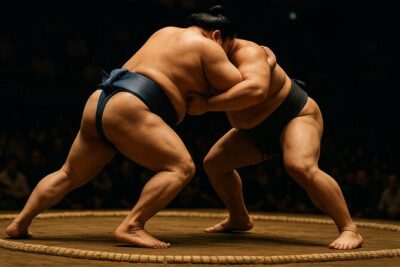
Tokyo Shinjuku Sumo Show & Experience with Photo
Read our review →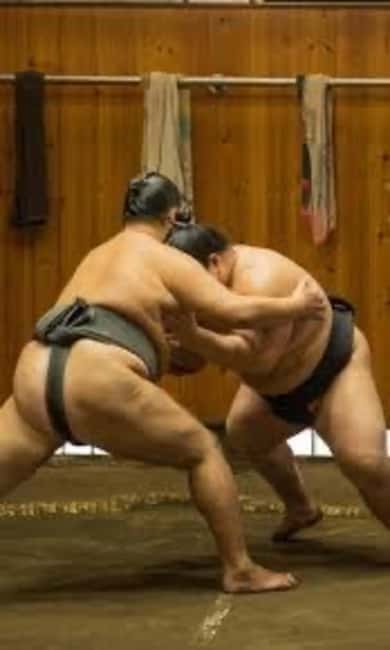
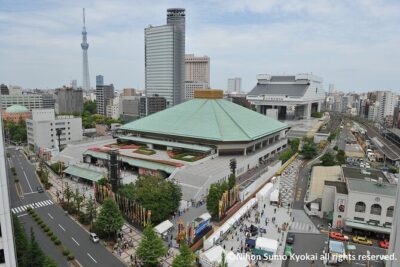
Tokyo Grand Sumo Tournament Viewing Tour with Tickets
Read our review →

Luxury Sumo Show Experience & Japanese cuisine & Drink
Read our review →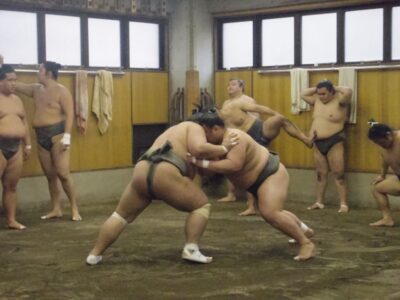
Browse the lists this tour appears in