
Review · SUMO EXPERIENCES IN TOKYO
Tokyo: Sumo Morning Practice Viewing Tour at a Real Stable
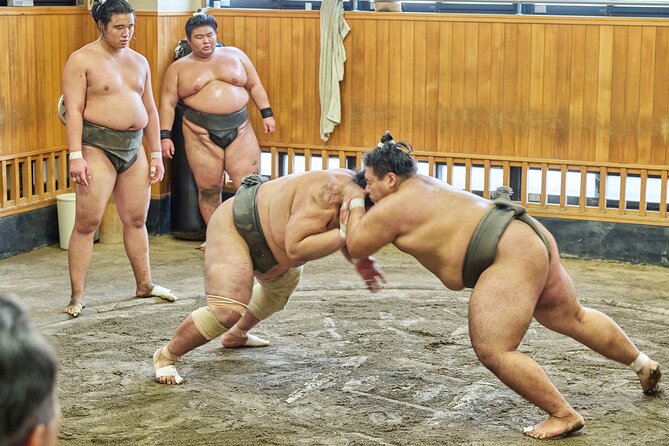
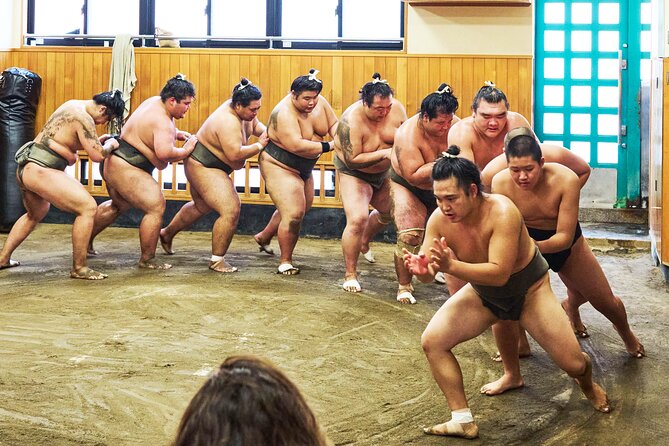
A sumo stable is not a stage set for tourists. It is where wrestlers live, eat, train, and spend years chasing a place among Japan’s top professionals. You sit close to the ring as young rikishi slap flesh, grapple, and drive each other out with startling speed. I especially like the real working setting and the chance to see the sport’s Shinto rituals explained by an English-speaking guide. I also like that guides such as Mao, Kawa, Yuki, and Tomo keep the explanations clear without burying you in technical detail.
The main drawback is the strict schedule. You must remain until practice ends, you cannot move around during training, and arriving late may mean missing the stable entirely. The session can also run a little shorter or longer, so do not place an important appointment immediately afterward.
Key Points
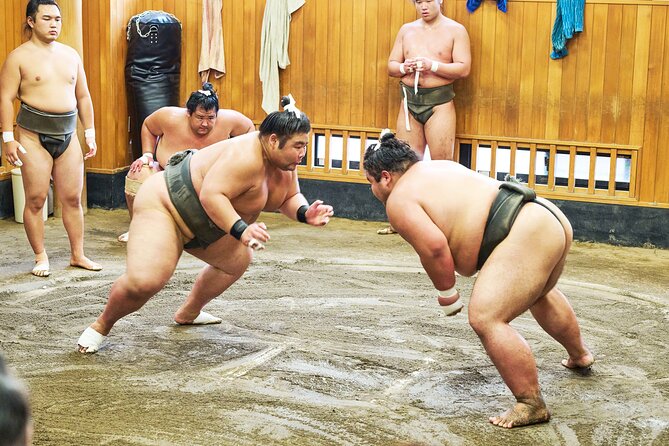
- Watch practice from close to the ring: You hear the footwork, body slaps, and impact rather than seeing a polished public performance from a distant seat.
- Enter a stable normally closed to the public: Access was once mainly reserved for sponsors, making this an unusual Tokyo experience even for many local residents.
- Learn the meaning behind the movements: Your English-speaking guide explains the rules, rituals, spiritual links, and tournament goals before and around the practice.
- Meet wrestlers outside training hours: You may have a chance to speak with the rikishi after the formal practice, subject to the stable’s schedule.
- Expect a quiet, respectful visit: Modest clothing, silent phones, and no standing or wandering are part of the deal.
- Plan for an early start: The meeting point is Kiyosumi-Shirakawa Station, and the group may ride a train to the stable after gathering.
Why This Sumo Visit Feels Different
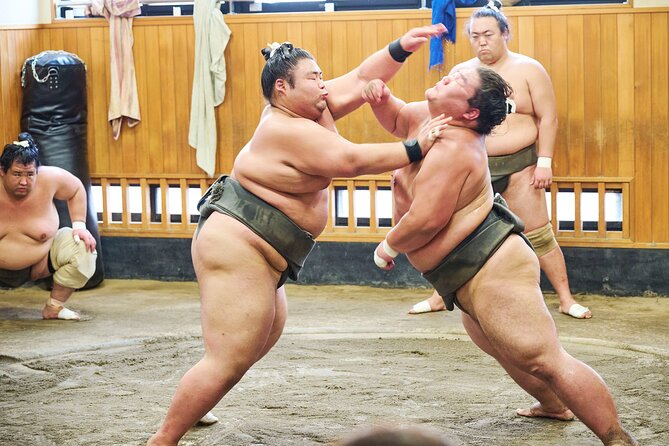
Tokyo offers plenty of polished cultural shows. This is not one of them. You enter a place of work, take a seat beside the ring, and watch the wrestlers follow their normal morning routine. They do not perform for the group or pause to explain what they are doing.
That lack of showmanship is the point. You see the sport at its most direct: bodies colliding, feet shifting, hands gripping, and wrestlers testing one another again and again. The sound matters. A slap against the torso, a hard landing, or the quick scrape of a foot across the clay tells you more about sumo’s physical demands than a short demonstration could.
The stable is also part of the wrestlers’ daily life. They live and eat there as well as train, and their entire routine is built around the sport. Watching practice gives you a glimpse of the commitment required before a wrestler ever becomes a familiar name at a tournament.
This is especially valuable if your only picture of sumo comes from television or a tournament ticket. A tournament shows the final contest. A stable visit shows the work behind it.
More Sumo Experiences in Tokyo
- Tokyo: Sumo Show and Dining Experience
★ 4.8 · 2,742 reviews - the SUMO show
★ 5.0 · 1,960 reviews - Tokyo Shinjuku Sumo Show & Experience with Photo
★ 5.0 · 1,750 reviews
Meeting at Kiyosumi-Shirakawa Station
The tour begins in front of Exit A1 at Kiyosumi-Shirakawa Station. You can reach the station on the Toei Oedo Line or the Hanzomon Line. Look for a guide holding a Local Guide Stars sign.
Give yourself plenty of time. The meeting point may look simple on a map, but late entry is a serious problem here. The group might take a train to the stable after meeting, and the stable does not operate like a museum with a flexible entry window. If you arrive late, entry may not be possible.
I would aim to reach the station at least 30 minutes before the stated meeting time. That gives you room for the station, the correct exit, and any delay finding the guide. One late arrival can also reduce the time available for everyone else, since the stable follows its own work schedule.
The ending point may differ from the station, depending on the day’s arrangements. Keep your morning flexible rather than assuming you will finish exactly where you started.
The Guide’s Introduction to Sumo
Before entering the stable, your guide sets the scene. This short explanation is more important than it may sound. Without it, you might see a series of brief wrestling bouts and miss the rules, rank system, rituals, and effort behind them.
You learn the basic way a match is won: a wrestler forces the opponent outside the ring or makes any part of the opponent’s body other than the feet touch the ground. That simple rule creates a surprisingly wide range of tactics. Strength matters, but timing, balance, flexibility, and position matter just as much.
The guide also explains sumo’s roots in ancient Shinto beliefs. Sumo is not treated only as a sport. Ritual and respect shape the way wrestlers enter the ring, prepare for a bout, and conduct themselves around practice.
Guides including Mao, Kawa, Yuki, and Tomo have been praised for clear English and useful explanations. Mao in particular has been noted for giving a strong introduction and answering questions in a friendly way. Tomo’s style has been described as helpful without overwhelming people with too much information. That balance suits this tour well. You need enough context to understand what you are seeing, but you do not want a classroom lecture before the main event.
Sitting Beside the Ring During Morning Practice
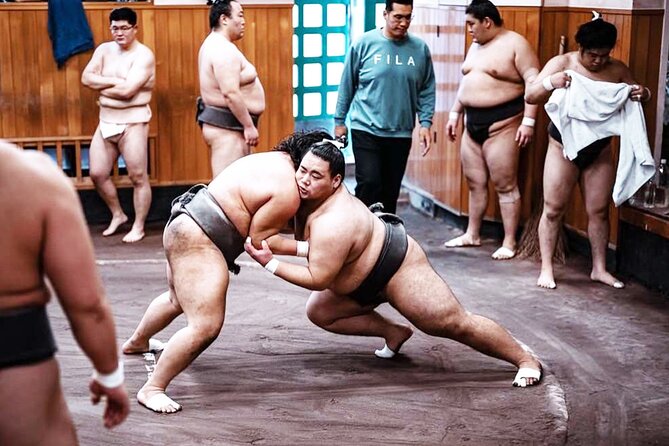
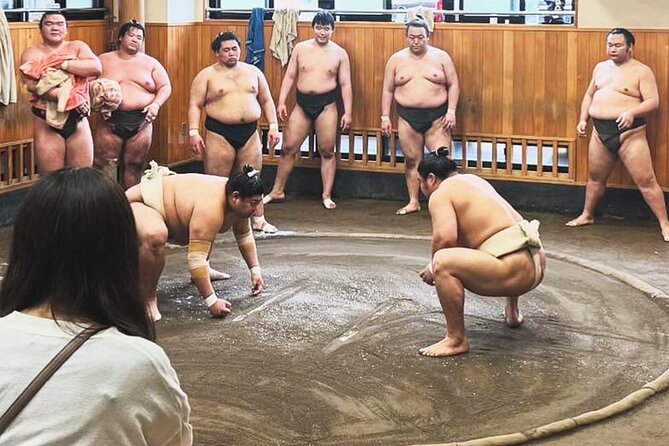
The heart of the visit is the practice session. You sit at the side of the ring, close enough to see and hear the action clearly. This is not the distant view you get from many public sporting events. You are near the physical work, while still following the stable’s rules and keeping out of the wrestlers’ way.
Expect silence. Your phone should be on silent, and you must not stand up or move around while practice is taking place. Noisy conversation is not allowed. You should also avoid eating and drinking during the session, apart from water, and use the restroom beforehand.
These restrictions are not needless fussiness. The wrestlers are training, not entertaining a group. Remaining still lets them continue their routine and helps you notice details that noise would cover up. Watch how a wrestler settles his feet, how quickly a bout changes direction, and how much effort goes into a short exchange.
The intensity can surprise you. Sumo wrestlers are large, but the practice is not slow. You may see speed, flexibility, balance, and considerable endurance packed into a few seconds. The action has a blunt physical force that photographs cannot quite capture.
You might also see a wrestler of very high rank. One visit included a yokozuna, the highest rank in sumo, though no particular rank can be promised on every date. The important point is that you are watching the stable’s scheduled practice, not a cast assembled for the tour.
Same city, a different fixture:
- Tokyo: Sumo Show and Experience in Shinjuku
★ 4.8 · 1,001 reviews - Tokyo Grand Sumo Tournament Viewing Tour with Tickets
★ 5.0 · 692 reviews - Tokyo Sumo Wrestling Tournament Experience
★ 5.0 · 660 reviews - Tokyo:Luxury Sumo Show Experience & Japanese cuisine & Drink
★ 4.7 · 577 reviews
Seeing Ritual and Discipline Up Close
The physical bouts are only part of the morning. Sumo’s rituals help explain why the sport carries such cultural weight in Japan. Your guide points out the spiritual practices and the meaning behind the wrestlers’ movements.
You will not simply watch people shove one another around a ring. You see a structured tradition in which preparation, respect, and discipline matter. The gestures may be brief, but they are tied to a much older idea of sumo as a practice connected to the divine and to the purification of the ring.
The training itself reveals another side of the tradition. Young wrestlers give everything to the session while working toward higher ranks and the major tournaments. Their effort is not a one-off display. It is part of a demanding path that shapes daily life inside the stable.
I like this combination of action and context. The guide does not ask you to admire sumo only because it is old. You get to see why the tradition still has force: the rules are simple, the discipline is severe, and every movement has a place.
Speaking With Wrestlers After Practice
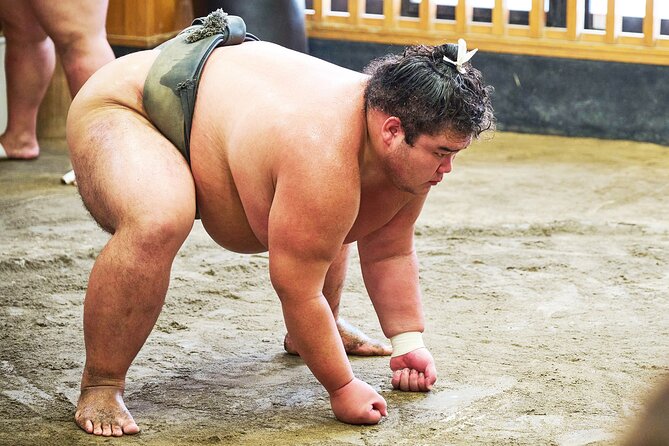
There may be time to speak with the wrestlers outside training hours. This is a valuable part of the visit because it changes the experience from observation to personal contact, while still respecting the stable’s work routine.
The timing matters. You should not expect to interrupt practice for questions or photographs. The chance to speak with wrestlers comes outside the formal training period and depends on the day’s schedule and stable arrangements.
Keep your questions respectful and concise. You may want to ask about daily life, training, tournaments, or the route toward becoming a top-ranked professional. The guide can help explain the setting and bridge the language gap.
The human contact works best after you have watched practice. By then, you have seen the effort involved, so a brief conversation carries more meaning. You are not meeting performers after a show. You are meeting athletes who have just completed serious work.
What the Two Hours Really Include
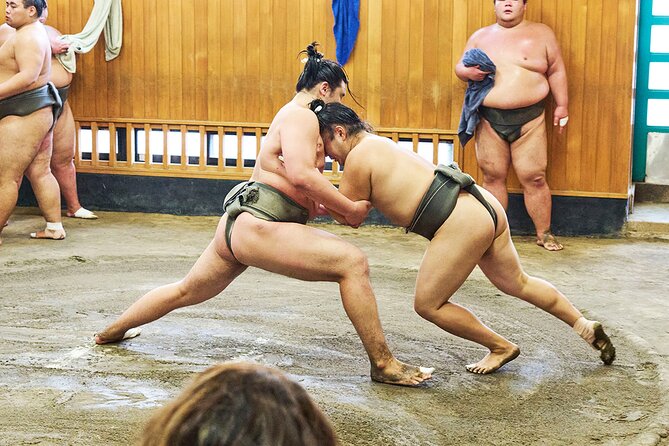
The advertised duration is about two hours, but the exact rhythm depends on the stable’s practice schedule. A typical visit includes:
- Meeting the guide at Kiyosumi-Shirakawa Station
- Receiving an introduction to sumo rules, traditions, and spiritual meaning
- Traveling to the stable if required
- Sitting quietly beside the ring during morning practice
- Learning what you are seeing from the guide
- Speaking with wrestlers outside training hours when possible
- Leaving once the practice and visit are complete
The stable may ask the group to remain until the end of practice, usually around 9:00 to 10:00 in the morning. You cannot leave and return later. If you step out, re-entry is not available.
That makes the tour a poor match for a tightly packed morning itinerary. It is a good match for someone willing to give the activity its full time and attention. The practice can be a little shorter or longer than expected, so allow extra room afterward.
The group size can vary. One recent group had 11 people, while another had 14. A smaller group makes it easier to hear the guide and feel close to the ring, though the stable itself remains the focus rather than group interaction.
Dress and Behavior Inside the Stable
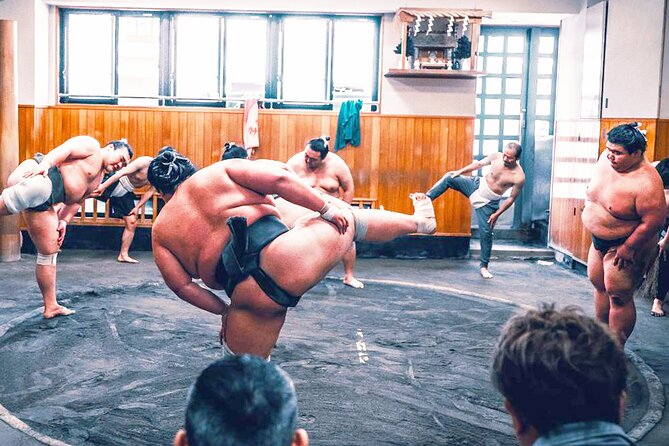
Think of the stable as a workplace and a traditional space, not a sightseeing attraction. Dress modestly. Keep your phone silent. Do not stand up, wander, or make noise during practice.
You should also prepare to sit quietly for the full session. The information does not specify the exact seating style, but the practical rule is clear: you need to remain in your place and stay until the practice ends.
This may sound strict if you are used to hopping between Tokyo attractions. It is also what protects the experience’s authenticity. The wrestlers carry on with their training because the group agrees to observe without getting in the way.
The tour is not suitable for children under 11. Older children and adults who can remain quiet and still may appreciate it, but the stable’s rules apply to everyone.
Is $98 a Fair Price?
At $98 per person, this is not a cheap way to fill two hours in Tokyo. You are paying for access to a place that is normally closed to the public, a live English-language explanation, and the chance to watch a real training session from close range.
The value depends on what you want. If you only want to see sumo once and do not care about the setting, a public tournament or televised match may make more sense. If you want to understand how wrestlers train and live, the stable visit offers something a regular spectator ticket cannot.
You are also paying for the guide’s interpretation. Sumo’s rules and rituals can be hard to read from the sidelines, especially when several bouts happen quickly. A clear introduction lets you recognize what matters and appreciate the difference between a simple clash and a carefully timed move.
The strongest value comes from the authenticity. This is a real session rather than a tourist performance. I would consider the price reasonable for a visitor who places cultural access above a bargain admission fee, especially if sumo is high on your Tokyo list.
Free cancellation up to 24 hours before the activity and the option to reserve now and pay later make planning easier. They do not change the strict arrival and departure rules, so flexibility before the day is useful, but flexibility during the visit is limited.
Who Will Enjoy This Most
I would recommend this tour to you if you:
- Want a close look at a major Japanese tradition
- Prefer real daily life to a staged cultural show
- Enjoy sports, ritual, or physical discipline
- Can sit quietly and follow strict stable etiquette
- Have a flexible morning schedule
- Are happy to learn from a guide before watching the action
It is particularly good for first-time visitors who want more than a quick photograph of a sumo wrestler. The guide’s explanation gives the sport a human and cultural frame, while the practice provides the physical proof.
I would hesitate if you need to leave at a fixed time, dislike quiet observation, or want a hands-on activity. You will not be invited to enter the ring or move freely around the stable. This is a close viewing experience, not a participation class.
Should You Book the Sumo Stable Visit?
Book it if you want to see sumo as a way of life rather than as a short show. The close seating, serious practice, spiritual customs, and chance to speak with wrestlers create a rare morning in Tokyo.
Book only if you can arrive early and stay until the end. Meet at Kiyosumi-Shirakawa Station’s Exit A1 with time to spare, dress modestly, silence your phone, and leave your schedule open afterward.
For the right person, the $98 cost buys access to the part of sumo that most visitors never see: the hard, quiet work before the tournament lights and applause.
FAQ
Where does the tour meet?
Meet in front of Kiyosumi-Shirakawa Station at Exit A1. The station is served by the Toei Oedo Line and the Hanzomon Line. A guide will hold a Local Guide Stars sign.
How long does the activity last?
The stated duration is two hours. The practice and tour can be a little shorter or longer than expected, so keep commitments after the activity flexible.
What time does practice usually finish?
Practice usually ends around 9:00 to 10:00 in the morning. You must stay until the end of the practice.
Can I leave the stable and come back?
No. Once you leave the stable, re-entry is not possible.
Is the tour conducted in English?
Yes. The tour includes a live English-speaking guide.
Can I speak with the wrestlers?
You may have an opportunity to speak with the wrestlers outside training hours. The stable’s practice must not be interrupted.
What should I wear and bring?
Wear modest clothing and keep your phone on silent. You must not make noise, stand up, or move around during practice.
Is the activity suitable for children?
No. The tour is not suitable for children under 11 years old.
Just added for fans in Tokyo
- Tokyo: Grand Sumo Morning Training Tour★ 4.9 · 12 reviews
- Sumo Training Watching Experience in Tokyo★ 4.5 · 8 reviews
- Tokyo Sumo Experience with Live Show & Audience Challenge★ 5.0 · 38 reviews
- Kickboxing & Body Training with EX-Pro Fighter★ 5.0 · 4 reviews
- Tokyo: Visit Sumo Morning Practice with English Guide★ 4.5 · 22 reviews
- Tokyo Shinjuku Sumo Show and Experience with Drinks and Photo★ 4.0 · 21 reviews
- Tokyo Sumo History Tour with Chanko Nabe Lunch★ 5.0 · 3 reviews
- 【SUMO FESTIVAL】Tokyo Ginza: Sumo Show & Photo Experience★ 4.5 · 41 reviews
Sumo Experiences in Tokyo, compared.
Tokyo Shinjuku Sumo Show & Experience with Photo
Read our review →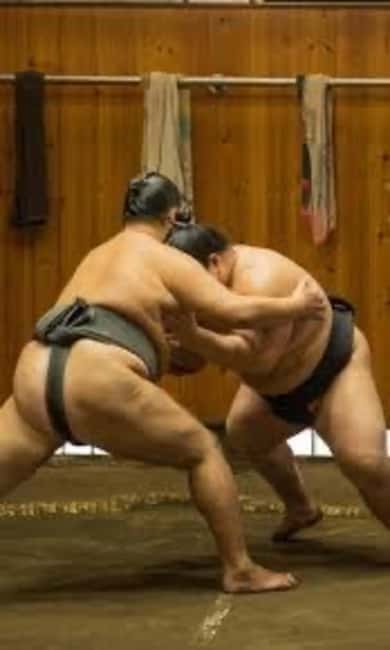
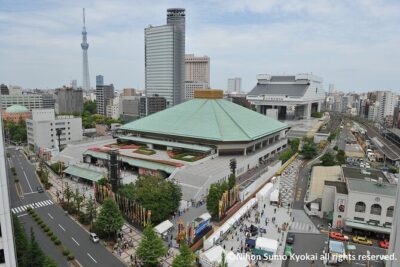
Tokyo Grand Sumo Tournament Viewing Tour with Tickets
Read our review →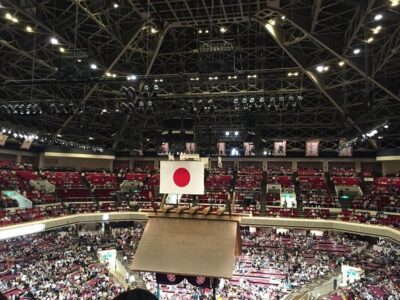

Luxury Sumo Show Experience & Japanese cuisine & Drink
Read our review →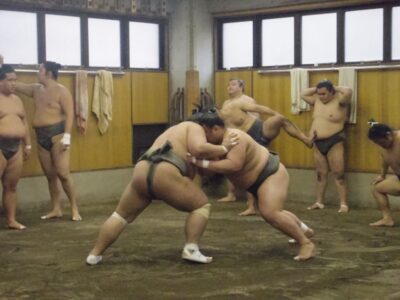
Browse the lists this tour appears in