
Review · SUMO EXPERIENCES IN TOKYO
Tokyo: Sumo Show and Experience in Shinjuku
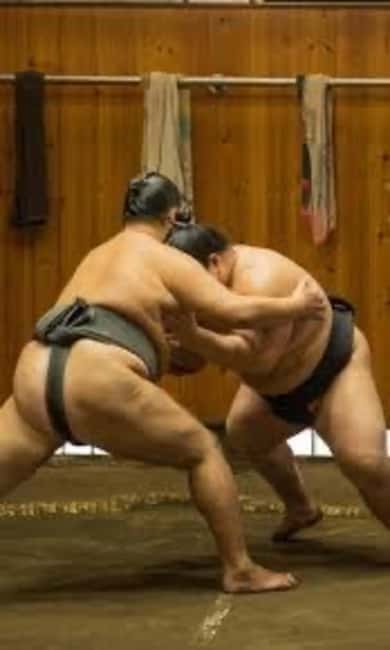
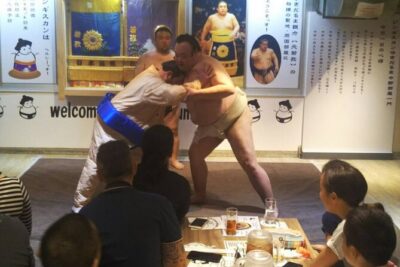
The big draw here is simple: you do not just watch sumo, you learn how it works and then get the chance to step into the ring yourself. The wrestlers demonstrate foot stomps, throws, training moves, and match technique before putting on an exhibition bout.
I like the clear English explanations and the friendly crowd work from hosts such as Paula, Dai, Ari, and Ali. I also like the chance to wear a sumo outfit and face a professional wrestler, even though the result is never really in doubt. The main thing to remember is that this is not a tournament, but a staged cultural show with demonstrations and exhibition matches.
Key points
- A 90-minute introduction to sumo: Learn the rules, rituals, training, fouls, and basic techniques before watching an exhibition match.
- English-speaking hosts keep it lively: Paula, Dai, Ari, and Ali have all led sessions praised for humor, clear explanations, and audience interaction.
- You can enter the ring: Put on a traditional sumo outfit and challenge one of the wrestlers in a playful bout.
- Professional wrestlers perform: The demonstrations show the force, balance, discipline, and timing behind the sport.
- A good Shinjuku evening activity: The event is short enough to fit around sightseeing, shopping, or dinner.
- Know what you are buying: At $69, you are paying for education, entertainment, and personal interaction, not a full tournament.
What happens inside the Shinjuku sumo show
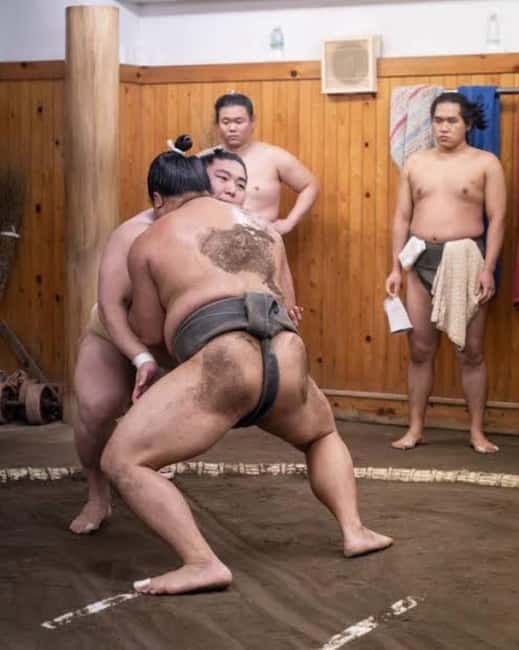
This experience takes place on the second floor of the Sekisaku Building in Shinjuku. You must enter through the front door facing the main road, next to Daiso. That detail matters because the building has other access points, and the front desk may not accept late arrivals once the timed program has begun.
I would arrive early enough to find the entrance without rushing. Shinjuku can be confusing, especially when you are navigating large streets, department stores, and station exits. Since the show follows a fixed schedule, being a few minutes late could mean missing part of the program or being refused entry.
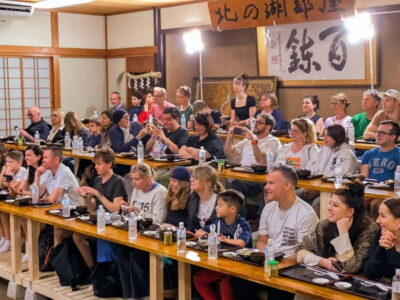
Once inside, you receive bottled water and take your place for a compact 90-minute program. The setting is designed for close contact rather than a huge arena atmosphere. That gives the event its main strength: you can see the wrestlers at close range and feel involved in the action.
The host guides the program in English. Different sessions feature hosts such as Paula, Dai, Ari, and Ali, and the tone can vary slightly with the person leading it. The strongest common thread is audience participation. You are not expected to sit quietly through a lecture. The host explains a point, brings the wrestlers into the demonstration, and often turns to the crowd for questions or volunteers.
More Sumo Experiences in Tokyo
- Tokyo: Sumo Show and Dining Experience
★ 4.8 · 2,742 reviews - the SUMO show
★ 5.0 · 1,960 reviews - Tokyo Shinjuku Sumo Show & Experience with Photo
★ 5.0 · 1,750 reviews
From shiko to salt throwing
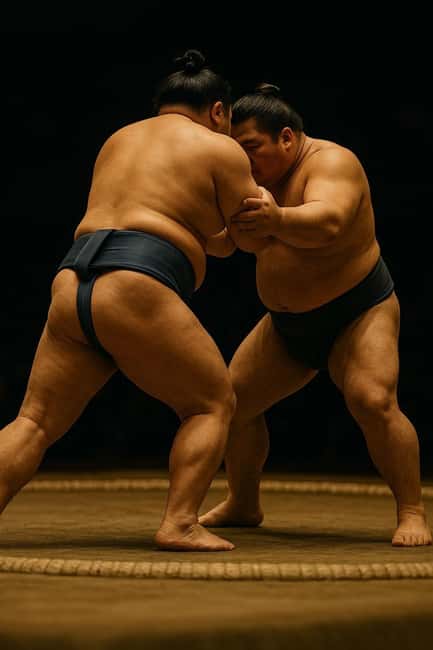
The first part explains why sumo looks so unusual to newcomers. You see the shiko, the powerful foot-stomping movement associated with sumo, along with salt throwing and other ceremonial actions. These are not random flourishes. They help show that sumo is built around ritual as well as physical combat.
The host also explains the basic rules and the aim of a bout. That preparation is useful because a sumo match can be over in seconds. Without context, you may see two large men collide, push, and tumble out of the ring before you understand what happened. With the rules explained first, you can watch for foot placement, balance, grip, timing, and the moment one wrestler gains control.
The presentation also covers techniques and fouls. This is one of the more valuable parts for first-time viewers. Sumo is often reduced to size and strength, but the demonstrations show more than that. A wrestler must stay balanced, use leverage, read an opponent, and apply force at the right moment.
The training demonstrations help make the sport more understandable. You see movements that demand control and repetition, not just brute power. The physical presence of the wrestlers is impressive, but the program gives you a better sense of the discipline behind it.
I especially like this structure because it prepares you for watching live sumo elsewhere. If you later attend a professional tournament, you will have a better idea of what the wrestlers are doing and why a short bout can contain so much strategy.
The exhibition match brings the lesson to life
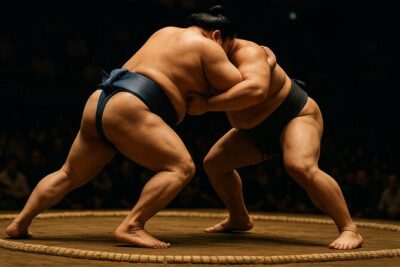
After the explanations and demonstrations, the professional wrestlers face each other in an exhibition match. This is the point where the show shifts from classroom to theater. You hear the impact, see the speed of the initial charge, and watch the wrestlers work for position.
It is important to set your expectations correctly. This is not a tournament, and it is not presented as a full competition day. The match is part of a controlled cultural program. That does not make it dull. The wrestlers are entertaining, the action is easy to follow, and the format lets the host explain what you have just seen.
The show also uses humor. That keeps the tone comfortable for families and for people who know little about sumo. The wrestlers interact with the audience rather than remaining distant figures. You might see them answer questions, pose for photographs, or play along with the host and volunteers.
The exhibition format is also a practical advantage. A real tournament involves a much longer visit, more rules to learn, and a schedule that may not line up with your time in Tokyo. Here, you get a concentrated introduction in 90 minutes. I would choose this event if I wanted a taste of sumo without committing half a day to a tournament venue.
Your turn in the dohyo
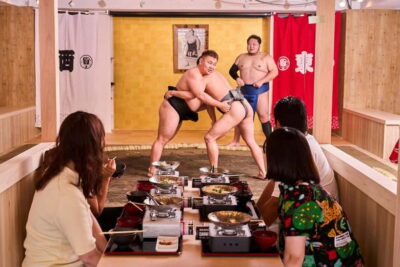
The most memorable part for many people is the chance to put on a traditional sumo outfit and enter the ring. Volunteers challenge the wrestlers in short, playful bouts. You should expect the wrestler to have the clear advantage, but that is part of the joke and the fun.
The experience is not about pretending you can defeat a professional. It is about feeling the scale, movement, and physical presence of the sport. Even a simple push against a trained wrestler gives you a better sense of how much control and strength are involved.
Audience members have described the challenge as hilarious, and children often respond especially well to it. One parent even found that a wrestler let him toss the wrestler over the ropes, leaving his children convinced that their father could really win. That kind of playful performance is exactly what makes the event work for families.
You do not have to volunteer. If you prefer to watch, you can enjoy the demonstrations and see other people take their turn. If you do volunteer, remember that the encounter is physical, even though it is presented as entertainment. The supplied information does not give specific age, height, or health requirements, so you should ask the staff if you have concerns before joining in.
The traditional outfit also makes the moment more memorable for photographs. The program includes the opportunity to wear it, and photographs with the wrestlers may be possible during the event. I would treat photos as a pleasant part of the encounter rather than a guaranteed separate service, since the formal inclusions specifically promise the outfit and the challenge opportunity.
Same city, a different fixture:
- Tokyo Grand Sumo Tournament Viewing Tour with Tickets
★ 5.0 · 692 reviews - Tokyo Sumo Wrestling Tournament Experience
★ 5.0 · 660 reviews - Tokyo:Luxury Sumo Show Experience & Japanese cuisine & Drink
★ 4.7 · 577 reviews - Tokyo: Sumo Morning Practice Viewing Tour
★ 4.8 · 570 reviews
Why the English host matters
Sumo has layers of ritual and terminology that can be hard to follow without help. The English-speaking host makes the difference between seeing a curious spectacle and understanding a Japanese sport.
Hosts such as Paula have been praised for confidence, humor, and audience interaction. Dai is noted for answering questions and explaining the sport in a way that works for first-time viewers. Ari and Ali have also been singled out for keeping the tone engaging. Since the host may vary, you should not book based on one particular personality alone, but the format clearly gives the presenter an important role.
The best part of the commentary is its practical focus. You learn the history and traditions of sumo, then connect them to the movements in front of you. The host also explains professional discipline, rules, techniques, and fouls. That progression makes the sport easier to respect and enjoy.
I would recommend paying attention during the early explanations, even if you came mainly for the match. The demonstrations are more entertaining once you know what to watch for. You may also get the chance to ask the wrestlers questions, which gives the program a personal touch that a distant tournament seat cannot provide.
Is $69 a fair price?
At $69 per person, this is not a cheap way to fill 90 minutes. You are paying more than you would for a casual museum visit or a basic cultural demonstration. The price makes more sense if you value the combination of a live performance, English commentary, close access to professional wrestlers, audience participation, and the chance to enter the ring.
The event also saves you from the uncertainty of trying to understand sumo on your own. A tournament ticket can offer the real sport, but you may need to plan around dates, seats, timing, and a longer visit. This show gives you a compact introduction that works well during a short Tokyo stay.
For a family, the price may be worthwhile because adults get the cultural explanation while children get the comedy and physical action. The show has enough structure to teach something, but it does not feel like a formal class.
For a serious sumo fan, the value is more limited. You will not see a tournament, and you will not get the same sense of a full competition day. You are buying access and explanation rather than the highest level of sporting suspense.
I would call it good value for a first-time visitor who wants a personal encounter with sumo. I would be more cautious if you have already attended a tournament or watched extensive professional sumo and are looking only for authentic competitive action.
Who will enjoy it most?
I think this suits families, first-time visitors to Japan, and anyone curious about Japanese culture but unsure how to approach sumo. The English commentary removes a major barrier, and the audience participation keeps the program from becoming too formal.
It is also a good choice for people who have just started watching sumo. One useful approach is to attend this show before going to a professional tournament. The rules and techniques will make the tournament easier to follow, and you will not feel lost when a bout ends almost immediately.
The event works for adults too. Several parts are genuinely informative, especially the explanations of fouls, training, and technique. The humor keeps it from feeling heavy, while the live demonstrations show the physical demands of the sport.
I would not choose it if you want a quiet, highly traditional ceremony with little audience involvement. The show depends on interaction, jokes, volunteers, and a friendly presentation. That is its strength, but it may not suit someone looking for a formal or purely athletic event.
Planning your visit in Shinjuku
The 90-minute length is easy to fit into a Tokyo itinerary. You can place it before dinner, after shopping, or between other Shinjuku activities. It also works well on a day when your feet need a break, since much of the program is spent watching from your seat.
Give yourself extra time to find the building. The meeting point is the second floor of Sekisaku Building, and entry is only through the front of the building next to Daiso. Do not assume that any visible entrance will take you to the event.
Late arrival is a real concern because the program follows a time schedule. I would avoid booking this too tightly against a train connection, meal reservation, or another timed attraction. You can cancel up to 24 hours ahead for a full refund, and the reserve-now, pay-later option gives you some flexibility while planning your Tokyo days.
Food is not included. The listed welcome drink is bottled water, so eat beforehand or plan a meal afterward. Since the show is in Shinjuku, you have plenty of options nearby, but the event itself should be treated as entertainment rather than dinner.
Should you book the Shinjuku sumo experience?
I would book it if you want an accessible, lively introduction to sumo and like the idea of getting close to the performers. The English host, clear demonstrations, exhibition match, and optional ring challenge give you more to do than simply watch two bouts from a distance.
I would skip it if your main goal is to see official tournament competition. This show does not replace a tournament, and the $69 price reflects the teaching, presentation, and audience access as much as the wrestling itself.
For most first-time visitors, I think it earns its place in a Tokyo plan. You leave with a better understanding of the rituals, rules, and training, plus a story about stepping into the ring with a sumo wrestler. That is a useful mix of culture, comedy, and close-up action in the heart of Shinjuku.
FAQ
Is this a real sumo tournament?
No. This is a cultural show with demonstrations and exhibition matches. It is not an official tournament.
How long does the experience last?
The experience lasts 90 minutes.
Is the show conducted in English?
Yes. An English-speaking live host explains the history, rituals, rules, techniques, and demonstrations.
Can I challenge a sumo wrestler?
Yes. The experience includes the opportunity to wear a traditional sumo outfit and challenge one of the wrestlers in the ring.
Where is the meeting point?
The meeting point is on the second floor of Sekisaku Building in Shinjuku. Entry is through the front door next to Daiso.
Is food included?
No. Food is not included. A welcome bottled water is included.
Can I cancel my booking?
Yes. You can cancel up to 24 hours in advance for a full refund. You can also reserve now and pay later.
Just added for fans in Tokyo
- Tokyo: Grand Sumo Morning Training Tour★ 4.9 · 12 reviews
- Sumo Training Watching Experience in Tokyo★ 4.5 · 8 reviews
- Kickboxing & Body Training with EX-Pro Fighter★ 5.0 · 4 reviews
- Tokyo: Visit Sumo Morning Practice with English Guide★ 4.5 · 22 reviews
- Tokyo Sumo Experience with Live Show & Audience Challenge★ 5.0 · 38 reviews
- Tokyo Shinjuku Sumo Show and Experience with Drinks and Photo★ 4.0 · 21 reviews
- Tokyo Sumo History Tour with Chanko Nabe Lunch★ 5.0 · 3 reviews
- 【SUMO FESTIVAL】Tokyo Ginza: Sumo Show & Photo Experience★ 4.5 · 41 reviews
Sumo Experiences in Tokyo, compared.
Tokyo Shinjuku Sumo Show & Experience with Photo
Read our review →
Tokyo Grand Sumo Tournament Viewing Tour with Tickets
Read our review →

Luxury Sumo Show Experience & Japanese cuisine & Drink
Read our review →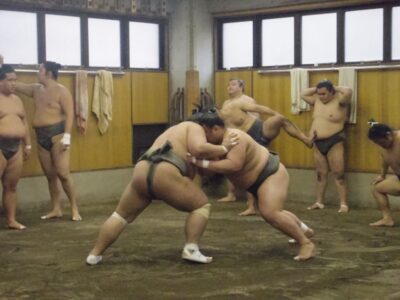
Tokyo Sumo Experience: Chanko & Mochi with a Former Pro
Read our review →Browse the lists this tour appears in