
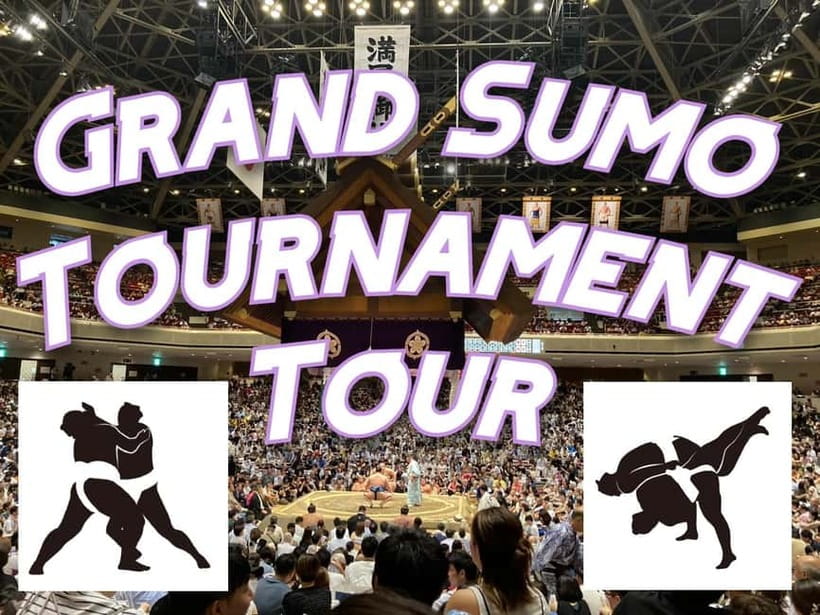
Review · SUMO EXPERIENCES IN TOKYO
Tokyo: Watching Sumo and Ryogoku Area Walking Tour
Sumo is more than a sport in Japan, and this experience gives you a useful introduction before you take your seat at Ryogoku Kokugikan. The 50-minute walk links sumo landmarks with the rituals and stories that make the matches easier to follow.
I like the visit to Eko-in Temple, where sumo has longstanding spiritual ties, and the chance to pair the walking tour with a real tournament ticket. The main drawback is that your guide leaves once you enter the arena, so you may need to work out the match customs and announcements on your own.
Key points at a glance
- Start at Edo NOREN: Meet staff holding TNK placards outside the west exit of Ryogoku Station at 12:20 PM.
- See three distinctive sites: The route includes Eko-in Temple, the Sumo Photo Museum, and the remains of the Kira Residence.
- Choose your viewing style: Box seats sit close to the ring, while second-floor chairs offer more personal space.
- Expect a shared box: Each 1.3-meter box has four cushions and may seat you with other customers.
- Plan for independent arena time: The English-speaking guide leads the city walk but does not stay inside the venue.
- Allow for a strict venue: Outside food and drinks, video recording, smoking, large bags, and bare feet are not permitted.
Why Ryogoku is the right place to watch sumo
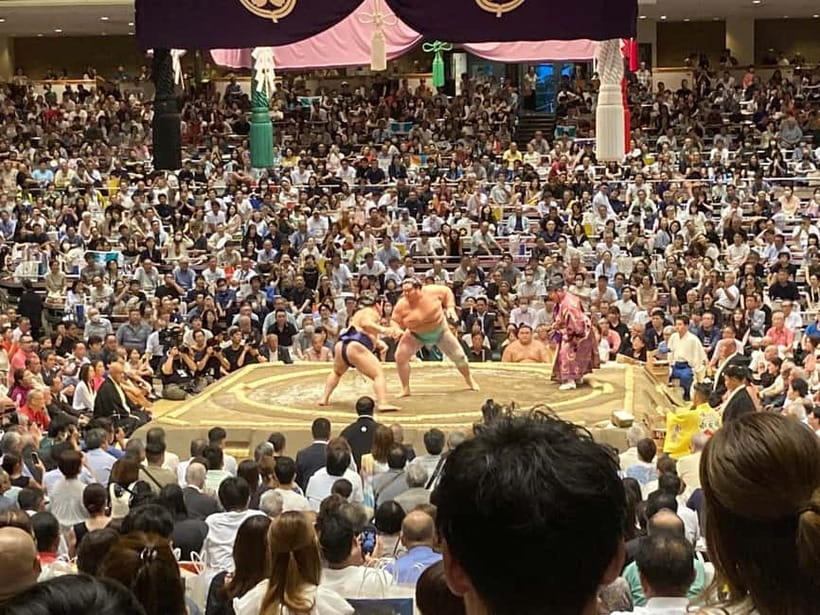
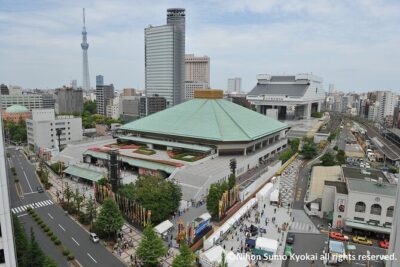
Ryogoku is the natural setting for this outing because the district is closely tied to professional sumo. You are not simply being taken to an arena and handed a ticket. The walk first shows you the places connected with the sport, then leaves you free to watch the action at your own pace.
That order matters. Sumo can look puzzling if you arrive without knowing why wrestlers perform certain rituals or why the ring receives so much attention. A short orientation around the neighborhood gives you a better frame for what follows, even though it cannot replace a full lesson in Japanese.
The activity costs $135 per person. That price includes the walking guide and the sumo ticket, but not transportation, food, or drinks. It is a substantial spend for an outing lasting part of one day, so the value depends heavily on how much you want to attend a live match and how important the walking introduction is to you.
If you were already planning to buy a sumo ticket independently, the guided walk adds useful context. If you mainly want a long, guided day with constant commentary, this is less satisfying because the arena portion is self-directed.
More Sumo Experiences in Tokyo
- Tokyo: Sumo Show and Dining Experience
★ 4.8 · 2,742 reviews - the SUMO show
★ 5.0 · 1,960 reviews - Tokyo Shinjuku Sumo Show & Experience with Photo
★ 5.0 · 1,750 reviews
Meeting at Ryogoku Station at 12:20 PM
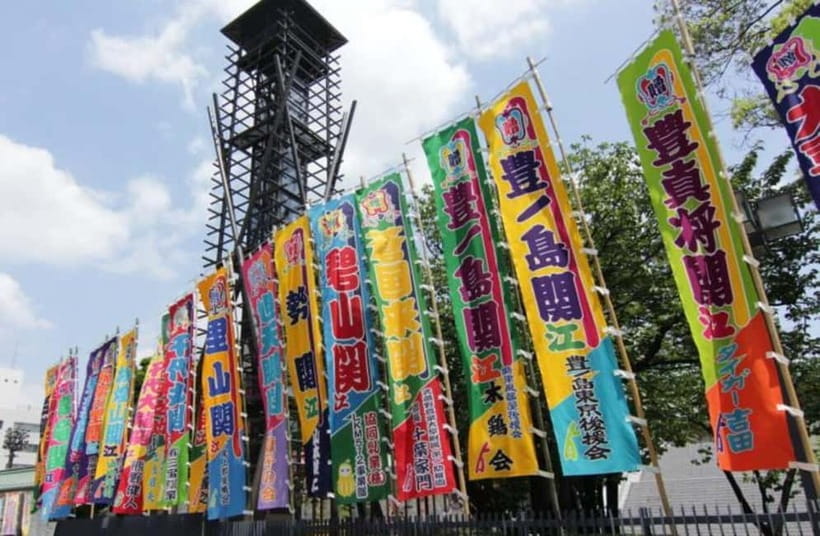
Your meeting point is the Edo NOREN entrance near the west exit of Ryogoku Station. Staff will hold placards marked TNK, and you should confirm your name with them. Arrive 10 to 15 minutes early. Ryogoku has more than one station exit, and a last-minute search for the right entrance could make the start unnecessarily tense.
You arrange your own transportation to the station and later back from the venue. The activity is listed as ending back at the meeting point, but you should still check the day’s instructions carefully and keep enough time in your schedule for the sumo event.
Wear comfortable clothes and sensible shoes. The walk lasts only 50 minutes, but you will then spend time inside the arena. Large bags are not allowed, and the activity is not suitable for wheelchair users.
A helpful feature is the simple meeting setup. You do not need to search for a restaurant or a hard-to-find street corner. Look for the placards at the station entrance and make sure the staff have your name before the group sets off.
Eko-in Temple and sumo’s spiritual side
Eko-in Temple is the first major stop and one of the more meaningful parts of the route. It is linked to sumo through centuries of religious and cultural connections, giving you a reminder that the sport is tied to ceremony as much as competition.
The temple stop is not presented as a long religious tour. Instead, it helps place sumo within the wider customs of Japan. You can expect your English-speaking guide to explain why this site matters to the district and how its past connects with sumo.
I like this part because it moves the outing beyond a simple sporting event. You are seeing a place associated with the values and rituals around sumo, not just looking at athletes from a seat. The tradeoff is time. With only 50 minutes for the whole walk, each stop receives an introduction rather than a detailed historical treatment.
Keep your expectations in check here. This is a brief guided visit, not an extended temple tour with time for quiet exploration. If you prefer a fast, focused route that connects several sites, the pace should suit you. If you want long stops and detailed architecture commentary, you may find it light.
The Sumo Photo Museum in a short walking route
The Sumo Photo Museum offers a visual look at how sumo has changed and how it fits into Japanese culture. Photographs can make the sport easier to understand because they show its settings, personalities, and customs across time.
This is especially useful if you are new to sumo. Before the match, the museum can give you a clearer sense of the sport’s public image and long development. You will not need specialist knowledge to appreciate the displays, and the stop breaks up the outdoor walk with a focused indoor visit.
The museum is part of the route rather than a separate long museum outing. The tour does not promise an extended amount of free time there, so think of it as a well-chosen introduction. You will see enough to add context, then continue to the next landmark.
For me, this is one of the tour’s strongest choices because the three stops cover different sides of Ryogoku. Eko-in Temple points to spiritual connections, the photo museum presents sumo through images, and the Kira Residence site brings in samurai history.
Same city, a different fixture:
- Tokyo: Sumo Show and Experience in Shinjuku
★ 4.8 · 1,001 reviews - Tokyo Grand Sumo Tournament Viewing Tour with Tickets
★ 5.0 · 692 reviews - Tokyo Sumo Wrestling Tournament Experience
★ 5.0 · 660 reviews - Tokyo:Luxury Sumo Show Experience & Japanese cuisine & Drink
★ 4.7 · 577 reviews
The Kira Residence and a darker samurai story
The remains of the Kira Residence offer a shift away from sumo. The site is linked with samurai culture and the background of seppuku, a subject connected with honor and resolve in the samurai tradition.
That change of subject gives the walk more range. You are not moving from one sumo fact to another. Instead, you get a glimpse of the older social world that shaped Japanese ideas of duty, status, and honor.
The stop is a historical site rather than a preserved grand residence. Do not expect a complete palace or a large museum complex. Its value comes from the story attached to the place and from the guide’s explanation of why it matters.
Some visitors may find the topic sobering. That is part of its worth, but it also means this is not a purely cheerful sightseeing walk. The guide needs to keep the explanation clear and respectful, especially for people who know little about seppuku or samurai customs.
Entering Ryogoku Kokugikan for the live match
After the walking portion, you head to Ryogoku Kokugikan Arena for the match. This is the main reason most people will book the activity. A live sumo event has a force that a television broadcast cannot fully reproduce, even if you do not understand every announcement or rule.
Your ticket is included, and the event staff will admit you to the venue. Once inside, you have free time to watch the matches. The tour guide does not remain available after entering, so pay attention during the walk and ask your questions before the group reaches the arena.
That arrangement is both convenient and limiting. You are free to settle in, look around, and watch without being tied to a guide. But if the Japanese announcements, match order, or ring rituals leave you confused, you will need to make sense of them independently.
For the best experience, use the walking portion to ask practical questions. Find out what to watch for before each bout, how the ceremony works, and which behavior is expected in the seating area. Even a little preparation can make the independent arena time more rewarding.
Follow the venue rules carefully. Outside food and drinks are not permitted, though you can buy refreshments inside. Video recording is strictly prohibited. Smoking is not allowed, and disruptive behavior or loud talking can lead to removal.
Box seats or second-floor chair seats
The two ticket choices create a real difference in how you watch the match.
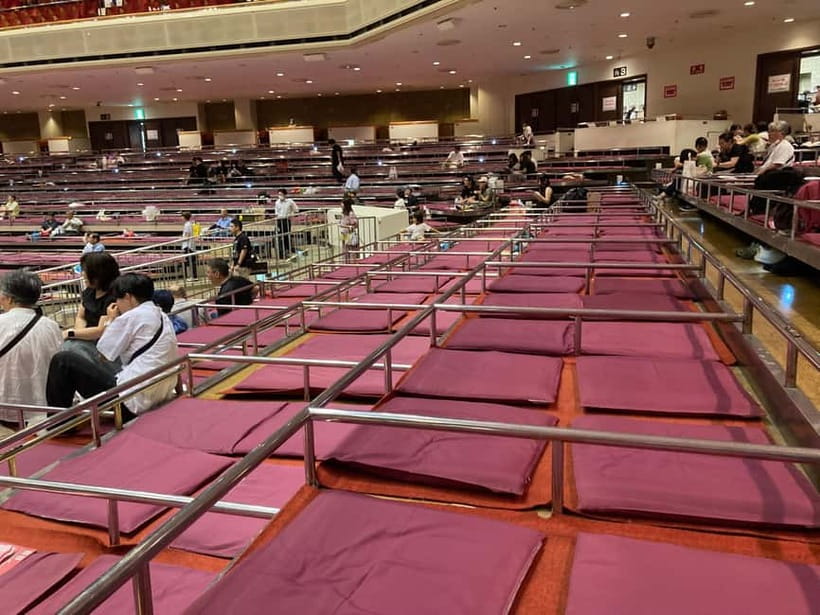
First-floor box seats place you close to the ring. Each box measures about 1.3 meters on all four sides, is enclosed by iron pipes, and comes with four cushions. These seats offer a traditional Japanese viewing style and a close look at the action.
The catch is space. A box is designed for four people, and groups of fewer than four may be seated with other customers. You should be comfortable sitting close to people you do not know. One person found the limited space surprising for the price, and that is a fair concern.
Box seating may suit you if proximity and tradition matter more than personal room. It is not the choice for anyone who wants a broad, relaxed seat with plenty of space to stretch.
Second-floor chair seats provide a more familiar setup and more room for personal comfort. They are farther from the ring, but you can watch the overall event without the close quarters of a shared box.
Choose the box if you want to feel near the ring and do not mind sharing. Choose the chair if you prefer a simpler, less cramped viewing experience. At $135, the difference is worth considering before you book, not after you arrive.
What the price really covers
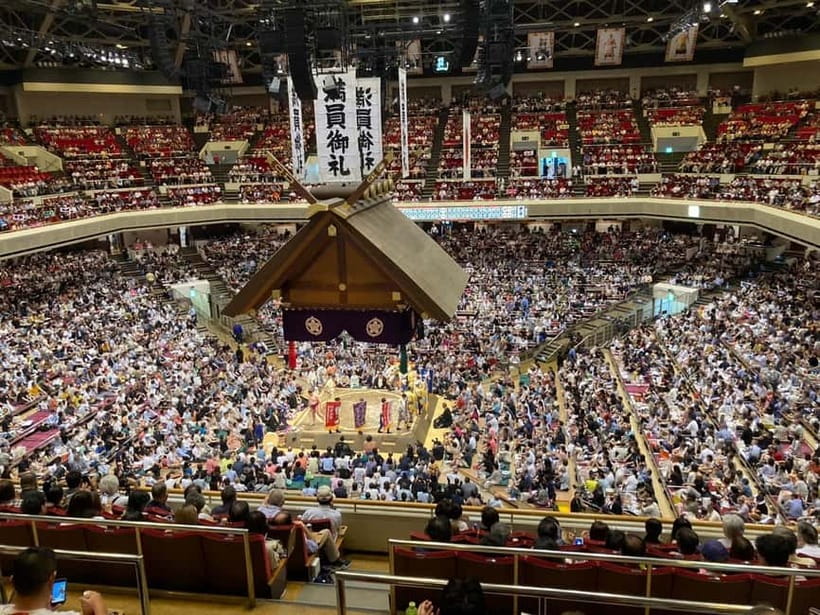
The fee combines two things that can be awkward to arrange separately: a guided introduction to Ryogoku and access to a sumo match. That package is useful if you are unfamiliar with the district or unsure how to plan a tournament visit.
It does not cover your train fare, meals, or drinks. You also need to account for the fact that the guide is not available once you enter the arena. The price is therefore buying access and a short cultural orientation, not a full-day escorted program.
Ticket handling deserves care. There has been at least one reported case of a floor-seat booking being changed close to the event, followed by confusion over the seat offered at the venue. If your choice of box or chair seat is important, confirm the ticket category with the operator before the event and keep your booking details handy.
There was also a case in which the guide did not appear at the meeting point until the main office was contacted. This is not a reason to assume the same will happen to you, but it is a reason to arrive early, keep the provider’s contact details available, and avoid planning an important reservation immediately afterward.
On the positive side, the tickets have been described as legitimate, and the match itself has earned strong praise. That is the central value here. You are paying for a genuine live event in the district most associated with sumo, not a staged demonstration.
Who will get the most from this outing
This activity is a good fit if you want a compact introduction to sumo followed by a real match. It suits first-time visitors to Tokyo who want both a cultural walk and an event ticket, especially if they prefer a planned start rather than sorting out the arena alone.
It also works well for couples, families with older children, and small groups who can accept the shared seating rules. A group of four is particularly well matched to a box seat because the seating arrangement is designed around four cushions.
You may want another option if you need wheelchair access, dislike sitting close to strangers, or want a guide beside you throughout the match. It may also disappoint you if you expect a full explanation of every bout, announcement, and ritual inside the arena.
The short walk makes this easier to fit into a Tokyo itinerary than a full-day tour. Still, do not treat it as a quick drop-in. The fixed meeting time, walking route, match schedule, and return arrangements need room in your day.
Practical ways to make the day smoother
Arrive early at the Edo NOREN entrance and look for the TNK placards. Wear comfortable clothing, keep your belongings small, and leave large luggage elsewhere.
Use the walk to ask questions. Since there is no guide inside, this is your best chance to learn what the ceremonies mean and how to follow the event.
Do not bring outside food or drinks into the arena. Plan to buy refreshments inside if needed. Avoid video recording, loud conversation, smoking, and bare feet.
Keep your expectations realistic about the box. It is close and traditional, but the 1.3-meter space is shared and may feel tight. If comfort is more important than closeness, the second-floor chair is the safer pick.
One guide named Yuki has been singled out for friendly service, though guide assignments can vary. The most useful guide, whoever leads your walk, will be the one who explains the sites clearly and prepares you for the time without assistance inside the arena.
Should you book the Ryogoku sumo tour?
Book it if seeing a live sumo match is high on your Tokyo list and you want a short, useful walk before the event. The combination of Eko-in Temple, the Sumo Photo Museum, the Kira Residence site, and a legitimate arena ticket gives the outing more substance than a ticket-only visit.
Think twice if $135 feels high for a partly guided experience. The guide is not available inside, box seats can be cramped, and ticket arrangements should be confirmed carefully. For the best match between price and comfort, choose a chair seat if you value space, or a box only if being close to the ring is worth sharing a small area.
FAQ
Where does the tour meet?
Meet at the Edo NOREN entrance near the west exit of Ryogoku Station. Staff will hold placards marked TNK.
What time should I arrive?
The meeting time is 12:20 PM. Arrive 10 to 15 minutes early so you can find the staff and confirm your name.
What places does the walking tour visit?
The 50-minute walk includes Eko-in Temple, the Sumo Photo Museum, and the remains of the Kira Residence.
Is a sumo ticket included?
Yes. Sumo wrestling tickets and an English-speaking Ryogoku guide are included.
Does the guide stay inside the arena?
No. The guide leads the city walk but is not available after you enter the venue. You have free time to watch the matches.
Can I bring food, drinks, or a camera into the arena?
Outside food and drinks are not permitted, though there is a shop inside. Video recording is strictly prohibited. Large bags, smoking, and bare feet are also not allowed.
Just added for fans in Tokyo
- Tokyo: Grand Sumo Morning Training Tour★ 4.9 · 12 reviews
- Sumo Training Watching Experience in Tokyo★ 4.5 · 8 reviews
- Kickboxing & Body Training with EX-Pro Fighter★ 5.0 · 4 reviews
- Tokyo: Visit Sumo Morning Practice with English Guide★ 4.5 · 22 reviews
- Tokyo Sumo Experience with Live Show & Audience Challenge★ 5.0 · 38 reviews
- Tokyo Shinjuku Sumo Show and Experience with Drinks and Photo★ 4.0 · 21 reviews
- Tokyo Sumo History Tour with Chanko Nabe Lunch★ 5.0 · 3 reviews
- 【SUMO FESTIVAL】Tokyo Ginza: Sumo Show & Photo Experience★ 4.5 · 41 reviews
Sumo Experiences in Tokyo, compared.
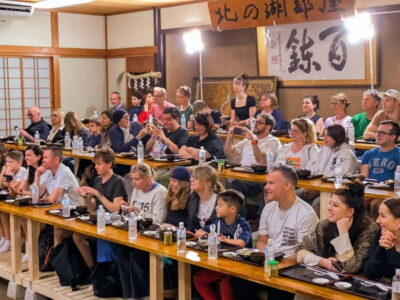
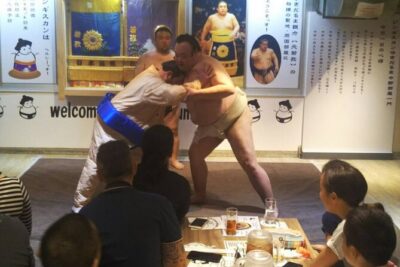
Tokyo Shinjuku Sumo Show & Experience with Photo
Read our review →
Tokyo Grand Sumo Tournament Viewing Tour with Tickets
Read our review →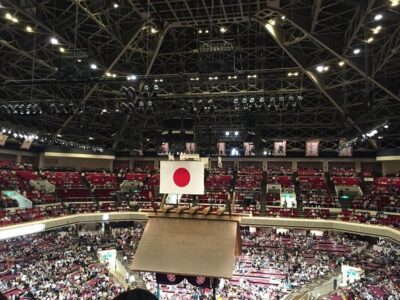
Luxury Sumo Show Experience & Japanese cuisine & Drink
Read our review →
Browse the lists this tour appears in