
Review · SUMO EXPERIENCES
Authentic Sumo Experience in Tokyo: Enter the Sanctuary
Sumo is far more than a few minutes of pushing in a ring. This four-hour Kawasaki experience takes you inside a former stable, where you can see the dining room, bath, and practice space before sitting close to the ring for morning training. You may even test the movements yourself with retired wrestlers.
I like the hands-on format and the meal. You learn the squat, footwork, and body positions, then share chanko-nabe, the hearty hot pot associated with sumo life. Guides such as Charlie, Jim, Lily, and Fugi have been praised for clear English and good humor. The main consideration is the early, strict schedule: arrive at least 15 minutes early, because more than five minutes late without contact can mean cancellation and no refund.
Key points at a glance
- Former working stable: Visit a Kawasaki sumo stable officially used until 2022, with access to its dining room, bath, and training area.
- Ringside morning practice: Sit directly in front of the ring and watch a training session rooted in a tradition dating back to the samurai era.
- Try the wrestler exercises: Take part in basic sumo movements and, depending on the session, challenge a retired wrestler in the ring.
- Chanko-nabe lunch: Make chicken dumplings with the wrestlers, then eat together at a table once used in the sumo room.
- Small group setting: The maximum group size is 15, which helps keep the explanations and demonstrations personal.
- Useful extras: The price includes a certified MagicalTrip guide, tour photos, and an original T-shirt.
Why this is more than a sumo demonstration
Many sumo activities give you a lecture or a staged bout. This one lets you see the place where wrestlers once lived and trained. That changes the feel of the visit. The dining room, bath, and practice space explain the daily structure of sumo life in a way a stadium seat cannot.
You begin at Shin-Kawasaki Station, in Kawasaki rather than central Tokyo. That means you need to allow time for the train ride, but it also takes you away from the polished tourist center and into a real neighborhood setting. Your guide meets you at the station, explains the customs and history of sumo, and leads you to the former stable.
Guides have included Charlie, Jim, Lily, and Fugi. The strongest accounts single out their English, humor, and ability to explain the sport without making the lesson feel stiff. One guide has used a PowerPoint presentation to support the history talk. That can be especially useful if you know little about sumo before arriving.
The group limit of 15 is a sensible size. It is large enough for a lively lunch but small enough that you should be able to hear the guide and see the exercises. The exact balance depends on the day’s group, but this is not designed as a massive coach tour.
More Sumo Experiences in Japan:
- Tokyo: Sumo Show Experience with Chicken Hot Pot and a Photo
★ 4.8 · 6,678 reviews - Tokyo: Sumo Show and Dining Experience
★ 4.8 · 2,742 reviews - the SUMO show
★ 5.0 · 1,960 reviews
Inside the Kawasaki stable used until 2022
The stable is the heart of the experience. It was officially used until 2022, so you are not simply visiting a museum reconstruction. You see the spaces that supported the wrestlers’ daily routine.
The room tour includes the dining area, bath, and practice space. Each stop helps fill in a part of the picture. The dining room connects to the communal meal later. The bath gives you a sense of the shared facilities used after training. The practice area shows how much of sumo life centers on repetition, discipline, and the ring.
The tour’s value comes from the contrast between the simple spaces and the public image of sumo. Grand tournaments take place under bright lights and formal ceremony. Here, you see the practical setting behind the sport. You also learn how wrestlers live in real life, rather than only learning the rules of a bout.
Keep your expectations grounded. This is not a full tour of an active stable, and the building was officially used until 2022. Access and training arrangements can change. Sumo stables can cancel unexpectedly a few days, or even a couple of days, before the visit. That is an important limitation for anyone planning a tightly packed Japan itinerary.
Watching practice from the front of the ring
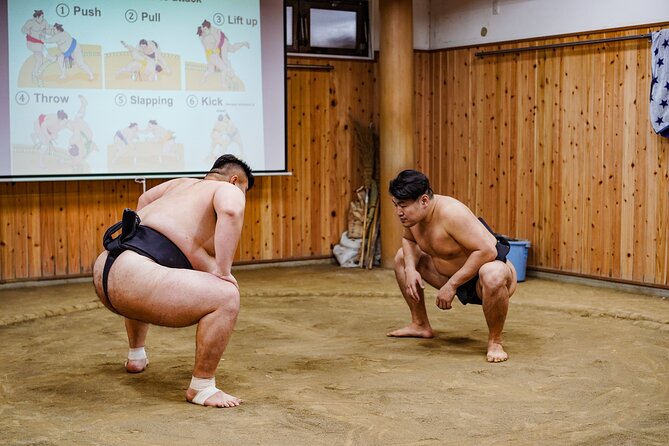
The morning practice is the most unusual part of the visit. You sit directly in front of the sumo ring and watch wrestlers train at close range. This is not a tournament match with an announced winner, so the mood and pace are different.
Morning practice usually begins around 7 a.m. and lasts three to four hours. Since this activity starts at 9:30 a.m., you are likely seeing part of a longer session rather than arriving at the very beginning. The schedule may vary, but the late-morning timing gives you a chance to watch serious training without needing to make a pre-dawn start.
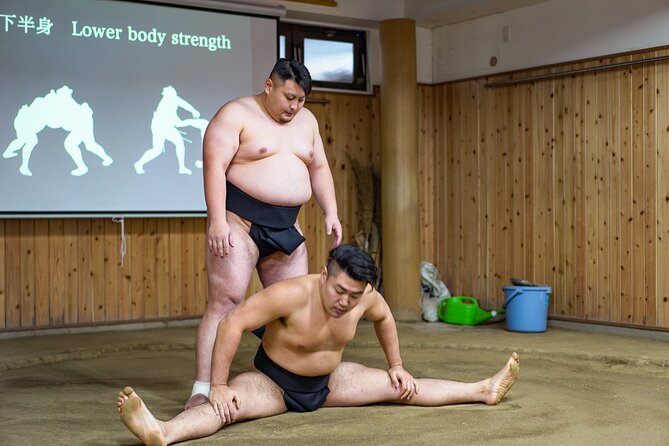
Sumo training is built on repeated movements. The exercises can look simple at first, but the physical demand becomes clear when you try them. Squats, balance work, foot placement, and controlled pushing all require strength and discipline. The demonstrations show why a sumo wrestler’s preparation is not just about size.
This is also a quiet part of the visit. Several people have found the opening lesson and first demonstration more serious than expected, with the group initially shy and reserved. That is normal. The mood usually becomes more relaxed once the guide and wrestlers invite participation.
You should follow the stable’s rules closely. This is a working training environment, even though the stable was officially used until 2022. Listen before moving near the ring, and treat the wrestlers with respect. The point is to watch and learn, not to turn the practice into a loud performance.
Trying the movements with retired wrestlers
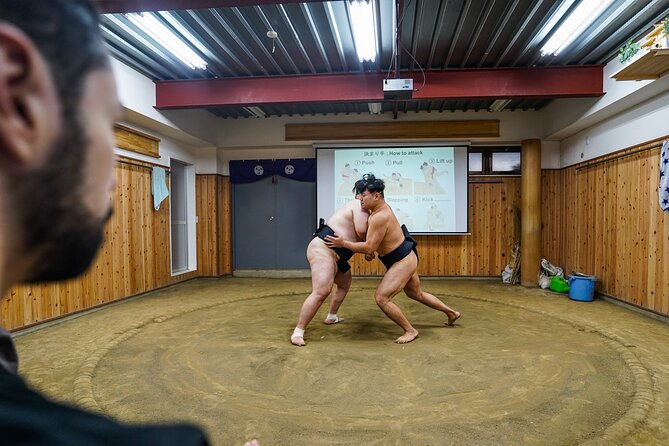
After watching, you get the chance to try some of the movements yourself. This is where the experience shifts from observation to participation. You may practice the exercises shown by the wrestlers and, depending on the session, step into the ring for a friendly bout with a retired sumo wrestler.
The demonstrations are designed for ordinary people, not trained athletes. Families have particularly enjoyed this part, and children and teenagers often find the physical practice more useful than a long history lecture. You do not need to arrive as a sumo fan. The guide explains what to do, and the wrestlers use humor to keep the session comfortable.
Do not confuse the activity with a serious contest. The appeal is feeling the posture, balance, and force involved, not proving that you can defeat a rikishi. Some people may find the practice less instructive than the cultural talk, but it remains a fun way to understand the sport through your own body.
The wrestlers themselves are a major part of the visit. They demonstrate exercises, answer questions, and make the lesson personal. You get a chance to ask about their work and training during the day, especially around lunch. That direct contact is more valuable than another general explanation of sumo rules.
Wear clothes that allow movement. The supplied information does not specify a dress code, but you should expect to squat, stretch, and take part in physical exercises. Summer in Japan can be hot and humid, so bring water and wear a hat for the walking portions before and after the indoor session.
More Sports Experiences in Japan:
- Tokyo Shinjuku Sumo Show & Experience with Photo
★ 5.0 · 1,750 reviews - Tokyo Sumo Entertainment Show with Chicken Hot Pot and Photo
★ 5.0 · 1,205 reviews - Tokyo: Sumo Show and Experience in Shinjuku
★ 4.8 · 1,001 reviews - Tokyo: Sumo Tournament Tour with Chair Seat Tickets
★ 4.6 · 753 reviews
Making chanko-nabe at the stable table
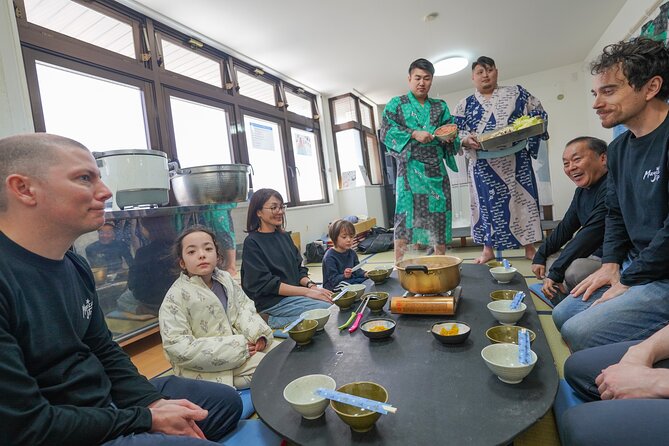
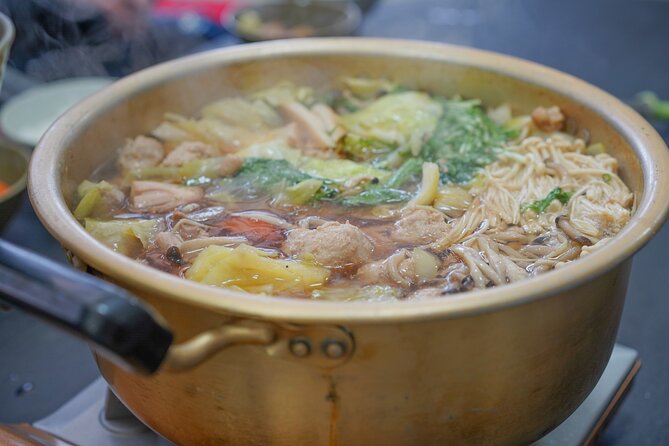
Lunch is not an afterthought. You help make chicken dumplings, the main ingredient in the chanko-nabe, alongside the wrestlers. Then everyone eats together around a table that was actually used in the sumo room.
Chanko-nabe is the hot pot closely tied to sumo meals. It is filling, communal, and practical, which makes it a fitting end to a morning spent learning about wrestler life. The meal gives you time to sit down, ask questions, and talk with the people who led the demonstrations.
The food has received some of the warmest praise. The chicken dumplings and hot pot have been a hit, and one family member managed four bowls of soup. That tells you something about the meal’s role: it is not a tiny cultural sample. You should expect a proper lunch.
Additional food and drinks are not included, so bring money if you want anything beyond the provided meal. Tell the operator about allergies or dietary needs at least one day ahead. The food is prepared in kitchens outside MagicalTrip’s control, so allergy-free preparation and substitutions cannot be guaranteed.
If you are vegetarian, have a serious allergy, or follow a strict diet, consider this carefully before booking. The operator will try to help, but same-day requests cannot be accommodated, and substitutions may not be possible at every stop.
Is the $171.12 price good value?
At $171.12 per person, this is not a cheap way to spend a morning. It becomes easier to justify when you count what is included: the sumo stable visit, guide, practice viewing, participation, wrestler’s lunch, photos, and original T-shirt.
The strongest value comes from access. You are not paying only for a meal or a staged demonstration. You are paying for entry into a former stable, an explanation of the spaces, a close view of training, direct contact with wrestlers, and a hands-on session. A standard tournament ticket can show you public sumo, but it does not offer this behind-the-scenes context.
The included lunch also matters. A separate meal would add to the cost, and the chanko-nabe is part of the cultural lesson rather than a random restaurant stop. The tour photos are useful if you want a record of the ring practice without spending the whole morning taking pictures yourself.
The price is harder to justify if you only want to watch a match. This is not a tournament-day substitute, and you may prefer a lower-cost museum visit or public practice viewing if you do not care about participation. It is also a less attractive choice if you have strict food restrictions or cannot handle physical exercises.
Timing, meeting point, and practical planning
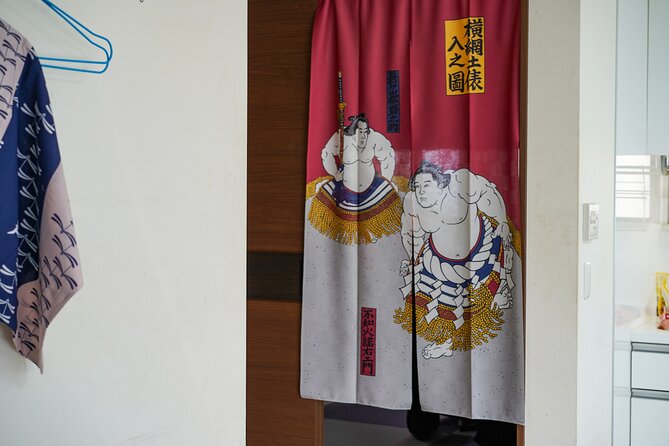
The listed start time is 9:30 a.m. at 1-chōme-2-1 Kashimada, Saiwai Ward, Kawasaki, Kanagawa 212-0058. The meeting instructions also direct you to meet your guide at Shin-Kawasaki Station. Confirm the exact station meeting details when you book, and plan to be there early.
The operator is strict about time. The group starts on schedule, and arriving more than five minutes late without contacting the operator is treated as a cancellation. You cannot join later, reschedule, or receive a refund after missing the group.
The activity lasts about four hours and 10 minutes, ending back at the meeting point. Do not bring a suitcase or other large luggage. The experience is near public transportation, and most people can take part, but remember that the program includes squatting and sumo exercises.
Mobile tickets make entry simple, but they do not remove the need for careful planning. Save the meeting details before leaving your hotel, check the train route, and leave extra time for finding the correct station exit. Kawasaki is not the same as central Tokyo, so avoid treating this as a quick walk from a major Tokyo attraction.
Cancellation is free up to 24 hours before the start time. Within 24 hours, changes and refunds are not accepted. If the minimum group size is not reached, the operator will offer another date or activity, or provide a full refund. A stable can also cancel unexpectedly, so avoid placing an important flight, rail connection, or nonrefundable dinner immediately afterward.
Who should book this sumo experience?
I would recommend it most strongly to first-time sumo learners, families, couples, and anyone who wants contact with the sport rather than a short photo stop. You do not need technical knowledge. The guide’s lesson gives beginners enough background to understand what they are seeing, while longtime fans get the rare chance to train with wrestlers and ask questions.
Children and teenagers can enjoy the physical side, especially if they would lose interest during a long cultural lecture. The food also helps keep the day balanced. Couples and solo visitors benefit from the small group and shared table, where conversation comes naturally.
Longtime sumo fans should note the difference between watching a tournament bout and attending practice. You will not get the drama of a formal match, but you will see the repetitive work behind it. The chance to enter the ring and challenge a retired wrestler can be the highlight.
I would think twice if you need guaranteed dietary substitutions, dislike group activities, or want a completely passive morning. Participation is optional, but the experience is built around interaction. The schedule is firm, and the possible cancellation by the stable means you should keep some flexibility in your Japan plans.
Should you book it?
Book this if you want to understand how sumo wrestlers train, eat, and live, not just take a picture beside a ring. The former stable, close practice viewing, friendly retired wrestlers, and shared chanko-nabe lunch give you several ways to connect with the sport.
Skip it if your main goal is a professional tournament or a low-cost sightseeing stop. At $171.12, the price asks you to value access and participation. For a family or a sumo fan, that combination can make this one of the most memorable mornings in Japan. Just arrive early, bring water, warn the operator about food concerns in advance, and keep your schedule flexible.
FAQ
Where does the sumo experience begin?
The experience begins at Shin-Kawasaki Station, with the listed meeting address at 1-chōme-2-1 Kashimada, Saiwai Ward, Kawasaki, Kanagawa 212-0058, Japan.
What time does the tour start?
The start time is 9:30 a.m. The group leaves on time, and arriving more than five minutes late without contacting the operator is treated as a cancellation.
How long does the activity last?
The experience lasts approximately four hours and 10 minutes. It ends back at the meeting point.
Is lunch included?
Yes. A sumo wrestler’s lunch is included. You help prepare chicken dumplings and eat chanko-nabe together at a table used in the sumo room. Additional food and drinks are not included.
Can I participate in sumo exercises?
Yes. You have the opportunity to learn and practice sumo movements with the wrestlers. The experience may also include the chance to wrestle a retired sumo wrestler.
Are dietary requests accepted?
You must provide dietary requests or allergy information at least one day before the tour. Allergy-free preparation and dietary substitutions cannot be guaranteed, and requests made on the day cannot be accommodated.
What is the cancellation policy?
You can cancel for a full refund up to 24 hours before the start time. Cancellations or changes made less than 24 hours before the experience are not refunded or accepted. The sumo stable may also cancel unexpectedly, in which case another date or activity, or a full refund, will be offered.
Just added for fans in Japan
- Tokyo: Grand Sumo Morning Training Tour★ 4.9 · 12 reviews
- Sumo Training Watching Experience in Tokyo★ 4.5 · 8 reviews
- Kickboxing & Body Training with EX-Pro Fighter★ 5.0 · 4 reviews
- Tokyo: Visit Sumo Morning Practice with English Guide★ 4.5 · 22 reviews
- Tokyo Sumo Experience with Live Show & Audience Challenge★ 5.0 · 38 reviews
- Tokyo Shinjuku Sumo Show and Experience with Drinks and Photo★ 4.0 · 21 reviews
- Tokyo Sumo History Tour with Chanko Nabe Lunch★ 5.0 · 3 reviews
- 【SUMO FESTIVAL】Tokyo Ginza: Sumo Show & Photo Experience★ 4.5 · 41 reviews
Sumo Experiences, compared.
Sumo Show Experience with Chicken Hot Pot and a Photo
Read our review →
Tokyo Shinjuku Sumo Show & Experience with Photo
Read our review →
Tokyo Sumo Entertainment Show with Chicken Hot Pot and Photo
Read our review →
Tokyo Grand Sumo Tournament Viewing Tour with Tickets
Read our review →Browse the lists this tour appears in