
Review · SUMO EXPERIENCES IN TOKYO
Experience the Sumo World in Tokyo
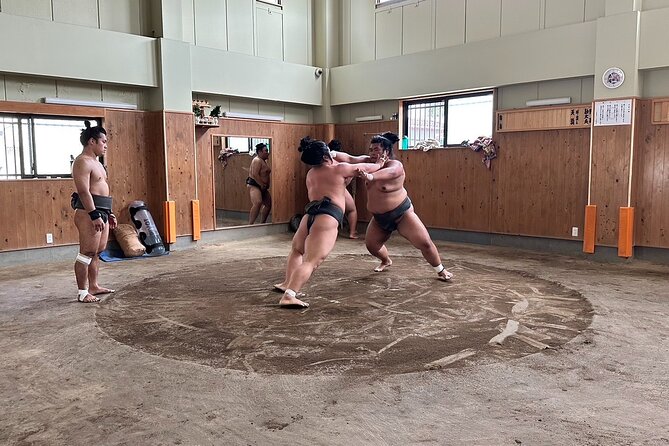
A quiet sumo stable is a very different world from the bright lights of a Tokyo tournament. Here, you sit just a few feet from wrestlers as they train, watch the stablemaster direct the session, then step into the ring area for a friendly strength test. It is close, raw, and far more revealing than simply watching a match from the stands.
I like two things in particular: the front-row view of real practice and the chance to ask questions after training. Guides such as Ryoko, Haru, Tomer, and Tammy have been praised for explaining rules, customs, and daily life in plain English. The shared chanko nabe lunch adds another useful piece of the puzzle.
The main drawback is the early start and complicated journey. You must meet at Ueno Station at 7:45 AM, pay about ¥1,060 for two train rides, and stay alert during the transfer. Clear communication matters, since one delayed meeting caused a participant to miss most of the practice.
Key points at a glance
- Real morning practice: Watch rikishi train at Asahiyama beya from chairs placed close to the action.
- Two-train journey: Travel from Ueno through Matsudo and Kunugiyama, with train fares paid separately.
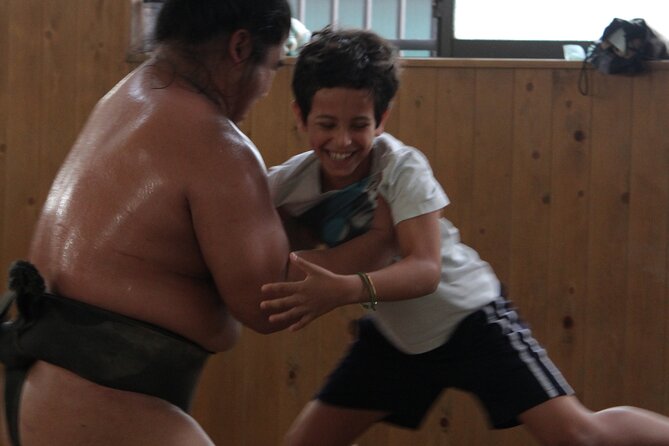
- Hands-on finale: Try to push a sumo wrestler, ask questions, and take photographs after training.
- Chanko nabe included: Share the stable’s hearty dish, with vegetarian service available if requested at least three days ahead.
- Strong family appeal: Children and adults can take part in the lighthearted wrestling challenge.
- Small but variable group: The maximum group size is 26, though some departures may be much smaller.
Why a sumo stable is more revealing than a tournament
A tournament gives you the polished public face of sumo: formal entrances, packed stands, official bouts, and a clear scoreboard. This experience shows the work behind that spectacle. You see the repetition, exertion, stretching, tactics, and strict focus that shape a wrestler long before tournament day.
The stable is called Asahiyama beya. You watch from folding chairs beside the training area, not from a distant viewing platform. That closeness matters. You can see how much movement goes into sumo, not just the final collision. Size catches your eye first, but agility, balance, timing, and technique soon become just as interesting.
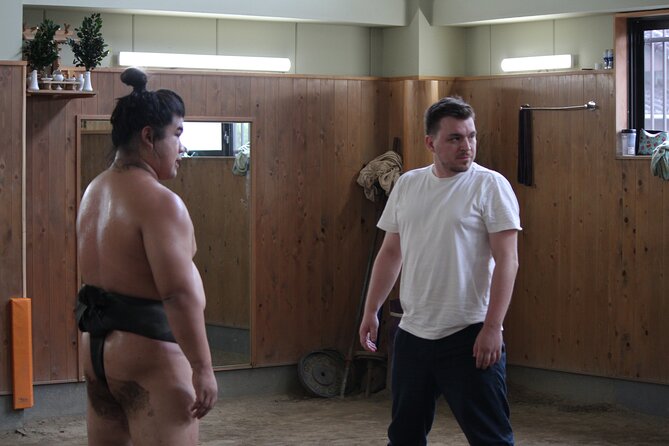
The visit is also a cultural lesson. Sumo is not presented as a simple sporting contest. Your guide explains terms, rules, customs, and the daily life of rikishi, the wrestlers who train and live within the stable system. Tomer, Ryoko, Haru, Tammy, and other guides have been praised for translating explanations and helping beginners follow what is happening.
You do not need to follow professional sumo before booking. The guides explain enough for a first-timer to understand the basic action. If you already know the sport, the access to the training room and chance to ask questions should give the morning more depth.
More Sumo Experiences in Tokyo
- Tokyo: Sumo Show and Dining Experience
★ 4.8 · 2,742 reviews - the SUMO show
★ 5.0 · 1,960 reviews - Tokyo Shinjuku Sumo Show & Experience with Photo
★ 5.0 · 1,750 reviews
The 7:45 AM meeting at Ueno Station
The meeting point is the JR Information area at Ueno Station. Ueno is a practical starting place, but Tokyo stations can still be confusing, especially early in the morning. Give yourself extra time to locate the meeting point rather than arriving at the last minute.
The official start is 7:45 AM. The group is expected to leave soon after, so this is not an experience where you can casually wander in ten minutes late. One difficult departure involved a participant arriving at 7:58 AM and then struggling to connect with the group. The guide eventually sent the stable address, but the delayed arrival meant missing most of the practice.
That situation appears unusual, but it points to a useful rule: confirm the meeting instructions before bed and check the tour operator’s messages. Communication may include WhatsApp as well as the booking platform. If you do not use WhatsApp, make that clear ahead of time and ask for the full meeting and transport details in writing.
Two trains from Ueno to the training stable
The route takes you first to Matsudo Station, roughly 19 minutes by train, and then onward to Kunugiyama Station, about 15 minutes away. The train travel is part of the outing, not just a transfer. Your guide can explain sumo history and vocabulary along the way, and the journey gives you time to get oriented before entering the stable.
Round-trip JR train fares cost ¥1,060, or about $7, and are not included in the tour price. Bring enough yen or make sure your transit payment method covers the trip. The train route is simple when led by a guide, but it is still one reason to book this as a guided experience rather than trying to reproduce it alone.
The stable is outside central Tokyo, so this is not a quick stop between visits to Ueno Park and Asakusa. You commit most of a morning, and the total experience lasts about four hours. That extra travel is also part of the value: you leave the central sightseeing circuit and visit a working place that is not normally open to the public.
Watching the training from the front row
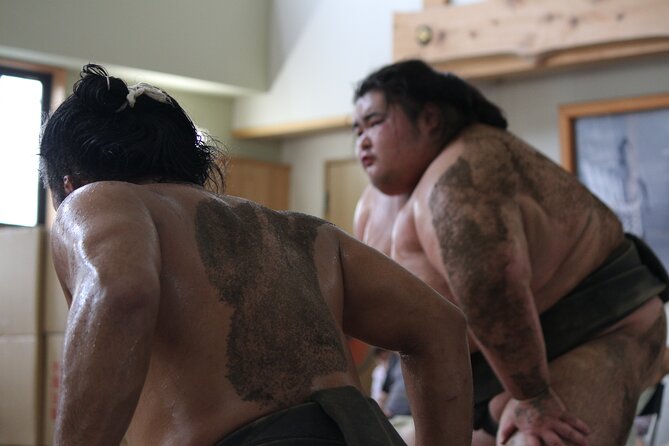
Inside Asahiyama beya, you take a seat close to the training space. The session can be intense and surprisingly varied. You may see wrestlers work through repeated bouts, practice strength and balance, stretch, and respond to instructions from the stablemaster.
The information provided describes this portion as lasting about two hours, but the actual practice schedule can vary. One family account describes around 45 minutes of active training followed by photos and interaction. Another late arrival saw only about ten minutes of bouts and ten minutes of stretching. That difference is a good reason to arrive on time and also to expect the stable’s own schedule to control the morning.
Silence and attention are important while the wrestlers train. This is not a staged show performed on demand for a tour group. You are watching a working session, and its pace depends on the wrestlers and the stablemaster. That makes the experience feel genuine, but it also means you should not expect a fixed theatrical program.
Your guide helps you read the action. Without explanation, the repeated pushes and clashes can blur together. With context, you begin to notice footwork, balance, tactics, and the difference between raw force and controlled movement.
Same city, a different fixture:
- Tokyo: Sumo Show and Experience in Shinjuku
★ 4.8 · 1,001 reviews - Tokyo Grand Sumo Tournament Viewing Tour with Tickets
★ 5.0 · 692 reviews - Tokyo Sumo Wrestling Tournament Experience
★ 5.0 · 660 reviews - Tokyo:Luxury Sumo Show Experience & Japanese cuisine & Drink
★ 4.7 · 577 reviews
Trying to push a wrestler
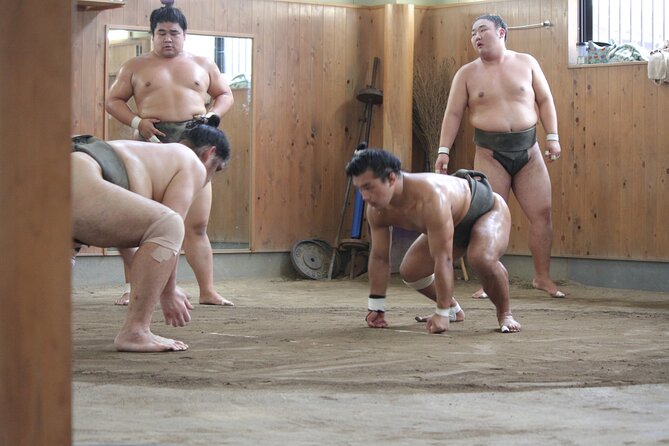
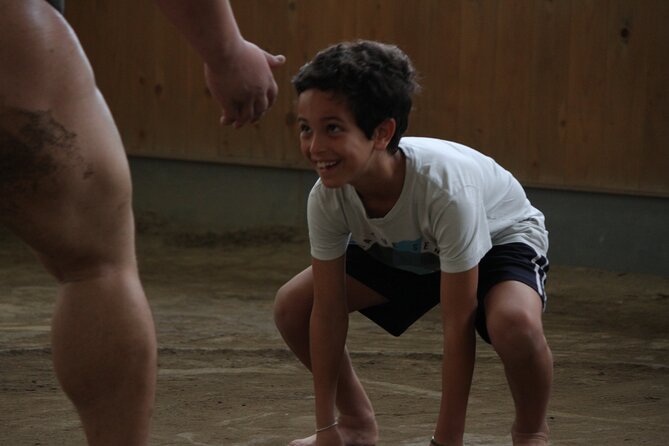
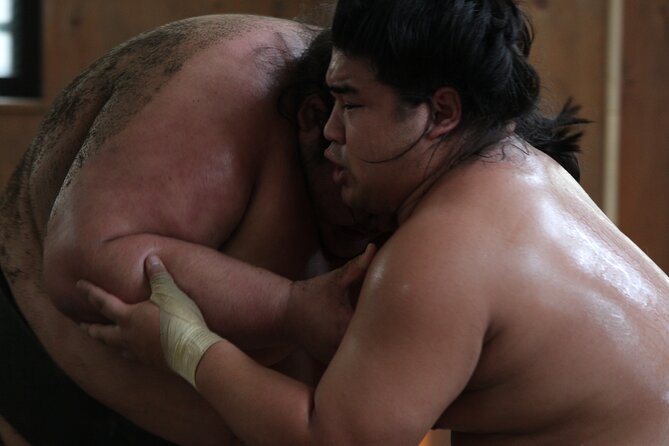
After practice, the tone becomes much lighter. You may try to push one of the wrestlers yourself. Do not expect to move him far. The fun is in discovering just how solid a trained sumo wrestler feels, even when he is being gentle.
This portion works well for families. Children have taken part, and the wrestlers are described as kind and patient during the playful challenge. It is not a competitive bout, and you should treat it as a brief, respectful interaction rather than a chance to test someone’s full strength.
The activity also gives you a physical sense of the sport. A television screen can show a collision, but it cannot show how difficult it is to shift a person with extraordinary balance and power. Even a losing attempt can make the training you just watched more understandable.
Questions, photos, and a shared bowl of chanko nabe
Photography is allowed at the end of the session. This timing is important. You are not there to hold up a phone throughout training, and the stable’s rules take priority. Once practice ends, you can take photos with the wrestlers and, when possible, ask about their lives and routes into sumo.
Translation is part of the guide’s role. Some wrestlers speak English, while the guide can help with questions and answers. Past interactions have included conversations about daily life, individual journeys, and the experience of training at the stable. These exchanges turn the morning from a viewing session into a personal meeting.
Lunch is chanko nabe, the hot stew associated with sumo stables. It is designed as nourishing food for athletes and may include broth, vegetables, and chicken. It has been described as a light but satisfying soup rather than a lavish restaurant meal. You share the meal with the wrestlers, which gives the food a clear connection to the place.
Vegetarian service is available, but you must notify the operator at least three days in advance. The supplied information does not promise other dietary arrangements, so explain your needs before booking if you have restrictions beyond vegetarian food.
Is the $105.71 price fair?
At $105.71 per person, this is not a cheap way to fill a morning. You also pay about $7 for the round-trip train journey. Still, the price includes access to a working stable, guide service, the wrestling activity, photography time, and lunch.
The key value is access. A normal sumo ticket shows the public contest, but it does not usually put you beside a training session or allow you to ask questions over a meal. The stable visit is the part that makes the cost easier to justify, especially if sumo is one of your main reasons for visiting Japan.
I would consider it good value for a sumo fan, a family seeking a hands-on activity, or anyone who has already covered the standard temples and city viewpoints. If you are only mildly curious and are watching every dollar, you may prefer a tournament match or a sumo museum visit. This experience asks for both money and a full morning.
Bookings are made, on average, 23 days ahead. That suggests you should not leave it until the final day of your Tokyo stay, particularly if your schedule is tight. The maximum group size is 26, though group size can vary and some departures may feel much more personal.
Who will get the most from this morning?
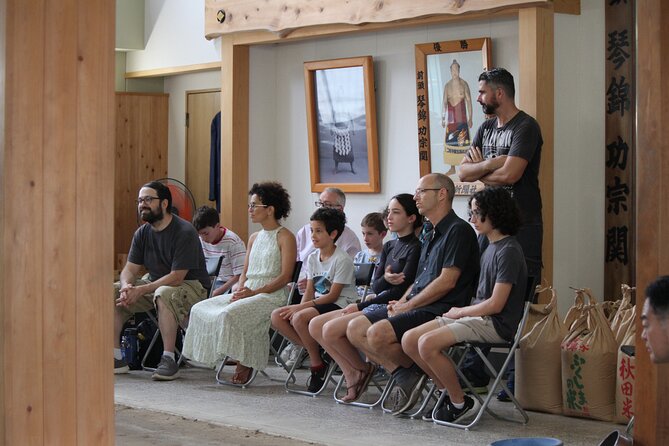
I would choose this for anyone who wants Japanese culture presented through real people and daily work rather than a polished display. It suits first-time visitors because the guide explains the basics, and it suits serious sumo fans because the training takes place in an actual stable.
Families are a strong match. Children can watch the practice, try the push, meet wrestlers, and eat a simple meal connected to the sport. The early start may be hard for young children, but the activity itself is accessible to most participants.
It also suits solo visitors and couples who value unusual experiences. Guides such as Ryoko have helped with directions and suggested onward plans after the stable visit. That practical help is useful in Tokyo, where the next train platform can sometimes feel like a puzzle.
I would think twice if you dislike early mornings, train transfers, shared meals, or activities where the schedule is controlled by a working institution. The session is authentic partly because it is not built entirely around visitor convenience.
Practical details before you book
Confirmation is provided at booking, and the activity uses a mobile ticket. The experience begins and ends at the Ueno meeting point, with the stable visit and train journey in between.
Wear clothes that let you sit comfortably and move briefly during the push activity. The provided information says most people can participate, but it does not describe special facilities or detailed mobility arrangements. If you have mobility concerns, contact the operator before paying.
The itinerary can change slightly because of weather, transport, or scheduling. That is normal for an outing involving public trains and a working sumo stable. The cancellation policy allows a full refund when you cancel at least 24 hours before the local start time. Changes or cancellations inside that window are not accepted, and the minimum number of participants must be met.
Should you book the Sumo World experience?
Book it if you want more than a photograph outside a sumo venue. The strongest parts are the close view of training, the chance to ask questions, the good-natured push against a wrestler, and the chanko nabe meal. Guides including Ryoko, Haru, Tomer, and Tammy have helped make the rules and customs understandable without requiring prior sumo knowledge.
Do not book it casually if your Tokyo schedule is packed or if you cannot manage a 7:45 AM meeting. Confirm every message, budget the ¥1,060 train fare, and leave room for the stable’s timetable to change.
For the right visitor, this is one of Tokyo’s more personal cultural experiences. You see the work behind the sport, meet the people who train inside it, and leave with a better sense of why sumo matters in Japan.
FAQ
Where does the experience begin?
It begins at the JR Information area in Ueno Station, at 7 Chome-1 Ueno, Taito City, Tokyo. The meeting time is 7:45 AM.
How long does the experience last?
The experience lasts approximately four hours, including the meeting, train journey, stable visit, meal, and return to Ueno.
How do I reach the sumo stable?
The group travels by train from Ueno to Matsudo Station, then continues to Kunugiyama Station. The listed journey times are about 19 minutes and 15 minutes, not including transfers and waiting.
Are train fares included?
No. The round-trip JR train fare costs ¥1,060 in total, or about $7, and is paid separately.
Is lunch included?
Yes. Lunch is included and features chanko nabe, the traditional stew associated with sumo stables.
Can I request vegetarian food?
Yes. Vegetarian service is available, but you must notify the operator at least three days in advance.
Can I take photographs?
Yes. Photography is allowed at the end of the training session, during the interaction with the wrestlers.
Can children take part?
The activity is suitable for most people, and children have taken part in watching practice and trying the friendly push activity. The supplied information does not state a specific minimum age.
What happens if I need to cancel?
You can receive a full refund if you cancel at least 24 hours before the local start time. Cancellations or changes made less than 24 hours before the start are not accepted.
Just added for fans in Tokyo
- Tokyo: Grand Sumo Morning Training Tour★ 4.9 · 12 reviews
- Sumo Training Watching Experience in Tokyo★ 4.5 · 8 reviews
- Tokyo: Visit Sumo Morning Practice with English Guide★ 4.5 · 22 reviews
- Tokyo Sumo Experience with Live Show & Audience Challenge★ 5.0 · 38 reviews
- Kickboxing & Body Training with EX-Pro Fighter★ 5.0 · 4 reviews
- Tokyo Shinjuku Sumo Show and Experience with Drinks and Photo★ 4.0 · 21 reviews
- Tokyo Sumo History Tour with Chanko Nabe Lunch★ 5.0 · 3 reviews
- 【SUMO FESTIVAL】Tokyo Ginza: Sumo Show & Photo Experience★ 4.5 · 41 reviews
Sumo Experiences in Tokyo, compared.
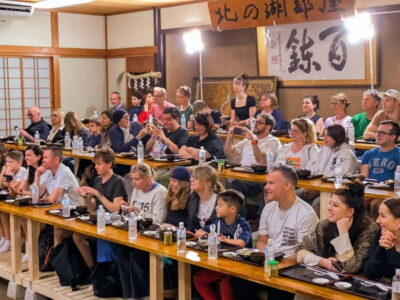
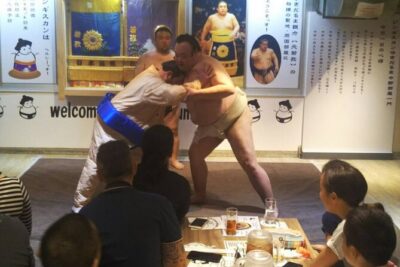
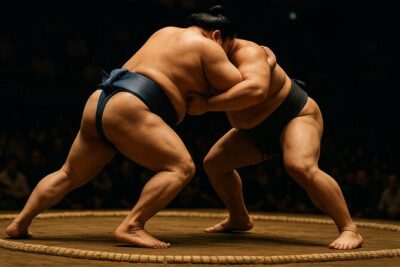
Tokyo Shinjuku Sumo Show & Experience with Photo
Read our review →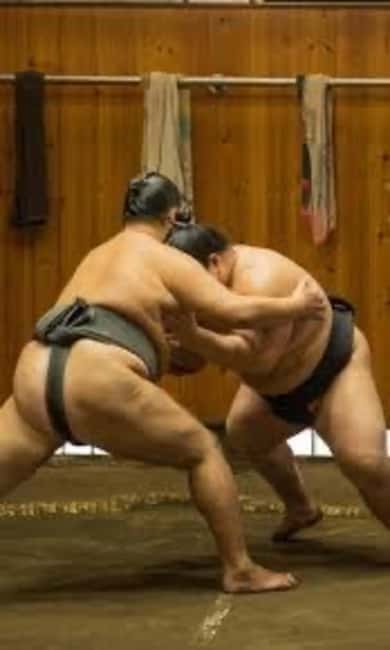
Tokyo Grand Sumo Tournament Viewing Tour with Tickets
Read our review →

Luxury Sumo Show Experience & Japanese cuisine & Drink
Read our review →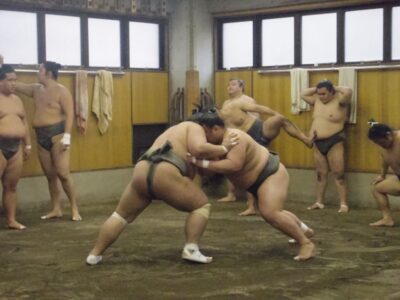
Browse the lists this tour appears in