
Review · SUMO EXPERIENCES
Fukuoka: Sumo Wrestling Tournament Chair Seats & ExpertGuide
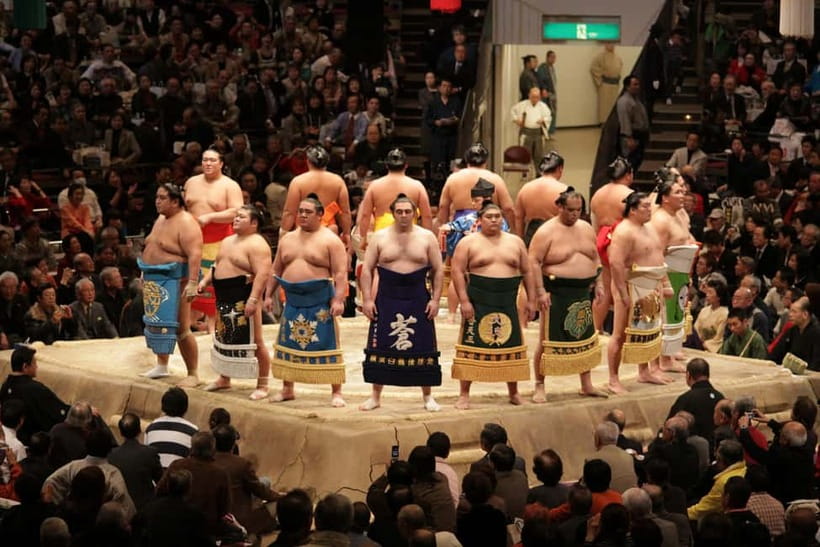
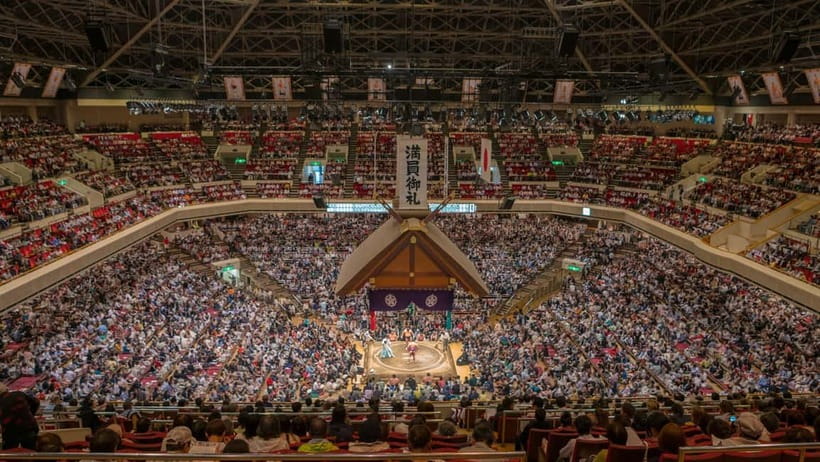
Fukuoka’s sumo tournament gets most exciting late in the day, when the strongest wrestlers enter the ring and Japanese television begins its broadcast. This experience puts you in second-floor A or B chair seats, with a broad view of the arena rather than a cramped ringside perch.
I like the small group, limited to seven people, and the English explanation of sumo rules before the action starts. I also like the chance to see the nakabi ceremony around 3:20 p.m. A possible drawback is the fixed schedule: you must meet at 2 p.m. and stay with the group session timing, and snacks and transportation are not included.
What makes this Fukuoka sumo outing useful
- Small-group guidance: Up to seven people makes it easier to ask questions and keep track of the guide.
- Second-floor perspective: A or B chair seats give you a wide view of the full arena.
- The strongest bouts: The main action runs from about 4 p.m. until 6 p.m., when top-ranked wrestlers compete.
- A practical introduction: Your English-speaking interpreter explains sumo culture, rules, and codes before you settle in.
- Flexible re-entry: You can leave and return once that day, but you must tell the guide first.
- A named guide to look for: Hiro Matsuo is praised for being punctual, friendly, detailed, and helpful with photo spots.
Why the 2 p.m. start matters
This is not a quick ticket handoff. You meet at 2 p.m., enter with the guide, and receive an introduction to sumo before the late-day bouts take over.
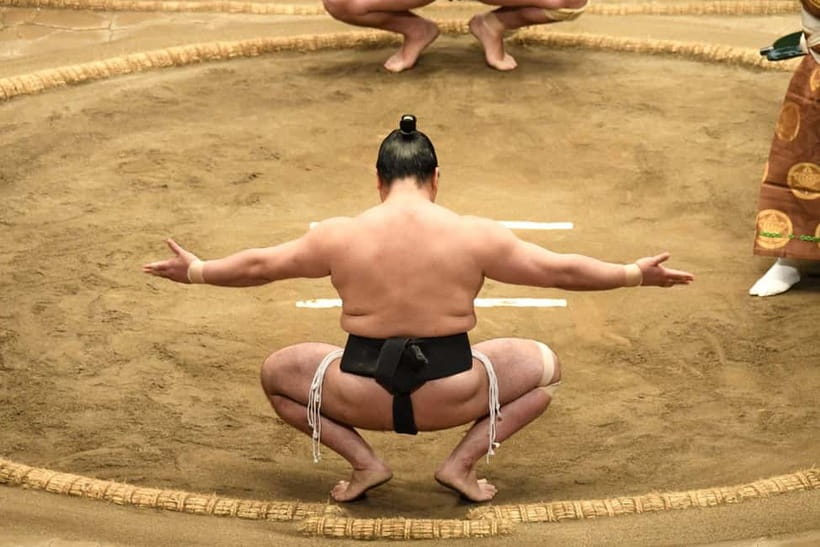
That timing is useful because sumo can feel confusing if you arrive with no context. The sport has formal rituals, strict rules, and a clear order to the day. Your interpreter explains the culture, rules, and codes so you can follow what happens in the ring instead of simply waiting for one wrestler to push another out.
The guide also helps you understand when the program reaches its main point. Around 3:20 p.m., the nakabi ceremony begins. This ceremony comes before matches involving particularly strong wrestlers, so it marks the shift from the earlier bouts to the part most people have come to see.
You should not treat the 2 p.m. meeting as optional. The session time cannot be changed, and the group enters together. If your train, lunch, or sightseeing plans run late, the fixed start could become a problem.
More Sumo Experiences in Japan:
- Tokyo: Sumo Show Experience with Chicken Hot Pot and a Photo
★ 4.8 · 6,678 reviews - Tokyo: Sumo Show and Dining Experience
★ 4.8 · 2,742 reviews - the SUMO show
★ 5.0 · 1,960 reviews
Finding the meeting point in Fukuoka
The meeting information describes the starting place as the left side of the main entrance ticket counter at 2 p.m. More detailed directions are sent two or three days before the event. Another instruction refers to meeting to the left of the Akira Suisan sign, marked by a red sun motif.
That means you should read the final meeting instructions carefully rather than relying only on a general map pin. Look for the English-speaking interpreter and arrive early enough to identify the main entrance without rushing.
The meeting point is also the stated end point. Private transportation is not included, so you handle your own route to and from the venue. This works well if you are already exploring Fukuoka independently, but it adds a little planning on tournament day.
Entering the venue with an interpreter
Once the group enters, the guide gives the main explanation of sumo. The included service is an English-speaking interpreter, not a private lecture just for you. Still, with a maximum of seven people, the group is small enough for a more personal feel than a large bus tour.
The value here comes from timing and translation. You can ask about what you are seeing while the arena is active, then use that information during the matches. The guide explains the sport’s background, rules, and codes, giving you a frame for the ceremony and bouts that follow.
Hiro Matsuo is specifically praised for being punctual, friendly, and detailed. He also pointed out places where visitors could get memorable impressions and photos. That suggests a practical style: not only talking about sumo, but helping you notice the venue and find useful viewpoints.
The guide is included in the price, but snacks are not. You should plan accordingly. The description says drinks and snacks are part of the experience’s general appeal, yet the included and excluded sections make clear that snacks are not covered. Bring your own budget for food and refreshments.
What second-floor A and B chair seats are like
Your ticket is for a chair seat in either the A or B class. The seats are on the second floor, giving you a panoramic view of the whole arena.
That broad view is the main advantage. Sumo happens inside one central ring, but the mood also comes from the ceremonies, audience reaction, movement around the arena, and the sense of order before each bout. A higher seat lets you take in the full setting instead of focusing only on the wrestlers close to the ring.
A second-floor seat also suits first-time spectators who want to understand the flow of the tournament. You can watch the ring, the entrances, and the surrounding activity at the same time. The tradeoff is distance. You will not have the same close-up view as someone seated directly beside the ring, and the experience does not promise one exact seat class in advance, only an A or B chair seat.
After reaching your seat, you are free to move around the venue. That gives you some breathing room during the long session. You can settle in for the bouts, look around, or take a short break without being tied to one chair for four hours.
More Sports Experiences in Japan:
- Tokyo Shinjuku Sumo Show & Experience with Photo
★ 5.0 · 1,750 reviews - Tokyo Sumo Entertainment Show with Chicken Hot Pot and Photo
★ 5.0 · 1,205 reviews - Tokyo: Sumo Show and Experience in Shinjuku
★ 4.8 · 1,001 reviews - Tokyo: Sumo Tournament Tour with Chair Seat Tickets
★ 4.6 · 753 reviews
The 3:20 p.m. nakabi ceremony
The nakabi ceremony begins around 3:20 p.m., before the matches involving particularly strong wrestlers. This is one of the most useful parts of the schedule because it gives the afternoon a clear rhythm.
You arrive before the main ceremony, hear the explanation, and then watch the event build toward the top bouts. The ceremony is not simply filler between matches. It helps show how carefully the tournament is organized and why the late afternoon carries more weight.
Your guide watches it with you from the assigned seats. Since the group session does not end until around 6 p.m., you have time to see the ceremony and remain for the main contests instead of leaving just as the program reaches its best-known portion.
The strongest matches from 4 to 6 p.m.
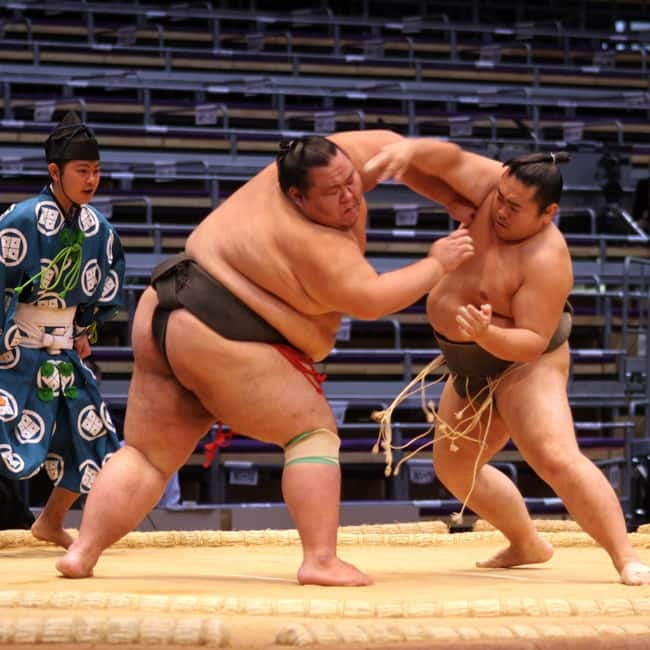
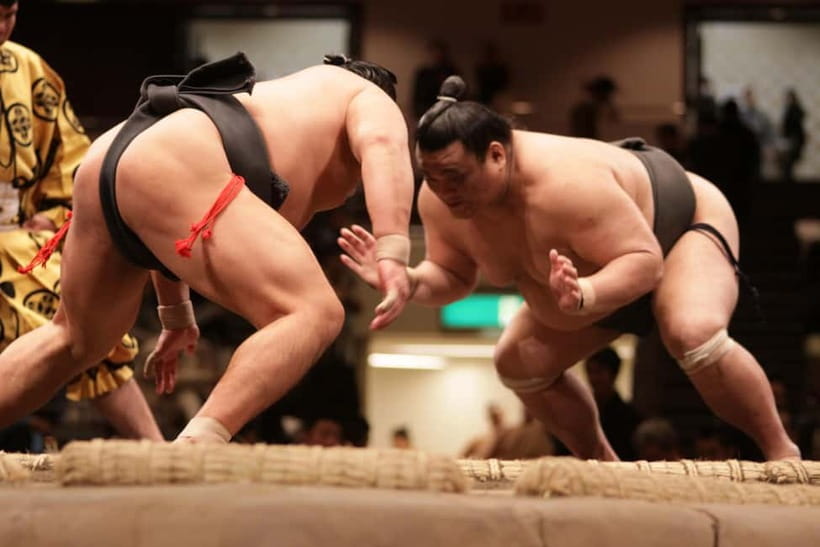
From about 4 p.m. until 6 p.m., the tournament reaches its highlight. Japanese television broadcasts begin during this period, and particularly strong sumo wrestlers take their turns.
This is the stretch to protect in your schedule. If you are choosing between an earlier sightseeing stop and staying through the final match, stay for the ending. The earlier portion helps you learn the setting, but the late bouts are the reason this tour is timed from 2 to 6 p.m.
You will watch from your chair seat and join the energy of the arena as the strongest competitors appear. The description does not promise the names of specific wrestlers on your date, so do not book expecting one particular athlete. The draw is the tournament atmosphere and the chance to see the most intense matches of the day.
At about 6 p.m., after the final match, the group session ends. The tour then disbands back at the meeting point.
Re-entry, breaks, and the long afternoon
A sumo tournament session lasts several hours, so the re-entry rule matters. You may leave the venue and return once that day. Tell the guide before you go out.
This is helpful if you need fresh air, food, or a short break. It is not unlimited access, and the guide needs to know your plans. Since snacks are not included, re-entry could also help if you want to buy something outside, provided you follow the venue’s rule and return in time.
You remain responsible for watching the clock. The fixed group session runs from 2 p.m. to about 6 p.m., and leaving does not change the official end time. If you plan to depart early, clarify that with the guide rather than assuming you can come and go freely.
Is $162 a fair price?
The price is $162 per person. That is more than buying an ordinary event ticket alone, but this is not sold as a ticket-only purchase.
The price includes the sumo ticket, an English-speaking interpreter, and an explanation of sumo culture, rules, and codes. You are also getting a small group capped at seven people, A or B chair seating, and guidance through the period when the strongest matches take place.
I see the value mainly in the language help and the structure. If you already know sumo well and speak Japanese, you may prefer to arrange a ticket independently. The separate ticket is not sold through this provider, so you cannot remove the guide portion and pay less through the same booking.
For a first sumo event, the extra cost can make sense. The guide helps you understand what is happening, points out useful places for photos, and keeps the afternoon organized. The value is weaker if you want a private guide, luxury hospitality, or food included. This is a guided small-group ticket experience, not a private box with catering.
Who should book this experience?
I would recommend it to a first-time sumo spectator who wants help making sense of the event. It also suits solo visitors and couples who like a small group, a clear schedule, and a wide second-floor view.
It is a good match for you if:
- You want an English explanation before the matches.
- You care about seeing the strongest wrestlers later in the day.
- You prefer chair seating and a full-arena view.
- You want the option to leave and return once.
- You appreciate help finding photo viewpoints.
- You can commit to the 2 p.m. meeting time.
Think twice if your day is already packed, since the session cannot be moved. You should also look elsewhere if food, private transportation, or a private viewing space is important to you.
The cancellation terms are friendly: you can cancel up to 24 hours in advance for a full refund. You can also reserve now and pay later, which helps if your Fukuoka plans are still changing.
Practical tips for a better afternoon
Arrive early at the main entrance. The exact meeting details are provided two or three days before the date, and the instructions refer both to the ticket counter and the Akira Suisan sign, so check the final message closely.
Wear something comfortable for a long afternoon in a chair. You can move around after reaching your seat, but the main session still lasts roughly four hours.
Keep the 3:20 p.m. ceremony and the 4 to 6 p.m. top bouts in mind when planning food or other activities. If you need a break, speak with the guide before leaving. Re-entry is allowed once, not repeatedly.
Finally, ask questions during the introduction. The included explanation is one of the main reasons to choose this tour rather than buying a ticket without guidance. Hiro Matsuo’s strength, according to the available feedback, is his detailed and friendly approach, along with showing the group useful spots for photos.
Should you book the Fukuoka sumo tour?
Book it if you want more than a seat and need an English-speaking guide to explain the customs, rules, and timing of a Japanese sumo tournament. The small group, second-floor panoramic view, late-day top bouts, and once-daily re-entry give the $162 price a reasonable basis.
Skip it if you need a flexible schedule, private transportation, included snacks, or a close ringside seat. For a first visit to sumo, though, this is a well-organized way to spend the afternoon, especially if you want help noticing what makes the sport more than a series of short matches.
FAQ
What time does the experience begin?
The group meets at 2 p.m. The guided session runs from about 2 p.m. until 6 p.m., ending after the final match.
Where is the meeting point?
The meeting point is to the left of the ticket counter at the main entrance. Instructions also refer to the left of the Akira Suisan sign with the red sun motif. Final meeting details are provided two or three days before the event.
What type of seats are included?
You receive either A or B class chair seats on the second floor. These seats provide a panoramic view of the full arena.
Is the experience available in English?
Yes. An English-speaking interpreter accompanies the group and explains sumo culture, rules, and codes.
Can I leave and return to the venue?
Yes. Re-entry is possible once per day. You must inform the guide before leaving the venue.
Are food and transportation included?
No. Private transportation and snacks are not included. The ticket, friendly interpreter, and sumo explanations are included.
Just added for fans in Japan
- Tokyo: Grand Sumo Morning Training Tour★ 4.9 · 12 reviews
- Sumo Training Watching Experience in Tokyo★ 4.5 · 8 reviews
- Kickboxing & Body Training with EX-Pro Fighter★ 5.0 · 4 reviews
- Tokyo: Visit Sumo Morning Practice with English Guide★ 4.5 · 22 reviews
- Tokyo Sumo Experience with Live Show & Audience Challenge★ 5.0 · 38 reviews
- Tokyo Shinjuku Sumo Show and Experience with Drinks and Photo★ 4.0 · 21 reviews
- Tokyo Sumo History Tour with Chanko Nabe Lunch★ 5.0 · 3 reviews
- 【SUMO FESTIVAL】Tokyo Ginza: Sumo Show & Photo Experience★ 4.5 · 41 reviews
Sumo Experiences, compared.
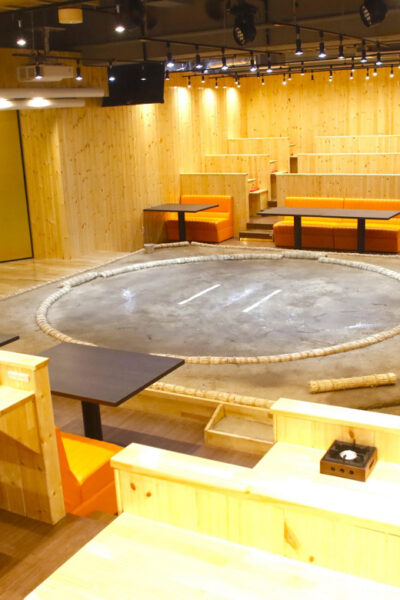
Sumo Show Experience with Chicken Hot Pot and a Photo
Read our review →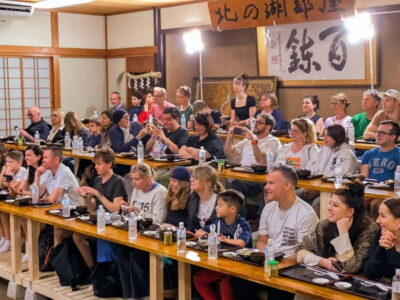
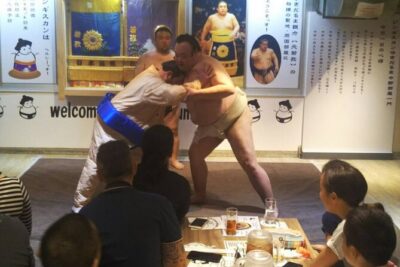
Tokyo Shinjuku Sumo Show & Experience with Photo
Read our review →
Tokyo Sumo Entertainment Show with Chicken Hot Pot and Photo
Read our review →
Tokyo Grand Sumo Tournament Viewing Tour with Tickets
Read our review →Browse the lists this tour appears in