
Review · SUMO EXPERIENCES IN TOKYO
Grand Sumo Tournament Tokyo – Osaka – Nagoya
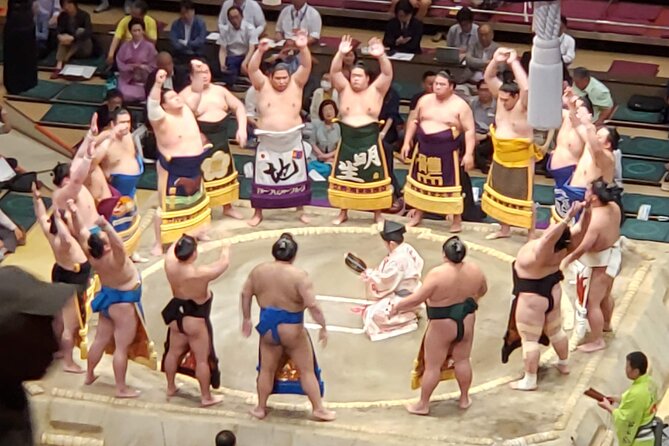
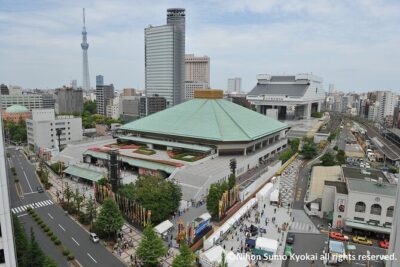
Sumo is not a staged cultural show. It is a real sporting event, with ritual, noise, food stalls, intense bouts, and fans who follow every movement. At Tokyo’s Ryōgoku Kokugikan, you get a close look at one of Japan’s oldest public traditions while sitting among local supporters.
I like two things right away: your admission is arranged ahead of time, useful for a popular event that can sell out, and you can choose upgraded seating for a better view. The lively atmosphere is another plus, especially if you arrive early enough to enjoy the arena before the main bouts.
The main caution is price. The listed cost is $946 per person, and some tickets may show a lower printed face value. When events sell out, replacement or resale tickets can cost much more, so confirm exactly what you are buying before paying.
Key points to know before booking
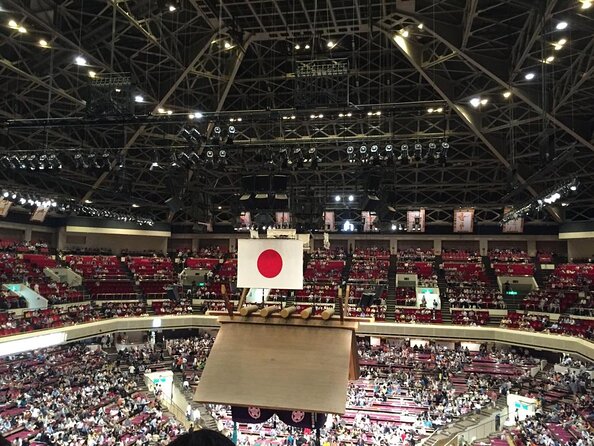
- Tokyo’s Ryōgoku Kokugikan is the main meeting venue, with the meeting point at Ryōgoku Edo Noren.
- The advertised experience lasts about four hours, including admission to the tournament.
- The standard format is ticket only, with no guide or transportation included.
- Optional seat upgrades are available, but they cost extra.
- Ken Miller and Shin may provide added guidance on some arrangements, including sumo rituals, rules, and arena orientation.
- The booking is non-refundable and cannot be changed, so choose your date carefully.
Why a sumo tournament is worth your time
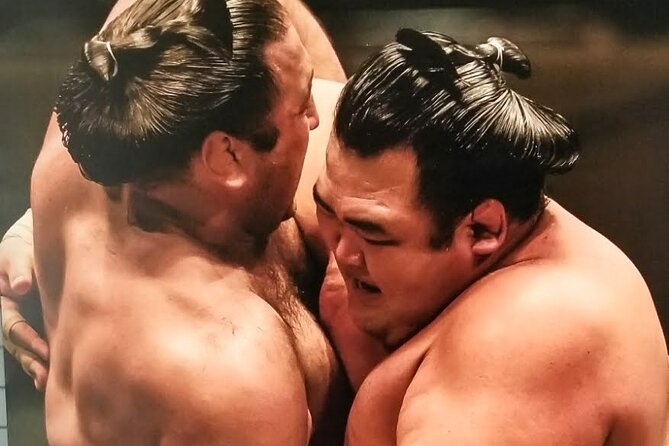
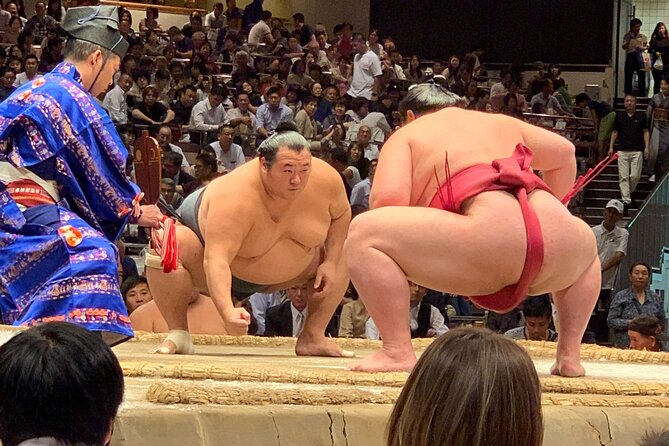
Sumo makes sense only when you see it live. On a screen, the matches can look brief and repetitive. At the arena, the slow preparation matters as much as the collision. Wrestlers enter, stamp, bow, scatter salt, and wait for the right moment. Then the bout may be over in seconds.
That rhythm gives the sport its character. Sumo is part athletics, part ceremony, and part crowd theater. Fans cheer loudly, react to each judge’s call, and follow the wrestlers with the focus you would expect at a major professional sports game.
You also get a look at ordinary Japanese sports culture. This is not a performance prepared only for international visitors. The audience knows the wrestlers, understands the customs, and reacts naturally. If you want an activity that connects culture with everyday life, a tournament does that better than a museum display.
The Tokyo event takes place at Ryōgoku Kokugikan, Japan’s best-known sumo venue. The activity information also lists tournament choices in Osaka and Nagoya, so check the selected city carefully before booking. The meeting point and instructions supplied here are for Tokyo.
More Sumo Experiences in Tokyo
- Tokyo: Sumo Show and Dining Experience
★ 4.8 · 2,742 reviews - the SUMO show
★ 5.0 · 1,960 reviews - Tokyo Shinjuku Sumo Show & Experience with Photo
★ 5.0 · 1,750 reviews
Arriving at Ryōgoku Edo Noren
In Tokyo, you meet at Ryōgoku Edo Noren in Sumida City. This is near public transportation and puts you close to the sumo district, which makes the start fairly practical. The activity ends back at the meeting point, although you are responsible for getting to and from the venue yourself.
That last point matters. Transportation is not included, and this is not a bus tour. You need to plan your route to the meeting point and later to Ryōgoku Kokugikan. The information provided does not include a private transfer, hotel pickup, or return transport.
Allow yourself time to get oriented. Ryōgoku is a sumo center, and arriving early lets you enjoy more than the bouts themselves. The area around the arena can feel festive on tournament days, with food stalls and fans arriving in team colors or traditional clothing.
The practical setup is simple, but it asks you to pay attention. Your booking confirmation is received at the time of purchase, and the ticket is a paper ticket. Keep it safe, and check the exact meeting instructions for your tournament date.
Inside the Grand Sumo Tournament
Once inside, you will see an event with a long build-up rather than a single two-hour match. The advertised duration is about four hours, though the broader tournament day can involve activity before and after your visit. The ticket gives you admission, and the focus is on watching the live competition.
The early part of your time is useful for taking in the venue. You may see wrestlers and fans around the entrance, and the arena can have a festival feel. One especially useful tip is to arrive early for the fuller experience. It gives you time to find your section, look around, enjoy food stalls, and see the crowd gather.
Finding your seat may take a little patience. One booking included an incorrect ticket detail for the Osaka tournament, and another person had trouble locating seats at first. Arena staff are available to help, and Ken has said that guests should ask if they need assistance. Still, check your ticket as soon as you arrive rather than waiting until the action is underway.
The exact view depends on the ticket type. Upgraded seats are available for an additional fee, but the supplied information does not specify a particular seating class, row, or distance from the ring. Ask for those details before booking if the view is important to you.
The rituals make short bouts meaningful
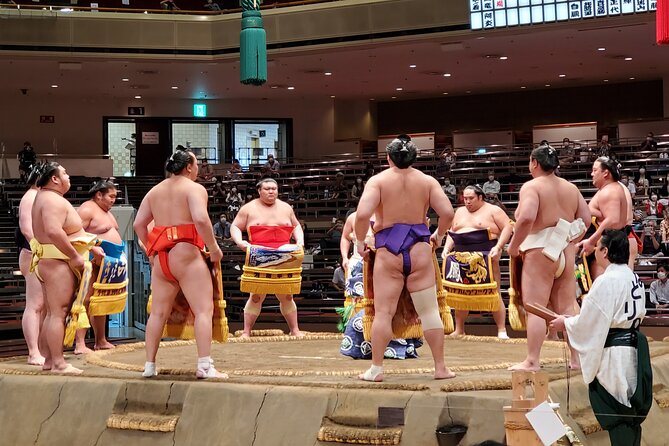
The best part of sumo is not simply seeing two large athletes push each other. The ritual gives every bout a clear structure. The movements before the match help you understand that sumo is tied to Japanese custom, discipline, and respect.
If you are new to the sport, the rules can seem mysterious. A wrestler wins by forcing the opponent out of the ring or making any part of the body other than the soles of the feet touch the ground. You will also see long periods of preparation before the actual contest.
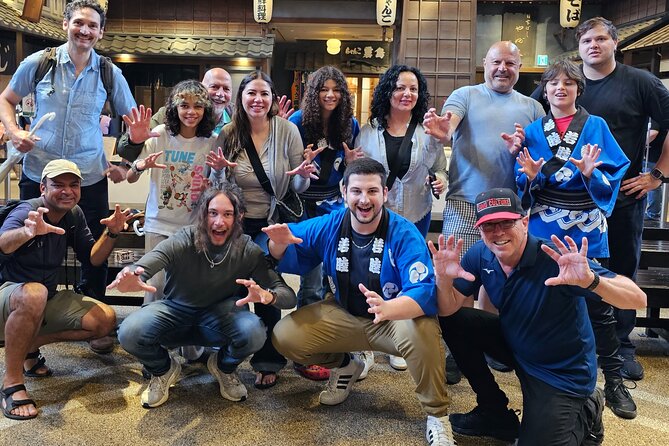
Some arrangements include an orientation led by Ken Miller, with Shin also assisting on certain tours. The added explanation can cover the rituals, rules, and history of sumo. Ken is described as someone who practices sumo himself, and several bookings included practical demonstrations, local stories, and a playful bout for members of the group.
That guided element is worth clarifying. The main activity details describe a ticket-only event with no tour guide. Yet some of the supplied experiences describe Ken and Shin leading an hour of instruction or walking guests around the arena before the tournament. This suggests that the exact format can vary by booking. Confirm whether your purchase includes only the paper ticket or also a guided introduction.
Same city, a different fixture:
- Tokyo: Sumo Show and Experience in Shinjuku
★ 4.8 · 1,001 reviews - Tokyo Grand Sumo Tournament Viewing Tour with Tickets
★ 5.0 · 692 reviews - Tokyo Sumo Wrestling Tournament Experience
★ 5.0 · 660 reviews - Tokyo:Luxury Sumo Show Experience & Japanese cuisine & Drink
★ 4.7 · 577 reviews
Ken Miller and Shin add personality when included
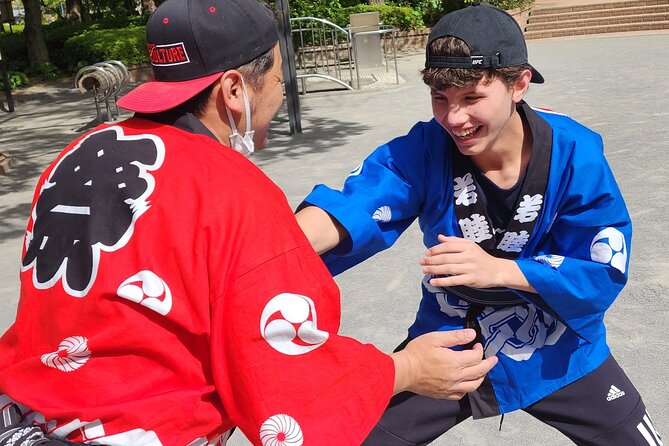
The strongest praise is directed at Ken Miller’s enthusiasm and personal approach. He has been described as friendly, easygoing, and passionate about sumo. His background in practicing the sport gives him a useful connection to the subject, especially when he explains why the rituals matter.
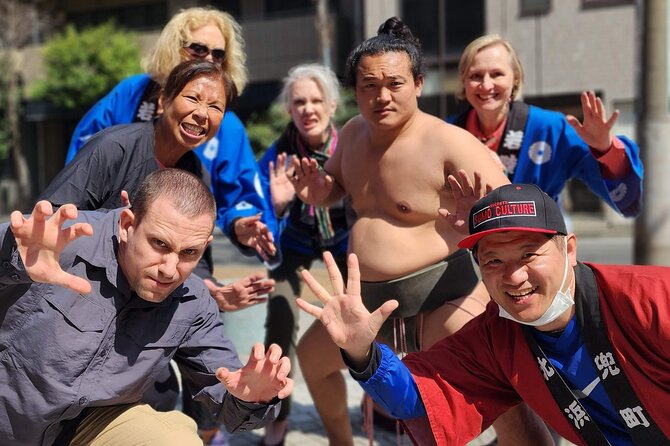
The guided version can be interactive. Guests may learn how to act around the arena, hear stories about sumo, and take part in a playful practice bout. In one arrangement, the men in the group tried mock matches while the women acted as referees. That sounds lighthearted, but it also gives beginners a physical sense of balance, force, and timing.
Ken has also taken groups to a historic sumo shrine dedicated to animals. This is not listed as part of the standard four-hour ticket-only itinerary, so you should not assume it is included. If your confirmation names Ken or Shin, ask what the pre-event portion covers and where it begins and ends.
The guided option is especially useful for families and teenagers. It gives younger visitors something active to do before sitting through the tournament and helps explain rules that can otherwise be hard to follow. Without a guide, you still get the authentic event, but you may need to read the atmosphere for yourself.
The $946 price needs careful checking
At $946 per person, this is an expensive way to see sumo. The value depends almost entirely on the ticket location, tournament demand, and whether personal guidance is included.
A sold-out event can push prices well above the printed amount on the paper ticket. That does not automatically mean the booking is wrong, but it does mean you should understand the difference between face value and the price charged to arrange a difficult-to-get ticket. One booking involved a major gap between those figures, and the explanation was that the event had sold out and the ticket had been sourced at a higher aftermarket price.
If you live in Japan or can buy directly during the regular sales period, you may find lower prices, including good box seats at much less than $946. The convenience here is access when normal supply is gone. For a visitor with fixed travel dates, that can be valuable. For a flexible buyer, the price may be hard to justify.
Before you commit, ask these questions:
- Is the ticket for Tokyo, Osaka, or Nagoya?
- Is the booking ticket only, or does it include Ken or Shin?
- What section and seat type are included?
- Is the ticket face value different from the price paid?
- Are seat upgrades available, and what do they cost?
- Is the tournament sold out?
Get the answers in writing if the price is high. The non-refundable policy gives you little room to correct a misunderstanding later.
Tokyo, Osaka, and Nagoya are not the same booking
The activity is presented as a way to attend a Grand Sumo Tournament in Tokyo, Osaka, or Nagoya. Those are separate tournament locations, not three stops in one four-hour tour. You choose a city and date, then attend the event associated with that booking.
The Tokyo itinerary names Ryōgoku Kokugikan and gives Ryōgoku Edo Noren as the meeting point. The Osaka information is less precise here, and one ticket detail was reported as incorrect, so double-check the exact venue and seat information before the event.
Nagoya is included among the available tournament cities, but no Nagoya meeting point or detailed route is supplied. Do not assume that the Tokyo instructions apply to Nagoya. Your confirmation should be the final word on where and when to meet.
This is a good example of why the activity suits people who are comfortable managing a portion of their own day. You receive the event access, but you do not receive a complete city tour with transport from your hotel.
Who will enjoy this most
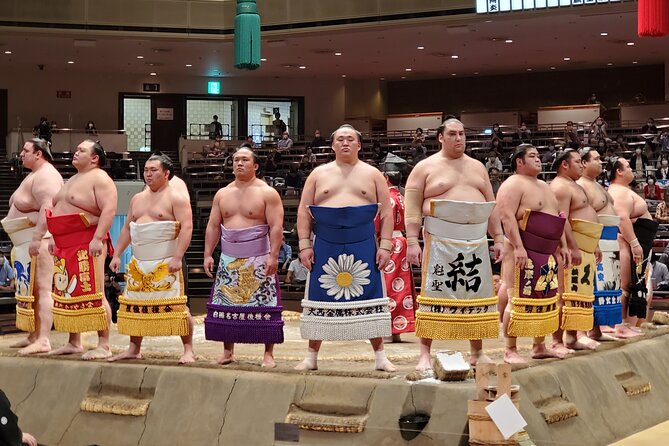
I would recommend this experience to someone who wants a real sporting event rather than a staged cultural lesson. It is also a strong choice if you have already seen Tokyo’s major sights and want an evening or afternoon activity rooted in local life.
Families can enjoy the guided version, especially if children or teenagers like physical contests and clear rules. Sumo also works well for sports fans who want to see how a national sport can carry so much ceremony.
It is less suitable for someone who wants a cheap, fully guided outing. The standard format has no tour guide and no transport. The cost is high, and the cancellation terms are strict. Anyone unsure about dates, cities, or seating should resolve those questions before booking.
The group size can reach 20 people, so a guided portion may feel social rather than private. That can add to the fun, especially when demonstrations or mock bouts are part of the visit, but it is not the format for someone seeking a quiet, one-on-one lesson.
Booking and cancellation details
You receive confirmation at booking, and most people can participate. The meeting point is near public transportation. The advertised experience is non-refundable and cannot be changed for any reason, including cancellation or an amendment request.
That rule is especially important here because tournament dates and seats are fixed. Confirm the city, date, seat category, meeting point, and guide arrangements before purchase. If you are booking during a sold-out period, also confirm why the price is higher than the printed ticket value.
Should you book this sumo experience?
Book it if attending a live Japanese sumo tournament is a top priority and you value having admission arranged in advance. The atmosphere, rituals, fan response, and chance to see the sport in its own arena are the real rewards.
I would be cautious at $946 unless the event is sold out, the seat is clearly identified, and guided help from Ken or Shin is included. If you can buy directly or remain flexible about dates, compare prices first. If you have only one chance to see sumo and want a practical way past a sold-out event, the high cost may be acceptable, but go in with your eyes open.
FAQ
Where does the Tokyo experience begin?
The Tokyo meeting point is Ryōgoku Edo Noren in Sumida City, near Ryōgoku.
Where does the Tokyo activity take place?
The itinerary names Ryōgoku Kokugikan as the tournament venue.
Does the price include admission?
Yes. Admission to the sumo tournament is included.
Is transportation included?
No. Transportation is not included.
Is a tour guide included?
The advertised activity is ticket only and says no tour guide is included. Some arrangements described with Ken Miller and Shin include guidance, so confirm the exact format before booking.
How long does the experience last?
The listed duration is approximately four hours.
Can I upgrade my seat?
Yes. Upgraded seats are available for an additional fee.
Is the activity available outside Tokyo?
Yes. Tournament options are listed for Tokyo, Osaka, and Nagoya.
How many people can join?
The activity can have a maximum of 20 participants.
Can I cancel or change my booking?
No. The experience is non-refundable and cannot be changed for any reason.
Just added for fans in Tokyo
- Tokyo: Grand Sumo Morning Training Tour★ 4.9 · 12 reviews
- Sumo Training Watching Experience in Tokyo★ 4.5 · 8 reviews
- Kickboxing & Body Training with EX-Pro Fighter★ 5.0 · 4 reviews
- Tokyo: Visit Sumo Morning Practice with English Guide★ 4.5 · 22 reviews
- Tokyo Sumo Experience with Live Show & Audience Challenge★ 5.0 · 38 reviews
- 【SUMO FESTIVAL】Tokyo Ginza: Sumo Show & Photo Experience★ 4.5 · 41 reviews
- Tokyo Shinjuku Sumo Show and Experience with Drinks and Photo★ 4.0 · 21 reviews
- Tokyo Sumo History Tour with Chanko Nabe Lunch★ 5.0 · 3 reviews
Sumo Experiences in Tokyo, compared.
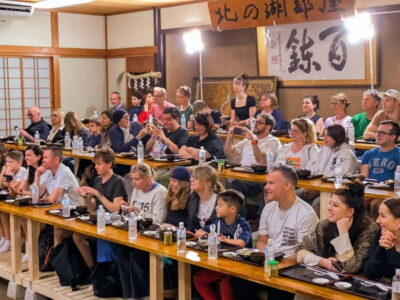
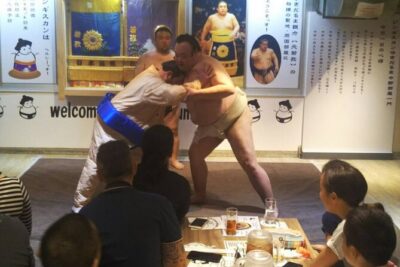
Tokyo Shinjuku Sumo Show & Experience with Photo
Read our review →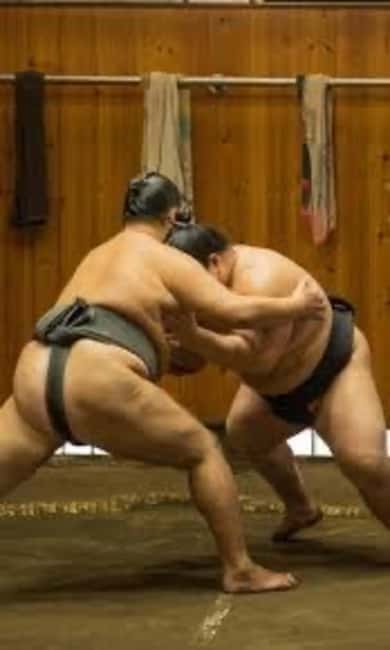
Tokyo Grand Sumo Tournament Viewing Tour with Tickets
Read our review →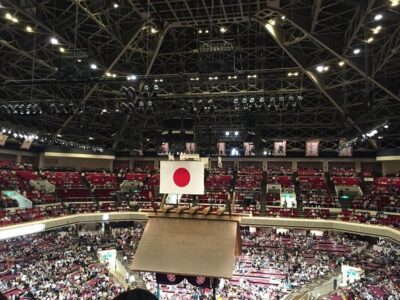
Luxury Sumo Show Experience & Japanese cuisine & Drink
Read our review →
Browse the lists this tour appears in