
Review · SUMO EXPERIENCES IN TOKYO
Grand Sumo Tournament Tour w/an English Guide ,Tokyo January 2026
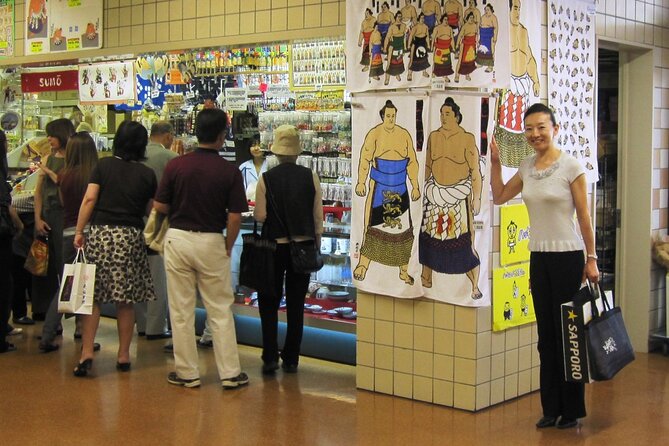
Sumo is far more than two large men pushing each other out of a ring. At Tokyo’s Kokugikan arena, you’ll see a carefully ordered world of rankings, ceremony, clothing, ritual, and explosive force. An English-speaking guide makes the unfamiliar parts easier to follow, from the referee’s movements to the meaning of each wrestler’s rank.
I especially like the reserved S chair seating, described as the best available chair section, and the small group limit of 10 people. I also like the cultural context, including the Kokugikan’s architecture, the Sumo Museum, traditional dress, and etiquette. The main caution is price: at $124.26 per person, you pay for guidance and access as well as the ticket, so independent fans may find it costly.
Key points about this Tokyo sumo tour
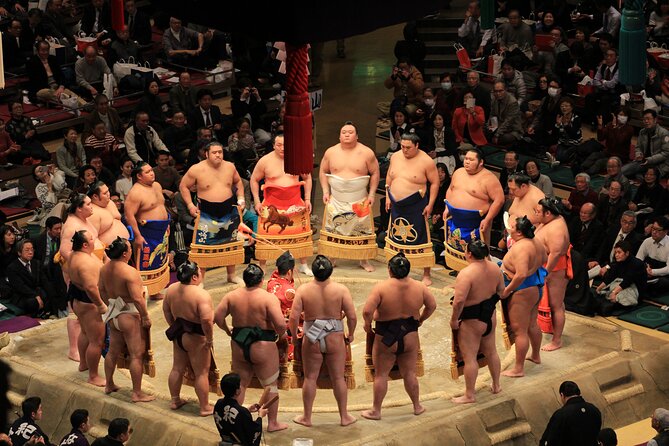
- S seating gives you the best available chair section, rather than leaving your position in the arena to chance.
- English commentary explains the sport as it happens, including divisions, ranks, rituals, officials, and winning techniques.
- Ryogoku Station is the meeting point, making the start fairly simple by Tokyo standards.
- The group is limited to 10 people, a useful size for questions and personal help.
- The visit lasts about 3 hours and 45 minutes, with a 2:15 pm start.
- Guides such as Jeff and Yuki have added personal touches, including wrestler information sheets and clear explanations for first-time spectators.
Why sumo works best with an English guide
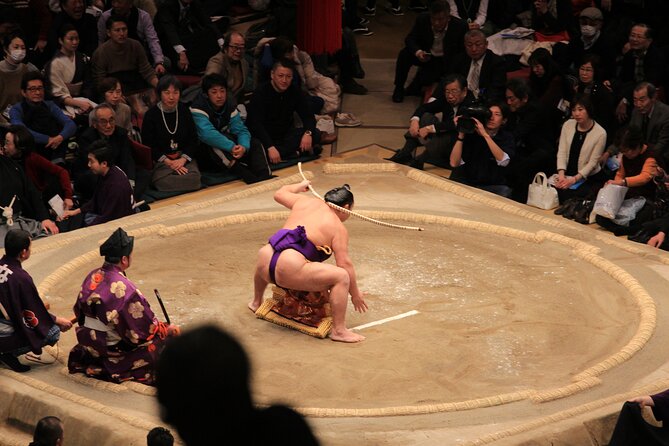
The basic action is easy to understand. Two wrestlers face each other, collide, and try to force one another out of the ring or make the other touch the ground with something besides the soles of the feet. The details are much less obvious.
That is where this tour earns its keep. Your guide explains the structure of professional sumo, including the different divisions and the place of early matches within the day. You’ll also learn how the rankings work, from yokozuna and ozeki to the wider sanyaku group and makuuchi competitors.
Those names are not just labels. They tell you how a wrestler fits into the sport’s strict hierarchy. Without help, you might see a collection of matches that seem similar. With the right explanation, you can start noticing which bouts carry greater status and why a particular wrestler receives more attention.
The guide also explains kimarite, the official names for winning techniques. A bout may end with a shove, a belt throw, a leg trip, or a perfectly timed sidestep. Once you understand that each finish has a recognized form, you watch the matches with a sharper eye.
The experience has been led by guides including Jeff and Yuki. Jeff is described as friendly and clear in his explanations, while Yuki prepared an additional sheet about the wrestlers. Guide assignments can change, but these details suggest the tour aims to teach rather than simply lead you into the building.
More Sumo Experiences in Tokyo
- Tokyo: Sumo Show and Dining Experience
★ 4.8 · 2,742 reviews - the SUMO show
★ 5.0 · 1,960 reviews - Tokyo Shinjuku Sumo Show & Experience with Photo
★ 5.0 · 1,750 reviews
Meeting at Ryogoku Station at 2:15 pm
The meeting point is Ryogoku Station, at 1-chome-3-20 Yokoami in Sumida City. Your guide then escorts you to the venue and helps you reach your reserved seat.
A fixed meeting point matters in Tokyo. The Kokugikan is close to Ryogoku Station, but the station area can still feel unfamiliar if this is your first visit. Meet with enough time to spare so you are not trying to locate the guide at the last moment.
The tour begins at 2:15 pm and lasts about 3 hours and 45 minutes. The activity ends back at the meeting point. That gives you a defined afternoon and early evening plan, though you should avoid scheduling another fixed activity immediately afterward in case the visit runs slightly over its stated duration.
The group maximum is 10 people. That is small enough for the guide to answer questions without turning the outing into a private tour price. It also gives you a better chance of hearing explanations in a large arena where crowd noise and announcements can compete for attention.
The tour uses a mobile ticket. You should have your booking information ready on your phone, though the supplied details do not state any special ticket-printing requirement.
Entering the Kokugikan and understanding the setting
The Kokugikan is part of the experience, not just a container for the matches. Your guide introduces the arena’s Japanese architectural character, ceremonial clothing, symbolic decorations, and customs.
This matters because sumo can look strange if you only focus on the wrestlers. The ring, the clothing, the movements, and the formal behavior all carry meaning. The guide helps connect those pieces so you understand that the event is both a contest and a carefully controlled public ritual.
You’ll also learn about the gyoji, the referee. The gyoji does more than declare a winner. The clothing, gestures, and position in the ring are part of the event’s formal structure. The guide explains the role of the yobidashi, the announcer who calls out the wrestlers and helps maintain the rhythm of the tournament.
These officials can be easy to overlook if you are seeing sumo for the first time. The commentary gives you a reason to watch them, not just the athletes.
The tour also covers traditional attire and etiquette. This is useful for anyone who wants to understand the event respectfully rather than treat it as a novelty. You’ll have a better sense of why the ceremony takes time and why the matches are framed by repeated gestures and formal routines.
The Sumo Museum adds context before the matches
The Sumo Museum is included in the guided visit to the Kokugikan. Its displays help place the modern tournament within the broader world of Japanese sumo.
The supplied details do not specify the exact exhibitions available in January 2026, so I would not book this expecting a particular wrestler, artifact, or display. Instead, think of the museum as a short cultural stop that gives the arena more meaning.
This part is especially useful if you know little about sumo. The museum setting gives your guide time to explain traditions before you are watching live bouts. You can then recognize clothing, rankings, and ceremonial details once you take your seat.
It is also a welcome change of pace. The tournament itself is loud, active, and full of quick finishes. A museum visit lets you pause and ask questions before the action takes over.
Same city, a different fixture:
- Tokyo: Sumo Show and Experience in Shinjuku
★ 4.8 · 1,001 reviews - Tokyo Grand Sumo Tournament Viewing Tour with Tickets
★ 5.0 · 692 reviews - Tokyo Sumo Wrestling Tournament Experience
★ 5.0 · 660 reviews - Tokyo:Luxury Sumo Show Experience & Japanese cuisine & Drink
★ 4.7 · 577 reviews
Watching the tournament from S chair seating
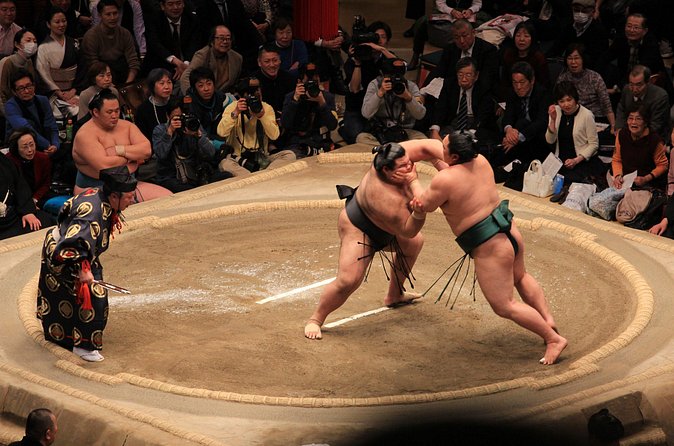
The S ticket is described as the best chair seating available. That does not mean a private box or a guaranteed front-row position. It means you receive the highest available category within the chair seating offered for this tour.
For a first visit, reserved seating removes a major worry. You do not need to work out where to sit after entering, and your guide escorts you to the assigned place. You can settle in and focus on the ring.
The January 2026 S seat schedule had not yet been released in the supplied information. The same is true for A seating. B seating was listed for January 11, 13, 15, 21, 22, and 23. Check the exact date and seat category before paying, especially if your Tokyo schedule is tight.
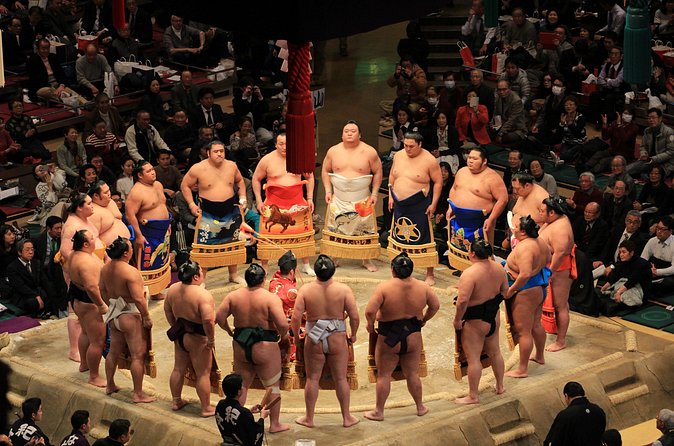
The atmosphere changes as the bouts progress. You’ll feel the crowd’s attention sharpen when wrestlers prepare to enter the ring. The pre-match movements can seem slow compared with the actual clash, but that pause builds tension and gives the contest a formal shape.
The match itself may last only moments. That is part of the appeal and part of the risk. You may wait through ceremony and preparation for a bout that ends almost instantly. A guide helps you appreciate the setup, technique, and result rather than judging the experience only by the number of seconds of physical contact.
Learning to watch the people around the ring
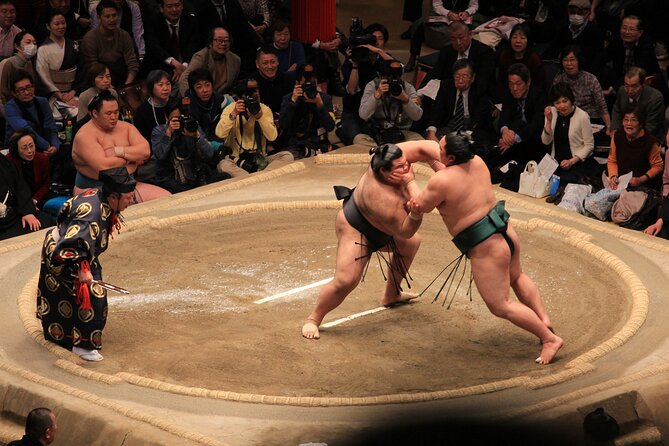
The guide’s explanations are most valuable when connected to what is happening in front of you. You might hear the name of a division, then see how its wrestlers differ in status. You might learn about a kimarite, then recognize that technique when a match ends.
The gyoji and yobidashi also become easier to follow. Their traditional clothing is not decorative background. It signals their roles in the formal process of the tournament.
You’ll learn how yokozuna and ozeki fit into the ranking system, along with the sanyaku and makuuchi categories. This gives you a framework for understanding why some bouts feel more important than others.
The tour is not simply a translation service. It is an introduction to the rules and customs that make sumo distinct from other combat sports. That is why it can work well even if you have never watched a match before.
The possible chanko meal and what to expect
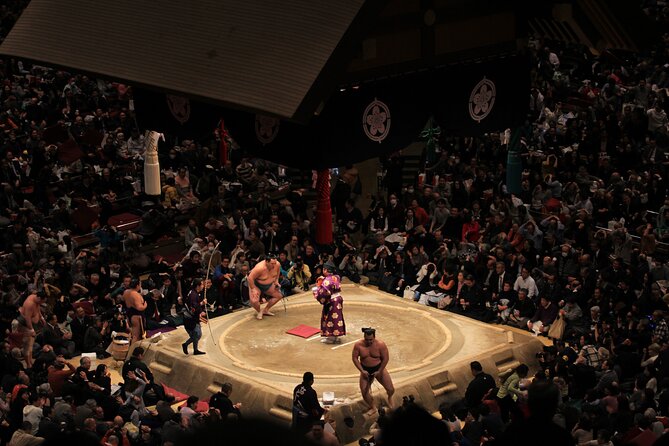
Chanko is mentioned in the experience feedback as a tasty part of the sumo outing. The supplied tour details do not clearly state whether a meal is included in every January 2026 booking, so I would confirm this before assuming food is part of the price.
If chanko is included in your arrangement, it adds a fitting culinary link to the sport. Chanko is closely associated with sumo wrestlers, and trying it can make the day feel more complete. If it is not included, you should treat the $124.26 price as covering the guided tournament experience rather than a guaranteed meal.
This is a small but important booking point. The tour price is easier to judge when you know exactly which elements apply to your selected seat type and date.
Is $124.26 a fair price?
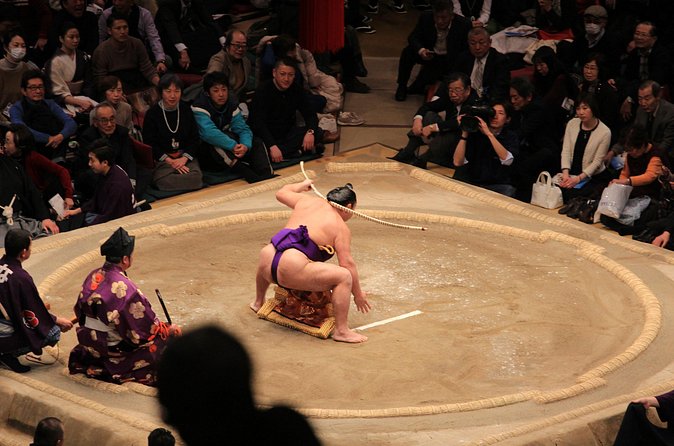
At $124.26 per person, this is not the cheapest way to attend a sumo tournament. A regular ticket can cost less if you manage to obtain one independently, as one past participant pointed out. The trouble is that tournament tickets can be difficult to secure, and an independent ticket does not explain what you are seeing.
The value here comes from several parts:
- A reserved seat in the best available chair category for the S option
- An English-speaking guide who escorts you inside
- Explanations of ranks, divisions, techniques, etiquette, clothing, and officials
- A visit to the Kokugikan and Sumo Museum
- A small group capped at 10 people
- Help making sense of a major Japanese cultural event
For a dedicated sumo fan who already understands the sport and can obtain a ticket, the added cost may not feel worthwhile. For a first-time visitor, the guidance can change the entire experience. You are paying to know what to watch, not simply to occupy a seat.
The price also reflects demand. The tour had more than 10 bookings in the previous month, and January tournaments are a major part of Tokyo’s cultural calendar. I would compare the price against the value of certainty, seat quality, and instruction rather than against the cost of a bare admission ticket alone.
Who will enjoy this tour most
I would choose this experience if you want a clear introduction to sumo and prefer not to work out the rules on your own. It suits couples, families with older children, and small groups who want a shared cultural activity with a guide available for questions.
Children aged 4 and above require admission. The supplied details say most people can participate, but they do not give specific guidance on strollers, wheelchair access, or seating arrangements. If you need a particular accessibility setup, confirm it before booking.
The tour is also a good fit if you like traditional customs as much as sport. The arena architecture, clothing, officials, etiquette, and museum visit receive attention alongside the matches.
I would think twice if you want a completely independent outing or if you are mainly looking for the lowest possible ticket price. You may prefer to buy a standard ticket yourself, provided you can find one and already understand the sport.
Booking dates, cancellations, and practical cautions
The January 2026 schedule needs checking by seat type. S and A seat dates were to be released, while B seating was listed for January 11, 13, 15, 21, 22, and 23. Do not assume every seat category is available on every tournament day.
Confirmation is sent within 48 hours of booking, subject to availability. That wording matters, so avoid making nonrefundable plans around the tour until your place is confirmed.
You can cancel for a full refund up to 24 hours before the local start time. Cancellations or changes made less than 24 hours before the experience are not refunded or accepted.
The activity may also be canceled if minimum participation is not reached or if poor weather affects the event. In those cases, you are offered another date or experience, or a full refund.
Should you book this Tokyo sumo experience?
I would book it if this is your first Grand Sumo Tournament and you want more than a quick look at the action. The guide’s explanations, the reserved S chair seating, the Sumo Museum, and the small group make the experience easier to understand and less stressful to arrange.
I would skip it if your main goal is simply finding the least expensive ticket. The price is higher than independent admission may be, and the exact January seat schedule still needs confirmation.
For most first-time visitors, the strongest reason to book is not just getting into the Kokugikan. It is learning how to watch sumo once you are there.
FAQ
Where does the tour meet?
The meeting point is Ryogoku Station at 1-chome-3-20 Yokoami, Sumida City, Tokyo 130-0015, Japan.
What time does the tour start?
The tour starts at 2:15 pm.
How long does the experience last?
The experience lasts approximately 3 hours and 45 minutes.
Where does the tour end?
The activity ends back at the meeting point.
What type of seating is available?
The S option provides the best available chair seating. A and B seating options are also listed, depending on the selected date and availability.
Which January 2026 dates are listed for B seating?
B seating is listed for January 11, 13, 15, 21, 22, and 23.
Is an English-speaking guide included?
Yes. Your guide escorts you to your reserved seat and explains the tournament, sumo rankings, officials, clothing, etiquette, and winning techniques.
How many people can join the tour?
The activity has a maximum of 10 participants.
Are children required to pay admission?
An admission fee applies to anyone aged 4 and above.
Can I cancel for a full refund?
Yes. You can cancel at least 24 hours before the local start time for a full refund. Cancellations made less than 24 hours in advance are not refunded.
Just added for fans in Tokyo
- Tokyo: Grand Sumo Morning Training Tour★ 4.9 · 12 reviews
- Sumo Training Watching Experience in Tokyo★ 4.5 · 8 reviews
- Kickboxing & Body Training with EX-Pro Fighter★ 5.0 · 4 reviews
- Tokyo: Visit Sumo Morning Practice with English Guide★ 4.5 · 22 reviews
- Tokyo Sumo Experience with Live Show & Audience Challenge★ 5.0 · 38 reviews
- Tokyo Sumo History Tour with Chanko Nabe Lunch★ 5.0 · 3 reviews
- 【SUMO FESTIVAL】Tokyo Ginza: Sumo Show & Photo Experience★ 4.5 · 41 reviews
- Tokyo Shinjuku Sumo Show and Experience with Drinks and Photo★ 4.0 · 21 reviews
Sumo Experiences in Tokyo, compared.
Tokyo Shinjuku Sumo Show & Experience with Photo
Read our review →
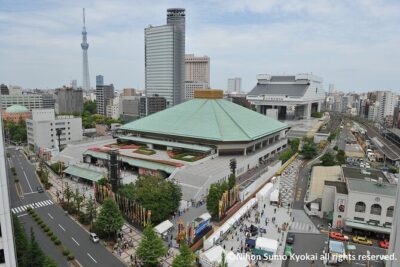
Tokyo Grand Sumo Tournament Viewing Tour with Tickets
Read our review →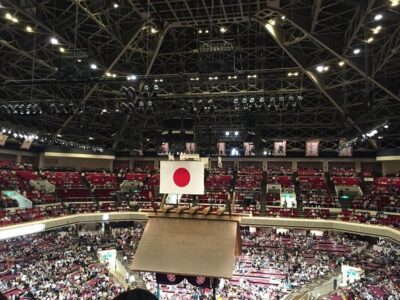
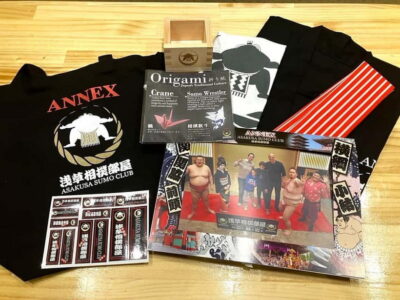
Luxury Sumo Show Experience & Japanese cuisine & Drink
Read our review →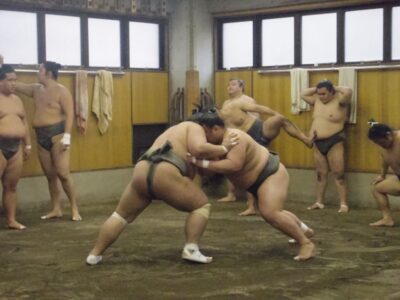
Browse the lists this tour appears in