
Review · SUMO EXPERIENCES IN TOKYO
Morning Sumo Practice Viewing in Tokyo
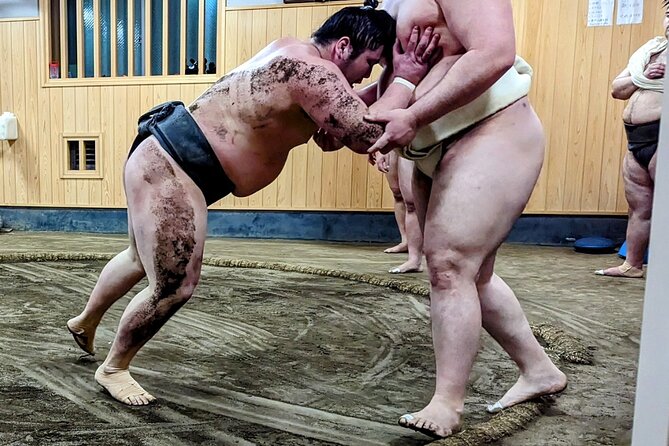
A morning sumo practice gives you something a tournament ticket cannot: a close look at the daily work behind Japan’s national sport. You sit inside a real wrestler’s stable, watch warm-ups and practice bouts at close range, and learn why each movement carries religious and cultural meaning. The guides, including Joji, Dawn, Jeff, and Aki on different departures, explain what you are seeing before the action begins.
I like the small maximum group of 10 and the English guidance, which make it easier to follow a sport full of unfamiliar rules. I also like that the ticket includes a donation to the stable, helping support the place you are visiting.
The trade-off is comfort. You sit on a cushion on a flat floor for about two hours, with no chairs available and no toilet at the stable. The 7:30 am start also means an early morning, but that is when the wrestlers train.
Key points to know before booking
- Morning practice is the main event: Expect roughly two hours of close-up training, not a staged performance or tournament match.
- You watch from the stable floor: Everyone sits on a cushion, and chairs are not available.
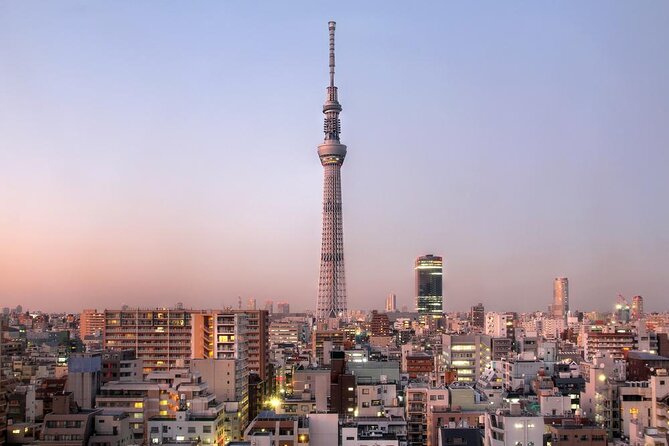
- The Tokyo Skytree meeting point matters: The guide uses the first 30 minutes to explain sumo rules and viewing etiquette.
- A small group helps: The maximum is 10 people, allowing for personal explanations and easier questions.
- A photo session may follow: You will probably have a chance to take photos with wrestlers, but it is not presented as an absolute guarantee.
- The price supports the stable: At $99.08 per person, the fee includes the stable donation and an English-speaking local guide.
Why a sumo stable offers more than a tournament seat
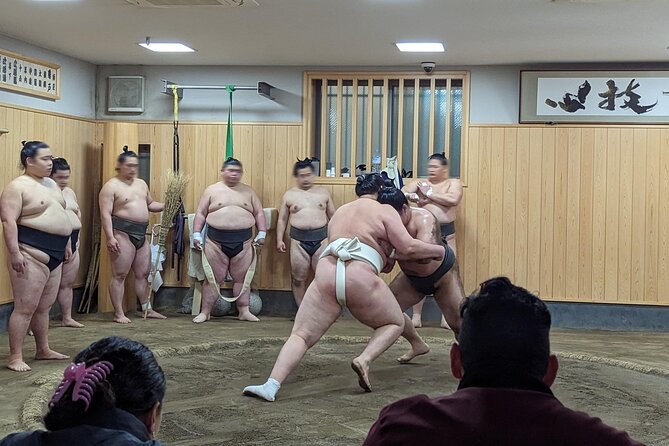
A professional sumo tournament can give you the drama of a formal match, but morning practice shows the less polished side of the sport. You see wrestlers warming up, repeating movements, and testing one another in practice bouts. That daily routine helps you understand that sumo is built on discipline long before a wrestler steps into a tournament ring.
The stable is the wrestler’s training home. Access is difficult to arrange on your own, so the guide and the donation are important parts of the experience. You are not simply buying a seat at a public show. You are being brought into a working place where training follows its own rules.
Sumo also has strong Shinto roots. The sport’s rituals, gestures, and respect for the ring are not decorative extras. They help explain why sumo feels different from many other sports. The opening briefing gives you the background needed to notice those details instead of seeing only two large athletes pushing and throwing.
This is particularly useful if you know little about sumo. A short introduction to the basic rules and moves turns a long practice session into something you can follow. You will have a better sense of why one bout matters, what a wrestler is trying to do, and how the stable’s customs shape the morning.
More Sumo Experiences in Tokyo
- Tokyo: Sumo Show and Dining Experience
★ 4.8 · 2,742 reviews - the SUMO show
★ 5.0 · 1,960 reviews - Tokyo Shinjuku Sumo Show & Experience with Photo
★ 5.0 · 1,750 reviews
Meeting at Tokyo Skytree at 7:30 am
The meeting point is Tokyo Skytree Station at 1-chōme-1-4 Oshiage in Sumida City. The start time is 7:30 am, so plan your route the night before. You do not want a complicated morning transfer to make you late for an activity tied to a stable’s training schedule.
The first stop lasts about 30 minutes near Tokyo Skytree. The tower itself is a useful landmark and an easy place to find the guide. You are not paying for admission to the Skytree, and the tour does not include a visit up the tower. Instead, this opening stop gives the guide time to explain how to watch practice and what behavior is expected inside the stable.
That briefing is more useful than it may sound. A sumo practice is quiet in a different way from a sporting event. You need to know when to speak, where to sit, and how to show respect while the wrestlers work. Guides have also provided handouts and profiles of the wrestlers in training, which can help you recognize who is doing what.
The early start has one clear benefit: you reach the stable at the right time for morning training. The cost is that you lose a leisurely breakfast and need to be ready for a floor-based activity soon after waking.
Inside the Sumida stable
From Tokyo Skytree, the experience continues to Sumida, ending at Naruto-beya Sumo Stable at 1-chōme-22-16 Mukōjima. The stable is the heart of the tour, and you sit inside while the wrestlers practice.
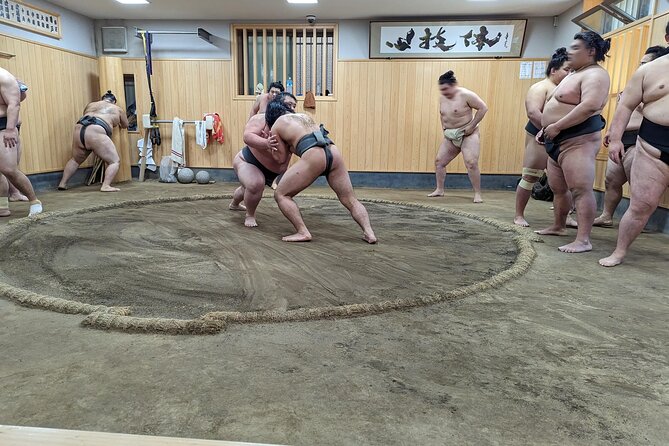
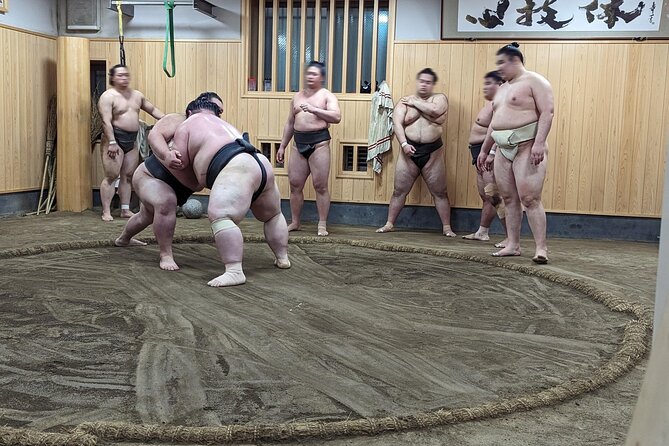
The viewing period is listed as about two hours. That is long enough to see more than a quick ceremonial demonstration. You may watch stretching, warm-ups, technical drills, and practice bouts. The pace can change from repetitive training to a forceful contest, so stay alert even when the action seems quiet.
Your position close to the wrestlers is one of the strongest reasons to choose this experience. You are not watching from the back row of a large arena. You are sitting on the stable floor, close enough to observe the physical effort and the concentration involved.
That closeness also comes with responsibilities. The guide explains the rules and simple etiquette before you enter, so listen carefully. This is a working practice, not a performance arranged around an audience. The most respectful approach is to watch quietly and follow the guide’s instructions.
The stable’s floor setup will not suit everyone. Every participant must sit on a cushion on a flat floor, and there are no chairs. If you have difficulty sitting this way for two hours, that is the main practical concern to weigh before paying.
There is also no toilet at the stable. Use facilities before the practice begins. This detail is easy to overlook when you are focused on the early meeting time, but it matters once you are seated inside.
Learning to read a practice bout
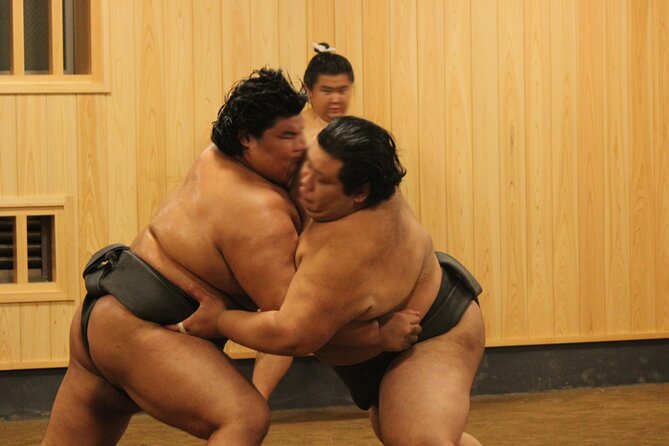
Without an explanation, sumo can look simple: two wrestlers push, pull, and try to force each other out of the ring. The rules are more precise than that, and the guide’s introduction makes the practice easier to understand.
The guides have been praised for explaining the sport’s background, rituals, and moves in clear English. Joji has offered a short lecture before the stable visit, while Dawn, Jeff, and Aki have also guided departures. The exact guide depends on the date, but the experience is designed around a local English-speaking certified guide.
You may receive written information about the wrestlers or the rules. That is helpful during practice because you can connect the names and profiles to the athletes in front of you. It also gives you something to refer to when several bouts take place in quick succession.
I especially like this teaching element for first-time sumo spectators. You do not need to arrive with a working knowledge of rankings, techniques, or ritual. The guide gives you enough structure to understand what you are watching, while the close setting supplies the atmosphere.
The tour is also useful for people who already follow sumo. You get a look at the training environment rather than only the formal competition. Still, it is worth keeping expectations in check. This is a practice session, so the schedule and intensity are controlled by the stable, not by the tour.
Same city, a different fixture:
- Tokyo: Sumo Show and Experience in Shinjuku
★ 4.8 · 1,001 reviews - Tokyo Grand Sumo Tournament Viewing Tour with Tickets
★ 5.0 · 692 reviews - Tokyo Sumo Wrestling Tournament Experience
★ 5.0 · 660 reviews - Tokyo:Luxury Sumo Show Experience & Japanese cuisine & Drink
★ 4.7 · 577 reviews
A possible photo with the wrestlers
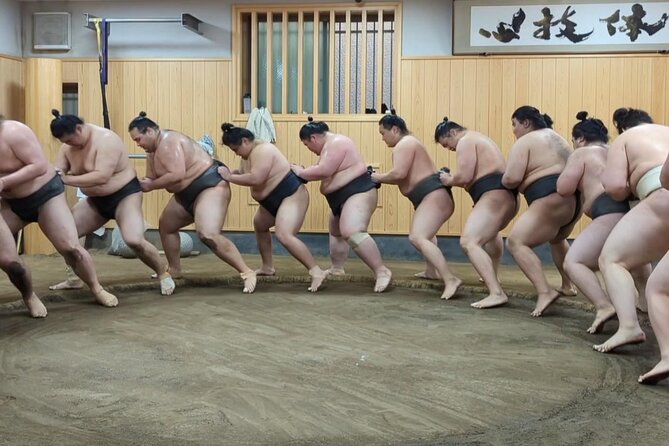
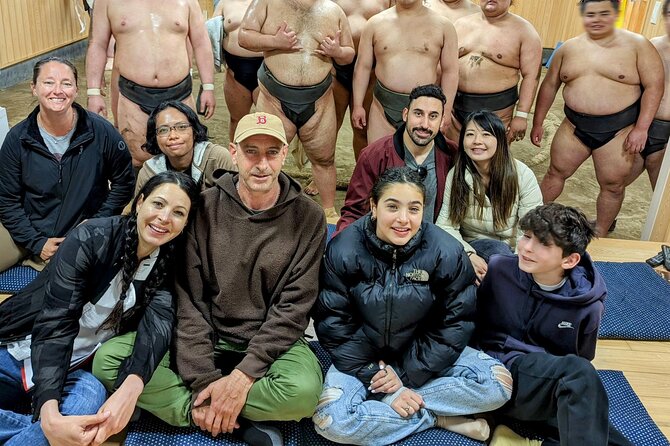
After practice, you will probably have the chance to take photos with the wrestlers. That can be a memorable finish, especially after sitting close by while they train.
The wording matters: the photo session is described as most probable, not guaranteed. Do not book this solely for a posed picture. The reliable part is the stable visit and practice viewing. The photo opportunity is a welcome extra when conditions allow.
The setting also makes the photo more meaningful than a generic souvenir picture. You have just watched the wrestlers work in their training space, so the image connects to the experience rather than being the entire point of it.
Follow the guide’s instructions about timing and behavior. The wrestlers may need to continue with their morning routine, and the stable remains their workplace. A short, orderly photo session is more likely to respect that setting.
Chanko nabe and the question of lunch
Chanko nabe, the hearty hot pot associated with sumo wrestlers, is presented as part of the experience. It is traditional wrestler food and a fitting way to end a morning spent watching training.
Still, you should check the booking details for your specific departure before treating lunch as guaranteed. The included items clearly identify the stable donation and English guiding, while food is not separately listed there. The tour description says you will likely refuel with chanko nabe, so regard it as an expected possibility rather than the one feature to build your plans around.
That distinction is useful when working out the rest of your day. If you need a definite meal at a fixed time, leave room for a backup plan. The practice itself is the core experience.
What the $99.08 price really covers
At $99.08 per person, this is not a cheap sightseeing stop. The value comes from access, instruction, and setting rather than from the length alone.
You are paying for entry to a stable that is difficult to visit independently, a local English-speaking guide, a small group capped at 10, and a donation to the stable. The donation is worth noting. It means part of your fee supports the place that allows the visit, rather than treating the stable as a free backdrop for tourists.
A private-tour format is highlighted, with personalized attention included among the benefits. The maximum group size is 10, so you should confirm the exact format at booking if you need a fully exclusive outing. Either way, a group this size is far more manageable than a large bus tour, especially in a compact training space.
The fee makes the most sense if you value cultural access and explanation. If you only want to see a sumo match, a tournament ticket may fit your plans better. If you want to understand the routine, etiquette, and religious background of the sport, this morning visit offers more than a quick photo stop.
Group discounts are available, which may improve the value for families or friends booking together. Hotel pickup and drop-off are not included, so you must arrange your own way to Tokyo Skytree Station and from the stable at the end.
Who will enjoy this morning best
I would recommend this to anyone curious about Japanese culture, sports, or daily life behind a public spectacle. You do not need to be a sumo expert. The briefing and guide help you follow the action.
It is also a strong choice for families with older children who can sit quietly and follow instructions. The close setting can make the sport feel immediate, but the early start and floor seating may be hard for younger children.
Photography enthusiasts may enjoy the proximity and possible photo session, though the practice should not be treated as a photo shoot. You need to be comfortable putting the camera down and watching respectfully.
This is less suitable if you need chairs, frequent toilet access, or a flexible late-morning schedule. It is also not ideal if you want a polished show with guaranteed bouts, music, or a fixed entertainment program.
Most participants can take part, according to the activity information, but the floor seating remains the practical issue to consider. If sitting on a cushion for about two hours is difficult, ask about your needs before booking.
Smart planning for the early start
Because the tour starts at 7:30 am, check the route to Tokyo Skytree Station in advance. The meeting point is near public transportation, but the tour does not include hotel transfers.
Wear clothing that lets you sit comfortably on the floor. The stable provides cushions, but the cushion does not turn floor seating into a chair. You should also use a toilet before entering, since there is none at the stable.
Leave the rest of your morning reasonably open. The stated duration is about three hours, with 30 minutes near Tokyo Skytree and about two hours inside the stable. The exact rhythm may depend on the practice and the movement between the meeting point and stable.
The tour ends at Naruto-beya Sumo Stable, not back at Tokyo Skytree. That is useful if you plan to continue exploring Sumida afterward, but you need to account for the separate return journey if your hotel or next booking is elsewhere.
Free cancellation is available up to 24 hours before the start time for a full refund. Changes or cancellations inside that 24-hour window are not accepted for a refund. Poor weather can also affect the activity, in which case a different date or full refund is offered.
Should you book this sumo experience?
Book it if you want close access to a working sumo stable, clear English explanations, and a cultural experience that goes beyond watching a match from the stands. The stable donation, small group size, possible wrestler photos, and possible chanko nabe make the $99.08 fee easier to justify.
Think twice if you cannot sit on the floor for two hours, need a toilet nearby, or dislike early starts. Also remember that practice is not a tournament, and the photo session and meal should not be treated as absolute guarantees.
For most visitors who want one memorable, distinctly Japanese morning in Tokyo, this is a strong choice. Arrive ready to listen, sit quietly, and watch the work behind the sport. That is where the value lies.
FAQ
Where does the sumo tour begin?
It begins at Tokyo Skytree Station, at 1-chōme-1-4 Oshiage, Sumida City, Tokyo.
What time does the experience start?
The start time is 7:30 am.
Where does the tour end?
The tour ends at Naruto-beya Sumo Stable at 1-chōme-22-16 Mukōjima, Sumida City, Tokyo. Hotel drop-off is not included.
How long does the experience last?
The activity lasts about three hours. Around 30 minutes is spent near Tokyo Skytree for the briefing, followed by about two hours watching practice at the stable.
Do I need to sit on the floor?
Yes. All participants sit on a cushion on a flat floor, and chairs are not available.
Is there a chance to take photos with the wrestlers?
Most probably, yes. A photo session with the wrestlers is included as a likely part of the experience, but it is not guaranteed.
Just added for fans in Tokyo
- Tokyo: Grand Sumo Morning Training Tour★ 4.9 · 12 reviews
- Sumo Training Watching Experience in Tokyo★ 4.5 · 8 reviews
- Kickboxing & Body Training with EX-Pro Fighter★ 5.0 · 4 reviews
- Tokyo: Visit Sumo Morning Practice with English Guide★ 4.5 · 22 reviews
- Tokyo Sumo Experience with Live Show & Audience Challenge★ 5.0 · 38 reviews
- Tokyo Shinjuku Sumo Show and Experience with Drinks and Photo★ 4.0 · 21 reviews
- Tokyo Sumo History Tour with Chanko Nabe Lunch★ 5.0 · 3 reviews
- 【SUMO FESTIVAL】Tokyo Ginza: Sumo Show & Photo Experience★ 4.5 · 41 reviews
Sumo Experiences in Tokyo, compared.
Tokyo Shinjuku Sumo Show & Experience with Photo
Read our review →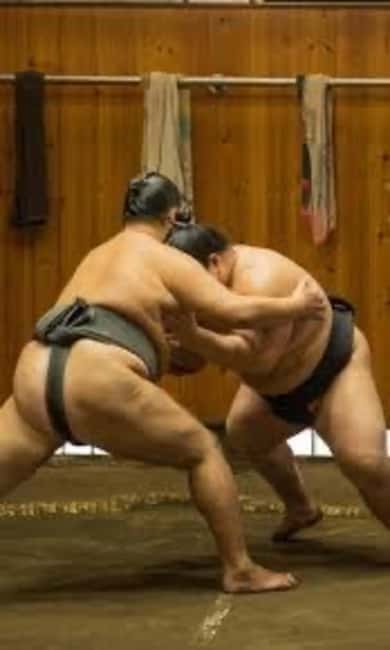
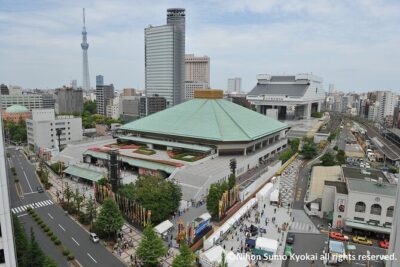
Tokyo Grand Sumo Tournament Viewing Tour with Tickets
Read our review →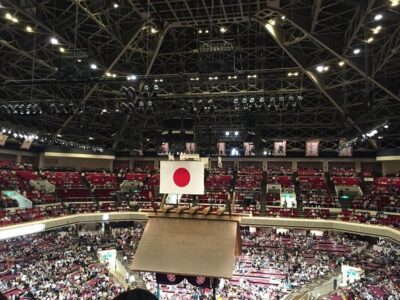

Luxury Sumo Show Experience & Japanese cuisine & Drink
Read our review →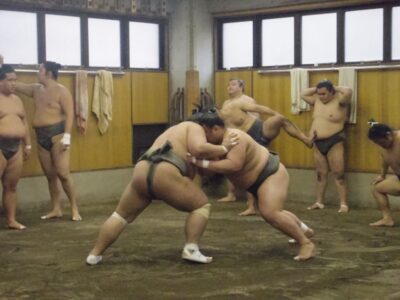
Browse the lists this tour appears in