

Review · STADIUM TOURS
The Museum of Hanshin Koshien Stadium Entry Ticket
The Museum of Hanshin Koshien Stadium gives you a close look at the traditions that make Japanese baseball more than a game. Inside the famous ballpark, you can follow the story of the Hanshin Tigers, see rare memorabilia, and learn why the high school Koshien tournaments matter so much across Japan. I especially like the interactive exhibits and the chance to reach a stadium view from the outfield, rather than looking at baseball only through glass cases.
I also like the low price, about $9 per person, and the fact that exclusive merchandise is included with admission. The main thing to consider is language: English appears limited, so you may need Google Translate to get the most from the displays. This is a self-guided museum visit, not a hosted tour with a named guide.
Key points to know before you go
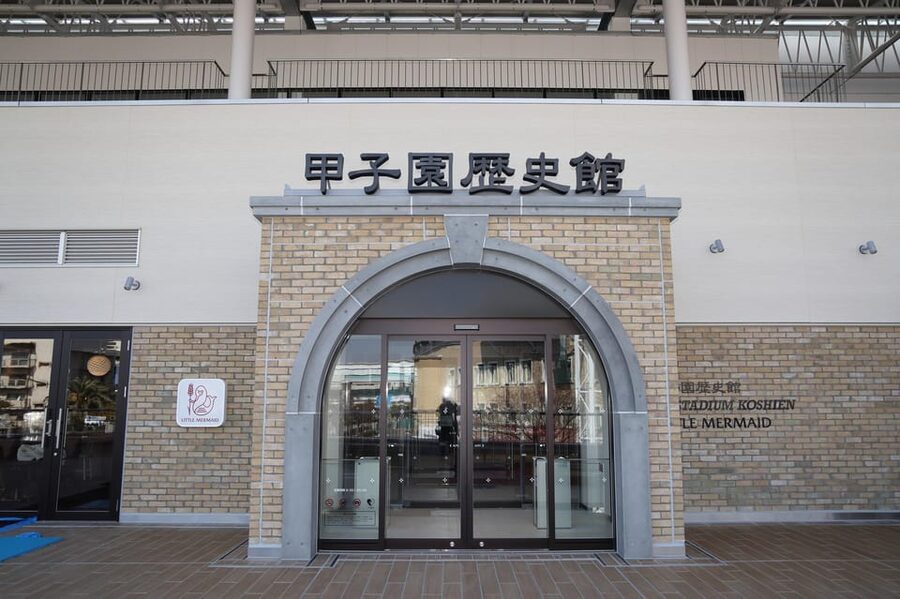
- The museum is inside Koshien Stadium: You enter the home of one of Japan’s best-known baseball traditions, not a separate sports museum.
- High school baseball gets serious attention: The Koshien tournaments are a major part of the museum story and offer a window into Japanese sporting culture.
- The outfield view adds value: You can access a view of the stadium from the outfield, giving the visit a sense of place.
- Exclusive merchandise is included: Your admission covers a small souvenir element as well as museum entry.
- English support is limited: Bring a translation app if you do not read Japanese.
- The ticket is valid for one day: You can plan the museum around the rest of your time in the area, but the ticket cannot be refunded.
Why Koshien Stadium matters in Japanese baseball
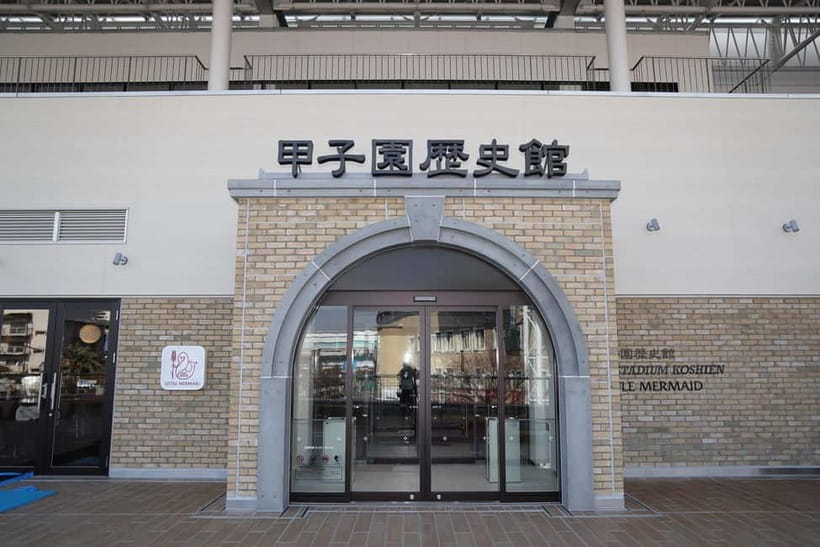
Koshien Stadium is not simply a place where professional games take place. It is tied to two powerful parts of Japanese baseball: the Hanshin Tigers and the national high school tournaments held at Koshien.
The Hanshin Tigers give the museum its professional baseball side. The team has a long following, and its memorabilia helps explain the emotional connection between a club and its home city. If you already know the Tigers, you will have plenty of familiar names, objects, and moments to connect with. If you do not, the displays still give you a useful introduction to the club’s place in Japanese baseball.
The high school tournaments offer a different story. Koshien is linked with school teams from around the country, and the tournament has become a major part of the sporting calendar. The museum lets you see how baseball can mark a young person’s school years and become a shared national memory.
That mix is what makes the visit more interesting than a simple collection of old uniforms and equipment. You are seeing both organized professional sport and the strong school tradition that feeds Japan’s baseball culture.
More Stadium Tours in Japan:
- Madrid: Tour Bernabéu Entry Ticket
★ 4.5 · 21,573 reviews - Liverpool: Liverpool Football Club Museum and Stadium Tour
★ 4.8 · 10,764 reviews - Amsterdam: Johan Cruijff ArenA Tour with Optional Guide
★ 4.6 · 8,954 reviews
Inside the Museum of Hanshin Koshien Stadium
Your visit centers on displays about the stadium, the Hanshin Tigers, and the high school tournaments. The material includes rare memorabilia, historical displays, and interactive elements that make the visit more active than a room of static photographs.
The interactive exhibits are especially useful if you are new to Japanese baseball. You can take in the story in smaller pieces, moving from one display to the next rather than facing a long wall of text. I would allow yourself time to stop and work through the exhibits instead of rushing to the stadium view.
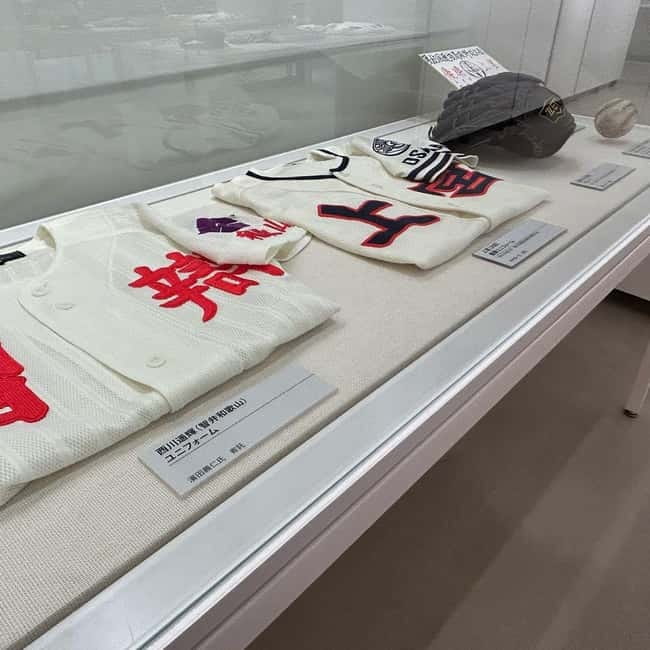
The museum also brings the building itself into the experience. Since it is located within Hanshin Koshien Stadium, the setting gives the displays more weight. A baseball glove or tournament item means more when you know it is being shown inside the stadium connected to those events.
The available information does not provide a fixed route or a timed program. Think of this as a flexible museum visit rather than a scheduled tour. You can spend as much or as little of your one-day ticket window as suits your plans, although the exact visit length is not specified.
The stadium view from the outfield

One of the most appealing parts of the visit is access to a stadium view from the outfield. This gives you a chance to look beyond the exhibition rooms and see the ballpark itself.
That detail matters because a stadium museum can sometimes feel detached from the place it explains. Here, the view helps connect the objects and stories to the actual field. You can picture where the Hanshin Tigers play and where the famous high school tournaments take place.
The outfield access also gives the ticket extra value for anyone who enjoys sports architecture or photography. The information provided does not promise a full stadium tour, access to the dugouts, or entry to every part of the ballpark, so you should not book this expecting a behind-the-scenes stadium walk.
Still, the view adds a strong sense of location. For many people, it may be the moment when the museum changes from a history stop into a real Koshien experience.
How the high school tournament story adds depth
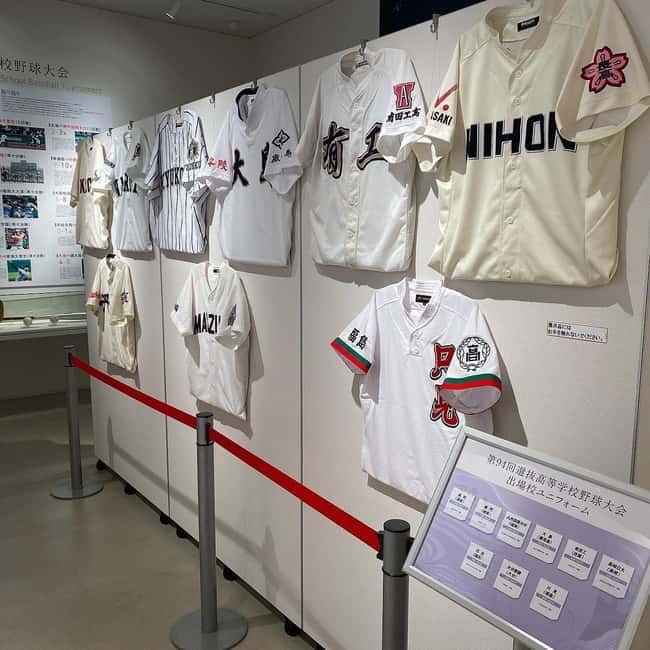
The Koshien high school tournaments are one of the museum’s most important subjects. Even if you are not a dedicated baseball fan, this section can help you understand why the stadium has such a broad cultural reach.
School sports can carry a special emotional charge because they are tied to youth, hometown pride, and a short period in a player’s life. The museum’s displays show how Koshien became associated with those ideas. You are not only learning about scores or famous players. You are seeing how a tournament can bring different parts of Japan together around one sport.
This also makes the museum a good choice for visitors interested in modern Japanese culture. Baseball is a practical way to explore ideas about school identity, competition, teamwork, and regional pride without visiting a formal history museum.
The exact language and depth of these displays may vary, and English information is limited. If you cannot read Japanese, use Google Translate for labels or take photographs of text to translate later. One visitor found the museum very educational despite needing translation, which is a useful warning and a useful encouragement: the material is worth the extra effort, but it may not be effortless.
More Sports Experiences in Japan:
- Tokyo: Sumo Show Experience with Chicken Hot Pot and a Photo
★ 4.8 · 6,678 reviews - Tokyo: Sumo Show and Dining Experience
★ 4.8 · 2,742 reviews - the SUMO show
★ 5.0 · 1,960 reviews - Tokyo Shinjuku Sumo Show & Experience with Photo
★ 5.0 · 1,750 reviews
Hanshin Tigers memorabilia and baseball objects
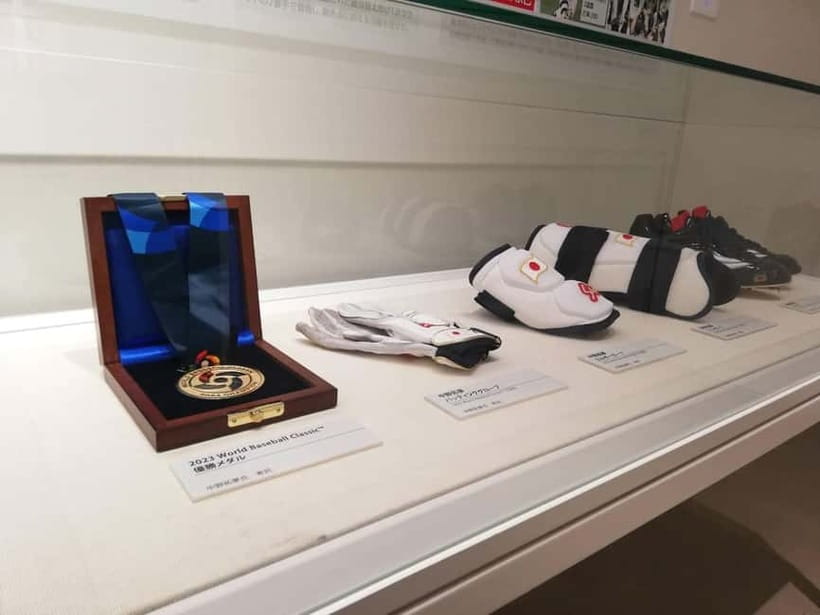
The rare memorabilia gives the museum a more personal feel. Objects connected with the Hanshin Tigers help turn broad dates and tournament results into something you can see at close range.
For a baseball fan, these items are likely to be the main attraction. You can look for the details that do not appear in a standard stadium visit: old equipment, team-related material, and objects linked with important moments. The supplied information does not list individual pieces, so I would avoid arriving with a checklist of specific uniforms or trophies.
Instead, treat the collection as a chance to understand how the team and stadium developed together. The museum is built around legacy, not just current statistics. That makes it worthwhile even if you do not follow the Hanshin Tigers season by season.
The museum also works for someone in your group who is less interested in sport. The high school tournament displays and the stadium setting provide a wider cultural frame, while the objects give baseball fans something specific to study.
What the $9 admission includes
At roughly $9 per person, this is an inexpensive attraction by Japanese sightseeing standards. The ticket includes admission to the Museum of Hanshin Koshien Stadium and exclusive merchandise, which improves the value if you enjoy collecting small souvenirs.
You are paying for more than a compact display of memorabilia. The ticket also brings you into a famous stadium and includes access to the outfield view. The exact merchandise is not described, so consider it a welcome extra rather than the reason to buy the ticket.
Food and drinks are not included. That is easy to manage, but it is worth remembering if you are planning a full outing around the stadium. The experience itself does not provide a meal, snack, or drink package.
The price is particularly fair for a baseball fan who wants context rather than only a game ticket. It can also work for families, since the ticket categories cover children and high school students separately. The museum may be less valuable if you have no interest in sport, stadiums, or Japanese culture, but the low cost keeps the risk modest.
Planning your arrival at Koshien
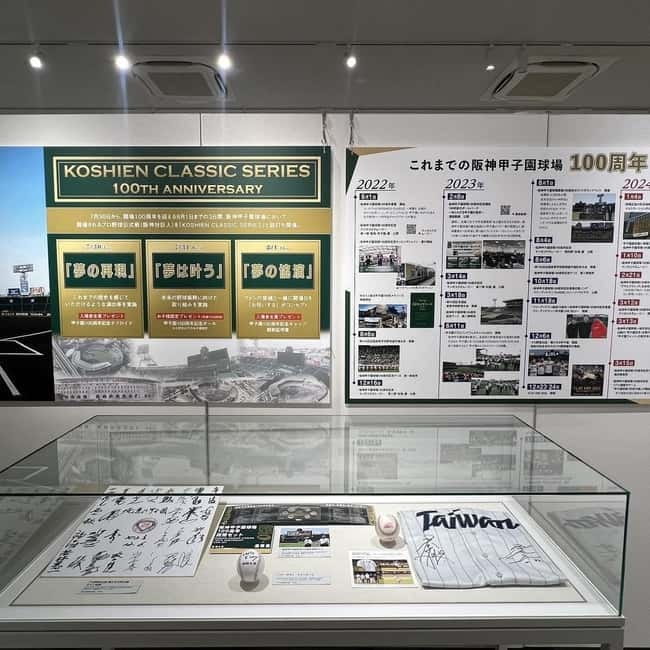
For redemption, go directly to the counter on the second floor of Koshien Stadium. The stated location is 34.7201516, 135.3621596, which you can use in a map app before setting out.
You need a printed voucher. Do not rely only on a phone confirmation if you want to avoid a problem at the counter. This is one of the most important practical details for the visit.
The ticket is valid for one day, and you should check availability for the starting times offered when you book. The information does not give a fixed visit duration or a required sequence, so plan around the available entry time rather than assuming you can arrive at any hour.
The museum is closed on Mondays, New Year’s Eve, and New Year’s Day. Check those dates carefully before building your schedule, especially if you are visiting Japan around the holidays.
Age categories are clear: adults are 19 and older, high school students are 16 to 18, and children are 4 to 15. The supplied details do not state the policy for children under four, so check directly if that applies to your family.
Who will get the most from this visit
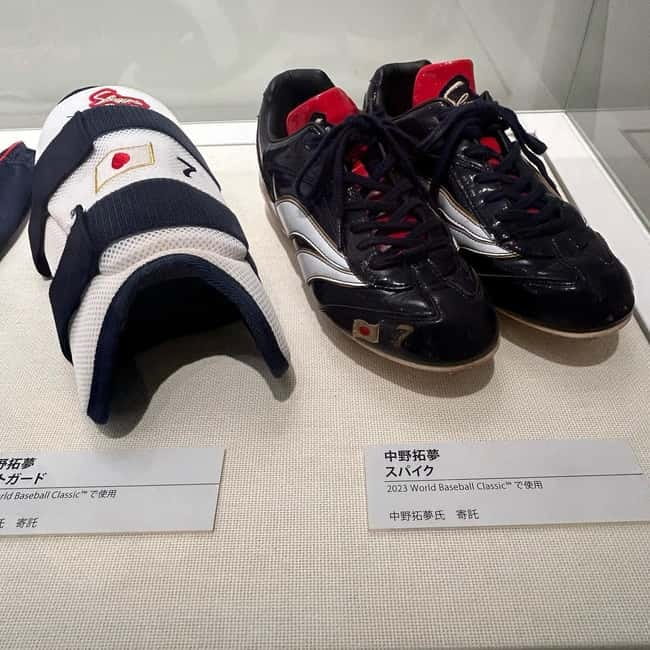
I would recommend this museum first to Hanshin Tigers supporters, baseball fans, and anyone curious about Japanese sporting culture. You will get the most from the memorabilia and tournament displays if you enjoy connecting objects with stories.
It also suits families with children or teenagers who already like baseball. The interactive displays may be easier to enjoy than a long text-heavy museum, although the limited English could make it harder for younger visitors who cannot translate independently.
History lovers should not dismiss it as only a sports stop. The high school tournament material shows how sport connects with school life, regional identity, and national attention. That broader angle gives the visit more substance.
The museum is less suitable if you want a guided tour, extensive English interpretation, food, or a full behind-the-scenes look at the stadium. There is no guide name or hosted commentary provided, and the available experience focuses on exhibitions plus the outfield view.
A few drawbacks to weigh
The biggest drawback is the limited English. You can still learn a lot, but you may need Google Translate, and translation takes time. If you want to read every label, allow more time than you might for a small museum with clear English signs.
The ticket is also non-refundable. That matters because the museum has specific closure days and requires a printed voucher. Check the date, time, age category, and voucher requirement before you commit.
Finally, the exact length of the visit is not stated. That flexibility is useful, but it also means you cannot plan around a guaranteed one-hour or two-hour program. The visit may be short for someone who only wants the main displays, or longer for a serious fan who reads every panel.
Should you book the Museum of Hanshin Koshien Stadium?
Book it if you want an affordable, focused look at Japanese baseball and the famous Koshien tournaments. The combination of rare memorabilia, interactive displays, exclusive merchandise, and an outfield stadium view gives the $9 ticket solid value.
I would be especially happy to add it to a day in the area if you already care about the Hanshin Tigers or want a cultural stop with a clear local identity. Just bring a printed voucher, avoid Mondays and the New Year closure dates, and prepare to use Google Translate.
Skip it if you need extensive English support or expect a complete stadium tour. For everyone else, this is a practical and reasonably priced way to understand why Koshien carries such importance in Japan.
FAQ
Where is the Museum of Hanshin Koshien Stadium?
The museum is inside Koshien Stadium in Honshu, Japan. The listed coordinates are 34.7201516, 135.3621596.
Where do I redeem the ticket?
Proceed directly to the counter on the second floor of Koshien Stadium for redemption.
Do I need a printed voucher?
Yes. A printed voucher is required for this activity.
How long is the ticket valid?
The ticket is valid for one day. Check availability for the starting times offered when booking.
Is the ticket refundable?
No. This activity is non-refundable.
When is the museum closed?
The museum is closed on Mondays, New Year’s Eve, and New Year’s Day.
What does the admission ticket include?
Admission to the Museum of Hanshin Koshien Stadium and exclusive merchandise are included.
Are food and drinks included?
No. Food and drinks are not included in the ticket.
Just added for fans in Japan
- Tokyo: Grand Sumo Morning Training Tour★ 4.9 · 12 reviews
- Sumo Training Watching Experience in Tokyo★ 4.5 · 8 reviews
- Kickboxing & Body Training with EX-Pro Fighter★ 5.0 · 4 reviews
- Tokyo: Visit Sumo Morning Practice with English Guide★ 4.5 · 22 reviews
- Tokyo Sumo Experience with Live Show & Audience Challenge★ 5.0 · 38 reviews
- Tokyo Shinjuku Sumo Show and Experience with Drinks and Photo★ 4.0 · 21 reviews
- Tokyo Sumo History Tour with Chanko Nabe Lunch★ 5.0 · 3 reviews
- 【SUMO FESTIVAL】Tokyo Ginza: Sumo Show & Photo Experience★ 4.5 · 41 reviews
Stadium Tours, compared.


Liverpool Football Club Museum and Stadium Tour
Read our review →


Emirates Stadium Entry Ticket and Audio Guide
Read our review →
Chelsea Football Club Stadium and Museum Tour
Read our review →

Browse the lists this tour appears in