
Review · SUMO EXPERIENCES IN TOKYO
Tokyo Highlights Tour: Sumo, Sushi, Tea, and Tokyo Tower
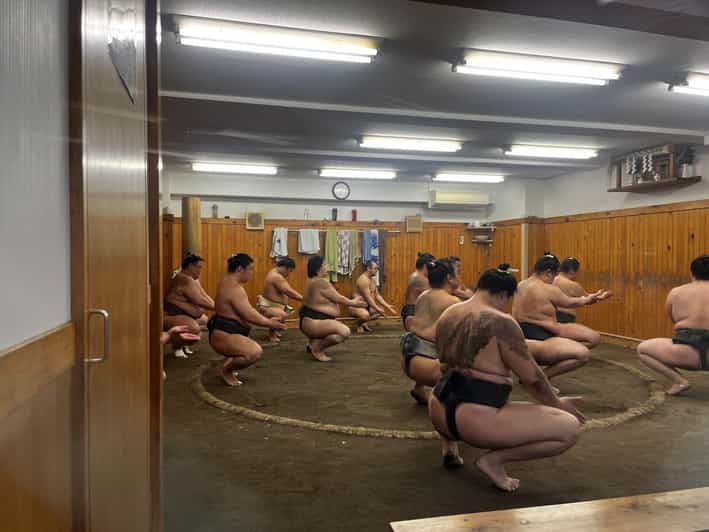
Seeing wrestlers train through the windows of a real sumo beya is the unusual hook here. You are not watching a staged show. You are quietly observing serious practice, with the chance that wrestlers may come outside for photos afterward.
I like the way this tour links food, religion, gardens, and city views in one day. I also like the hands-on moments: fresh market tasting, matcha with wagashi, and copying a Buddhist sutra. The main caution is that sumo practice can be canceled, and the day includes plenty of walking, stairs, and public transport.
Key points at a glance
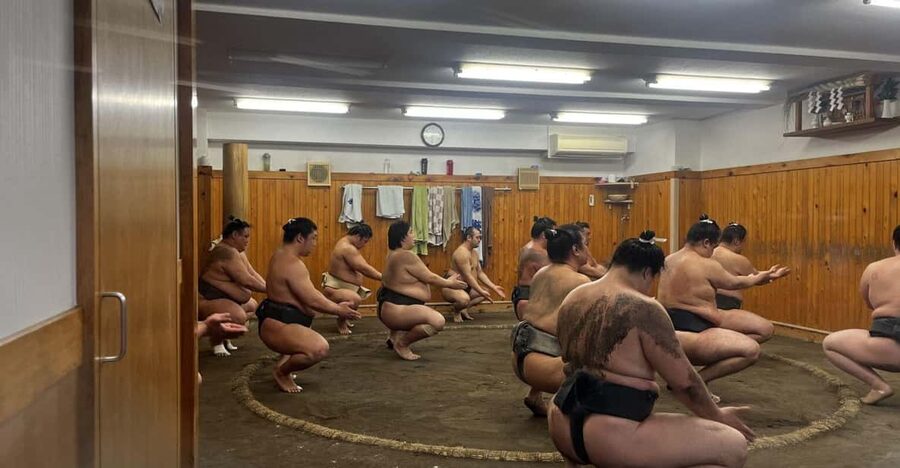
- Real sumo practice: Watch training from outside through large viewing windows, without interrupting the wrestlers.
- Tsukiji breakfast stop: Use free time to sample sushi, wagyu, fruit, sweet potatoes, and other market foods.
- Tea in a historic garden: Drink matcha and eat wagashi inside Hamarikyu Gardens.
- Quiet temple activity: Copy a sutra at Zojo-ji Temple and receive a Goshuin stamp.
- Classic Tokyo finale: Finish at Tokyo Tower, with admission included and views across the city.
- Long but well-filled day: The tour lasts 510 minutes and ends near Akabanebashi Station.
Why the sumo stop makes this tour different
Tokyo has plenty of sightseeing tours, but few begin with a working sumo stable. That first stop gives you a look at sumo as a daily discipline rather than only a tournament spectacle.
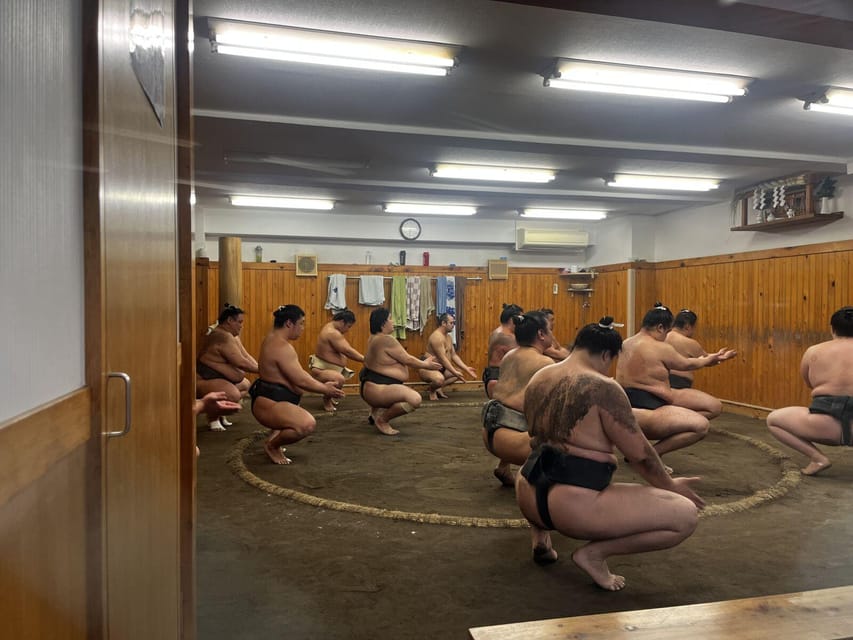
You walk about five minutes from Hamacho Station to the training room. The wrestlers train while you watch from outside through large windows. This is important: you cannot enter the practice area, speak to the wrestlers, or interrupt their work. Think of it as quiet observation, not a performance.
On some dates, wrestlers come outside for photographs. That can be a memorable bonus, but it is not promised. The training schedule can change, and practice is closed during certain weeks when Grand Sumo Tournaments take place in January, May, and September.
If sumo viewing is unavailable, the meeting point changes to Tsukiji Station. The tour still begins at 8:15 a.m., except on Wednesdays, when the meeting time is 9:30 a.m. at Tsukiji Station. Check the final meeting instructions carefully, since this is the one part of the day that can shift before you arrive.
More Sumo Experiences in Tokyo
- Tokyo: Sumo Show and Dining Experience
★ 4.8 · 2,742 reviews - the SUMO show
★ 5.0 · 1,960 reviews - Tokyo Shinjuku Sumo Show & Experience with Photo
★ 5.0 · 1,750 reviews
Starting at Hamacho Station
The regular meeting point is inside Hamacho Station at 8:15 a.m. Follow signs for exits A1 and A2 from the platform, go upstairs, and pass through the ticket gates. A green vending machine marked Merci is directly ahead, and that is where you meet the guide.
This early start matters. It gives you a better chance of seeing sumo practice and leaves enough time for the market, garden, temple, and tower. It also means you should plan your own breakfast around the tour. Food is not included, but Tsukiji comes early in the schedule, so you can eat there.
The first train ride is included. You take a short journey from Ningyocho Station to Tsukiji Station, with the guide handling that part of the route. Transport before the tour and after it is your responsibility.
Tsukiji Outer Market: build your own breakfast
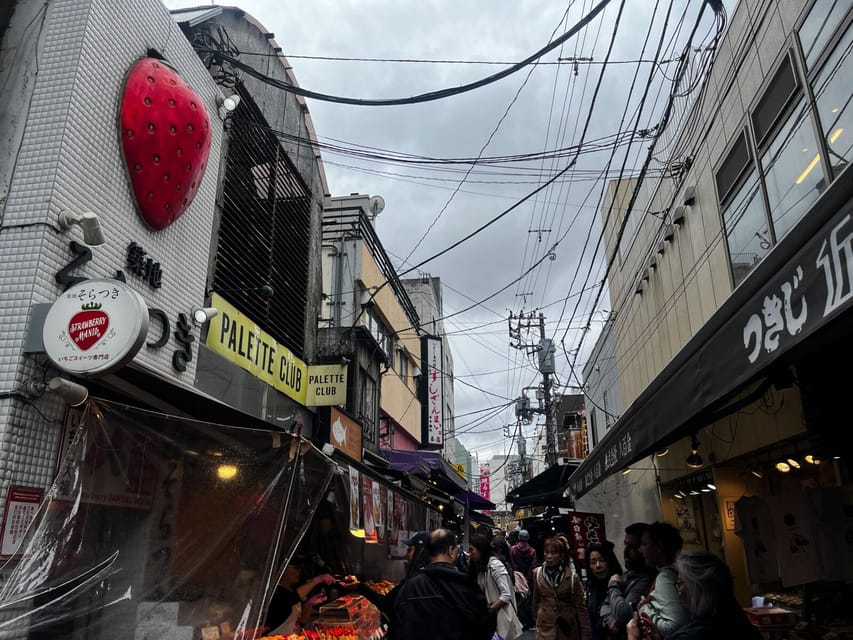
Tsukiji Outer Market has served Tokyo’s food businesses since 1935. The wholesale market moved elsewhere, but the outer market remains a useful place to see seafood shops, prepared food, kitchen goods, and small eateries in close quarters.
Your guide first gives you an orientation, then you have free time to choose what to eat. The selection mentioned for this tour includes sushi, wagyu, fresh fruit, and sweet potatoes. You might find that breakfast becomes the first major expense of the day, since food and drinks are not included in the $150 price.
I like this setup better than a fixed restaurant meal. You can choose a small portion, try something that catches your eye, or make breakfast substantial enough to carry you through the afternoon. The tradeoff is that the market portion requires some independence. Your guide shows you around, but you decide what to buy and how much to eat.
The market visit lasts about 90 minutes. That is enough for an introduction and a few samples, though not enough to inspect every shop. Wear shoes you can walk in, and keep your belongings close in a crowded food area.
Hamarikyu Gardens and a proper tea break
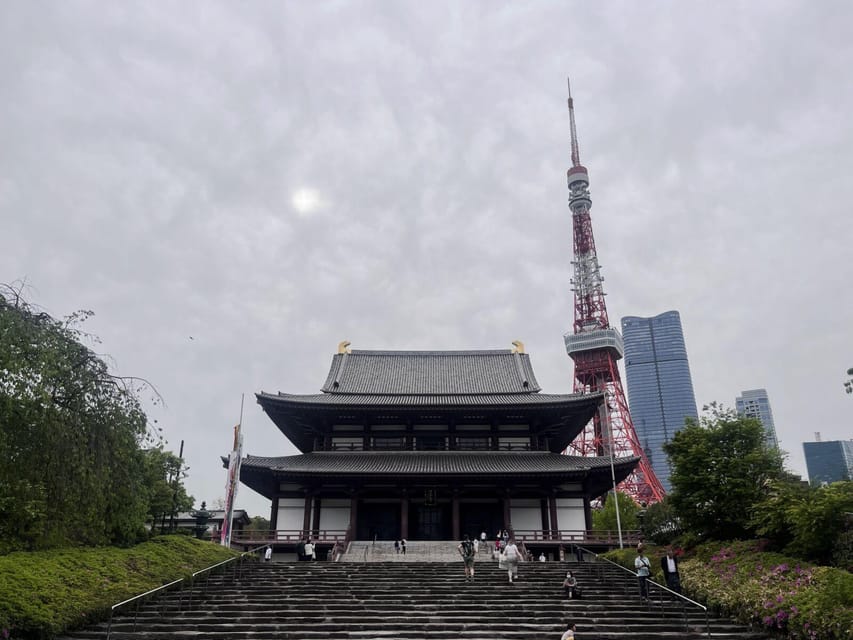
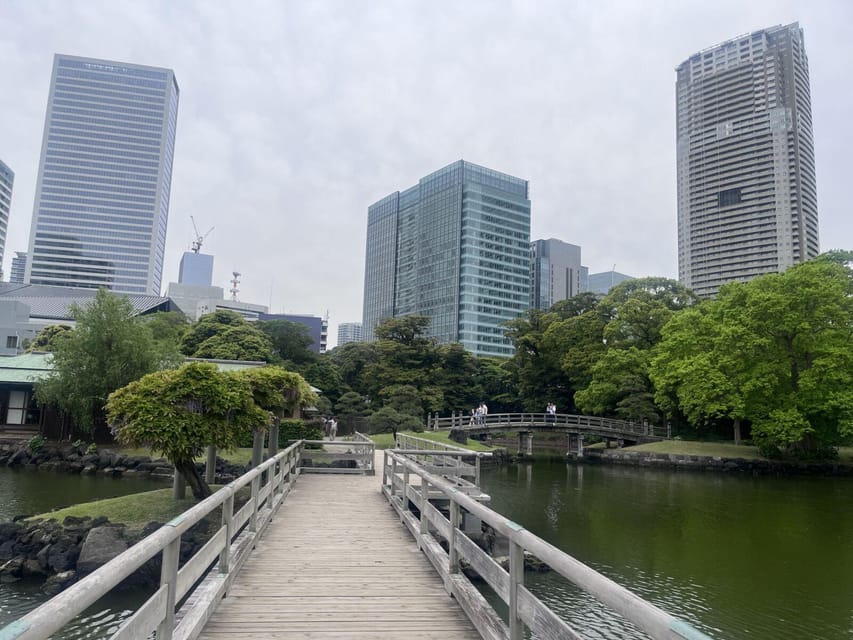
From Tsukiji, you walk about 20 minutes to Hamarikyu Gardens. The garden was created in 1654 by the Tokugawa family and sits near the mouth of the Sumida River. After the narrow streets and food stalls of Tsukiji, the open garden gives the day a welcome change of pace.
The guide introduces the garden and its past, then gives you free time to walk on your own. This is a good balance. You get useful context without having someone narrate every step while you look around.
The included tea house experience is one of the tour’s strongest features. You sit down for matcha and a wagashi, a traditional Japanese sweet. This is not just a drink break. It gives you a simple way to experience a Japanese custom in a historic setting, with time to slow down before the afternoon’s temple visit.
The garden portion lasts about 80 minutes. That includes the guided introduction, personal time, tea, and sweet. If you prefer a fast-moving schedule, this may feel leisurely. I think the pause is useful, especially after an early start and a busy market.
Admission to Hamarikyu Gardens and the tea house experience are included. That helps the price feel more reasonable because two of the day’s quieter cultural activities are already covered.
Same city, a different fixture:
- Tokyo: Sumo Show and Experience in Shinjuku
★ 4.8 · 1,001 reviews - Tokyo Grand Sumo Tournament Viewing Tour with Tickets
★ 5.0 · 692 reviews - Tokyo Sumo Wrestling Tournament Experience
★ 5.0 · 660 reviews - Tokyo:Luxury Sumo Show Experience & Japanese cuisine & Drink
★ 4.7 · 577 reviews
Zojo-ji Temple and the calm of copying a sutra
After the garden, you walk about 10 minutes to Zojo-ji Temple. This Buddhist temple was founded in 1393, and its grounds include Tokyo’s oldest wooden building, dating from 1622. Tokyo Tower rises directly behind the temple, giving you one of the city’s clearest old-meets-new views.
The guide explains the temple and its past before you take part in a sutra copying activity. You copy the text inside the temple while incense burns nearby. The activity gives you a quiet stretch in a day otherwise filled with movement, food, and city sights.
You do not need to be spiritual to appreciate the pause. The value is in doing one careful task at a slower pace. When you finish, you receive a Goshuin, or temple stamp, as a souvenir. The copying fee is included.
This stop lasts about an hour. The temple grounds are expansive, so the visit adds more than a quick photo stop. At the same time, anyone who has difficulty walking should take the schedule seriously. The tour involves station access, a train, market walking, two garden and temple visits, and the final tower stop. It is not suitable for wheelchair users or people with mobility impairments.
Tokyo Tower closes the day with a wide view
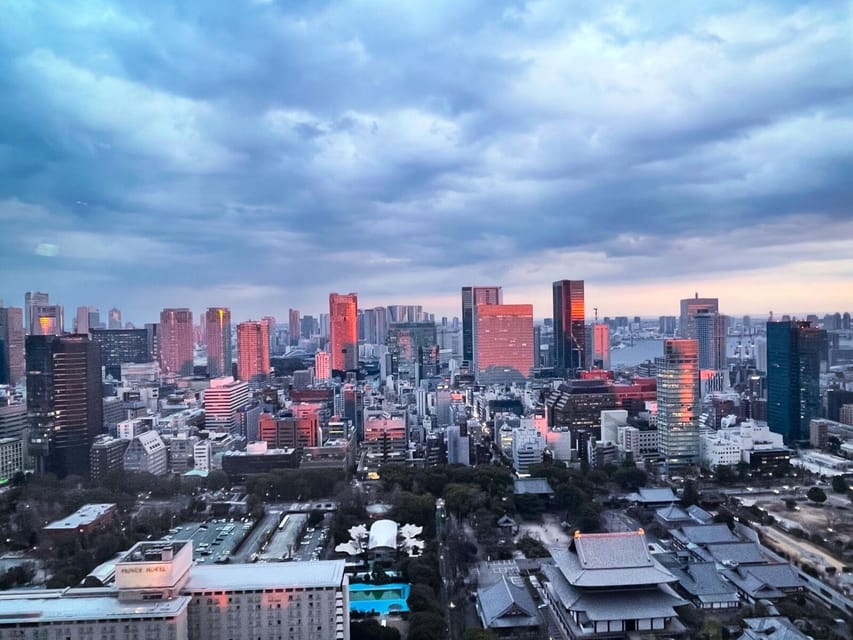
The final stop is Tokyo Tower, built in 1958. Its observatory has a retro feel, and the view gives you a useful sense of how widely Tokyo spreads beyond the compact neighborhoods visited earlier.
The tower visit lasts about 75 minutes and includes your ticket. You have time to take in the city from above before the tour ends. Afterward, the group walks back to nearby Akabanebashi Station.
This is a smart ending. The day begins with close observation of people and food, shifts to gardens and temple practice, then finishes with a broad view over Tokyo. The tower does not replace a dedicated Tokyo sightseeing day, but it ties together the different parts of the city you have just seen.
Your guide can help with train and transport questions before you leave. That is useful if you are still learning Tokyo’s rail network, though you should plan your onward route in advance rather than rely on the final few minutes to solve every transport problem.
What the $150 price really covers
At $150 per person, this is not a bargain if you only want a market visit and a tower ticket. It becomes better value when you use the full package.
The price includes:
- The train from Ningyocho Station to Tsukiji Station
- Hamarikyu Gardens admission
- Matcha and wagashi at the garden tea house
- The sutra copying activity
- Tokyo Tower admission
- An English-speaking local guide
You still pay for breakfast, lunch, snacks, and drinks. Lunch is not built into the schedule, so you should budget for it separately. Tsukiji may provide enough food for breakfast, but you should not assume it replaces lunch later in the day.
The real value is the access and organization. The guide connects places that would take planning to combine on your own, explains the cultural setting, and manages the transitions between walking and train travel. If you already know Tokyo well and prefer to set your own pace, you may find the price high. If you want one structured day that mixes major sights with activities, it is easier to justify.
The guide can shape the whole day
The two direct accounts provided for this experience give special credit to the guides. Jeff is described as welcoming and helpful, while Beth is praised for being warm, highly informed, accomplished, and accommodating. Those details matter because this tour has several moving parts and benefits from a guide who can explain customs without making them feel formal or distant.
Your guide leads the sumo viewing, market orientation, garden introduction, temple visit, sutra activity, and tower visit. That is a wide range of subjects. A good guide can help you understand why each stop matters instead of treating the day as a checklist.
The tour is offered in English. The total duration is 510 minutes, or eight hours and 30 minutes, including the scheduled visits and transport. That makes it a serious full-day commitment, not a casual morning outing.
Practical details before you book
Start with the mobility issue. This is not suitable for wheelchair users or people with mobility impairments. Even if you walk comfortably, expect a full day on your feet, with station movement, market streets, garden paths, temple grounds, and the walk to the final station.
The sumo portion is the biggest uncertainty. Training may not take place, and it closes during certain tournament weeks in January, May, and September. If seeing sumo is the main reason you are booking, confirm the current arrangement and understand that the schedule can change.
Bring enough money for food. Breakfast at Tsukiji is recommended because the tour starts early, and lunch is not included. The market is your best chance to choose exactly what you want, from sushi to fruit or sweets.
The meeting instructions deserve close attention. On standard dates, meet inside Hamacho Station at 8:15 a.m. If sumo is unavailable, meet outside exit 2 at Tsukiji Station instead. On Wednesdays in that situation, the start time is 9:30 a.m., and the operator will contact you.
You can cancel up to 24 hours before the tour for a full refund, and you can reserve now and pay later. Those policies help if your Tokyo plans are still shifting, but they do not remove the need to check the exact date, meeting point, and sumo availability.
Who should book this Tokyo day?
I would recommend this tour to you if you want cultural context, guided transport, and several different kinds of Tokyo experience in one day. It suits a first visit especially well, since it covers food, religion, traditional arts, gardens, and a major city viewpoint.
It also works for people who prefer activities over a long sequence of photo stops. The tea service and sutra copying make the day more personal, while the market and tower keep it firmly connected to modern Tokyo.
I would hesitate if you want a slow, self-directed day, dislike early starts, or have difficulty walking. I would also hesitate if sumo is your single reason for booking, since practice is not guaranteed.
For most people who want a well-organized introduction with real cultural variety, the $150 cost is fair. The strongest parts are not just the famous locations, but the chance to watch a working sumo practice, sit for matcha in Hamarikyu, and copy a sutra at Zojo-ji. Book it if those details appeal more than ticking off sights at your own speed.
FAQ
How long does the tour last?
The tour lasts 510 minutes, or eight hours and 30 minutes.
What time does the tour begin?
The regular start time is 8:15 a.m. at Hamacho Station. If sumo viewing is unavailable, the meeting point changes to Tsukiji Station. In that situation, a Wednesday tour starts at 9:30 a.m., and you will be contacted.
Where exactly do I meet the guide?
Meet inside Hamacho Station near the green Merci vending machine. Follow signs for exits A1 and A2, go upstairs, and pass through the ticket gates.
What happens if sumo training is unavailable?
The meeting point changes to Tsukiji Station, outside entrance number 2. The tour schedule may also be affected because sumo practice is not guaranteed.
Is sumo training available during every month?
Training is closed during certain weeks when Grand Sumo Tournaments take place in January, May, and September. The schedule can also change at other times.
Can I enter the sumo training room?
No. You watch the training from outside through large viewing windows because the wrestlers cannot be disturbed.
Is food included?
No. Breakfast, lunch, snacks, and drinks are not included. You have free time to buy food at Tsukiji Outer Market.
What admissions and activities are included?
The tour includes the train from Ningyocho Station to Tsukiji Station, Hamarikyu Gardens admission, the garden tea house experience, the sutra copying fee, and the Tokyo Tower ticket.
Where does the tour finish?
The tour finishes at Akabanebashi Station after the Tokyo Tower visit. The guide can help with questions about trains and transport.
Is the tour suitable for wheelchair users?
No. The activity is not suitable for wheelchair users or people with mobility impairments.
What language is the tour offered in?
The tour is conducted in English by a local English-speaking guide.
Can I cancel the booking?
You can cancel up to 24 hours in advance for a full refund. The activity also offers a reserve-now, pay-later option.
Just added for fans in Tokyo
- Tokyo: Grand Sumo Morning Training Tour★ 4.9 · 12 reviews
- Sumo Training Watching Experience in Tokyo★ 4.5 · 8 reviews
- Kickboxing & Body Training with EX-Pro Fighter★ 5.0 · 4 reviews
- Tokyo: Visit Sumo Morning Practice with English Guide★ 4.5 · 22 reviews
- Tokyo Sumo Experience with Live Show & Audience Challenge★ 5.0 · 38 reviews
- Tokyo Shinjuku Sumo Show and Experience with Drinks and Photo★ 4.0 · 21 reviews
- Tokyo Sumo History Tour with Chanko Nabe Lunch★ 5.0 · 3 reviews
- 【SUMO FESTIVAL】Tokyo Ginza: Sumo Show & Photo Experience★ 4.5 · 41 reviews
Sumo Experiences in Tokyo, compared.
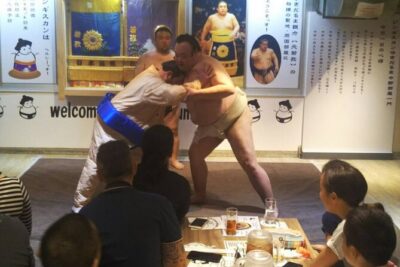

Tokyo Shinjuku Sumo Show & Experience with Photo
Read our review →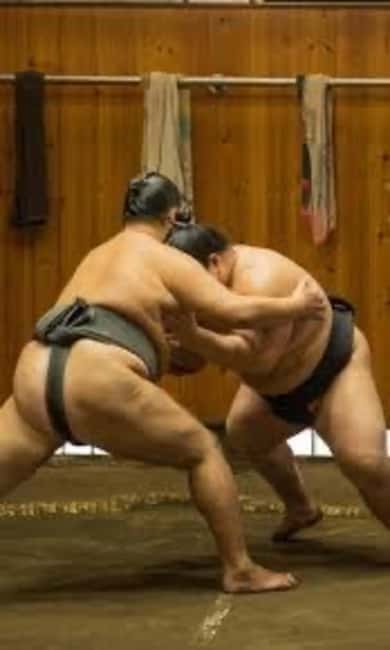
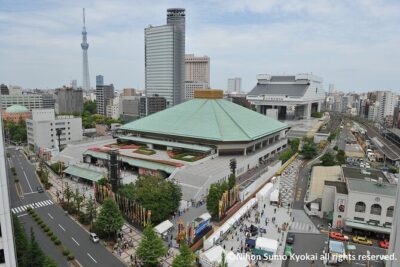
Tokyo Grand Sumo Tournament Viewing Tour with Tickets
Read our review →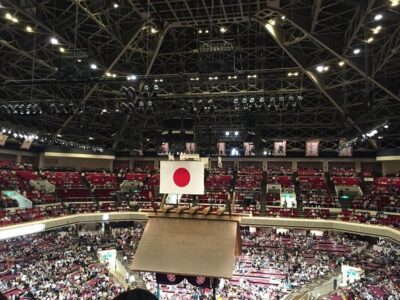

Luxury Sumo Show Experience & Japanese cuisine & Drink
Read our review →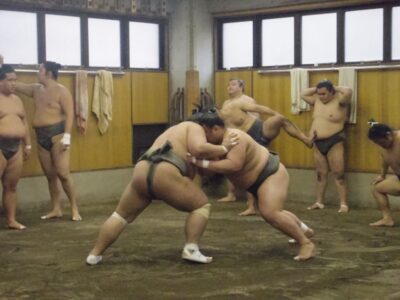
Browse the lists this tour appears in