
Review · SUMO EXPERIENCES IN TOKYO
Tokyo: Sanctuary Authentic Grand Sumo Experience & Training
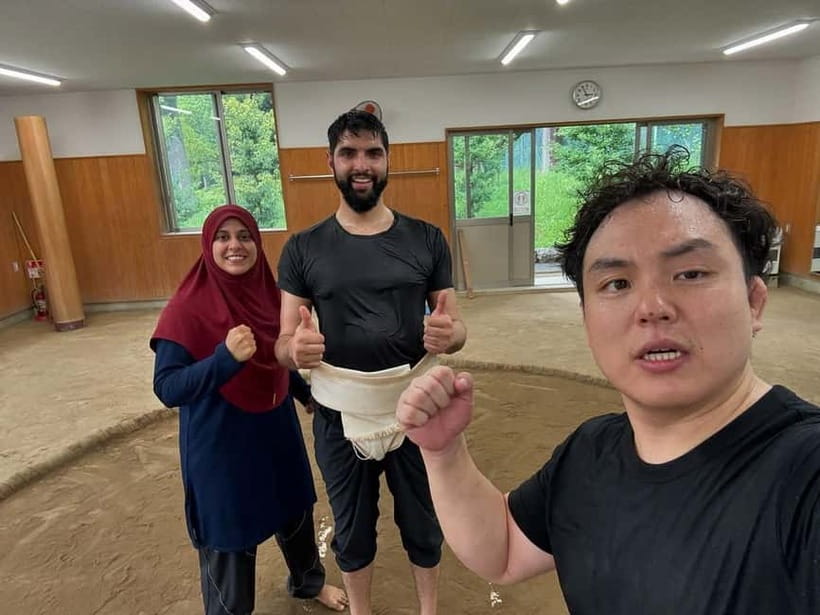
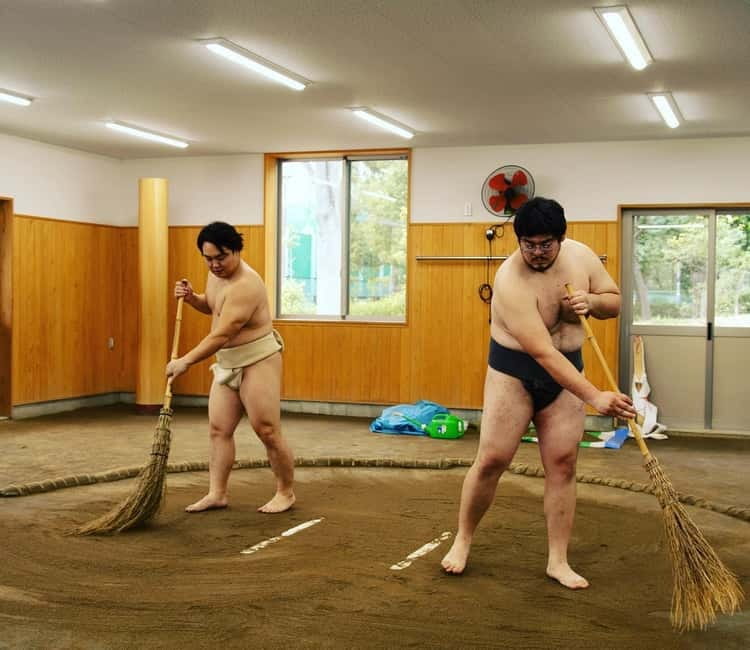
The rare thing here is that you do not just watch sumo. At Amita Sumo Dojo, you step into a real clay dohyo, learn the sport’s rituals, put on a real mawashi if you wish, and test your strength in the ring. Coach Takeshi leads the session in Japanese and English, with no previous experience required.
I like the hands-on format and the way the activity explains the meaning behind sumo customs instead of treating the sport as a simple wrestling show. I also like its flexibility: you can take part at your own level, and children from age five may join if booked.
The main drawback is practical rather than cultural. You will sweat, and the venue serves no food, so bring plenty of water, two towels, and clothes you can move in. The nearby shower costs ¥100 for five minutes.
Key points to know before you book
- Real training, not a staged demonstration: You learn stretches, warm-ups, rituals, rules, and wrestling basics in an actual sumo ring.
- A mawashi is provided: You may wear the traditional belt at no extra cost, though you can also take part in your own clothes.
- Takeshi coaches the bouts: After practice, you can wrestle friends, family members, or, if you are game, a coach.
- The session works for beginners: The activity welcomes all genders, ages, and fitness levels, with the effort adjusted to each participant.
- Plan for a sweaty two hours: Bring drinks and two towels. A five-minute shower nearby costs ¥100.
- Heiwajima Station is the useful landmark: The dojo is about a 10-minute walk from the station on the Keikyu Main Line.
Why this Tokyo sumo session is different
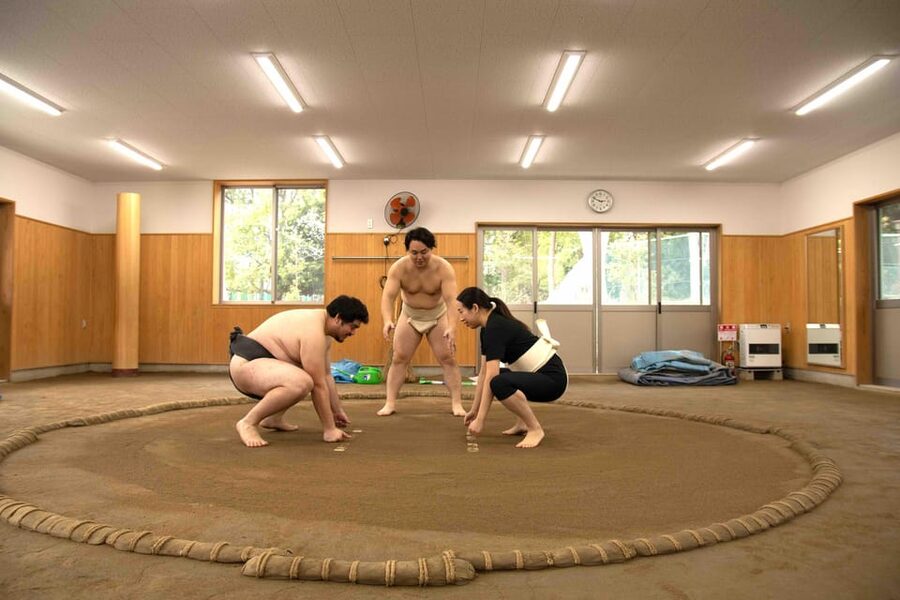
Tokyo gives you several ways to encounter sumo. You can attend a professional tournament, visit a morning practice, or watch a theatrical sumo performance. This experience takes a different path. It puts you inside the ring and gives you a basic feel for the sport’s physical demands and formal customs.
That distinction matters. Watching a bout tells you what sumo looks like. Training helps you understand why the opening rituals take time, why balance matters, and why a simple shove can require surprising effort. You are not asked to arrive as an athlete. The class starts with fundamentals and builds toward short matches.
The activity is produced by Amita Sumo Dojo, with instruction in English and Japanese. Takeshi is the named coach associated with the session, and the instruction combines explanation with direct practice. This is useful for first-time participants because you do not have to guess what to do once you enter the ring.
The experience lasts two hours. That gives you enough time for an introduction, physical preparation, cultural explanation, and bouts without turning the outing into a full-day commitment. I would still avoid scheduling a formal dinner immediately afterward. The workout can be more demanding than the friendly tone suggests.
More Sumo Experiences in Tokyo
- Tokyo: Sumo Show and Dining Experience
★ 4.8 · 2,742 reviews - the SUMO show
★ 5.0 · 1,960 reviews - Tokyo Shinjuku Sumo Show & Experience with Photo
★ 5.0 · 1,750 reviews
Arriving at Heiwanomori Park Sumo-jo
The meeting point is Heiwanomori Park Sumo-jo, at 2-1 Heiwanomorikoen in Ota City. Look for the small office at the address. From Heiwajima Station on the Keikyu Main Line, allow about 10 minutes on foot.
The station connection is one of the better practical features. The stated train times are about 22 minutes from Shinagawa, 28 minutes from Shimbashi, 34 minutes from Nihonbashi, 36 minutes from Shibuya, and 40 minutes from Ginza. From Shinjuku, allow about 49 minutes, and from Asakusa about 44 minutes.
Check your route carefully before leaving. The dojo is not presented as a spot where you can simply step out of a major station and find the entrance. If you take a taxi, arrange one yourself in advance. Taxis do not normally come to this location without being called.
Wear comfortable clothing if you prefer not to use the mawashi. The option to keep your own clothes on makes the class less intimidating, especially for children, first-time participants, or anyone who feels unsure about the traditional belt.
The opening stretches and sumo basics
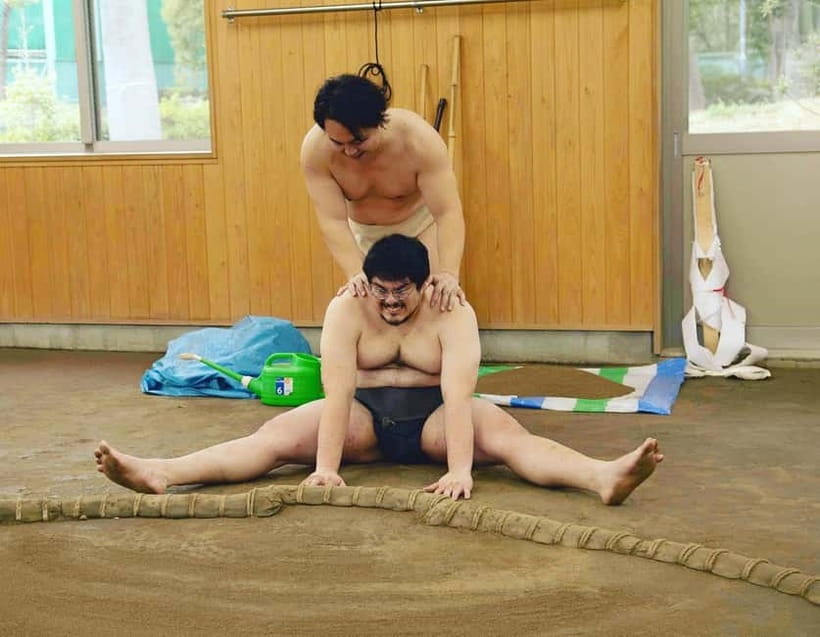
The session begins with stretches and warm-ups. This is not filler. Sumo uses low positions, forceful leg work, and sudden movement, so preparing your hips, legs, and shoulders is important even if you consider yourself fit.
You will be introduced to basic sumo fundamentals and the rules for wrestling inside the dohyo. The coach explains how the bouts work, what counts during a match, and how to approach the ring. Instruction is given in English and Japanese, so you can follow along even without Japanese-language experience.
The class is adaptable. A participant with a sports background can put more effort into the drills, while a beginner can work at a slower pace. The supplied information specifically presents the session as suitable for all fitness levels, and the family feedback supports that practical approach. A teenager and an adult nephew took part successfully, while a child who had already trained in wrestling found the experience satisfying for a different reason.
Do not confuse adaptable with effortless. Sumo training can leave you hot and tired. Bring several bottles of water, not just one small drink.
Understanding the rituals before entering the dohyo
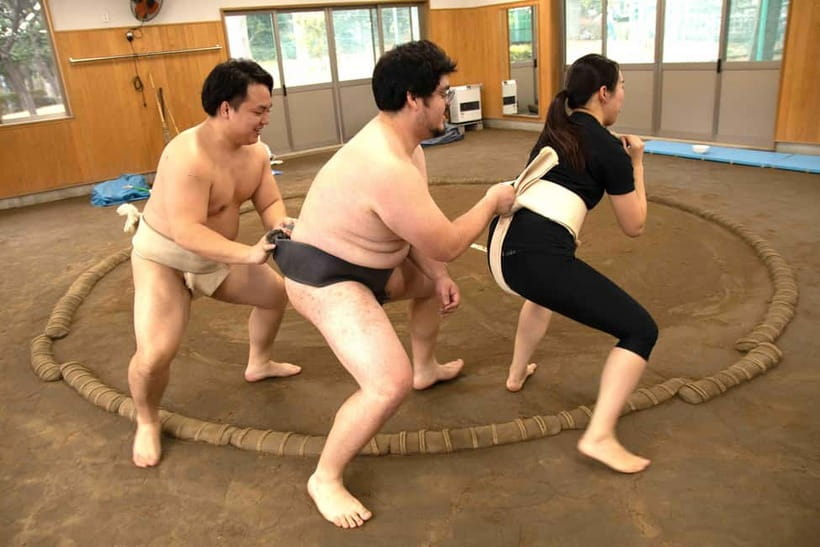
One of the strongest parts of the experience is the explanation of traditional sumo and Shinto rituals. Sumo is not presented only as a contest of strength. The movements, ring customs, and preparation have a ceremonial side that helps explain why the sport occupies such a distinctive place in Japanese culture.
You follow demonstrations before trying the actions yourself. That order works well. Instead of copying movements without context, you learn what the rituals mean and how they relate to the match.
The coach also covers the dohyo, the clay ring used for sumo, and the mawashi, the belt worn by wrestlers. These details may sound basic, but they make the experience more useful than a photo opportunity. You learn the names of the objects and the rules attached to them, then use that information in the ring.
The activity does not claim to reproduce the full life of a professional rikishi. It gives you a guided introduction. That is the right way to approach it. You will gain a physical and cultural sample of sumo, not professional-level training in two hours.
Same city, a different fixture:
- Tokyo: Sumo Show and Experience in Shinjuku
★ 4.8 · 1,001 reviews - Tokyo Grand Sumo Tournament Viewing Tour with Tickets
★ 5.0 · 692 reviews - Tokyo Sumo Wrestling Tournament Experience
★ 5.0 · 660 reviews - Tokyo:Luxury Sumo Show Experience & Japanese cuisine & Drink
★ 4.7 · 577 reviews
Wearing the mawashi and stepping into the real ring
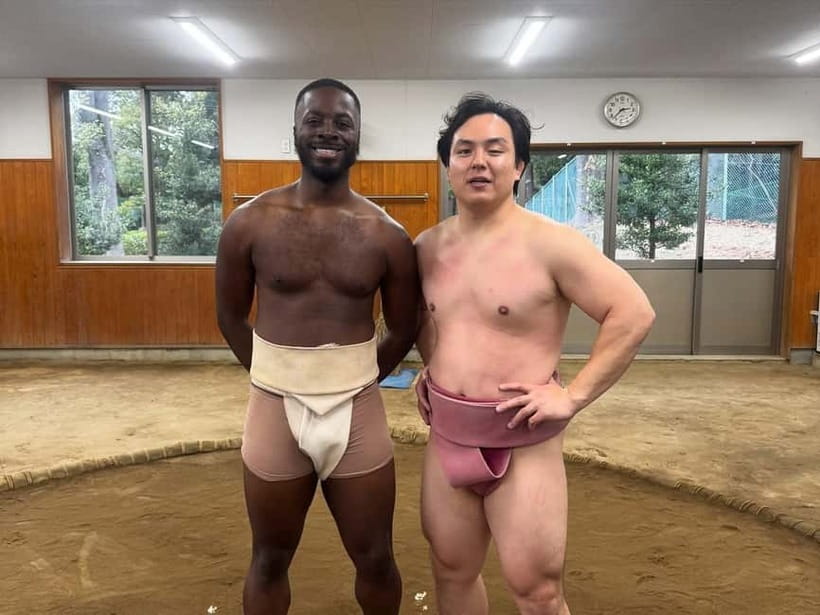
A mawashi is supplied at no extra cost. You can wear it for the training, which gives the experience its most distinctive visual and physical element. If you prefer not to, the organizers state that you may participate in your regular clothes.
The real clay dohyo adds weight to the activity. You are not simply standing on a studio floor while someone explains sumo. You practice in the kind of ring associated with the sport, under the direction of a real sumo coach.
This is also the point where personal comfort matters. If changing into a mawashi feels outside your comfort zone, you still have a way to participate. If you want the most authentic version of the session, wearing the belt and entering the ring gives you a clearer sense of the sport’s posture and movement.
Photography and video are allowed, including for social media, but they must not interrupt the class. Do not record participants who have not agreed to it, and follow any instructions about people who may not be filmed. I would nominate one person in your group to take a few photos rather than letting phones distract from the training.
The final bouts with friends and coaches
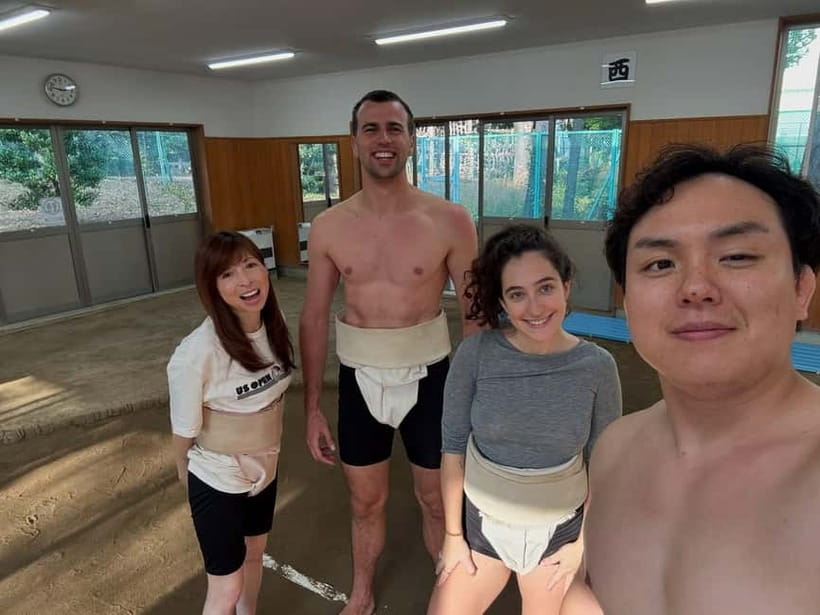
The session ends with the part most people will remember: matches in the ring. You can wrestle friends or family members, and brave participants may challenge the coaches.
The bouts are adjusted to the participants, so you do not need to arrive with wrestling experience. That matters for mixed-age groups. A parent, teenager, and first-time adult can all take part without needing the same strength or skill level.
The coach’s role is important here. A bout against a trained sumo instructor is not a fair contest in the usual sense. The point is to feel the technique, timing, and force involved, while keeping the activity within the limits of the participant. One family group had the chance to wrestle a five-time Japanese national champion, which gives you a sense of the unusual opportunity available during the final matches.
Do not treat the bout as a competition you must win. Sumo depends on balance, position, and pushing at the right moment. The short match format lets you enjoy the physical comedy and surprise of the sport without requiring a long contest.
For families, this is likely the most memorable portion. Children aged five and older may observe for free, but each child who wants to participate needs a booking. Children under four may accompany the group as observers only.
The workout, water, and shower question
The practical warning about sweat deserves emphasis. You will perform stretches, warm-ups, low stances, and wrestling drills over two hours. Even a person who does not consider the session strenuous may want to change afterward.
Bring:
- Several bottles of water
- One towel for the training
- A second towel for showering
- Comfortable clothing for before and after the session
A shower room is located near the venue. It costs ¥100 for five minutes, so carry a small amount of cash and keep your expectations modest. The information provided does not promise a full changing or bathing facility, only a nearby shower room.
No food is served. Eat beforehand if you need a proper meal, and plan your next stop with the workout in mind. This is an activity, not a dinner outing.
The organizers also state that participants are responsible for injuries and accidents. That is a reason to listen closely to the warm-up and coach instructions. Use the level of force that suits you, especially if you have concerns about exertion.
Is $199 a fair price?
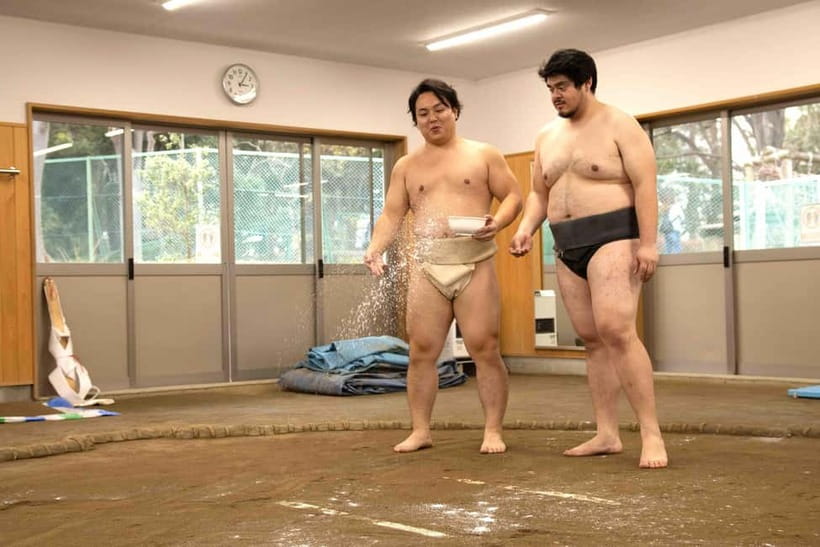
At $199 per person, this is not a bargain-priced introduction to Japanese culture. The value comes from the access and participation. Your fee includes real sumo training, use of a mawashi, practice in a real dohyo, and instruction from a sumo coach.
I see stronger value here for someone who wants to do sumo rather than simply see it. If your main goal is a cheap cultural activity, the price may feel high. If you are comparing it with a premium guided experience that gives you a private, physical connection to a traditional sport, the cost becomes easier to justify.
The price also makes more sense for a family or small group that will use the session fully. You get a sequence of instruction, rituals, practice, and bouts rather than a short photo stop. The activity has earned a perfect rating from seven recorded bookings, including strong praise for the welcoming instruction, the family format, and the chance to wrestle with the coach. That is encouraging, though the sample is small.
I would book it for a special Tokyo day, especially if someone in your group already follows sumo, practices wrestling, or wants an activity that differs from temples and museums. I would skip it if you dislike physical participation, sweat, or changing into sports gear.
Who will enjoy Amita Sumo Dojo most?
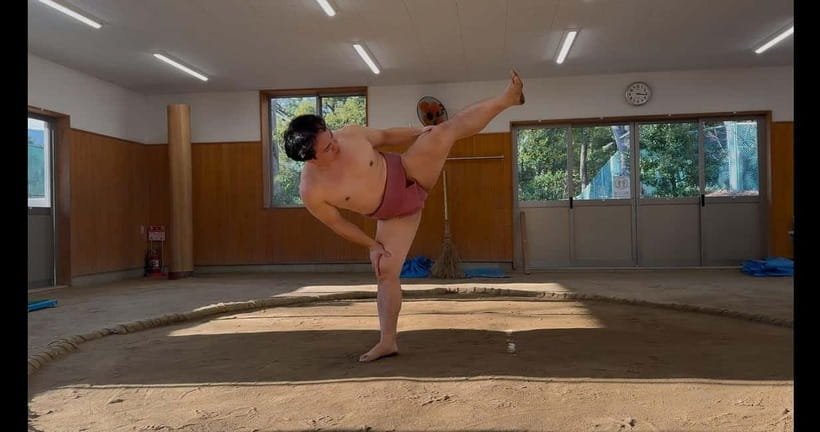
This activity fits:
- Families with children aged five and older who want to take part
- Adults who want a physical cultural experience
- Sumo fans who want more than tournament seats
- Visitors with no previous martial arts or wrestling experience
- Groups looking for a memorable shared activity
- People comfortable following instructions and taking part in a ring
It may not fit someone seeking a quiet, passive tour. It also may not suit anyone with a medical concern about strenuous activity, since the class includes physical training and the provider accepts responsibility limitations for accidents.
The family format is a real strength. The activity can adjust to different abilities, and children under four can come along as observers. Just remember that an observing child is not automatically booked as a participant.
Booking, cancellation, and timing advice
Book at least two days before your preferred date. The online system may allow a reservation closer to the start time, but the provider recommends earlier booking. That gives the dojo time to prepare the session and gives you a better chance of securing the date you want.
The duration is two hours, with starting times based on availability. Leave enough time for the walk from Heiwajima Station and arrive ready to begin at the stated meeting point.
You can cancel up to 24 hours in advance for a full refund. The reserve-now, pay-later option also helps if your Tokyo plans are still shifting. Still, do not wait until the last moment if this is a must-do activity.
Should you book this sumo experience?
Book it if you want an active, personal introduction to sumo and you like the idea of learning rituals before testing yourself in the ring. The combination of an actual dohyo, a provided mawashi, English instruction, and bouts with friends or coaches is unusual.
I would give it special consideration for families and small groups. The session is friendly to beginners, adapts to different fitness levels, and gives everyone a shared story to take away from Tokyo.
Skip it if you want to sit quietly, avoid sweat, or spend less than $199 on a short cultural activity. For everyone else, bring water, two towels, and a willingness to look a little silly while learning. That is part of the fun, and it is also the closest this itinerary comes to showing you what sumo feels like from inside the ring.
FAQ
Where does the sumo experience take place?
It takes place at Heiwanomori Park Sumo-jo, 2-1 Heiwanomorikoen, Ota City, Tokyo, 143-0005. Meet at the small office at the address.
How do I reach the dojo by train?
The dojo is about a 10-minute walk from Heiwajima Station on the Keikyu Main Line.
How long does the activity last?
The experience lasts two hours. Starting times depend on availability.
Is previous sumo or wrestling experience required?
No. The activity welcomes beginners and includes basic stretches, warm-ups, rituals, rules, and sumo fundamentals.
Is instruction available in English?
Yes. The instructors teach in English and Japanese.
Is a mawashi included?
Yes. A real mawashi is provided at no extra cost. You may also participate in your own clothes if you prefer.
Can children take part?
Children under four may accompany the group but can only observe. Children aged five and older may observe free of charge, or participate if a booking is made for each child taking part.
Is food included?
No. Food is not served during the activity.
Is there a shower nearby?
Yes. A nearby shower room costs ¥100 for five minutes. Bring a towel for showering in addition to the towel you use during training.
Can I take photos and videos?
Yes, provided filming does not interrupt the activity and you do not record participants without permission. Follow any instructions from the organizers about people who may not be filmed.
Just added for fans in Tokyo
- Tokyo: Grand Sumo Morning Training Tour★ 4.9 · 12 reviews
- Sumo Training Watching Experience in Tokyo★ 4.5 · 8 reviews
- Kickboxing & Body Training with EX-Pro Fighter★ 5.0 · 4 reviews
- Tokyo: Visit Sumo Morning Practice with English Guide★ 4.5 · 22 reviews
- Tokyo Sumo Experience with Live Show & Audience Challenge★ 5.0 · 38 reviews
- Tokyo Shinjuku Sumo Show and Experience with Drinks and Photo★ 4.0 · 21 reviews
- Tokyo Sumo History Tour with Chanko Nabe Lunch★ 5.0 · 3 reviews
- 【SUMO FESTIVAL】Tokyo Ginza: Sumo Show & Photo Experience★ 4.5 · 41 reviews
Sumo Experiences in Tokyo, compared.
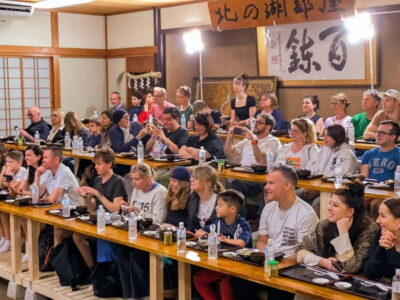
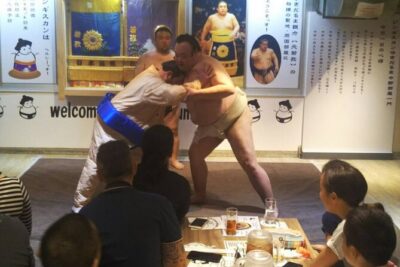
Tokyo Shinjuku Sumo Show & Experience with Photo
Read our review →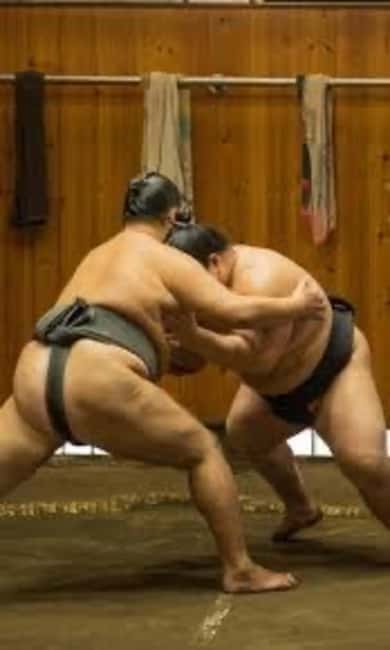
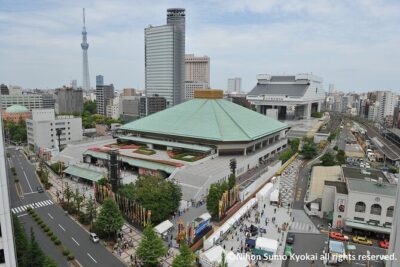
Tokyo Grand Sumo Tournament Viewing Tour with Tickets
Read our review →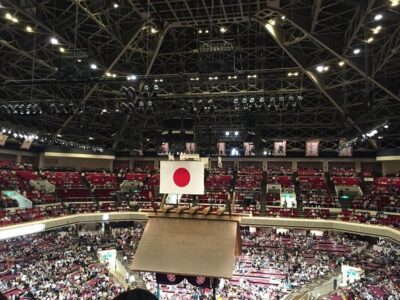

Luxury Sumo Show Experience & Japanese cuisine & Drink
Read our review →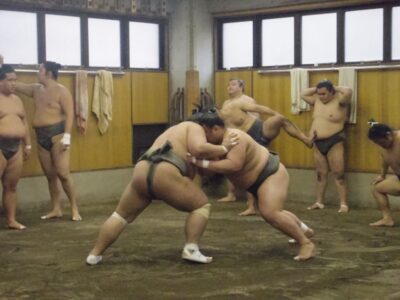
Browse the lists this tour appears in