
Review · SUMO EXPERIENCES IN TOKYO
Tokyo: Sumo Morning Practice -Stable Visit Tour with a Guide
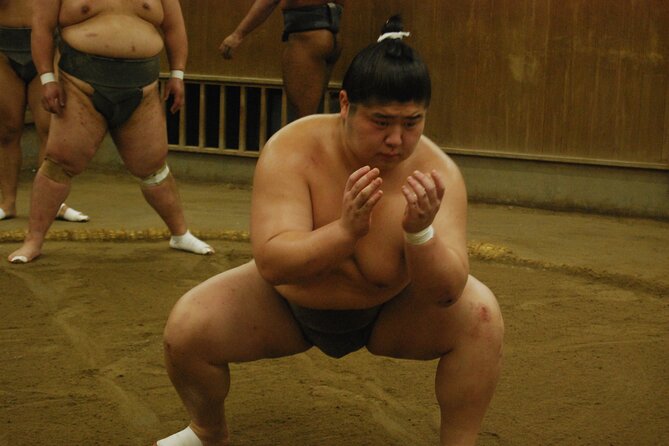
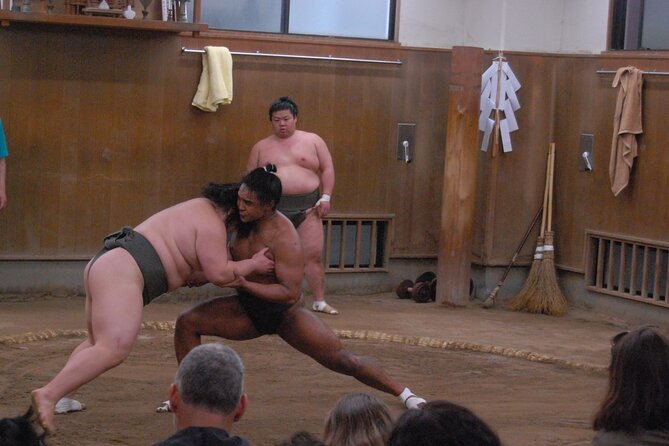
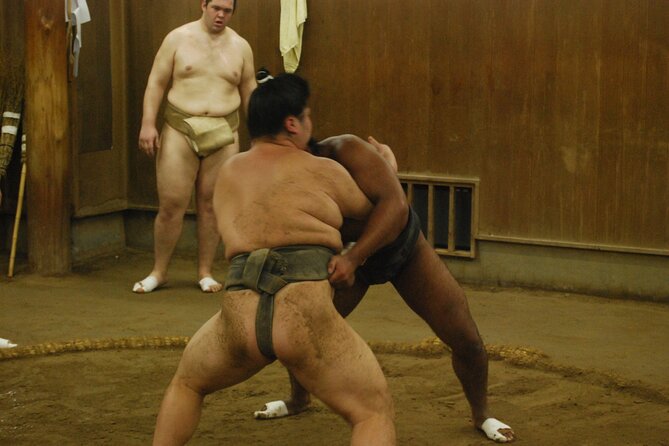
The best part of this Tokyo experience is the distance. You are not watching from a stadium seat. At Ikazuchi Sumo Stable, you can see wrestlers’ breathing, facial expressions, and the force of each collision during their serious morning practice. The coach’s voice may sound harsh, but it reflects the discipline and trust that keep the stable running.
I like two things in particular: the small group limit of 10, which helps you see and hear what is happening, and the chance to ask questions and take photos with the wrestlers after practice. The main consideration is that this is a working training session, not a staged show. You must stay quiet, skip video and flash photography, and follow the stable’s rules.
Key points to know before booking
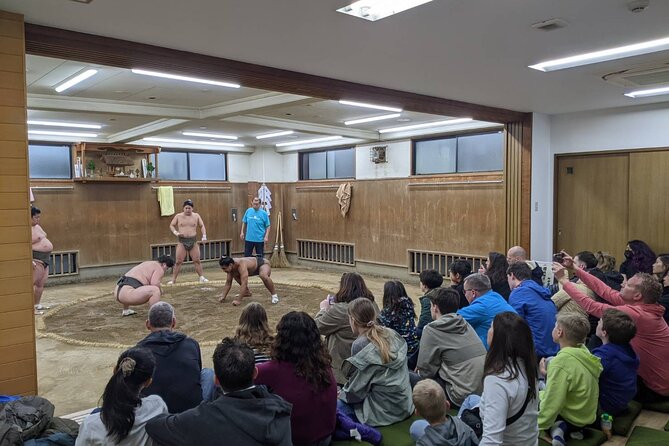
- Watch Ikazuchi Stable practice up close: See wrestlers and apprentices train at close range, with no stadium crowd between you and the action.
- Arrive for the 8:30 am start: The early timing places you inside the stable during its serious morning training period.
- Expect a small group: The tour accepts a maximum of 10 people, useful in a compact training space.
- Meet wrestlers after practice: You can take photographs and ask questions once the training session ends.
- Bring a drink with a lid: Food, snacks, bread, and rice balls are not allowed during practice.
- Respect the training room: Private conversation, video, and flash photography are prohibited.
Why a stable visit feels different from a sumo tournament
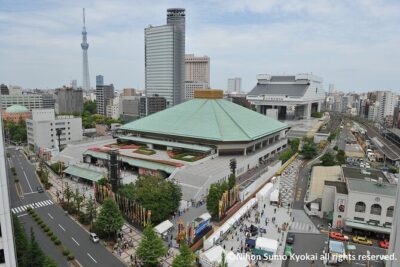
A sumo tournament at Tokyo’s Kokugikan is a polished public event, with formal bouts, a large crowd, and the pageantry of competition. This visit gives you something else: the working routine behind those matches.
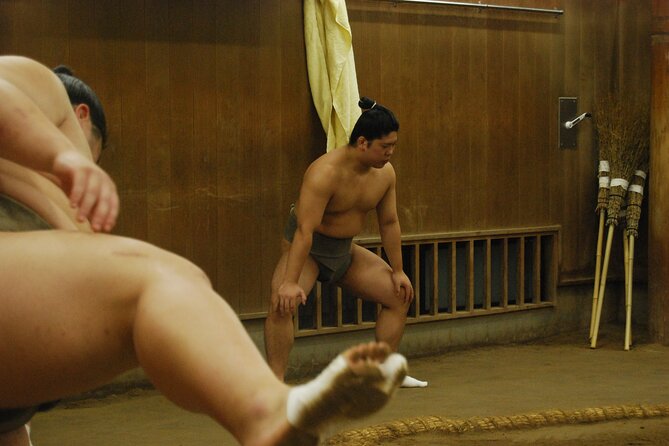
Morning practice is where wrestlers and their apprentices prepare, repeat movements, build strength, and maintain the sport for the next generation. You see the effort before the public spectacle. The sounds are direct and physical. Bodies collide. Feet strike the floor. The coach calls out instructions in a strong voice. The room can feel tense because the wrestlers are there to train, not entertain.
That difference matters. You are not being promised a performance arranged for visitors. You are watching a real practice session, and your behavior helps protect it. The quiet rules are not minor formalities. They allow the rikishi, the Japanese term for sumo wrestlers, to keep their concentration.
I find this format more revealing than a standard cultural demonstration. You get a glimpse of the discipline required to make sumo look simple in a match. A bout may last only seconds, but the work behind it is repeated day after day.
More Sumo Experiences in Tokyo
- Tokyo: Sumo Show and Dining Experience
★ 4.8 · 2,742 reviews - the SUMO show
★ 5.0 · 1,960 reviews - Tokyo Shinjuku Sumo Show & Experience with Photo
★ 5.0 · 1,750 reviews
The 8:30 am meeting in Sumida
The tour begins at 8:30 am at Water section1-chōme-1-1 Oshiage, Sumida City, Tokyo 131-0045. The meeting point is near public transportation, and the activity returns to the same place when it ends.
The early hour is part of the experience, not an inconvenience added by the operator. The stable’s morning practice is the main event, so a late morning schedule would miss the working rhythm you came to see. Plan your route carefully and arrive ready to enter on time.
A mobile ticket makes the booking simple, and confirmation is sent when you book. Since the group can be as large as 10 people, punctuality matters. A small group is helpful once you are inside, but the stable has limited space and a practice session cannot be held up for late arrivals.
The total experience is advertised at about two hours, while the stable visit itself is described as roughly an hour to an hour and a half. Allow the full morning rather than planning a tight connection immediately afterward. The exact balance between watching practice and the time after practice may vary with the stable’s schedule.
Inside Ikazuchi Sumo Stable
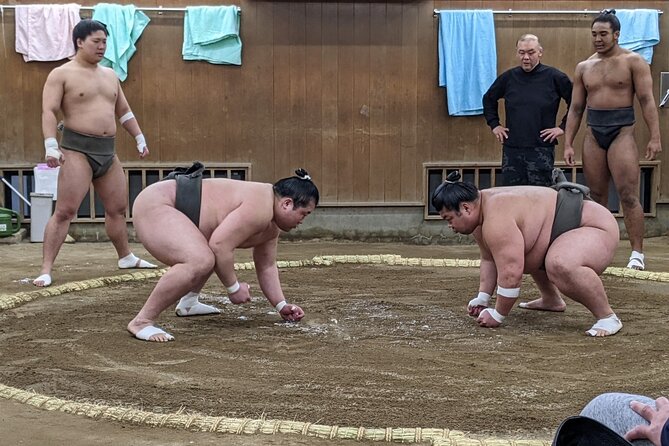
The visit takes you into one of Tokyo’s active sumo stables, where wrestlers and apprentices train under their coach. The stable is more than a gym. It is the place where the wrestlers practice, live within the traditions of the sport, and prepare for future competitions.
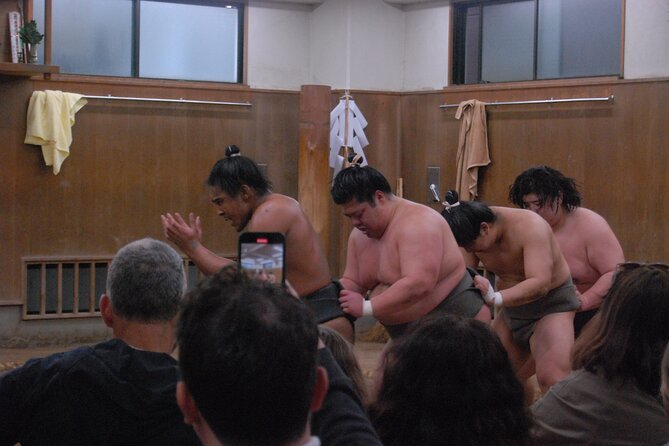
You will be close enough to notice details that disappear in a large arena. Watch the wrestlers’ faces as they brace for contact. Listen to their breathing. Pay attention to the sound of bodies meeting and to the coach’s commands cutting through the room.
The coach’s voice may surprise you at first. It is described as strong and harsh, but the tone is part of the training relationship. This is not a sign that the session has gone wrong. It reflects the demanding standards of sumo and the trust between coach and students.
That trust is one of the most interesting parts of the visit. You are seeing a private working environment that is not normally open for casual daily viewing. The tour provides access, but it also asks you to behave like a respectful observer. Keep your voice low, avoid private conversation, and let the wrestlers maintain their focus.
What you will see during the practice hour
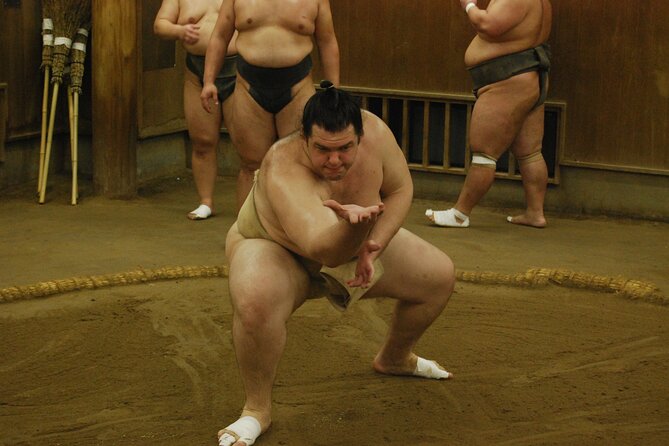
The practice session is the heart of the tour. You may see wrestlers and apprentices working through repeated exercises and bouts of physical training. The supplied details do not promise a particular sequence, named wrestler, or ceremonial event, so it is best to arrive with an open mind.
The value lies in the unedited nature of the session. Some moments may be explosive, while others may involve preparation and repetition. The training is not arranged around the visitor’s attention span. That is precisely why it can feel genuine.
I would pay attention to three details:
- The breathing and facial expressions of the wrestlers, which reveal the effort behind each movement.
- The sounds of contact and footwork, which communicate the physical force better than a distant view.
- The coach’s instructions, which show how closely the wrestlers are guided during practice.
You are asked not to speak privately during the session. This means you cannot casually explain every moment to a companion while the wrestlers train. Instead, watch closely and save your questions for afterward. For many people, that quiet is an advantage. It helps the room retain its serious mood.
Same city, a different fixture:
- Tokyo: Sumo Show and Experience in Shinjuku
★ 4.8 · 1,001 reviews - Tokyo Grand Sumo Tournament Viewing Tour with Tickets
★ 5.0 · 692 reviews - Tokyo Sumo Wrestling Tournament Experience
★ 5.0 · 660 reviews - Tokyo:Luxury Sumo Show Experience & Japanese cuisine & Drink
★ 4.7 · 577 reviews
Photos and questions after practice
After the training session, you can take photographs with sumo wrestlers and ask questions. This gives the visit a useful second half. You first watch without interrupting, then have a chance to clarify what you saw.
The question-and-answer time is especially helpful for families and first-time visitors. One family with children enjoyed the experience and found the question period a strong part of the visit. Children may not understand every detail of the training, but the chance to ask a direct question can make the sport easier to grasp.
Photography rules remain important. Video recording and flash photography are prohibited inside the stable. Still photographs without flash are allowed. If you want a picture with a wrestler, wait for the guide’s direction and keep your camera ready without using the flash.
The post-practice photo opportunity should be treated as a courtesy, not a guaranteed private meeting with a particular wrestler. The stable’s schedule and the wrestlers’ availability come first. Keep the interaction brief and polite.
The rules are part of the experience
This tour asks you to adjust your usual sightseeing habits. You cannot snack while watching practice. Bread, rice balls, snacks, and other food are not allowed inside during the morning session.
You may bring your own drink, but it must have a lid. That is a practical rule in a close training space. An open bottle could spill, and food would be distracting or inappropriate during a serious practice.
The key rules are simple:
- Do not hold private conversations during practice.
- Do not record video.
- Do not use flash photography.
- Do not bring food into the practice area.
- Bring a drink with a lid if you need one.
If you are booking for children, explain these rules before arrival. The tour can suit families, but it is not a place for running commentary or casual eating. Children who can watch quietly and wait for the question period should get more from it.
The information also asks visitors who feel inclined to support the rikishi to leave a tip after practice. Tipping is presented as optional, not as a required part of the price. If you choose to do so, wait for the appropriate moment and follow the guide’s instructions.
How the $82 price measures up
At $82, this is not the cheapest way to learn about sumo in Tokyo. You can read about the sport, watch tournament footage, or visit a public match for a different price and format. The question is what you are paying for here.
The cost covers guided access to an active stable, a small group setting, and the chance to watch training at close range. It also includes a special brochure designed to help you understand sumo better. The brochure is useful because the practice can move quickly, and a little background makes the rituals, roles, and training easier to follow.
The small group limit gives the price more weight. A maximum of 10 people is far more manageable than a large tour group when you are watching from a compact indoor space. You are more likely to hear the guide and get a chance to ask a question.
The value is strongest for someone who wants access to the daily side of sumo rather than only its public matches. It is weaker for someone who expects a long guided lecture, guaranteed bouts, or a full tournament-style program. The experience is short, focused, and dependent on the stable’s real morning schedule.
I would compare it with the cost of other special-access activities in Tokyo. For an authentic look at a sport that most people only see in an arena or on television, $82 can be reasonable. Just remember that the central product is access and observation, not a packaged show.
Who will get the most from this visit
This experience suits first-time visitors who want a direct introduction to sumo. You do not need to be an expert. The guide, the brochure, and the chance to ask questions give you several ways to understand what is happening.
It also works well for families with children who can remain quiet during practice. The photo opportunity and questions afterward add a social element, while the physical nature of the training gives children something clear to watch.
Sumo fans should appreciate the closeness. The official games show the competitive result. This visit shows the preparation, repetition, and coaching behind it.
You may want to skip it if you need a relaxed late-morning activity, want to record everything on video, or dislike strict visitor rules. It is also not ideal if your schedule cannot handle an early start. The experience depends on your willingness to observe respectfully rather than control the pace.
Practical planning for your Tokyo morning
Set aside roughly two hours from the 8:30 am start. The stable visit includes about an hour of practice, with the broader activity lasting around an hour and a half to two hours.
Wear whatever allows you to sit or stand quietly and comfortably, though the supplied details do not specify a dress code. The important preparation is behavioral: charge your phone for still photos, turn off the flash, and leave food behind.
A mobile ticket is accepted, and the meeting point is near public transportation. Because the tour begins in Sumida at a precise time, check your route before the morning of the visit. The activity ends back at the meeting point, which makes it easier to plan the next part of your day in the same general area.
The tour is listed as suitable for most people. No special fitness requirement is stated, but the experience is observational and takes place during an active training session. If you have a specific mobility or seating concern, confirm details before booking rather than assuming the stable will suit your needs.
Free cancellation is available if you cancel at least 24 hours before the start time. Changes or cancellations within 24 hours are not refunded, and late changes are not accepted. The experience also requires a minimum number of participants, so a cancellation by the operator may result in another option or a full refund.
Should you book the Ikazuchi Stable visit?
Book this tour if you want to see sumo as a daily discipline, not just as a public contest. The strongest reasons are the close viewing distance, the small group, and the chance to ask questions and take photographs after practice.
The tour earns its price through access. You are given a rare look at a working stable, where the coach’s commands, the wrestlers’ breathing, and the impact of training create a far more direct experience than a museum display.
Skip it if you want a flexible schedule, video footage, or a staged performance. The rules are firm, the start is early, and the session belongs to the wrestlers first.
For visitors who can be quiet, punctual, and respectful, this is one of the clearest ways to understand the effort behind Japan’s national sport.
FAQ
Where does the sumo stable tour begin?
The meeting point is at Water section1-chōme-1-1 Oshiage, Sumida City, Tokyo 131-0045, Japan.
What time does the tour start?
The tour starts at 8:30 am.
How long does the experience last?
The activity lasts approximately two hours. The stable visit itself includes about an hour of practice and is also described as lasting around an hour and a half.
How many people can join the tour?
The tour has a maximum of 10 participants.
Can I take photographs inside the sumo stable?
You may take photographs without flash. Video recording and flash photography are prohibited.
Can I eat during morning practice?
No. Snacks, bread, rice balls, and other food are not allowed during morning practice. You may bring a drink with a lid.
Can I ask the sumo wrestlers questions?
Yes. After practice, you can ask questions and take photographs with the wrestlers.
Just added for fans in Tokyo
- Tokyo: Grand Sumo Morning Training Tour★ 4.9 · 12 reviews
- Sumo Training Watching Experience in Tokyo★ 4.5 · 8 reviews
- Kickboxing & Body Training with EX-Pro Fighter★ 5.0 · 4 reviews
- Tokyo: Visit Sumo Morning Practice with English Guide★ 4.5 · 22 reviews
- Tokyo Sumo Experience with Live Show & Audience Challenge★ 5.0 · 38 reviews
- Tokyo Shinjuku Sumo Show and Experience with Drinks and Photo★ 4.0 · 21 reviews
- Tokyo Sumo History Tour with Chanko Nabe Lunch★ 5.0 · 3 reviews
- 【SUMO FESTIVAL】Tokyo Ginza: Sumo Show & Photo Experience★ 4.5 · 41 reviews
Sumo Experiences in Tokyo, compared.
Tokyo Shinjuku Sumo Show & Experience with Photo
Read our review →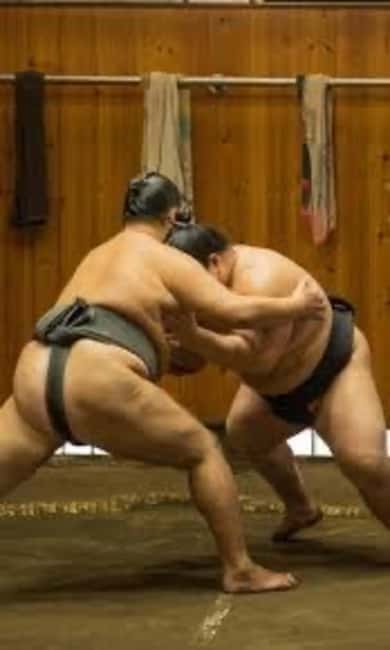
Tokyo Grand Sumo Tournament Viewing Tour with Tickets
Read our review →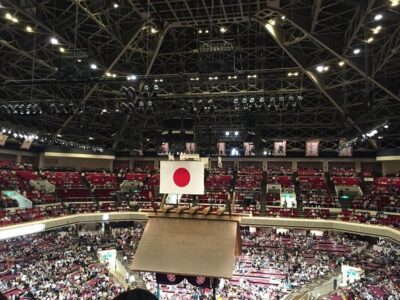

Luxury Sumo Show Experience & Japanese cuisine & Drink
Read our review →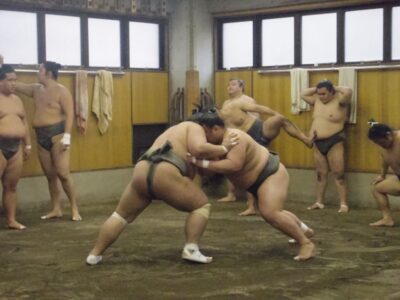
Browse the lists this tour appears in