
Review · SUMO EXPERIENCES IN TOKYO
Tokyo: Sumo Morning Practice -Stable Visit Tour with a Guide
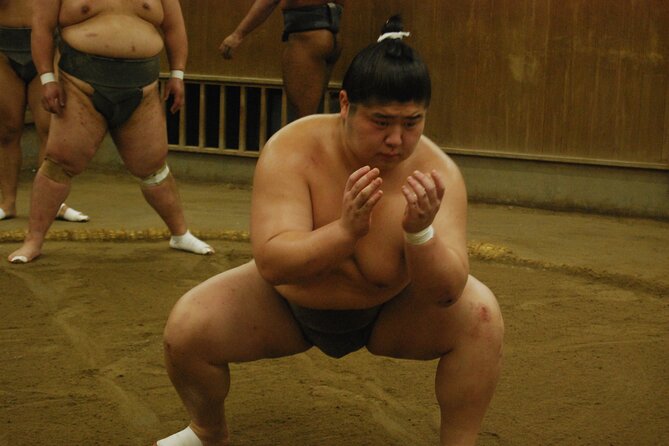
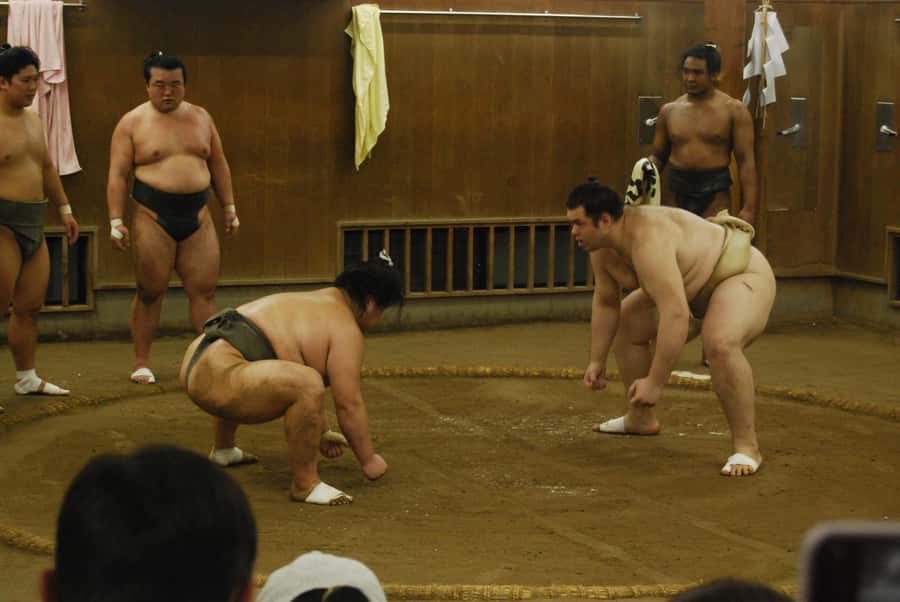
At Ikazuchi Sumo Stable, you sit close enough to catch the wrestlers’ breathing, facial expressions, and the hard thud of bodies meeting. This is not a staged demonstration. It is a working morning practice, with the coach’s sharp voice directing rikishi and apprentices as they prepare in the traditional way. The closeness is the main attraction, especially compared with watching an official bout from the audience at the Kokugikan.
I like two things here: the guide fills in the rules and the daily life of a wrestler, and you get a rare look at the trust between coach and students. Guide Ishida is specifically noted for explaining the sport clearly, including the effort behind each practice. The drawback is that you must remain very quiet and follow strict rules about food, video, and flash photography, so this suits attentive visitors more than restless children.
Key points to know before you book
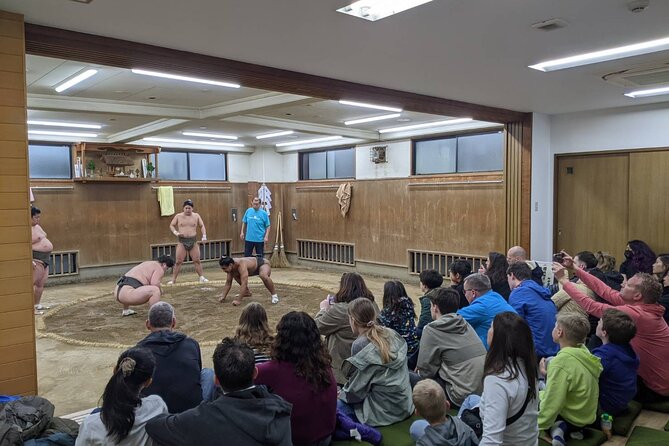
- Watch real morning training: See wrestlers and apprentices practice at close range inside Ikazuchi Sumo Stable.
- Sit on cushions near the action: The low seating gives you a direct view of breathing, expressions, collisions, and the coach’s commands.
- Learn more than the basic rules: An English-speaking guide explains sumo, stable life, and the discipline behind the sport.
- Take photographs after or during the visit: Non-flash photographs are allowed, while video and flash photography are prohibited.
- Meet near Tokyo Skytree: The meeting point is in front of the Memorial Statue of Soramachi Hiroba.
- Plan for a quiet, adult-style visit: Children under 10 are not permitted, and private conversation is discouraged during practice.
Why a morning at a sumo stable feels different
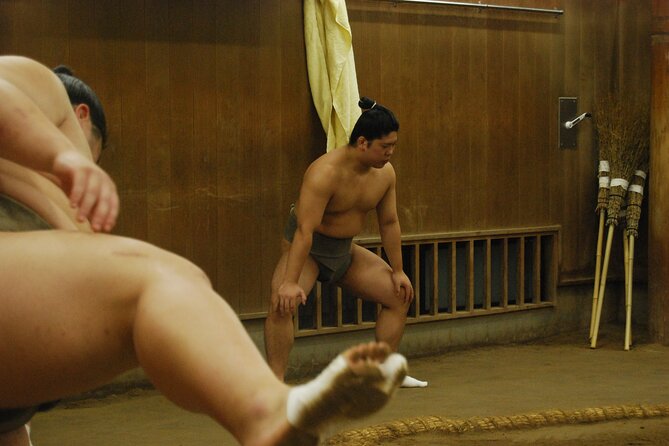
Most people first meet sumo through a tournament. At the Kokugikan, you see the polished public side: formal entrances, packed seating, ritual, and bouts that last only a short time. At a stable, you see the work that makes those bouts possible.
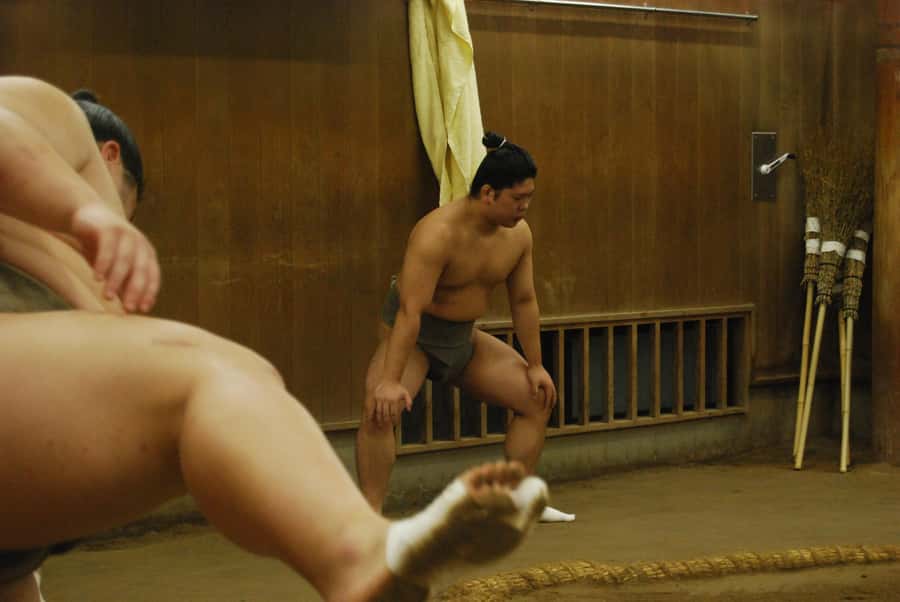
The practice is the main event here. Wrestlers and apprentices train in the morning to preserve Japan’s national sport and pass it on to the next generation. You are close enough to notice the physical strain rather than simply watching two large figures collide from a distance.
That closeness changes the mood. You can hear bodies hit the floor and each other. You can see a wrestler’s face tighten with effort. The coach’s voice may sound harsh at first, but it reflects the serious demands of practice and the trust built within the stable.
This is also a useful way to understand sumo as a daily discipline, not just a ticketed sporting event. The stable is the place where wrestlers train, learn, and live within the traditions of the sport. The guide helps connect what you see in the room with the wider world of sumo.
More Sumo Experiences in Tokyo
- Tokyo: Sumo Show and Dining Experience
★ 4.8 · 2,742 reviews - the SUMO show
★ 5.0 · 1,960 reviews - Tokyo Shinjuku Sumo Show & Experience with Photo
★ 5.0 · 1,750 reviews
Meeting near Tokyo Skytree
Your meeting point is in front of the Memorial Statue of Soramachi Hiroba, near Tokyo Skytree. This matters because the stable is not a public attraction with a large, obvious entrance and a row of signs outside. Without a guide, you might not know where to go or how to approach the stable respectfully.
The tour begins with an English-speaking guide, and guide Ishida has been praised for being friendly and clear. Before practice, the guide reviews basic sumo rules and explains the life of a wrestler while living at the stable. That introduction gives you a better way to watch the training instead of simply wondering which movement counts as a technique.
Allow yourself enough time to reach the meeting point. The supplied details do not give a transport plan or a recommended arrival time, so check the exact starting time when you book and follow the meeting instructions carefully.
The location also pairs well with a visit to Tokyo Skytree, but the tour itself is focused on the stable. You should not expect a sightseeing circuit around the neighborhood. The value is in entering a place most people cannot casually visit and observing its morning routine.
Taking your seat on cushions
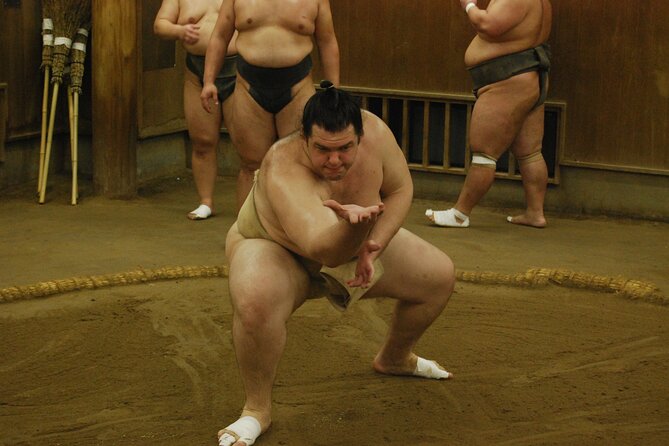
Inside the stable, you sit on cushions close to the practice area. This low seating helps create the strongest part of the experience: you are near the action rather than separated from it by a large arena.
You may notice the sounds first. Training is physical and direct. Bodies collide, feet move across the floor, and the coach calls out instructions in a strong voice. You can also watch the quieter details, including breathing, concentration, facial expressions, and the way wrestlers respond to one another.
The seating is not a plush spectator setup. Cushions place you close to the floor, which may not suit everyone for a full two-hour visit. The available information does not describe chairs or other seating options, so keep that in mind if you have trouble sitting low.
Your behavior matters here. Private conversation is discouraged so the wrestlers and apprentices can maintain concentration. This is not the place for casual chatter, a running commentary, or loud reactions. I like this rule because it preserves the practice as a real training session, but it does require you to be a quiet observer.
What the training reveals about sumo
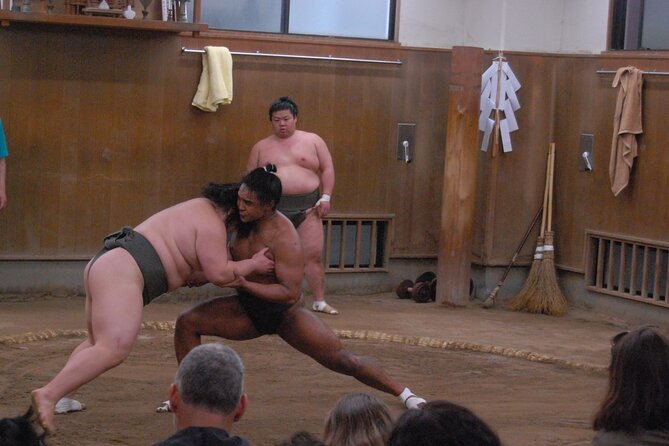
A morning practice shows why an official tournament bout is only one small part of a wrestler’s life. The public contest may be brief, but the preparation demands focus and repeated physical effort.
The coach’s commands can sound surprisingly severe. That may seem uncomfortable if you expect a gentle lesson or a visitor-friendly show. The point, however, is not entertainment created for tourists. You are watching a coach direct his students in the tone and manner needed for serious training.
The stable survives through trust between the coach and the rikishi who train with him. That relationship is one of the most meaningful parts of the visit because it gives context to the strict atmosphere. You are not merely watching strength. You are seeing a system built around instruction, discipline, and respect.
The guide’s explanation is especially useful here. Without background, a practice can look like a series of repeated clashes. With a basic understanding of the rules and the wrestlers’ lives, you can better appreciate the patience and hard work involved.
Same city, a different fixture:
- Tokyo: Sumo Show and Experience in Shinjuku
★ 4.8 · 1,001 reviews - Tokyo Grand Sumo Tournament Viewing Tour with Tickets
★ 5.0 · 692 reviews - Tokyo Sumo Wrestling Tournament Experience
★ 5.0 · 660 reviews - Tokyo:Luxury Sumo Show Experience & Japanese cuisine & Drink
★ 4.7 · 577 reviews
Guide Ishida and the value of explanation
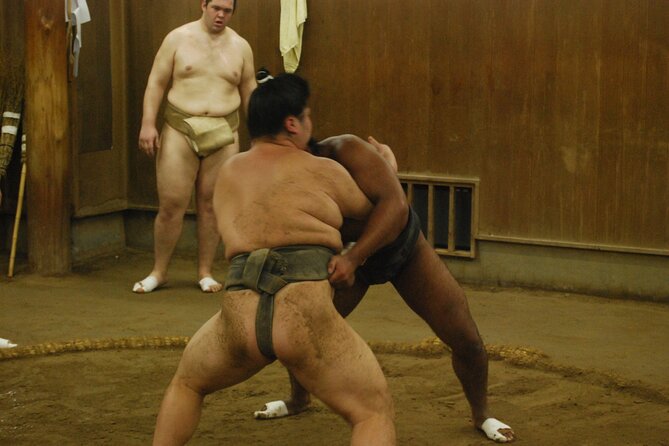
A guide makes a large difference at this stable. Sumo has its own rules, vocabulary, customs, and social structure. Even if you have watched bouts before, you may miss what is happening during practice.
Guide Ishida has been singled out for explaining the basic rules before the training began and for describing life inside a stable. That preparation helps you know what to look for once the practice starts. You are not left to guess why the coach is speaking sharply or how the wrestlers’ routines connect with official sumo.
The guide also helps you reach a place you might not find on your own. Since a stable is a working training space rather than a conventional attraction, the guide’s role includes more than translation. It is also about helping you behave properly in a private, highly focused setting.
An English-speaking guide is included, and the tour is listed in English. The special brochure is another useful aid. Keep it as a reference during or after the visit, especially if this is your first close look at sumo.
Photography, the photo opportunity, and stable etiquette
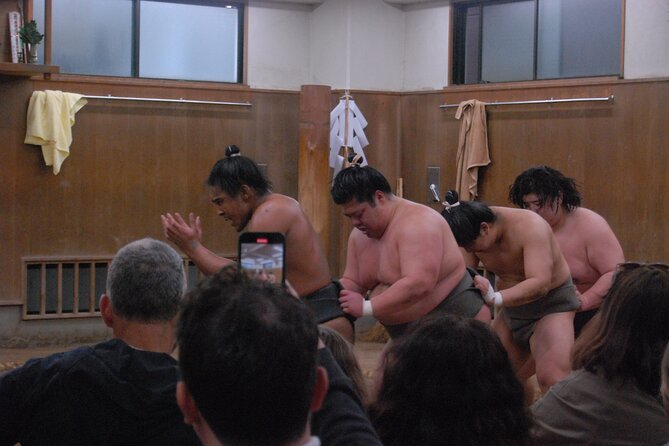
Photography is allowed, but the rules are strict. You may take photographs without flash. Video recording is prohibited inside the stable, as is flash photography.
The restriction makes sense in this setting. Bright flashes and constant filming could distract wrestlers during a demanding practice. You should set your camera or phone before the training begins, turn off the flash, and avoid handling it in a way that creates noise.
A photo shoot with sumo wrestlers is one of the advertised highlights. The supplied details do not specify exactly when or how long this takes, so listen to the guide’s instructions. Do not assume that you can freely approach wrestlers whenever you wish.
The visit is a chance to take home photographs, but photography should remain secondary to respectful observation. The practice is the reason you are there. Keep your attention on the training and follow the guide’s directions about when photographs are appropriate.
You should also bring a drink with a lid if you need one. Snacks, bread, rice balls, and other food are not allowed during the morning practice. Avoid bringing loose food into the stable, and do not eat while seated near the training area.
If you feel you want to support the wrestlers after practice, a tip may be left for them. This is presented as an optional way to show support, not as a required fee.
Price, timing, and who gets good value
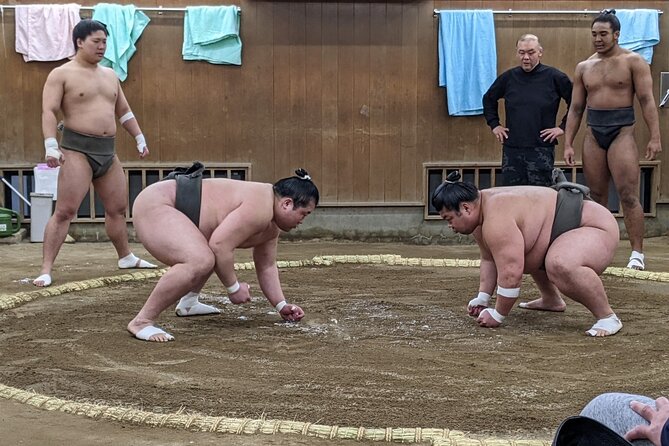
The tour costs $90 per person and lasts two hours. That is not a bargain-priced sightseeing stop, but the comparison should be with the access it provides rather than with a standard city tour.
You are paying for entry into a working sumo stable, close seating for a real practice, an English-speaking guide, a special brochure, and the chance to take photographs with wrestlers. You also get explanation that would be difficult to gain by simply watching a tournament on your own.
I think the price makes the most sense if sumo is a serious interest or if you want an experience that is hard to arrange independently. The visit is also valuable for someone who has already seen an official match and wants to understand what happens behind the public performance.
The value is weaker if you mainly want a quick photo opportunity or a loud, interactive show. The training requires silence, and the two-hour format is built around observation rather than constant activity.
There are only 16 ratings available for the experience, with an overall score of 4.8. The strongest praise focuses on the close view, the guide’s explanations, and the chance to understand the work and respect involved. Those are the features I would use to judge the price.
Who should book this experience
I would recommend this tour to adults and older children who can sit quietly and follow instructions. Children under 10 are not permitted, and the no-talking expectation makes this a poor choice for young children even if they were allowed.
It suits first-time visitors who want a clear introduction to sumo. The guide covers basic rules and stable life, so you do not need a deep background before arriving.
It also suits people already interested in Japanese sport and tradition. You will see the daily work behind the tournament, hear the coach’s direct commands, and observe the relationship between wrestlers and their teacher.
Photographers may like the close view and the permitted non-flash pictures. Videographers should skip it, since video recording is not allowed. Anyone expecting a free-flowing photo session should also understand that the stable’s rules come first.
If you dislike sitting on cushions, staying quiet, or watching repetitive physical practice, choose a different activity. This is a focused visit, not a general Tokyo attraction with many moving parts.
Practical advice for a respectful visit
Wear clothing that allows you to sit comfortably for the two-hour session. The information provided does not specify a dress code, so the key concern is comfort and quiet movement.
Arrive at the stated meeting point in front of the Memorial Statue of Soramachi Hiroba with enough time to find your guide. Since the stable is near Tokyo Skytree but is not described as a large public venue, do not rely on spotting a major tour sign at the door.
Keep your phone on silent and disable the flash before entering. Avoid private conversation during practice, and wait for the guide to explain when photographs are acceptable.
Bring a drink with a lid, but leave food behind. If you want to offer a tip to the wrestlers, do so after practice and follow the guide’s instructions.
The tour offers free cancellation up to 24 hours in advance, and you can reserve now and pay later. Those policies are useful if your Tokyo schedule is still changing, but confirm the available starting times before you commit.
Should you book the Ikazuchi Sumo Stable visit?
Book it if you want close access to real sumo training and are willing to behave like a respectful observer. The strongest reasons are the cushion seating, the physical immediacy of the practice, and the guide’s explanation of rules and stable life.
I would especially choose it over a simple tournament viewing if you want to understand the daily work behind sumo. Guide Ishida’s clear introduction can help first-time visitors make sense of what they see, while the stable setting gives experienced fans a closer look at the sport’s demanding routine.
Skip it if you need a family activity for children under 10, want to record video, or prefer a relaxed attraction where conversation and snacks are fine. For the right visitor, the $90 price buys something difficult to arrange alone: a quiet seat inside a working sumo stable, close to the athletes and the tradition they are keeping alive.
FAQ
Where does the sumo stable tour meet?
The meeting point is in front of a Memorial Statue of Soramachi Hiroba, near Tokyo Skytree.
How long does the experience last?
The tour lasts two hours.
How much does the tour cost?
The listed price is $90 per person.
Is an English-speaking guide included?
Yes. The experience includes an English-speaking live tour guide. Guide Ishida has provided explanations about basic sumo rules and stable life.
Can I take photographs inside the stable?
Yes, photographs without flash are allowed.
Can I record video during the practice?
No. Video recording is prohibited inside the sumo stable.
Can I bring food into the morning practice?
No. Snacks, bread, rice balls, and other food are not allowed. Drinks are allowed if they have lids.
Are children under 10 allowed to join?
No. The experience is not suitable for children under 10.
Can I cancel the booking for a refund?
Yes. You can cancel up to 24 hours in advance for a full refund. You can also reserve now and pay later.
Just added for fans in Tokyo
- Tokyo: Grand Sumo Morning Training Tour★ 4.9 · 12 reviews
- Sumo Training Watching Experience in Tokyo★ 4.5 · 8 reviews
- Kickboxing & Body Training with EX-Pro Fighter★ 5.0 · 4 reviews
- Tokyo: Visit Sumo Morning Practice with English Guide★ 4.5 · 22 reviews
- Tokyo Sumo Experience with Live Show & Audience Challenge★ 5.0 · 38 reviews
- Tokyo Shinjuku Sumo Show and Experience with Drinks and Photo★ 4.0 · 21 reviews
- Tokyo Sumo History Tour with Chanko Nabe Lunch★ 5.0 · 3 reviews
- 【SUMO FESTIVAL】Tokyo Ginza: Sumo Show & Photo Experience★ 4.5 · 41 reviews
Sumo Experiences in Tokyo, compared.
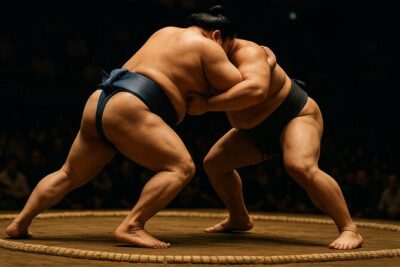
Tokyo Shinjuku Sumo Show & Experience with Photo
Read our review →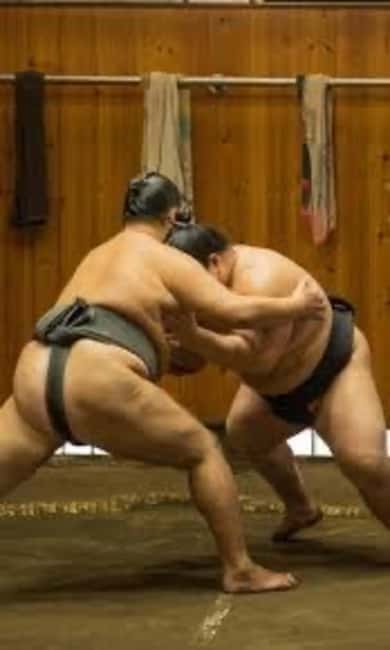
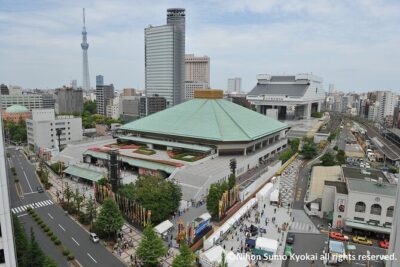
Tokyo Grand Sumo Tournament Viewing Tour with Tickets
Read our review →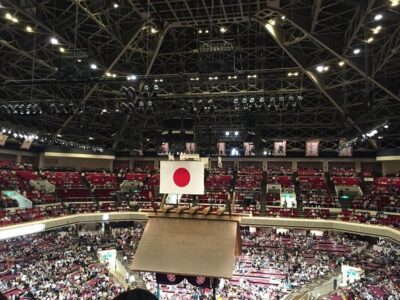

Luxury Sumo Show Experience & Japanese cuisine & Drink
Read our review →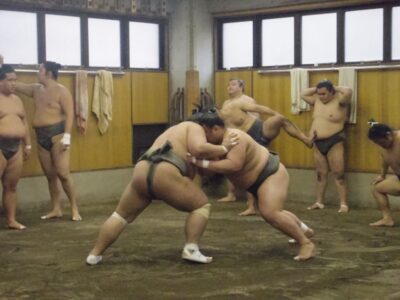
Browse the lists this tour appears in