
Review · SUMO EXPERIENCES IN TOKYO
Tokyo Sumo Morning Practice Tour at Stable
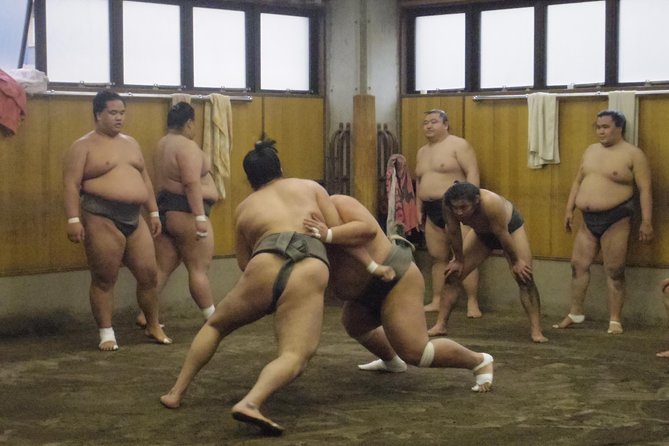
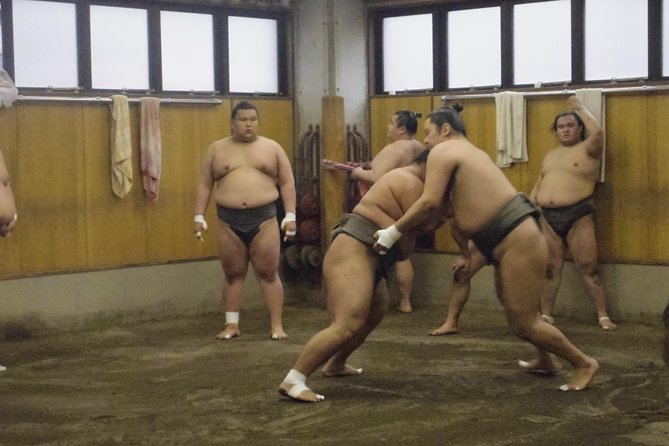
The best part of this Tokyo morning tour is simple: you watch professional sumo wrestlers train inside a real stable, not on a stage built for tourists. The wrestlers practice close to the audience, often repeating bout after bout with little ceremony between them. The action feels direct and unpolished, which is exactly why it can be more revealing than a formal tournament.
I like the clear English commentary, especially when the guide explains rankings, rituals, training methods, and the six annual Grand Tournaments. I also like the small-group format, with a maximum of 20 people, and the chance for photographs with wrestlers after practice when arrangements allow. The main drawback is the audio: some people have found the headsets hard to hear, and listening while watching can be distracting.
Key points to know before you book
- Early start: Meet near Ryogoku Station at 7:45am, then travel to the stable, possibly by train.
- Close-up training: Watch real practice bouts, exercises, and daily routines from inside a working sumo stable.
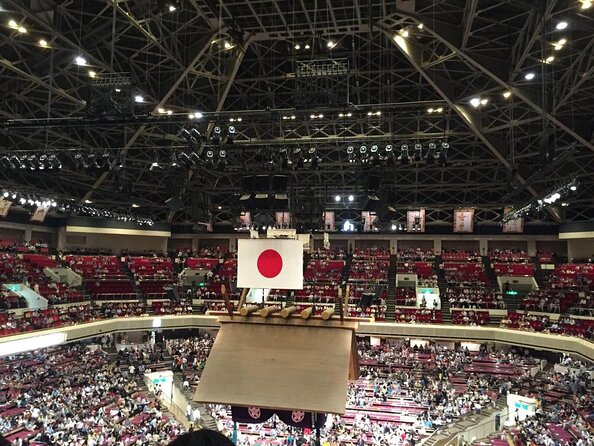
- Useful cultural context: Learn about Shinto connections, rankings, stable life, and Japan’s six 15-day Grand Tournaments.
- Strict etiquette: Stay silent, keep phones on silent, avoid flash and shutter sounds, and never step onto the ring area.
- Summer warning: The stable has no air conditioning. Water and sports drinks are allowed during summer, but bring a cold towel or ice pack.
- Age limit: Children 11 and under cannot enter. The minimum age is 12.
Why morning practice tells you more than a tournament
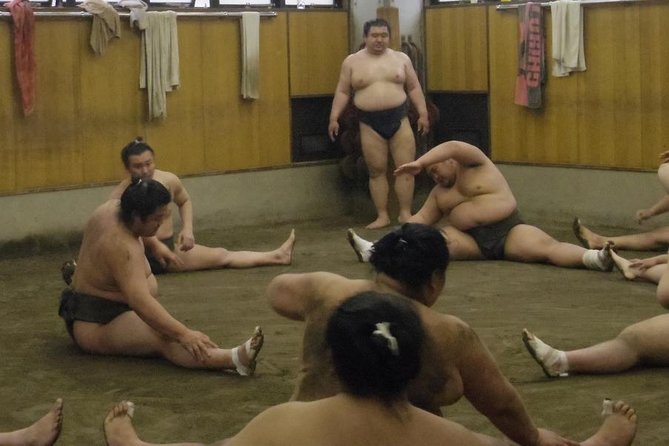
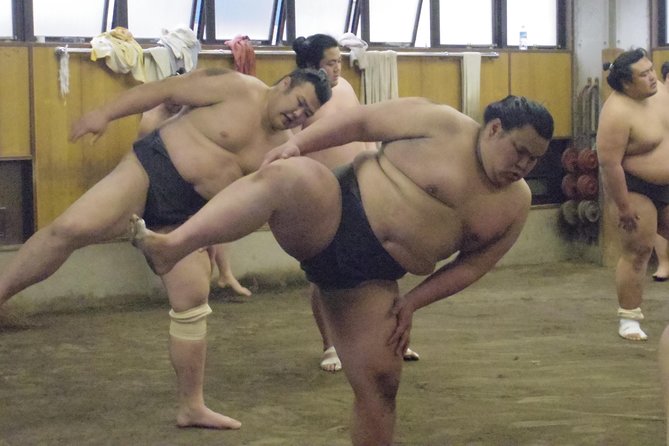
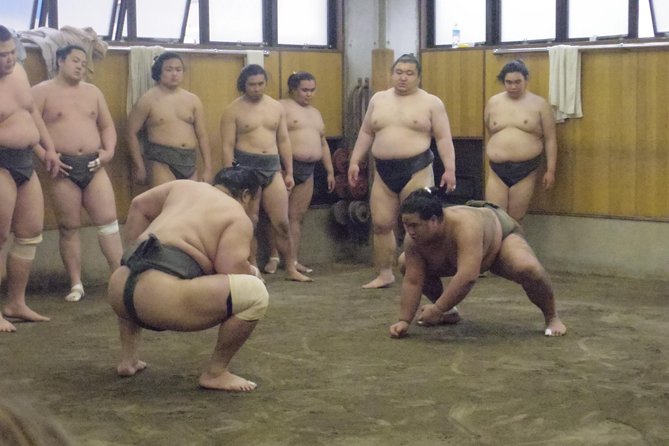
A sumo tournament is polished, ceremonial, and exciting. Morning practice shows you the work behind it. You may watch wrestlers stretch, perform strength exercises, practice throws, and clash repeatedly while senior members of the stable supervise. There is less ceremony, so you see more wrestling in a shorter time.
That difference matters. At a tournament, each bout is separated by introductions, salt throwing, foot stamping, and other formal actions. At practice, the wrestlers can go again and again. One morning may include dozens of exchanges, depending on the stable’s schedule and the stage of training.
You should not expect a performance arranged for your benefit. The wrestlers are there to train. Some sessions may be longer and more intense than others. The timing can shift too, since the tour lasts roughly two hours and the stable decides when practice ends.
This lack of control is part of the appeal, but it also explains why the experience will not feel identical every day. You might see seasoned wrestlers in hard sparring, or you might spend more time watching warmups and technique work. The practice schedule is real, not a fixed show.
More Sumo Experiences in Tokyo
- Tokyo: Sumo Show and Dining Experience
★ 4.8 · 2,742 reviews - the SUMO show
★ 5.0 · 1,960 reviews - Tokyo Shinjuku Sumo Show & Experience with Photo
★ 5.0 · 1,750 reviews
Starting at Ryogoku Station at 7:45am
You meet your guide in the morning near Ryogoku Station Gallery at 7:45am. This is early, so plan your route the night before and allow extra time. The exact meeting location can vary by booking option, so check your confirmation carefully rather than relying only on a map pin.
The guide gives you an introduction before you enter the stable. This is when you can get the basic framework: sumo’s links to Shinto, the ranking system, stable life, and the way professional competitions work. Guides have included Seiji, Yumi, Cameo, Noriko, and Nobu, all described as clear and enthusiastic about the sport.
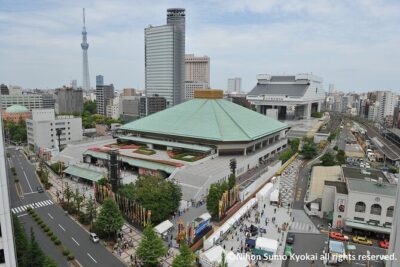
The short walk or train ride to the stable is not the main event, but it helps put the visit in context. Ryogoku is Tokyo’s sumo district, and the stable is part of the sport’s working structure. You are not being taken to a museum or a themed restaurant. You are entering a place where wrestlers live and train under a stable master.
The meeting process deserves care. One person reported confusion at the station and went directly to the stable, arriving in time. That does not mean you should skip the guide. It means you should keep your confirmation handy, arrive early, and contact the operator if the meeting point is unclear.
Entering a working sumo stable
A sumo stable, or heya, is both a training place and a community for wrestlers. The stable master oversees the wrestlers, and the daily routine follows rules that are very different from a normal gym or sports club.
Before you sit down, the guide explains what you are seeing and how to behave. You must watch quietly and avoid interrupting the wrestlers’ concentration. The ring and sandy area are sacred spaces, so you cannot step down onto them.
Your seating may be on stools or close to the floor, depending on the stable and the arrangement that day. Some seats can offer a better view than others. The front section may be reserved for sponsors or other people connected to the stable, so arriving early can help you get a better position within the available visitor seating.
The room is usually close to the action, which is one of the tour’s great strengths. Even from farther back, the wrestlers are likely to feel impressively near. At the same time, close seating means you must accept a restricted viewpoint. You cannot wander around for a better angle, stand up repeatedly, or move toward the ring.
Use the restroom before arrival. Once you leave the stable, you cannot re-enter, and leaving in the middle of practice is discouraged. This is not a flexible hop-on, hop-off attraction.
What you will watch during the 90-minute practice
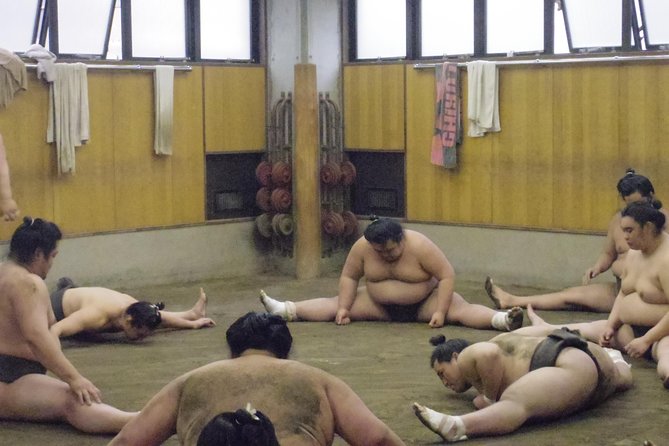
The practice session lasts about 1 hour and 30 minutes, though it may be shorter or longer depending on what is happening inside the stable. The exact sequence varies, but you can expect a mix of warmups, exercises, drills, and practice bouts.
The most gripping moments come when wrestlers push against each other at close range. Sumo is often described as a short contest, but the training reveals how much preparation sits behind those few seconds. Balance, timing, footwork, grip, force, and stamina all matter.
A useful guide helps you notice details that are easy to miss. You may learn why a wrestler holds a certain position, how rankings affect competition, or how a stable prepares athletes for a major tournament. The explanations also make the quiet stretches easier to understand.
The strongest guides, including Seiji, Yumi, Cameo, Noriko, and Nobu, have been praised for making unfamiliar customs easy to follow. Some have used headsets for discreet commentary, which lets you listen without the guide speaking loudly across the room.
That system has a weakness. Several people have found the audio unclear or affected by static. Others felt that constant narration made it harder to focus on the practice. If you learn best by watching first and asking questions later, the commentary may feel like too much at once.
A guide who points out key moves and saves longer explanations for before or after the practice would suit many people better. If your booking includes handouts or a question period, use them. The content is valuable, but the delivery can affect how much you absorb.
Same city, a different fixture:
- Tokyo: Sumo Show and Experience in Shinjuku
★ 4.8 · 1,001 reviews - Tokyo Grand Sumo Tournament Viewing Tour with Tickets
★ 5.0 · 692 reviews - Tokyo Sumo Wrestling Tournament Experience
★ 5.0 · 660 reviews - Tokyo:Luxury Sumo Show Experience & Japanese cuisine & Drink
★ 4.7 · 577 reviews
Sumo’s Shinto roots and tournament calendar
Sumo is not only a strength contest. Its rituals connect the sport to Shinto, Japan’s indigenous religious tradition. You will hear about customs that preserve the sport’s sacred side even as sumo operates as a major professional spectator event.
The origins of sumo reach back at least 1,500 years in Japanese tradition, while its organized modern form developed over time. The sport still uses ritual gestures, sacred spaces, and strict conduct. The ring is not simply a platform, which explains why stepping onto the sandy area or pointing your feet toward it is considered rude.
The guide also explains the six annual Grand Tournaments, each lasting 15 days. Three are held in Tokyo, with one each in Osaka, Nagoya, and Fukuoka. If you plan to attend a tournament later in your trip, this morning visit gives you a useful introduction to what you will see.
You will also gain some understanding of rankings and the lifestyle of the wrestlers. That background changes the way you watch. A practice bout is no longer just two large men colliding. It becomes part of a demanding system in which wrestlers train, compete, move up or down the rankings, and represent their stable.
The photo opportunity and departure
Photography is allowed during the experience, but only without flash or shutter sounds. Video is not allowed. You also cannot ask wrestlers to pose while practice is still underway.
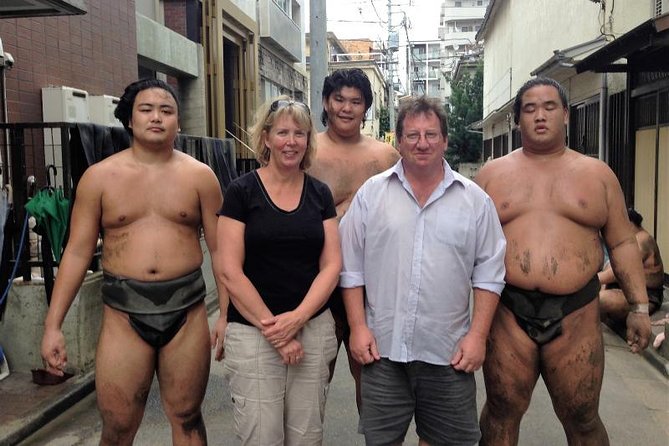
After training, there may be a short opportunity to take photographs with wrestlers. This is not guaranteed as a long social session. Some people have had pictures with two wrestlers, while others describe only a few minutes before the group leaves.
Treat this as a possible extra, not the reason to book. The central experience is watching practice. You must also respect image and privacy rights, and unauthorized use of photographs is strictly prohibited.
At the end, your guide walks you back to the station, where the tour finishes. The full outing takes about two hours, but the stable practice itself accounts for most of that time.
Price and value at $83.57
At $83.57 per person, this is not a cheap morning activity. The price makes more sense if you value access to a genuine working stable, a guide who can explain what is happening, and the chance to see repeated practice bouts from close range.
You are paying for access as much as for entertainment. A normal sightseeing ticket cannot give you this setting. The guide also saves you from trying to interpret unfamiliar rituals and rankings on your own.
Still, value depends on your expectations. If you want a polished show, a guaranteed photo session, a comfortable climate-controlled room, or a formal question-and-answer period, this may feel expensive. Seating, audio quality, practice length, and the photo opportunity can vary.
I would compare it with the price of a tournament ticket, but not as a direct substitute. The tournament offers ceremony and competition under official conditions. This tour offers training and an inside look at preparation. If your main goal is to see constant wrestling action, practice may actually give you more activity in a shorter period.
The 96 percent recommendation rate and 4.8 rating from 298 ratings point to strong overall satisfaction, but the lower ratings highlight real issues: difficult audio, limited interaction, uneven views, and a sense that the commentary could be more focused. Those are useful warnings, not reasons to dismiss the experience.
Heat, etiquette, and practical rules
Tokyo mornings can be hot, and the stable has no air conditioning. During summer, water and sports drinks are allowed inside, but eating is not. Bring a cold towel or small ice pack, and wear clothing that will keep you comfortable while sitting quietly.
Sunglasses and hats are not allowed in the stable. Keep your phone on silent. Photos must be taken without flash or shutter sounds, and video is forbidden.
Do not stretch your legs toward the ring. Showing the soles of your feet to the wrestlers is considered impolite. Do not talk during practice, step onto the sandy area, or move around to get a better photograph.
These rules may feel strict if you are used to casual sports events, but they protect the stable’s daily routine. The wrestlers are training, not performing for an audience. Your quiet attention is part of showing respect.
The tour is for ages 12 and up. Most people can participate, but the seating and quiet format may not suit anyone who needs frequent breaks or cannot remain still for the practice. If you feel unwell, do not join.
Free cancellation is available up to 24 hours before the start time. Changes or cancellations inside that window are not accepted for a refund.
Who will enjoy this sumo morning
I would recommend this experience to anyone curious about Japanese culture beyond temples, shopping streets, and staged dinner shows. You do not need to understand sumo before arriving. The guide fills in the basics, and the visual power of the training makes the sport accessible.
It is especially good for:
- First-time visitors who want a strong cultural activity in Tokyo
- Sports fans interested in training rather than only formal competition
- People planning to attend a Grand Tournament
- Photographers who can follow strict no-flash and no-video rules
- Small groups who prefer a quiet, focused experience
- Anyone willing to rise early for an unusual morning
I would hesitate if you dislike sitting still, find spoken commentary distracting, or need guaranteed access to wrestlers. I would also think twice during the hottest part of summer unless you are prepared for a warm, non-air-conditioned room.
Should you book the Tokyo sumo morning practice tour?
Book it if you want to see how professional sumo is made, not just how it looks on tournament day. The close distance, repeated bouts, strict ritual, and guide’s explanations give you a better sense of the discipline behind the sport.
Go in with realistic expectations. The stable is not a theater, the seating may not be perfect, the audio may be uneven, and the photo session is brief. But if you arrive early, follow the rules, and pay attention to the work rather than waiting for a staged spectacle, the $83.57 price can be fair for access this unusual.
FAQ
Where does the tour meet?
The listed meeting point is near Ryogoku Station Gallery, with the guide meeting the group at 7:45am. The exact location may differ by booking option, so check your confirmation email carefully.
How long does the experience last?
The complete experience takes about two hours. The stable practice itself lasts around 1 hour and 30 minutes, though the timing can change depending on the day’s practice.
What age can join the tour?
The minimum age is 12. Children aged 11 and under cannot enter the sumo stable.
Can I take photographs or videos?
Photographs are allowed without flash or shutter sounds. Video is not allowed. You cannot ask wrestlers to pose while practice is taking place, and all photographs must respect image and privacy rights.
Is food or drink allowed inside the stable?
Eating and drinking are not allowed in general. During summer, water and sports drinks are permitted because the stable has no air conditioning.
Can I cancel for a refund?
You can cancel up to 24 hours before the experience start time for a full refund. Cancellations and changes made less than 24 hours before the start time are not accepted.
Just added for fans in Tokyo
- Tokyo: Grand Sumo Morning Training Tour★ 4.9 · 12 reviews
- Sumo Training Watching Experience in Tokyo★ 4.5 · 8 reviews
- Kickboxing & Body Training with EX-Pro Fighter★ 5.0 · 4 reviews
- Tokyo: Visit Sumo Morning Practice with English Guide★ 4.5 · 22 reviews
- Tokyo Sumo Experience with Live Show & Audience Challenge★ 5.0 · 38 reviews
- Tokyo Sumo History Tour with Chanko Nabe Lunch★ 5.0 · 3 reviews
- 【SUMO FESTIVAL】Tokyo Ginza: Sumo Show & Photo Experience★ 4.5 · 41 reviews
- Tokyo Shinjuku Sumo Show and Experience with Drinks and Photo★ 4.0 · 21 reviews
Sumo Experiences in Tokyo, compared.
Tokyo Shinjuku Sumo Show & Experience with Photo
Read our review →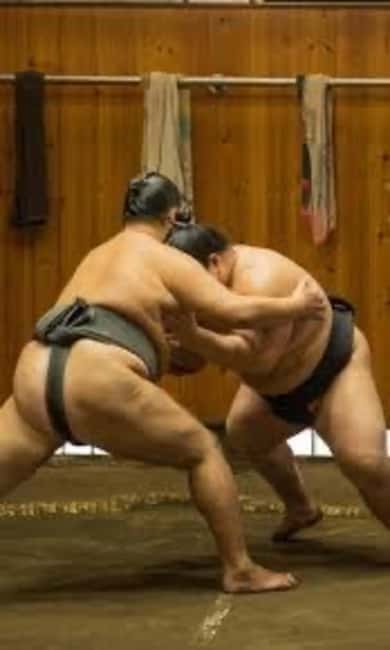
Tokyo Grand Sumo Tournament Viewing Tour with Tickets
Read our review →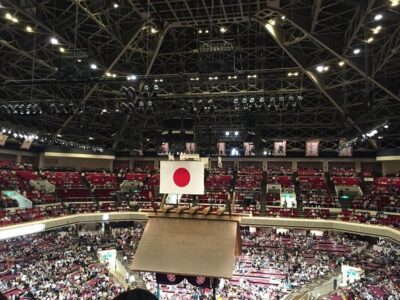

Luxury Sumo Show Experience & Japanese cuisine & Drink
Read our review →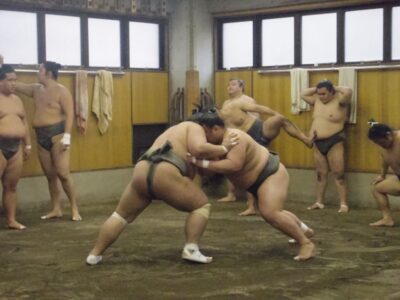
Browse the lists this tour appears in