
Review · SUMO EXPERIENCES IN TOKYO
Tokyo Sumo Morning Practice: Viewing & Exclusive Interaction
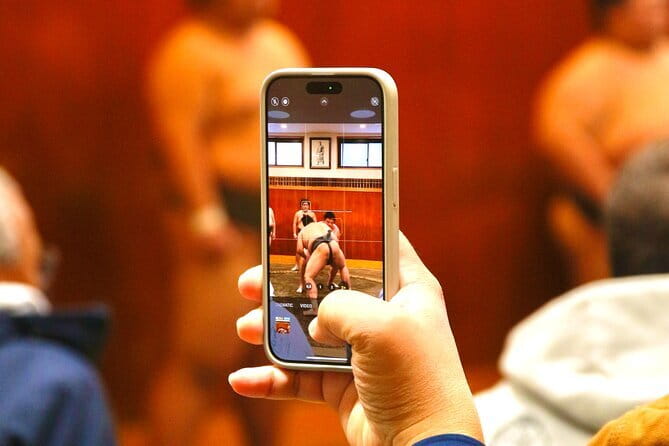
Entering a real sumo stable before lunch gives you something a tournament ticket cannot: a close look at the daily work behind the sport. You watch wrestlers warm up, practice, and spar in a serious training setting, not a staged dinner show. The room is quiet except for the slap of bodies and the sharp rhythm of the wrestlers’ work.
I like the front-row floor cushions, which put you close to the action, and the stools at the back, which make the visit easier if you would rather not sit on the floor. I also like the private question-and-photo session with active wrestlers. Guides including Haru, Momo, Sana, Sarah, Ryoko, and Momo have been praised for explaining the rules clearly and helping visitors ask useful questions.
The main consideration is the early start and the strict stable etiquette. You must remain quiet during practice, cannot record video or audio, and cannot bring food, alcohol, or drugs. During a Grand Sumo Tournament period, practice begins about 30 minutes earlier and the viewing portion lasts about an hour.
Key Points Before You Book
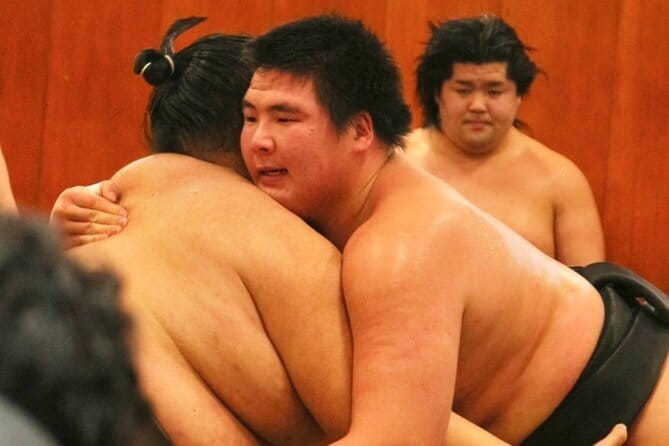
- Watch genuine morning training: See warm-ups, practice bouts, and sparring at an active sumo stable rather than a staged performance.
- Choose your seat: Sit on a traditional zabuton near the front or use a stool at the back if floor seating is uncomfortable.
- Talk with current wrestlers: Ask about training, daily life, and the mindset required for professional sumo, then take commemorative photos.
- Receive an official banzuke: Your souvenir is a real sumo ranking sheet placed in a specially designed folder.
- Finish with open questions: The guide returns with you to Narihira Park for extra sumo questions and Tokyo advice.
- Plan your afternoon nearby: The tour ends around 11:00 AM, leaving time for Tokyo Skytree or Asakusa.
Why Morning Practice Is More Revealing Than a Sumo Show
Sumo is often encountered through tournament highlights, souvenir shops, or formal performances. Those can be fun, but they show the finished product. This visit shows the work that produces it.
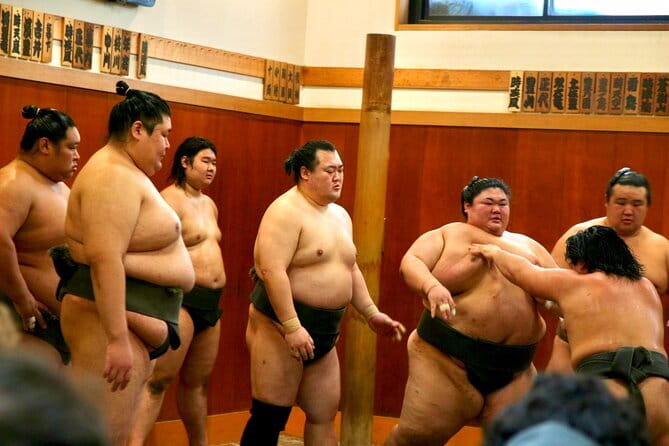
At the stable, you see wrestlers prepare their bodies and repeat basic movements before the more forceful bouts begin. You may watch warm-ups, practice, and sparring, with each part offering a different view of the sport. The physical power is obvious, but so are the discipline and concentration required to keep repeating demanding exercises.
I find this setting valuable because it removes much of the stagecraft. There is no meal built around a performance and no need to fill the room with entertainment. The training itself is the event. That can make the experience feel more serious, and at moments more intense, than a standard cultural show.
The visit also helps you understand that sumo is more than two large athletes pushing one another out of a ring. The sport has set rituals, rules, gestures, and forms of etiquette. Your guide introduces these before you enter the stable, so you know what to watch and how to behave.
More Sumo Experiences in Tokyo
- Tokyo: Sumo Show and Dining Experience
★ 4.8 · 2,742 reviews - the SUMO show
★ 5.0 · 1,960 reviews - Tokyo Shinjuku Sumo Show & Experience with Photo
★ 5.0 · 1,750 reviews
Starting at Narihira Park in Sumida
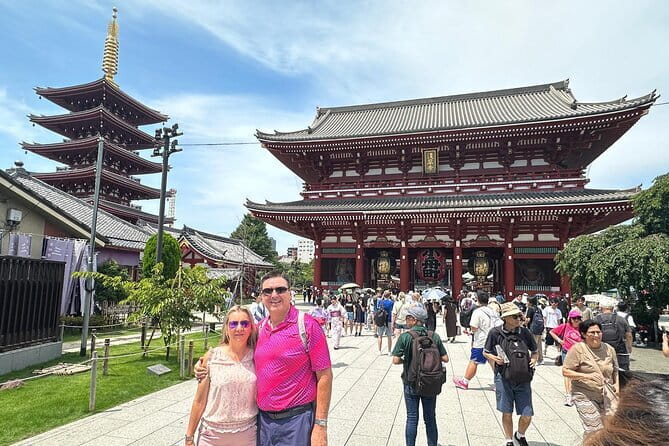
Your meeting point is near the multipurpose restroom at Narihira Park. This is more than a place to gather. Your guide checks your name, hands out sumo-related materials, and explains the manners and rules that matter inside the stable.
Arrive ready to listen. The introduction covers sumo history, basic rules, and etiquette, giving you a useful frame for the practice session. Without this short briefing, a visitor unfamiliar with sumo might see only a series of powerful collisions. With it, you can pay attention to the structure of the training and the meaning of what happens around the ring.
The park meeting point also gives you a calm place to ask an initial question before the walk. Guides such as Momo and Haru have been praised for making complex ideas easy to follow, while Sarah, Sana, and Ryoko have also been singled out for being friendly and helpful. The exact guide depends on the date, but the activity is offered in English and Japanese.
From the park, you take a short walk to the active stable. Transportation to the meeting point is not included, so plan your route to Narihira Park separately. Once you arrive at the meeting point, the walk to the stable is part of the guided visit.
Inside the Stable: Quiet, Close, and Physical
The stable is a working place, not a theater. You need to keep quiet during practice and follow instructions about where to sit and when photography is allowed. That restraint is part of the value of the visit. The wrestlers are training, and your presence should not interrupt them.
You can sit on a zabuton, a traditional floor cushion, near the front. This gives you a close view and a stronger sense of the force involved when wrestlers collide. The front position is appealing if you want to study footwork, body position, and the speed of each exchange.
If sitting on the floor is difficult, stools are available at the back. This is a practical feature that can make a major difference. Sumo practice requires concentration, so you do not want to spend the session worrying about your knees or trying to shift position quietly.
The setting is intimate enough that the physical details become hard to miss. You may notice the sharp impact of a bout, the repeated nature of the exercises, and the effort that goes into even the movements that look simple. The session can feel overwhelming for a moment because the wrestlers are working at close range and with real force. That is precisely why the stable visit offers more than a quick photo opportunity.
Photography is allowed, but it comes with clear limits. Do not use flash, and remain quiet while taking pictures. Video and audio recording are not allowed. If your main goal is to create hours of footage, this is the wrong activity. If you want a few respectful photographs and a direct sense of the training room, it fits well.
The Wrestlers’ Work, Not a Tourist Performance
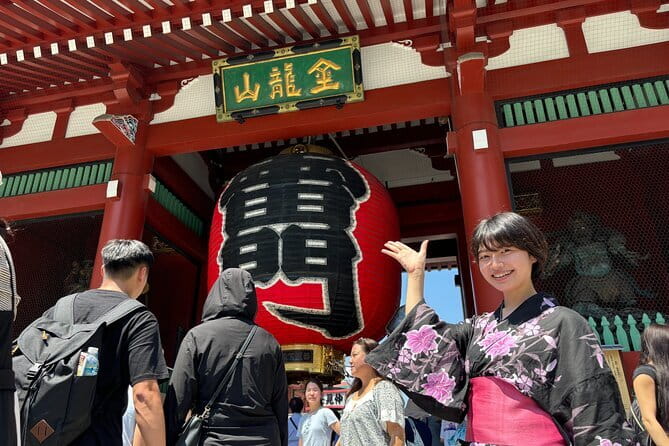
One of the strongest reasons to book this visit is the difference between real practice and a show arranged for an audience. The wrestlers are current athletes, and the session is built around their training rather than a script for visitors.
That does not mean every moment will be equally dramatic. Training includes repetition, waiting, preparation, and exercises that may be less familiar to you. The reward is seeing how the sport is practiced day after day, not just watching a polished bout.
The experience can also change your view of the athletes. A tournament match presents wrestlers as opponents. The practice session gives you a glimpse of their shared working environment and the discipline needed to improve. The intensity is balanced by the ordinary human details that come out later during the questions.
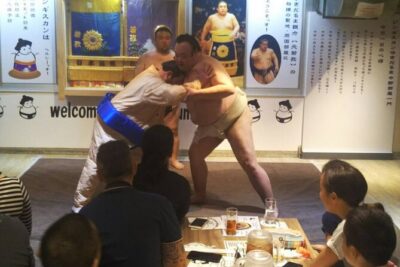
Several bookings have included an optional chance for male audience members to try a short wrestle with a professional in the dojo. This does not appear to be guaranteed, so treat it as a possible extra rather than a promised part of the program. If it happens, it adds plenty of fun, but the main purpose of the visit remains observing practice.
Same city, a different fixture:
- Tokyo: Sumo Show and Experience in Shinjuku
★ 4.8 · 1,001 reviews - Tokyo Grand Sumo Tournament Viewing Tour with Tickets
★ 5.0 · 692 reviews - Tokyo Sumo Wrestling Tournament Experience
★ 5.0 · 660 reviews - Tokyo:Luxury Sumo Show Experience & Japanese cuisine & Drink
★ 4.7 · 577 reviews
Meeting the Wrestlers After Practice
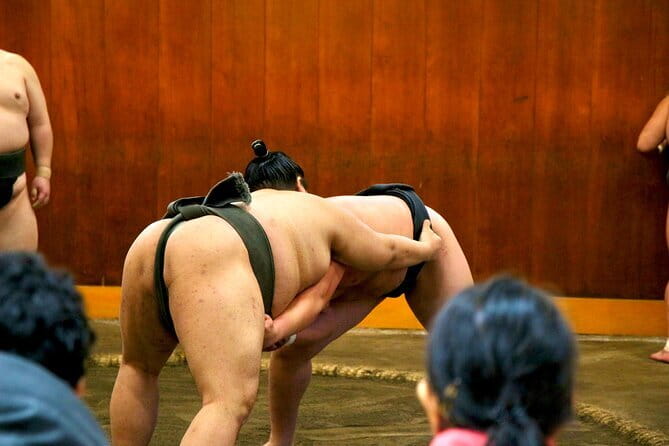
After the training ends, the tone changes. You have an opportunity to speak directly with the wrestlers through the guide and take commemorative photographs with them.
This is where the activity becomes personal. You can ask about daily life, training, and the mindset required for professional sumo. The guide helps with communication, so you are not left trying to invent a question while standing beside an athlete who has just completed a hard morning session.
Prepare a few questions before you arrive. Ask how often they train, what part of the day is most difficult, or what they want people to understand about sumo. The available information confirms that questions about daily life, training, and athletic mindset are welcome. The session is a chance to learn directly, not simply to pose for a picture.
The photo is a useful souvenir, but the conversation is the better reason to value this part of the program. It connects the formal rules and rituals from the opening briefing with a person who lives by them. The wrestlers have been described as generous with their time and willing to answer questions, though the exact length and shape of the interaction can vary with the day’s schedule.
Be respectful here too. These are athletes finishing a serious practice, not performers waiting for a meet-and-greet. Follow the guide’s instructions about photos and keep your questions concise if the group is large.
The Banzuke and the Final Park Session
After leaving the stable, you return to Narihira Park. There you receive an official banzuke, or sumo ranking sheet, inside a specially designed souvenir folder.
The banzuke is a more meaningful keepsake than a generic token because it connects directly to the structure of professional sumo. Keep it flat and protected during the rest of your Tokyo day. It is small, easy to carry, and gives you something to look at later when you want to remember the names and ranks discussed during the visit.
The final session is an extended question period with your guide. Rather than rushing straight into a meal, the tour leaves room for questions about sumo traditions and the points you noticed during practice. You can also ask for personalized suggestions for the rest of your Tokyo plans.
This closing matters because sumo has many rules that are easier to understand after you have seen them in context. You may think of a question only after watching the training or speaking with the wrestlers. The park session gives you a second chance to ask it.
The activity wraps up around 11:00 AM. That timing is convenient if you want to continue to Tokyo Skytree or Asakusa. It also means you should not expect lunch to be part of the experience. The organizers specifically provide question time instead of a rushed meal.
Is $93 a Fair Price?
At $93 per person, this is not a budget walk. The value depends on what you want from a sumo experience.
If you only want to see a sumo bout, the price may feel high. If you want a close look at real training, an English-speaking guide, direct questions with current wrestlers, photographs, and an official banzuke, the cost is easier to justify. Access to an active stable is the central value. It is not an attraction you can simply enter on your own.
The three-hour length also helps. You are not paying for a quick glimpse and a hurried exit. The morning includes preparation at the park, the walk to the stable, the practice viewing, the wrestler interaction, the photograph session, the souvenir, and the final questions.
I would especially consider the price reasonable for someone who has already seen a sumo tournament and wants to understand the athletes’ routine. It is also a strong choice if this is your only sumo activity in Tokyo, since the guide supplies context that you would miss by simply watching a bout.
The price does not include transportation to Narihira Park, food, or a meal afterward. Add those costs to your Tokyo plan. The tour ends early enough that you can choose your own lunch in Asakusa or near Skytree rather than paying for a meal that may not suit you.
Who Will Enjoy This Most?
This activity suits adults and older children who can remain quiet and follow instructions in a working training space. Children under six are not suitable for the visit.
I would recommend it to you if you want culture with some physical edge. You will not just hear about sumo customs. You will see athletes train at close range, then have a chance to ask about the lives behind the sport.
It is also good for curious first-time visitors because the opening explanation makes the rules easier to follow. You do not need prior knowledge of sumo to appreciate the session.
You should think twice if you need a highly flexible morning, dislike early starts, or want to record video. The stable has rules, and those rules are not optional. You should also consider the floor seating carefully, though the stools at the back provide another choice.
People looking for a polished, theatrical show may prefer a different activity. This visit is quieter, more serious, and less predictable than a staged performance. That is its strength, but it also means you need to respect the training environment.
Timing, Cancellation, and Practical Details
The activity lasts three hours, with a usual finish around 11:00 AM. Check the available starting time when booking, since the exact start is not stated as one fixed hour.
During the Grand Sumo Tournament periods in January, May, and September, practice begins about 30 minutes earlier and the viewing portion lasts roughly one hour. Plan carefully during those periods, since the shorter viewing time changes the balance of the morning.
The activity includes the stable visit fee, an English-speaking guide, and the special souvenir. It does not include transportation to the meeting point.
You may cancel up to 24 hours in advance for a full refund. A reserve-now, pay-later option is also available, which helps if your Tokyo schedule is still shifting.
Should You Book This Sumo Morning?
Book it if you want real training rather than a staged performance, and if meeting active wrestlers matters as much to you as watching them practice. The Q&A, photographs, banzuke, and final park session give the morning more substance than a simple viewing ticket.
Skip it if you cannot manage an early start, need to film, or want a casual show with few rules. The stable demands quiet attention and respectful behavior.
For most visitors with a genuine interest in Japanese culture, I think the strongest part is the combination of closeness and explanation. You see the force of the sport, learn how to read the practice, and then hear about the athletes’ lives directly. At $93, it is a considered purchase, but for a serious introduction to sumo in Tokyo, it offers a personal morning that is difficult to duplicate.
FAQ
Where does the sumo morning activity meet?
Meet near the multipurpose restroom at Narihira Park in Sumida. The guide checks your name, provides sumo-related materials, and explains the manners and rules before the walk to the stable.
How long does the activity last?
The activity lasts three hours and usually finishes around 11:00 AM.
Is transportation to the meeting point included?
No. Transportation to Narihira Park is not included.
Can I sit on a chair during the stable visit?
Yes. You can choose a traditional floor cushion near the front or use stools at the back if you prefer not to sit on the floor.
Can I take photographs?
Yes, photography is allowed, but you must remain quiet and follow the rules about flash and seating position. Flash photography is not allowed.
Can I record video or audio?
No. Video recording and audio recording are not allowed.
Can I speak with the sumo wrestlers?
Yes. After practice, you can ask active wrestlers questions about training, daily life, and their mindset, and take commemorative photographs with them.
What souvenir is included?
You receive an official banzuke, which is a sumo ranking sheet, inside a specially designed souvenir folder.
Is the activity suitable for young children?
Children under six are not suitable for this activity.
What happens during Grand Sumo Tournament periods?
During the tournament periods in January, May, and September, practice starts about 30 minutes earlier and the viewing time is about one hour.
Just added for fans in Tokyo
- Tokyo: Grand Sumo Morning Training Tour★ 4.9 · 12 reviews
- Sumo Training Watching Experience in Tokyo★ 4.5 · 8 reviews
- Kickboxing & Body Training with EX-Pro Fighter★ 5.0 · 4 reviews
- Tokyo: Visit Sumo Morning Practice with English Guide★ 4.5 · 22 reviews
- Tokyo Sumo Experience with Live Show & Audience Challenge★ 5.0 · 38 reviews
- Tokyo Shinjuku Sumo Show and Experience with Drinks and Photo★ 4.0 · 21 reviews
- Tokyo Sumo History Tour with Chanko Nabe Lunch★ 5.0 · 3 reviews
- 【SUMO FESTIVAL】Tokyo Ginza: Sumo Show & Photo Experience★ 4.5 · 41 reviews
Sumo Experiences in Tokyo, compared.
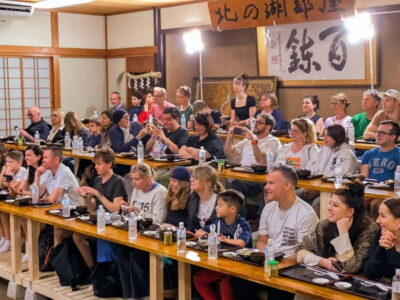
Tokyo Shinjuku Sumo Show & Experience with Photo
Read our review →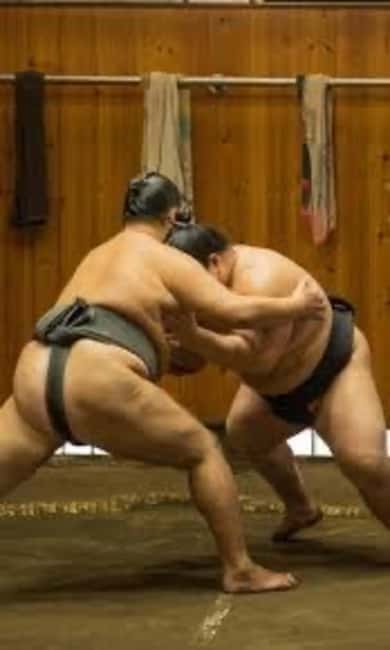
Tokyo Grand Sumo Tournament Viewing Tour with Tickets
Read our review →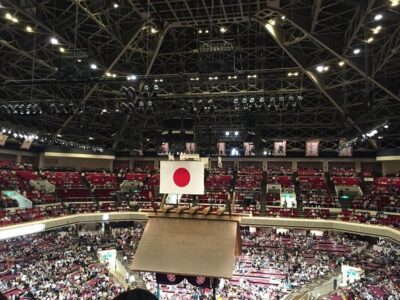

Luxury Sumo Show Experience & Japanese cuisine & Drink
Read our review →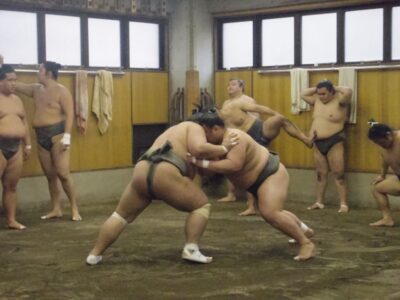
Browse the lists this tour appears in