
Review · SUMO EXPERIENCES IN TOKYO
Tokyo: Sumo Morning Practice Viewing Tour at a Real Stable
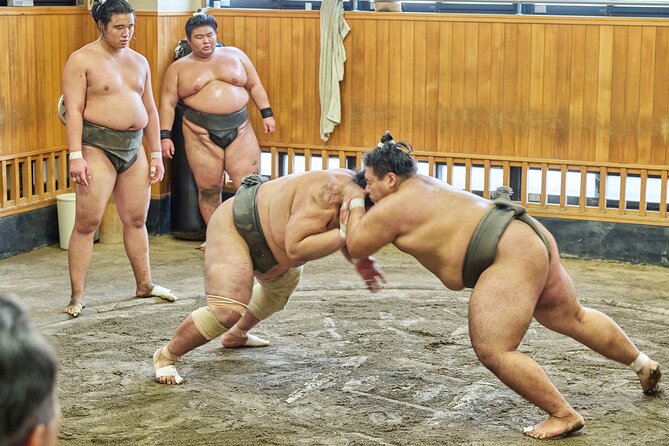
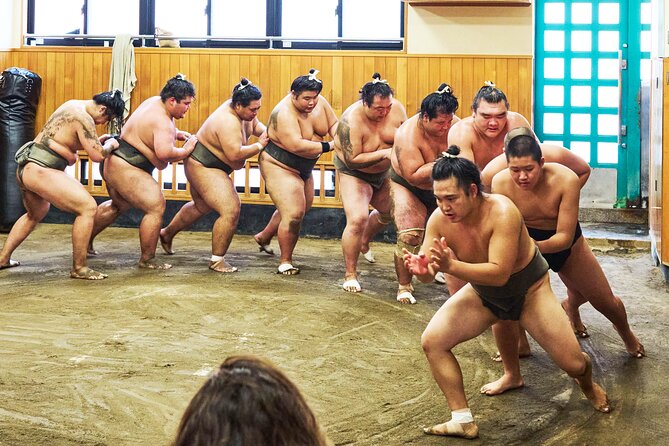
Tokyo sumo practice is not a staged show. You sit quietly near a working training session and watch wrestlers repeat drills, push, grapple, and prepare for competition. That close, unscripted access is the main reason to book this real sumo stable visit.
I like the clear explanations from guides such as Mao and Tomo, and I like that you can ask questions before or after practice. I also appreciate the chance for photos with wrestlers. The main consideration is simple: silence is required during training, so this suits you best if you can watch patiently rather than expect a lively performance.
Key points at a glance
- A real morning practice: Watch sumo wrestlers train at a working stable rather than attending a staged demonstration.
- About 90 minutes of viewing: The practice session gives you enough time to see repeated drills and the athletes’ physical effort.
- Guides make the customs clear: Mao and Tomo have explained rules, rituals, and stable etiquette for visitors.
- Silence matters: You must remain quiet during practice, though one guide used a WhatsApp group so visitors could send questions without interrupting.
- Possible wrestler photos: The tour includes an opportunity to take pictures with sumo wrestlers.
- Easy morning meeting point: Meet at Kiyosumi-shirakawa Station at 8:30 am, with the activity ending back at the meeting point.
Why this sumo practice feels different from a match
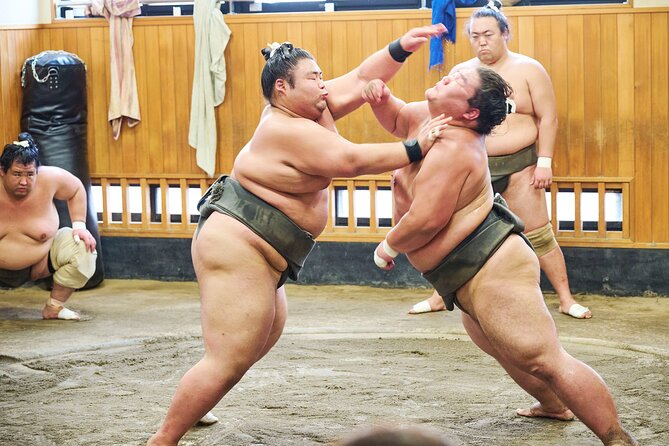
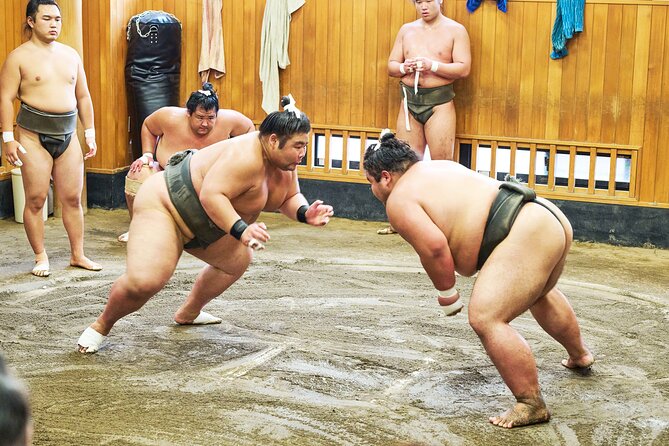
A professional sumo tournament gives you the noise, ceremony, crowds, and drama of competition. This morning tour gives you something less polished and, in some ways, more revealing: ordinary training at a stable where wrestlers work on their strength and technique.
You may see athletes repeating the same movements, facing one another in short bursts, and building the control needed for a bout. The point is not to watch a full contest with a winner and loser. It is to observe the work behind the public spectacle.
That distinction matters. If you want constant action, this may feel slow. If you want to understand how sumo wrestlers prepare, the slower pace is the attraction. You get time to watch patterns develop instead of seeing only a few seconds of action in a tournament ring.
The setting also gives the experience its value. A real stable is a place where wrestlers train as part of their daily routine. You are not being handed a simplified show designed only for tourists. You are being asked to fit into the stable’s rules, especially the rule about staying quiet.
More Sumo Experiences in Tokyo
- Tokyo: Sumo Show and Dining Experience
★ 4.8 · 2,742 reviews - the SUMO show
★ 5.0 · 1,960 reviews - Tokyo Shinjuku Sumo Show & Experience with Photo
★ 5.0 · 1,750 reviews
Meeting at Kiyosumi-shirakawa at 8:30 am
The tour begins at Kiyosumi-shirakawa Station, at 1-chōme-6-13 Shirakawa in Koto City. The start time is 8:30 am, so plan your morning carefully and allow enough time to reach the meeting point without rushing.
Your guide meets you there and takes you to the training stable. The guide’s role begins before the practice itself. You receive help with the route and an explanation of what to expect, which is useful because the stable is not presented as a standard sightseeing attraction with a large sign and a public entrance.
The meeting point is near public transportation, and the activity ends back there. That return is handy if you have another Tokyo plan afterward. You can continue sightseeing without arranging a separate pickup or figuring out your way back from an unfamiliar part of the city.
The early start is part of the bargain. You lose some sleep, but morning practice is the reason you get to see the wrestlers in their training routine. I would schedule a relaxed afternoon afterward rather than pairing this with a packed morning itinerary.
Inside the stable: quiet observation, not a performance
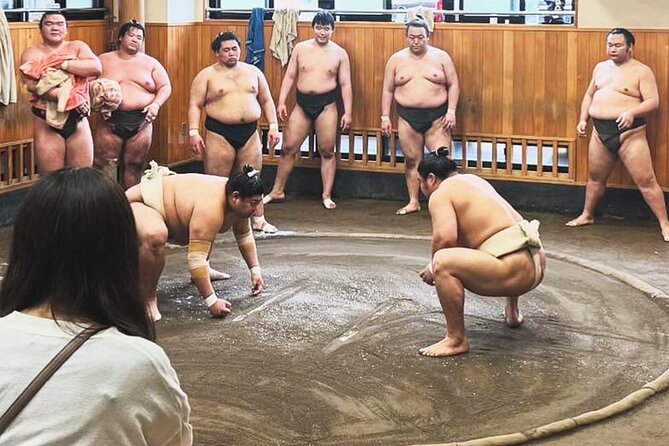
The most important instruction is to stay quiet while the wrestlers train. This is not a minor request. The stable is an active workplace, and the wrestlers need to concentrate.
That rule can make the session feel unusually focused. You are not competing with a tour guide’s running commentary, crowd noise, or staged announcements. Instead, you watch and listen to the sounds of training itself.
Your guide explains the rules, rituals, and traditions around the practice. The explanations help you notice what you might otherwise miss. Without preparation, a series of wrestling drills can look repetitive. With context, you begin to understand the purpose behind the movements and the discipline required of the athletes.
A useful detail from the experience is the way questions can be handled without breaking the stable’s silence. One guide, Mao, created a WhatsApp group so visitors could send questions during practice and receive answers without speaking. This is a smart solution, though you should still expect the live viewing itself to be quiet and restrained.
The practice portion is described as lasting about one and a half hours. The overall activity is listed at approximately two hours, so allow the full two-hour window for the meeting, transfer, explanations, viewing, and return to the station.
What the training reveals about sumo
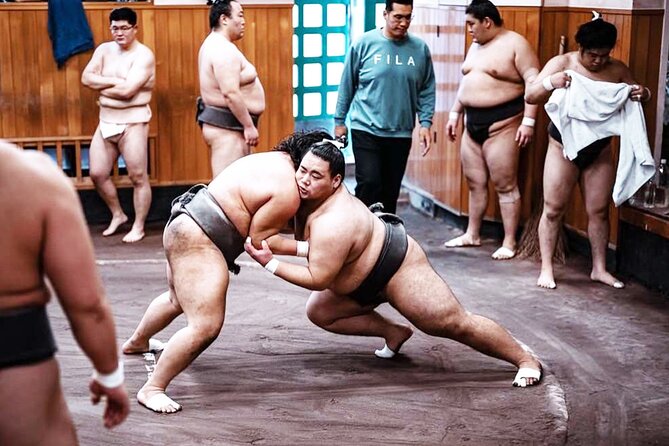
At a tournament, sumo can look like a short collision. At practice, you see the repetition behind that collision.
The wrestlers train as athletes, not performers. Their strength is obvious, but so is the technical side of the sport. The session lets you watch them prepare close up, with the guide filling in the rules and customs that give the movements meaning.
This is valuable for first-time sumo viewers. You do not need to research the sport before arriving. The guide explains enough to help you follow what is happening, so you can spend your attention on the wrestlers rather than trying to decode every action on your own.
I also think this format suits people who have already watched sumo but want a closer look at the daily work. You will not get the same atmosphere as a tournament, and you will not see a formal public match. You will see the less visible side of the sport, where progress comes from practice and repetition.
The experience is particularly good for curious families and older children who can follow the quiet rule. One account describes two energetic nephews staying silent through the entire session after the guide explained the requirement. That says something about the setting: even children who normally need constant activity may become absorbed by what is happening in front of them.
Same city, a different fixture:
- Tokyo: Sumo Show and Experience in Shinjuku
★ 4.8 · 1,001 reviews - Tokyo Grand Sumo Tournament Viewing Tour with Tickets
★ 5.0 · 692 reviews - Tokyo Sumo Wrestling Tournament Experience
★ 5.0 · 660 reviews - Tokyo:Luxury Sumo Show Experience & Japanese cuisine & Drink
★ 4.7 · 577 reviews
Meeting the wrestlers and taking photos
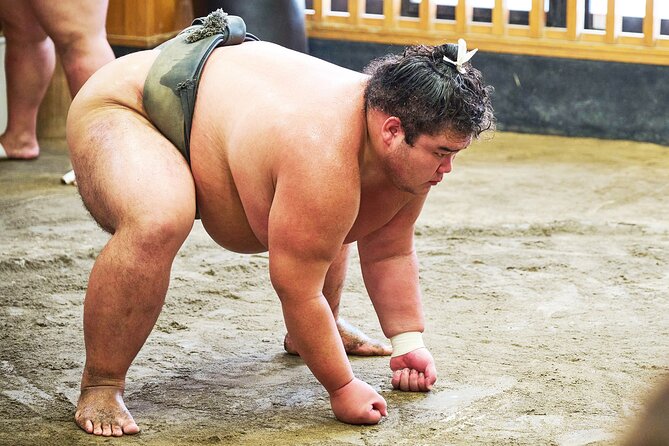
The tour includes an opportunity to take photos with sumo wrestlers. This is a memorable extra, but it should not be the only reason you book.
The core experience is watching practice. The photo opportunity adds a personal ending or highlight, depending on how the stable visit unfolds. Since this is a working training environment, I would treat the photographs as a possibility included in the tour rather than a guaranteed posed session with every wrestler.
That distinction helps keep expectations realistic. You are visiting a real stable, and the stable’s routine comes first. The appeal is precisely that the wrestlers are training rather than performing for a camera.
If taking photos matters to you, listen closely to the guide’s instructions and wait for the appropriate moment. During the practice, keep your phone quiet and avoid interrupting the session.
The guides make the difference
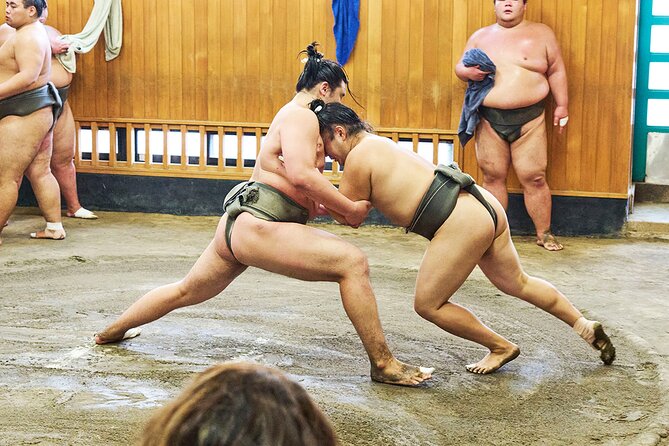
The experience depends heavily on the guide because the practice itself is mostly observed in silence. Tomo is described as answering questions thoroughly and offering food suggestions for the rest of a Tokyo visit. Mao is praised for explaining the training and setting up a WhatsApp group for questions during the session.
That kind of help matters more here than on a standard walking tour. The guide has to prepare you for the stable’s etiquette, explain what you are seeing, and keep the group organized without creating noise or distraction.
You also benefit from having someone help you reach the stable from the meeting point. The guide meets you at an identifiable location and makes sure the group is on its way. That removes some of the uncertainty from visiting a place that is not part of the usual sightseeing circuit.
The experience provider is Local Guide Stars. The guide names associated with the feedback are Mao and Tomo, though the individual assigned to your departure may differ. If you have questions about the customs or want meal suggestions after the session, this is the time to ask them.
Is $118.92 a fair price?
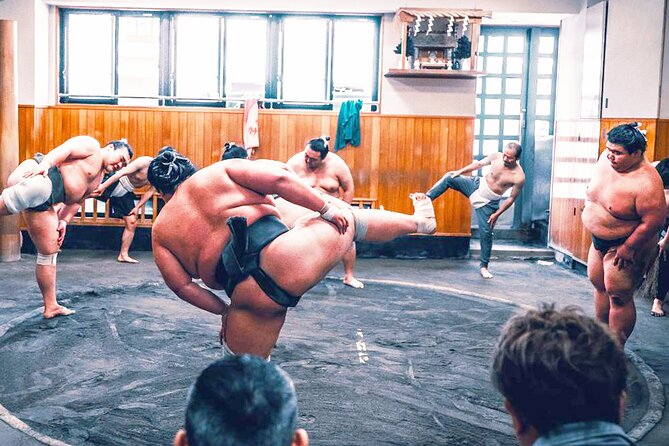
At $118.92 per person, this is not a budget activity. Its value comes from access rather than duration. You are paying for a rare chance to enter a working sumo stable, watch training at close range, and receive guidance that makes the session understandable.
The viewing itself lasts about 90 minutes, with the whole activity taking about two hours. That works out to a substantial morning experience, but the price still makes most sense if sumo is high on your Tokyo list.
I would not choose this tour simply because you have a free morning. The cost is easier to justify if you care about Japanese sports, traditional culture, photography, or behind-the-scenes access. It can also be a strong choice if you have no tournament ticket and still want to see sumo in person.
The price includes the guide-led stable visit, explanations, and the chance for wrestler photos. The provided details do not list meals, drinks, or transportation beyond the guided movement from the station meeting point, so plan your budget and morning around the stated tour rather than expecting extra inclusions.
Who will enjoy this most?
This tour fits you well if you like:
- Japanese traditions explained in plain language
- Sports training rather than staged entertainment
- Quiet observation and close-up photography
- Small cultural experiences that require respectful behavior
- Starting early to see a side of Tokyo many people miss
It is also a good match for families with children who can remain quiet for the practice. The stable’s atmosphere can hold a child’s attention, but the silence rule is firm enough that you should explain it before booking.
You may prefer a tournament if you want cheering crowds, formal bouts, and the full public spectacle of sumo. You may also prefer a more active tour if sitting quietly for about 90 minutes sounds frustrating.
Most travelers can participate, according to the activity details. The maximum group size is listed as 50 people, which is larger than an intimate private visit. The actual viewing arrangement may affect how close you feel to the action, so book for the stable access and cultural insight rather than assuming a tiny group.
Practical details before you book
Your mobile ticket is convenient, and booking confirmation is provided at the time of purchase. Meet at Kiyosumi-shirakawa Station at 8:30 am, and expect the activity to finish back at the meeting point.
Wear something suitable for sitting quietly and watching for an extended period. The supplied details do not specify seating, clothing rules, or exact stable arrangements, so follow the guide’s instructions once you arrive.
Do not plan to talk during the practice. Save your questions for before or after the session, or use the communication method provided by the guide if one is arranged for your group.
The cancellation policy is forgiving if your plans change early. You can cancel for a full refund up to 24 hours before the local start time. Cancellations or changes made less than 24 hours before the start are not accepted for a refund.
Should you book the sumo stable tour?
I would book this if you want to see sumo as a working sport rather than a staged cultural show. The authentic training session, patient guide explanations, and possible wrestler photos give you a close look at a part of Tokyo that is not easy to arrange on your own.
I would skip it if you need a lively, talkative tour or if you want the excitement of official competition. The early start, strict silence, two-hour commitment, and $118.92 price are all worth weighing.
For sumo fans, curious first-time viewers, and families who can respect the rules, this is a strong use of a Tokyo morning. Arrive ready to watch carefully, keep quiet, and let the training reveal why sumo is more than a few seconds of wrestling in a ring.
FAQ
Where does the sumo practice tour start?
The tour starts at Kiyosumi-shirakawa Station, at 1-chōme-6-13 Shirakawa, Koto City, Tokyo 135-0021, Japan.
What time does the experience begin?
The meeting time is 8:30 am.
How long does the tour last?
The overall activity lasts approximately two hours. The training viewing itself is described as lasting about one hour and 30 minutes.
Where does the activity end?
The tour ends back at the meeting point at Kiyosumi-shirakawa Station.
Will I watch a sumo tournament match?
No. You watch a morning practice session at a real sumo training stable, not a staged performance or tournament match.
Can I take photos with sumo wrestlers?
The experience includes an opportunity to take photos with sumo wrestlers. The practice itself requires visitors to remain quiet.
Do I need to know the rules of sumo before arriving?
No. The guide explains the rules, rituals, and traditions during the experience.
What happens if I need to cancel?
You can cancel for a full refund up to 24 hours before the local start time. Cancellations or changes made less than 24 hours before the start are not accepted for a refund.
Just added for fans in Tokyo
- Tokyo: Grand Sumo Morning Training Tour★ 4.9 · 12 reviews
- Sumo Training Watching Experience in Tokyo★ 4.5 · 8 reviews
- Kickboxing & Body Training with EX-Pro Fighter★ 5.0 · 4 reviews
- Tokyo: Visit Sumo Morning Practice with English Guide★ 4.5 · 22 reviews
- Tokyo Sumo Experience with Live Show & Audience Challenge★ 5.0 · 38 reviews
- Tokyo Shinjuku Sumo Show and Experience with Drinks and Photo★ 4.0 · 21 reviews
- Tokyo Sumo History Tour with Chanko Nabe Lunch★ 5.0 · 3 reviews
- 【SUMO FESTIVAL】Tokyo Ginza: Sumo Show & Photo Experience★ 4.5 · 41 reviews
Sumo Experiences in Tokyo, compared.
Tokyo Shinjuku Sumo Show & Experience with Photo
Read our review →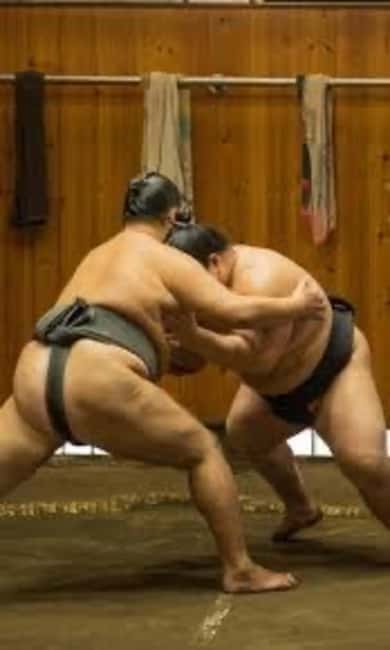
Tokyo Grand Sumo Tournament Viewing Tour with Tickets
Read our review →

Luxury Sumo Show Experience & Japanese cuisine & Drink
Read our review →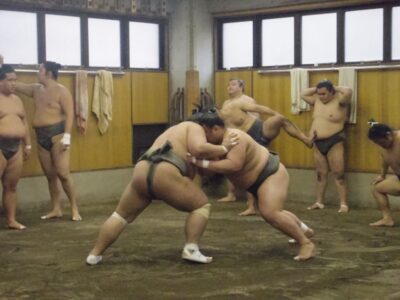
Browse the lists this tour appears in